In light of the TikTok drama in Washington, I thought I’d take another look at Chinese ownership of Gulf of Mexico oil and gas leases.
A year ago, it was reported that State owned China National Offshore Oil Corp. (CNOOC) was considering an exit from its operations in the US, Canada, and the UK because of sanctions concerns. That may still be the case for other properties, but CNOOC has retained its Gulf of Mexico lease interests.
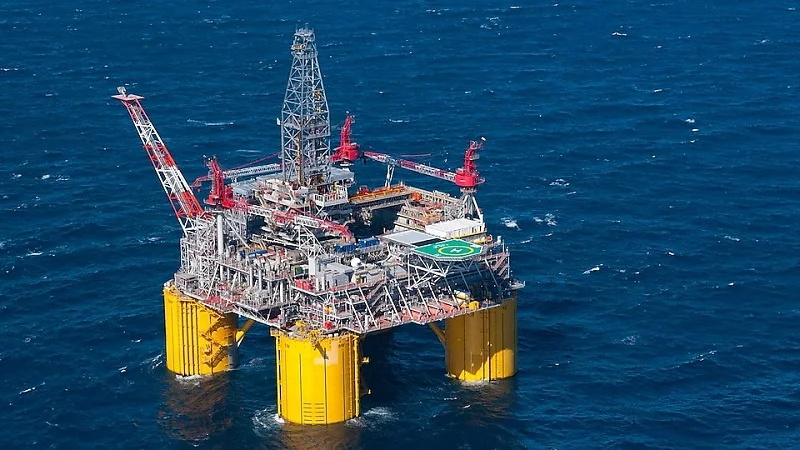
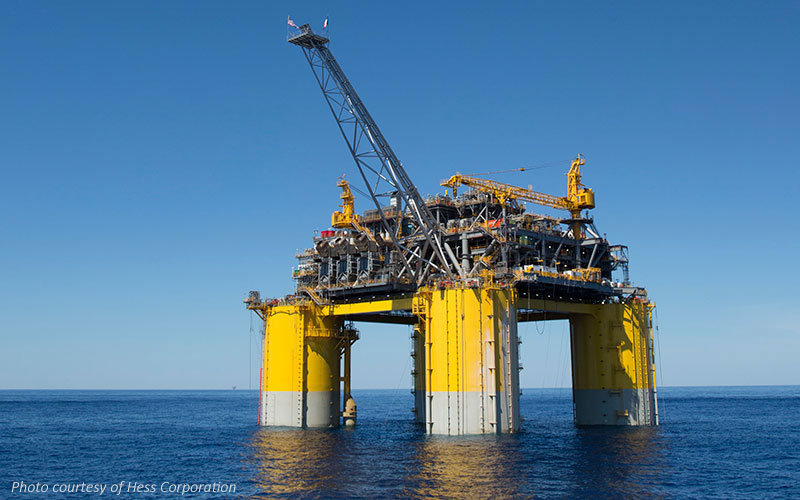
Per BOEM lease data, CNOOC continues to own 25% and 21% interest respectively in the important Stampede (Green Canyon 468, 511, and 512) and Appomattox (Mississippi Canyon 391, 392, and 393) deepwater projects. CNOOC reports are positive on those operations, noting that the production wells have performed better than expected.
CNOOC also owns interest in five other GoM leases. No CNOOC lease interest has been assigned to other companies in the past two years.
I welcome foreign investment in our offshore program, and see little downside in Chinese entities owning minority shares of OCS leases. GoM lease ownership does advance CNOOC’s understanding of deepwater exploration and development technology, but that knowledge can also be acquired elsewhere, sometimes in partnership with US companies (as is the case in Guyana).
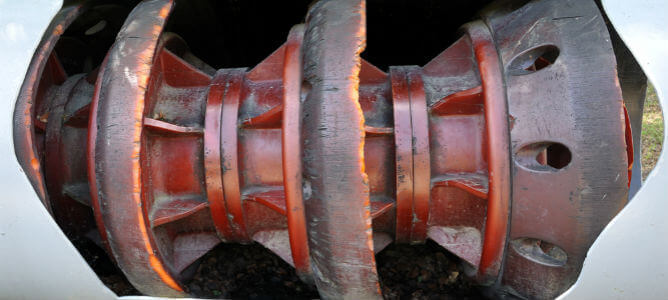
Pictured: pig for cleaning gas pipelines. Will Nord Stream’s suit against the insurers unplug investigation findings?
Nord Stream AG has sued insurers Lloyds and Arch in the English High Court for failing to pay for pipeline damage incurred during the Sept. 2022 Baltic Sea explosions. The estimated pipeline repair costs range from €1.2 to €1.35 billion, and Nord Stream is seeking €400 million from the insurers.
Could this litigation help us learn more about the findings of the official Nord Stream investigations? After 17 months of investigation, Denmark recently concluded that “there are not sufficient grounds to pursue a criminal case in Denmark.” Only nineteen days before Sweden had announced that “Swedish jurisdiction does not apply and that the investigation therefore should be closed.” These weak announcements at the end of lengthy investigations seem too convenient, and may lend credence to Hersh’s Nord Stream account or a recent variation that implicates the UK. Germany is presumably still investigating, and it remains to be seen whether they will release findings.
Could the parties in the Nord Stream case pursue documents or testimony from the Swedish, Danish, or German investigation teams? Both sides in this case, Nord Stream AG and the insurers, would benefit from details that could help identify the responsible parties.
Bayou Bend CCS LLC commenced drilling an offshore (Texas State waters) and an onshore stratigraphic well for carbon sequestration in the first quarter 2024.
Is offshore carbon disposal ocean dumping?One of the provisions that was slipped into the “2021 Infrastructure Bill” exempted carbon sequestration from the Marine Protection, Research, and Sanctuaries Act of 1972 (Ocean Dumping Act). This exemption revises the OCS Lands Act and thus does not apply to State offshore lands. The Texas offshore wells must therefore be permitted by EPA as “Class VI wells,” as is the case for onshore disposal wells. However, Texas and Louisiana have asked the EPA for “primacy,” which would allow state agencies to approve and oversee these operations.
Meanwhile, the regulations for carbon disposal on the OCS, which the Infrastructure Bill mandated by November 2022, have yet to be published for comment. The latest Federal regulatory agenda indicates a publication date of 12/00/2023 for these regulations. Presumably the staff work has been completed and the rule is stalled in the review process.
Despite the absence of a regulatory framework, BOEM has accepted sequestration bids at the last three oil and gas lease sales. These bids were evaluated as if the leases were being acquired for oil and gas exploration and production, even though the bidders’ intentions were widely known. Why was BOEM a willing participant in this charade, not just at one sale, but at three sales in succession?
Given that the perceived carbon disposal bonanza is dependent on mandates and subsidies, one has to wonder about the massive revenue projections for this industry and raise concerns about the associated public and private financial risks. What is the long term business plan for this industry? Who will be monitoring the offshore wells (in perpetuity)? How will the public be protected from financial assurance and leakage risks? We will see how the myriad of carbon sequestration issues are addressed in the proposed regulations.
As we enter the third month of 2024, BSEE has finally updated the incident tables to include 2022 data.
The OCS program managers I was privileged to work for would never have accepted such delays in posting fundamental safety data. Carolita Kallaur (RIP) wouldn’t tolerate a delay of 14 days in publishing quarterly incident statistics, let alone a delay of 14 months for annual data with no quarterly updates. Transparency and timeliness in informing the public about offshore safety performance was her highest priority. Cynthia Quarterman, Tom Readinger, and other OCS program leaders were similarly insistent on timeliness and transparency in the reporting of incident data.
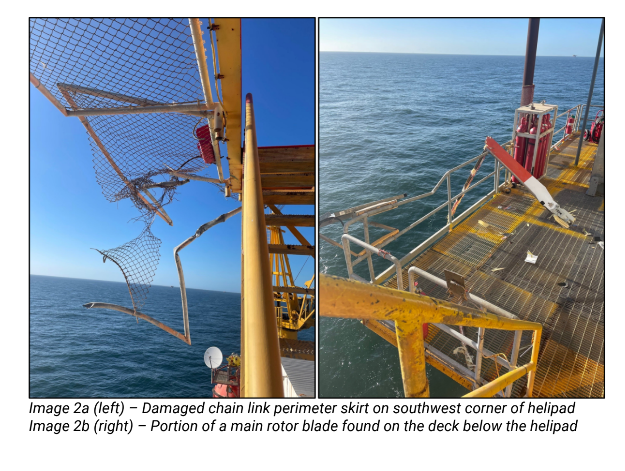
The belated 2022 BSEE tables also include a glaring error. The most important figure, the number of fatalities, is incorrect. Five workers died from US OCS incidents in 2022, not one. The fatal helicopter crash at the West Delta 106 A helideck on 12/29/2022 that killed four workers (photos below) is inexplicably not included.
Is the failure to include this fatal incident a regulatory fragmentation issue? OCS safety data should be reported holistically and should not be parsed based on perceived regulatory jurisdiction? In any event, the tragic accident at the West Delta 106 A platform occurred at the helideck, which per the MOA with the Coast Guard is under BSEE jurisdiction.
It’s unfortunate that 2023 data are not available, even in summary form. At a minimum, BSEE should be proudly reporting that 2023 was the first zero fatality year on the US OCS since at least 1963! While acknowledging that this outstanding achievement will be difficult to repeat, it most certainly deserves public attention.
Lastly, what about incident data for the offshore wind program? When will these data be posted?
Reports in Nov. indicated that ~60,000 bopd were shut-in as a result of the presumed Main Pass Oil Gathering system pipeline leak. The Coast Guard subsequently reported that other pipelines in the area were shut-in as the search for a leak continued. The bulk of the Nov./Dec. production decline of ~80,000 bopd (from Oct. levels) was probably attributable to those pipeline system shut-ins.
Offshore facility decommissioning is a frequent target of Federal auditors given the complex financial and regulatory challenges. Unfortunately, the reviews have done little to better protect the public interest. As have previous inquiries, the new GAO report (attached for your convenience) calls for improved regulations and enforcement practices. That, of course, has been the objective for decades, but the problems have only worsened.
While the GAO recommendations are unsurprising, the body of the report is informative. Most notably, GAO (p. 29) raises a significant inconsistency on a key provision in the proposed decommissioning financial assurance regulations published last year:
One of the five criteria BOEM would no longer use under the proposed rule is demonstrated reliability, as shown by record of compliance with laws, regulations, and lease terms, among other factors. BOEM’s June 2023 regulatory analysis concluded this criterion is not a good predictive indicator of default on decommissioning obligations. However, BOEM and BSEE officials we spoke with told us that poor compliance records—such as safety and maintenance issues or delayed decommissioning obligations—can be an indicator of potential decommissioning noncompliance or financial stress.
Why was there such a disconnect between the opinions of BOEM and BSEE officials (who are directly involved with decommissioning) and BOEM’s decision not to include a company’s compliance record among the factors to be considered in determining the need for supplemental financial assurance? As pointed out here and here, safety performance is arguably the most important predictor of financial failure and decommissioning noncompliance.
The GAO report correctly acknowledges the difficulties in disqualifying operating companies. However, the regulations at 30 CFR § 250.135 specifically provide for disqualification for poor performance. While the regulations could be tighter, enforcing disqualifications regulations is dependent on persistence and strong support from management and DOI attorneys. Given the political risks associated with disqualifying operators, that support is often lacking.
Disqualification difficulties make it imperative that BOEM carefully consider past performance before approving lease assignments or determining financial assurance amounts. Provisions in 30 CFR §585.408 and §585.107 could have been used to disapprove assignments to Signal Hill, Fieldwood, Cox, and other problem operators. The failure to do so has significantly delayed decommissioning and increased public exposure to financial risks.
In some cases, lease assignments to unqualified companies have not only been approved but they have been facilitated by BOEM/MMS. The case of Platforms Hogan and Houchin, in the Santa Barbara Channel, is a particularly good example. (Did GAO inquire about the Inspector General report on this matter or ask why that report has still not been released?)
Most operating companies are responsible about planning for and fulfilling their decommissioning obligations. The problem is the exceptions, and they are not difficult to identify if you look at compliance data and obtain input from BSEE inspection personnel.
Other important decommissioning questions that need to be considered:
Given that decommissioning responsibility is divided between BSEE and BOEM, is regulatory fragmentation limiting their efficiency and effectiveness? Is coordination between BSEE and BOEM delaying action on fitness to operate and disqualification matters?
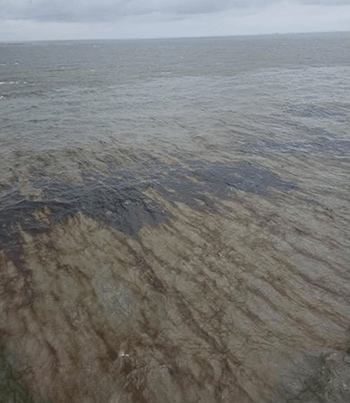
Were sheen samples fingerprinted and are those results definitive?
Given that the source has not been identified, what was the basis for the large (and rather sensational) spill volume estimate? The sheen was not indicative of a spill of that magnitude.
How much production has been shut-in since the slick was first identified? November production data indicate a GoM-wide oil production decline of ~80,000 bopd decline from September.
Given the public claims that were made about the size and potential implications of this spill, the authorities need to be more forthcoming regarding their findings to date.
Less than a month ago BSEE issued an alert that addressed chronic and persistent helideck safety issues. This week BSEE again issued an alert (attached) following yet another near-miss. Per BSEE:
After receiving clearance for landing at an offshore helideck, the aircrew noticed upon landing that a section of the helideck’s safety skirting was not properly secured to the support structure and was blowing upward and downward due to the helicopter’s rotor downwash. This created an imminent hazard to safe helicopter operations with potentially catastrophic results.
The latest near-miss is yet another reminder that the muddled regulatory regime for helideck safety needs to be addressed. The most recent Coast Guard – BSEE MOA for fixed platforms only added to helideck regulatory uncertainty by assigning decks and fuel handling to BSEE and railings and perimeter netting to the Coast Guard. What about safety skirting? As is the case with all safety regulations, a holistic, systems based approach to helideck safety oversight is needed.
To their credit, BSEE has been addressing these helideck issues with safety alerts. Since they are bearing the responsibility for these incidents, they should have the unambiguous authority needed to take enforcement actions regardless of which helideck elements are involved.
Expected appeals by API (first attachment) and Earth Justice et al (second attachment) were filed on 12 Feb, 60 days after Secretary Haaland approved the 5 year plan and thus the first day appeals could be filed pursuant to 43 U.S. Code § 1349.
The statute (language below) requires that leasing program appeals be filed in the DC Court of Appeals. API would have undoubtedly rather filed in Louisiana while Earth Justice is likely content with the DC venue.
43 U.S. Code § 1349 (c)(1)Any action of the Secretary to approve a leasing program pursuant to section 1344 of this title shall be subject to judicial review only in the United States Court of Appeal for the District of Columbia.
The filings don’t include any arguments except for API’s general assertion that “the Record of Decision and Approval is arbitrary, capricious, and not in accordance with law.”
Earth Justice presumably filed for defensive reasons given that the 5 year plan has the fewest lease sales in history and would seem to be favorable to their point of view.
API will likely contend that the plan is not balanced as require by the statue:
43 U.S. Code § 1344 (a)(3)The Secretary shall select the timing and location of leasing, to the maximum extent practicable, so as to obtain a proper balance between the potential for environmental damage, the potential for the discovery of oil and gas, and the potential for adverse impact on the coastal zone.
Energy experts like Dan Yergin have a different, and far more credible view. Yergin explains that energy transitions don’t happen on command, noting that the world uses almost three times as much coal today as in the 1960’s when oil finally surpassed coal as the world’s primary energy source.
Oxy CEO Vicki Hollub’s recent remarks should serve as a reality check for the 5 Year Plan authors and their counterparts elsewhere in western governments. More oil and gas exploration and production are needed, not less. Leading Oxy investor Warren Buffet agrees.
Crude reserves are being found and developed at a much slower pace than they’ve been in the past. Specifically, she said the world has only newly identified less than half the amount of crude it’s consumed over the course of the past 10 years. Given the current trends, this means demand will exceed supply before the end of 2025.
Recent trends in the Gulf of Mexico, where Hollub’s Anadarko unit is one of the more active and successful operators, reflect Hollub’s concern. Note below the sharp decline in discoveries, as determined by BOEM, over the past 20 years. Effective development of older discoveries and improved resource recovery practices are sustaining GoM production, but declines are inevitable without consistent leasing and increased exploration.
In the Gulf of America, the UTRR mean estimate for oil dropped nine percent to 26.90 Bbo, while the estimate for gas decreased 17 percent from 54.84 Tcfg to 45.59 Tcfg. The overall decrease in UTRR is due in part to the refinement of fieldsize distributions and the estimated number of prospects for some mature geologic plays, particularly on the shallow water shelf. Several geologic plays in the Mesozoic section are reported with a modest increase in mean UTRR. A total of 30 geologic plays are assessed across the Gulf of America OCS.