Feeds:
Posts
Comments

Archive for the ‘energy policy’ Category

Deb Haaland, U.S. Secretary of the Interior
Deb Haaland, US Secretary of the Interior
Haaland Leeds
Erling Braut Haaland

As a result of her mother’s heritage, Deb Haaland is the first Native American to serve as a US cabinet secretary. However, her father, a decorated Marine Corps officer was a Norwegian American. She thus has the same surname as Erling Braut Haaland, the star striker for Norway and BVB Dortmund in the German Bundesliga.

Although most Americans cannot name the Secretary of the Interior (James Watt was an exception thanks to his attempt to ban the Beach Boys from the 4th of July concert in Washington😃), Deb Haaland is probably slightly better known in the US than Erling Haaland. However, thanks to the popularity of football/fussball/futbol/soccer, Erling is much better known internationally.

What does this have to do with offshore energy? Well Norway, which just announced record oil and gas revenues, has managed to sustain leasing, exploration, and production throughout the pandemic without compromising safety and environmental objectives. They also wisely eased the petroleum tax burden during the pandemic with favorable results.

The temporary change in the petroleum tax has most likely led to an increase in project activity. The projects would most likely have been carried out even without the tax package, but some of them would have been postponed.

NPD

Regardless of her heritage and any connections she might have with Norway, this would be a good time for Secretary Haaland to put the MOU between the Dept. of the Interior and the Ministry of Petroleum and Energy (Norway) to good use by learning more about resource management on the Norwegian continental shelf and discussing how to best sustain US offshore production.

Read Full Post »

This should not surprise experienced OSHA regulators given the absence of clear legislative authority.

Offshore regulators in the US have used “work-arounds” in the form of Notices to Lessees, Conditions of Approval, and other types of guidance documents. However, there was a general understanding that requirements imposed by these methods would not survive legal challenges unless they were clearly authorized by legislation or regulations. Most work-arounds aren’t challenged because the regulatory authority is reasonably clear, their issuance is at least minimally acceptable to the regulated industry, or the perceived cost of challenges exceeds the cost of compliance.

Read Full Post »

Read Full Post »

“We will need gas throughout the transitional phase,” government spokesman Steffen Hebestreit said.

oilprice.com

Germany has a very strong Green lobby that has now become part of the ruling coalition. Despite an anti-fossil fuel discourse, the Greens have now apparently accepted the necessity of at least one fossil fuel, perhaps not least because Germany has plans to shut down all of its nuclear power plants by the end of this year.

oilprice.com

Read Full Post »

Declines in drilling activity and discoveries suggest that higher real oil prices are on the horizon. We may be fortunate enough to escape significant price hikes and supply disruptions over the next couple of years, but they are coming.

Rystad’s not-so-cheery pre-Christmas press release reported that, on a volume basis, 2021 oil and gas discoveries had sunk to the lowest level in 75 years.

20211220 OG global discoveries PR chart.png
Rystad Energy

US offshore trends are even more troubling. Per BOEM’s database, no deepwater fields were discovered in 2021 and there were only 2 discoveries in the past 3 years (see chart below). HartEnergy reports 5 announced discoveries in 2021, none of which has been determined by BOEM to be commercially producible. Regardless of the status of those 2021 determinations, recent discoveries have not been sufficient to reach and sustain GoM production volumes at the 2019 peak (August) of 2.044 million BOPD. 2019 was the first year since 1982 without a confirmed deepwater discovery and the trend (below) is not encouraging. Schlumberger data through 2016 indicated GoM depletion rates greater than 20%, and the subsequent low discovery rates do not bode well for future production trends.

from BOEM data

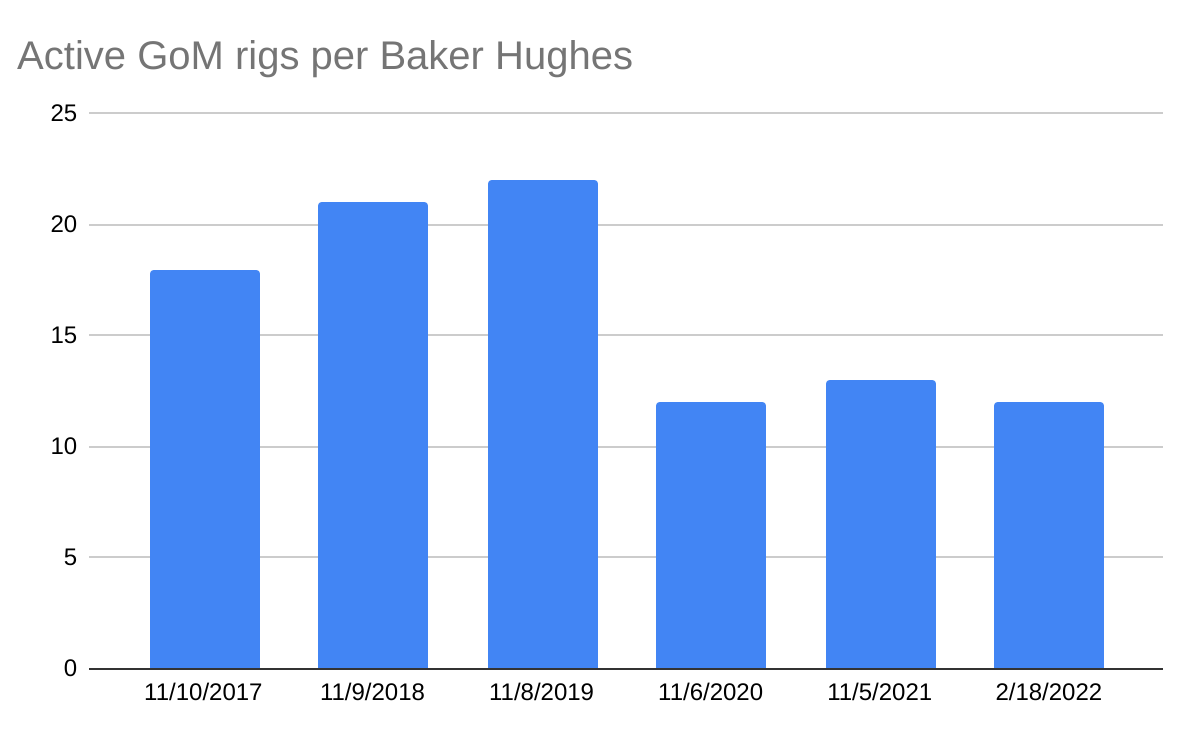
You can’t make discoveries without drilling and only 9 companies drilled deepwater GoM exploratory wells in 2021 (34 wells total). With the Pacific in decommissioning mode, the Atlantic and Eastern GoM off-limits, limited options offshore Alaska, and the decline of the GoM shelf, the deepwater GoM is the only important US offshore production option. The exploration numbers below are therefore concerning.

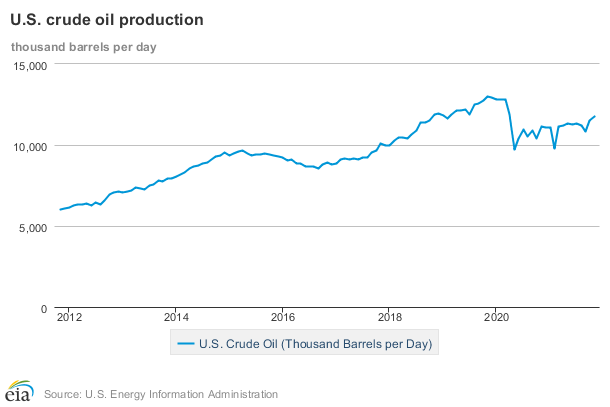
The shale revolution made the US a net oil exporter, but skepticism about shale production forecasts suggests the need for other supply sources. Given the shale uncertainty and the unrealistic expectations regarding the energy transition, greater US dependence on imported oil is on the horizon. This bodes well for OPEC, but not so well for US and international consumers.

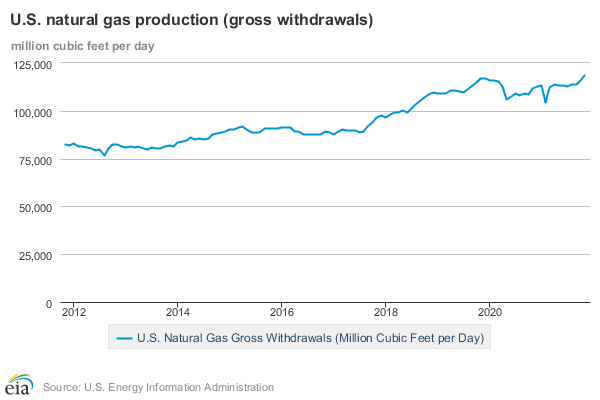
Meanwhile, the US Dept. of Energy shows no evidence of concern about oil and gas production. Although oil and gas account for about 70% of our energy consumption, there has been no mention of either on the DOE homepage for months. DOE does express a strong interest in “energy justice.” Perhaps they can explain how increased imports and higher energy prices benefit the poor. They should also explain how oil imports are environmentally and economically superior to domestic oil and gas production, when the reality is exactly the opposite.

Read Full Post »

Quite a bit per the GAO, and their report only deals with DOE management of demonstration projects. The Infrastructure Bill authorizes $2.5 billion for commercial projects (and much more for other CCS purposes).

DOE provided nearly $684 million to eight coal projects, resulting in one operational facility. Three projects were withdrawn—two prior to receiving funding—and one was built and entered operations, but halted operations in 2020 due to changing economic conditions. DOE terminated funding agreements with the other four projects prior to construction.

DOE provided approximately $438 million to three projects designed to capture and store carbon from industrial facilities, two of which were constructed and entered operations. The third project was withdrawn when the facility onto which the project was to be incorporated was canceled.

GAO

So DOE’s actual success ratio was 0.182 (2 for 11) – not very compelling.

With regard to proposals for offshore carbon sequestration, who will be liable for future cost overruns, operating losses, infrastructure failures including pipeline and well leaks, and decommissioning costs? Who ensures that there will never be any leakage from CO2 disposal reservoirs? Does all of this fall on the Federal government?

Corporations that want to engage in carbon sequestration for commercial or other purposes should fund the projects with their own revenues or fees charged to the companies whose emissions they are collecting. The Outer Continental Shelf is publicly owned and those wishing to dispose of substances should pay a usage fee, be responsible for all costs, and be liable for pollution and damages.

Read Full Post »

An old offshore platform in the U.S. Gulf of Mexico is set to be converted into a working fish farm, creating a blueprint for future aquaculture re-use projects and providing repurposing options for old oil and gas assets.

offshore-energy.biz
Creating blueprint for reusing old oil & gas assets in Gulf of Mexico
Station Padre

Congratulations to the Gulf Offshore Research Institute (GORI) and Innovasea on their plans to transform an offshore Texas gas platform into a working fish farm.

For the complete list of alternative uses for offshore oil and gas platforms, see our Rigs-to-Reefs+++ page.

Read Full Post »

New PHMSA (DOT) regulation

At the behest of Congress, coastal areas and beaches are now designated as Unusually Sensitive Areas (USAs). Given that any offshore liquids pipeline has the potential to affect coastal waters or beaches, the rule would seem to require that all such pipelines be included in Integrity Management Programs, which are mandatory for pipelines that could affect USAs. (The IMP requirements would almost certainly apply to all DOT regulated offshore pipelines. Their applicability to DOI/producer pipelines is less certain. Of course, very little is clear and consistent in US offshore pipeline regulation.)

As one would expect, the recent Huntington Beach pipeline spill is among the incidents cited in the justification for this regulation. More surprisingly, the Santa Barbara well blowout was also cited. This incident occurred 53 years ago, was the result of a reckless drilling program, and had nothing to do with production operations or pipelines.

As noted in a recent BOE post, the regulatory regime for offshore pipelines is badly in need of overhaul. DOT and DOI, with inconsistent jurisdictional boundaries, regulations, and approaches, have primary responsibility and multiple regulatory entities have roles.

Lastly, PHMSA seems to have inadvertently posted a highlighted copy of the new regulation. Nothing at all scandalous (looks like someone was highlighting potential talking points), but possibly amusing to other regulation nerds. 😃

Read Full Post »

Carbon capture and storage
NPD

Several actors have approached the ministry with a desire to be allocated two specific areas for storage of CO 2 . One area in the North Sea and one in the Barents Sea were therefore announced on 10 September in accordance with the storage regulations.

By the application deadline of 9 December, the ministry had received applications from five companies. The Ministry will process the received applications and allocate area in accordance with the storage regulations during the first half of 2022.

Ministry of Petroleum and Energy, Norway

Contrast the situation in Norway with Exxon’s apparent attempt to acquire 94 Gulf of Mexico leases at Oil and Gas Lease Sale 257 solely for CCS purposes. BOEM’s Notice of Sale made no mention of CCS, and there had been no environmental or economic assessment of CCS activity.

And how much will the public pay for grand CCS ventures that (although interim measures) will take years to initiate, add new safety and environmental risks, and may never achieve their objectives? The public burden will no doubt include direct subsidies, tax credits, increased petrochemical prices, and the erosion of purchasing power associated with the resulting inflation pressures.

More on Sale 257 and the CCS bidding.

Read Full Post »

Sen. Joe Manchin III (D-W.Va.), a critical swing vote, has rejected a provision (in the “Build Back Better Bill”) that would prohibit all future drilling off the Atlantic and Pacific Coasts, as well as the eastern Gulf of Mexico, according to three people familiar with the matter

Washington Post

New oil and gas leasing is unlikely in these areas, but broad permanent bans are never a good idea.

Read Full Post »

« Newer Posts - Older Posts »