Feeds:
Posts
Comments

Archive for August, 2024

Excerpts from US Dept. of the Interior Announcement

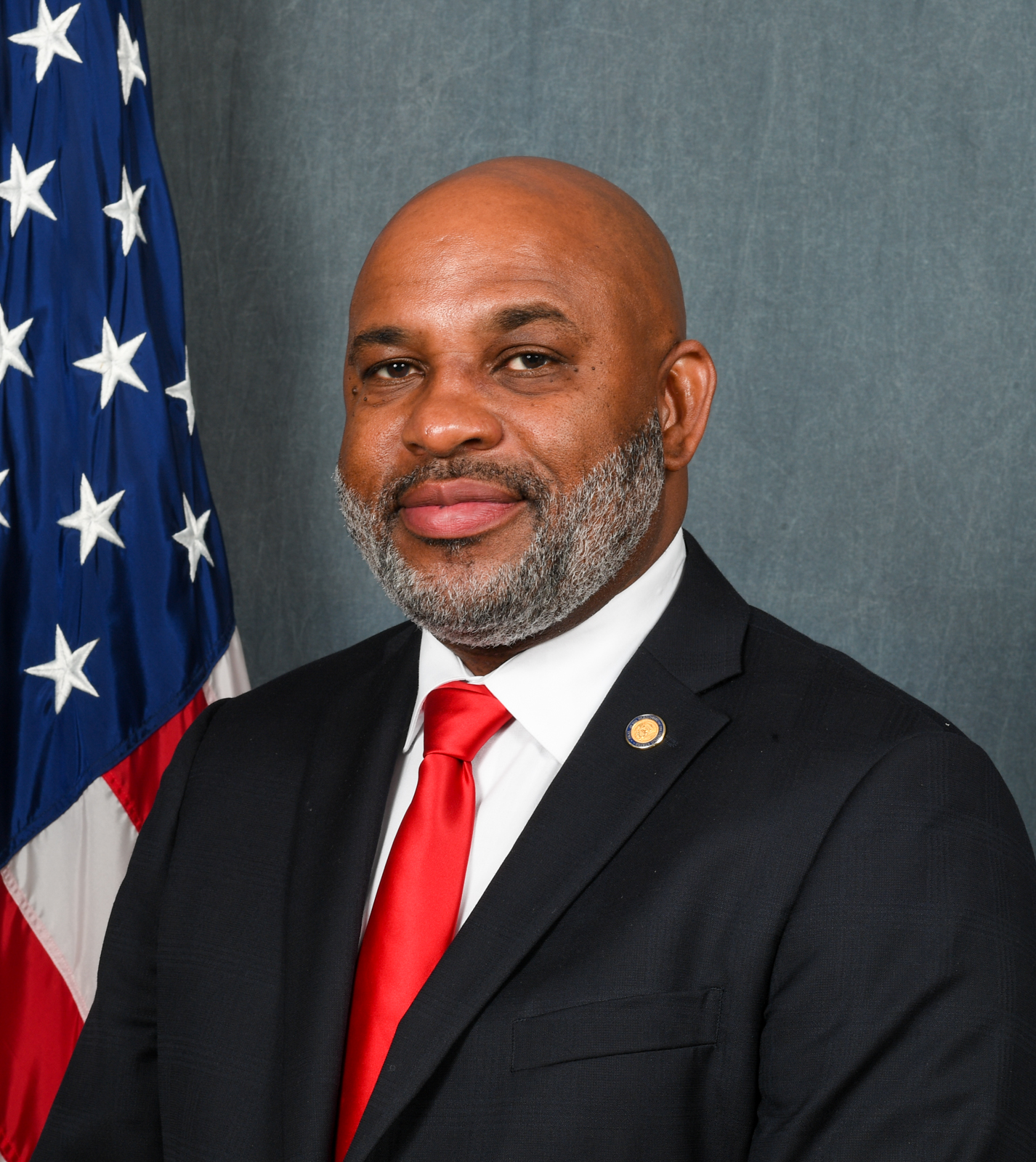
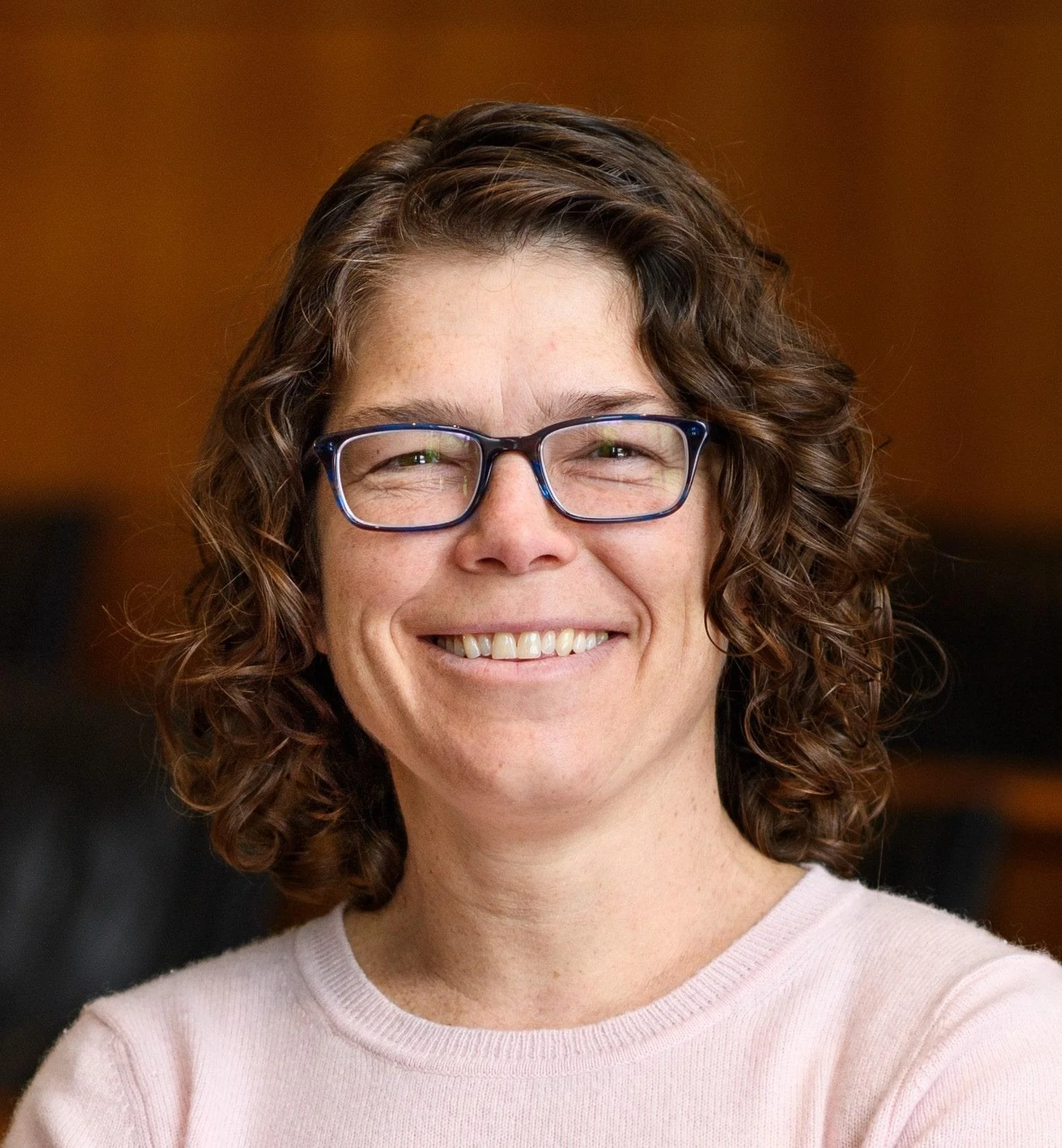
WASHINGTON — The Department of the Interior today announced that Bureau of Safety and Environmental Enforcement (BSEE) Director Kevin M. Sligh will depart his position effective September 6, after serving in the role for the past two and a half years. Kathryn (Kati) E. Kovacs, who serves as Deputy Assistant Secretary for Land and Minerals Management, will assume leadership of the bureau.

A cornerstone of Director Sligh’s tenure was a focus on the enhancement of BSEE’s emergency response capabilities. This included the first capping stack exercises in a decade, critical high-stakes operations designed to demonstrate the bureau’s readiness to rapidly seal off uncontrolled well blowouts on the Outer Continental Shelf (OCS). In addition, BSEE implemented improvements to its capabilities at its National Oil Spill Response Research and Renewable Energy Test Facility (Ohmsett), where new technologies and training are helping the United States and the international community better plan for and respond to oil spills and advance new renewable energy science and technologies. These efforts were essential in testing and proving BSEE’s ability to manage potential offshore incidents effectively, ensuring that the bureau and industry responders are equipped to act swiftly and efficiently if needed.

In her current role, Kovacs has had oversight over BSEE, focusing on their regulatory agenda. Thanks to both Kovacs’ and Sligh’s leadership during the Biden-Harris administration, the Department made significant progress in expanding its oversight of renewable energy sources, including the enactment of a final rule that transferred safety and environmental compliance responsibilities for offshore renewable energy from the Bureau of Ocean Energy Management (BOEM) to BSEE. The rule recognized that the scopes of the bureaus’ roles and responsibilities had matured since they were created more than a decade ago following the Deepwater Horizon tragedy and supports the Department’s commitment to independent regulatory oversight and enforcement in the renewable energy program.

Prior to joining the Department in April 2022, Kovacs was a professor of law at Rutgers University. Kovacs’ public service career also includes 12 years in the Department of Justice’s Environment and Natural Resources Division, Appellate Section and service as a senior advisor to the director of the Bureau of Land Management in 2016. Kovacs also served in the Baltimore City Law Department as an attorney and clerked for former Chief Judge of the Maryland Court of Appeals Robert C. Murphy. She is a graduate of Yale University and the Georgetown University Law Center.  

Interestingly, on 18 Sept., Ms. Kovacs will be making a presentation at the Case Western Reserve School of Law entitled Regulating Energy and Land Management at the Department of the Interior. There is no charge to register.
Read Full Post »

Culzean facilities

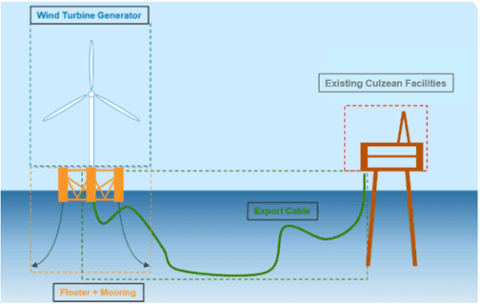
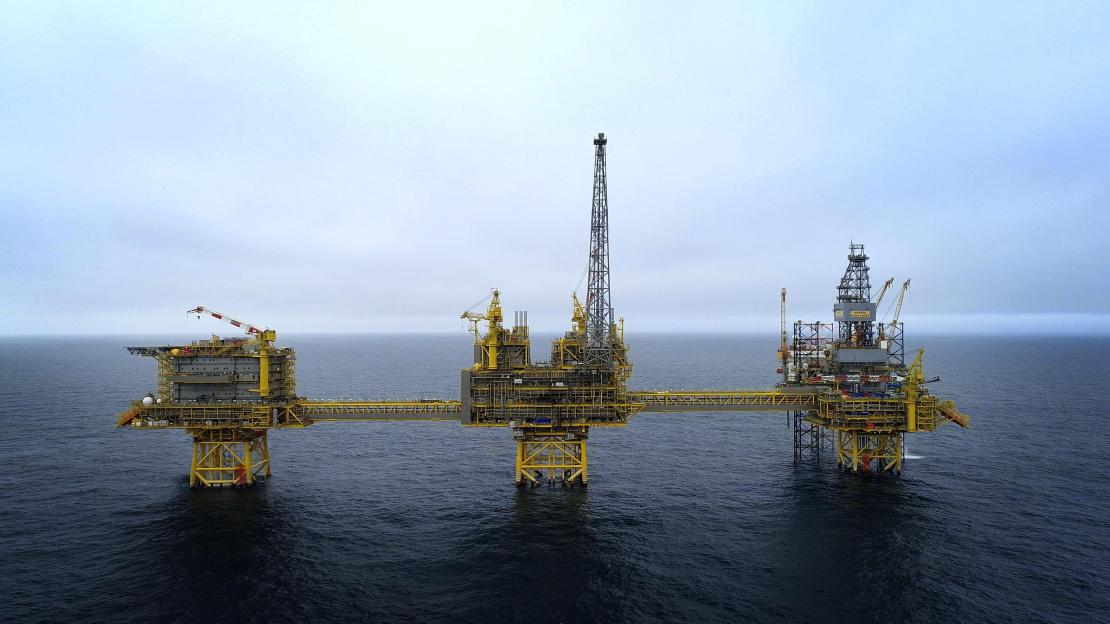
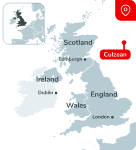
Total has announced plans to install a 3 MW floating wind turbine 2 km west of the Culzean platform, 220 km off the coast of Scotland. This turbine, expected to be fully operational by the end of 2025, will supply around 20% of Culzean’s power requirement. This project is interesting from an R&D standpoint, but makes little sense otherwise. Here’s why:

  • Culzean is a gas condensate field that is capable of meeting 5% of the UK’s gas demand. There is thus ample produced gas to reliably and economically power the platform.
  • Gas will be required to meet 80% of the power requirement even after the wind turbine is operating.
  • In light of installation, maintenance, and decommissioning costs for the floating turbine, the cost of the intermittent wind power will no doubt be much higher than the cost of the power generated by platform gas.
  • Some tax benefits may be associated with adding the wind turbine, but this won’t affect the real costs, other than to perhaps make them higher.
  • In addition to affecting profitability, higher operational costs could reduce the ultimate recovery of gas and condensate from the field.
  • Gas not consumed at the offshore facilities will be marketed and consumed onshore, so there is essentially no net reduction in global CO2 emissions.
  • As JL Daeschler reminds me, the floating turbine complicates operations and could create safety issues: obstruction for helicopters and supply boats to avoid, trenching and installing power cable in a spare “J” tube, and feeding power to an electrical distribution system in accordance with standards and platform specifications. As JL notes, “I think we have plenty to do offshore already!”
  • And what if there are mooring failures and the turbine drifts toward the platforms? Turbine blade failures?
  • Bottom line: adding costs and risks for no apparent benefit.

See a related post on platform electrification in Norway.

Read Full Post »

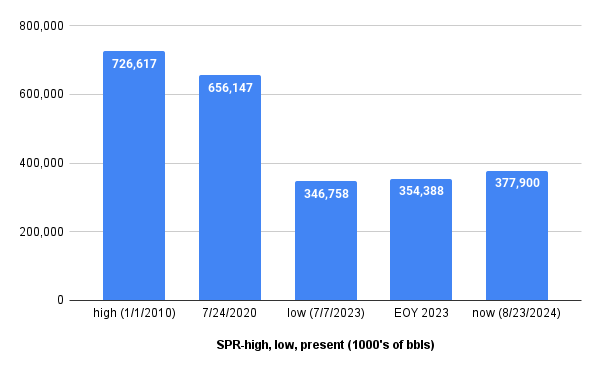
Given the relatively moderate oil prices during much of 2024, DOE has made some progress in adding to the Strategic Petroleum Reserve. However, the 31 million bbls added since July 2023 only amount to about 10% of the reserves withdrawn during the 3 years prior (July 2020 to July 2023) and about 4% of the SPR’s capacity.

Read Full Post »

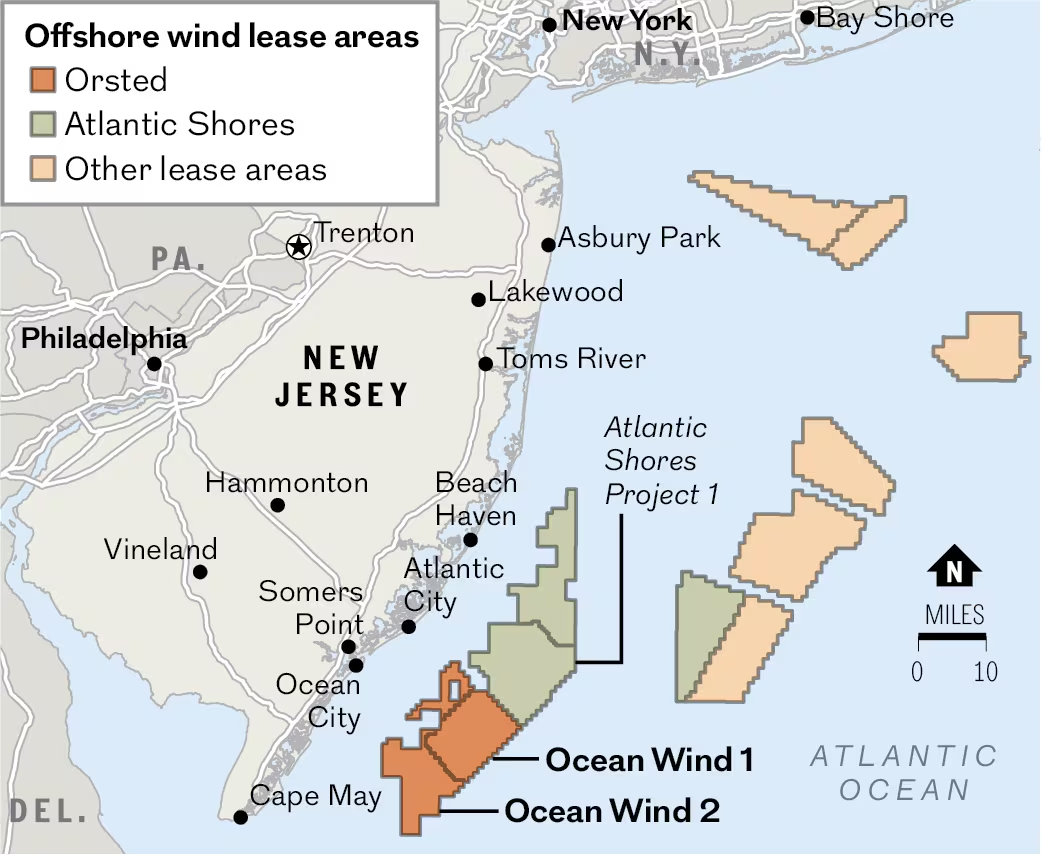
  • 10/31/2023: Citing economic factors, Orsted announces they “will cease development of the Ocean Wind 1 and Ocean Wind 2 projects.” (This should have resulted in termination of the leases.)
  • 1/19/2024: Orsted requests a 2 year “suspension of operations” to extend the leases they had ceased developing. (Presumably, this was a hedge with hopes of marketing the leases or getting better terms.)
  • 2/29/2024: True to form, BOEM approves the questionable 2 year suspension request. The approval letter was dated one day before the leases’ 8th anniversary when they would have presumably expired. (This is unconfirmed because the lease document and BOEM’s wind regulations lack clarity regarding lease expiration.)
  • BOEM’s approval letter (attached) curiously asserts that “suspension of the operations term is necessary for the Lessee’s full enjoyment of the lease in this circumstance to ensure sufficient time for project operations in support of the Project’s economic viability.” (Interesting wording that expresses the accommodative and promotional philosophy of the Federal wind program.)
  • 8/14/2024: The New Jersey Board of Public Utilities formally vacated all of its Orders that approved the Ocean Wind One and Ocean Wind Two offshore wind projects.
  • 8/14/2024: Cape May County comments that they are likely to amend their Federal Court filings “since the actions of the NJBPU would appear to have nullified Orsted’s federal permits.”
  • 8/27/2024: Despite the fact that Orsted has ceased development and New Jersey has vacated its approvals, the Federal leases are still active.
  • Good luck keeping an oil and gas lease if you cease development and request a suspension of operations. BSEE will rightfully deny your request.

Read Full Post »

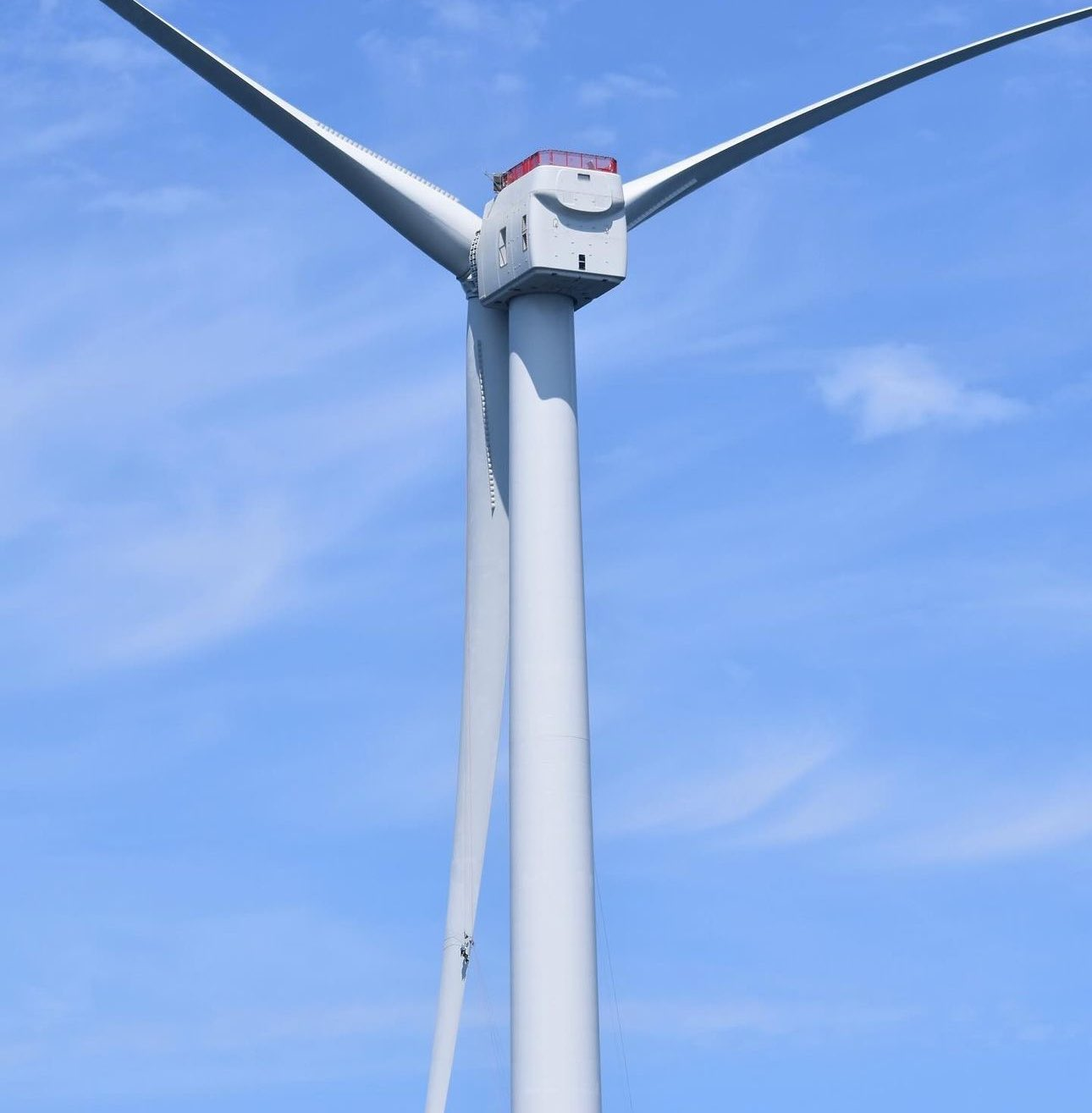
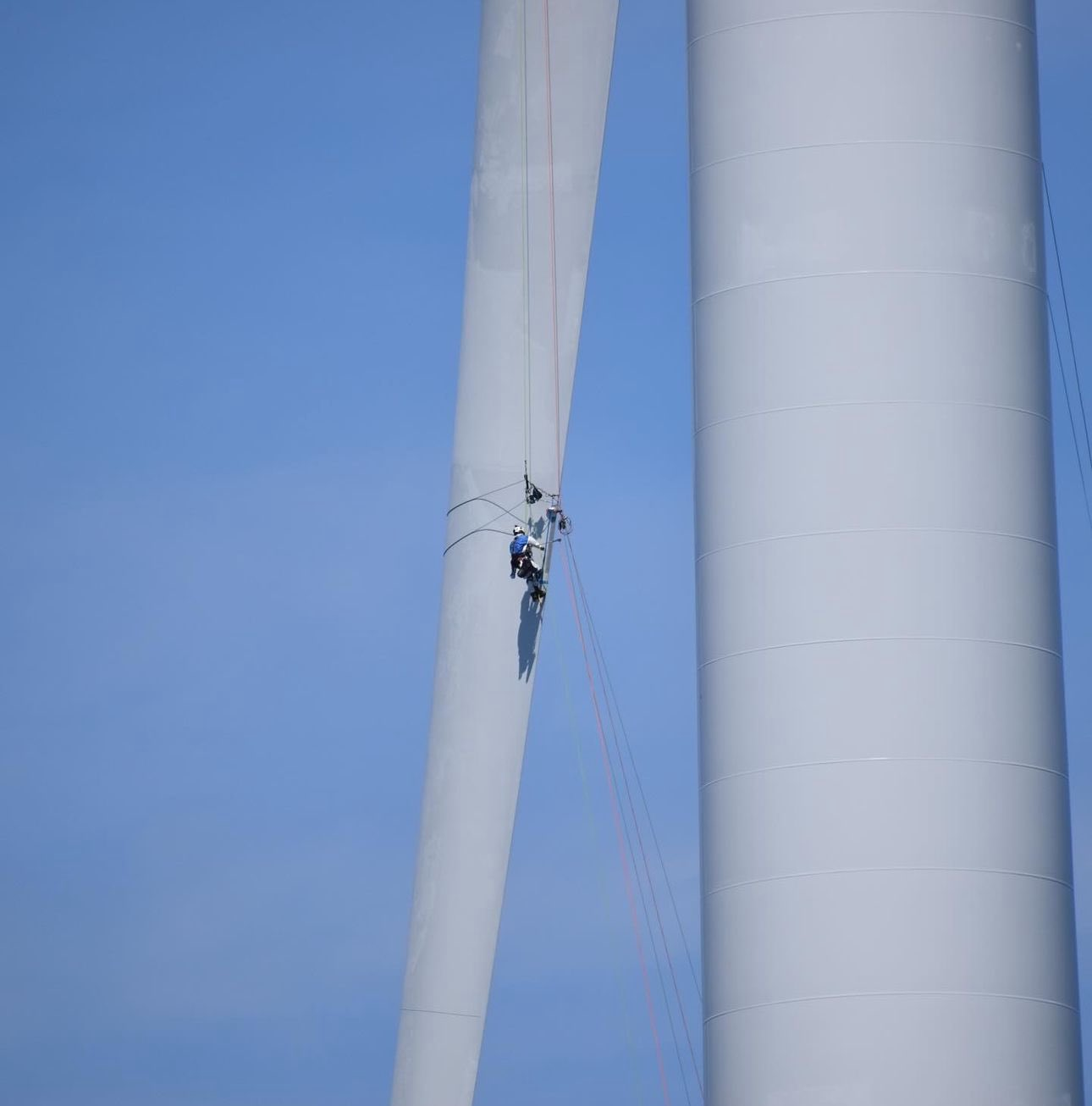
This real-life Spider-Man, seen on a Vineyard Wind turbine blade, is Tyler Paton. Tyler is an independent composite specialist who inspects and repairs blades on site. The Nantucket Current shared these images on X.

posted by Brian J @Mainsail23

Read Full Post »

  • The “highly unusual and rare” talking point for turbine blade failures seems to have finally been discarded.
  • 3 new GE Haliade-X blades failed shortly after installation at Dogger Bank and Vineyard Wind. A total of only 48 turbines had been installed.
Offshore wind projectHaliade-X turbines installedblade failures
Dogger Bank272
Vineyard Wind211

Read Full Post »

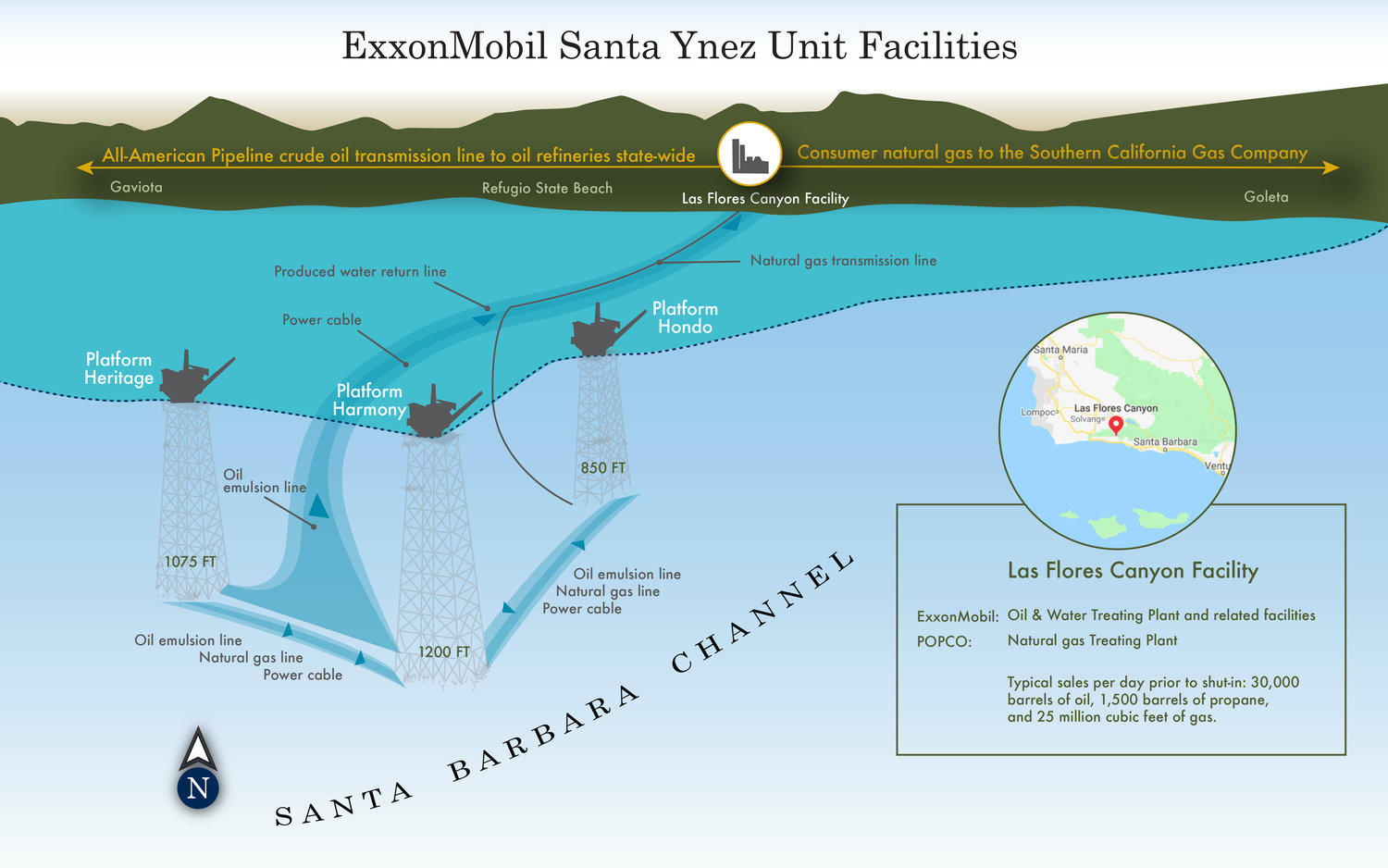
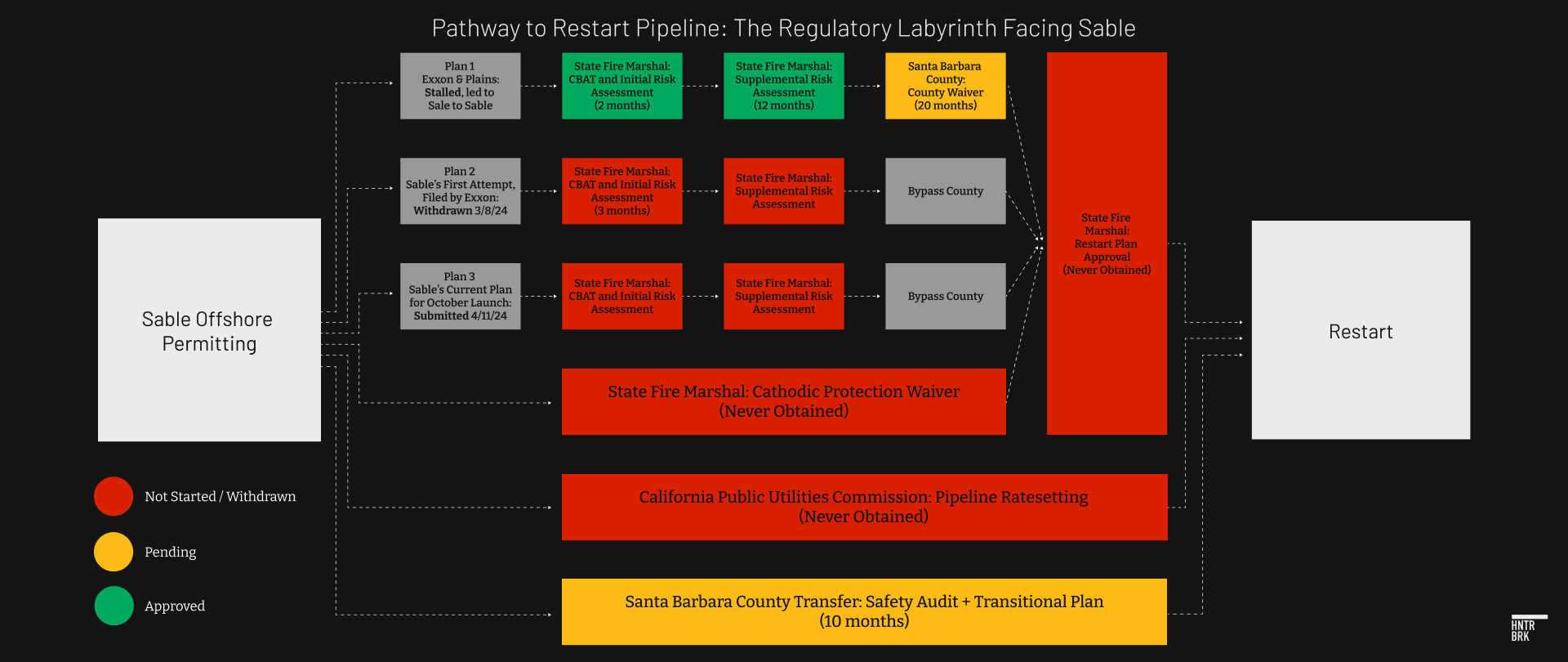
Earlier this year John Smith correctly commented that a Santa Ynez Unit (SYU) production restart in 2024 was not possible. Last month, BOE reported on the regulatory “catch 22” facing Sable Offshore, the current operator under an agreement with Exxon.

An assessment prepared for Hunterbrook Capital draws the same conclusions regarding the prospects for production, calling the restart “a pipe dream” (presumably the pun was intended given the pipeline permitting quagmire). Hunterbrook’s chart (pasted below) illustrates the regulatory labyrinth facing Sable.

Hunterbrook has also flagged Sable’s ability to continue as a “going concern.” That may be a valid concern, but Sable’s success is very much in Exxon’s best interest. Exxon must have evaluated Sable and been comfortable with their management. Otherwise, they wouldn’t have made the deal.

Does Exxon want the massive SYU headache to revert back to their portfolio, as provided for in their agreement with Sable, if production doesn’t restart by January 1, 2026? Unless Exxon thinks they have a better option than Sable, they will presumably be flexible about the deadline.

Meanwhile, a judge denied the temporary restraining order requested by Sable to prohibit release of redacted portions of their oil spill contingency plan. Sable had argued that revealing “trade secrets” and specific locations and vulnerabilities of the pipelines could pose a “threat to national security.”

The Santa Barbara Independent also alludes to “pending litigation with Santa Barbara County over automatic shut-off valve permits.” Although litigation would seem likely if the County continues to deny permits for valves required by the Fire Marshall, BOE was unable to confirm any such litigation plans.

Read Full Post »

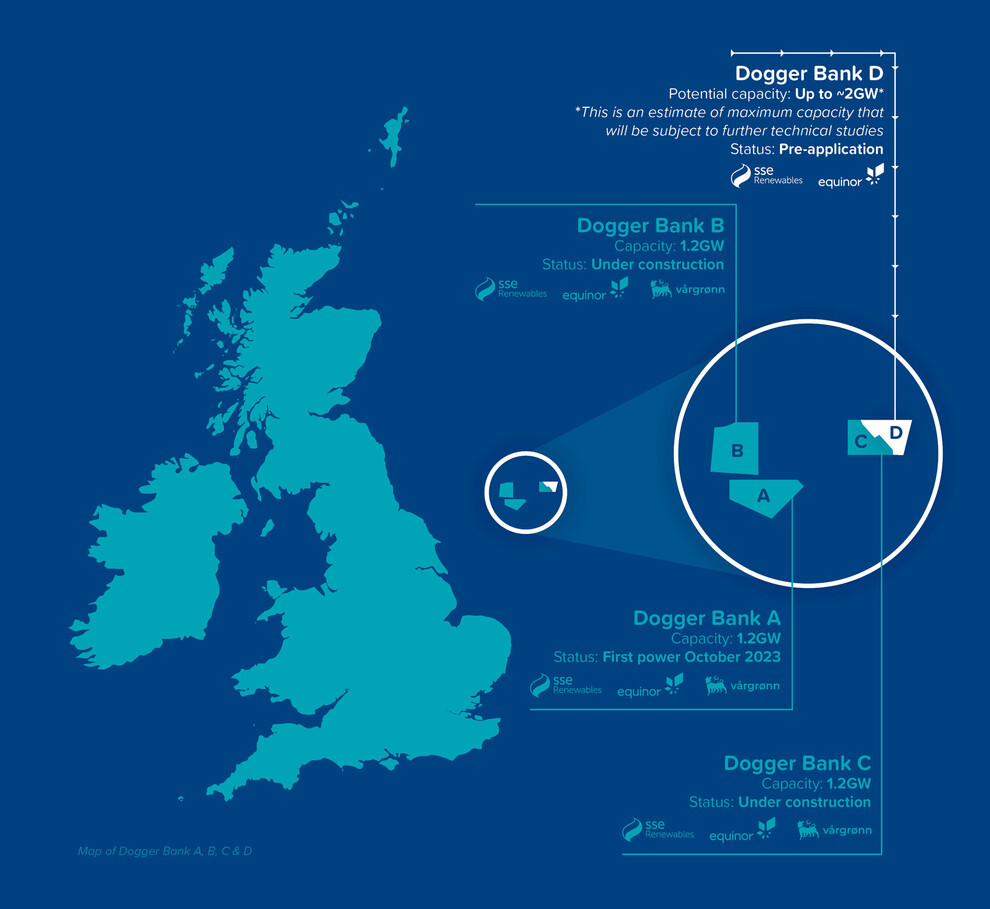
The operator of the wind farm released this short statement yesterday (8/22/2024):

We are aware of a blade failure which occurred this morning on an installed turbine at Dogger Bank A offshore wind farm, which is currently under construction. In line with safety procedures, the surrounding marine area has been restricted and relevant authorities notified. No one was injured or in the vicinity at the time the damage was sustained.

We are working closely with the turbine manufacturer, GE Vernova, which has initiated an investigation into the cause of the incident.

Further updates will be issued in due course as more information becomes available.

There have thus been at least 3 GE Vernova Haliade-X turbine failures at new offshore wind farms in 2024 – two at Dogger Bank and one at Vineyard Wind.

Read Full Post »

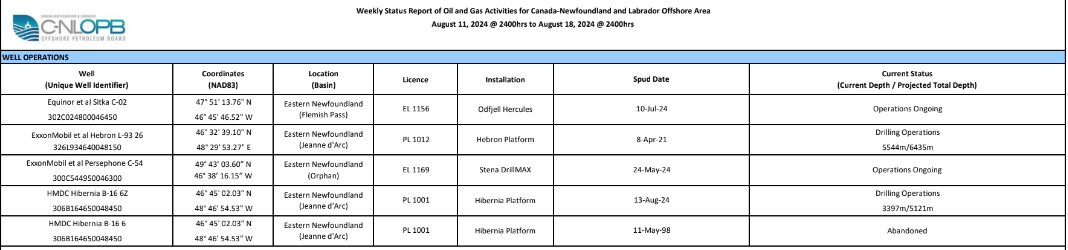
To find the sole exploratory well being drilled in the vast North American Atlantic, you have to exit “wind-only” US waters, head NE to St. John’s, NL (advancing your watch by 1.5 hours 😉), and transit another 317 miles NE to the Stena DrillMAX working for Exxon in the Orphan Basin.

The latest (8/20/2024) CNLOPB report (below) is that operations are ongoing. The well was spudded 3 months ago. That is about all they can disclose without compromising confidentiality. Even seemingly innocuous information like the current and projected well depth provides the opportunity to speculate about geologic conditions and current well activities.

We can assume that there have been no safety or environmental incidents to date, because the CNLOPB does a good job of posting such information in a timely manner.

Previous posts on this well

Read Full Post »

From Oil Now Guyana:

In the evolving landscape of Guyana’s oil and gas industry, few have managed to carve out a niche quite like Koaito Grant. A name synonymous with corporate photography, Grant’s journey from discovering his passion for capturing moments to becoming a sought-after photographer within the oil and gas sector is as inspiring as it is instructive.

So true: “It’s the best feeling when a client reaches out and says you were very highly recommended by this or that person.” His professionalism and work ethic have been key differentiators. “I have a client that always asked if I was Guyanese because I’m always early for all projects and activities.”👍 💯

Read Full Post »

Older Posts »