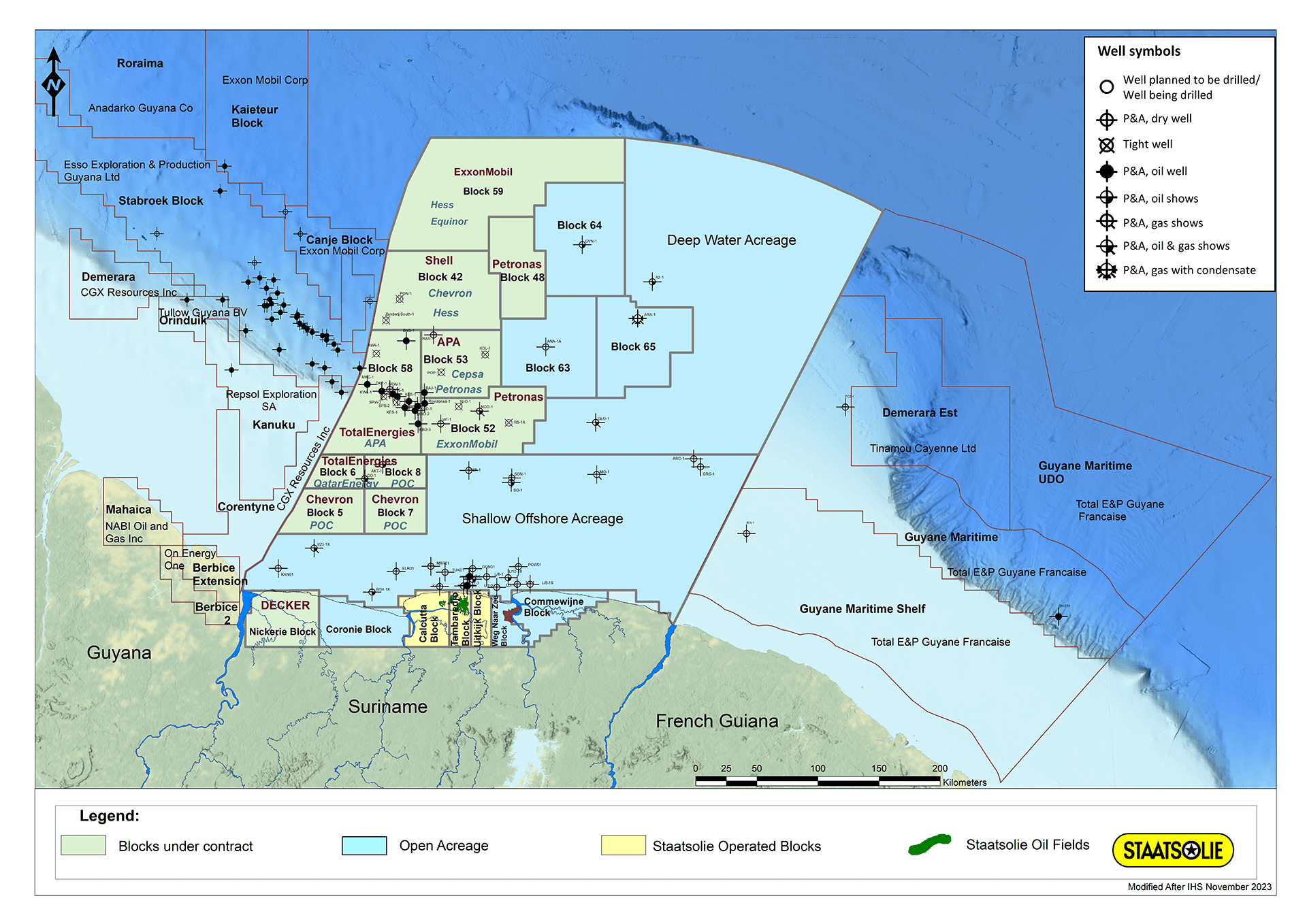
Through the PSCs, Staatsolie extends the rights for exploration, development and production to these companies. The costs and risks during the exploration period are fully covered by the latter. The exploration period consists of three phases and will last seven years. An exploration well will be drilled in both Block 64 and Block 65 in the first phase, which will last three years. In Block 63 the first exploration well follows in the second phase of the exploration period. In the event of an oil or gas discovery that is declared commercial, Staatsolie has the right to participate in all three blocks for a maximum of twenty percent from the development period
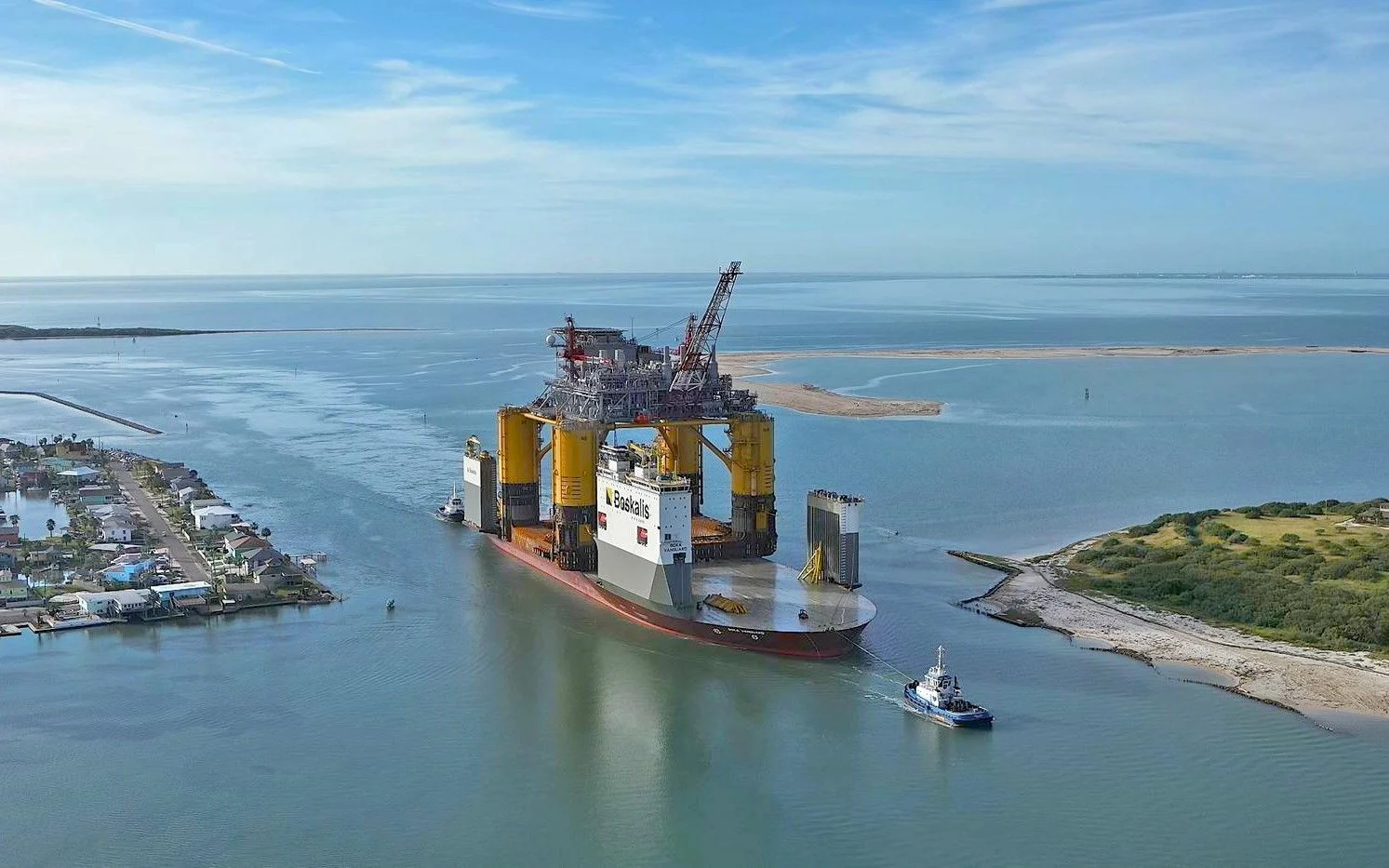
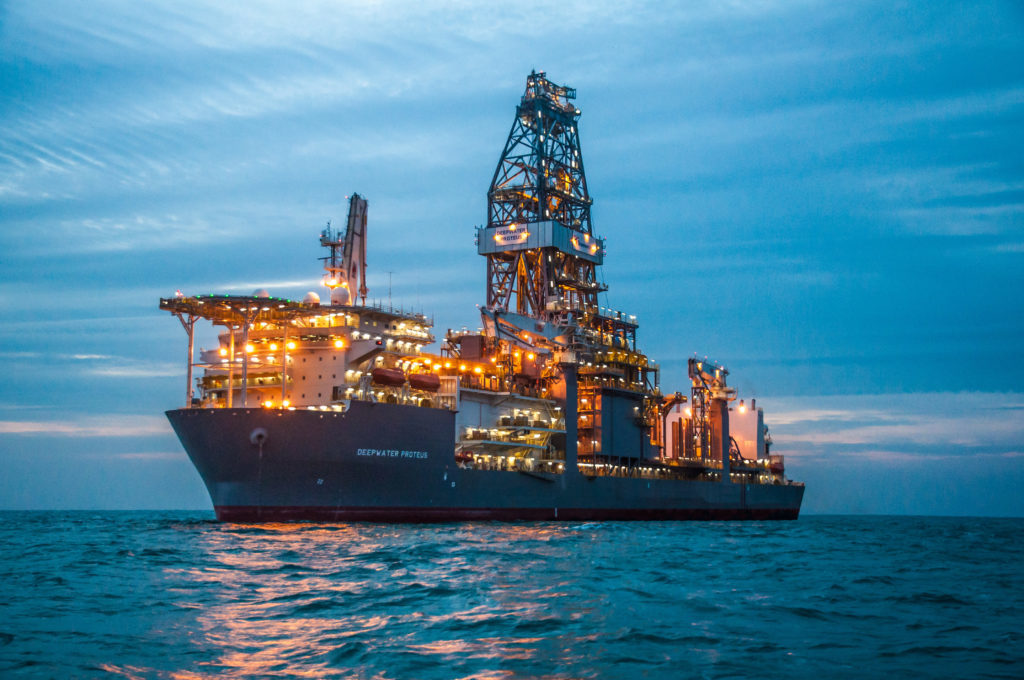
Lars Herbst noted another endangered whale sighting by the US Coast Guard. Unlike their erroneous Rice’s whale report in September (still waiting for their mea culpa), the Coast Guard has gotten this one right. The 25,000 ton Whale is pictured above.
Whale’s species is indeed endangered with the most serious threats coming from a faraway place on the Potomac River. The “newborn” Whale is one of only 15 of its species in the Gulf of Mexico. The entire platformus deepis genus numbers only 59, but their importance to society is enormous (read more).
Perhaps the wise people who control our offshore lands will do more to encourage and support these floating behemoths. Unfortunately, their 5 year management plan is not encouraging in that regard.
Pictured: Transocean’s Deepwater Proteus. T/O should name one of their drillships Deepwater Diligence 😉
Seven of the deepwater exploratory wells drilled in the Gulf of Mexico in 2023 (YTD) were spudded within 4.5 years of the effective date of their leases. Three of these wells were spudded within 3 years of their lease effective dates (see table below).
These are impressive achievements when you consider the time required for consultation with partners (if any) and contractors, site surveys, exploration plan development and approval, well planning, and drilling permit preparation and approval.
The subject wells accounted for 28% of thedeepwater exploratory well starts in 2023 (25 net YTD wells after subtracting restarts at the same location).
date lease effective
spud date
elapsed time (months)
water depth (ft)
operator
3/1/2021
8/27/2023
30
6498
Shell
8/1/2020
5/21/2023
34
2211
Talos
8/1/2020
3/15/2023
31
3338
Talos
12/1/2019
6/5/2023
42
4228
Chevron
11/1/2019
6/1/2023
43
4603
Hess
7/1/2019
7/11/2023
48
7486
Kosmos
12/1/2018
6/6/2023
54
4127
bp
Below are the exploration plan (EP) and permit (APD) approval timeframes for these 7 wells. With the exception of the Kosmos EP which required a number of modifications, the regulator actions appear to have been timely. For the bp, Shell, and Chevron wells, only 4-6 months elapsed between EP submittal and APD approval.
operator
block
date EP received
date EP approved
APD received
APD approved
Shell
WR 365
3/1/2023
5/17/2023
5/11/2023
8/8/2023
Talos
GC 78
1/19/2021
4/16/2021
3/8/2023
5/26/2023
Talos
MC 162
4/1/2022
7/13/2022
8/2/2022
3/2/2023
Chevron
MC 937
12/7/2022
5/19/2023
4/21/2023
5/21/2023
Hess
MC 727
8/30/2022
11/3/2022
12/21/2022
4/24/2023
Kosmos
KC 964
1/3/2020
10/12/2022
4/18/2023
7/3/2023
bp
GC 436
1/18/2023
4/14/2023
3/29/2023
6/5/2023
Notes: EP=Exploration Plan, APD=Application for Permit to Drill, WR=Walker Ridge, GC=Green Canyon, MC=Mississippi Canyon, KC=Keathley Canyon
Per the BSEE borehole file, there were 2 deepwater exploratory well starts since 4/1/2023. The Shell well is another GoM milestone in that it is the 150th well spudded in >8000′ of water. The first was in the year 2000.
Operator
spud date
location
water depth
Chevron
5/5/2023
Mississippi Canyon 608
6678′
Shell
4/13/2023
Alaminos Canyon 728
8660′
Arena and Cantium continue to drive shelf drilling. Below are the shelf development wells since 4/1/2023:
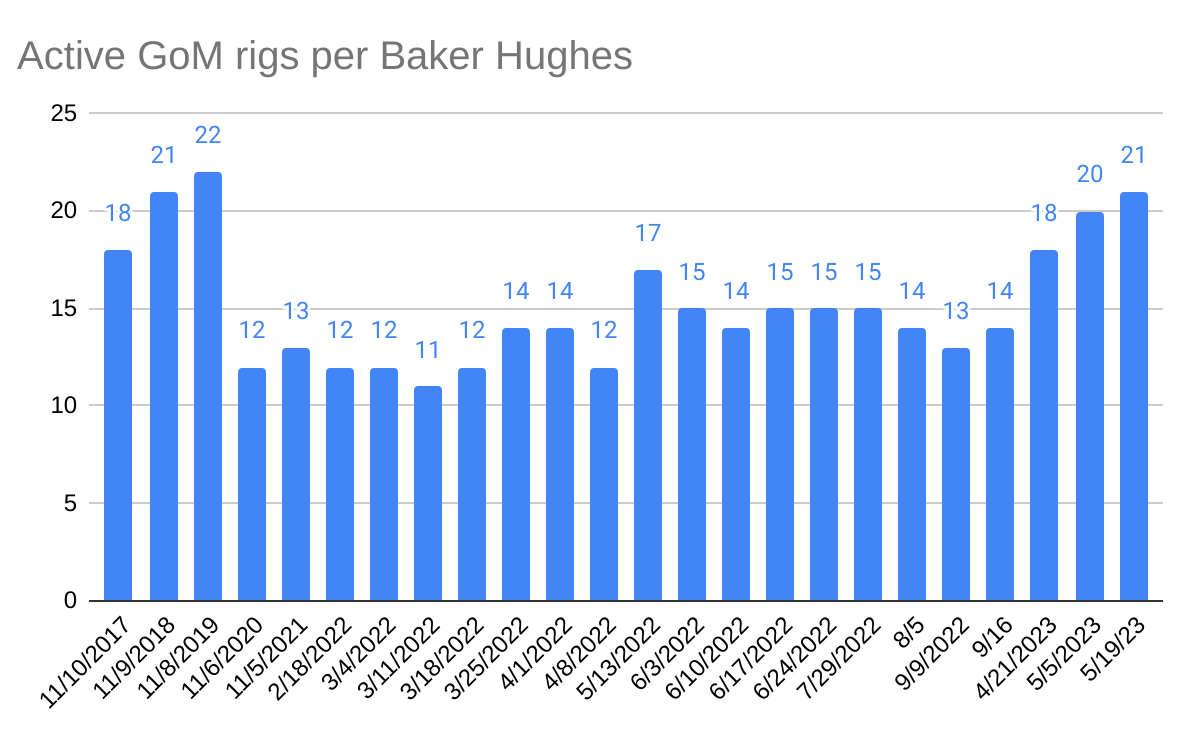
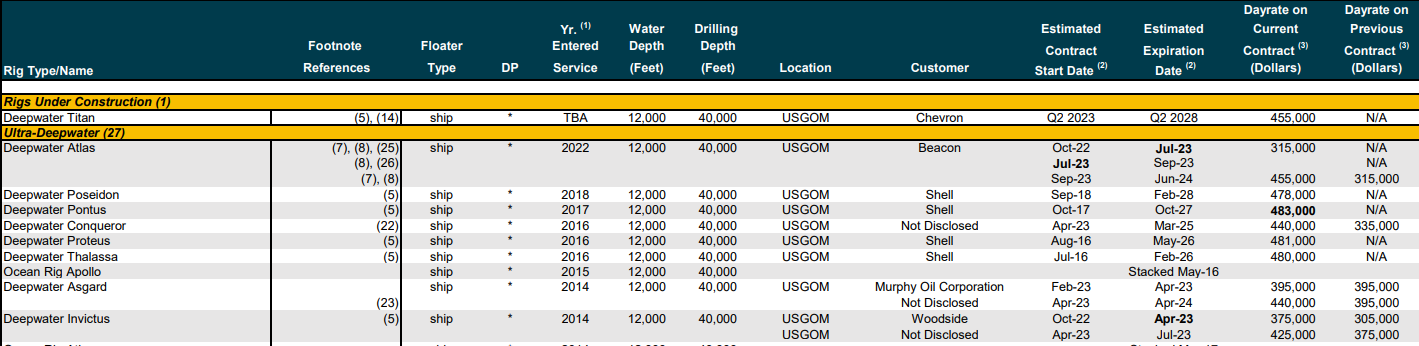
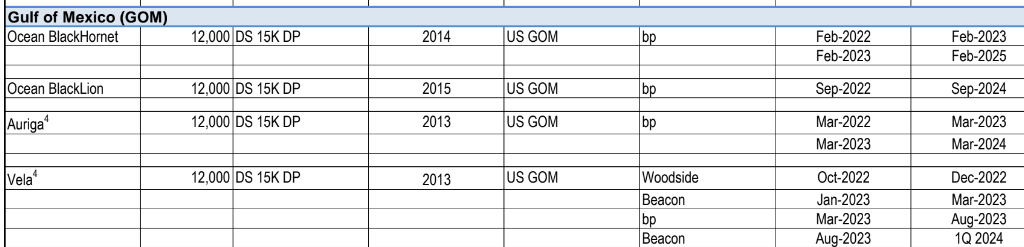
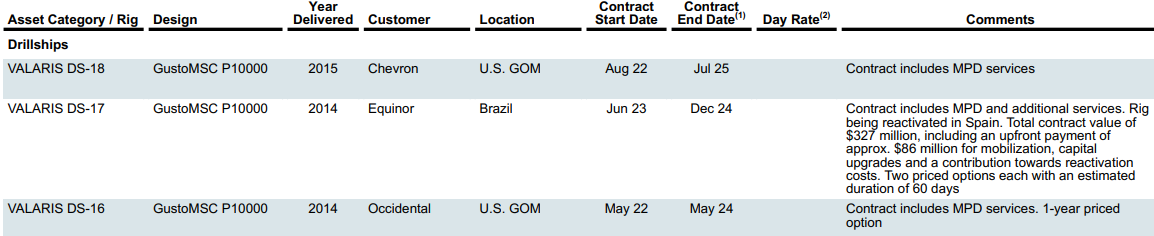
Based on drilling contractor rig activity reports, the table below lists 19 deepwater MODUs under or soon to begin contracts in the GoM. (Further details are pasted at the end of this post.) Per the Valeris report, platform rigs are operating on bp’s Thunder Horse and Mad Dog platforms. Per the BSEE borehole file, Arena and Cantium continue to drill development wells on the GoM shelf.
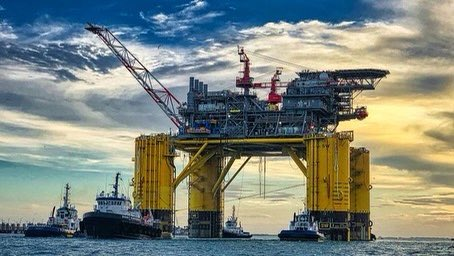
Prior to the installation of these platforms, the last deepwater platform addition was Shell’s Appomattox in 2018. That gap in deepwater platform installations was the longest since Bullwinkle was installed in 1988.
The 5 new structures will increase the deepwater platform count by 9% from 56 to 61, and in the next few years should account for approximately 1/4 of GoM oil production.
Exxon doubled down on their strategic CCS bidding; their only bids (69 in total) again appeared to be solely for carbon sequestration purposes. As previously noted, acquiring tracts for CCS purposes is not authorized in an oil and gas sale. Arguably, these bids should be rejected.
The other super-majors, BP, Chevron, and Shell, were active participants as were many independents.
It was good to see BOEM Director Liz Klein announcing bids. This shows respect for the OCS oil and gas program.






 Bud's Offshore Energy (BOE)