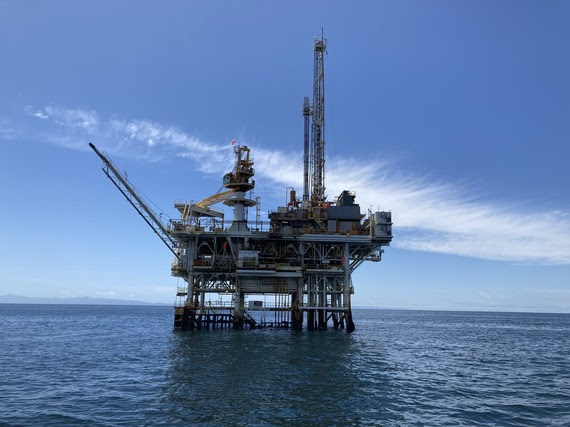
John comments that the project description, which calls for removing the jacket, seep tents and pipelines, and partially removing the upper 5 feet of the 23-foot-high shell mounds, does not make much sense given the abundant fish and invertebrates that reside on or around the platform jacket.Cutting the jacket off 85 feet below the water line and converting the remaining structure to an artificial reef would make more sense and should have been designated the proposed project.
The plan is to send the materials to the Ports of Long Beach, Los Angeles or Hueneme or possibly Ensenada, Mexico. The project involves complex logistics and is going to be a very long (3 years), ambitious and expensive project that will likely set a precedent for future platform decommissioning projects.
According to their agreement with the CSLC, Exxon is responsible for the decommissioning costs.
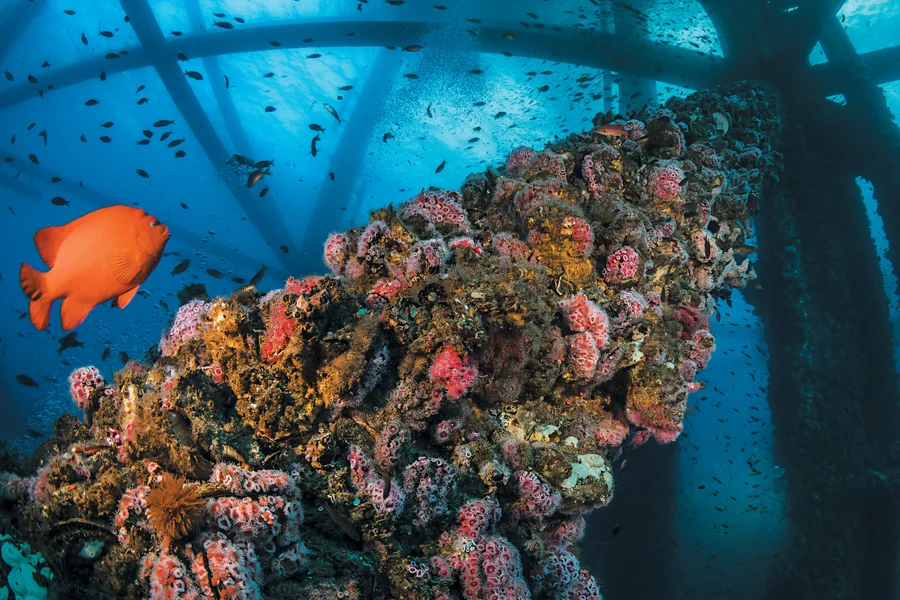
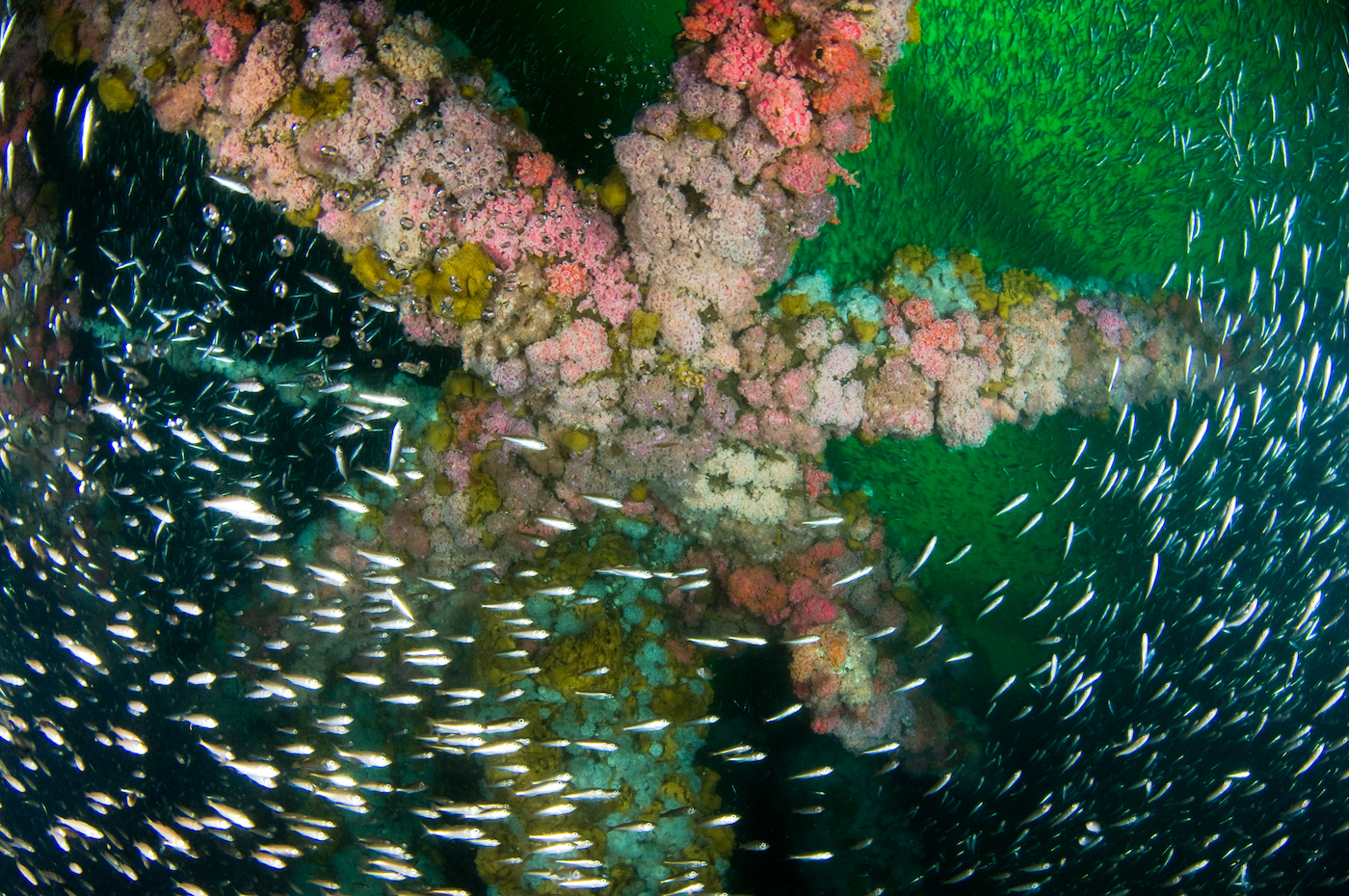
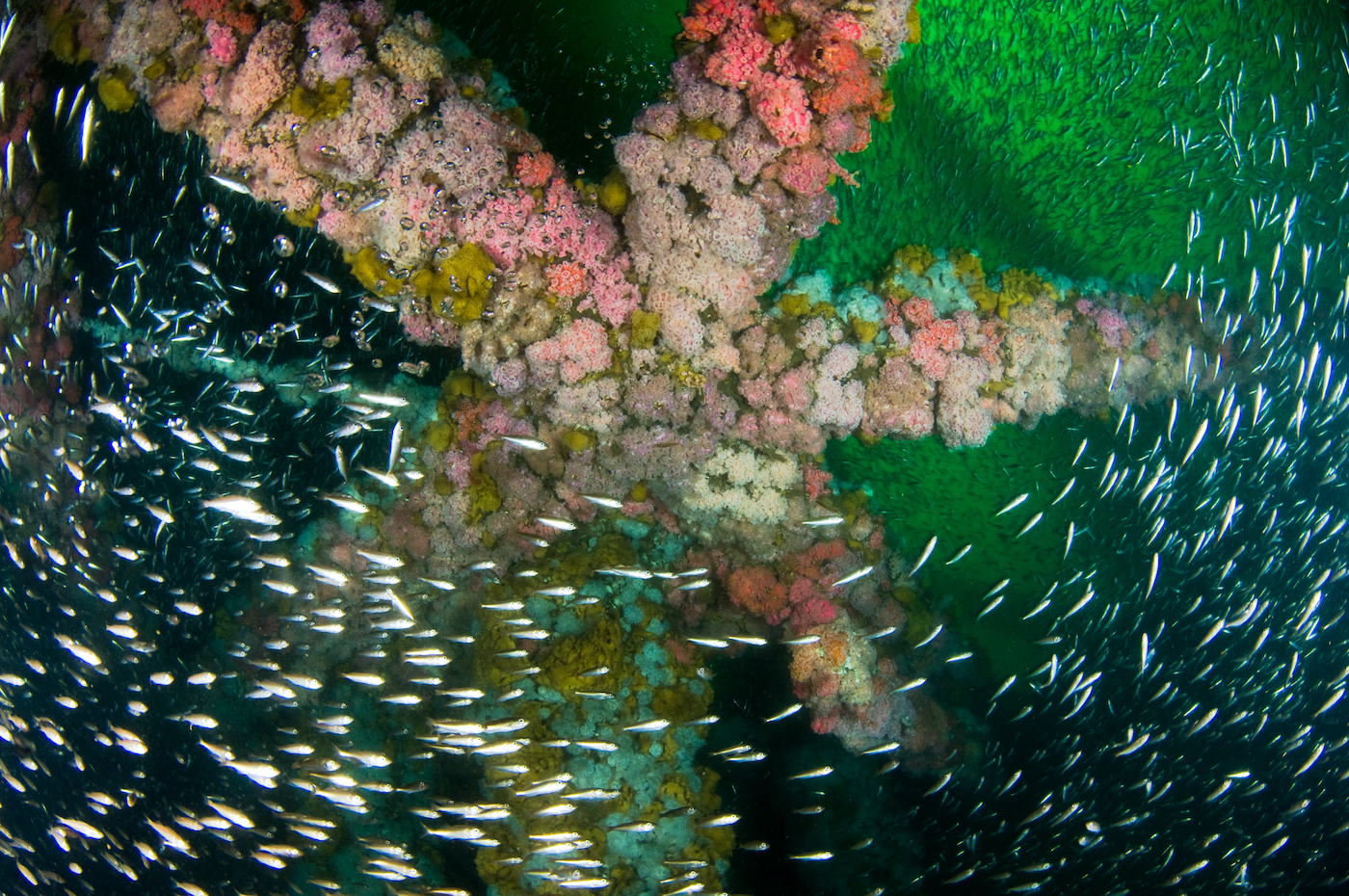
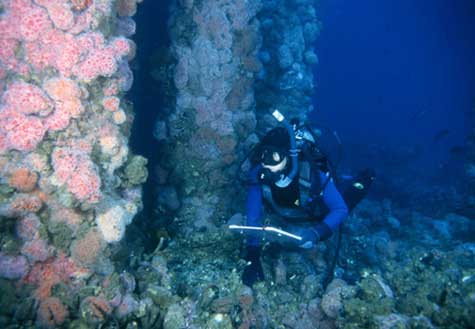
Scientific American: The steel “jackets” that support California’s offshore oil platforms are covered in millions of organisms and provide habitat for thousands of fishes. Joe Platko
“The Santa Barbara Channel has been dubbed the Galápagos of North America” ~ Maggie Hall, Environmental Defense Center attorney. (comments: 1. clever branding ala calling ANWR “America’s Serengeti!;” 2. no natural oil seeps in the Galapagos Islands; 3. 130 years of oil production history in the Channel)
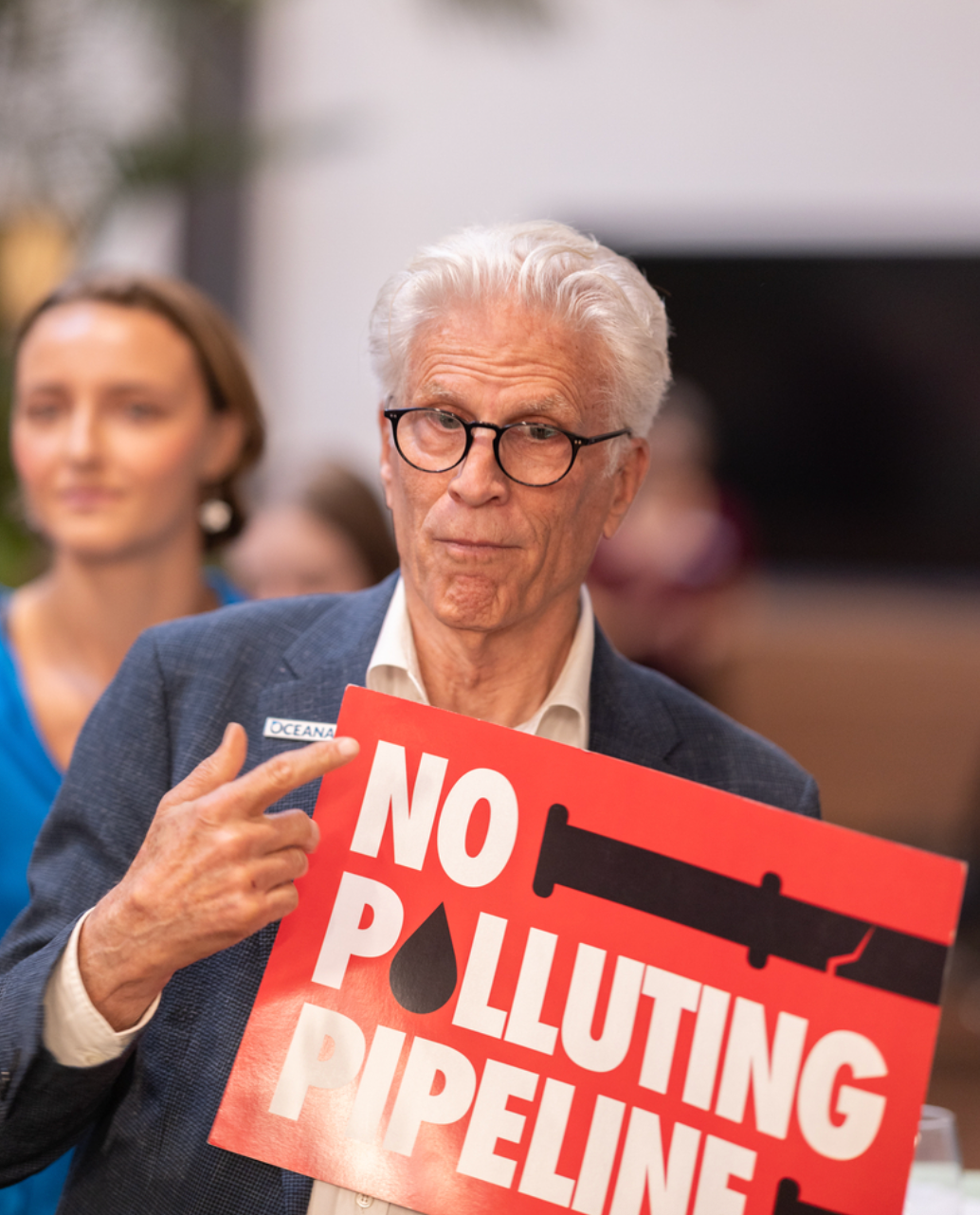
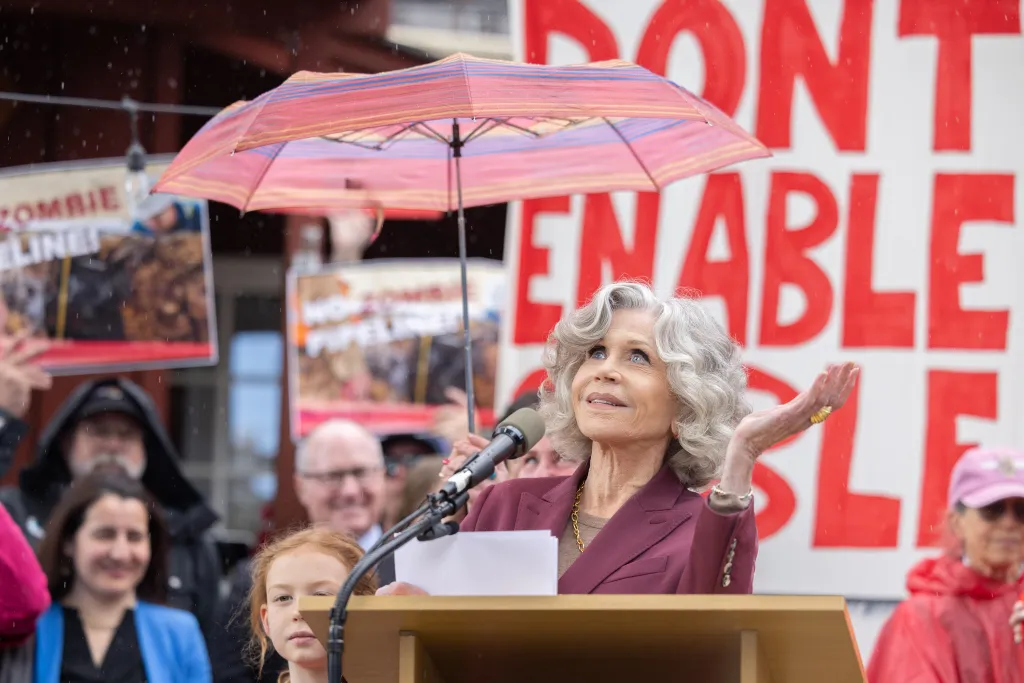
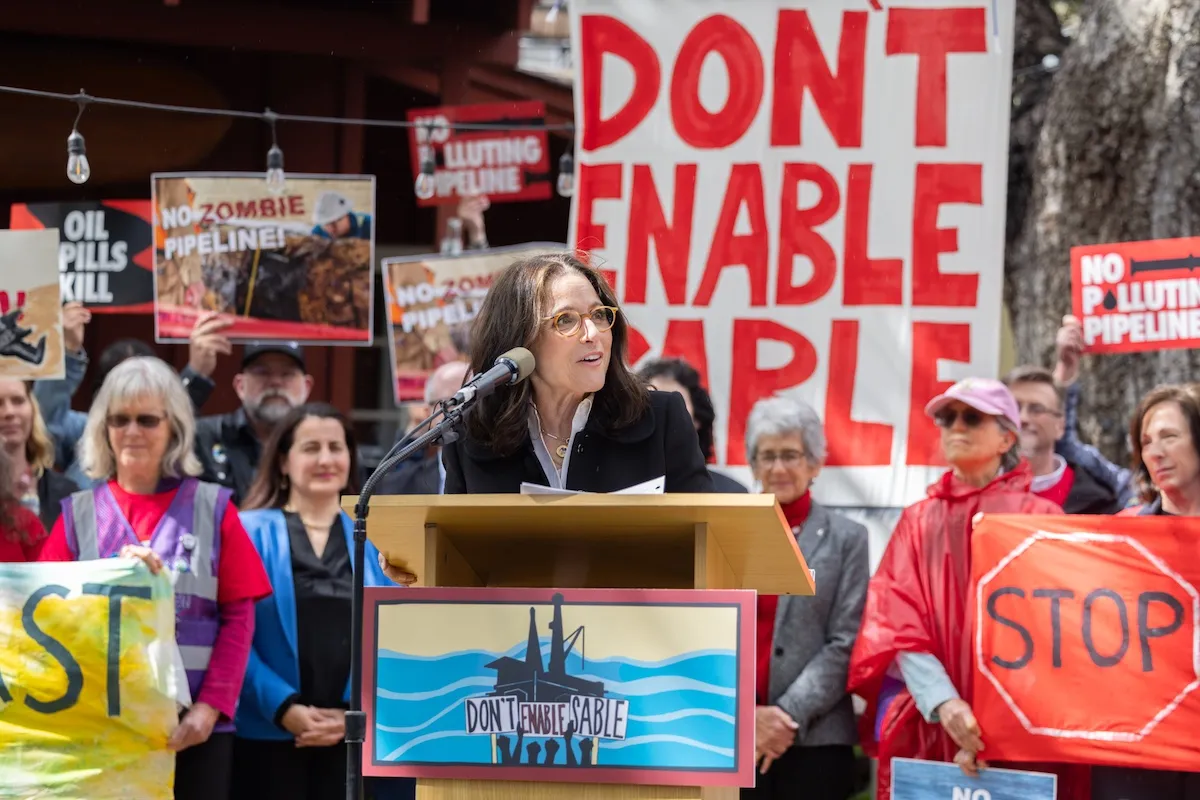
Sable opponents organize entertaining rallies featuring famous celebrities:
Ted Danson Jane FondaJulia-Louis Dreyfus
Meanwhile, Sable has some starpower of its own with strong public support from golfer Phil Mickelson.
Senior Federal officials and key agencies are outspoken Sable supporters:
“Only in California! Newsom is blocking oil production off California’s coast from reaching their own refineries, driving gasoline prices even higher for Californians! Now, this oil production will have to be shipped elsewhere, lowering gas prices for other areas— just not for California! This is the opposite of common sense!” ~ Energy Secretary Chris Wright
BSEE declared victory 6 months ago: “This is a significant achievement for the Interior Department and aligns with the Administration’s Energy Dominance initiative, as it successfully resumed production in just five months.”
Perhaps most entertaining are the exchanges on X between Sable bulls and short-sellers. A few examples are embedded below:
Listen Lassy, you could take your signing bonus and have $10 million in cash right now. But that’s short term thinking. Once Big Daddy Trump gets the regulations fixed Sable stock will be worth 50, 60, maybe even 100x that. We’ll be sipping Coffee for Wellness on our yachts in… pic.twitter.com/H2le8c0otE
Good luck but this stock & company are train wrecks. I live close to pipeline so state, local opposition to a restart remains steadfast. Here’s latest news, do your homework.https://t.co/ZfKSKwwrcW
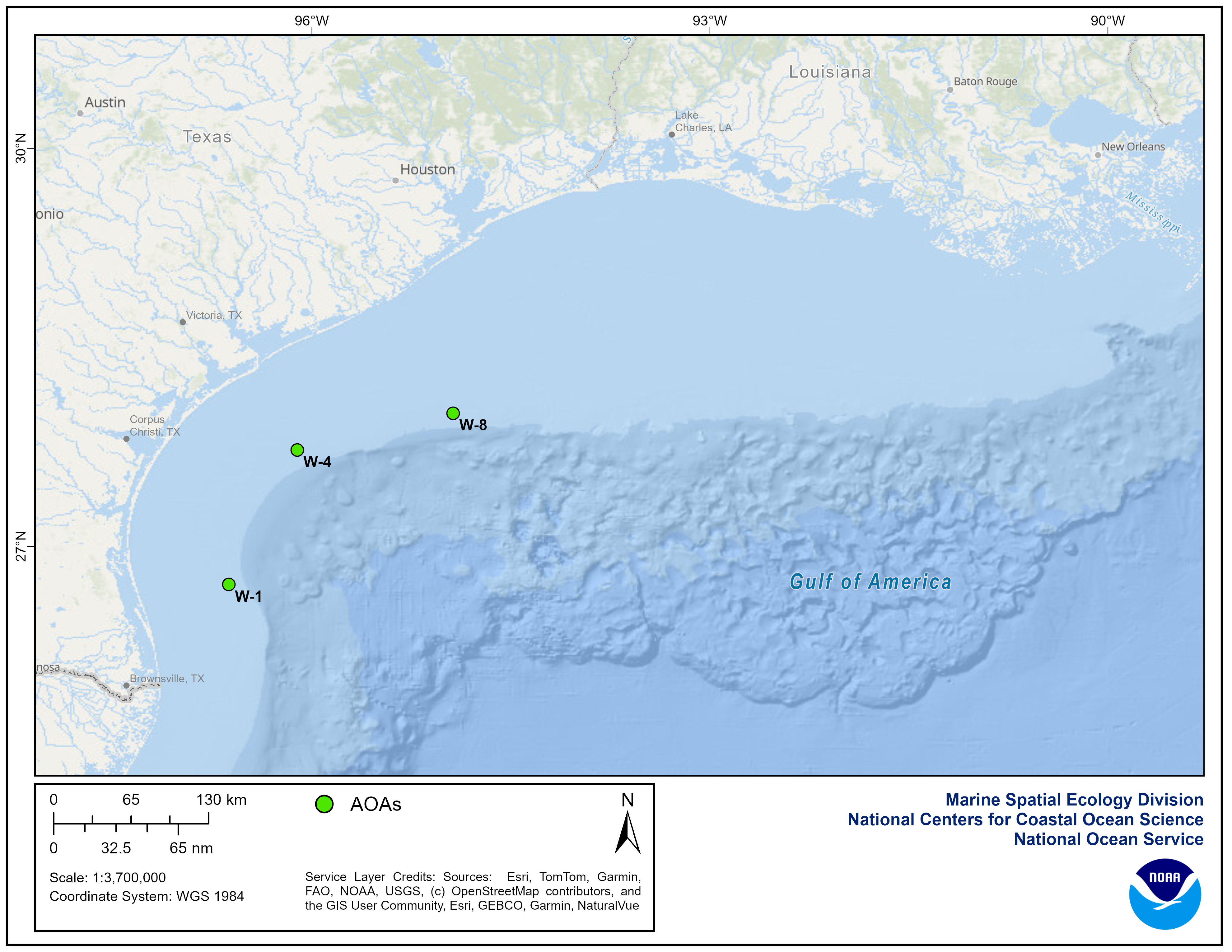
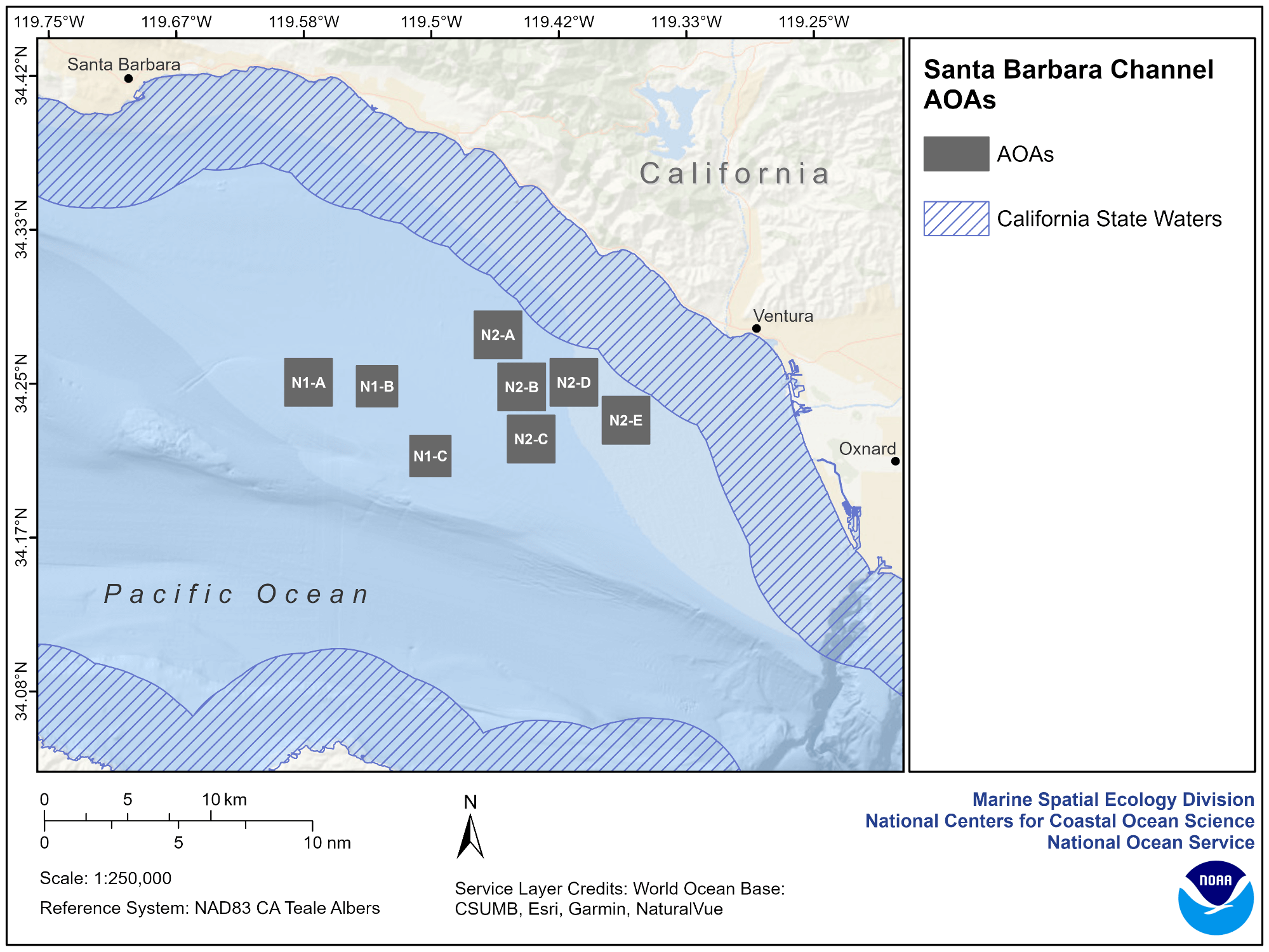
NOAA is touting marine aquaculture and has published Programmatic Environmental Impact Statements for Aquaculture Opportunity Areas (AOAs) in the Gulf of America and offshore Southern California. This is a positive step.
While the focus of these EIS documents is on distinct AOAs separated from oil and gas facilities, NOAA might also have discussed the potential for synergy with existing platforms. The reef effect of platforms can be sustained and new fishery ventures supported by converting older platforms to aquaculture facilities (Rigs-to-Roe/Redfish/Rockfish) rather than decommissioning them.
According to a paper published in 2014 by marine ecologist Dr. Jeremy Claisse of Cal Poly Pomona, the oil and gas platforms off the coast of California are the most productive marine habitats per unit area in the world. “Even the least productive platform was more productive than Chesapeake Bay or a coral reef in Moorea,” said Dr. Love. (Milt Love, UCSB biologist)
Inexplicably, BSEE’s ROD designates the most environmentally harmful, unsafe, and costly alternative as the “preferred alternative.” The decision is contrary to the opinions expressed by the leading experts on the ecology of California offshore platforms, most notablyDr. Milton Love of the University of California at Santa Barbara.
Why did BSEE select alternative 1 (complete removal) when their $1.6 million EIS acknowledges that alternative 2 (partial removal) is environmentally preferable? Was their decision influenced by activists who support the alternative that is most punitive to the industry they despise?
“On December 7, 2023, the Bureau of Safety and Environmental Enforcement (BSEE) issued a Record of Decision (ROD) recommending the full removal of California’s 23 offshore oil platforms in federal waters, following a Programmatic Environmental Impact Statement (PEIS) conducted to assess decommissioning options for platforms, pipelines, and other related infrastructure. However, upon close review, the PEIS and ROD appear to have reached misguided and detrimental conclusions due to critical oversights in their analyses.” Asher Radziner, Montecito Journal
Platforms Hogan and Houchin: These platforms are currently being manned, monitored and maintained as part of an agreement between BSEE, BOEM, DOI Solicitors Office, and the three predecessor lessees as they await a decision on the predecessors’ appeal to the IBLA. BSEE estimates an approximately $5 million deficit in financial assurance to decommission 21 orphaned sidetrack wells associated with these platforms.
Although the status of the decommissioning account for these platforms has not been disclosed, permanently abandoning these 21 wells will be costly. if the over/under is an additional $5 million, bet on the over.
After the wells are plugged, the platforms have to be removed at great cost to someone (hopefully not the taxpayer), and when will the matter of who pays finally be resolved?
When will the 9/20/2020 Inspector General report that found significant irregularities in the use of the decommissioning escrow funds be made publicly available?
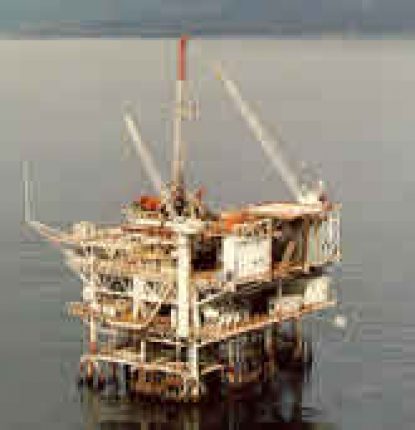
Platforms Hogan and Houchin were installed 52 and 53 years ago respectively on Lease OCS P-0166 in the Santa Barbara Channel. The lease, which had initially been issued to Phillips Petroleum, Cities Service Oil Co., and Continental Oil Co., was assigned to Signal Hill Service effective 2/19/1991. The assignment was approved despite concerns within the Minerals Management Service (MMS) about the financial strength of Signal Hill and the technical competence of Pacific Operators Offshore Inc (POOI), the affiliate that would operate the facilities.
Three decades of frustration followed for MMS, BOEM, and BSEE regulators in the Pacific Region. Per the terms of the assignment, Signal Hill was required to establish an Abandonment Escrow Account, funded from oil production revenue, with a “target balance” equal to the abandonment cost, plus 25 percent. These payments were seldom made in a timely and consistent manner.
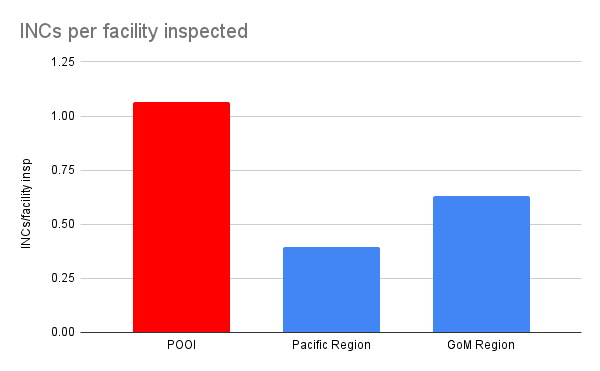
Compliance with safety regulations was also poor. In that regard, violations data are consistent with anecdotal reports from inspectors. POOI accounted for a high percentage of the regional Incidents of Noncompliance (INCs), and Platforms Hogan and Houchin had INC/inspection ratios that were far higher than Pacific or Gulf of Mexico platform averages (see inspection data below).
INC’s
Warnings
Component Shut-ins
Facility Shut-ins
POOI
485
562
46
All companies (Pacific Region)
1965
3103
281
POOI % of total
24.6
18.1
16.4
A 9/20/2020 Inspector General report found significant irregularities in the use of funds from an offshore production company’s escrow account. While the IG’s summary (pasted below in its entirety) doesn’t say so, the company is assumed to be Signal Hill.
The OIG investigated allegations that an offshore oil and gas production company improperly paid operational expenses with money from an escrow account dedicated to paying expenses related to decommissioning offshore platforms in Federal waters. We found that the company routinely used funds from its decommissioning account to pay what appeared to be various operating expenses. We also found instances where the company appeared to claim reimbursement for duplicate expenses. Based on our findings, the company submitted credits and adjustments, totaling $1.9 million, to the decommissioning account to cover these expenses and other disbursements. In addition, we referred a number of unresolved expenses for non-decommissioning activities to the Bureau of Safety and Environmental Enforcement and the Bureau of Ocean Energy Management for resolution. We referred this matter to the U.S. Department of Justice, which declined to pursue it.
Why haven’t BOEM, BSEE, or the OIG released the full report? The public and the offshore industry certainly have a right to know given the potential costs to the taxpayer and the reputational damage to the industry.
Why was a company with such a poor payment and compliance record allowed to withdraw funds from their decommissioning account to cover operating expenses?
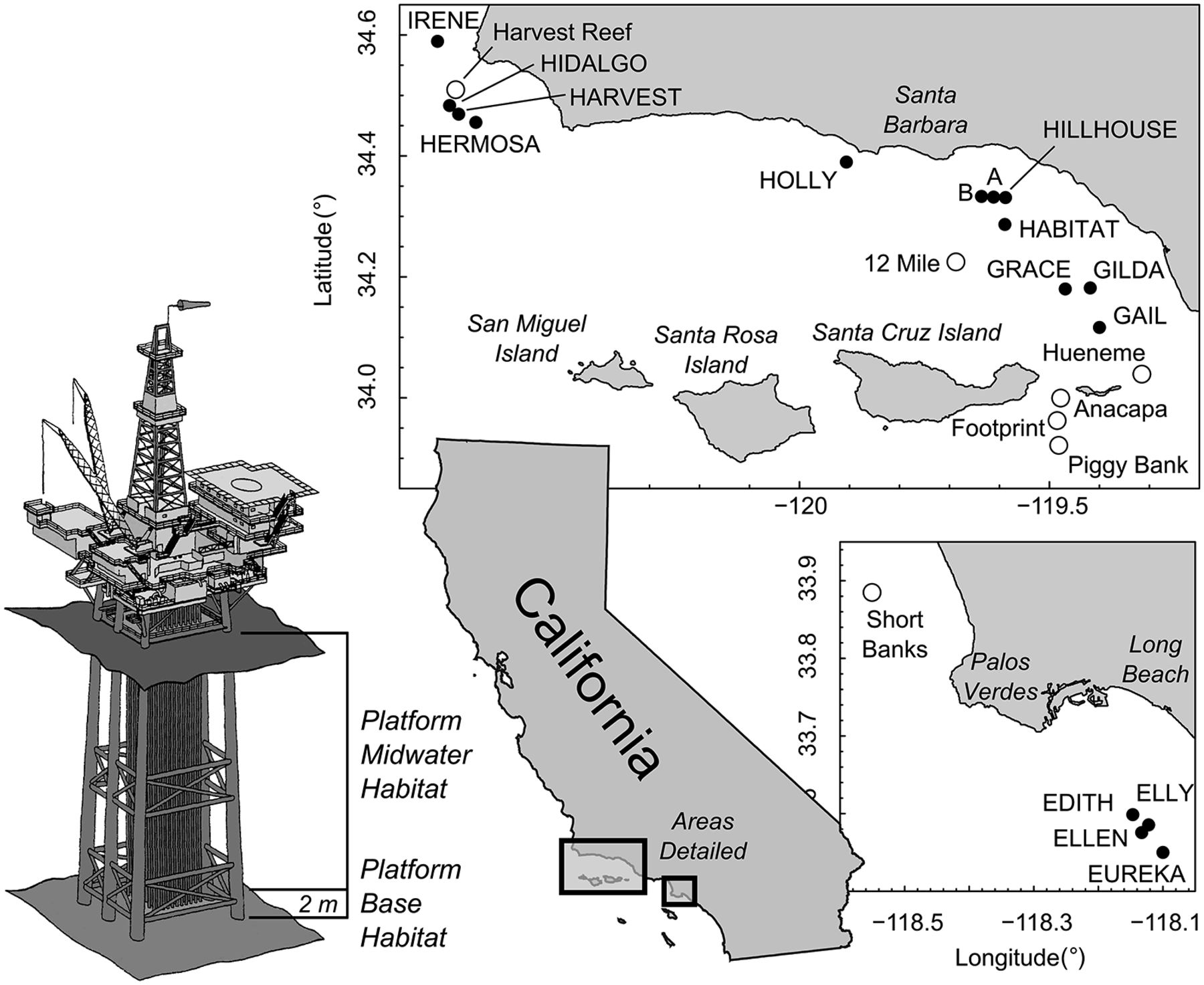
The Marine Science Institute of the University of California Santa Barbara has completed a 6-year study to investigate the differences between the types of fish that live around offshore oil and gas production platforms off the coast of California and the species that inhabit natural reefs in the same geographic area. This research strengthens and confirms observations made in previous studies. Among the important conclusions (full study linked here):
There is very extensive diversity in the species assemblages around the oil and gas platforms of California. Factors driving this variability include A) location around the platform, B) geographic location of the platforms, and C) bottom depth of the platform.
Around each platform, there are three, unique, fish assemblages: midwaters, bottom, and shell mound. While a suite of rockfishes (of 43 species) dominate most platform assemblages, a number of other taxa (e.g., lingcod, combfishes, sculpins, and seaperches) are also important.
Midwater fish assemblages tend to be similar across platforms; there are substantial differences among those found at bottoms and shell mounds.
In general, the assemblages of platforms and natural sites are different. These differences are primarily based on differences in species’ densities rather than the presence or absence of taxa.
The role that habitat complexity plays in structuring platform fish assemblages should not be underestimated.

 Bud's Offshore Energy (BOE)