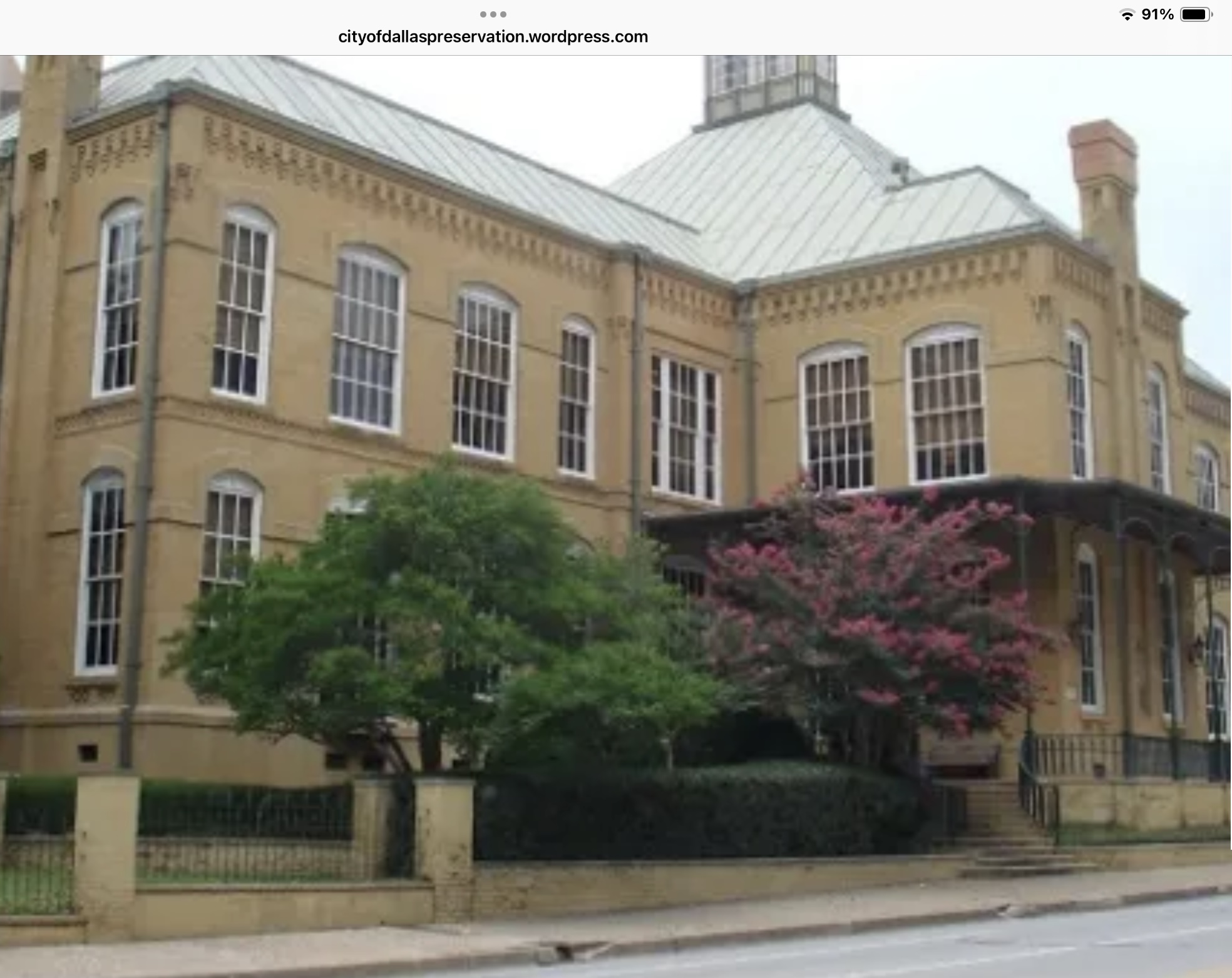
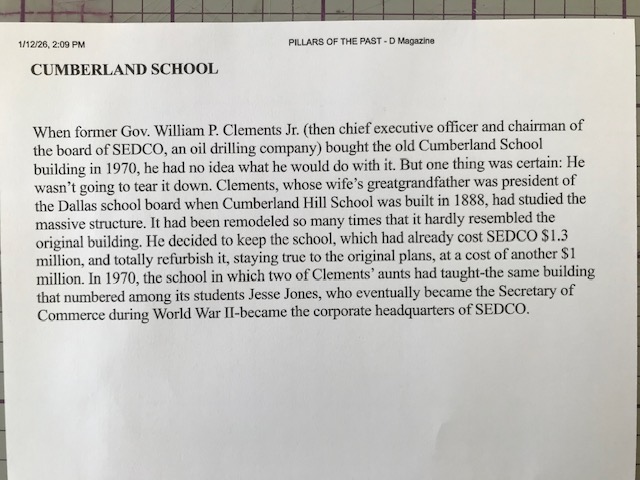
Per JL Daeschler, Sedco’s Far East, North Sea, and South America operations were all run from Dallas in the late 60’s. In 1970, an old schoolhouse became Sedco’s corporate headquarters (see picture and narrative pasted above). Thank you Bill Clements for saving this historic building – what a beautiful headquarters for the challenging and booming offshore industry!
JL: After 2 years with SEDCO in Miri, East Malaysia (1971) I moved to Brownsville Tx. But in 1979 I returned to the old school house in Dallas in secondment to Sedco Hamilton Production Services from Hamilton Brothers Oil & Gas. The main objective of the joint venture was promotion of floating production systems and in particular use of semi sub technology. One project assignment was the BP “Buchan” field in the North Sea. (Note: this work was a precursor to the deepwater floating production units that are now the method of choice for deepwater development in the Gulf.)
JL is pictured (right below) on the Sedco 135 during operations offshore East Malaysia.
Wisdom from JL: Rules were pretty simple, as you can read on the rig wall in the picture. No App, pin, or password…. In fact no internet and mobile phone, just a radio operator.
Safety was grounded in the attitude and respect of 100 + people living and working together (47 working / 47 sleeping and 6 managing and protecting others. More difficult was the integration of the visiting contractors, logging/cementing / diving / VIPs. (Still true today!) No division amongst ages, nationality ( sometimes 6 of them) religions, Job position , and ethnicity. Just get along and do what you get paid for! Safety issues were dealt with immediately with short, unscheduled “toolbox” meetings – less reporting and more fixing.
(As an aside, Dan Bourgeois and I were on assignment to Petronas in 1977 and visited their East Malaysian operations. Does anyone in Petronas remember us? 😉)
The attached comments were submitted to Regulations.gov on 9/8/2025.
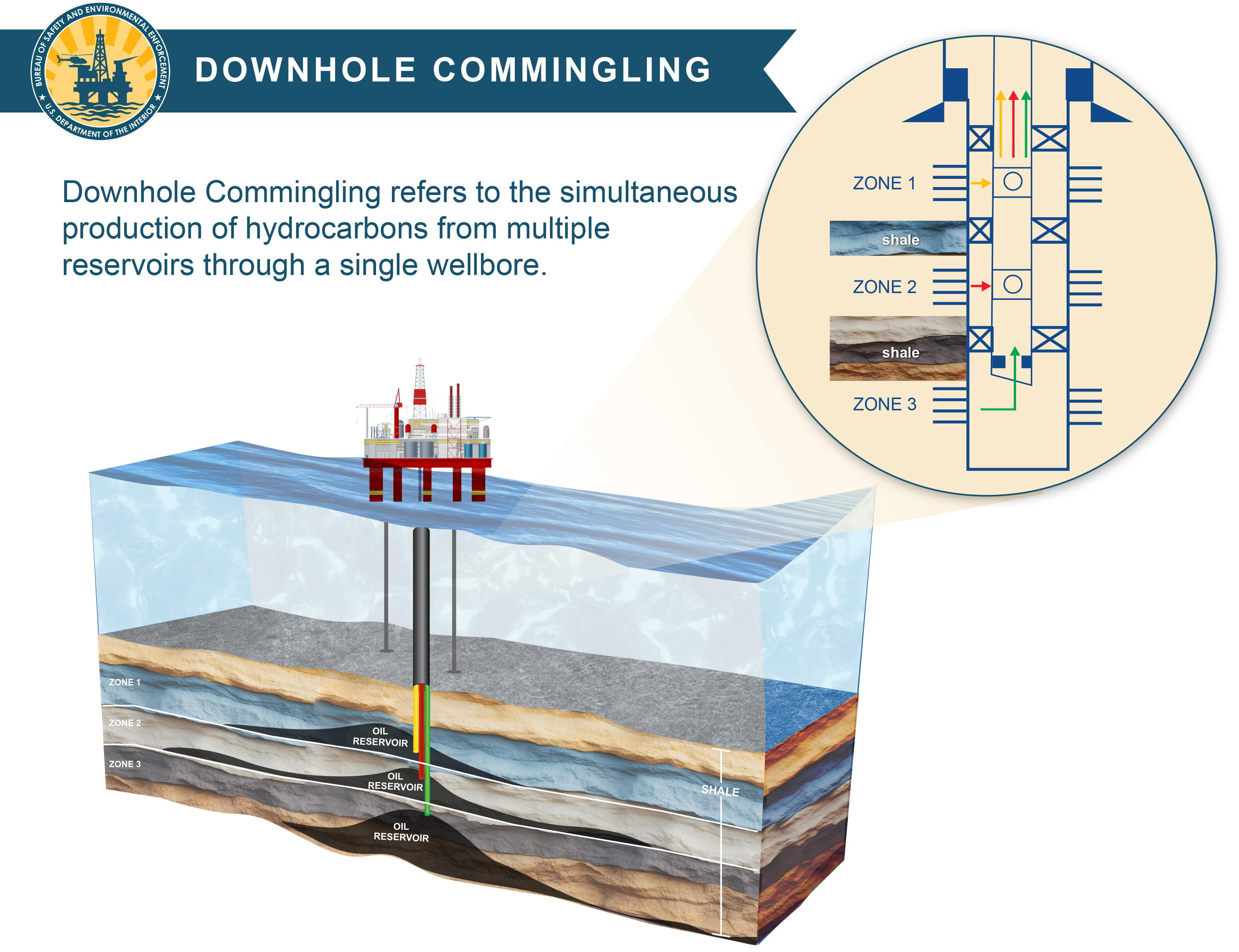
Legislatively dictating downhole commingling approvals, as per Section 50102 of the One Big Beautiful Bill, is a reckless precedent from both technical and regulatory policy standpoints.
This type of legislative maneuver compromises the integrity of the OCS oil and gas program and the companies that participate in it. Shaving the maximum royalty rate was one thing; mandating well completion approvals is quite something else. Disappointing. ☹
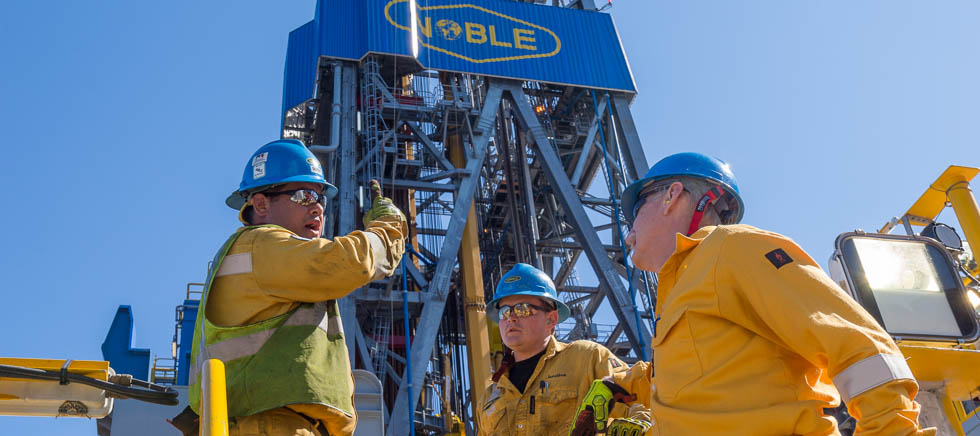
Noble’s acquisition of Diamond Offshore will unite two safety management pioneers and long-time offshore safety leaders. The press release stresses the importance of their “culture commonality around safety, operational excellence and service posture,” and their “shared commitment to these foundational principles is expected to be a driving force toward a successful and seamless integration.” While such statements are common in corporate merger announcements, Noble and Diamond “walked-the-walk” for decades, so their statement is more than corporate lip service.
Proved reserves should not be a basis for reducing supplemental assurance. The uncertainty associated with reserve estimates and decommissioning costs can easily negate the assumed buffer in BOEM’s 3 to 1 reserves to decommissioning costs ratio. That approach failed completely at the Carpinteria Field in the Santa Barbara Channel (Platforms Hogan and Houchin). See other points on this issue.
Given that the reverse chronological order process for determining predecessor liability was dropped from consideration last April, there is no defined procedure for issuing decommissioning orders to prior owners. The absence of such a procedure increases the likelihood of confusion, inequity, and challenges, particularly when orders are first issued to companies that owned the leases decades ago, in some cases prior to the establishment of transferor liability in the 1997 MMS “bonding rule.”
BOEM’s concern (below) about investment in US offshore exploration and production is interesting given that their 5 year leasing plan strongly implies otherwise.
BOEM’s goal for its financial assurance program continues to be the protection of the American taxpayers from exposure to financial loss associated with OCS development, while ensuring that the financial assurance program does not detrimentally affect offshore investment or position American offshore exploration and production at a competitive disadvantage
I’m just guessing here, but my sense is that BOEM was pressured to finalize this rule in a timely manner (<10 months is timely for such a complex rule) and was thus reluctant to make any significant changes to the proposal published last summer. A public workshop during the comment period would have been a good idea to facilitate informed discussion on the important issues addressed in this rule. Such workshops were once commonplace for major rules.
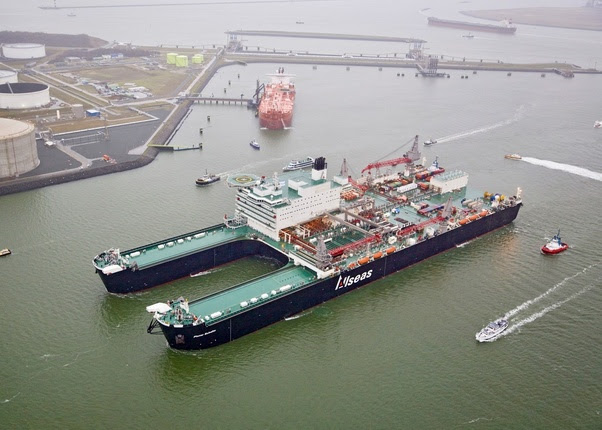
The financial, technical, and regulatory aspects of decommissioning have received much attention on this blog. Andrew Konczvald sends this photo with regrets that the behemoth “Pioneering Spirit” wasn’t available when he was concerned with such matters.
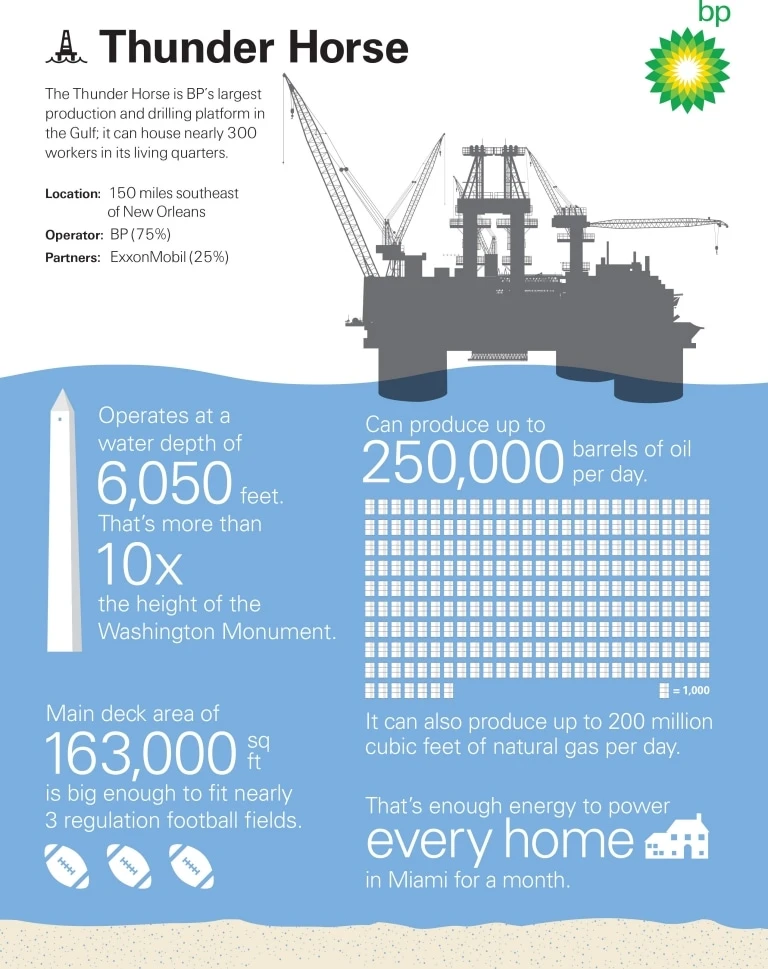
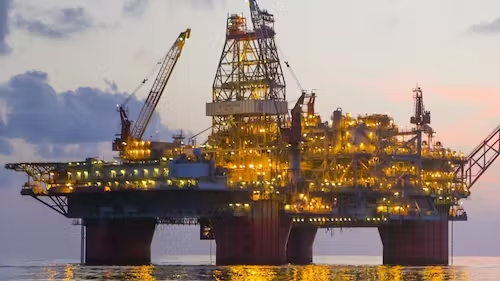
For comparison (size only given the different missions), the massive Thunder Horse floating production platform (see below) in the Gulf of Mexico is 136 m x 112 m, only 12 m narrower but just over 1/3 of the Pioneering Spirit’s length.
The worlds largest 403,342 gross tonnage ship ‘Pioneering Spirit’ (formerly Pieter Schelte) is a catamaran crane vessel owned by the Switzerland-based All Seas Group designed for the single-lift installation and removal of large oil and gas platforms and the installation of record-weight pipelines. The 382-metre-long (1,253 ft), 124-metre-wide (407 ft) vessel is the world’s largest vessel by gross tonnage, and since September 2021 also the largest floating sheer-leg in the world. It was built in South Korea by Daewoo Shipbuilding & Marine Engineering in 2013 at a cost of €2.6 billion. It commenced offshore operations in August 2016.Thunder Horse
Something here does not remotely add up. If New York state succeeds by 2030 in closing its natural gas plants — the plants that account for 60% of the State’s generation capacity — that would bring our total installed capacity down from 37.5 GW to as little as 15 GW. But we need almost 60 GW to meet projected demand. And that’s 60 GW that can be called on any time as needed to meet peak usage. The 9 GW of projected offshore wind turbines wouldn’t make much of a dent even if they operated all the time and could be dispatched to meet peak demand, which they can’t. Instead, they will operate only about a third of the time, and at their own whim. At best they will provide about 3 GW on average, when what we need for this full electrification project is more like 45 GW of dispatchable power to add to our existing hydro and nuclear.
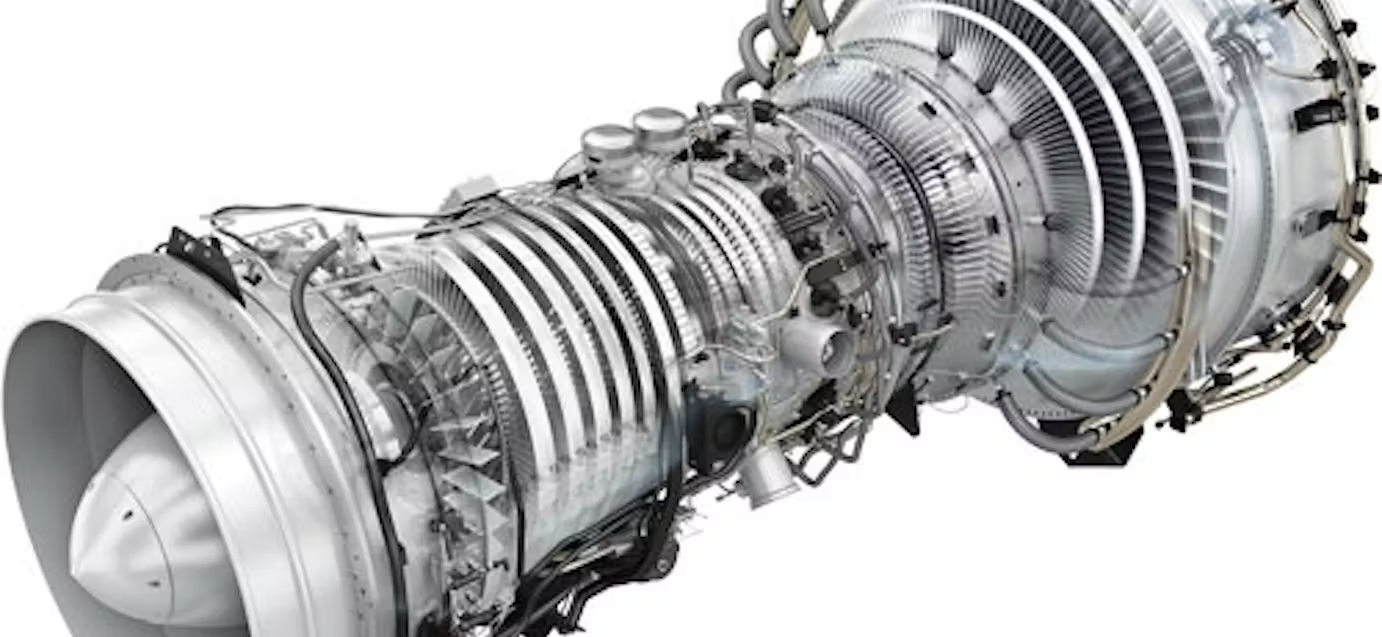
Offshore platforms: In some regions, there is a push to power platforms with renewable energy transported by electric cable. Currently, most platforms are efficiently powered by gas turbines which satisfy energy needs even when demand spikes during well operations like tripping out of the hole. The extent to which renewables can reliably support platform operations during these and other operations, when power interruptions are unacceptable from a safety standpoint, is a risk that must be assessed prior to committing to alternative energy sources.
The environmental benefits of powering platforms with renewable energy also have not been clearly documented. In most cases, offshore platforms produce sufficient gas to support their power demands. Should platforms be powered by imported electricity, gas that is not used for platform operations would presumably be marketed for consumption elsewhere or reinjected.
If the gas is marketed and consumed elsewhere, there is essentially no net (global) CO2 emissions reduction benefit. Gas that is reinjected is wasted unless there is an enhanced oil recovery benefit. So, the net environmental benefit from importing electric power seems questionable, and the operational risks could be significant.
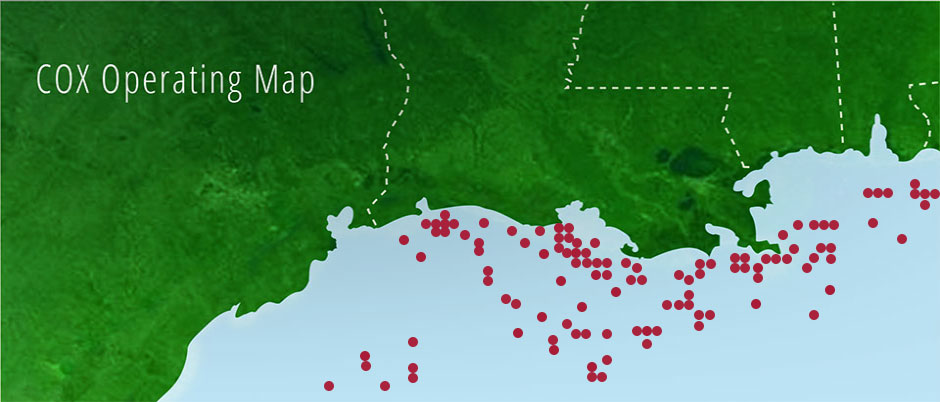
A Metairie-based oil company that’s one of the largest independent operators still working in the state’s shallow coastal waters has filed for bankruptcy protection, leaving dozens of south Louisiana service and supply companies facing potential bankruptcies of their own.
Bankruptcy court documents show Cox’s estimated liabilities are close to $500 million – more than $200 million of which is owed to small businesses in the Houma-Thibodeaux and Acadiana areas.
Court documents indicate that Cox followed a path that led to financial trouble for other companies in recent years: using debt to acquire large fields of aging wells in shallow Gulf waters.
This blog is primarily concerned with the potential impacts of the bankruptcy on safety performance, the plugging of wells, and the decommissioning of old facilities. Per BOEM’s data base, Cox currently operates 276 Gulf of Mexico platforms, all in shallow shelf waters. The company is reported (Nola.com) to owe $8 million in bond premiums needed to support well plugging operations.
Cox has not been an active driller of late with only 2 well starts since 1/1/2022 (BSEE borehole file).
Cox has been a major generator of INCs (incidents of noncompliance) with 437 INCs YTD. Cox has been responsible for 47% of all GoM INCs in 2023. Cox’s INC to inspection ratio was 2.46 vs. a combined ratio of 0.50 (490/972) for all other GoM operators.
Cox is currently ranked 11th and 18th respectively in GoM gas and oil production with 7.2 billion cu ft and 1.8 million barrels produced YTD.
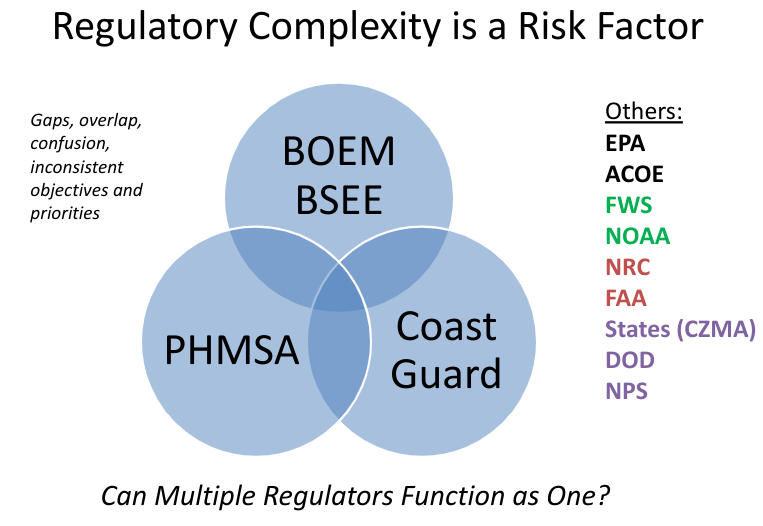
Regulatory fragmentation occurs when multiple federal agencies oversee a single issue. Using the full text of the Federal Register, the government’s official daily publication, we provide the first systematic evidence on the extent and costs of regulatory fragmentation. We find that fragmentation increases the firm’s costs while lowering its productivity, profitability, and growth. Moreover, it deters entry into an industry. These effects arise from regulatory redundancy and, more prominently, regulatory inconsistency between agencies. Our results uncover a new source of regulatory burden: companies pay a substantial economic price when regulatory oversight is fragmented across multiple government agencies.
The US has a highly fragmented offshore regulatory regime that has become even more fragmented with the complex division of responsibilities between BOEM and BSEE. The slide below is from a presentation on this topic.
While the linked paper focuses on costs and productivity, fragmentation may also be a significant safety risk factor. A UK colleague once asseted that “overlap is underlap,” and I believe there is something to that. If multiple agencies have jurisdiction over a facility, system, or procedure, the resulting redundancy, inconsistency, and ambiguity may create significant gaps in industry and governmental oversight.
For example, regulatory fragmentation was arguably a significant factor in the most fatal US offshore fire/explosion incidents in the past 35 years – the South Pass B fire in 1989 and the Macondo blowout in 2010. More specifically:
South Pass 60 B: The investigation of the 1989 South Pass 60 B platform explosion that killed 7 workers noted the inconsistency in regulatory practices for the platform, regulated by DOI, and the pipeline regulated by DOT. Cutting into the 18-inch pipeline riser did not require an approved procedure, and the risks associated with hydrocarbon pockets in the undulating pipeline were not carefully assessed. Oversight by the pipeline operator was minimal, and the contractor began cutting into the riser without first determining its contents. A massive explosion occurred and 7 lives were lost.
One would hope that this major spill will lead to an independent review of the regulatory regime for offshore pipelines. Consideration should be given to designating a single regulator that is responsible and accountable for offshore pipeline safety (a joint authority approach might also merit consideration) and developing a single set of clear and consistent regulations.
Macondo: While the root causes of the Macondo blowout involved well planning and construction decisions regarding the casing point, cementing of the production casing, and well suspension procedure, the blowout would likely have been at least partially mitigated (and lives saved) if the gas detection system was fully operable, the emergency disconnect sequence was activated in a timely manner, flow was automatically diverted overboard, or engine overspeed devices functioned properly. Indeed, regulatory overlap led to underlap as summarized below:
Macondo contributing factor
jurisdiction
flow not automatically diverted overboard
DOI/USCG (also concerns about EPA discharge violations)
some gas detectors were inoperable
DOI/USCG
generators did not automatically shutdown when gas was detected
USCG/DOI
failure to activate emergency disconnect sequence in a timely manner (training deficiencies and chain-of-command complications)
USCG/DOI
engine overspeed devices did not function
USCG/DOI
hazardous area classification shortcomings
USCG/DOI
MOUs and MOAs are seldom effective regulatory solutions as they are often unclear or inconclusive, and tend to be more about the interests of the regulator and protecting turf. They also do nothing to ensure a consistent commitment among the regulators. In the case of the US OCS program, BOEM-BSEE have a greater stake in the safety and environmental outcomes given that offshore energy is the reason for their existence. That is not the case for any of the other regulators identified in the graphic above.
Oil and Energy Minister Terje Aasland takes over the constitutional responsibility for the Petroleum Safety Authority with effect from 11 May 2023. Labor and Inclusion Minister Marte Mjøs Persen previously held responsibility. With this, the government wishes to strengthen comprehensive and good management of HSE, safety and preparedness on the Norwegian continental shelf.
The transfer of responsibility to the Ministry of Oil and Energy (OED) is in line with the main principle in Norwegian administration that one ministry and one cabinet minister have the constitutional responsibility for the sector as a whole.
The Petroleum Safety Authority and the Norwegian Petroleum Directorate, the resource management agency, now report to the same ministry. Prior to a December 2003 decree that established the PSA, both the safety and resource functions were administered by the NPD.
Could this be the start of a trend toward better coordination of regulatory and resource management functions? If so, that would be a positive development. Fragmented oversight is neither in the best interest of safety nor resource management. (More on this in an upcoming post.)
Promoting the offshore wind program is a very high BOEM priority. The bureau is charged with deploying 30 gigawatts of offshore wind energy capacity by 2030, which requires extensive advocacy. However, BOEM is also a core regulator for offshore wind projects, and the concern is that their regulatory role could be compromised by their advocacy priorities.
Per Notice to Lessees 2023 N-01, which arguably should have been published for public comment given its regulatory significance, BOEM has retained important responsibilities for wind project development and operations. These include review and approval of construction and operations plans, site assessment plans, and general activities plans. BOEM may also exercise enforcement authority through the issuance of violation notices and the assessment of civil penalties.
BOEM exists because in 2010 the Administration wanted to separate the OCS program’s leasing (sales/advocacy) and safety (regulatory/enforcement) functions. The intent was to avoid conflicting missions (or the appearance thereof) in the post-Macondo era. (More on this in an upcoming post.)
Ironically, the Save LBI comment describes BSEE as “a distinct unit within BOEM.” That may seem to be the case, but BSEE is actually a separate bureau in the Department of the Interior.



 Bud's Offshore Energy (BOE)