Feeds:
Posts
Comments

Posts Tagged ‘Offshore Wind’

Judge Patti Saris vacated part 2 of Trump’s 1/20/2025 “Wind Memo.” Part 1, which withdrew all OCS lands from wind leasing, was not in dispute. Part 2 suspended issuing wind energy permits and other authorizations.

The judge ruled (full order attached) that the suspension of wind permitting violates Administrative Procedures Act provisions requiring agencies “to proceed within a reasonable time and to set and complete proceedings expeditiously.

She concluded further that “the moratorium halts all wind energy authorizations indefinitely, pending a comprehensive assessment with no timeline, which is inconsistent with statutory deadlines and general commands for prompt processing in laws like OCSLA, the Clean Water Act, and others governing wind projects.

Although the judge’s assessment of the permitting moratorium seems sound, the merits of offshore wind as a primary energy source remain very much in doubt.

Read Full Post »

“So, the safety culture is fine because we don’t report when people die.” Former Ørsted safety head, Eskild Lund Sørensen, accuses offshore wind body G+ of cherry picking data. The 2024 G+ incident data report is attached.

Member companies, which include major players such as Ørsted, Equinor, Vattenfall, RWE, and CIP, report quarterly data on accidents, near-misses, hazardous observations, and equipment damage. As is the case with most industry reporting schemes, anonymity is prioritized over transparency.

Sørensen asserts that the G+ wind industry data are incomplete: ”It shows that what is reported under the guidelines has gone down, and also that there is a cut off on what is being reported that does not include the full value chain on the industry.” He notes that a contractor to Northland Power from Canada, a member of G+, was involved in a 2024 workplace accident in Taiwan that resulted in three fatalities. (It’s also noteworthy that Equinor’s 2024 Empire Wind fatality was not included.)

Sørensen:There have been no significant improvements in the last 10 years. Safety in offshore wind is neither getting worse nor better. There are no signs of that.”

I’m speaking up because we owe people the truth. If we’re not honest about the actual safety conditions in offshore wind, we can’t change them. Misinformation about workplace safety creates a dangerous illusion that everything is “under control”, while too many people are getting hurt. But when we dare to speak about reality as it is, we create the foundation for a safer, faster, and truly sustainable energy transition,” Sørensen says.

”And then it becomes difficult to learn if you have to wait for something to go through 57 gates and down past legal,” he says. (Sound familiar?)

In the U.S., both industry and govt need to do a better job of sharing complete incident data in a timely manner.

Read Full Post »

Interesting Univ. of Portsmouth crabs study:

This study provides the first evidence that EMFs typical of SPCs elicit sex-specific behavioral responses in C. maenas. Females exhibited significantly greater attraction to EMF zones and avoidance of low-field zones, suggesting higher exposure risk. These differences could affect migration, mating, and larval release, with consequences for population dynamics. 

Read Full Post »

Equinor (2/3 Norwegian govt owned) is increasing its position in Ørsted (50.1% Danish govt owned). Given the ownership structure, public money is at risk for both countries.

The comments below are from a DN Norway article. They were made by CEO Torgrim Reitan after Equinor announced that the company will contribute NOK 10 billion (USD 1 billion) in Ørsted’s special share offering.

Given that the value of their initial NOK 26 billion (USD 2.6 billion) investment in Ørsted last fall has almost been cut in half, this is a bold move by Equinor. The company has been sharply criticized for its wind investments by private Norwegian investors.

“We want a closer partnership with Ørsted. We are two leading companies in offshore wind, and we believe a closer collaboration could create significant value for both Ørsted’s and our own shareholders.”

“This industry is now going through its first real crisis. That makes it quite clear what’s needed. We know a lot about this from oil and gas. What often happens in such times is consolidation.”

“We want a closer partnership with Ørsted. We are two leading companies in offshore wind, and we believe a closer collaboration could create significant value for both Ørsted’s and our own shareholders.”

“In recent weeks, we’ve had conversations with Ørsted management, and we’ve also had conversations with the Danish state. But the discussions have primarily been with Ørsted.”

“Ørsted is in a difficult situation right now. For us, as an industrial and long-term owner, it’s important to be supportive and helpful in such a situation. That’s why we’re putting in nearly a billion dollars.”

“This is a difficult decision, because clearly a lot of equity capital needs to be raised, but we have a fundamental belief in the industry, and also in the company. Ørsted’s underlying portfolio is a strong one.”

“Going forward, this will increase our debt ratio somewhat—maybe by about two percentage points. But we’re starting from a very low debt ratio. So we can manage this within our financial framework. As for capital distribution in 2026 and beyond, we will remain competitive.”

Meanwhile, Equinor is the only major oil company that remains invested in US offshore wind energy. Equinor’s Empire Wind project continues to be highly divisive.

Read Full Post »

The Dept. of the Interior is reviewing offshore wind regulations including “the Renewable Energy Modernization Rule, as well as financial assurance requirements and decommissioning cost estimates for offshore wind projects…”

Concerns about offshore wind financial assurance were first raised on this blog in response to a precedent setting waiver of the “pay as you build” requirement. Vineyard Wind was authorized to defer providing the full amount of required decommissioning financial assurance until year 15 of actual operations.  The waiver request, which had been denied in 2017, was resubmitted in 2021 and approved. This questionable decision was consistent with the administration’s enthusiastic promotion of accelerated offshore wind development.

BOEM’s streamlining rule codified the deferred financial assurance option. The rule authorizes the transfer of decommissioning risks from developers to taxpayers and consumers by (1) not requiring any additional supplemental financial assurance at the Construction and Operations Plan (COP) approval stage, (2) not requiring supplemental assurance at the installation stage, and (3) providing for incremental supplemental assurance post-installation (e.g. for Vineyard Wind, the full amount is not due until 15 years after installation). See the rule’s previous and current language in the table below (emphasis added).

30 CFR 585.516 – What are the financial assurance requirements for each stage of my commercial lease?

financial assurance required before BOEM will: language prior to 4/24/2024 “modernization” rulecurrent language
Approve your COPA supplemental bond or other financial assurance, in an amount determined by BOEM based on the complexity, number, and location of all facilities involved in your planned activities and commercial operation. The supplemental financial assurance requirement is in addition to your lease-specific bond and, if applicable, the previous supplement associated with SAP approval.There is no supplemental bond requirement at the COP approval stage.
Allow you to install facilities approved in your COPA decommissioning bond or other financial assurance, in an amount determined by BOEM based on anticipated decommissioning costs. BOEM will allow you to provide your financial assurance for decommissioning in accordance with the number of facilities installed or being installed. BOEM must approve the schedule for providing the appropriate financial assurance coverage.A supplemental bond or other authorized financial assurance in an amount determined by BOEM based on anticipated decommissioning costs of the proposed facilities. If you propose to incrementally fund your financial assurance instrument, BOEM must approve the schedule for providing the appropriate financial assurance.

The current financial assurance language is fuzzy enough that BOEM could deny deferred funding requests and require full financial assurance at the time facilities are installed. However, revising the language to clearly require that assurance be fully demonstrated prior to installation would provide clarity and eliminate the deferral option going forward.

The more difficult challenge may be adjusting financial assurance requirements for the projects already under construction. It’s also important to ensure that parent corporations are not shielded from decommissioning and other liability risks.

Read Full Post »

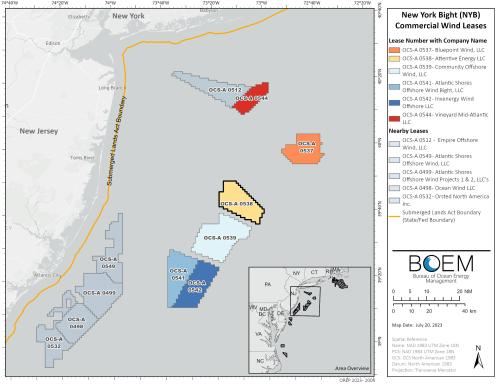
A new court filing (attached) informs that the Dept. of the Interior is reconsidering the Construction & Operations Plan (COP) approval for US Wind’s Maryland Offshore Wind (“MarWin”) Project (maps above). That approval is the subject of litigation filed by Ocean City MD and others.

The key section of the Federal government’s filing is pasted below.

  1. An extension in this case is necessary as Interior intends to reconsider its COP approval and move in the District of Maryland—the first-filed case—for voluntary remand of that agency action. See, e.g., Util. Solid Waste Activities Grp. v. EPA, 901 F.3d 414, 436 (D.C.Cir. 2018) (recognizing that administrative agencies have the authority to reconsider their decisions). The outcome of Interior’s reconsideration has the potential to affect the Plaintiff’s claims in this case.

Read Full Post »

Orsted photo: wind wakes trailing turbines at Vattenfall’s Horns Rev wind farm offshore Denmark

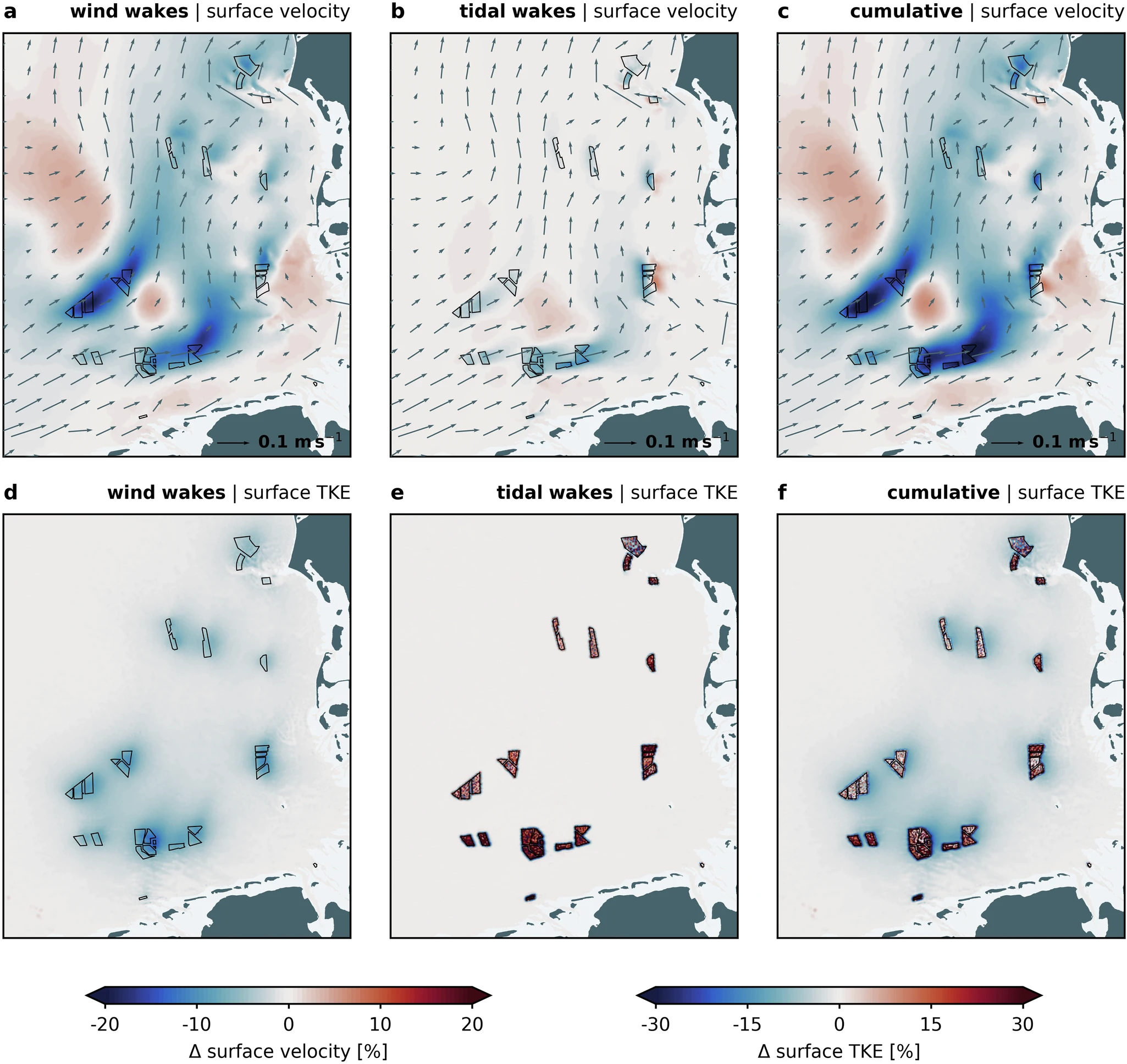
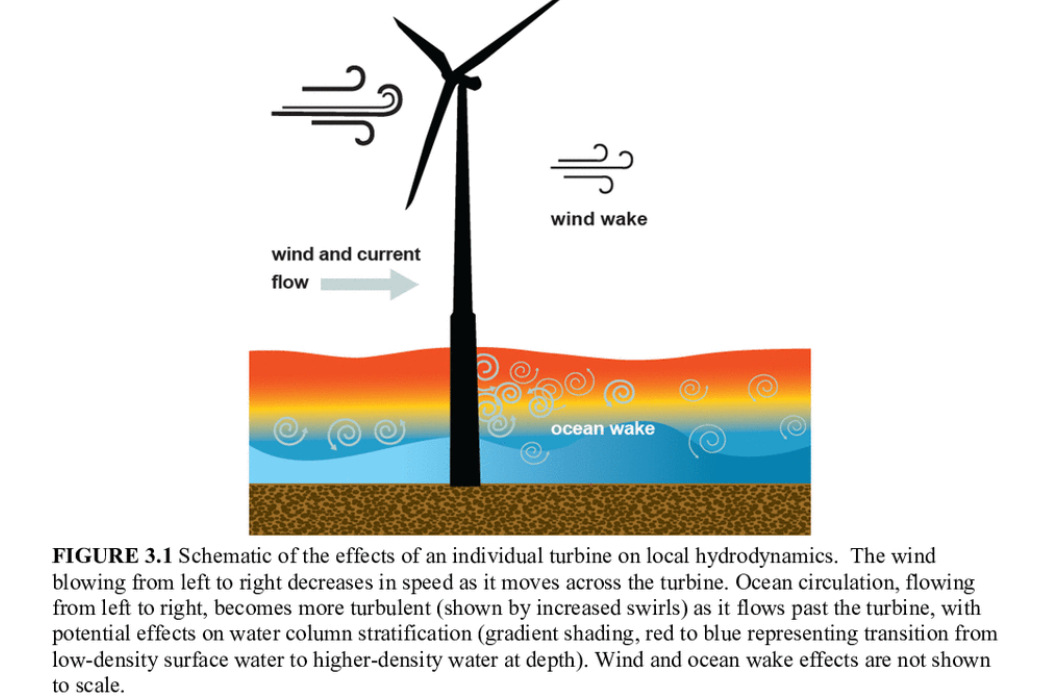
A previous post on wind theft and a recent BBC article point to the rather limited understanding that wind developers and govt land managers have about wind resource management including optimal turbine spacing and protection of correlative rights. Wind is considered a renewable energy resource, but the energy lost through inefficient operating practices is not renewable.

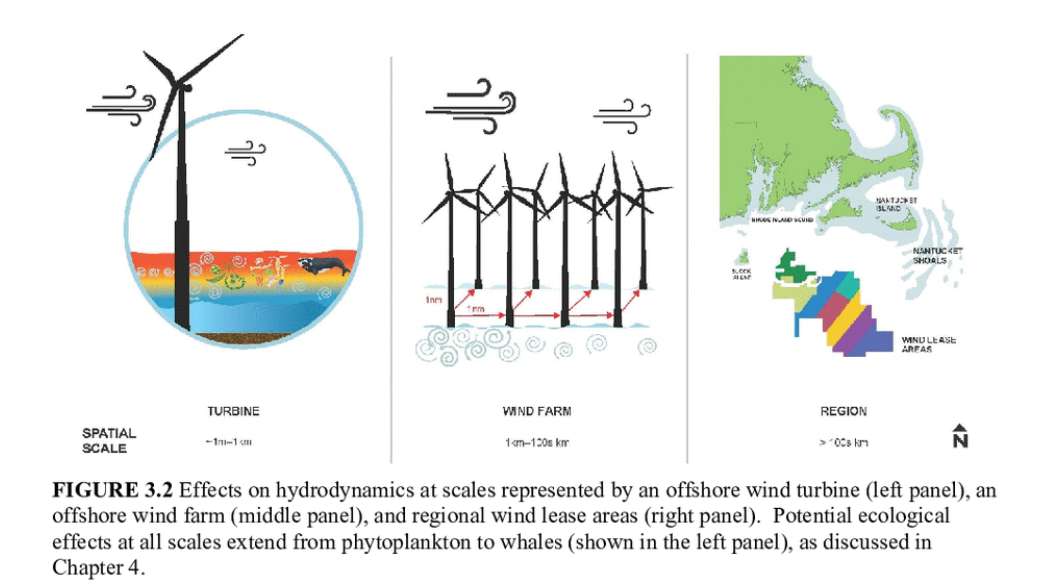
Given that the wake effect can extend for more than 100 km, reduce downwind energy production by >10%, and affect biological productivity, a better understanding of this phenomenon should have preceded the installation of thousands of turbines.

Wind resource management is reminiscent of the early years of oil production when the “law of capture” reigned supreme and wasteful production practices were a self-defense mechanism.

.

Read Full Post »

Congressman Jeff Van Drew doesn’t mince any words in commenting on New Jersey’s participation in the lawsuit against the offshore wind pause:

“You cannot make this stuff up. The Murphy administration already burned through billions of your tax dollars on offshore wind projects that never worked. They pushed it on us even when towns were saying no, fishermen were saying no, and the tourism industry was saying no. They looked the other way while whales washed up on our beaches. They ignored the Pentagon when it said it was a national security risk. The NJ Ratepayer Advocate said it would raise utility bills. The Government Accountability Office (GAO) said the cons outweighed the pros. They did not listen to anyone. And now, after all that, they want to throw even more taxpayer dollars at it in court. It truly is a slap in the face to every taxpayer and every family struggling to pay their energy bill.”

Read Full Post »

Shutterstock / Tomasz Kozal photo

David is small, semi-nomadic and works across a vast sea area; Goliath is massive and growing rapidly.”

Energy Voice describes the challenges offshore wind poses for the small but culturally important UK commercial fishing industry, highlighting the findings of a fisheries research lab report.

Per Elspeth Macdonal of the Scottish Fishermen’s Federation:

How it often feels to us is that government says all the right things, has this blue economy vision and all of those great things but, at the end of the day, it actually feels like government is picking winners and losers and, at the moment they seem unable to see past the wind industry as the only game in town.

This comment on the evolution of the relationship between the fishing and oil industries in the North Sea also aptly describes the US offshore experience:

The fishing industry eventually learned to live with Big Oil, which is now on the wane, but living with territory-guzzling offshore wind farms – fixed and floating – may prove a lot more challenging.”

Read Full Post »

All 17 of the States that filed the offshore wind law suit have Democrat governors. However, 6 States with Democrat governors are not parties in the suit (see table below). Two of those governors, Andy Breshear, and Josh Shapiro, are leading moderates within the Democrat party.

StateGovernor
HawaiiJosh Green
KansasLaura Kelly
KentuckyAndy Beshear
North CarolinaJosh Stein
PennsylvaniaJosh Shapiro
WisonsinTony Evers

The State where participation in this suit could have the most political impact is New Jersey, given the well organized wind opposition “down the shore.” However, Gov. Phil Murphy, whose offshore wind promotion has been widely criticized, is not eligible to run for re-election later this year.

Read Full Post »

Older Posts »