Feeds:
Posts
Comments

Posts Tagged ‘natural gas production’

Both are (or in the case of Iraq will soon be) LNG importers.

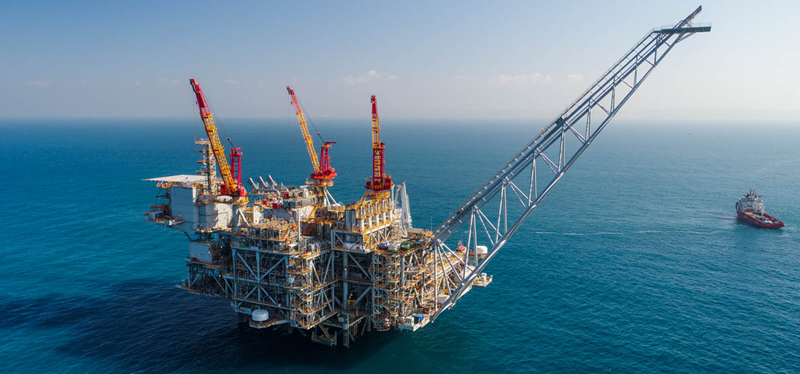
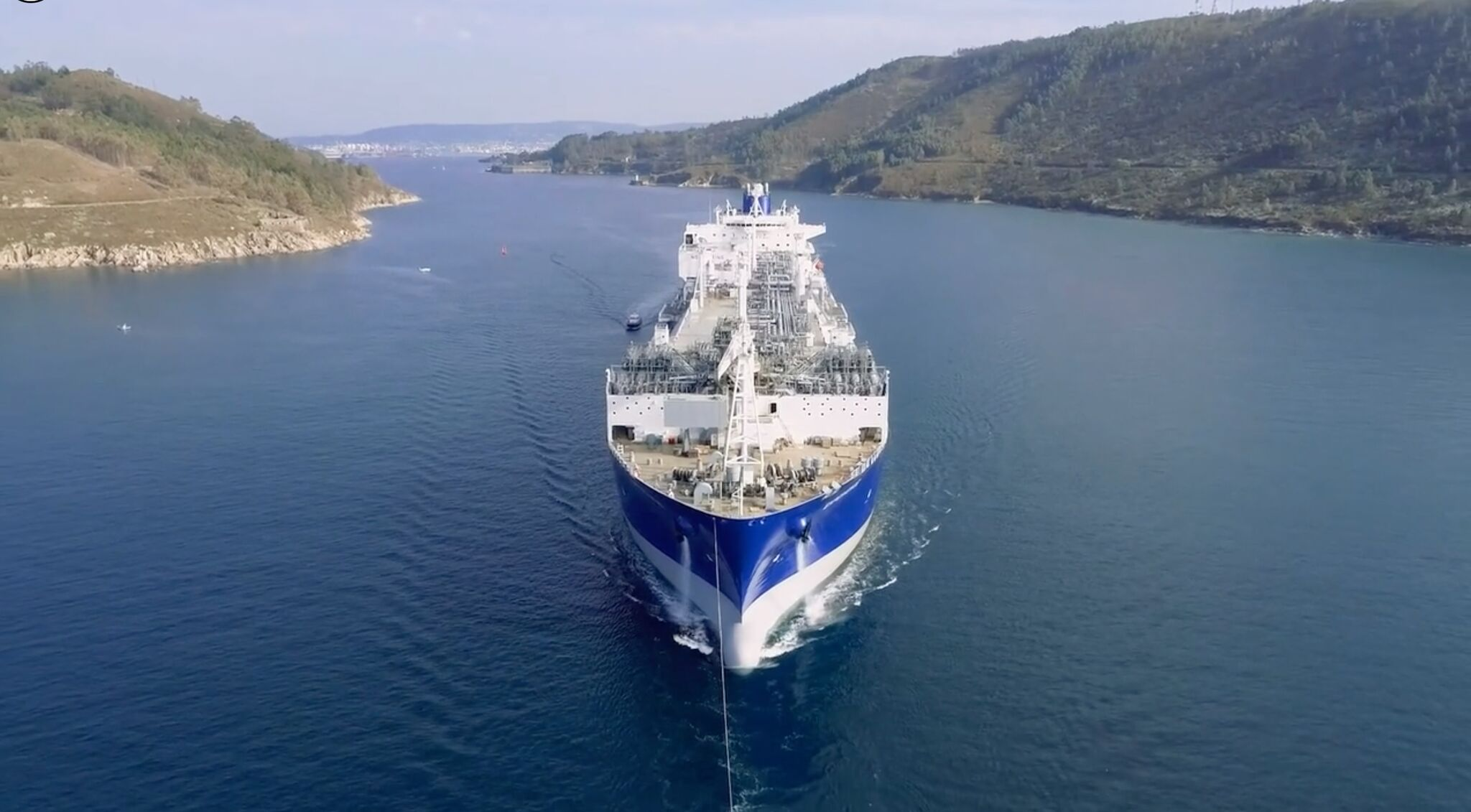
Excellerate Hull 3407, the company’s newest floating storage and regasification unit (FSRU), will be delivered to Iraq in 2026.

Why would a major oil and gas producer like Iraq be dependent on LNG imports?

  • Pipeline infrastructure limitations
  • High flaring rates: Iraq flared 625 bcf in 2023 which is almost equal to their total gas consumption (682 bcf). Iraq plans to eliminate routine flaring by 2028 (delayed from earlier targets).
  • Risks associated with gas imports from Iran.

And the Commonwealth of Massachusetts? Why would a state in the world’s no.1 gas producing country and not far removed from the massive Marcellus Shale reserves be importing LNG?

  • Firstly, Massachusetts is a wonderful place in many ways: beaches, mountains, islands, history, arts and culture, universities, charming villages, commercial fishing, recreational and professional sports, and more. I thoroughly enjoyed living on Cape Cod and was blessed to meet my wife there.
  • Unfortunately, Massachusetts energy policies have been misguided in recent years, in part because of unrealistic expectations regarding renewable energy, most notably offshore wind. Except for California and Hawaii, MA has the nation’s highest residential electric prices (Aug. 2025 data), 74% above the US average.
  • Pipeline restrictions have limited the flow of gas from Pennsylvania (Marcellus) and elsewhere.
  • Massachusetts is the only state with significant LNG imports.
  • Per EIA data, Massachusetts imported 13.2 bcf of LNG in 2023, accounting for about 87% of total U.S. LNG imports that year.
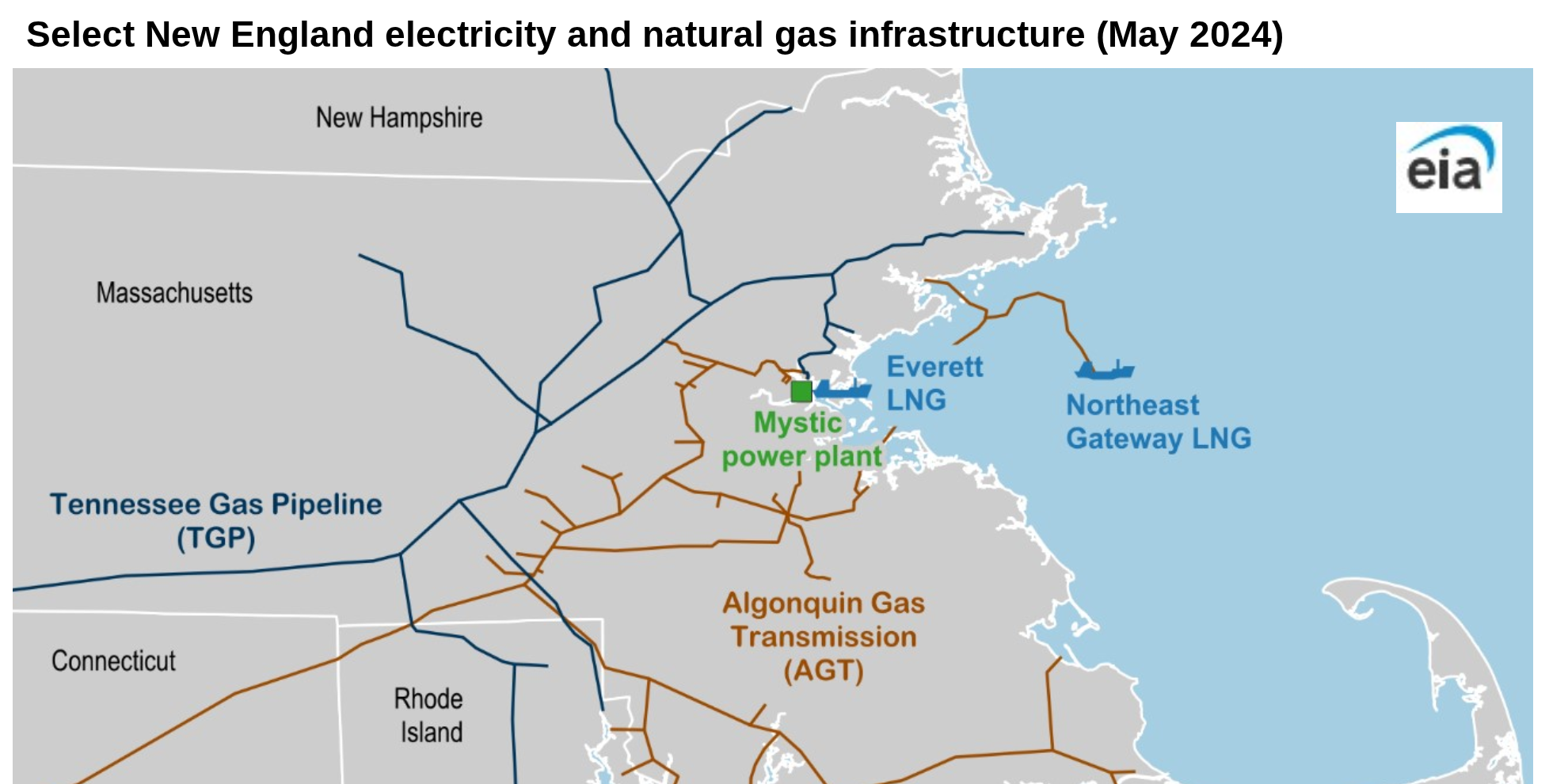
  • Most imports are through the Everett Marine Terminal near Boston. Imports through the offshore Northeast Gateway LNG terminal have been limited in recent years. (See map below).
  • Imports are seasonal, peaking in winter months, with most supply originating from Trinidad.
  • Recently, Governor Healy has made more encouraging statements regarding natural gas policy. She says she never stopped gas pipelines from entering the state and calls natural gas an “essential energy source.”
  • Perhaps the net-zero flip-flop my Bill Gates and other tech leaders is contagious.

Read Full Post »

Production on private lands in leading energy states fuels our independence.

Opportunity + Ingenuity ➡ Energy Independence + Prosperity

Read Full Post »

Yesterday, Lars Herbst attended the EIA’s Annual Energy Outlook presentation. The slides are attached.

Below is a custom chart from the EIA data tables. While EIA predicts growth in renewable generating capacity, US oil and gas production are nonetheless projected to increase slightly through 2050.

Read Full Post »

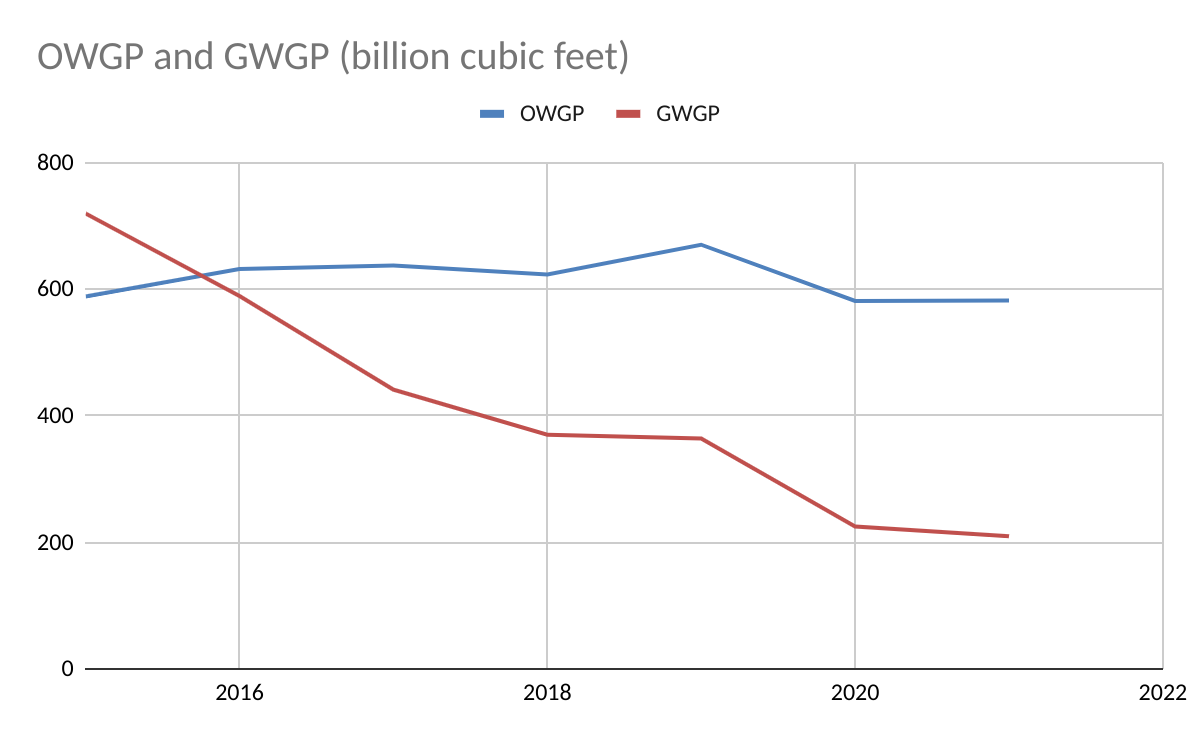
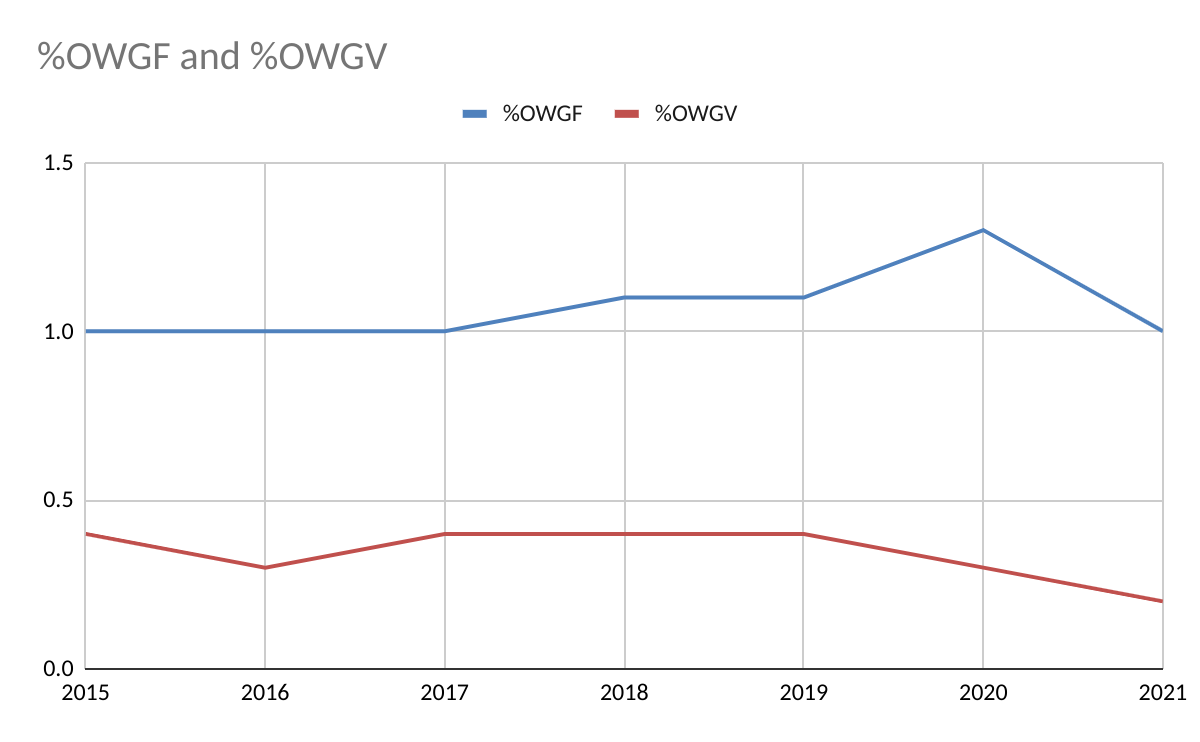
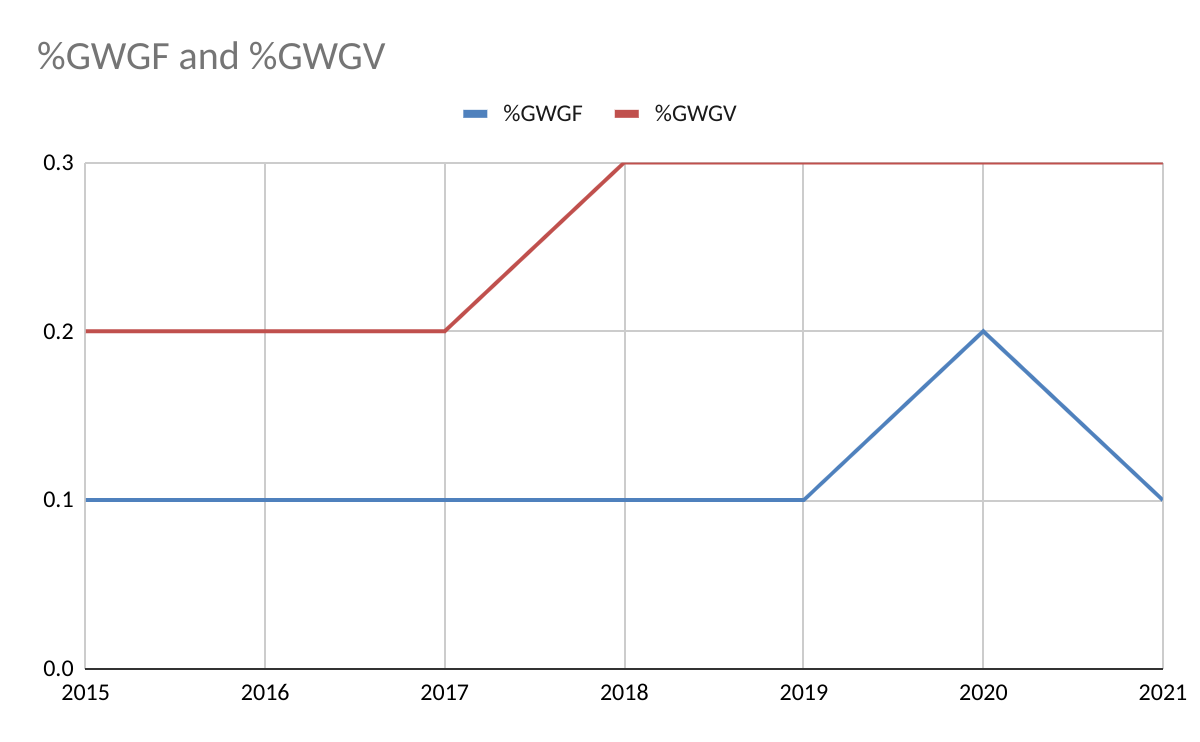
Gulf of Mexico flaring and venting data have been sorted for the years 2015-2021. The reporting of these data is mandatory and strictly enforced, so these ONRR numbers should be accurate.

Biggest surprise: The biggest surprise is that there were no big surprises in the data. The % of gas flared and vented were generally consistent with expectations based on familiarity with historical data.

Biggest disappointment: the continued sharp decline in nonassociated (gas-well) gas production. GoM gas well gas production exceeded 4 tcf annually in the 1990s and was still above one tcf ten years ago. Since then, GWG production has declined by 80%. Nonassociated offshore natural gas has important environmental advantages, so the decline in production should be a major concern to policy makers

Encouraging sign: The % of oil-well gas vented has ticked down over the past 2 years which is encouraging from a GHG standpoint. This is presumably because most associated gas is produced on modern deepwater facilities equipped with flare booms. An astute politician would be rushing to take credit for this achievement.😀

Unfavorable ratio: Although the volumes are low (<1 Bcf combined in 2021), more gas-well gas was vented each year than flared. This is presumably because older shelf facilities without flare booms still produce much of the natural gas.

Abbreviations:

  • ONRR: Office of Natural Resources Revenue
  • GoM: Federal waters of the Gulf of Mexico
  • OWGP: oil-well gas production
  • GWGP: gas-well gas production
  • OWGF: oil-well gas flared
  • OWGV: oil-well gas vented
  • GWGF: gas-well gas flared
  • GWGV: gas-well gas vented

Read Full Post »

  • Operating companies that produced >1 million bbls of oil or >1 BCF of gas in 2021 are listed in descending order based on oil production.
  • Both the total number of well starts and the number of exploratory wells are indicated
  • An INC is an Incident of Noncompliance (i.e. a violation). W=warning, CSI=component shut-in, and FSI=facility shut-in are the enforcement actions.
  • All of the below data are publicly available on the BSEE-BOEM websites.
2021
oil (MMbbls)
2021
gas (BCF)
2021/22
well starts

total-expl
2021/22
INCs
W-CSI-FSI
Shell149.8190.828-1211-14-4
bp114.082.75-26-3-4
Chevron83.742.28-81-1-3
Anadarko (Oxy)67.757.88-68-5-1
Hess27.561.72-27-4-0
Murphy25.150.07-74-8-1
LLOG20.429.03-01-1-1
Talos17.723.05-025-26-14
BHP14.55.93-22-3-0
Exxon13.22.31-1-1
Beacon10.515.71-00-0-0
Fieldwood10.424.7685-235-91
EnVen9.612.66-02-6-3
Kosmos9.48.41-11-0-0
Arena8.627.932-068-45-19
Walter8.136.22-23-1-2
Cox6.230.3237-169-3
Eni4.713.62-08-0-2
W&T5.027.21-065-40-7
Cantium4.55.518-023-15-2
QuarterNorth4.28.3no data
GoM Shelf2.34.852-5-2
ANKOR1.42.50-0-1
Byron1.04.45-8-2
Renaissance0.71.620-9-3
Sanare0.34.538-20-3
Helis0.21.21-0-2
Contango0.035.04-0-0
Samchully0.021.2no data

Comments:

  • “Energy transition” companies Shell and bp still love the Gulf of Mexico, which is a good thing for them and us. Together they accounted for 42.4% of the 2021 oil production.
  • The top 4 producers, Shell, bp, Chevron (includes Unocal), and Anadarko accounted for 2/3 of GoM oil production, nearly all of which was from deepwater leases.
  • Those are impressive production numbers for Anadarko (Oxy). No wonder Warren Buffett likes Oxy stock.
  • The relative number of deepwater exploratory wells is mildly encouraging given our concerns about sustaining production.
  • Exploratory well determinations are rather subjective and may not be entirely consistent.
  • Understandably, no exploratory wells were drilled by Arena or Cantium, the companies responsible for most well operations on shelf (shallow water) leases.
  • Overall, the INC numbers are impressively low for the deepwater operators, with Chevron and LLOG standing out. BSEE does not post the specific violation information (more on this in an upcoming post), so it’s difficult to properly assess a company’s compliance record.
  • Unfortunately, incident data could not be included on the scoreboard. BSEE’s incident tables are badly out of date, and no 2021/2022 summaries have been posted.
  • Fieldwood’s disturbing INC numbers were discussed earlier this year. High INC rates for 3 other operators have also were noted last month.
  • Exxon production is limited to the Hoover Diana spar, which was installed 22 years ago. The largest US oil company has only drilled one GoM exploratory well (2018) in the past 5 years. Currently, their main GoM interest seems to be the sequestration (disposal) of onshore emissions. (More on this topic in an upcoming post.)

Read Full Post »

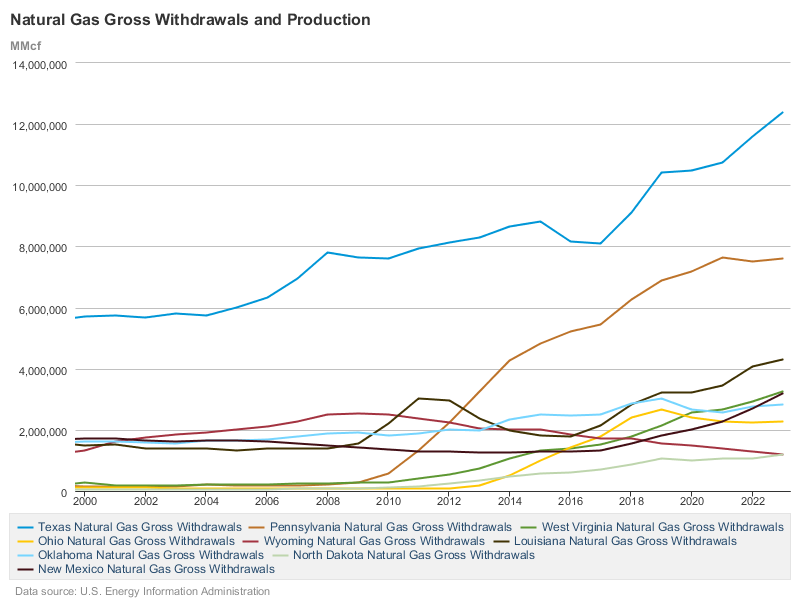
  • My home State (Commonwealth) of Pennsylvania is producing nearly 10 times as much natural gas as the US OCS (Federal offshore). Who would have dreamed this was possible 20 years ago? Among the states, PA is second to Texas in gas production.
  • Oil production in Texas is now nearly 3 times as high as on the OCS. In 2010, US offshore production was substantially higher (567 million barrels vs. 427 million barrels).
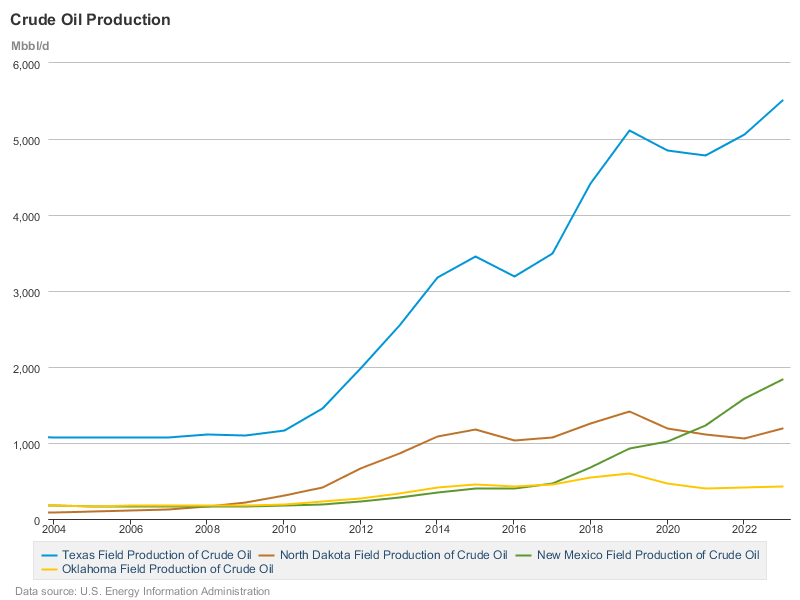
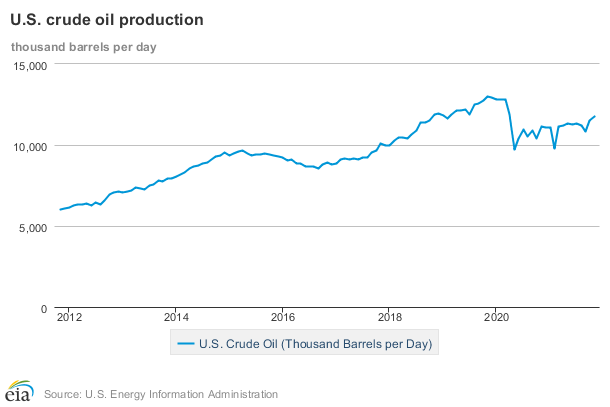
  • Thanks largely to Texas, North Dakota, and New Mexico, US oil production is rebounding.
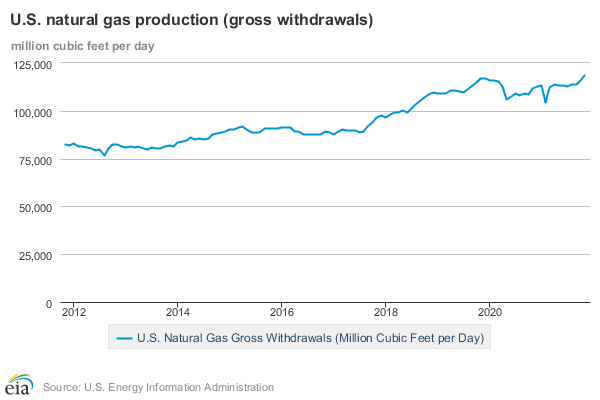
  • Thanks to TX, PA, LA, AK, WV, OK, NM, and OH, US gas production has also strengthened.

EIA production data through 11/20/2021:

Read Full Post »