Feeds:
Posts
Comments

Posts Tagged ‘Gulf of Mexico production’

Comments on 2022 oil production:

Read Full Post »

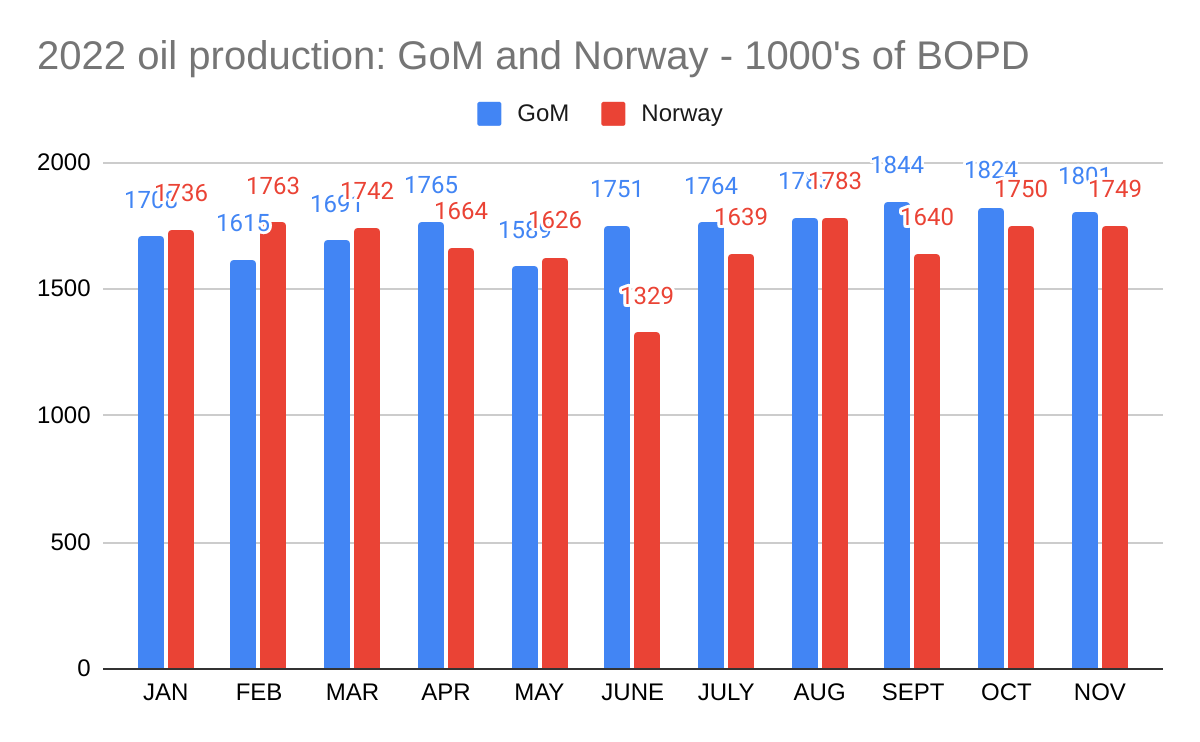
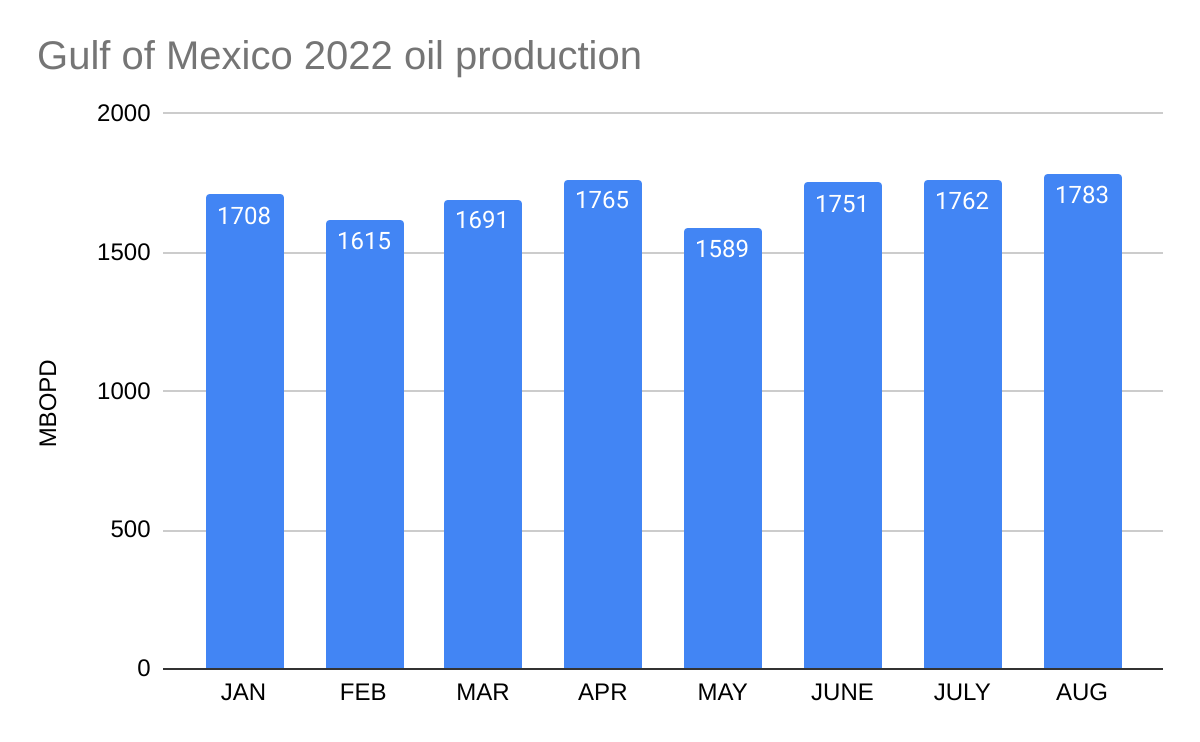
…and were in fact identical in August (1.763 million BOPD). GoM production should strengthen a bit in 2023 as new deepwater projects come online. Norwegian production should also increase. The longer term is more uncertain, particularly for the US OCS which is seemingly being managed to fail.

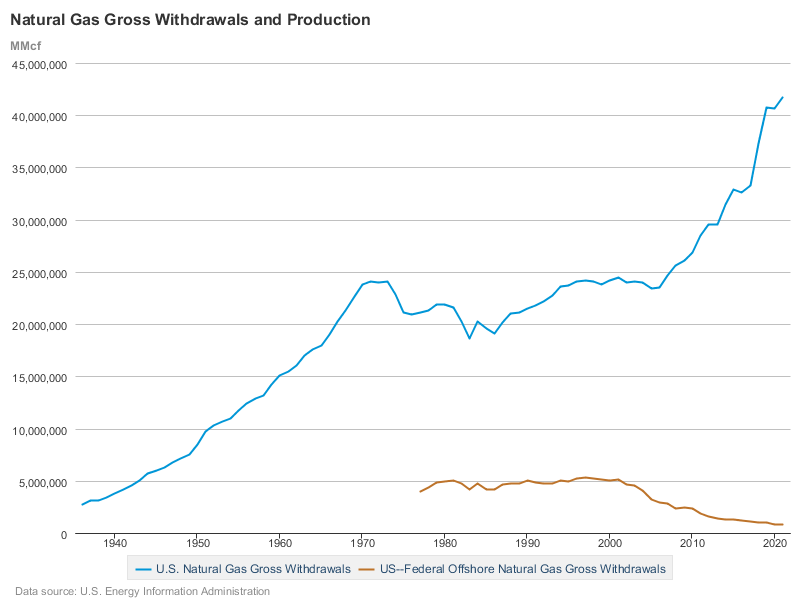
Natural gas production is a different story. Norway has been sustaining and growing offshore gas production, while Gulf of Mexico gas production has been in free-fall. Total US production has nonetheless grown sharply over the past 17 years thanks to the shale boom (see the chart below). In the 1980’s, the GoM accounted for 20-25% of US gas production. The GoM share is now only 2%, most of which is gas that is associated with deepwater oil production. Nonassociated offshore gas has important advantages that should not be ignored.

Read Full Post »

Offshore gas has important environmental advantages, particularly nonassociated gas-well gas (GWG). While the GoM production chart (below) is not pretty, there are signs that gas production may have bottomed and is slowly rising. This is largely due to growth in oil-well gas (OWG) associated with deepwater oil production.

A successful offshore program requires a mix of strategies, and it is encouraging that companies are still pursuing natural gas on the GoM shelf. The second chart (below), based on BOEM data, shows 2022 YTD (probably through Oct.) GWG production for the 11 companies that (1) produced more GWG than OWG and (2) produced more than 1 BCF of GWG.

Interestingly, 100% of the gas produced by Contango, Samchully, and Helis in 2022 was from gas wells. Contrast this with bp, the third largest GoM gas producer. None of bp’s gas production was from gas wells.

One has to wonder about the extent to which deepwater gas reservoirs are being stranded due to the less favorable economics. Preventing such resource losses was once an important regulatory consideration given the conservation mandate in the OCS Lands Act and the importance of maximizing the public benefit. However, current policy, as expressed in the proposed 5 year leasing plan, is to phase out offshore production rather than sustain it. This is difficult to reconcile.

Read Full Post »

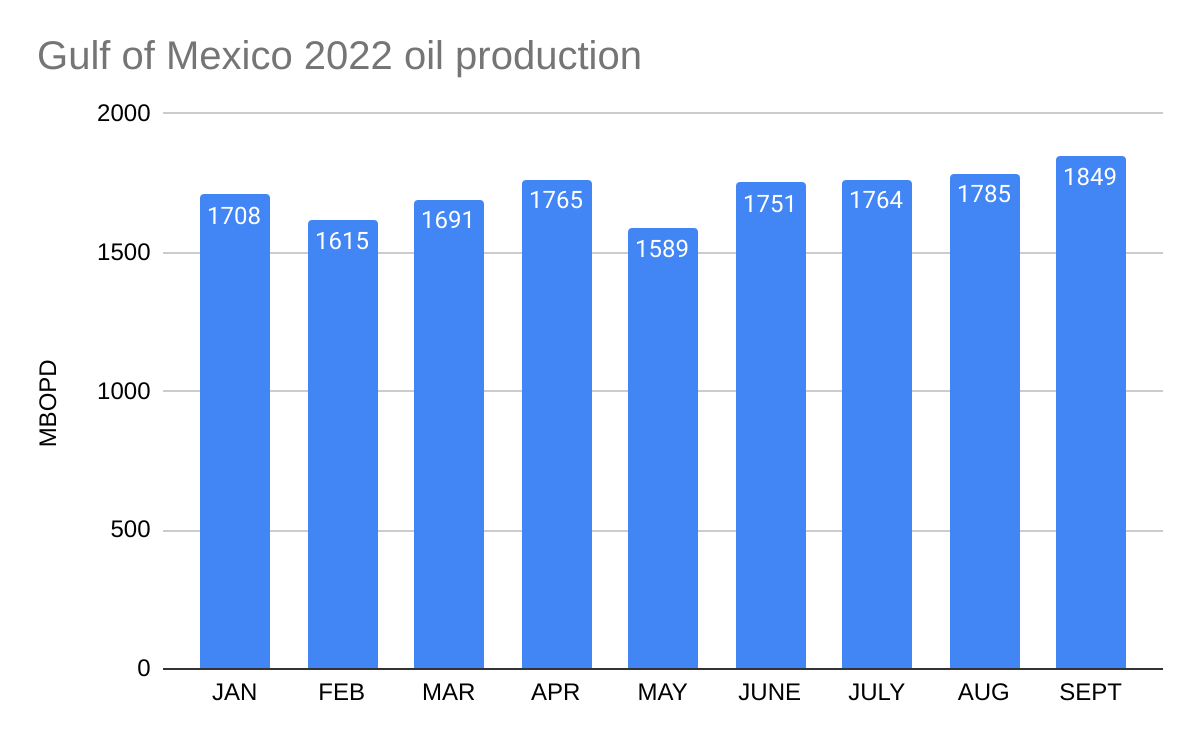
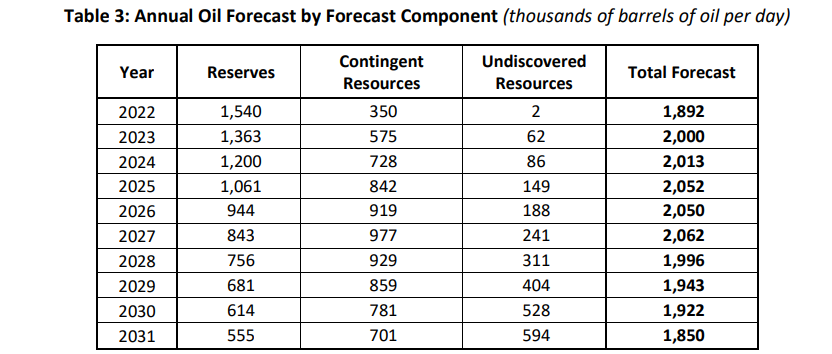
The September total reflects production from recent deepwater startups, including King’s Quay (Murphy) and Spruance (LLOG). Other new deepwater facilities should further boost GoM oil production next year as forecasted by BOEM (table below). Unfortunately, the BOEM forecast considerably overstates 2022 production and appears to be optimistic for the outyears. This is a significant concern given that US offshore leasing policy, as reflected in the 5 Year Plan, is naively focused on throttling long-term production. See the rather startling quote below:

BOEM’s short-term (20-year) production forecast for existing leases shows steady growth from 2022 through 2024 and declining thereafter (see Section 5.2.1). The long-term nature of OCS oil and gas development, such that production on a lease can continue for decades makes consideration of future climate pathways relevant to the Secretary’s determinations with respect to how the OCS leasing program best meets the Nation’s energy needs.

5 Year Leasing Program, p.3

Read Full Post »

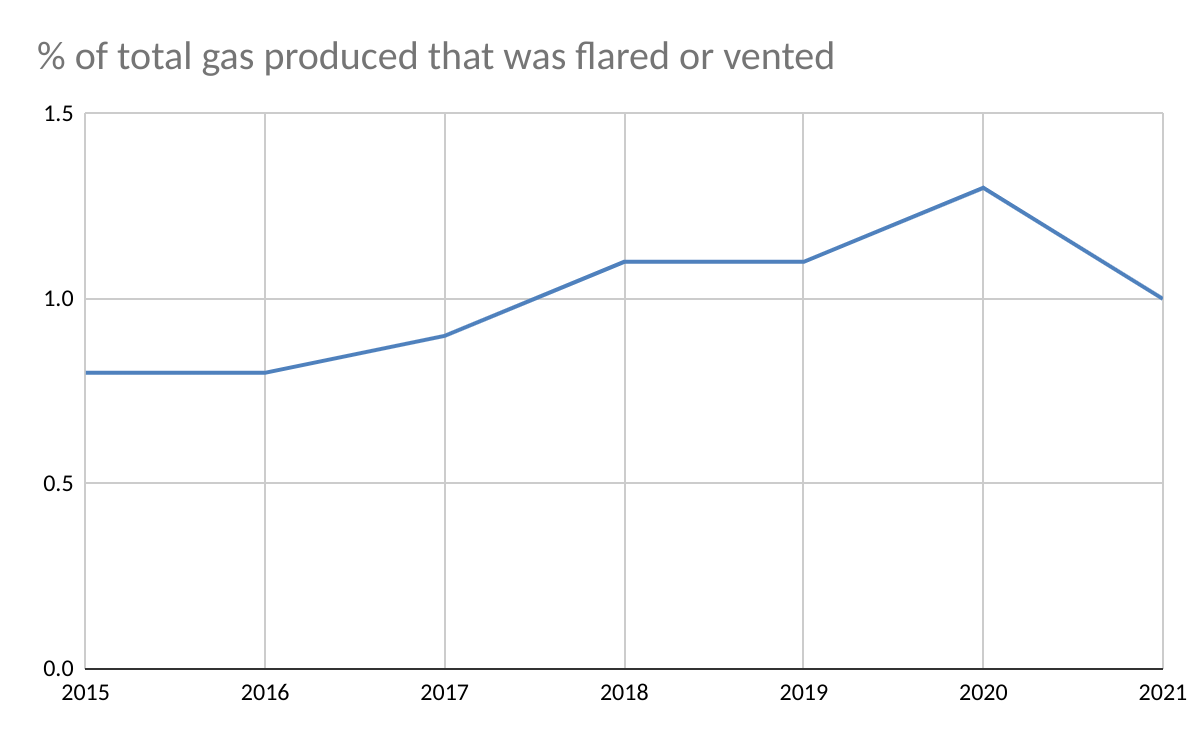
Further, per the ONRR data:

Oil-Well Gas
Produced
(BCF)
Gas-Well Gas
Produced
(BCF)
total gas
produced
(BCF)
total gas flared
or vented
(BCF)
% flared
or vented
2015588.4719.41307.810.30.8
2016631.7589.11220.89.70.8
2017637.3441.21078.59.90.9
2018623.1370.1993.210.61.1
2019670.2364.11034.311.71.1
2020581.4224.9806.310.41.3
2021582.2209.5791.78.21

Read Full Post »

BOEM’s 2022 production forecast, which was just published in July, was 1.9 million BOPD, and will likely be a full 10% too high for the year. One has to assume that the staff work was completed well before the document was actually published. Of greater concern, BOEM’s longer term production forecast, along with unrealistic expectations for the “transition,” were used to justify a subminimal 5 year leasing plan with the fewest sales in history.

Read Full Post »

Read Full Post »

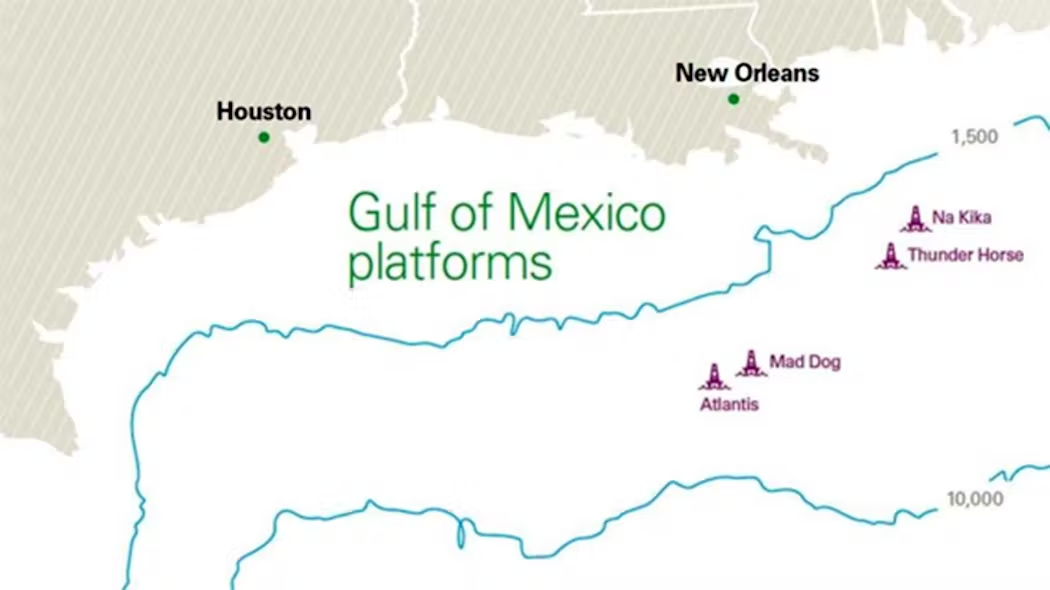
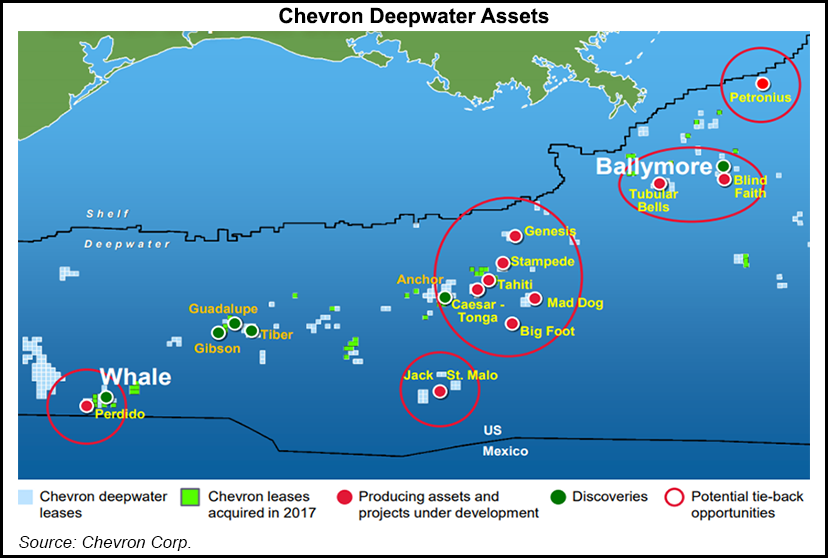
Based on current forecasts, Ian’s impact to Gulf of Mexico production facilities should be minimal. However, BP has shut-in Na Kika and Thunder Horse and Chevron has shut-in Petronius and Blind Faith given their more easterly locations.

Read Full Post »

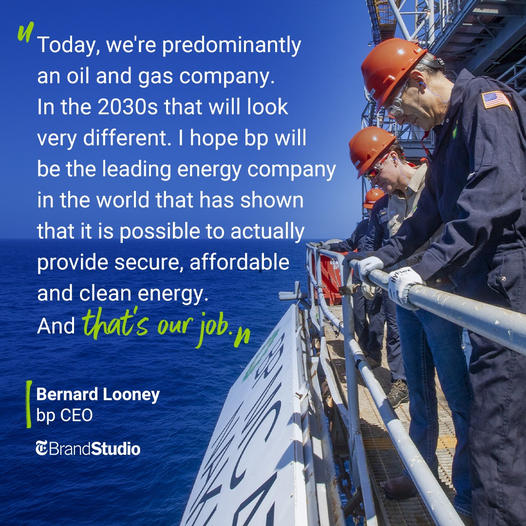
bp ad showing workers on their Na Kika floating production platform in the Gulf of Mexico (6340′ water depth)

Is bp apologizing for the pictured workers and platform? With the demand for oil and gas expected to increase through 2050, and worldwide concerns about energy supply and security, ads like this make neither good business nor good social sense.

Moving away from oil and gas and becoming a “very different” company in the 2030’s won’t make bp the “leading energy company in the world.” On the contrary, a “very different” bp will likely be less influential, less profitable, and more dependent on government mandates and subsidies.

Contrary to the ad (and to the company’s credit), bp seems committed to Gulf of Mexico production well beyond the 2030’s. They are the number 2 oil producer in the Gulf (behind Shell), continue to drill exploration and development wells, and were the most active participant at Lease Sale 257. Bp was the high bidder on 46 tracts, 12 more than no. 2 Chevron. The Department of the Interior has been legislatively directed to award Sale 257 leases by 9/15/2022, but has yet to comment publicly on the matter.

Read Full Post »

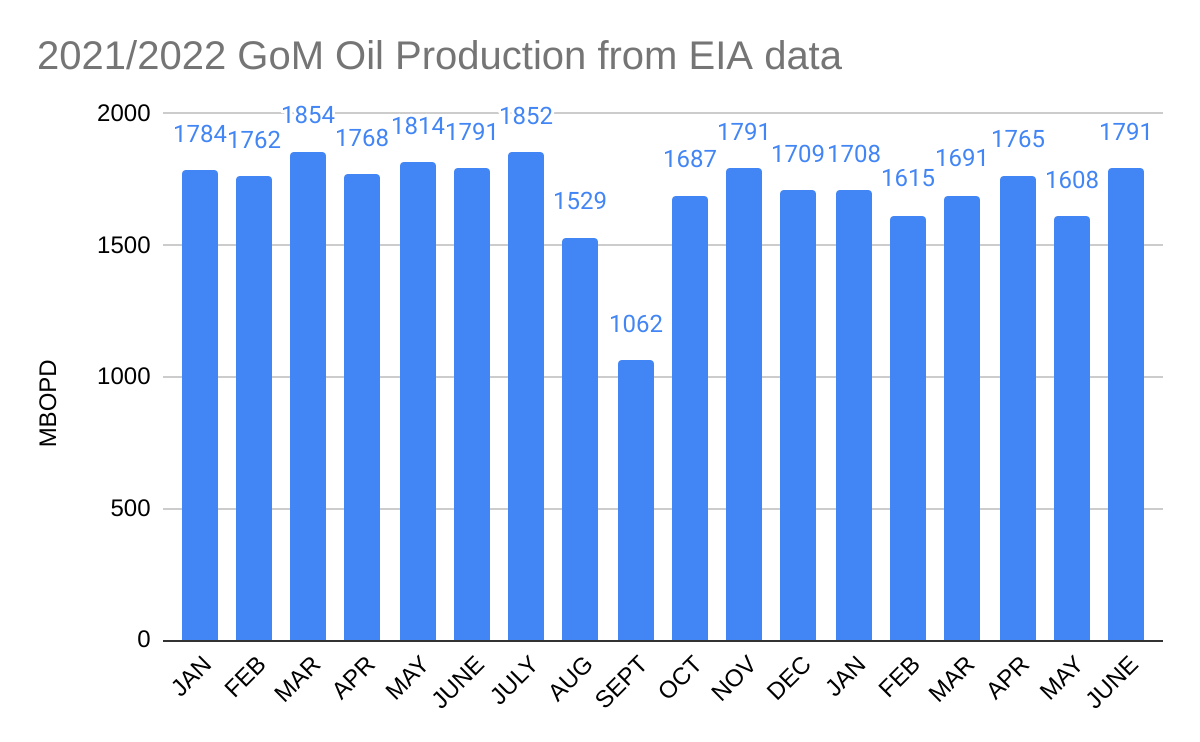
GoM oil production for June increased (see chart below) with King’s Quay and Spruance contributing to the uptick. Other anticipated 2022 startups are not yet producing.

The EIA production forecast for 2022 is proving to be pretty accurate. Kudos to them. However, BOEM’s 2022 forecast of 1.9 million bopd is not achievable and concerns about the intermediate and longer term persist. Unfortunately, BOEM’s highly optimistic forecast for 2022 and beyond, along with unrealistic expectations regarding the energy transition, have significant policy implications. This stunning quote from the 5 year leasing plan explains why so few lease sales were proposed:

BOEM’s short-term (20-year) production forecast for existing leases shows steady growth from 2022 through 2024 and declining thereafter (see Section 5.2.1). The long-term nature of OCS oil and gas development, such that production on a lease can continue for decades makes consideration of future climate pathways relevant to the Secretary’s determinations with respect to how the OCS leasing program best meets the Nation’s energy needs.

5 Year Leasing Program, p.3

Read Full Post »

« Newer Posts - Older Posts »