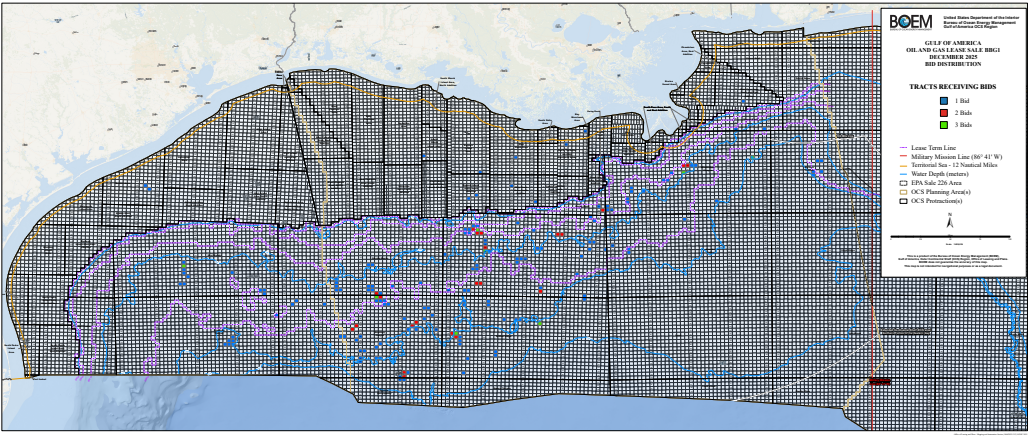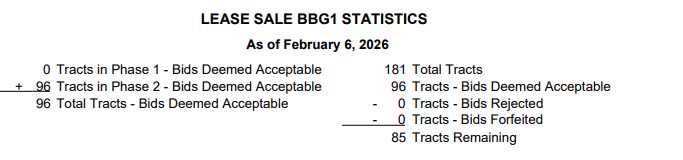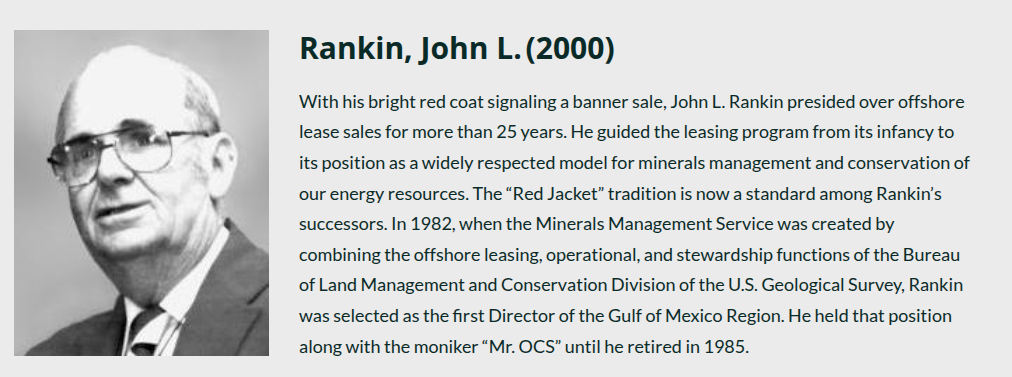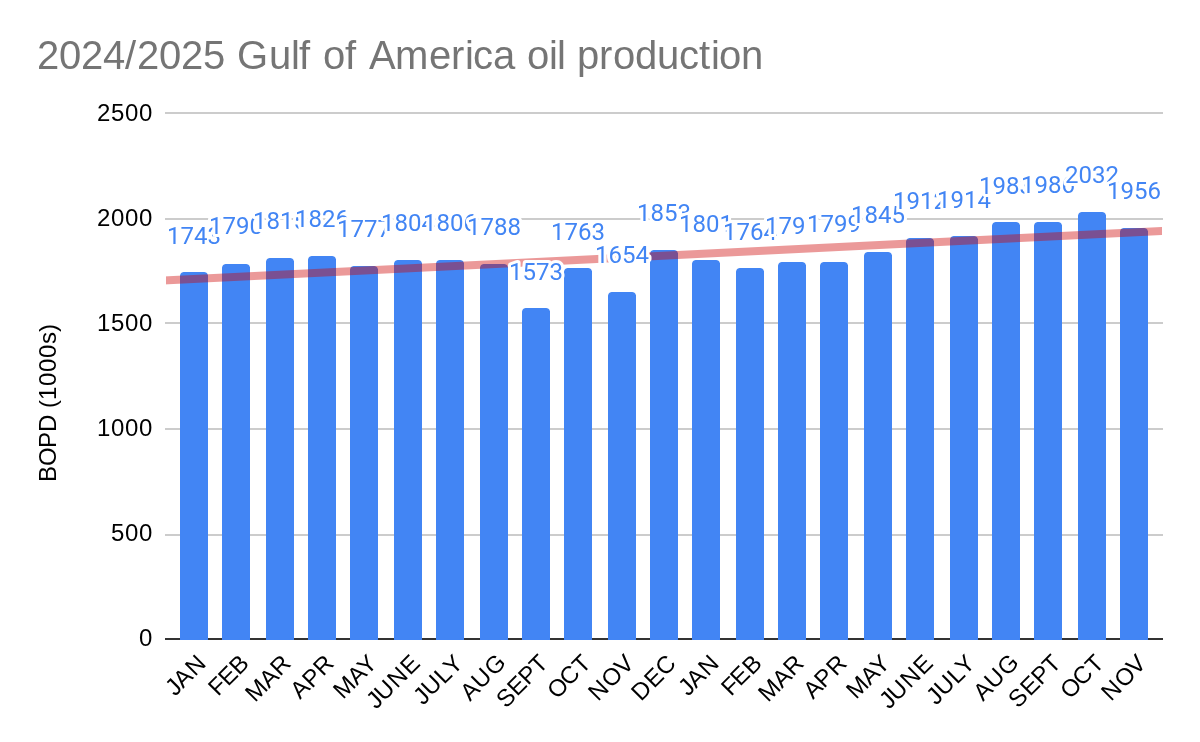
The press release and full program are linked. It looks like the most recent leaks were accurate. See the maps below with the locations and dates. This will stir the pot!


Posted in Alaska, California, energy policy, Gulf of Mexico, Offshore Energy - General, Uncategorized, tagged Alaska, California, Draft Proposed OCS Leasing Program, Florida, Gulf of America on November 20, 2025| 2 Comments »
The press release and full program are linked. It looks like the most recent leaks were accurate. See the maps below with the locations and dates. This will stir the pot!


Posted in California, energy policy, Gulf of Mexico, Offshore Energy - General, tagged Federal offshore, Gulf of America, history, offshore drilling, Offshore Oildom, oil production, Tyler Priest on November 5, 2025| Leave a Comment »

Tyler Priest, the leading historian on US offshore oil and gas operations, has published another gem. His book, Offshore Oildom, is a fascinating account of the history of the technologically innovative and economically important, yet highly controversial, OCS Oil and Gas program. His book is highly recommended.
Consider this recommendation by Daniel Yergin:
“Tyler Priest, a preeminent historian of energy and the environment, explores how a single well drilled off a pier near Santa Barbara in 1898 gave rise to a major American industry—offshore oil and gas. In spirited prose, Priest demonstrates how this U.S. industry was created not only by innovation, creative engineering, and complex execution; it was also the result of fierce political battles.” ~Daniel Yergin, Pulitzer Prize–winning author of The Prize: The Epic Quest for Oil, Money, and Power and The New Map: Energy, Climate, and the Clash of Nations
Posted in CCS, climate, energy policy, Gulf of Mexico, Regulation, tagged carbon disposal, CCS, Gulf of America, oil and gas leasing, Sale 257, sale 259, sale 261, Sale 262 on October 9, 2025| Leave a Comment »

Unsurprisingly, the carbon capture and sequestration (CCS) hype is fading fast. No other carbon strategy is so strongly opposed by both climate change activists and skeptics.
Support for CCS seems to be limited to those seeking to profit from subsidies, mandates, and disposal fees. In 2022, Exxon projected a $4 trillion CCS market by 2050. Pipe dream?
“Highlights” of the Gulf of America OCS carbon disposal era:

Even those of us who are supporters of responsible offshore oil and gas production find it a bit unsavory that some companies are looking to cash in on (and virtue signal about) carbon collection and disposal at the public’s expense. Perhaps companies that believe oil and gas consumption is harmful to society should be seeking to reduce production rather than engaging in enterprises intended to sustain it.
Posted in accidents, Offshore Energy - General, Regulation, tagged BSEE, equipment and tools, fire risk, Gulf of America, Safety Alert on September 15, 2025| Leave a Comment »
…and should be an integral part of Job Safety Analyses!

According to BSEE, there is a recurring trend of equipment misuse contributing to fire and explosion hazards during offshore oil and gas operations in the Gulf of America.
Workers have used tools not rated for electrical work on live circuits (Figure 1) and mismatched hydraulic or pneumatic tools for high-pressure systems (Figure 2). In several cases, non-intrinsically safe hand tools were used in explosive atmospheres, including mudrooms and drilling floors.
The Safety Alert is attached.
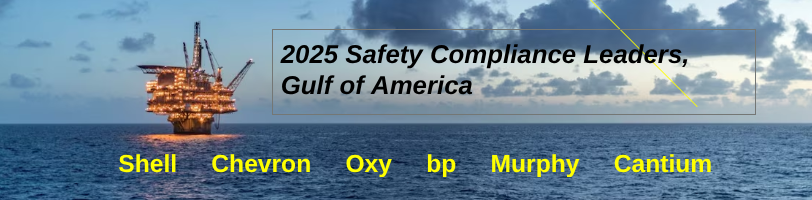
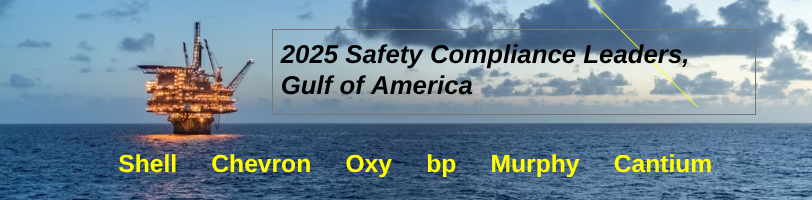
Posted in drilling, energy policy, Gulf of Mexico, Offshore Energy - General, tagged AnadarkoOxy, Arena, Beacon, bp, Cantium, Chevron, discoveries, few active rigs, Gulf of America, rig count, Shell, Talos on September 3, 2025| Leave a Comment »

The latest Baker Hughes Rig Count Report shows only 10 rigs actively drilling in the Gulf. All are at deepwater locations – 7 in the Mississippi Canyon area, 2 in Green Canyon, and 1 in Alaminos Canyon. Per the BSEE borehole file, Shell accounts for most of the current MS Canyon wells and the Alaminous Canyon well. Beacon is also drilling in the MS Canyon, and the Green Canyon well appears to be a Chevron operation.
This current rig count, which has hovered between 9 and 12 all year, is troubling if you are concerned about long-term production. By comparison the Gulf rig count reached 22 last year and was 100+ during the 10 year period from 1994 to 2003.
Only Anadarko/Oxy, Beacon/BOE, BP, Chevron/Hess, Shell, and Talos have spudded deepwater exploratory wells in 2025 YTD. Arena and Cantium are the only shelf drillers – all development wells.
Technological advances and extensions of past discoveries have sustained Gulf production, but declines are certain over the longer term if drilling activity doesn’t increase. Oil price uncertainty is an issue, but that’s always the case. Semiannual lease sales are now legislatively required and the terms will be attractive, so those issues are off the table. Let’s see what the bidding looks like at the upcoming sale.
The decline in deepwater discoveries (BOEM data below) is particularly discouraging. Per BOEM, the last deepwater field discovery was in March 2023.

Posted in Gulf of Mexico, Offshore Energy - General, Regulation, tagged Administrative Procedures Act, BSEE, downhole commingling, Gulf of America, OBBB, offshore safety, Paleogene fields, public review, ultimate resource recovery on August 29, 2025| Leave a Comment »

The “One Big Beautiful Bill Act of 2025” (OBBB), Public Law 119-21, which was signed into law on July 4, 2025, includes a significant offshore production directive (section 50102) that has received little public attention:
“The Secretary of the Interior shall approve a request of an operator to commingle oil or gas production from multiple reservoirs within a single wellbore completed on the outer Continental Shelf in the Gulf of America Region unless the Secretary of the Interior determines that conclusive evidence establishes that the commingling—(1) could not be conducted by the operator in a safe manner; or (2) would result in an ultimate recovery from the applicable reservoirs to be reduced in comparison to the expected recovery of those reservoirs if they had not been commingled.”
This is, to the best of my knowledge, the first time in the history of the OCS oil and gas program that Congress has directed the safety regulator to approve well completion practices that could increase safety, environmental, and resource conservation risks.
Rather than calling for the operator to demonstrate that a downhole commingling plan is safe and optimizes resource recovery, the plan must be approved unless BSEE proves conclusively that the operation could not be conducted safely or that resource recovery would be reduced. This is the antithesis of the operator responsibility doctrine, a fundamental principle of the OCS regulatory program, and safety management principles that call for the operator to demonstrate that safety, environmental, and resource conservation risks have been effectively addressed.
Only 40 days after the OBBB was signed, BSEE published a direct final rule implementing the downhole commingling directive. This is warp speed for promulgating a Federal regulation! In keeping with the rush to finalize the rule, the preamble asserts that “notice and comment are unnecessary because this rule is noncontroversial; of a minor, technical nature; and is unlikely to receive any significant adverse comments.”
I intend to submit comments prior to the Sept. 12 deadline. These comments will assert that the rule does not qualify for an exemption from the Administrative Procedures Act’s public review and comment requirement. I will also recommend that BSEE consider hosting a public forum during the comment period to present their research on downhole commingling and discuss the risk mitigations.
Below are some of the issues/questions that should be considered during the public comment period:
There are many more issues that remain to be discussed, which is why the downhole commingling rule should be published in draft form, with a comment period of at least 90 days.
Posted in Alaska, energy policy, Gulf of Mexico, Offshore Energy - General, tagged BOEM, Cook Inlet, Gulf of America, OCS leasing, US Dept. of the Interior on August 19, 2025| Leave a Comment »

| Year | Cook Inlet Sale | Gulf of America Sales |
|---|---|---|
| 2025 | — | Dec. 10 |
| 2026 | March | March, August |
| 2027 | March | March, August |
| 2028 | March | March, August |
| 2029 | — | March, August |
| 2030 | March | March, August |
| 2031 | March | March, August |
| 2032 | March | March, August |
| 2033–2039 | — | March, August |
| 2040 | — | March |
Posted in energy policy, Offshore Energy - General, Regulation, tagged Big Beautiful Bill, energy policy, Gulf of America, lease sale 262 on July 7, 2025| Leave a Comment »
See the differences in the OCS oil and gas provisions in the House and Senate versions.
We preferred the House version, but the Senate Parliamentarian killed the provisions that reduced the risk of litigation and processing delays.
Whether justified or not, the royalty rate is now capped at 1/6 and a 10-year deepwater lease term is locked in.
The favorable terms and assurance of regular GOA lease sales put the ball squarely in industry’s court. We are looking for a good showing at Sale 262, including some new bidders and the return of some prominent companies.
Posted in flaring and venting, Gulf of Mexico, Offshore Energy - General, Regulation, tagged Gulf of America, increased flaring, trend, venting on June 24, 2025| Leave a Comment »

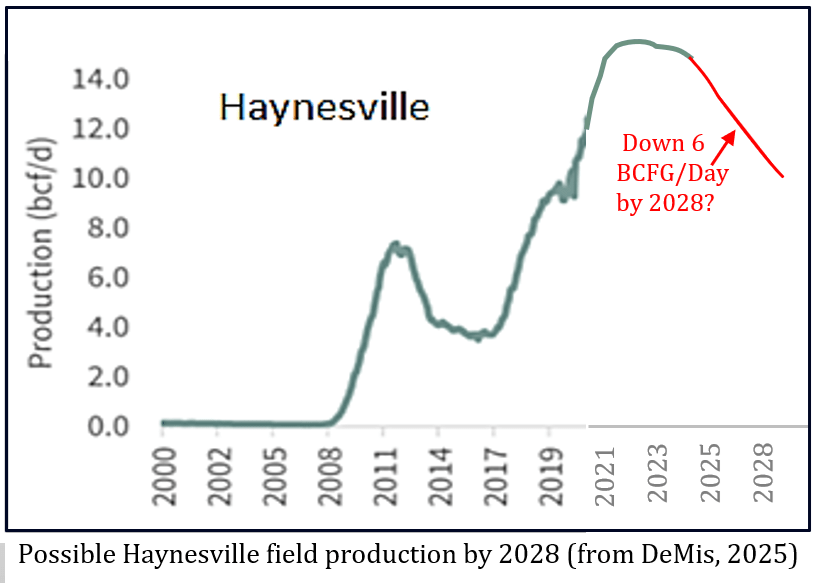
As the chart indicates, the % of flared or vented Gulf of America gas production increased over the past 10 years. This trend is presumably due, at least in part, to the sharp increase in the % of gas production from oil wells (associated gas), which have a higher flaring rate. In 2024, 87% of Gulf gas production was from oil wells.
Flaring/venting summary tables and comments, updated through 2024, will be posted later in the week.