Feeds:
Posts
Comments

Posts Tagged ‘flaring’

Further, per the ONRR data:

Oil-Well Gas
Produced
(BCF)
Gas-Well Gas
Produced
(BCF)
total gas
produced
(BCF)
total gas flared
or vented
(BCF)
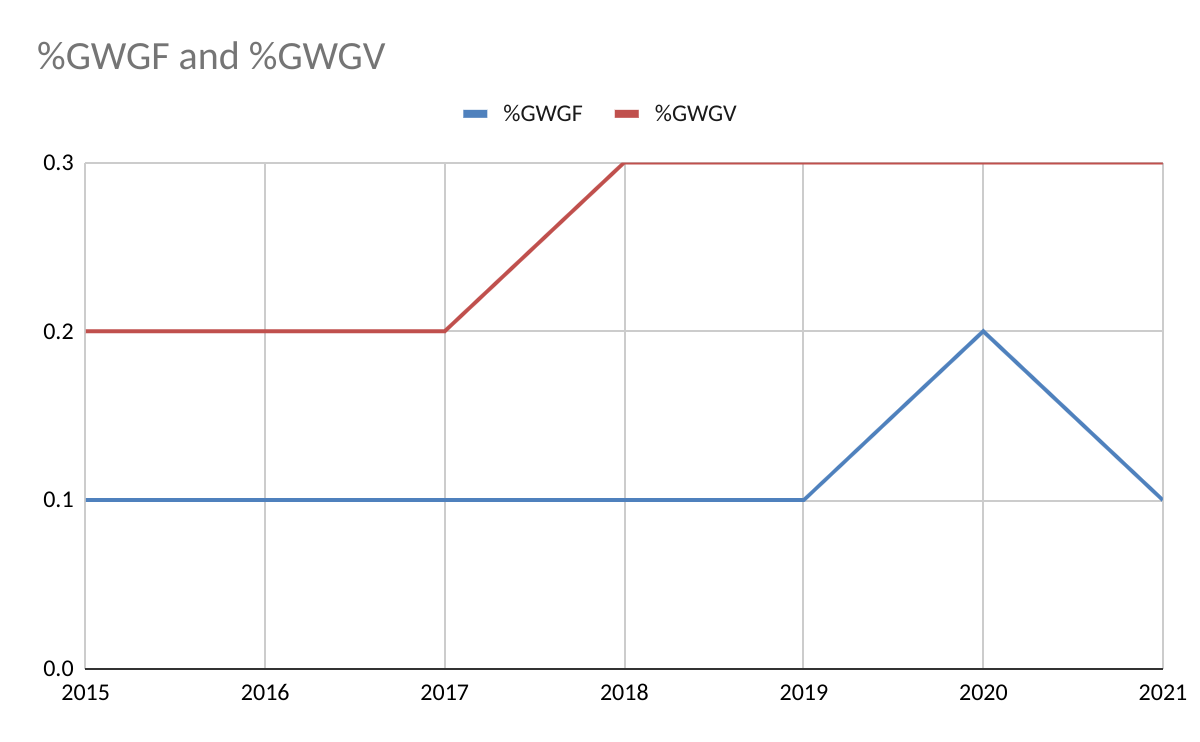
% flared
or vented
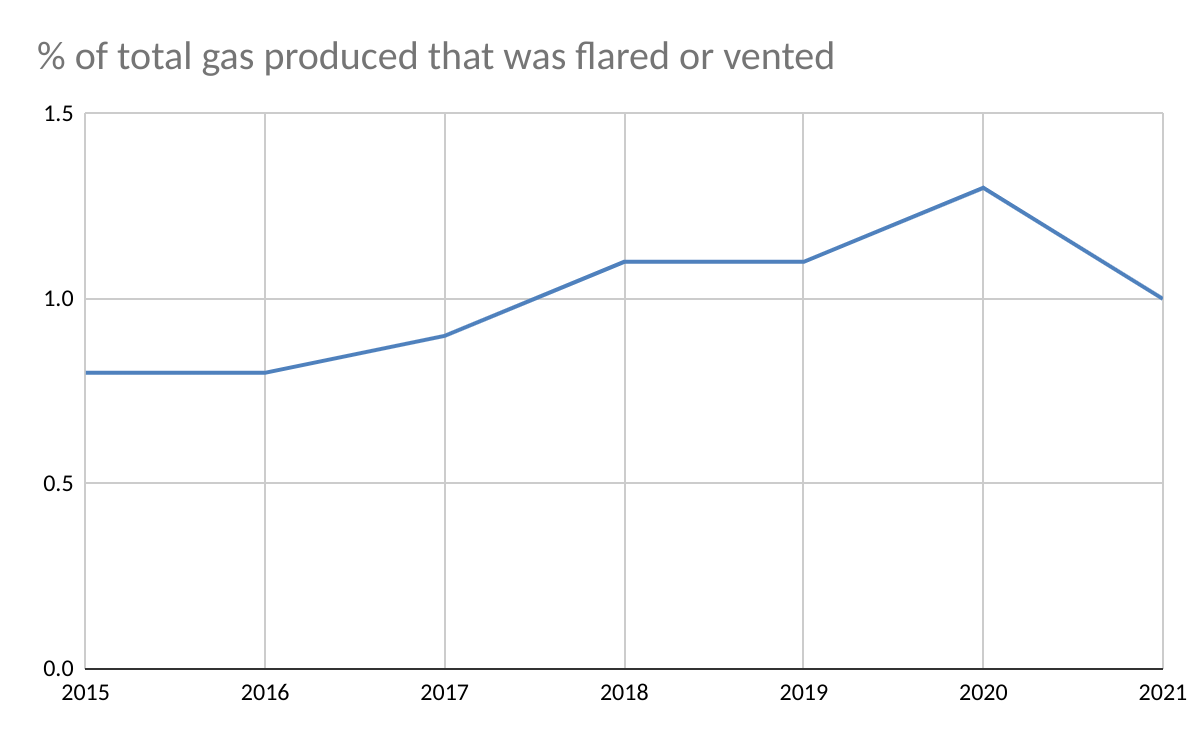
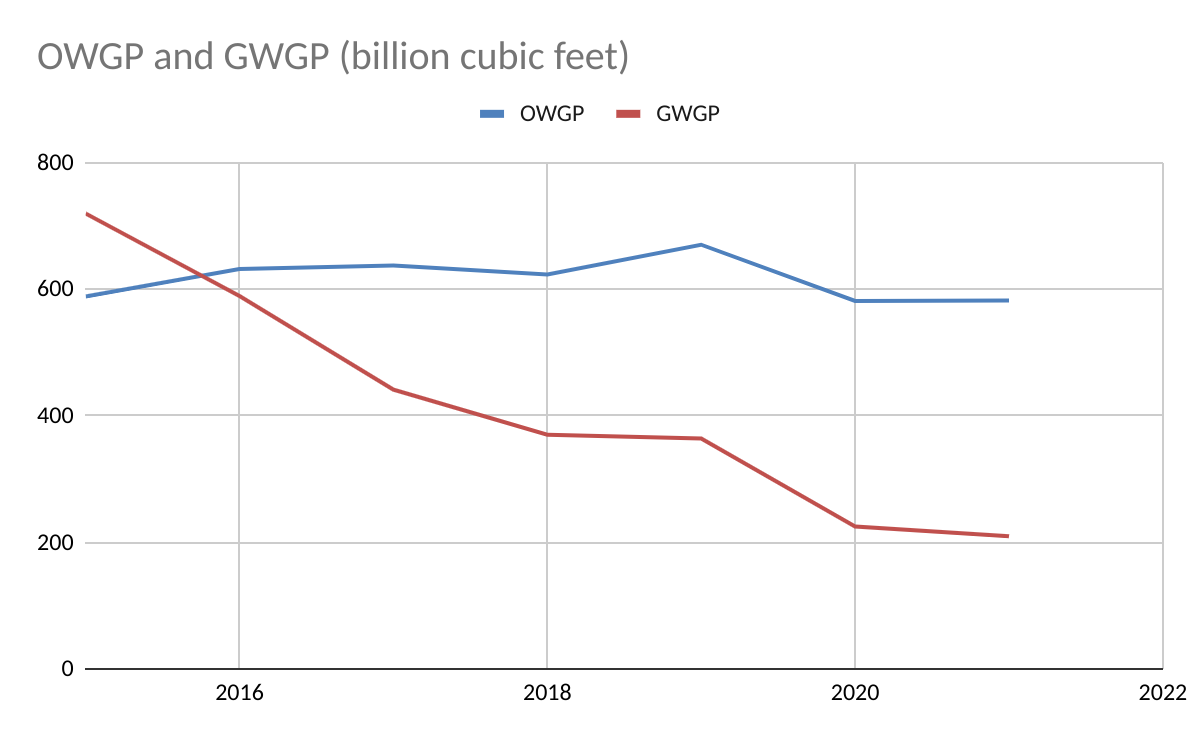
2015588.4719.41307.810.30.8
2016631.7589.11220.89.70.8
2017637.3441.21078.59.90.9
2018623.1370.1993.210.61.1
2019670.2364.11034.311.71.1
2020581.4224.9806.310.41.3
2021582.2209.5791.78.21

Read Full Post »

Gulf of Mexico flaring and venting data have been sorted for the years 2015-2021. The reporting of these data is mandatory and strictly enforced, so these ONRR numbers should be accurate.

Biggest surprise: The biggest surprise is that there were no big surprises in the data. The % of gas flared and vented were generally consistent with expectations based on familiarity with historical data.

Biggest disappointment: the continued sharp decline in nonassociated (gas-well) gas production. GoM gas well gas production exceeded 4 tcf annually in the 1990s and was still above one tcf ten years ago. Since then, GWG production has declined by 80%. Nonassociated offshore natural gas has important environmental advantages, so the decline in production should be a major concern to policy makers

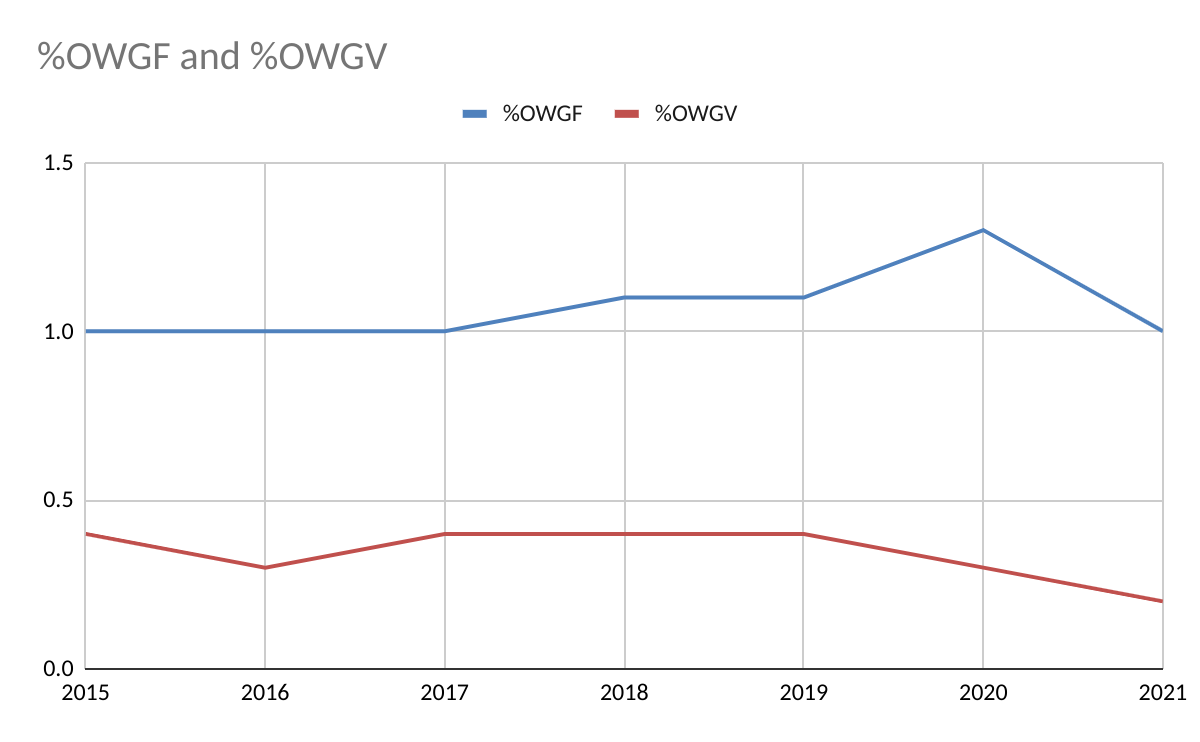
Encouraging sign: The % of oil-well gas vented has ticked down over the past 2 years which is encouraging from a GHG standpoint. This is presumably because most associated gas is produced on modern deepwater facilities equipped with flare booms. An astute politician would be rushing to take credit for this achievement.😀

Unfavorable ratio: Although the volumes are low (<1 Bcf combined in 2021), more gas-well gas was vented each year than flared. This is presumably because older shelf facilities without flare booms still produce much of the natural gas.

Abbreviations:

  • ONRR: Office of Natural Resources Revenue
  • GoM: Federal waters of the Gulf of Mexico
  • OWGP: oil-well gas production
  • GWGP: gas-well gas production
  • OWGF: oil-well gas flared
  • OWGV: oil-well gas vented
  • GWGF: gas-well gas flared
  • GWGV: gas-well gas vented

Read Full Post »

ONRR mandatory production reporting data are being sorted to assess GoM flaring and venting trends. This will help resolve inconsistencies previously identified. In the meantime, the table below summarizes the 2021 data. 1.03% of the gas produced that year was flared or vented. 0.25% of the gas production was vented.

Interestingly, more gas-well gas was vented than flared. This is presumably because older shelf facilities without flare booms still produce 25% of the gas (versus only 7% of the oil), mostly from gas wells. More to follow.

gas
production
flared (%)vented (%)flared &
vented (%)
OWG582,2045919 (1.01)1405 (0.24)7324 (1.26)
GWG209,779311 (0.15)548 (0.26)859 (0.41)
total 791,9836230 (0.79)1953 (0.25)8183 (1.03)
OWG=oil well gas; GWG=gas well gas; all volumes are in MMCF

Read Full Post »

Kudos to ONRR for posting complete flaring and venting data for all oil and gas operations on US Federal and Indian lands. These data, which distinguish between oil-well gas and gas-well gas, are included in the large “Production Disposition by Month” file that can be downloaded here.

The data should give us a good read on flaring and venting trends and help resolve the inconsistencies previously identified.

Read Full Post »

Final text

  • The flaring provision complicates compliance and may increase safety risks: (p. 649) Exception 1 exempts “gas vented or flared for not longer than 48 hours in an emergency situation that poses a danger to human health, safety, or the environment.” This is inconsistent with the carefully constructed BSEE regulations which allow limited (48 hours cumulative) flaring for certain operations (e.g. during the unloading or cleaning of a well, drill-stem testing, production testing, and other well-evaluation testing). Such flaring is essential but not normally “an emergency situation.” The bill could thus compromise safety by unnecessarily restricting or complicating well operations and by limiting flaring in circumstances where such flaring reduces safety risks.
  • Time for BOEM to get to work 😉: (p. 650): Per our previous post, the highlight section of the bill (from an offshore oil and gas standpoint) reinstates Lease Sale 257 (GoM) and requires that the scheduled 2022 lease sales 258 (GoM) and 259 (Cook Inlet) be held by 12/31/2022. Lease Sale 261 (GoM) must be held by 9/30/2023.
  • Petty but perhaps necessary: p. 655: The provision restricting wind leasing when no oil and gas lease sale has been held in the prior year is in the final bill.

Read Full Post »

Read Full Post »

IG Report

We determined that over approximately 5 years, the energy company’s venting and flaring activities exceeded regulatory limits without the required approvals, resulting in a loss of Federal mineral royalties and resources. More specifically, we identified approximately 229,066 MCF of vented and flared natural gas as suspicious or exceeding the allowable amount across four platforms in the Gulf of Mexico between January 2014 and April 2020. We presented our findings to ONRR, which assisted us in analyzing the energy company’s venting and flaring activities and determining the amount of lost Federal mineral royalties. Based on this analysis, ONRR submitted and secured a proof of claim in the amount of $712,857.82 for unpaid mineral royalties during the energy company’s bankruptcy proceeding.

OIG report 6/13/2022

Comments:

  1. The report doesn’t name the company, but one can make an educated guess based on some of the information provided (e.g. number of platforms the company operated, bankruptcy proceedings, etc.)
  2. The regulator usually finds out about false or misleading recordkeeping. Reports from employees, anonymous or otherwise, are a common source of such charges, as was the case here. (In my District in California, a toolpusher informed us that BOP pressure test records were being falsified. This led to multiple felony convictions.)
  3. The IG’s recommendations to BSEE and ONRR are reasonable and appropriate:
    1. Examine venting and flaring reports for patterns that may reflect violations or amounts that exceed permissible limits.
    2. Develop a process to ensure that royalties are being paid for improperly flared or vented gas.
  4. As BOE has previously reported, available public flaring data do not match. These data inconsistencies should be addressed.
  5. BSEE/ONRR should make more detailed flaring/venting data publicly available so differences between facilities and sectors (e.g. deepwater vs. shelf) can be assessed. Efforts should also be made to post these data in a more timely manner. Data for 2021 are still not available.

Read Full Post »

Among other provisions, EPA’s proposed rule, issued on 11/2/2021, specifies that associated gas be handled as follows:

Route associated gas to a sales line. If access to a sales line is not available, the gas can be used as an onsite fuel source, used for another useful purpose that a purchased fuel or raw material would serve, or routed to a flare or other control device that achieves at least 95 percent reduction in methane and VOC emissions.

Because the Dept. of the Interior has jurisdiction over air emissions on most of the Gulf of Mexico OCS, I assume this proposed rule does not apply to those facilities. However, the EPA proposal is not entirely clear in that regard. If the EPA proposal does not apply, will BOEM/BSEE be proposing similar restrictions in their regulations?

MMS/DOI considered prohibiting venting, but determined that adding flaring capability was not feasible for many shelf platforms, and for some platforms there would have been a net increase in emissions. That said, venting is not insignificant. A 2017 Argonne study indicated (table 2) that, for shelf platforms from 2011 through 2015, more than 3 times as much gas was vented as was flared. More recent data should be reviewed to get a better sense of the costs, benefits, and safety considerations associated with achieving further reductions in venting.

Current flaring/venting regulations for OCS facilities are here.

Read Full Post »

« Newer Posts