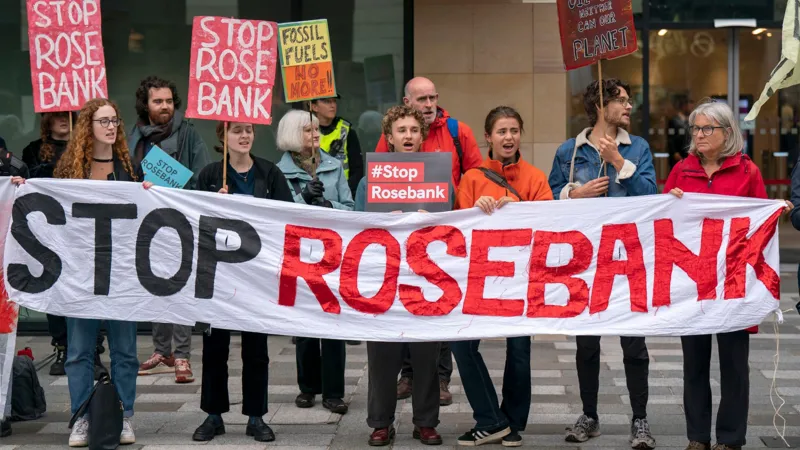
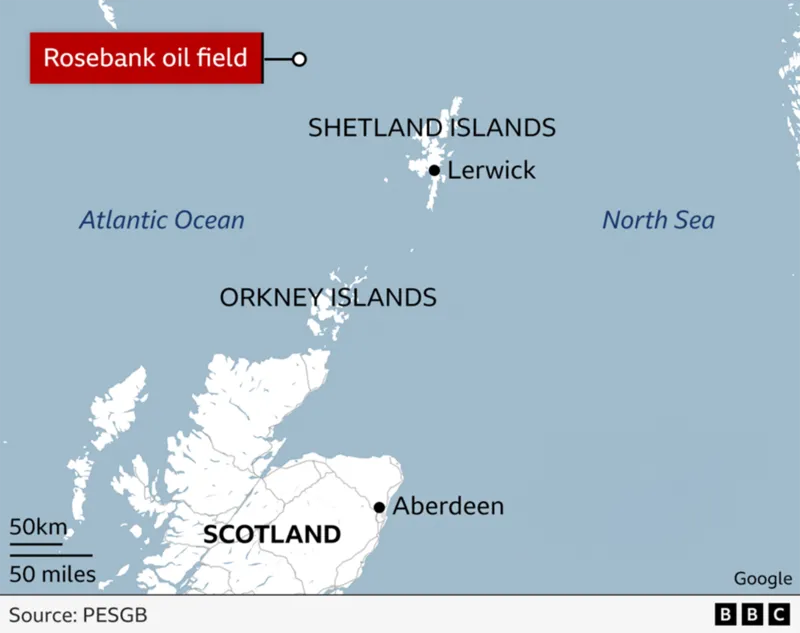
Campaigners against Rosebank, Britain’s largest untapped oil field, have told the UK government that approving the project would risk breaching international law.
They say profits would flow in part to the Israeli oil and gas company Delek Group, which the UN human rights commissioner accuses of “supporting the maintenance and existence” of illegal settlements in the West Bank.
Note that Delek is not a Rosebank partner, but is the majority shareholder in a 20% Rosebank partner, Ithaca Energy. The 80% owner and project operator is Equinor, which is 2/3 owned by the Norwegian govt. Apparently, neither Equinor nor Norway are troubled by Ithaca Energy’s 20% Rosebank share. (There is no indication that the BBC contacted Equinor prior to publishing the article.)
The most sensible quote in the article is from the govt of Israel which dismissed the accusations as “absurd and distorted.”
Which do left-wing activists hate more – oil or Israel?
The Snorre field is in 300-380m of water in the North Sea ~200 km west of Floro.
According to Reuters and others, Equinor will no longer pursue electrification of Snorre A and B, Heidrun, Aasgard B, and Kristin platforms, but still plans to proceed with projects at Grane and Balder fields.
A number of BOE posts since Jan. 2022 have questioned Norway’s electrification strategy for offshore platforms. Our reasons:
Most offshore platforms produce sufficient gas to support their power demands
Assuming gas that is not used to power a platform is marketed and consumed elsewhere, the net (global) reduction in CO2 emissions from electrifying offshore platforms is negligible. (Perhaps there is actually a small increase in net emissions given the power required to transport the gas to markets and the emissions associated with onshore power generation).
Offshore power demands are highly variable, especially when drilling operations are being conducted.
Gas turbines are reliable, and capable of responding to variable power demand. Excess generation capacity is typically provided.
Power from shore increases the cost of platform operations and could decrease ultimate recovery of oil and gas resources.
Per NPD, electrification of the shelf will increase electricity prices for onshore consumers and increase the need for onshore facility investment.
Gas turbines or diesel generators are still necessary to satisfy emergency power needs at the platforms.
Long power cables are vulnerable to damage (accidental or intentional), as are onshore power stations.
The reliability, cost, and cable vulnerability concerns have clearly been validated. The reality is that powering distant platforms from shore increases operating costs, safety risks, and onshore electricity prices with no net environmental benefit.
It also seems rather hypocritical for a major natural gas exporter to prevent offshore operators from powering their platforms with gas produced at their platforms.
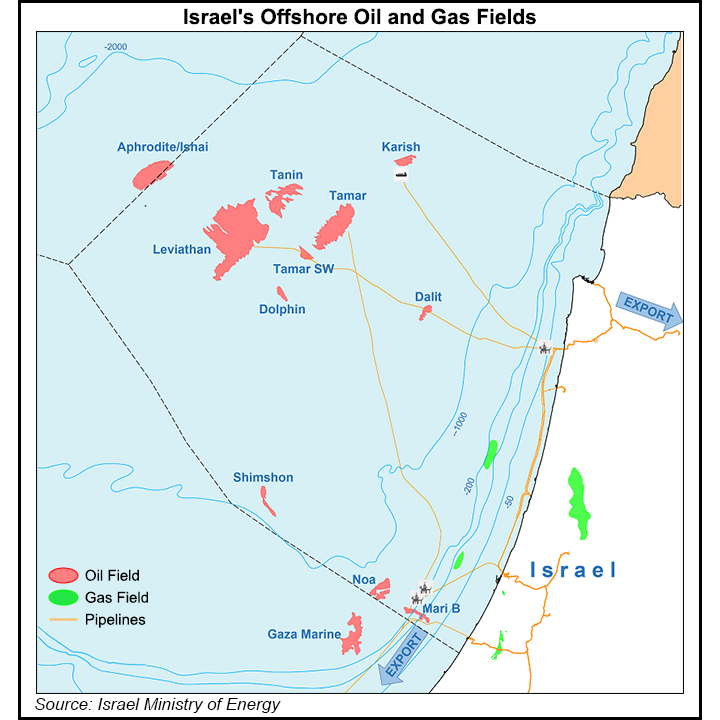
In light of the fantastic Middle East news, planning for the redevelopment of Gaza is underway. The Gaza Marine Gas Field should be a high priority given the power generation and revenue potential.
The field, which was discovered in 1999 by British Gas (now part of Shell), is located approximately 30-36 km off the coast of Gaza in the eastern Mediterranean and has estimated natural gas reserves of ~ 1 Tcf.
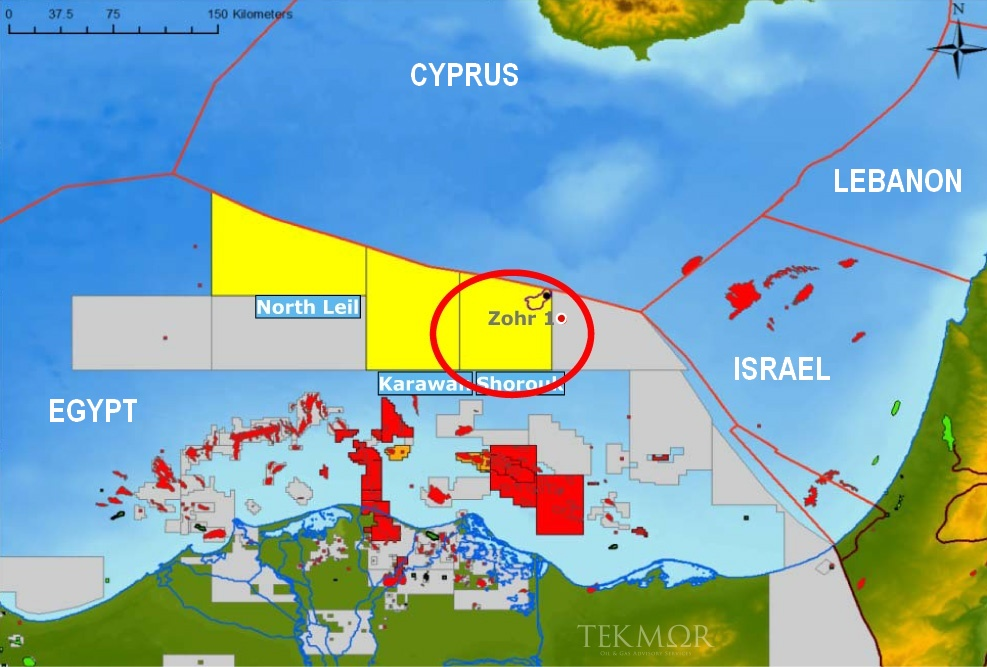
Who should be licensed to develop the field? In June 2023, there was a proposed agreement between the Palestinian Authority and an Egyptian consortium led by state-owned Egyptian Natural Gas Holding Company (EGAS). A resurrection of this arrangement may align with Palestinian interests. EGAS has experience in Mediterranean gas projects including the giant Zohr field (see map below).
Other candidates for developing the Gaza Marine field (pure speculation):
Chevron would be a logical choice given their extensive eastern Mediterranean experience as a result of their acquisition of Noble Energy. However, there might be concerns about undue US and Israeli control of this important resource.
Regional giants like Saudi Aramco, Qatar Energy, and Abu Dhabi National Oil Company (ADNOC) would be good candidates.
Another interesting possibility might be Equinor, which is 2/3 owned by the Norwegian govt. Equinor seems to sometimes make socially desirable investments that are less profitable.
Some combination of the above companies might also be a possibility. In any event, it’s critical to manage this resource in a manner that best benefits the recovery effort.
Equinor (2/3 Norwegian govt owned) is increasing its position in Ørsted (50.1% Danish govt owned). Given the ownership structure, public money is at risk for both countries.
The comments below are from a DN Norway article. They were made by CEO Torgrim Reitan after Equinor announced that the company will contribute NOK 10 billion (USD 1 billion) in Ørsted’s special share offering.
“We want a closer partnership with Ørsted. We are two leading companies in offshore wind, and we believe a closer collaboration could create significant value for both Ørsted’s and our own shareholders.”
“This industry is now going through its first real crisis. That makes it quite clear what’s needed. We know a lot about this from oil and gas. What often happens in such times is consolidation.”
“We want a closer partnership with Ørsted. We are two leading companies in offshore wind, and we believe a closer collaboration could create significant value for both Ørsted’s and our own shareholders.”
“In recent weeks, we’ve had conversations with Ørsted management, and we’ve also had conversations with the Danish state. But the discussions have primarily been with Ørsted.”
“Ørsted is in a difficult situation right now. For us, as an industrial and long-term owner, it’s important to be supportive and helpful in such a situation. That’s why we’re putting in nearly a billion dollars.”
“This is a difficult decision, because clearly a lot of equity capital needs to be raised, but we have a fundamental belief in the industry, and also in the company. Ørsted’s underlying portfolio is a strong one.”
“Going forward, this will increase our debt ratio somewhat—maybe by about two percentage points. But we’re starting from a very low debt ratio. So we can manage this within our financial framework. As for capital distribution in 2026 and beyond, we will remain competitive.”
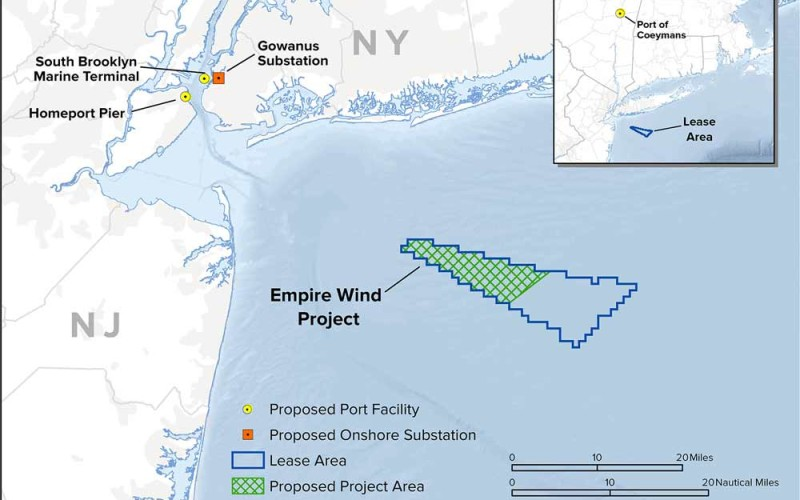
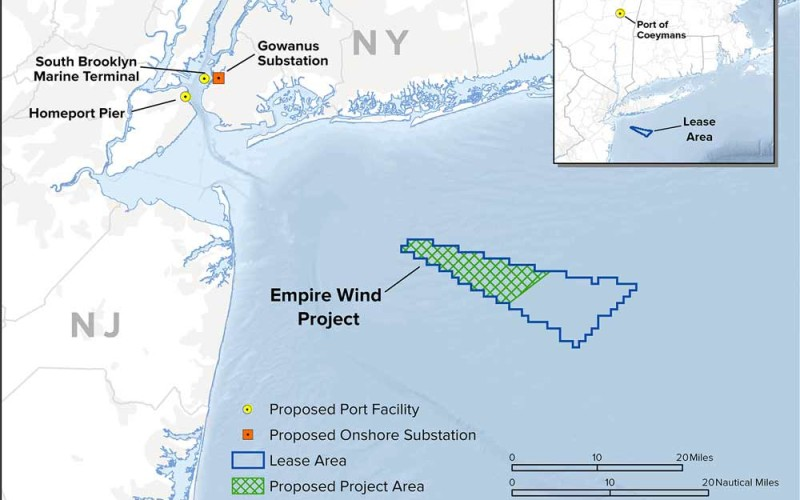
Meanwhile, Equinor is the only major oil company that remains invested in US offshore wind energy. Equinor’s Empire Wind project continues to be highly divisive.
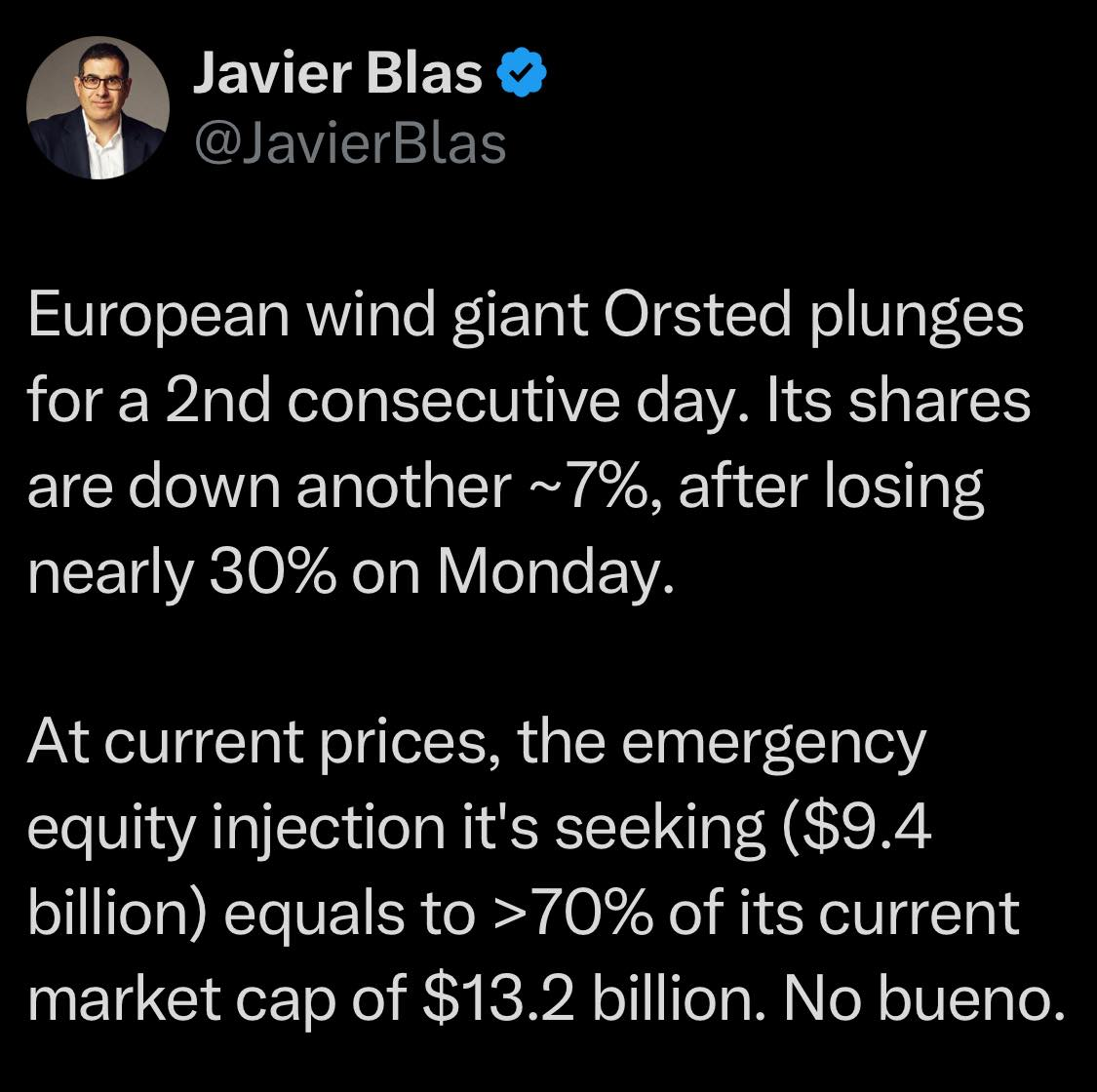
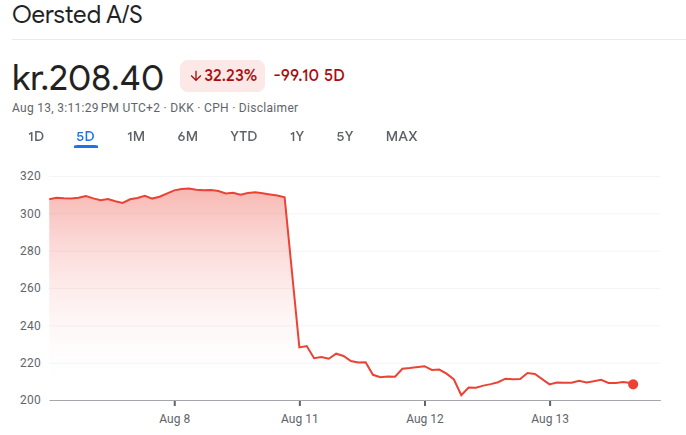
Ørsted’s stock price plummeted on Monday following the announcement of a $9.4 billion rights issue to fund the Sunrise Wind project. The share price has remained depressed (chart below).
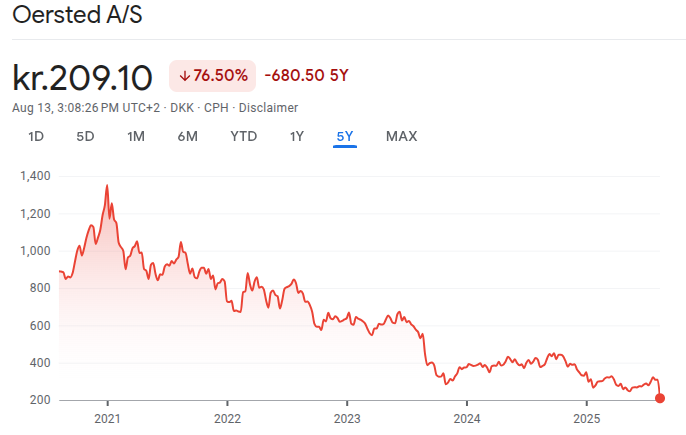
Also, although Ørsted attributes its financial woes to the change in US policies, it’s apparent in the second chart (5 year trend) that the decline in Ørsted’s valuation has been ongoing since 2021.
In March, Fitch downgraded Ørsted’s rating to BBB from BBB+, and its subordinated rating to BB+ from BBB-. Further downgrades would seem to be a distinct possibility.
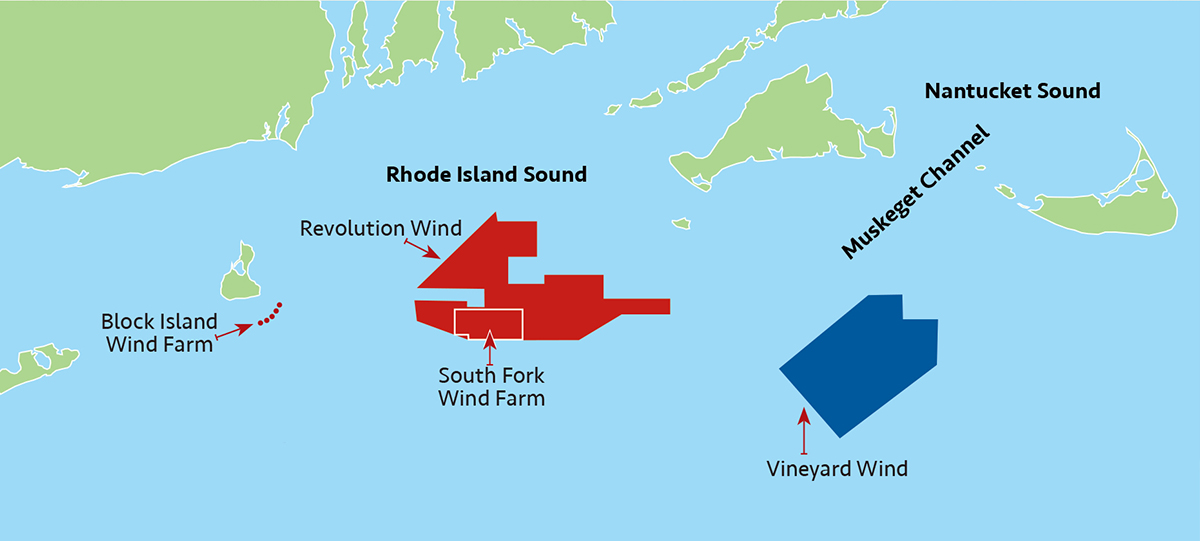
Meanwhile, decommissioning financing for the 3 Ørsted projects under construction in the US Atlantic is far from assured:
Revolution Wind:As they did for Vineyard Wind, BOEM approved Ørsted’s request to defer full decommissioning financial assurance until 15 years after the beginning of construction (see attached letter). This approval was prior to the Renewable Energy Modernization Rule (effective June 29, 2024), which eliminated the need for such waivers.
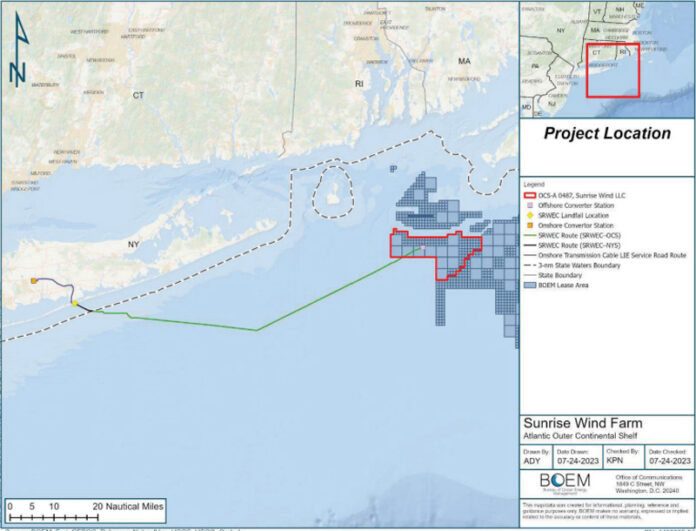
Sunrise Wind: Ørsted is now solely responsible for funding and constructing this project given the company’s failure to find investment partners. Presumably, decommissioning financial assurance was not required given BOEM’s latitude under the so-called “Modernization Rule.”
South Fork Wind: As is the case with Sunrise Wind, BOEM presumably allowed Ørsted to defer financial assurance for decommissioning as permitted by the “Modernization Rule.”
According to Ørsted, almost 70% of the turbines are installed at Revolution Wind and the first foundations have been installed at Sunrise Wind. South Fork Wind, 12 turbines and an offshore substation, is complete.
Given Ørsted’s strained finances, will BOEM now opt to require decommissioning assurance as provided for in 30 CFR § 585.517?
Ørsted’s situation is atypical in that the Danish government owns a majority (50.1%) stake in the company and Equinor, which is 2/3 Norwegian govt owned, holds a 9.8% stake. How will government ownership factor into BOEM decisions regarding decommissioning assurance? Note that Norwegian govt lobbying may have been one of the factors influencing the decision to allow the resumption of construction on Equinor’s Empire Wind project.
Along with other charges, the attached complaintasserts that awarding a wind lease to Norway’s Equinor, violates the Outer Continental Shelf Lands Act (OCSLA):
As an agency or instrumentality of Norway, Equinor cannot receive a lease on the Outer Continental Shelf for offshore wind turbine development or generation of electric power.
While other elements of the complaint appear to have merit, the charge against Norway does not. Here’s why:
US subsidiaries of foreign companies have long held leases under the OCS Lands Act.
Equinor US Wind is the US subsidiary holding the wind lease.
Equinor USA E&P holds interests in OCS oil and gas leases in the Gulf of America. BOEM credits 548,389 barrels of oil production to Equinor for 2023.
Chinese state-owned CNOOC has been an oil and gas lessee in the Gulf of America.
US subsidiaries of Shell and BP, both foreign corporations, are the top 2 producers in the Gulf. Although not government owned, there is nothing in OCSLA that distinguishes between US subsidiaries of private and govt owned companies. Woodside (Australia) and Eni (Italy) are also important Gulf producers.
The plaintiffs second count (excerpt below) seems to have more merit. The bulk of the filing pertains to this count.
BOEM never completed its “necessary review”, see Stop Work Order, April 16, 2025, and, instead, reinstated the Empire Wind work permit on May 19, 2025 without any explanation or finding, stating as follows: On April 16, 2025, the Bureau of Ocean Energy Management issued a Director’s Order to Empire Offshore Wind LLC to halt all ongoing activities related to the Empire Wind Project on the outer continental shelf. That Order is hereby amended to lift the halt on activities during the ongoing review.
The complaint goes on to discuss the reasons why the plaintiffs believe the review was indeed necessary and should have been conducted.
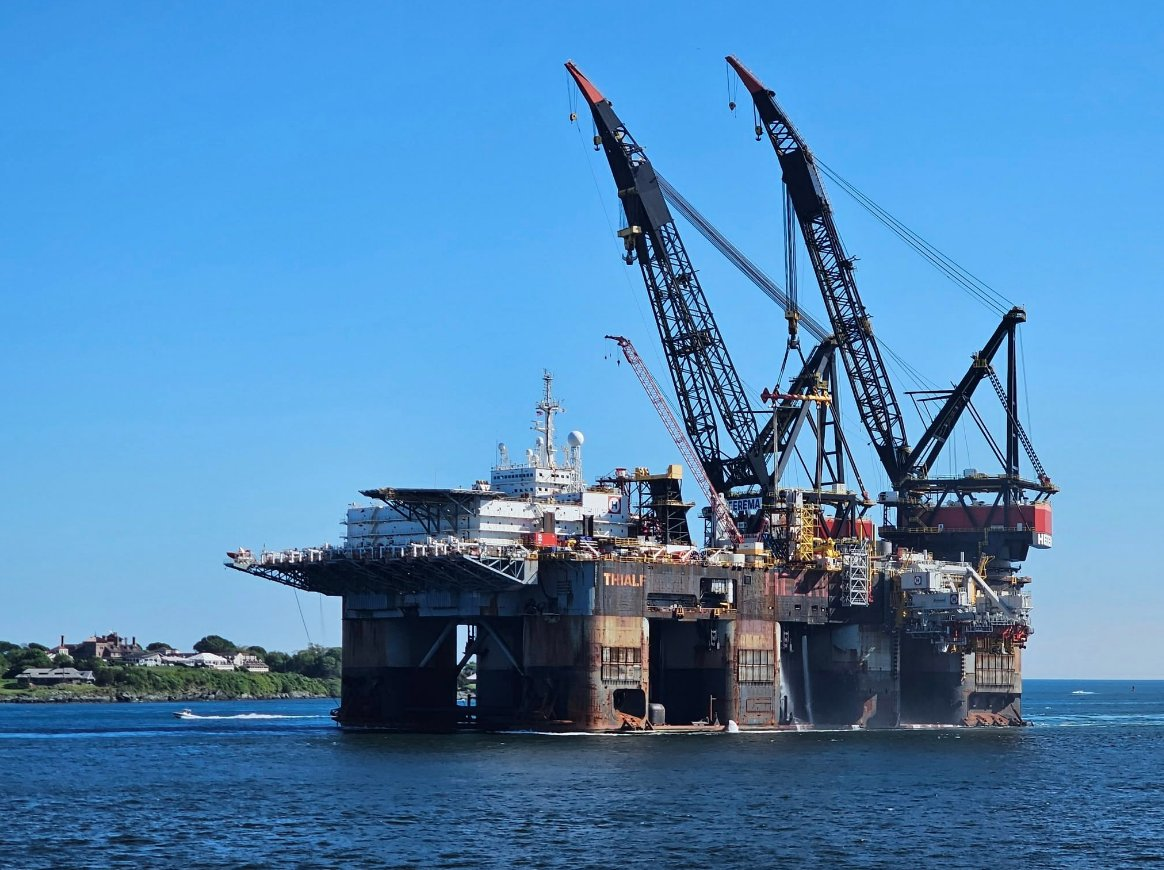
Thialf: a character in Norse mythology who was Thor’s servant.
The Heerema Thialf, a semi-submersible crane vessel (SSCV), is a rather massive presence in coastal waters. The vessel is 661 feet long and 470 feet high, with a lifting capacity of up to 14,200 metric tons, and is the second-largest of its kind.
The Thialf, which set a world record in 2000 by lifting the 11,883-metric-ton Shearwater topside structure in the North Sea, will be driving piles for 54 Vestas 15 MW wind turbines and a substation structure that are part of Equinor’s controversial Empire Wind project.
John Smith tells me that the Thialf is one of the heavy lift vessels being considered for removing California offshore oil and gas platforms. The vessel is too large for the Panama Canal and would have to make the trip around South America or across the Pacific, depending on where it was last working.
The Thialf’s day rate has not been disclosed, but is likely greater than $500k. Equinor claimed to be losing $50 million/week when the project was paused. Thialf costs were presumably a significant chunk of those losses.
Legal/regulatory: Although lease cancellation is not a reasonable option at this time, a pause for further review of the environmental and procedural issues is justified. During the previous Administration, the regulators seemed to function primarily as cheerleaders, as evidenced by the departures (examples here and here), the BOEM/NOAA strategy document, and the promotional tweets. Also, where is the long awaited report on the turbine blade failure? How do you proceed with development before that has been released for public review?
Norwegian govt intervention: Some would argue that Empire Wind was a bad investment by Equinor (2/3 govt owned) and it would have been better to take the losses and move on.
Trade unions: Concerns about the job losses are warranted, but the long term viability of the subsidy dependent offshore wind industry is in doubt, and important industries (e.g. fishing and tourism) may be negatively impacted. Other job losses could occur if offshore wind drives up electric prices and decreases grid reliability.
Pipeline deal: The regionally important Constitution natural gas pipeline is still very much in doubt despite reports of a deal with Governor Hochul. With or without her support, climate-ultras are driving NY/New England energy policy and will, at a minimum, stall this project. Fisheries Nation was particularly blunt in criticizing fishermen being “used as a poker chip” to gain tepid support for the pipeline project.
Following the reversal of the Empire Wind decision, Green Oceans, ACK for Whales, Long Island Commercial Fishing Association, Protect Our Westport Waters, Save Greater Dowses Beach, Save Right Whales Coalition, and the Wampanoag Tribe of Gay Head/Aquinnah petitioned Secretary Burgum to halt all wind construction in New England coastal waters and begin a “complete reevaluation” of their permits under applicable federal laws. In addition to right whale and tribal cultural resources concerns, the letter cited:
The Administration has not yet explained the decision to allow the Empire Wind project to go forward. I suspect the following points apply:
Attorneys advised, probably correctly, that the Administration would likely lose this case in the courts. Although the Secretary of the Interior has broad authority under OCSLA to suspend operations, he would need strong justification to do so indefinitely. Equinor has invested $billions in the project and their contractual rights would be difficult to abrogate.
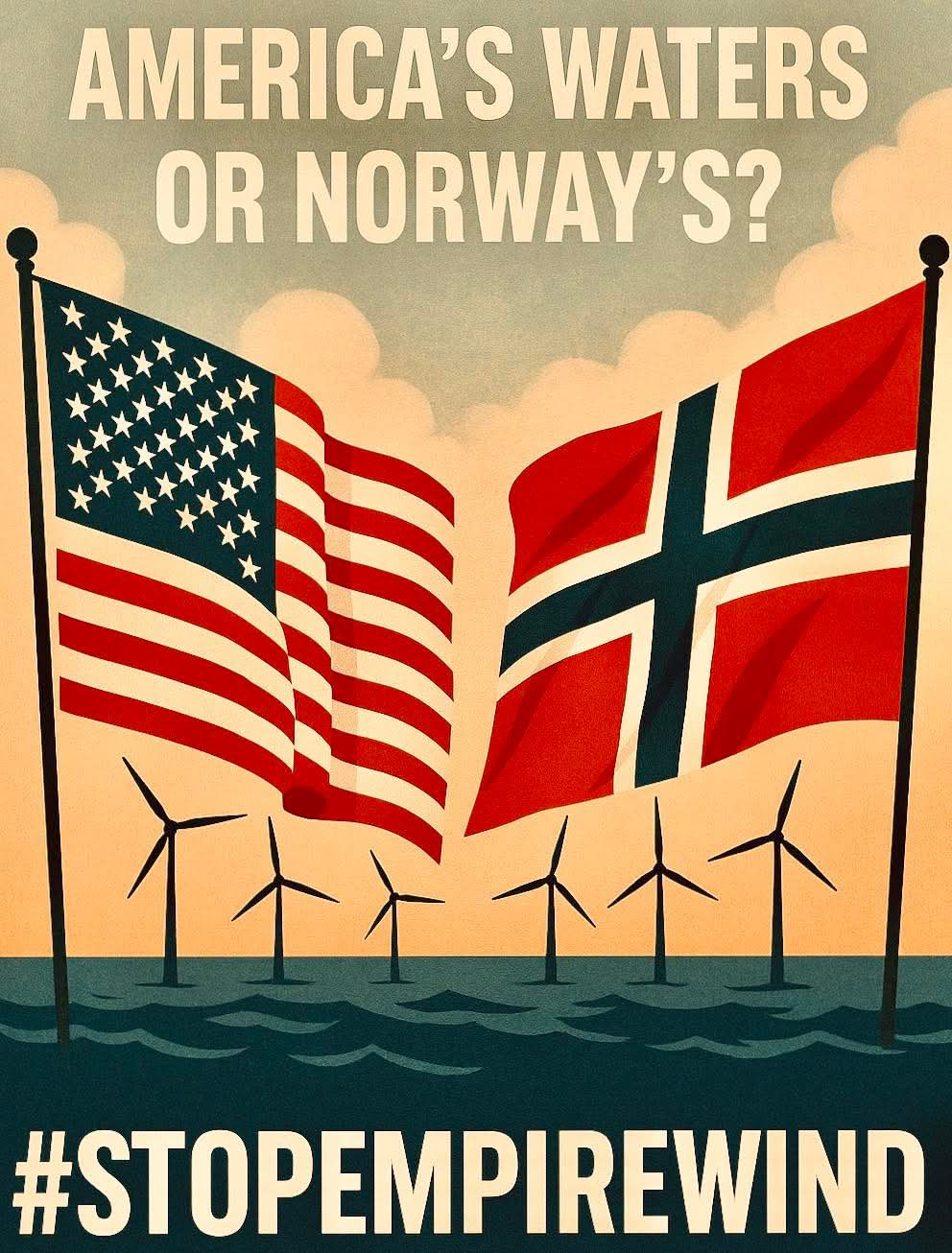
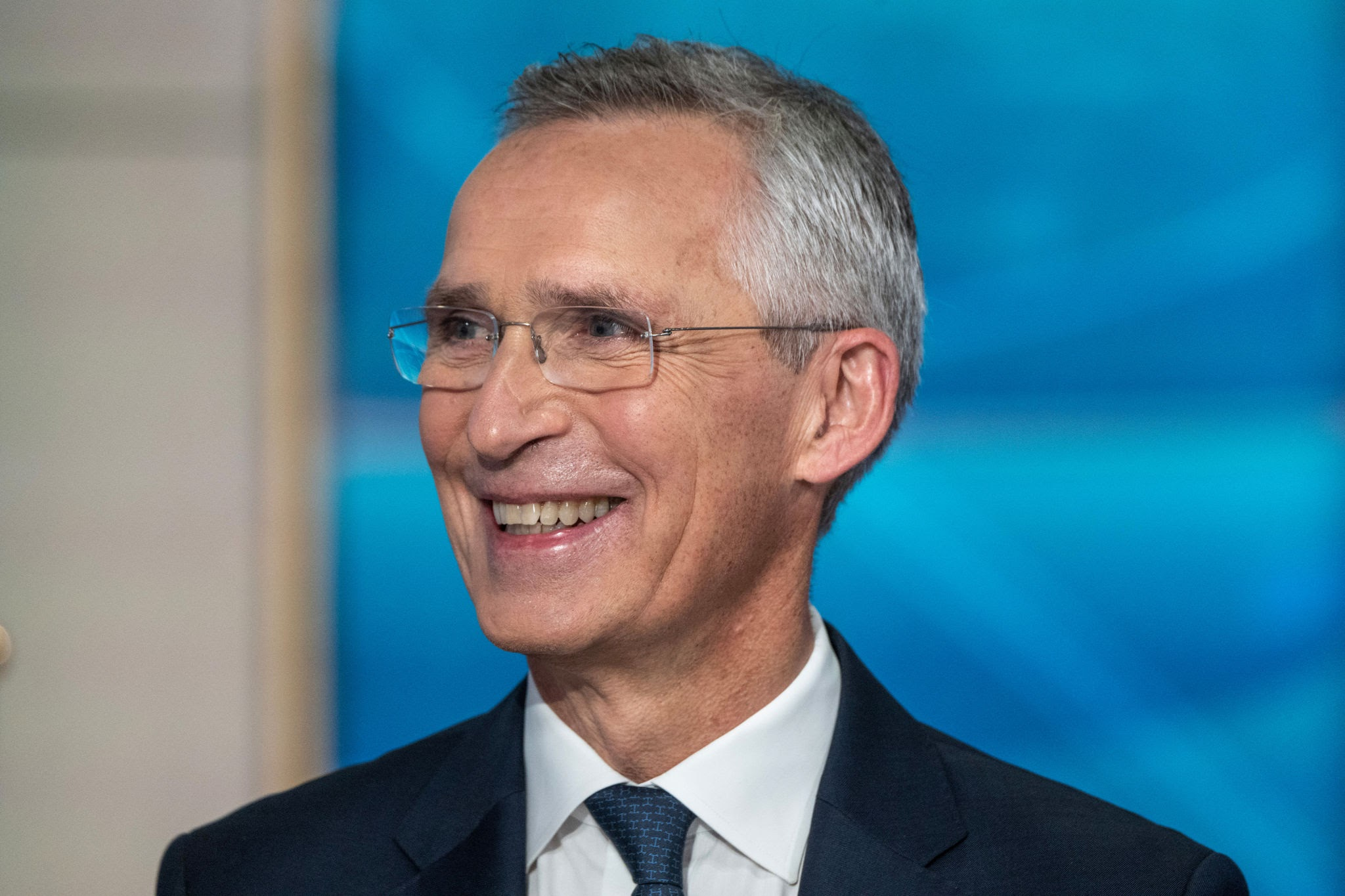
Equinor is 2/3 owned by the Norwegian govt, which engaged in diplomacy on Equinor’s behalf. Jens Stoltenberg, former PM of Norway and NATO chief, commented on X: “I commend the Trump Administration for our great cooperation in reaching an energy deal that allows Equinor to resume construction of Empire Wind. This will benefit both our countries & deliver energy to thousands of US households.”
The project has strong support from trade unions.
NY Gov. Hochul appears to have relaxed her position on gas pipelines: “I also reaffirmed that New York will work with the Administration and private entities on new energy projects that meet the legal requirements under New York law.”
A post on X by Protect Our Coast NJ summarizes the position of project opponents: “There are no words. There was a shocking announcement last night that the federal government reversed course on the Empire Wind Project. We were stunned to see this news. We believe that offshore wind anywhere is a terrible idea. And this project off New York and New Jersey lies in an especially important area—from a national security, environmental and economic perspective. We supported the President’s policy against offshore wind development. And we celebrated Secretary Bergum’s decision to stop the Empire Wind project a few weeks ago. At the time, he said Equinor ‘rushed through by the prior administration without sufficient analysis or consultation among the relevant agencies as relates to the potential effects from the project.’ What changed in the past six weeks? Offshore wind is an extremely expensive, inefficient and unreliable source of power. It harms wildlife, including some of the most endangered mammals on planet Earth. We will fight to protect our coastal and marine ecosystems from the devastation brought by offshore wind construction and operations. We won’t stop until every scrap of steel is removed from the ocean. And we will work to ensure that government officials fully understand the ramifications to public safety, commerce and national defense Empire Wind represents.“
“There have been voices saying that Equinor has kind of been given an out here for a bad project,” Fløtre said. “It’s not a top project from a profitability perspective. At the same time, it’s so mature that I think Equinor still sees a lot of prestige in getting this done and have quite a lot of investments into it already.”
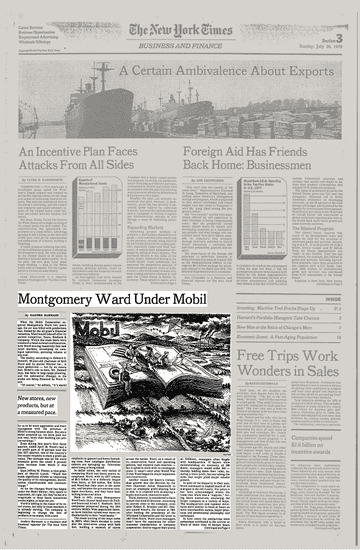
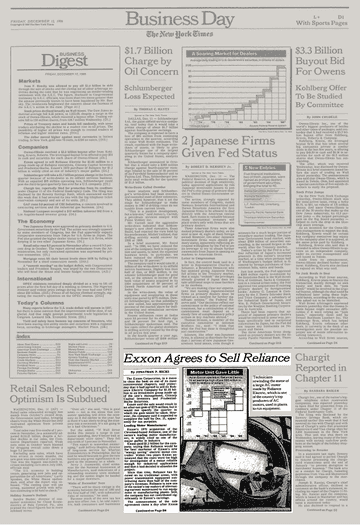
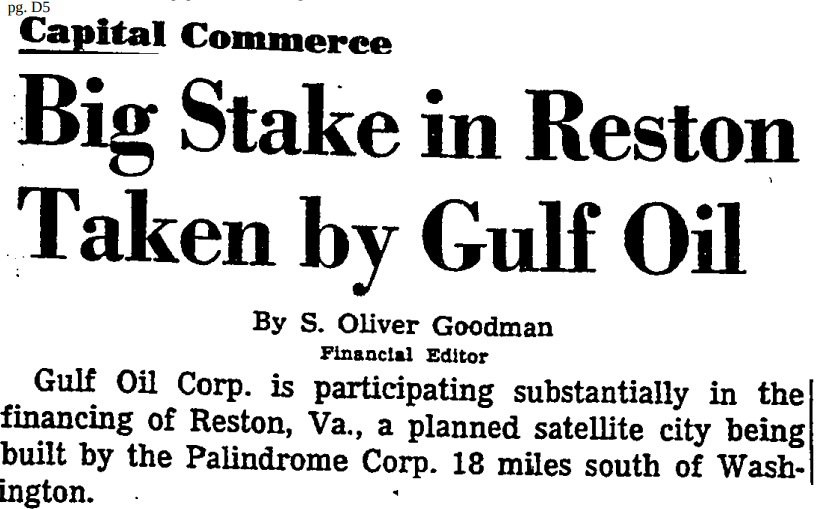
Farther in the past, there were noteworthy failures (below) like Mobil’s acquisition of Montgomery Ward, Exxon’s investment in Reliance Electric, and Gulf’s real estate ventures.
Mobil – Montgomery WardExxon – Reliance ElectricGulf Land – Reston
Finally, don’t expect the carbon sequestration boom that some are forecasting. As wind investors have discovered, industries dependent on mandates and subsidies are risky.
Not much unites climate activists and skeptics, but they are largely aligned in their opposition to carbon sequestration (euphemism for disposal), as are fiscal conservatives. The word chutzpah comes to mind when companies seek public funds to dispose of emissions associated with the combustion of their products.
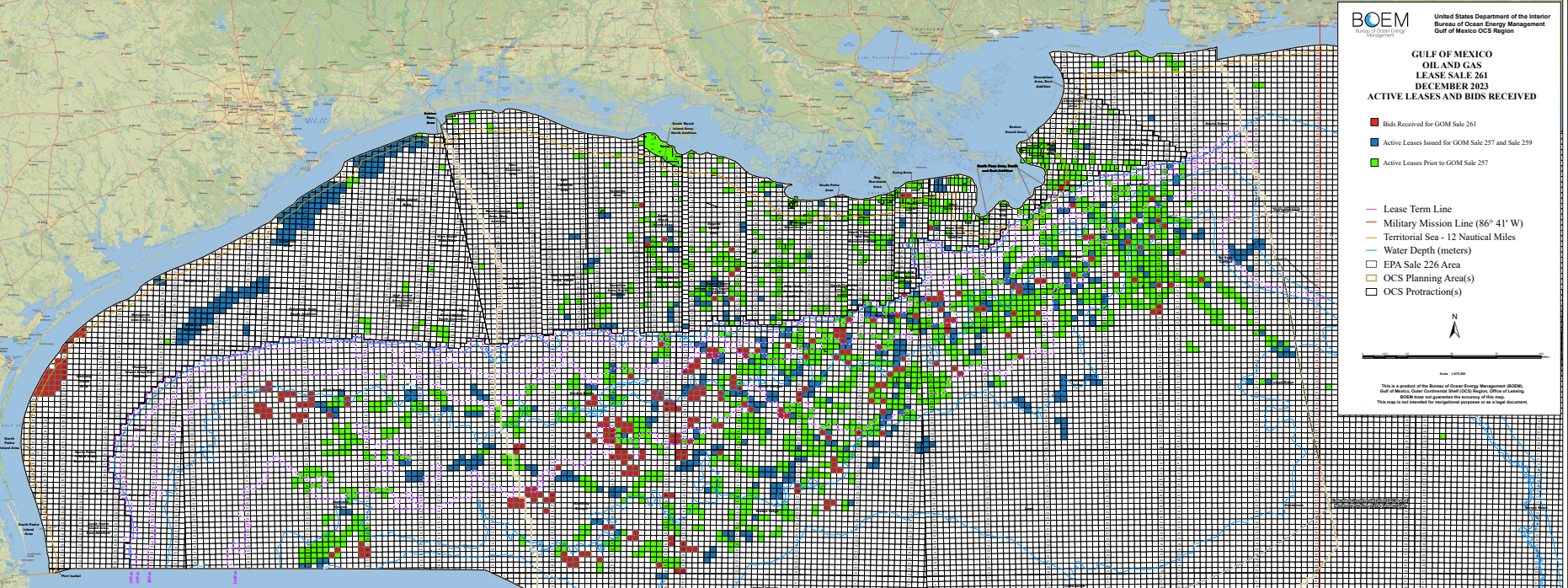
199 oil and gas leases were wrongfully acquired at Sales 257, 259, and 261 with the intent of developing these leases for carbon disposal purposes. Repsol was the sole bidder at Sale 261 for 36 nearshore Texas tracts in the Mustang Island and Matagorda Island areas (red blocks at the western end of the map above). Exxon acquired 163 nearshore Texas tracts (blue in map above) at Sales 257 (94) and 259 (69).

 Bud's Offshore Energy (BOE)