Feeds:
Posts
Comments

Posts Tagged ‘BSEE’

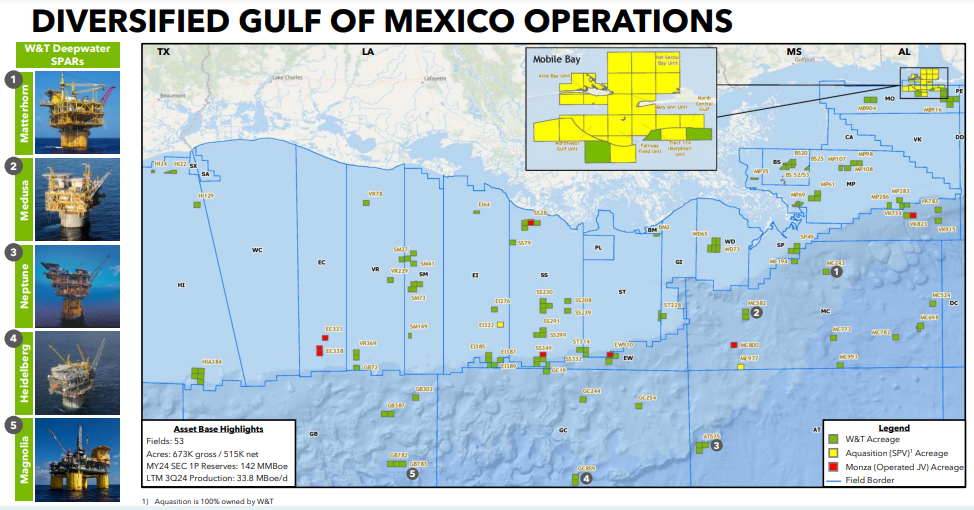
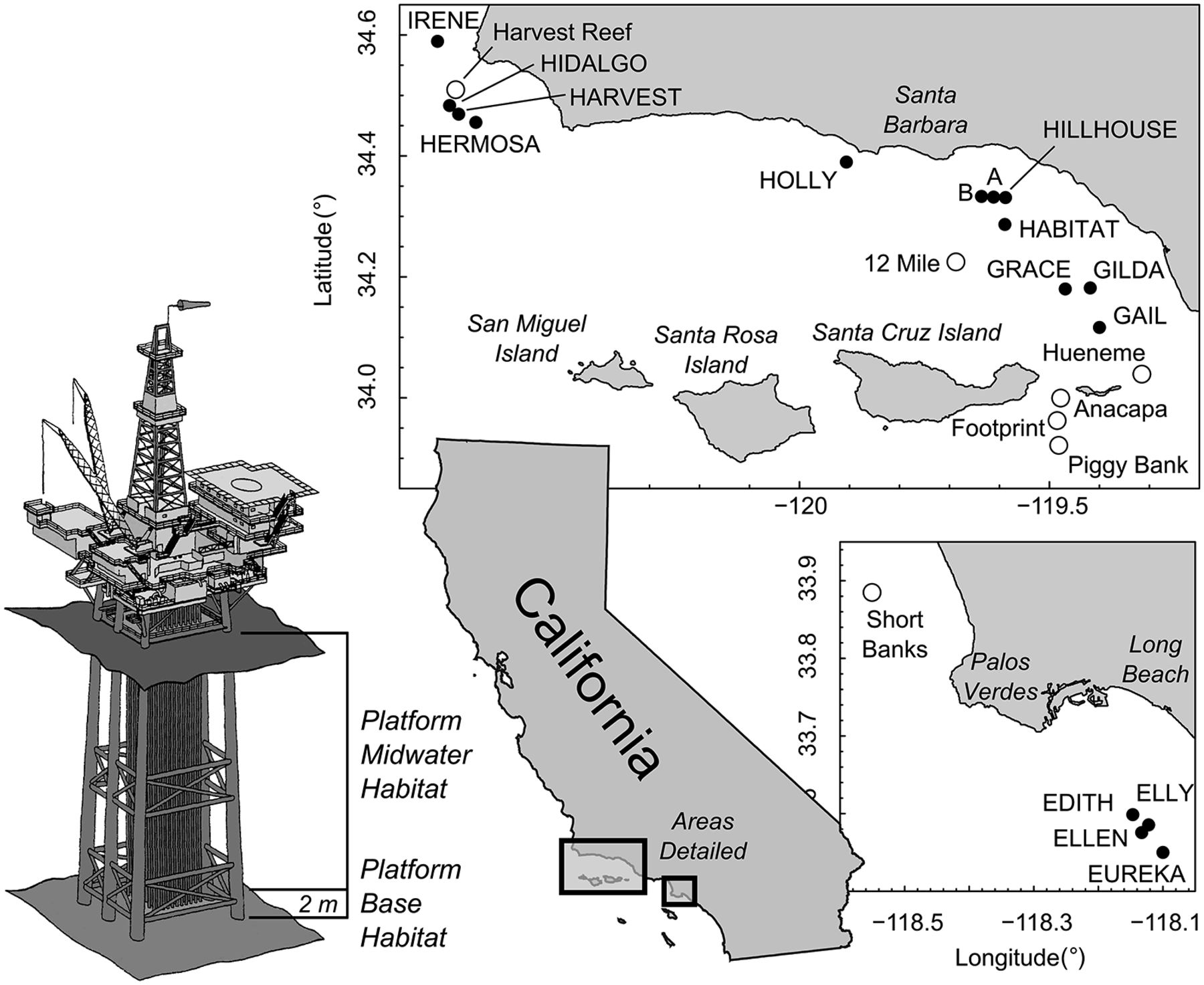
W&T (lease and facility map above) claims that insurers have colluded to damage the company by jointly demanding additional collateral and premiums.

Comments on excerpts from the W&T press release follow:

At the heart of the dispute are rules from the federal Bureau of Ocean Energy Management – BOEM – which require energy producers in the Outer Continental Shelf to provide a bond to pay for well, platform, pipeline and facilities cleanup if the operating company fails to do so.”

Comment: Despite disagreeing with aspects of the BOEM financial assurance rule, this blog has defended the rule against unfair criticism. Better solutions are achievable, but that will require industry leaders from all factions to come to the table with a commitment to reach a balanced agreement that protects the public interest.

“These insurance companies and their unreasonable demands for increased collateral pose an existential threat to independent operators like W&T.”

Comment: If insuring offshore decommissioning is so risk-free and lucrative, why aren’t other companies entering the market?

Several states, including Texas, are challenging the BOEM rule and in one case they specifically cite W&T as an example of how the rule could be misused to irreparably harm energy producers.

Comment: As previously posted, the concerned States should propose alternative solutions that would promote production while also protecting taxpayer interests. Arguing that decommissioning financial risks are not a problem is neither accurate nor a solution.

“In over 70 years of producer operations in the Gulf of Mexico, the federal government has never been forced to pay for any abandonment cleanup operations associated with well, platform facility, or pipeline operations.”

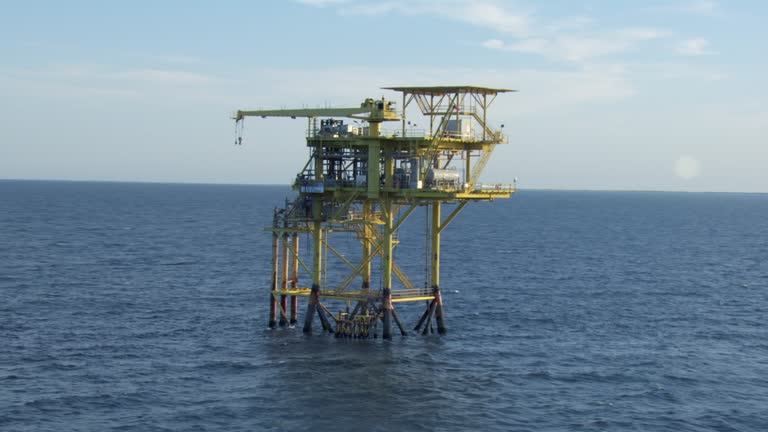
Comment: Shamefully, from the standpoints of both the offshore industry and the Federal government, that statement is no longer true. The taxpayer has now funded decommissioning operations in the Matagorda Island Area offshore Texas (BSEE photo below) and more significant decommissioning liabilities loom.

Other thoughts:

Read Full Post »

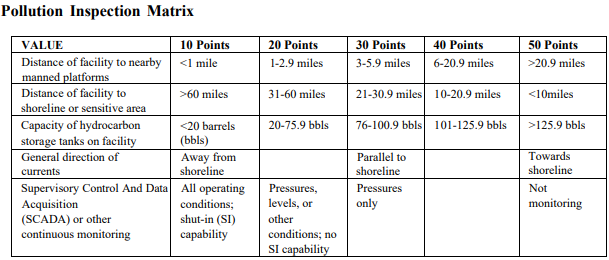
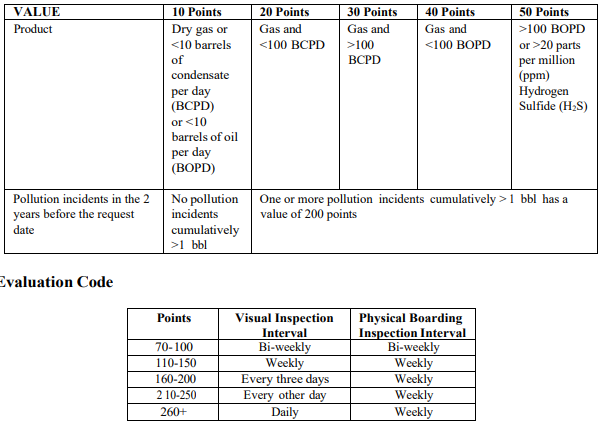
The attached BSEE document provides guidance for determining pollution inspection frequencies for unmanned facilities. Thoughts:

  • Reasonable risk-based approach
  • A minimum of bi-weekly visual and physical inspections for low risk platforms producing dry gas
  • Any platform with significant oil production and storage, and no real time monitoring system, will have to be visually inspected at least every 3 days (daily if other risk factors apply) and boarded weekly
  • Any platform that had spillage totaling > 1 bbl in the past 2 years will have to be visually inspected every other day and boarded weekly.
  • Provides for the application of technology (cameras, drones, innovative monitoring systems) to reduce inspection frequencies.

Read Full Post »

On Sept. 16, 2024, a routine helicopter approach at an offshore facility nearly resulted in a serious accident due to a failure to follow proper helideck procedures. Before landing, the helicopter pilot visually confirmed that a nearby crane was securely stowed and stationary (Figure 1). However, as the helicopter neared the helideck, the crane operator unexpectedly raised the crane boom, bringing it alarmingly close to the landing area as the helicopter was 10 feet from touchdown. The pilots swiftly executed a go-around maneuver, successfully avoiding a collision and ensuring the safety of the crew and passengers onboard.”

Good work by BSEE in continuing to identify and address helideck safety issues. This is the 4th helideck safety alert issued in 2024.

Meanwhile, why are we still waiting for the final NTSB report on the tragic helideck crash that occurred 2 years ago?

Read Full Post »

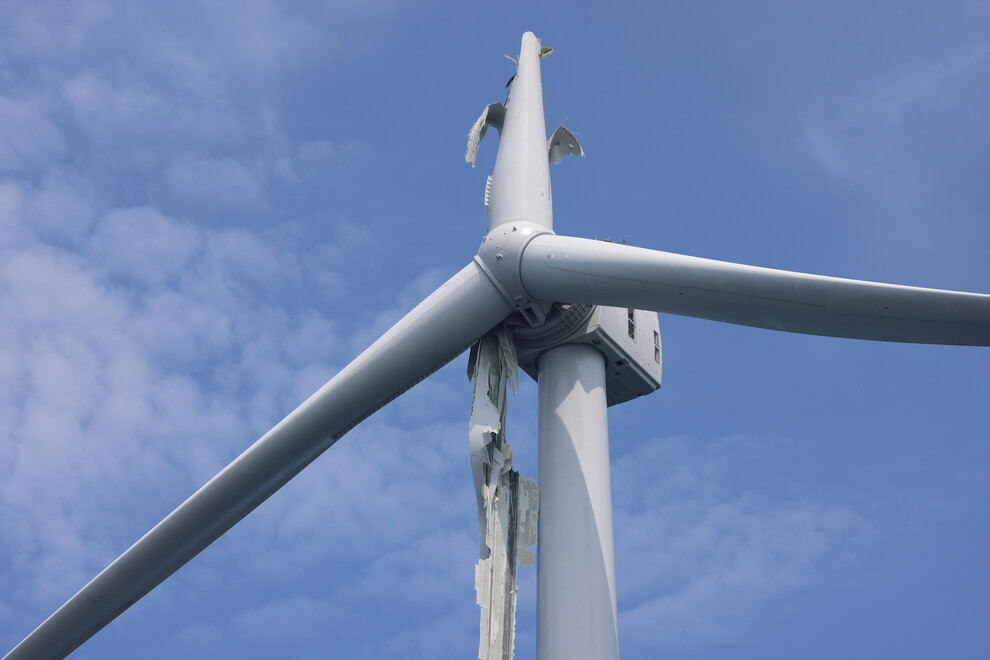
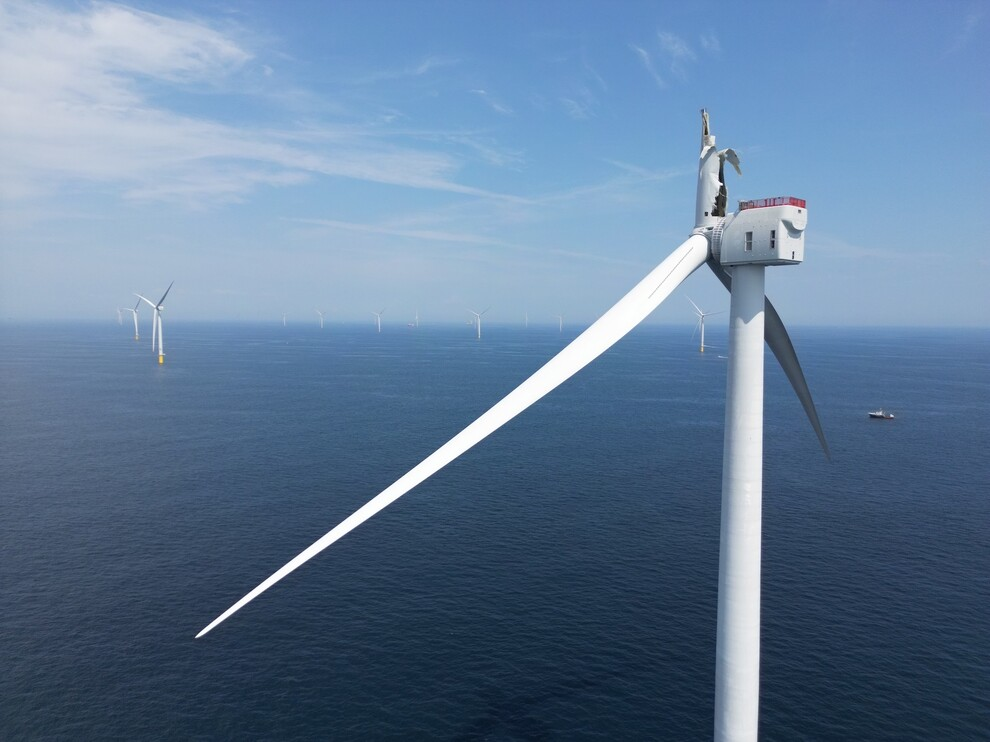
Damaged Vineyard Wind turbine; Kit Noble photo
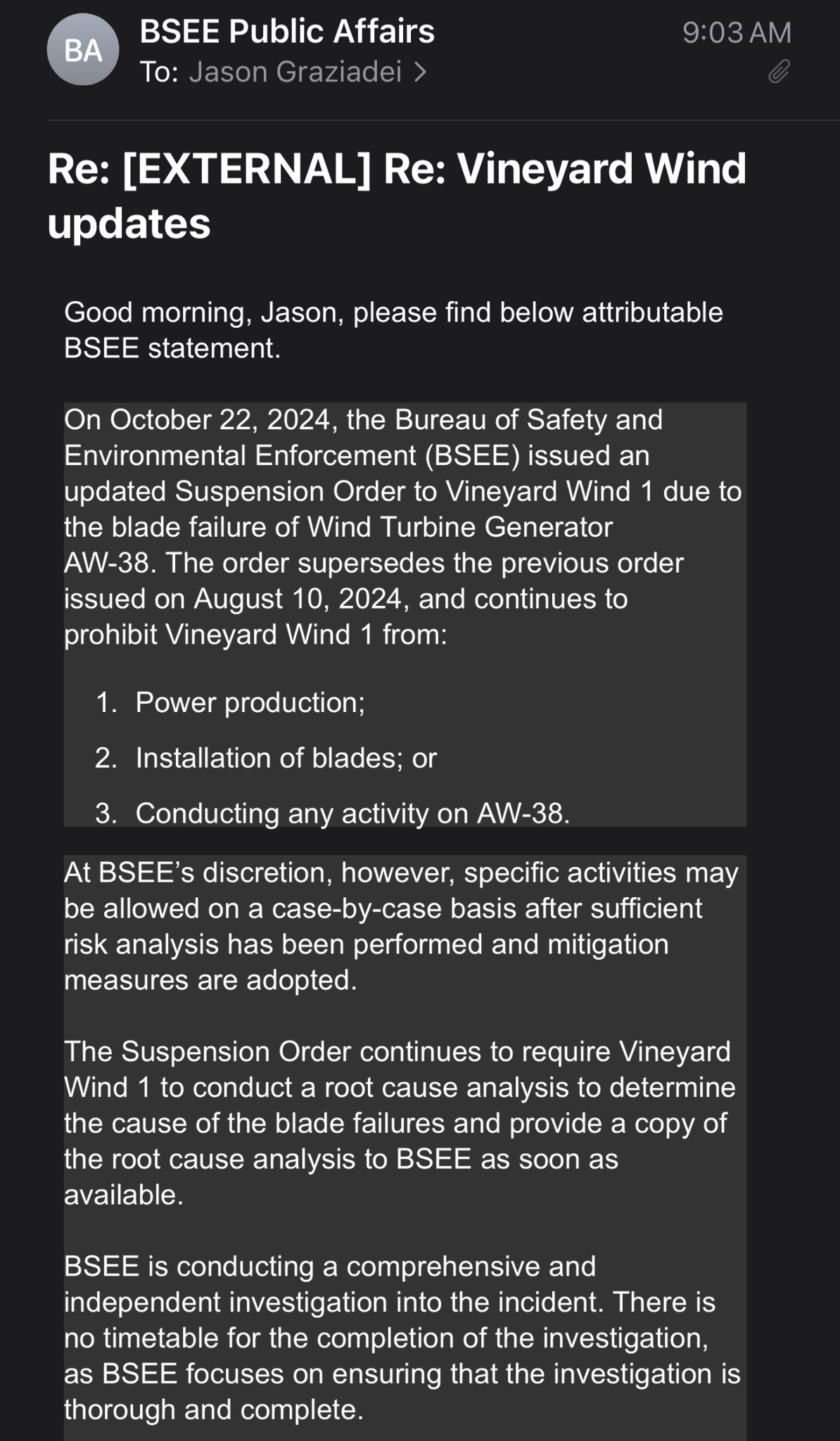
BSEE statement to the Nantucket Current

Comparing the above BSEE statement with recent GE Venova (GE) statements:

  • GE: We were “granted approval to return to installing new blades on turbines at the project once stringent safety and operational conditions are met.” (Positive spin of the BSEE statement implying that approval is assured.)
  • GE: “We have finalized root cause analysis and confirm the blade at issue at Vineyard Wind was caused by a manufacturing deviation from our factory in Canada.” (Then why doesn’t BSEE have the analysis? Is the Canadian plant being scapegoated?)

Finally, as expected, we can now conclude that the blades being shipped from New Bedford to France were defective.

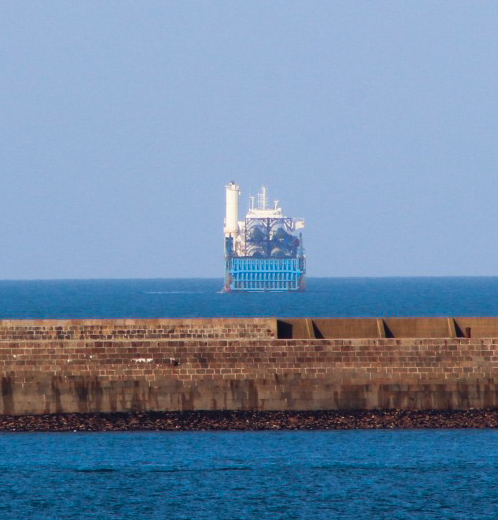
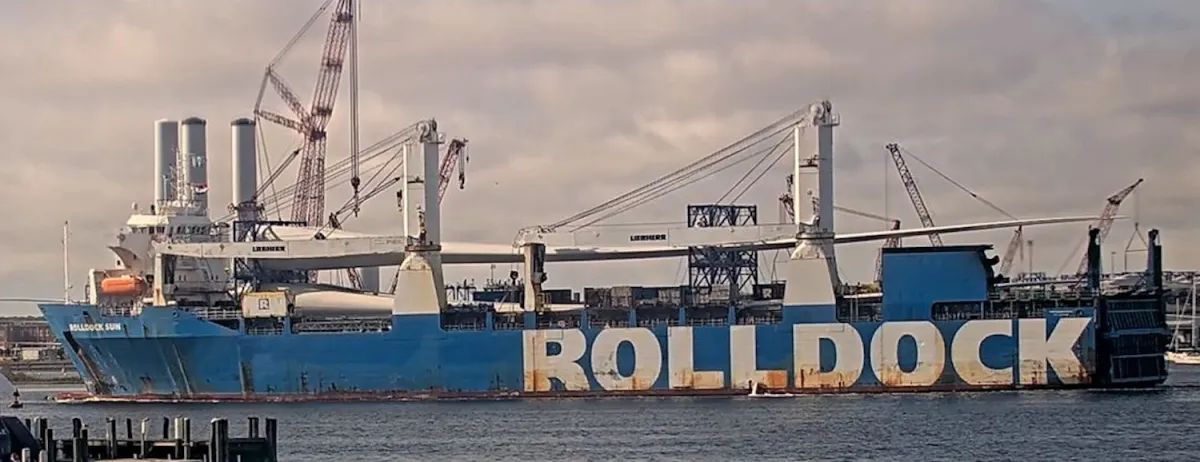
Rolldock Sun arriving in Cherbourg with defective blades

Read Full Post »

The attached letter was obtained by the Nantucket Current through a FOIA request. Key points:

  • Vineyard Wind power generation and blade installation suspension order remains in effect.
  • Vineyard Wind directed to conduct a site-specific study that evaluates the environmental harm and other potential damage from the blade failure, and to identify potential mitigation measures.
  • Vineyard Wind was required to submit a plan for the study by Oct. 11. It’s not clear whether the plan was submitted.
  • The study must include a mass balance of unrecovered debris material based on the weight of debris recovered and the weight of the subsea debris retrieved.

Comments:

  • The study requirement is appropriate given the significance of the blade incident and the implications for offshore wind development.
  • Why was a FOIA request needed to learn about the study requirement?
  • What about the 6 turbine blades being returned to France? Were they defective?

Read Full Post »

David Scarborough, Island Operating Co., was one of the 4 workers who died in the 2022 crash at a West Delta 106 platform.

Read Full Post »

New Bedford Light: The Rolldock Sun leaves New Bedford on Friday with two blades visible. Credit: Courtesy of West Island Weather

Per the New Bedford Light, the turbine blade delivery vessel Rolldock Sun was seen on Friday carrying at least two blades out of New Bedford. It was not headed for the Vineyard Wind site. According to vessel tracking websites, the Rolldock Sun was en route to the Port of Cherbourg, where GE Vernova has a blade manufacturing facility. 

The most likely explanation for returning the blades to Cherbourg is that defects were detected or suspected. The blade that failed, reportedly as a result of a manufacturing issue, is probably not the only one that was defective.

The New Bedford Light asked GE Vernova, Vineyard Wind, and the Federal regulator BSEE why the blades were being transported to Cherbourg. They received the following responses (my comments in parentheses):

GE Vernova: “No comment on this matter.” (This is the worst possible response. In the absence of information, people are left to speculate. If there was no problem with the blades, why wouldn’t GE simply provide an explanation? Their non-response simply reinforces suspicions that the blades were defective. If that is the case, why not take credit for procedures that identified the suspect defects, albeit belatedly?

Vineyard Wind: “The weekend has gotten in the way of the information flow,” and they would share information should they hear anything. Another request for information was not answered as of noon Monday. (Not exactly confidence inspiring from the company whose blade failure littered beaches and the offshore environment. They are deservedly being watched, and need to be more transparent and responsive.)

BSEE: A BSEE spokesperson did not answer questions and said by email that the agency has no new information. (Disappointing, but not surprising.)

Read Full Post »

The previously discussed sale of Cox assets in 6 GoM fields to W&T was completed in January for $72 million, $16.5 million less than the proposed price. W&T, an established GoM operator, believes they can increase the pre-bankruptcy production (8300 boepd) through workovers, recompletions, and facility repairs.

The extent to which W&T is assuming decommissioning liability for the Cox assets is unclear to this observer. Decommissioning information from W&T’s SEC filing is pasted at the end of this post.

In February, Cox won court approval to sell “about a dozen oil fields to Natural Resources Worldwide LLC for about $20 million following a bankruptcy court auction.” This sale is more concerning given that the purchaser has no operating history in the GoM, and scant information about the company can be found online. Perhaps they are affiliated with Natural Resources Partners L.P., an energy investment firm which “owns mineral interests and other rights that are leased to companies engaged in the extraction of minerals,” but “does not mine, drill, or produce minerals, has no operations, and conducts business solely in an office environment.”

Per BOEM data, Cox filed requests to assign a number of leases to Natural Resources Worldwide (NRW) in May, but those requests have yet to be approved. Hopefully, BOEM is taking a hard look at these requests and their obligations following the court auction. Decommissioning liabilities should be their number one concern. (Note: NRW was just listed as the operator of the former Cox platform at EI 361, so presumably at least some of those assignments have now been approved.)

According to BOEM’s platform data base, Cox and affiliates Energy XXI and EPL still operate 243 platforms, down from 435 in June 2023. Also per the data base, the Cox companies have not removed any platforms during 2023 or 2024 YTD, so the reduction in platforms is presumably the result of the W&T transaction. Most of the remaining Cox platforms are old – 16 of their 77 major platforms were installed in the 1950s!

Meanwhile, Cox and affiliates continue to be the GoM violations leader by far with 549 incidents of non-compliance (INCs) in 2024 YTD, 45% of the GoM total for all operators. No other company has more than 100 INCs (although Whitney Oil and Gas has a disappointing 93 INCs, including 33 facility shut-ins on only 65 inspections!)

operatorplatforms/
major platforms
warning INCscomponent shut-in INCsfacility shut-in INCs
Cox209/69407444
Energy XXI19/77312
EPL5/11611
Total Cox233/77496467
Total GoM1519/73683131768
INCs are for 2024 as of 9/17/2024. A major platform has at least 6 well completions or more than 2 pieces of production equipment.

From W&T’s quarterly SEC filing:

Contingent Decommissioning Obligations

The Company may be subject to retained liabilities with respect to certain divested property interests by operation of law. Certain counterparties in past divestiture transactions or third parties in existing leases that have filed for bankruptcy protection or undergone associated reorganizations may not be able to perform required abandonment obligations. Due to operation of law, the Company may be required to assume decommissioning obligations for those interests. The Company may be held jointly and severally liable for the decommissioning of various facilities and related wells. The Company no longer owns these assets, nor are they related to current operations.

During the three months ended March 31, 2024, the Company incurred $2.6 million in costs related to these decommissioning obligations and reassessed the existing decommissioning obligations, recording an additional $5.3 million. As of March 31, 2024, the remaining loss contingency recorded related to the anticipated decommissioning obligations was $20.8 million.

Although it is reasonably possible that the Company could receive state or federal decommissioning orders in the future or be notified of defaulting third parties in existing leases, the Company cannot predict with certainty, if, how or when such orders or notices will be resolved or estimate a possible loss or range of loss that may result from such orders. However, the Company could incur judgments, enter into settlements or revise the Company’s opinion regarding the outcome of certain notices or matters, and such developments could have a material adverse effect on the Company’s results of operations in the period in which the amounts are accrued and the Company’s cash flows in the period in which the amounts are paid. To the extent that the Company does incur costs associated with these properties in future periods, the Company intends to seek contribution from other parties that owned an interest in the facilities.

Read Full Post »

Federally funded decommissioning in the Matagorda Island area of the Gulf of Mexico. Not a success story.

I’m not typically aligned with the sponsors of the attached “Plug Offshore Wells Act,” but the call for transparency is understandable given that taxpayer funds are, for the first time, being used to decommission offshore platforms in the Matagorda Island area of the Gulf of Mexico, massive liabilities associated with the Cox bankruptcy loom, and the Hogan and Houchin saga drags on without resolution.

The bill would require an annual report on well, platform, and pipeline decommissioning including applications, deadlines, and enforcement actions. BSEE does have a good facility infrastructure page for the GoM, but much of the information called for in H.R. 9168 is not publicly available.

Improved oversight of decommissioning requirements for offshore wind projects should also be considered in light of the precedent setting waiver granted to Vineyard Wind and BOEM’s “modernization rule” that relaxes financial assurance requirements for wind development.

Read Full Post »

Chevron slide: Advances in seismic imaging help characterize deepwater development opportunities

A new JPT article features comments from BOE contributor Lars Herbst on advances in HPHT technology, control systems, sensors and transmitters, and automation that are facilitating the next era of deepwater development.

Well capping technology, which provides a tertiary well control capability, is an essential element of post-Macondo exploration and development. Lars points to the importance of BSEE’s unannounced drill program to verify that capping stacks can be transported and installed in a timely manner. Chevron expresses pride in leading a team that deployed and installed a capping stack in 6,200 feet of water in a drill monitored by BSEE. During that drill, a remotely operated vehicle (ROV) closed 10 valves to shut in a simulated well.

Exxon’s Jayme Meier aptly characterizes the challenge and excitement of deepwater development:

“You are floating on a surface, and you have to be able to pinpoint exactly where you’re going to land subsea hardware, exactly where you’re going to moor an FPSO and hit target boxes that are a few feet by a few feet, and they’re 6,000 ft below you,” she said. “It is the most exciting thing that I’ve ever been involved in. And it involves technology, technical know-how, and an ability to really plan the base plan and the contingency plan.”

Advances in deepwater technology are indeed impressive, but continuous improvement must always be the objective. In that regard, Lars rightfully emphasizes the importance of sustaining research through the industry’s up and down cycles.

Read Full Post »

« Newer Posts - Older Posts »