Feeds:
Posts
Comments

Posts Tagged ‘BOEM’

Forbes (USGS map of active wind turbines): “The U.S. Wind Turbine Database contains more than 74,695 wind turbines built since 1980, spread between 1,699 wind power projects in 45 states. However, thousands of wind turbines are reaching the end of their operational lifespan and need to be either repowered to make way for updated (often larger) turbines or entirely decommissioned to allow for new uses of the land they occupy. Unfortunately, there is no uniform legal framework to regulate the steps involved, nor is there an accepted industry-wide set of best practices, and the environmental costs are considerable.”

Forbes:As is often the case when new technologies come to market, unintended downstream consequences are not always immediately obvious to the players. Enthusiasm for clean energy initially pushed the first wind turbines into existence in the U.S. without considering the environmental and monetary costs that would be involved in either upgrading or bringing projects to a close later in their life cycle. “

Similarly, BOEM’s enthusiasm for offshore wind projects has increased decommissioning financial assurance risks for power customers and taxpayers. Their “Rule to Streamline and Modernize Offshore Renewable Energy Development” is intended to “make offshore renewable energy development more efficient, [and] save billions of dollars.” The savings associated with relaxed financial assurance requirements come at the expense of transferring decommissioning risks to those who have received little or no financial benefit from the projects.

Related story: “Osage Tribe Wins Again, Federal Judge Orders “Ejectment” Of 84 Wind Turbines By Next December”

Read Full Post »

Addressing regulatory fragmentation will improve efficiency and lower costs for industry and government while reducing safety and environmental risks.

Unfortunately, the regulatory regime for US offshore oil and gas operations is noteworthy for redundancy, uncertainty, and complexity that divert industry and governmental attention from safety and environmental protection objectives to administrative processes, interpretations, and jurisdictional boundaries.

“Poster Child” for regulatory fragmentation?

The 12 Federal entities that have some OCS regulatory responsibilities are identified in the above chart. The organizations with core regulatory roles are included in the overlapping circles. The responsibilities of BOEM and BSEE are so inextricably intertwined that those bureaus occupy the same circle.

Coastal states also have OCS regulatory roles through authority granted in the Coastal Zone Management Act.

When multiple agencies have jurisdiction over a facility, system, or procedure, the redundancy inevitably results in inconsistency, ambiguity, and gaps in oversight. The focus of operating companies and contractors is diverted from safety and risk management to understanding and satisfying the regulators. The inevitable result is a compliance mentality that weakens the safety culture.

Interagency agreements in the form of MOUs and MOAs, which are ostensibly for the purpose of managing redundancy, are often unclear or inconclusive. They tend to be more for the benefit of the agencies than the regulated industry. The interests of the regulators and protecting turf are paramount.

Regulatory fragmentation was a contributing factor to the two most fatal US OCS incidents in the past 35 years, the 2010 Macondo blowout and the South Pass 60 “B” fire and explosion in 1989.

Solutions:

  • Where legislation is not required (e.g. BOEM and BSEE), use executive orders to combine and streamline the regulatory functions.
  • Where agencies have separate legislative authority, establish a lead regulator by executive order pending corrective legislation. Under the EO, the agencies would function as a joint authority under the direction of the lead regulator.
  • A combined BOEM/BSEE would be the logical choice for leading the joint authority given that OCS energy is their sole focus and they are accountable for the success of OCS programs.
  • Use a management system regulatory approach that holistically considers all of the legislatively enacted regulatory objectives.
  • Increase the attention given to regulator and operator performance in terms of both outcomes and efficiency.
  • Reduce and simplify permitting requirements for operating companies that have demonstrated outstanding safety and environmental performance over a sustained period.
  • See the findings and recommendations from the 2010 Vancouver IRF Conference.


Read Full Post »

W&T (lease and facility map above) claims that insurers have colluded to damage the company by jointly demanding additional collateral and premiums.

Comments on excerpts from the W&T press release follow:

At the heart of the dispute are rules from the federal Bureau of Ocean Energy Management – BOEM – which require energy producers in the Outer Continental Shelf to provide a bond to pay for well, platform, pipeline and facilities cleanup if the operating company fails to do so.”

Comment: Despite disagreeing with aspects of the BOEM financial assurance rule, this blog has defended the rule against unfair criticism. Better solutions are achievable, but that will require industry leaders from all factions to come to the table with a commitment to reach a balanced agreement that protects the public interest.

“These insurance companies and their unreasonable demands for increased collateral pose an existential threat to independent operators like W&T.”

Comment: If insuring offshore decommissioning is so risk-free and lucrative, why aren’t other companies entering the market?

Several states, including Texas, are challenging the BOEM rule and in one case they specifically cite W&T as an example of how the rule could be misused to irreparably harm energy producers.

Comment: As previously posted, the concerned States should propose alternative solutions that would promote production while also protecting taxpayer interests. Arguing that decommissioning financial risks are not a problem is neither accurate nor a solution.

“In over 70 years of producer operations in the Gulf of Mexico, the federal government has never been forced to pay for any abandonment cleanup operations associated with well, platform facility, or pipeline operations.”

Comment: Shamefully, from the standpoints of both the offshore industry and the Federal government, that statement is no longer true. The taxpayer has now funded decommissioning operations in the Matagorda Island Area offshore Texas (BSEE photo below) and more significant decommissioning liabilities loom.

Other thoughts:

Read Full Post »

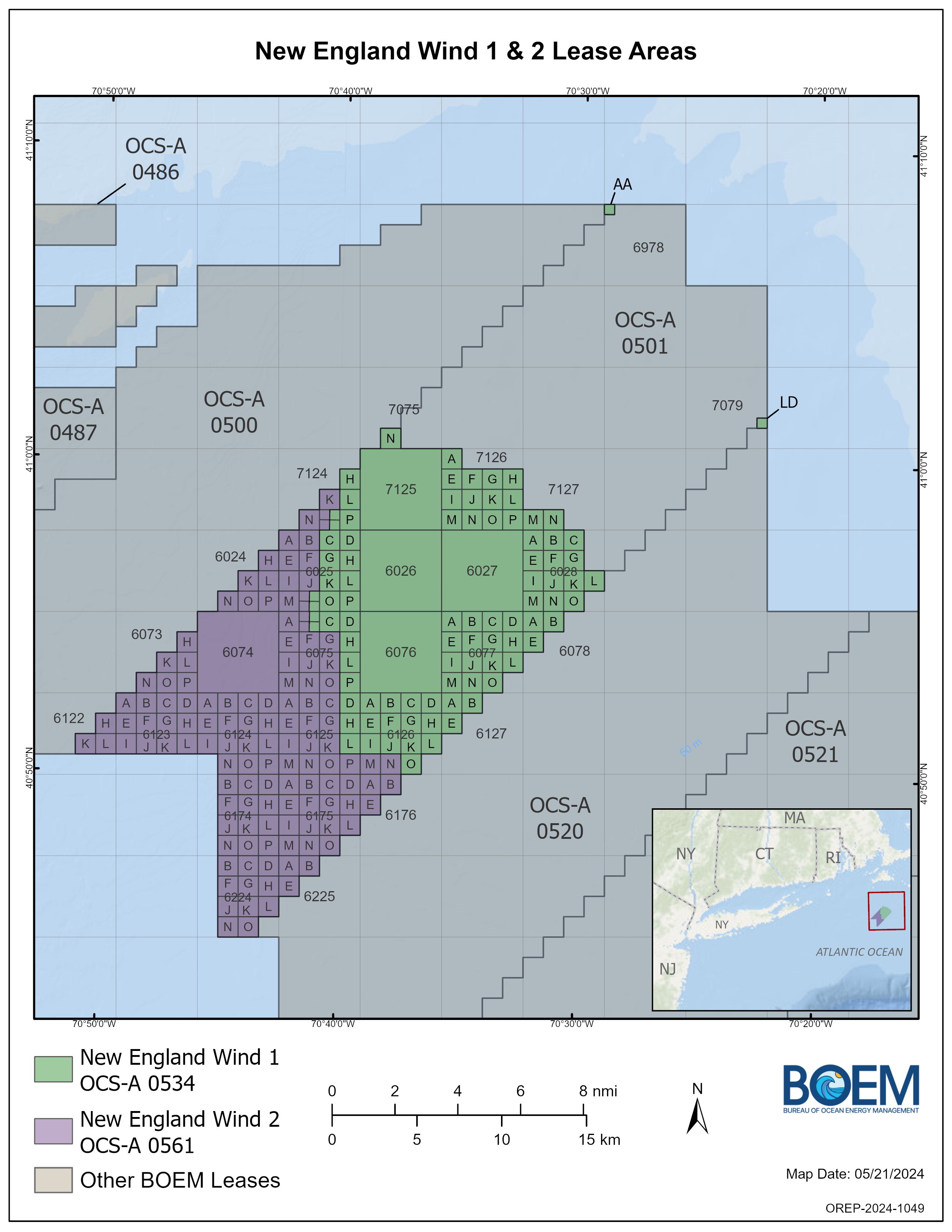
Total (Attentive Energy) lease OCS-A 0538 (outlined in black)

Impressive arrogance from the CEO of a foreign company that paid $795 million for a lease (OCS-A 0538) that was worth pennies on the dollar even before the Presidential election:

Offshore wind, I have decided to put the project on pause” with Trump’s return, Total Chief Executive Officer Patrick Pouyanne said at an energy industry conference in London on Tuesday.

“I said to my team, the project in New York, we’ll see that in four years,” he said. But the advantage is it’s only for four years.”

Perhaps Mr. Pouyanne thinks Total owns those 84,332 acres in the Atlantic or that they have the right to hold the leased area indefinitely. They do not. The OCS Lands Act calls for diligent development of leases and BOEM has promulgated implementing regulations.

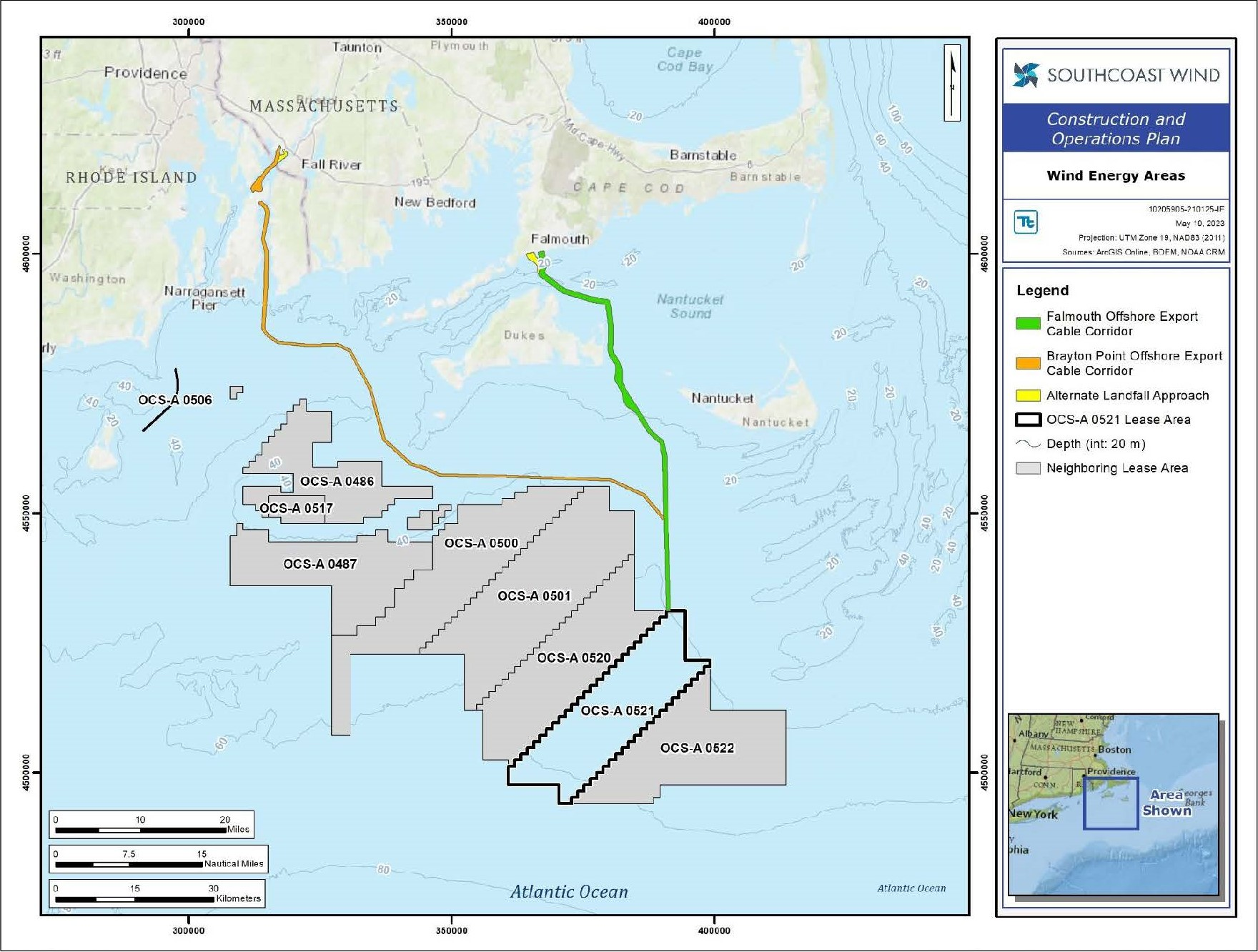
The Total (Attentive Energy) lease was issued on 5/1/2022. Per 30 CFR § 585.235(a)(1), the company must submit a Construction and Operations Plant (COP) no later than 5/1/2027, more than 20 months before the end of the Trump administration. BOEM will have ample time to act on the plan prior to the next administration.

BOEM could also call for progress updates and an earlier COP submittal if there is evidence that the lessee is not moving forward with development plans (as would already seem to be the case given Mr. Pouyanne’s public statements in London).

In the absence of progress in developing the lease, BOEM could seek cancellation (§ 556.1102) for failure to comply with the diligence mandate in OCSLA (556.1102 (a)). Cancellation could also be pursued based on misrepresentations in acquiring the lease (556.1102 (c)) or the threat of unacceptable harm to the environment or national security (556.1102 (d)).

Rather than making rash comments at a public forum in London, perhaps Mr. Pouyanne would have been wise to first meet with energy officials of the new administration early next year. At a minimum, the CEO’s comments will help justify any attempts to cancel the Total (Attentive Energy) lease on diligence grounds.

Read Full Post »

The table below illustrates the dramatic decline in bidding for Atlantic wind leases over the past 2 years. (The California sale is also included in the table.)

offshore areasale dateleases soldacres leasedbonus bids
($ millions)
$/acre
NY/NJ2/20226488,0004,3708955
California12/20225373,268757.12028
Central Atl.8/20242277,94892.65333
Gulf of Maine10/20244439,09621.9 50

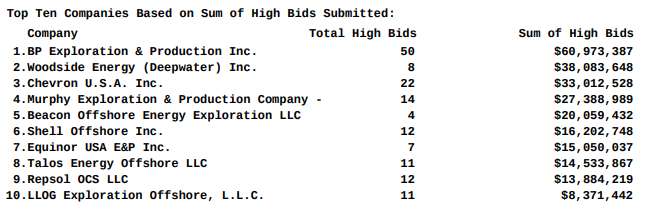
Accepting that bidding at the 2/2022 sale, which averaged nearly $9000/acre, was irrationally exuberant, bidding at this week’s sale was still incredibly weak. Even the bids at the Central Atlantic sale, just 2 months ago, averaged $333/acre, 6.7 times higher than the Gulf of Maine bids.

Energy giants Equinor, Repsol, and Total were among the eligible Gulf of Maine bidders that opted not to participate.

Do the Gulf of Maine bids pass BOEM’s fair market value tests? Apparently so; the sale notice established $50/acre as the minimum bid, and that is where the bidding started and ended. Invenergy and Avangrid had no competition and presumably got the tracts they wanted at the lowest possible price. We’ll see how this works out for the companies and power consumers.

Read Full Post »

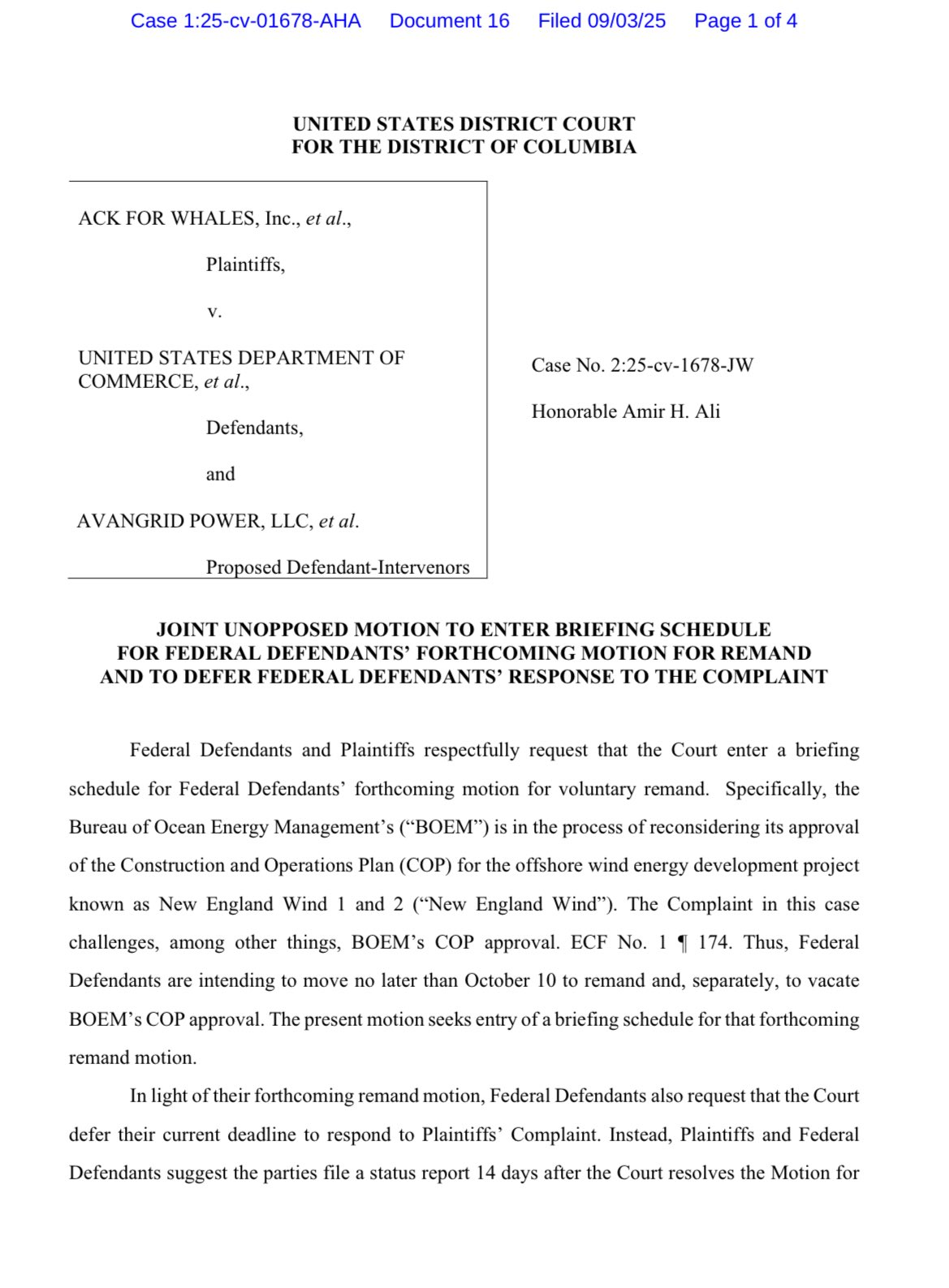
As promised, Ocean City, Maryland, neighboring towns, counties, fishing groups, the Save Right Whales Coalition, and a long list of commercial entities have sued BOEM for approving the Construction and Operations Plan (COP) for the Maryland Offshore Wind project. The complete filing is attached.

The plaintiffs’ discussion of BOEM’s failure to consider true alternatives (begins on p. 43) is particularly interesting. They contend that “BOEM rejected out-of-hand all true alternatives, and selected alternatives with only minor differences in number of turbines and the route for the power cables from the proposed action.

The plaintiffs also assert (p. 44) that “BOEM flatly rejected the option of not authorizing the Maryland Offshore Wind Project—as though approval were foreordained, with only the details to be determined.

The plaintiffs’ argue further (p. 46) that BOEM failed to analyze the 3 phases of the project, particularly the third phase which is open-ended at this time.

Blade failure concerns are discussed beginning on p. 49. Excerpt:

Missing from BOEM’s Final EIS is any discussion or analysis of the environmental impacts in the event of blade and turbine failure and the degradation of Project components, which are known and foreseeable possibilities that should have been reviewed and analyzed by BOEM. Risks of blade and turbine failure and component degradation are not hypothetical. Rather, they pose real dangers to the water quality of the ocean, fish and essential fish habitats, marine mammals, benthic resources, and recreational and commercial boaters.”

As previously recommended, wind leasing and plan approvals should be paused until BSEE’s investigation of the Vineyard Wind blade failure and the associated environmental damage study have been completed.

There is much more in this filing for those who want to take a closer look.

Read Full Post »

Four of the eight tracts that were offered received bids. Only two companies participated, and the amounts were a fraction of the bids submitted for just two leases at the last Central Atlantic sale.

Read Full Post »

Gulf of Maine Final Lease Areas, Acres, and Assigned Region

Lease Area ID Total Acres Developable Acres 
OCS-A 0562 97,854 97,854 
OCS-A 0563 105,682 105,682 
OCS-A 0564 98,565 93,756 
OCS-A 0565 103,191 103,191 
OCS-A 0566 96,075 96,075 
OCS-A 0567 117,780 113,208 
OCS-A 0568 124,897 116,363 
OCS-A 0569 106,038 101,757 
Total 850,082 827,886 
Average106,260103,486
Note that the ave. lease size is 18.4 times larger than a typical Gulf of Mexico oil and gas lease

Today’s Gulf of Maine sale will likely be the last wind lease sale for at least a year.

Per a provision in the “Inflation Reduction Act,” no offshore wind leases may be issued after 12/20/2024, the one year anniversary of the last oil and gas lease sale (no. 261).

Perhaps as a result of the legislative restriction, their desire to maximize wind leasing, and their plan to hold the fewest oil and gas lease sales in the history of the OCS program, BOEM front-loaded the 5 year wind leasing plan to include 4 sales from Aug. – Sept. 2024 (see schedule below). However, contrary to plan, the Gulf of Mexico sale was cancelled for lack of interest and the Oregon sale was cancelled at the request of the Governor in response to tribal and coastal county opposition.

The date of the next oil and gas lease sale is anyone’s guess. Next week’s elections are, of course, the elephant in the room. However, there is also an enormous ruling by a Federal judge in Maryland that would halt the issuance of Gulf of Mexico oil and gas leases and the approval of operating plans effective Dec. 20, 2024. Ironically (or perhaps not?), this is the same date after which no wind leases may be issued absent an oil and gas lease sale.

Chevron and industry trade associations have appealed Judge Boardman’s ruling. (Given the enormous implications of that ruling on current and future Gulf of Mexico production, I’m curious as to why Chevron is the only major producer that is a party in this appeal. Chevron was also the only producer that was a party in the litigation overturning the restrictive Sale 261 lease sale provisions. I’m assuming there is some legal or tactical reason for the absence of participation by Shell, bp, and Oxy?)

Finally, given the legislation linking future wind sales with oil and gas sales, are the Sierra Club et al, the plaintiffs in this case, comfortable with Judge Boardman’s decision? Perhaps they are okay with the judge’s ruling given the absence of any planned Atlantic wind leasing until 2026?

Read Full Post »

Newport Cliff Walk

Defendant Bureau of Ocean Energy Management (“BOEM”), acting as lead federal agency, violated federal law when it approved an industrial-scale energy project known as Revolution Wind. BOEM approved this project without considering its adverse effects on National Historic Landmarks (NHLs) and other historic properties within one of the most historically and culturally significant communities in the country. BOEM also failed to take a “hard look” at Revolution Wind’s impacts on the environment, leaving unanswered questions even though the law required BOEM to inform the public about the project’s environmental benefits and costs.

Those who have visited the Newport Cliff Walk and historic “cottages” are likely to appreciate the concerns of the Preservation Society. Their court filing is attached.

The Southeast Lighthouse Foundation is also a party in this litigation

Read Full Post »

The New England Fishermen’s Stewardship Association (NEFSA) is sending the attached letter to Maine Gov. Janet Mills along with a petition with over 2,500 signatures urging her to halt the development of offshore wind farms in the Gulf of Maine.

A Gulf of Maine wind lease sale is scheduled for Oct. 29.

The NEFSA cites the 9/27 letter from Oregon Governor Kotek that resulted in cancellation of the Oregon wind sale that had been scheduled for Oct. 15.

Read Full Post »

« Newer Posts - Older Posts »