Feeds:
Posts
Comments

Posts Tagged ‘BOEM’

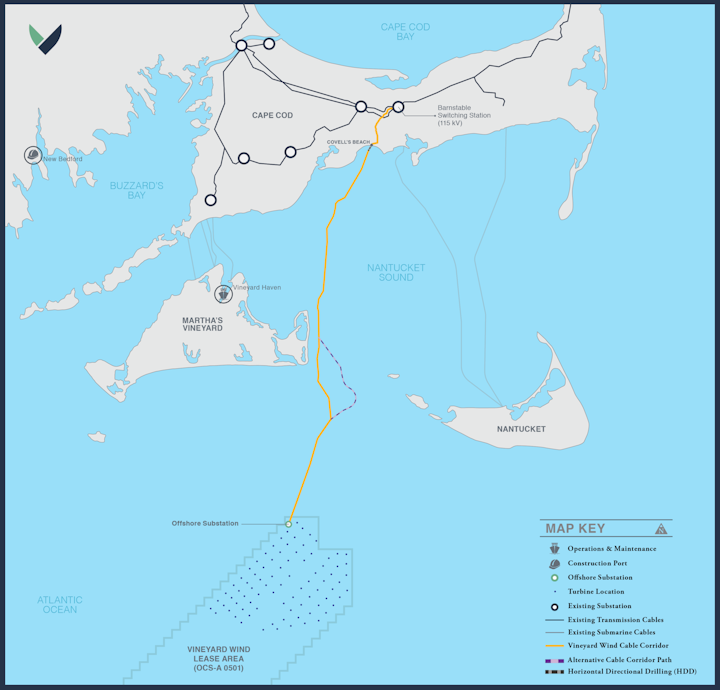
Vineyard Windmap 9 10 19 01

Washington, D.C. (9/13/2021) — Responsible Offshore Development Alliance (RODA), a broad membership-based coalition of fishing industry associations and fishing companies, filed a Petition for Review today in the First Circuit U.S. Court of Appeals regarding the Secretary of the Interior’s July 15, 2021 decision approving the Vineyard Wind 1 offshore wind energy project. This action is the culmination of many years of conscientious participation by fisheries professionals only to see their expertise and value summarily ignored by decision-makers during the leasing process.

The RODA statement is quite strong. While the new administration understandably wants to advance offshore wind development, they would have been wise to accept input from RODA and other interested parties before approving Vineyard Wind I. The fishing industry certainly has a legitimate interest in the outcome of this and other offshore wind projects.

A group of Nantucket residents had already sued BOEM over concerns about the endangered North Atlantic Right Whale. Concerns have also been expressed about the wind farm’s proximity to shore:

Fifteen miles was not OK in North Carolina or Long Island; then why is it OK for Nantucket? It’s just wrong.

David Stevenson, Caesar Rodney Institute

Read Full Post »

In light of the ongoing litigation regarding the Department of the Interior’s “leasing pause,” DOI’s Record of Decision for Sale 257 is most encouraging. The viewpoints expressed in the two quotes below are fundamental to the future of the OCS Oil and Gas Program. Hopefully, all parties can put aside their differences and build upon these consensus views.

While offshore exploration and development cannot be made risk free, OCS oil- and gas-related activities can be conducted safely and responsibly with strong regulatory oversight and appropriate measures to protect human safety and the environment.

ROD, p. 5

The decision to hold Lease Sale 257 recognizes the role that GOM oil and gas resources play in addressing the Nation’s demand for domestic energy sources and fosters economic benefits, including employment, labor income, and tax revenues, which are highest in Gulf Coast States and also distributed widely across the United States. Revenues from offshore oil and gas lease sales support national conservation programs and coastal resiliency for applicable coastal states and political subdivisions under the Gulf of Mexico Energy Security Act of 2006.

ROD, p. 7

Read Full Post »

A recent Washington Post (WP) article, based in part on a March 2021 General Accountability Office (GAO) report, raises interesting pipeline decommissioning issues, but might benefit from some additional context, which I have attempted to provide below:

  • Decommissioning liability issues are not simply a matter of “companies trying to get out of that obligation.” Much of the complexity is associated with decades-long chains of lease ownership and the respective responsibilities of prior lessees. Pertinent questions include the following:
    • If a company sold a lease decades ago and there have since been multiple owners, to what extent is the original owner still liable for decommissioning lease facilities? (Note that guidance from the Federal government has not been entirely consistent over the decades.)
    • If current leaseholders fail to fulfill their obligations, who is next in line and why?
    • To what extent are prior lessees liable for wells and structures constructed subsequent to their ownership?
    • Knowing that decommissioning costs can vary significantly, what amounts of security should be required? How should these funds be protected or managed? Should an assigning company also collect funds to protect their interest?
    • How do inconsistent Federal policies and financial assurance requirements, and improper practices by subsequent owners, affect the liability of prior lessees? In that regard, the case of Platforms Hogan and Houchin in the Pacific OCS Region is interesting and pertinent.
  • Per the WP, “Federal regulations require the removal of offshore pipelines once they are decommissioned, but the rules are rarely enforced.” This statement is doubly incorrect.
    • 30 CFR § 250.1750 provides for decommissioning pipelines in place when the Regional Supervisor (BSEE) determines that the pipeline does not constitute a hazard (obstruction) to navigation and commercial fishing operations, unduly interfere with other uses of the OCS, or have adverse environmental effects. The consensus opinion of the regulators’ engineers and scientists has been that the safety and environmental risks associated with pipeline removal were significantly greater than those for decommissioning in place in accordance with the procedures specified in 250.1751.
    • The comment about enforcement is unfounded. BSEE and its predecessors have strictly enforced decommissioning requirements despite the challenges related to inconsistent policy direction, industry downturns, and hurricane damage. BSEE has an effective program to ensure that idle wells are plugged and platforms are removed in a timely manner. For this reason, 3315 platforms have been removed since 2001; 1933 since 2010. Only about 1800 platforms remain. This very significant loss of habitat is a concern to fishing organizations, another factor that complicates decommissioning policy.
  • In situ decommissioning of buried or trenched offshore pipelines is the standard throughout the world. The seafloor disturbance and safety risks associated with the removal of such pipelines are universally viewed as unwarranted. The pipeline decommissioning procedures followed elsewhere are similar to those described in 30 CFR 250.1751. In the Gulf of Mexico, pipelines installed in less that 200′ of water are typically buried (30 CFR 250.1003) to minimize interference with commercial fishing and other activities.
  • The decommissioning of wind turbines, which are typically more densely located and closer to shore, and their attendant power cables and substructures, will also be challenging. In their 9/16/2019 Congressional testimony, the Responsible Offshore Development Alliance expressed concern about the practice of leaving structural foundations when turbines are abandoned.

In remarks to the WP, Syed Khalil, a coastal restoration geologist for the State of Louisiana, commented that they have enough sand to meet their short term needs, but future needs were a major concern. The Gulf of Mexico Offshore Sand Management Working Group would seem to be the best mechanism for timely action and a workable, long-term action plan. The minutes of their meetings are quite instructive. Rulemaking is not a solution unless the parties want to tie their fate to both the 25 year pipeline rule rewrite (draft published in 2007, another draft coming? final?) and the contentious and similarly interminable financial assurance rule.

Read Full Post »

In the early 1990’s, Department of the Interior (DOI) and Department of Energy (DOE) leadership dabbled at re-branding the OCS Oil and Gas Program by reversing the order of the words. Clever? Perhaps by Washington public relations standards. One senior manager even changed his license plate from “OCS OIL” to “MMS GAS” (not much competition for those tags 😃). Technical staff were less enthused about this simplistic marketing gimmick that misrepresented the historical and scientific facts about oil and gas production. For many years, natural gas was a byproduct of oil production that was commonly flared. (This practice continues in some regions of the world, although to a lesser extent than in the past.)

Understandably, the Oil and Gas Journal wasn’t very impressed by the change. I saved a copy of their 1/24/1994 editorial (attached) on the subject. Per the OGJ:

We at the Journal love natural gas. But that doesn’t warrant an attempt to repeal the laws of nature and ignore the weight of tradition by renaming everything “gas and oil” this and that.

John L. Kennedy, Editor, Oil and Gas Journal, 1/24/1994)

To their credit, BOEM and BSEE web pages and announcements during recent administrations (both parties) indicate a preference for the more traditional “oil and gas.” (The DOE website largely ignores the existence of either oil or natural gas.) Surprisingly, the American Petroleum Institute (API), an industry trade organization with more than 100 years of history, is now consistently using “natural gas and oil.” This rearrangement of words is not entirely consistent with the interest of API’s members. In the offshore sector, the primary interest of API members is in finding and producing oil. if you think otherwise, look at the EIA GoM gas production data. Most of the Gulf’s declining gas production is now associated with deepwater oil production, and BSEE rightfully requires that this gas be used for fuel or transported for sale. Similarly, gas is a secondary consideration for API members exploring in Alaska given that 35 trillion cu ft of North Slope gas still awaits a pipeline.

Oil companies, and those who represent them, should be proud of their current and historical role in producing oil (and gas) for our economy, security, and way of life; and of the men and women who have toiled to locate and produce petroleum resources for the benefit of society. Are there better energy alternatives? Perhaps, but issues with these alternatives remain to be resolved, and oil and gas will continue to be important. Let’s focus on producing these resources as safely, cleanly, and reliably as possible.

Read Full Post »

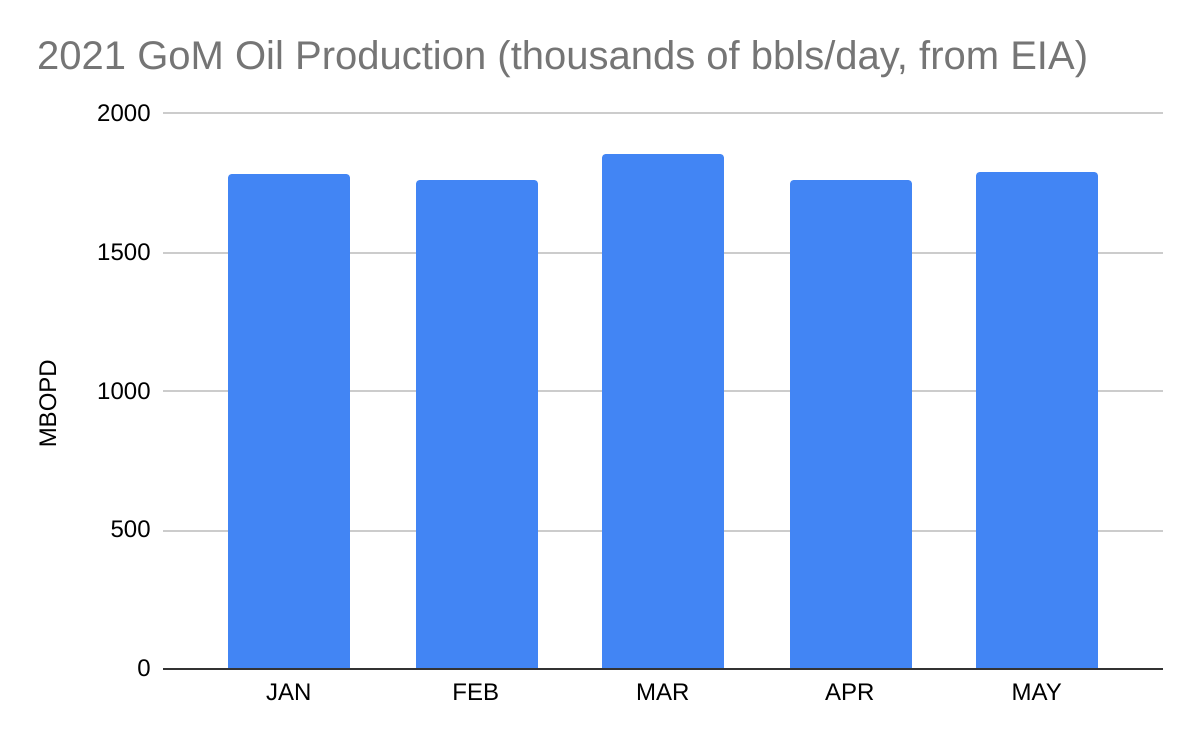
A previous BOE post estimated that current stabilized GoM oil production rates were 1.7 – 1.8 million BOPD. EIA recently announced that May production was 1.791 million BOPD, which is consistent with our estimate. Per the chart below, GoM production was essentially unchanged from the beginning of the year despite a 37% increase in the price of oil (WTI) from 1 January to 31 May. This suggests that stabilized GoM production may have peaked pending first oil from several new projects.

Key production questions:

  • Will new production from Mad Dog 2, Vito, PowerNap, Thunder Horse South 2, and the recently sanctioned Whale project offset high depletion rates elsewhere in the deepwater GoM?
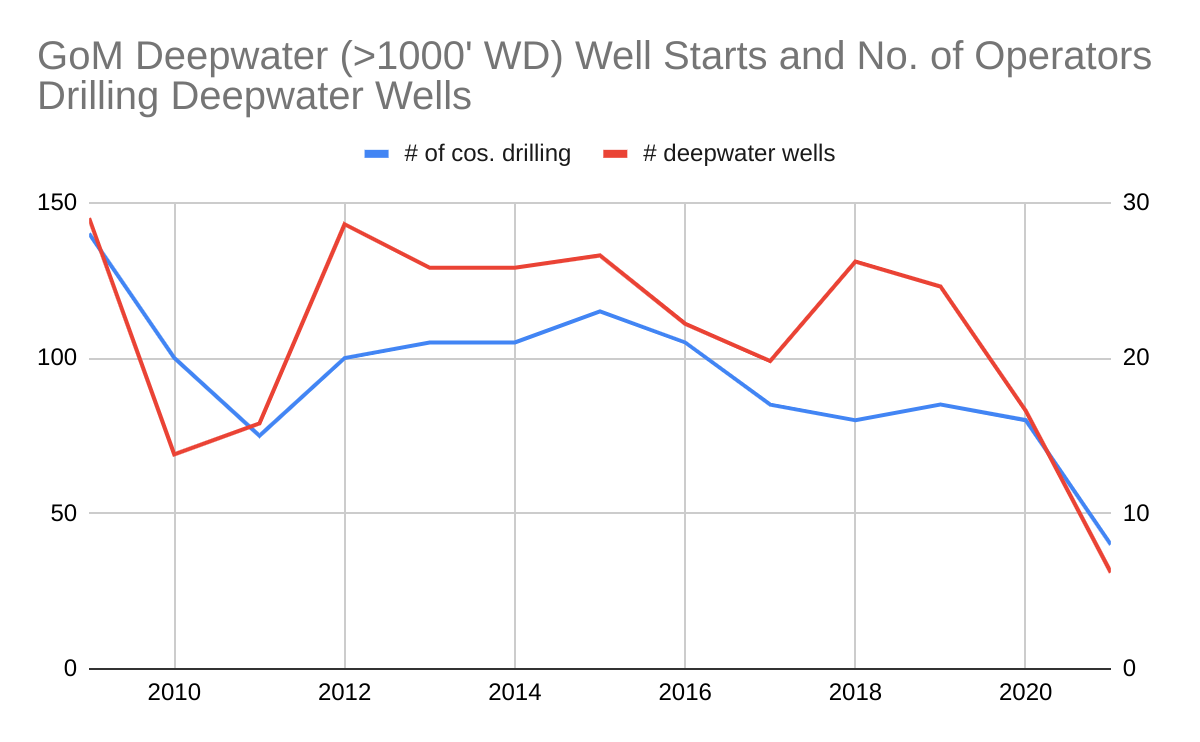
  • Looking further ahead, is deepwater GoM production sustainable without increased drilling activity? Per BSEE data, only 33 deepwater wells were started in 2021 YTD, just 18 of which are classified as exploratory. Drilling is thus at historic low levels. For reference, there were 477 wells started in 2001, 149 of which were exploratory. This level of activity facilitated a 30% growth in oil production, peaking at 2 million BOPD in 2019.

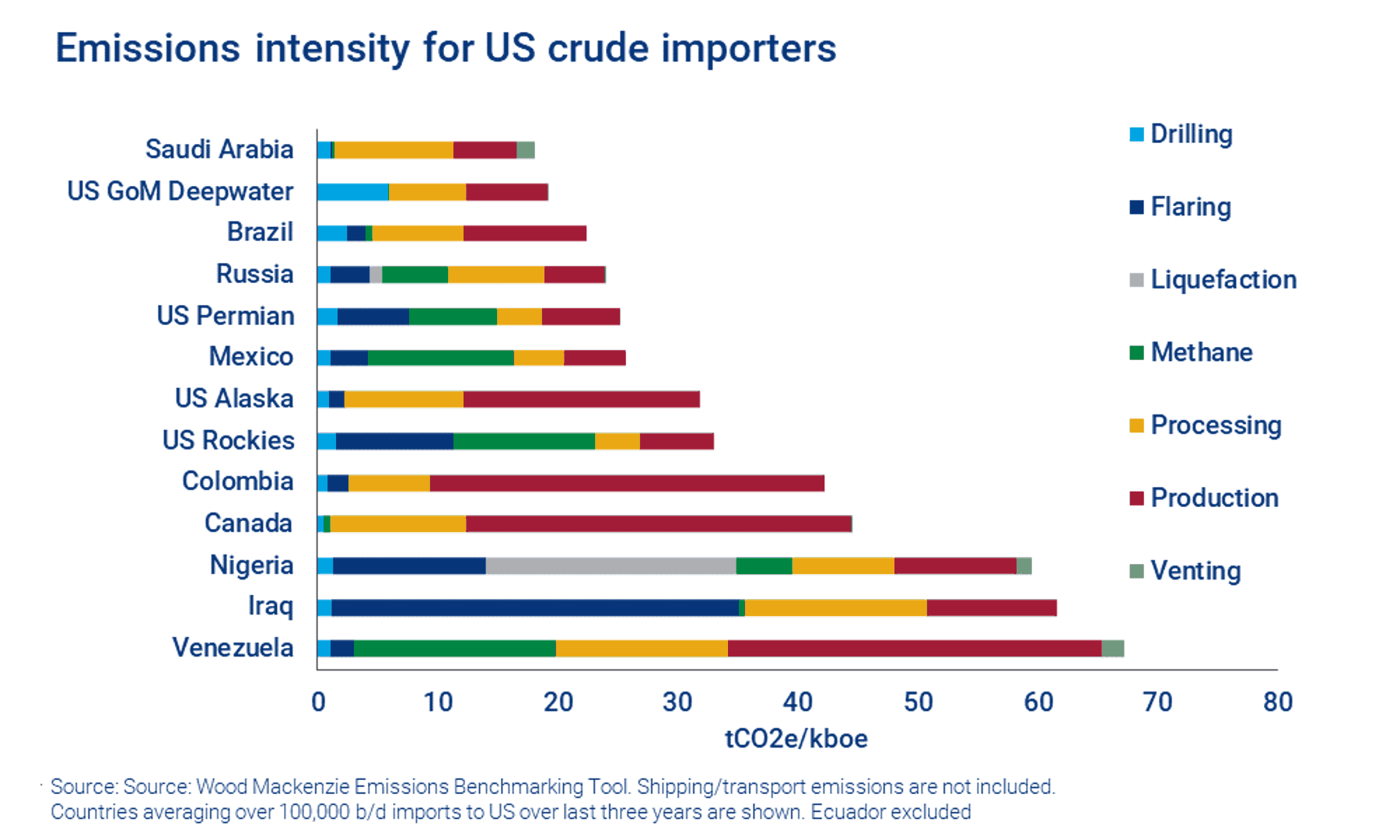
Regardless of one’s views on the urgency and timing of the “energy transition,” is there any doubt that oil and gas will continue to be important to our economy and security for years to come? If not, should deepwater GoM production, with its relatively low carbon intensity, be a core element of our energy strategy? To better understand the trade-offs, I suggest that BOEM’s Environmental Studies Program conduct a peer reviewed assessment of the carbon intensity of domestic and international supply alternatives. Product transportation considerations should be included in this assessment.

Read Full Post »

In light of energy security and price considerations, rebounding oil demand, uncertainty about the long-term viability of non-conventional onshore production, and the elimination of most other offshore options, sustaining deepwater GoM production should be a high-priority U.S. policy objective. The deepwater GoM also offers significant environmental advantages in that approximately 1.6 million BOPD are produced from only 58 widely dispersed surface facilities that are well maintained, closely monitored and inspected, and distant from shore. Another advantage of US deepwater production is the low carbon intensity relative to other sources of petroleum (more on this in a later post).

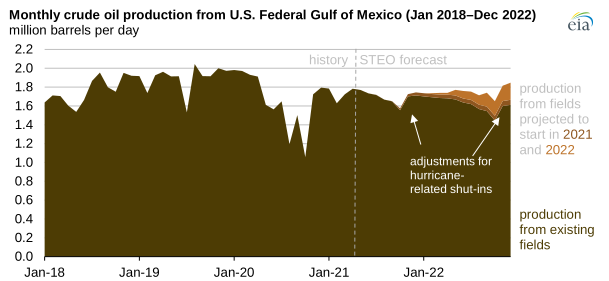
EIA (Chart 1) projects relatively stable GoM production over the next 2 years. Platt’s (Chart 2) is forecasting a slight decline in 2021 production primarily because of COVID-related delays in the initiation of production at Shell’s VIto and PowerNap and BP’s Mad Dog 2 and Thunder Horse South 2 facilities. Based on the latest available EIA data, current stabilized GoM oil production appears to be in the 1.7-1.8 million BOPD range.

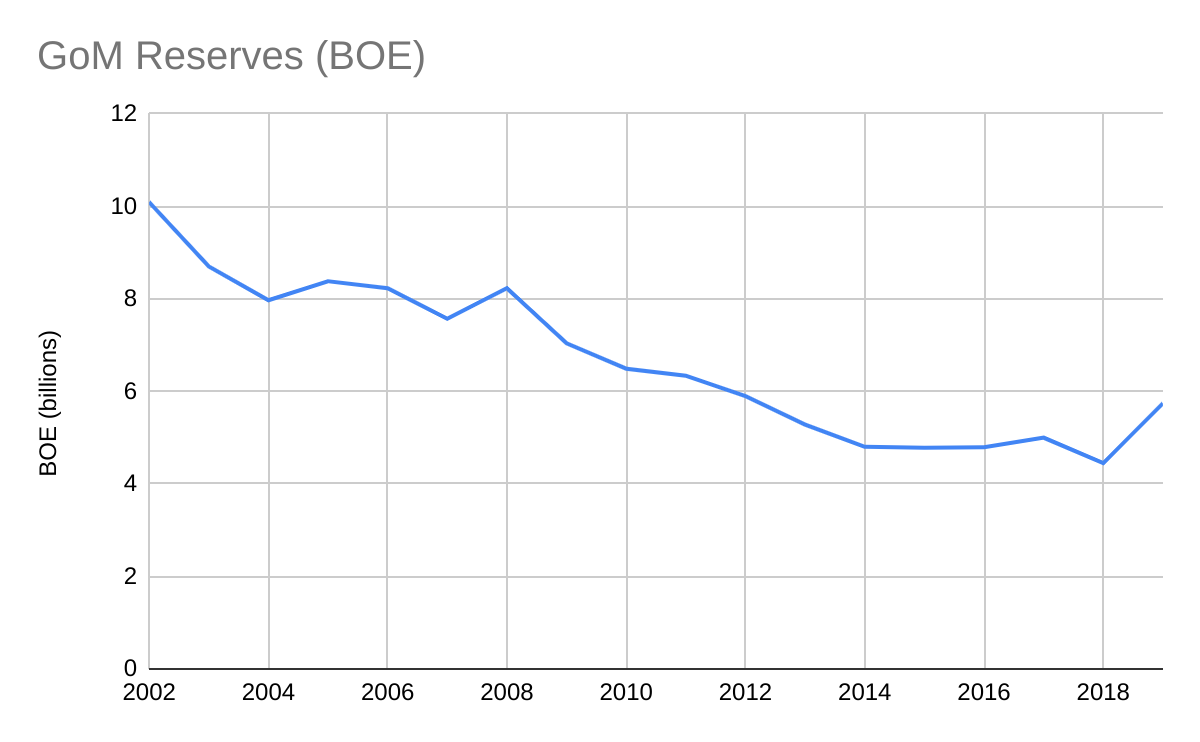
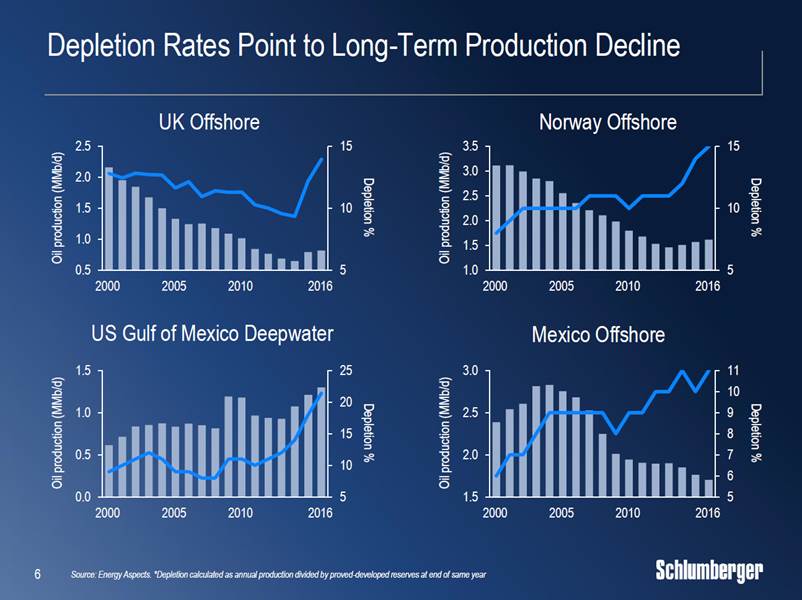
Going forward, the concern is the high rate of reserve depletion and the absence of drilling activity needed to replace reserves. Schlumberger data through 2016 (Chart 3) show depletion rates rising to above 20%, the highest (by far) of the offshore regions analyzed. I was unable to find more recent data, but unless this trend line has made a sharp turn, production declines are likely in the next 3-5 years. Further, drilling trends do not suggest the likelihood of significant reserve growth. Data from BSEE’s Borehole File (Chart 4) indicate deepwater well start activity that is comparable to the moratorium years of 2010 and 2011. Even more concerning is the absence of exploratory drilling (chart 5) and the very few operating companies that are drilling deepwater wells. Only five operators have spudded deepwater exploratory wells in 2021 YTD. One US supermajor hasn’t started a well since 2019, and another US major has essentially exited the Gulf.

Deepwater production trends are not easily reversed, so dialogue is urgently needed to assess the implications of declines in drilling, reserves, and industry interest. As the resource manager on behalf of the public, BOEM is the logical choice for initiating these discussions. BOEM’s Norwegian equivalent, the Norwegian Petroleum Directorate (NPD) demonstrates the importance of pro-active land management. The NPD has done an outstanding job of sustaining exploration activity and production consistent with Norwegian safety and environmental values, which are among the highest in the world. On their website, NPD provides ongoing updates on exploration, production, and reserve depletion parameters. Their competency and commitment to sustaining production on the Norwegian shelf is underscored in this news release, an excerpt from which is pasted below:

Exploration is of great importance for the long-term value creation on the shelf. The supply of oil and gas resources from new discoveries, as we have seen so far this year, is necessary so that activity in the petroleum industry does not fall sharply after 2030. Without new discoveries, production can fall by more than 70 percent in 2040 compared to 2020, says Torgeir Stordal, director of Technology and coexistence in the Norwegian Petroleum Directorate.

NPD, July 21, 2021
monthly crude oil production from U.S. federal gulf of Mexico
Chart 1, EIA GoM Production Forecast
Chart 2

cid:image006.jpg@01D2C0D3.5EE7AEC0

Chart 3: Depletion calculated as annual production divided by proved-developed reserves at end of same year

Chart 4: Data from BSEE Borehole File; 2021 Data as of 7/23
Chart 5: Data from BSEE Borehole File; 2021 Data as of 7/23

Read Full Post »

Link

Salazar and Bromwich also announced that they are establishing a permanent advisory body through which the nation’s leading scientific, engineering, and technical experts will provide input on improving offshore drilling safety, well containment, and spill response. Secretary Salazar has asked former Sandia National Laboratory Director Tom Hunter to lead the body, which will be called the Offshore Energy Safety Advisory Committee (Safety Committee).

The new Bureau of Ocean Energy Management (BOEM) will be responsible for managing development of the nation’s offshore resources in an environmentally and economically responsible way. Functions will include: Leasing, Plan Administration, Environmental Studies, National Environmental Policy Act (NEPA) Analysis, Resource Evaluation, Economic Analysis and the Renewable Energy Program.

The new Bureau of Safety and Environmental Enforcement (BSEE) will enforce safety and environmental regulations. Functions will include: All field operations including Permitting and Research, Inspections, Offshore Regulatory Programs, Oil Spill Response, and newly formed Training and Environmental Compliance functions.


Read Full Post »

Safety and Environmental Management Systems

This rulemaking will incorporate in its entirety and make mandatory the AmericanPetroleum Institute’s Recommended Practice 75, Development of a Safety andEnvironmental Management Program for Offshore Operations and Facilities, with respectto operations and activities under the jurisdiction of BOEMRE. This final rule will applyto all OCS oil and gas and sulphur operations and the facilities under BOEMREjurisdiction including drilling, production, construction, well workover, well completion,well servicing, and DOI pipeline activities.

The rule will become effective on November 15, 2010.

Read Full Post »

The complete interim final Drilling Safety Rule is now posted on the Federal Register site.  This rule was announced on 30 September along with the Safety and Environmental Management System rule. The latter rule has not yet been posted by the Federal Register.

The Drilling Safety Rule is effective immediately.  With regard to comments:

While BOEMRE will not solicit comments before the effective date, BOEMRE will accept and consider public comments on this rule that are submitted within 60 days of its publication in the Federal Register. After reviewing the public comments, BOEMRE will publish a notice in the Federal Register that will respond to comments and will either:

1. confirm this rule as a final rule with no additional changes, or

2. issue a revised final rule with modifications, based on public comments.

Read Full Post »

« Newer Posts