Feeds:
Posts
Comments

15,531 of the 15,537 comments on the bid adequacy rule were from a single organization, Friends of the Earth. I have no problem with the Friends of the Earth campaign given that their comment letter is pertinent to the topic. Their main point is that the bid adequacy process fails “to factor in the climate and social costs of continued Outer Continental Shelf oil and gas lease sales into the bid process.” Although that may be a reasonable position, those issues are addressed in the programmatic and sale specific environmental reviews which factor into when and where sales are held, tract exclusions, special lease stipulations, and the comprehensive operating regulations. Once bids are submitted, the issue (and the sole purpose of the bid adequacy rule) is whether those bids represent fair market value for the oil and gas resource potential of the leases being offered.

Given that 96.3% of the US OCS is off-limits to oil and gas leasing, only 0.7% is currently open to exploration, and the new 5 year plan includes the fewest lease sales in OCS program history, it’s rather a stretch to argue that environmental concerns are not being prioritized.

The State of Alaska submitted very good comments (attached) that point to the historical differences in Gulf of Mexico and Alaska leasing. The State argues that a simpler approach to determining fair market value would encourage exploration and development on offshore lands that have seen little of either in recent years. Knowing BOEM’s expectations prior to the sale, perhaps through higher minimum bid requirements, would ensure that companies do not underbid and that tracts are successfully leased.

The Gulf of Mexico leasing program of today is looking more like the frontier area leasing of the past. As previously noted, the uncertainty regarding future sales changes the historic GoM leasing dynamic. The next opportunity for purchasing unleased GoM tracts is now a troubling unknown. This would seem to make it less prudent to reject bids based on uncertain prospect evaluations. Absent leasing and exploration, the true resource and revenue potential will never be known.

It was good to see the strong comments submitted by my former Minerals Management Service colleagues Dr. Marshall Rose and Ted Tupper. Marshall, who was our Chief Economist, commented that the proposed rule did not identify the problem and explain how the rule addressed that problem. Ted, a senior statistician, points to past failures of the bid adequacy process and proposes specific changes. It’s great to see the passion that our retired employees have for the program they were so instrumental in developing and managing.
The rule was finalized without any substantive changes.

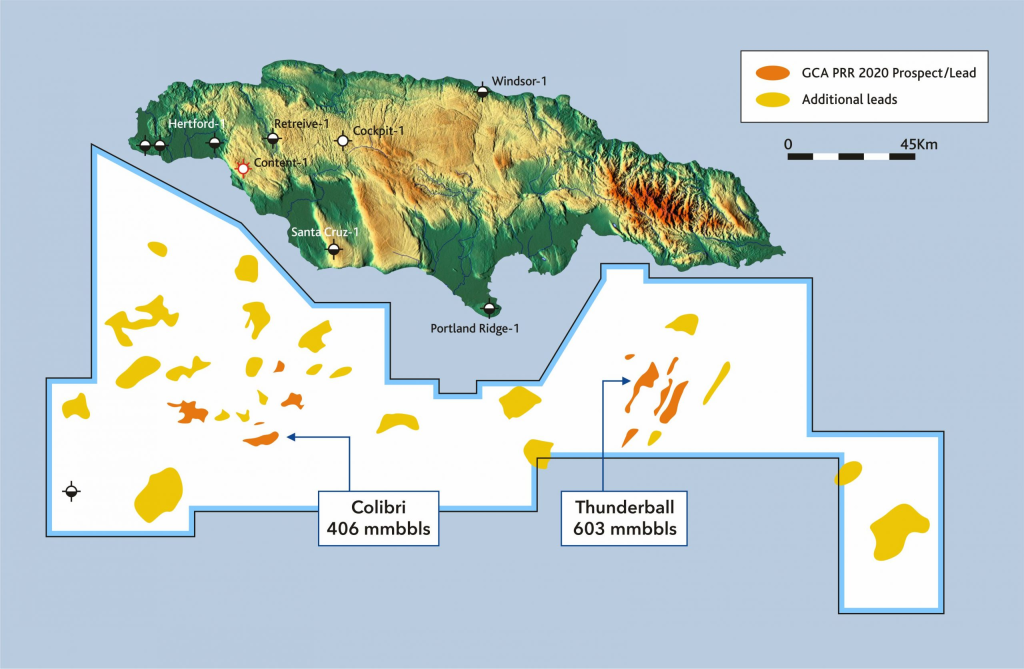
Walton-Morant license

“We are very pleased to announce the agreement of terms for a two-year license extension in Jamaica. United has dedicated significant effort to the technical aspects of this asset, which has over 2.4 billion barrels of unrisked oil potential and the promising Colibri prospect. This extension will empower us to confidently continue our farm-out campaign, seeking a strategic partner to unlock the immense potential in this region. The support from the Government of Jamaica underscores our relationship and the optimistic industry outlook in Jamaica. We will continue to focus on the recent positive interest that has been shown by a number of parties, and with the extended licence, this is a significant opportunity for the benefit of all stakeholders.”

United Chief Executive Officer, Brian Larkin, 1/22/2024

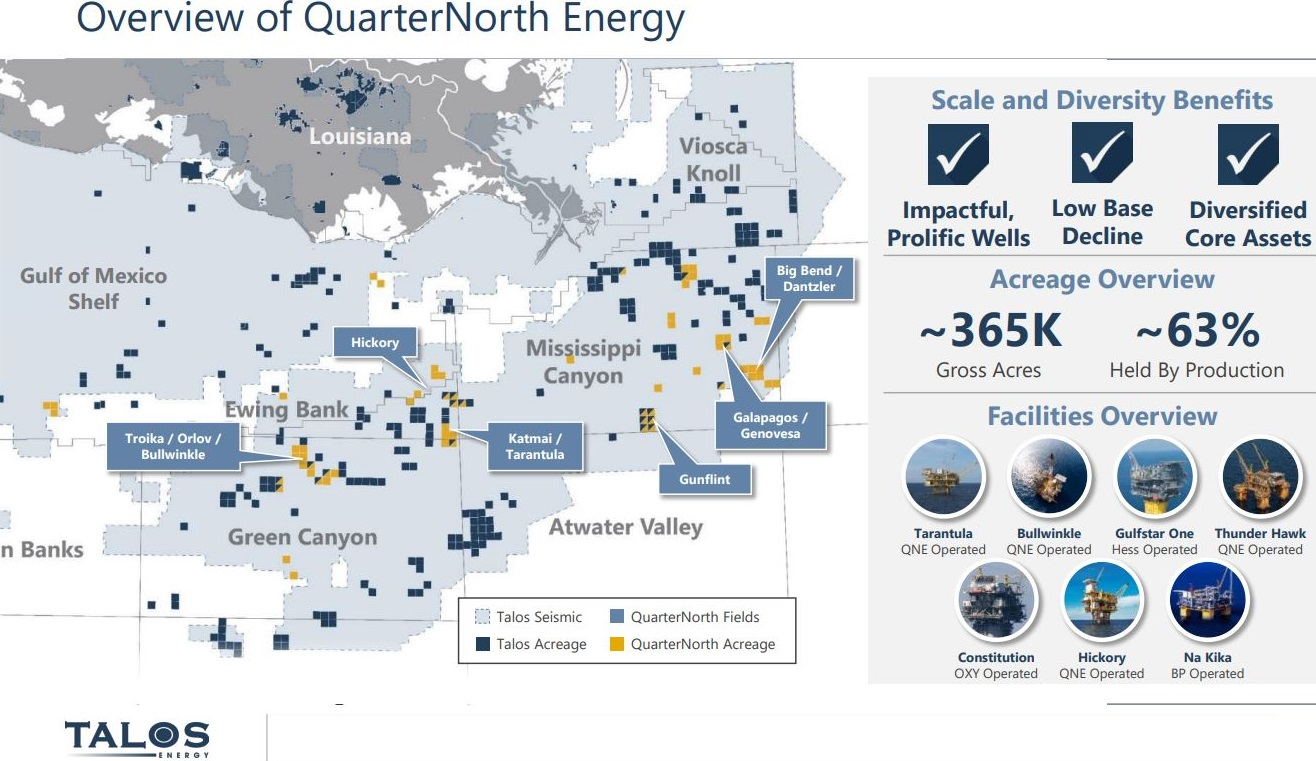
Safety first: As a descendant of troubled Fieldwood Energy, which had a very poor safety and compliance record, QuarterNorth Energy (QNE) had much to prove. That said, QNE has had a good compliance record in its brief 2 year history. During 76 facility inspections in 2022 and 2023, QNE was cited for only 15 Incidents of noncompliance, all but 2 of which were warnings. This is on par with the companies that had the best compliance records during that period.

BSEE’s incident statistics are hopelessly out-of-date, with the latest data being for 2021, so we have limited information on QNE safety incidents. However, BSEE’s District Investigation Reports, which document the more significant incidents, are relatively current and no QNE incidents were investigated in 2022 and 2023.

Platforms: Consistent with the general sense that QNE inherited the best of Fieldwood’s facilities, the company’s 15 platforms include Bullwinkle, the Thunder Hawk floating production unit in 6050′ of water, and prominent shelf platforms Tarantula and Hickory.

The acquisition reunites 2 iconic Shell platforms under the same ownership. QNE’s Bullwinkle, installed in 1988 in 1353′ of water, is the world’s tallest (non-compliant) steel tower platform. Talos’s Cognac, installed in 1978 in 1023′ of water, is the first platform in >1000′ of water.

Production and reserves: Per Talos, QNE adds 30,000 boe/d of production and 69 million boe of reserves.

Drilling: Per BSEE records, QNE was the operator for 2 deepwater exploration wells, both of which are classified as completed.

Active leases: The QNE acquisition will add 51 leases to the Talos’s 143 lease inventory.

Recent lease sale activity:

SaleQNETalos
2572/110/10
2596/45/4
2616/414/13
total/high bids for QuarterNorth (QNE) and Talos

Sales price and decommissioning: QNE was already on the market for “more than $2 billion,” shortly after the company was formed. Talos is paying $1.29 billion consisting of 24.8 million shares of Talos’s common stock and approximately $965 million in cash. A case study of the complex Fieldwood bankruptcy and the outcomes for the various parties would be most interesting. Also of interest would be a study of the decommissioning obligations of the former companies and the extent to which the sale proceeds are being applied.

Hywind Scotland, Equinor

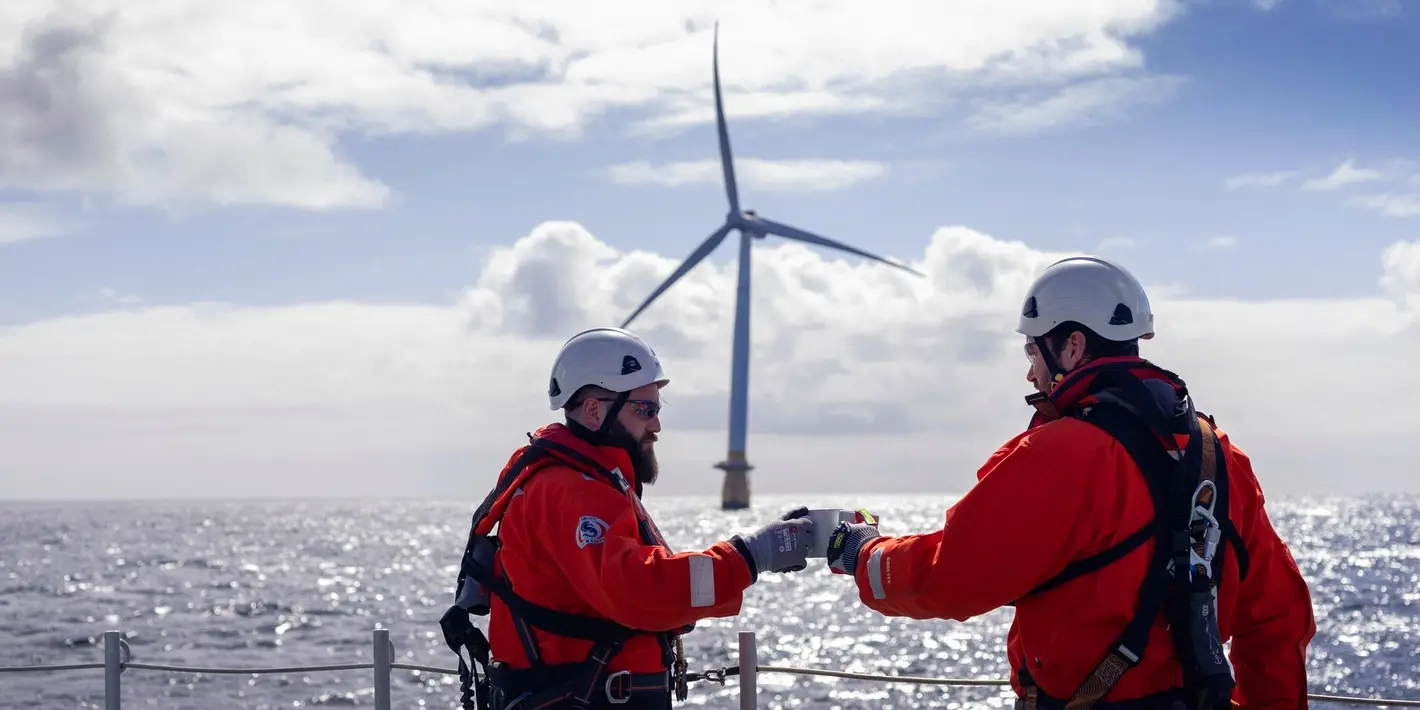
It’s prudent, if not imperative, to tow floating wind turbines to sheltered coastal locations for major maintenance. For that reason, Hywind, the world’s first floating wind farm will be offline for up to 4 months this summer.

Hywind Scotland‘s operator, Norwegian power giant Equinor, says that operational data has indicated that its wind turbines need work. The pilot project has been in operation since 2017.

The five Siemens Gamesa turbines will be towed to Norway this summer. An Equinor spokesperson said, “This is the first such operation for a floating farm, and the safest method to do this is to tow the turbines to shore and execute the operations in sheltered conditions.”

electrek

Published data indicate that Hywind has been the UK’s best performing offshore wind farm. Performance data for Hywind, and a chart illustrating the capacity factors since commissioning, are posted below. The 2024 capacity factor will, of course, be substantially reduced as a result of the essential offsite maintenance.

rolling 12 month capacity factor
ending 5/2022
life capacity
factor
age
(years)
installed
capacity
(MWp)
total elec
generated
(GWh)
power/
unit area spanned
(W/m2)
Hywind Scotland49.5%52.6%4.6306421.0
capacity factor = total energy generated/(hours since commissioning x capacity)

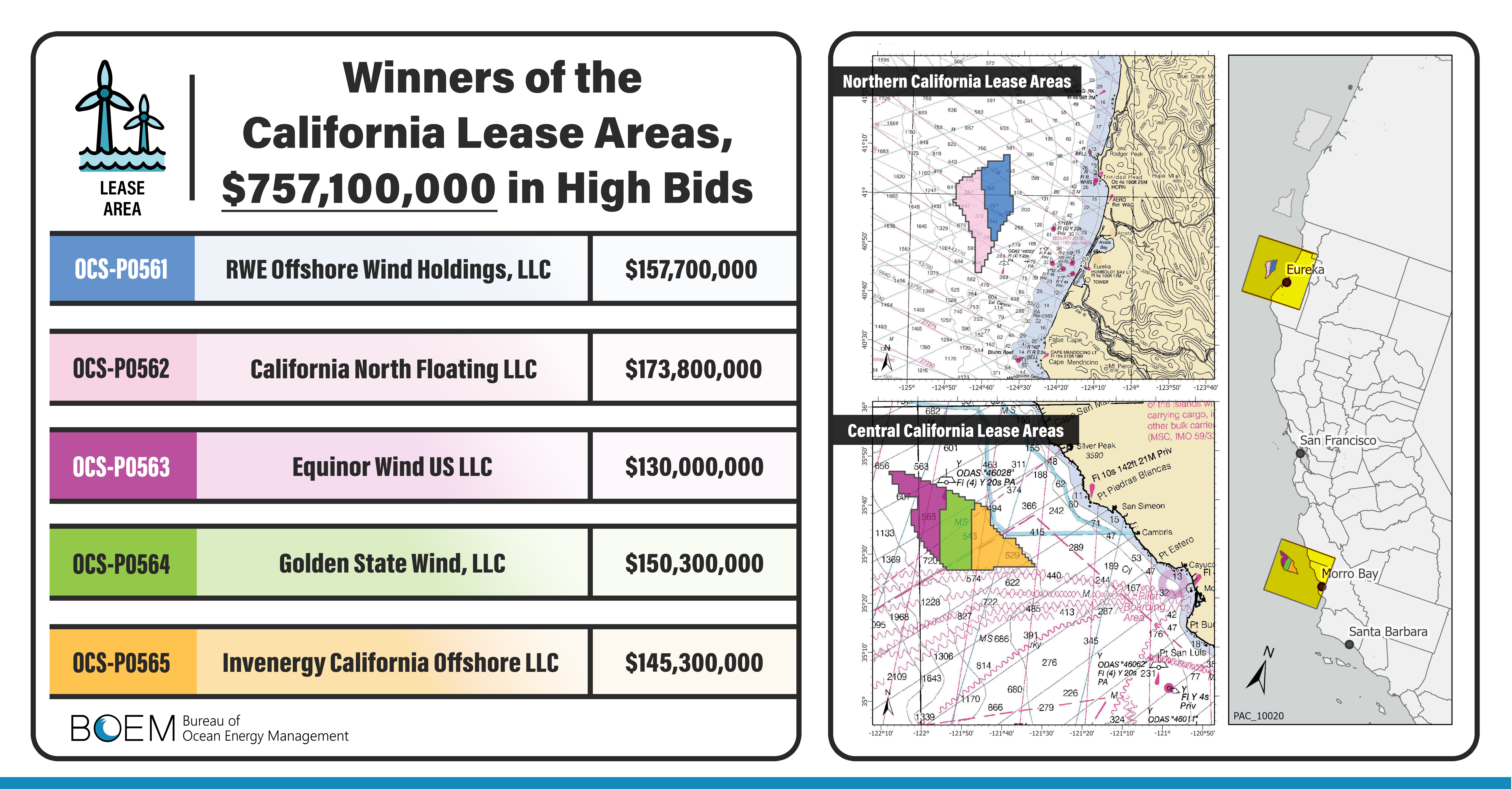
The first US floating turbines are expected to be at these California offshore leases, and Hywind operator Equinor is one of the lessees:

Given the financial challenges facing the offshore wind industry, the still emerging technology, and the risks inherent in California offshore development, the amounts bid on these leases only 13 months ago are stunning.

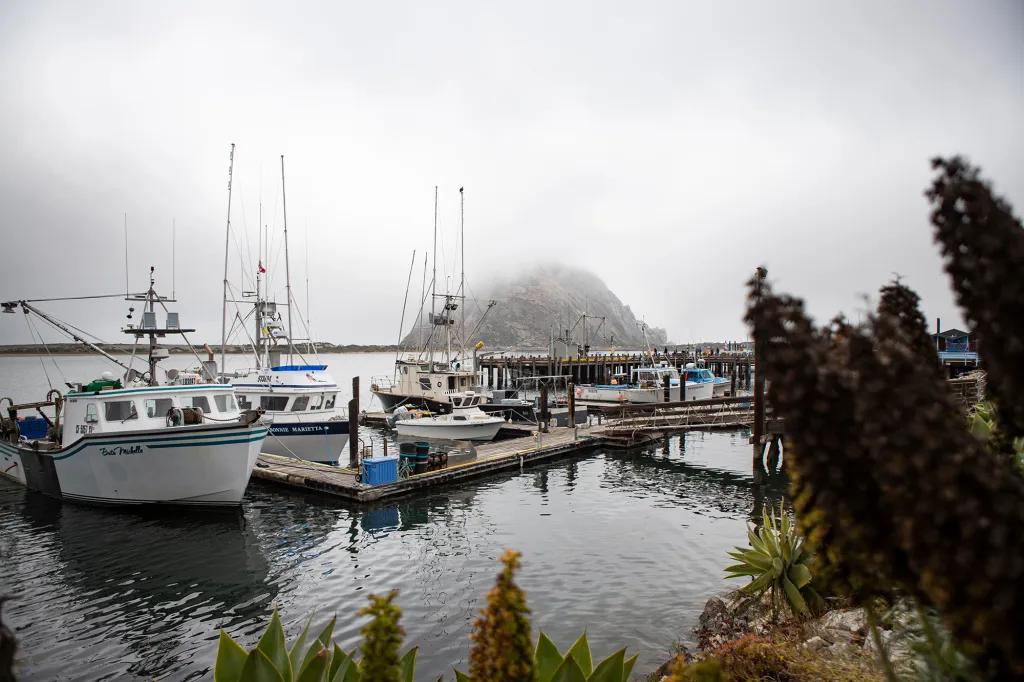
Some Central Coast residents are not enamoured with “another attempt to industrialize the coast.” Although the turbines will be >20 miles offshore, they will have to be towed to shore for major maintenance. For the Central California leases, nearby harbor areas like Morro Bay (pictured below) would be overwhelmed by the large structures and the maintenance and repair operations. Towing the towers to LA/Long Beach, albeit rather distant from the leases, would seem to be the preferred option for such work.

Ironically, a report for BOEM, points to synergies between the offshore wind industry and oil and gas decommissioning industry. Such synergies will only be possible if longstanding oil and gas decommissioning obstacles are satisfactorily addressed and the offshore wind projects proceed as planned.

Which will come first – platform decommissioning or wind turbine commissioning? For those young enough to find out, what is the over-under for the years until (1) half of those platforms are decommissioned, and (2) half of the wind turbines commissioned? Any number <10 is unrealistic for either.

Morro Bay Harbor

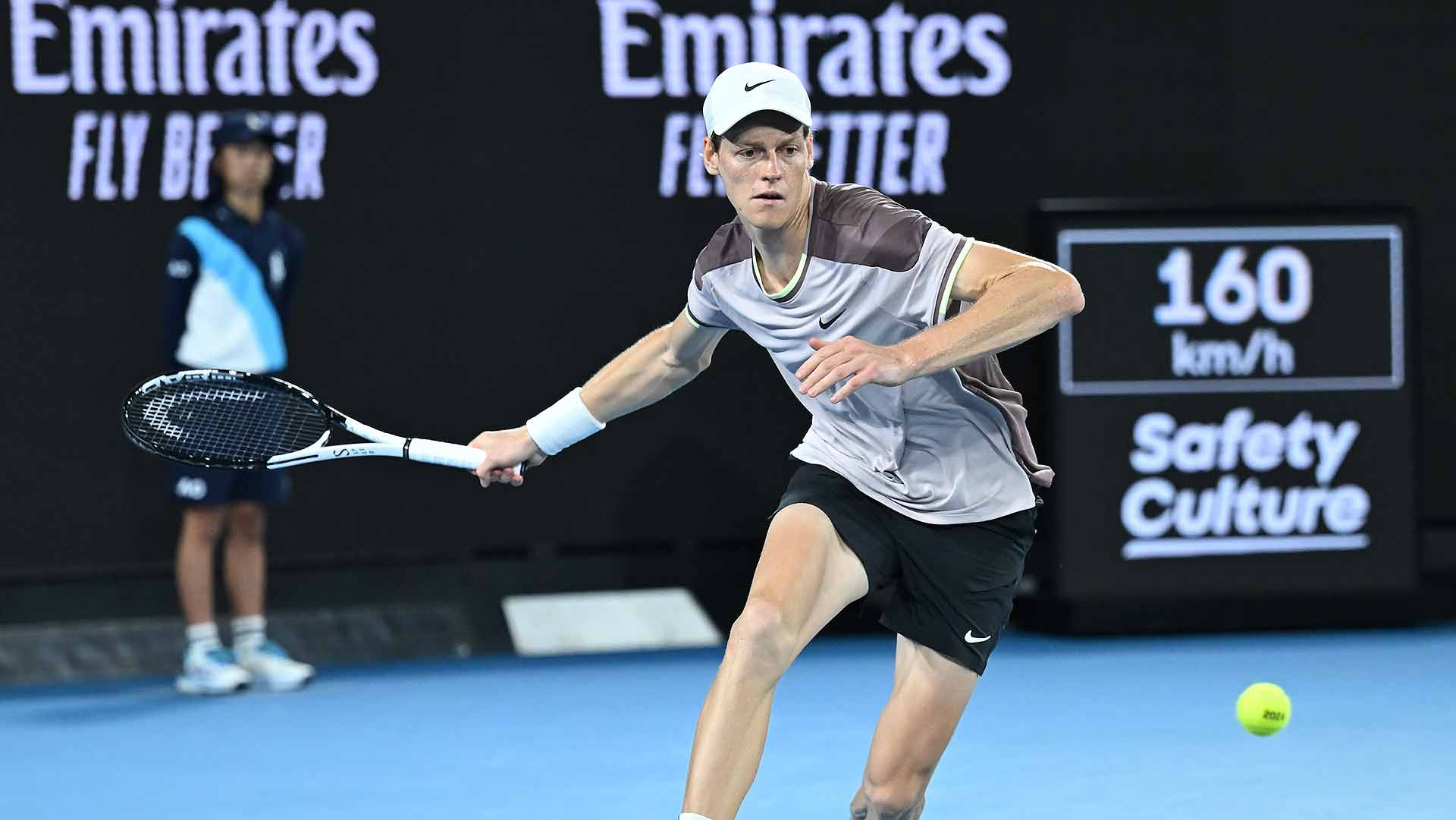
Below is the promotional video produced by SafetyCulture for the tournament. Their products seem to be similar to the safety management software used by offshore operators and contractors. SEMPCheck was a pioneer in that regard.

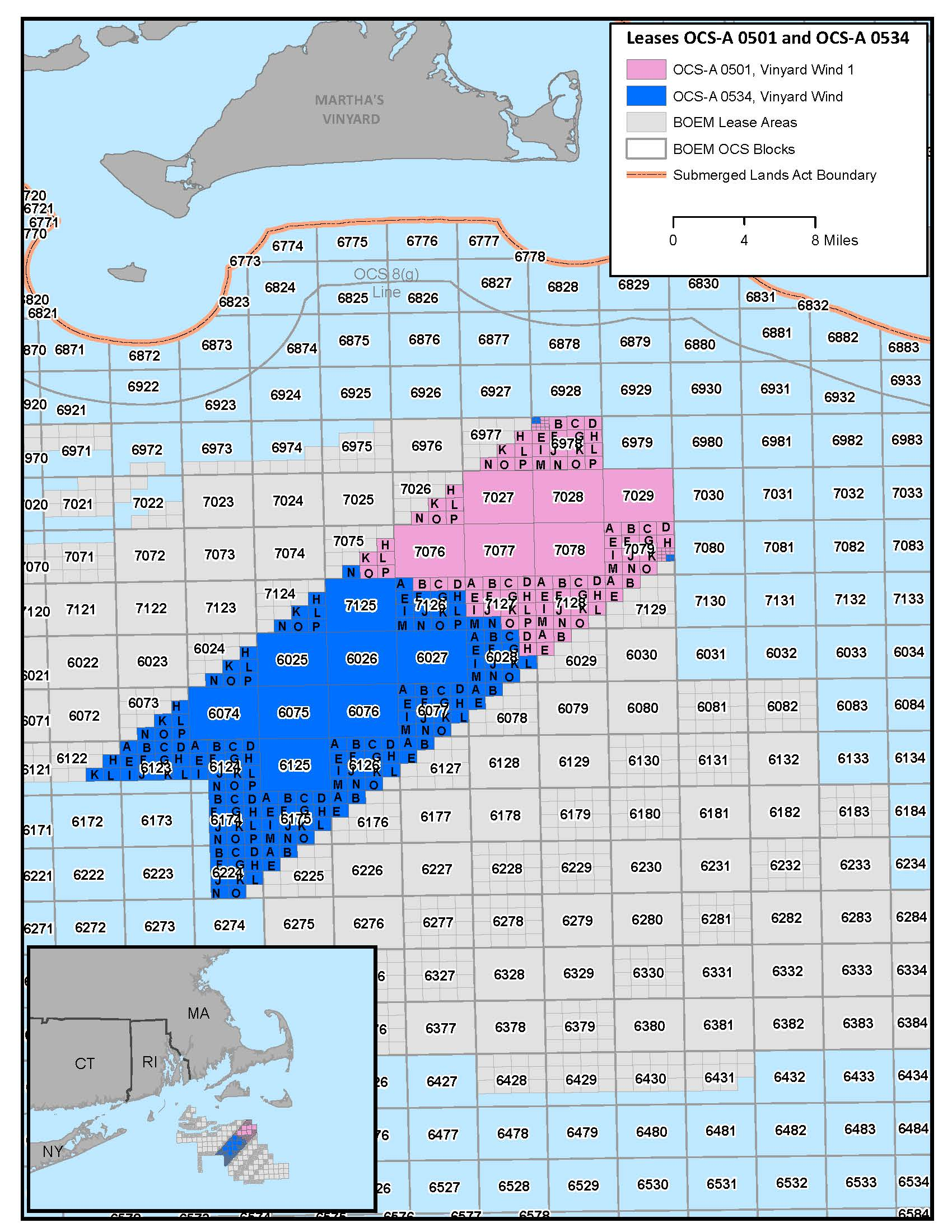
Vineyard Wind project

BOEM is charged with protecting the public from financial risks associated with the decommissioning of offshore facilities. Previous posts have addressed oil and gas facility decommissioning issues and proposed revisions to BOEM’s financial assurance regulations for those operations.

Recent disclosures indicate that BOEM, which very publicly promotes the offshore wind projects that it regulates, has waived a fundamental financial assurance requirement at the request of Vineyard Wind (approval letter attached). Given its broad applicability, this precedential waiver could have the effect of revising a significant provision of the offshore wind decommissioning regulations without public review and comment.

The issue is the “pay as you build” financial assurance requirement at 30 CFR § 585.516, which was waived by BOEM. This requirement, which is intended to project the public from decommissioning liability, is fair and reasonable given that wind developers must only provide financial assurance “in accordance with the number of facilities installed or being installed.” Companies that don’t have sufficient financial strength to comply with this requirement should not be installing and operating offshore wind turbines.

Vineyard Wind was either unable or unwilling to comply with the requirement. They instead requested to defer providing the full amount of the required financial assurance until year 15 of actual operations. The waiver changes “provide assurance when you install” to provide assurance 15 years after installation if everything goes as planned (hoped?).

After their waiver request was denied in 2017, Vineyard Wind resubmitted the request in 2021 seeking a favorable decision from an administration concerned that project cancellation or delay might tarnish the program that they were enthusiastically promoting.

BOEM (as directed from above?) granted the waiver, citing the general departure authority at 30 CFR § 585.103. However, that authority is intended for special situations, not for broadly applicable waivers that have the effect of revising the regulations without the public review required by the Administrative Procedures Act and Executive Orders 12866 and 13563.

There are no criteria in the Vineyard Wind waiver approval that could not apply to other wind developers. Vineyard Wind has simply committed to the same “risk-reduction factors” that apply to all offshore wind projects: damage insurance, the “use of proven turbine technology,” and long-term power purchase agreements. How could BOEM deny the same request from other companies?

It’s noteworthy that the regulations specific to financial assurance at 30 CFR § 585.516 provide no criteria for waiving the assurance requirements; nor do the regulations provide for the 15-year payment plan approved by BOEM. Given the precedential nature of the BOEM action and its enormous financial implications, a revision to the decommissioning regulations that provides criteria for such payment schemes should be promulgating before any similar departures are approved.

In light of the waiver, the public will likely incur substantial costs if Vineyard Wind fails, walks away, doesn’t fully fund their decommissioning account in a timely manner, or seeks new concessions after some or all of the 62 turbines have been installed.

Given the decommissioning obligations, what company would want to step in and assume responsibility for a failing project 10-15 years from now? What happens if Vineyard Wind’s project revenues don’t meet expectations and contributions to their decommissioning account are insufficient or used improperly? More concessions? We’ve seen this dance before.

Whether the project is for oil, gas, or wind energy, protecting the public from decommissioning liabilities should always be prioritized over facilitating development.

The attached BSEE Safety Alert addresses chronic and persistent helideck issues that pose significant risks to offshore workers. Meanwhile, we are still waiting for the final NTSB report on the tragic 12/29/2022 helideck incident that killed the helicopter pilot and 3 passengers.

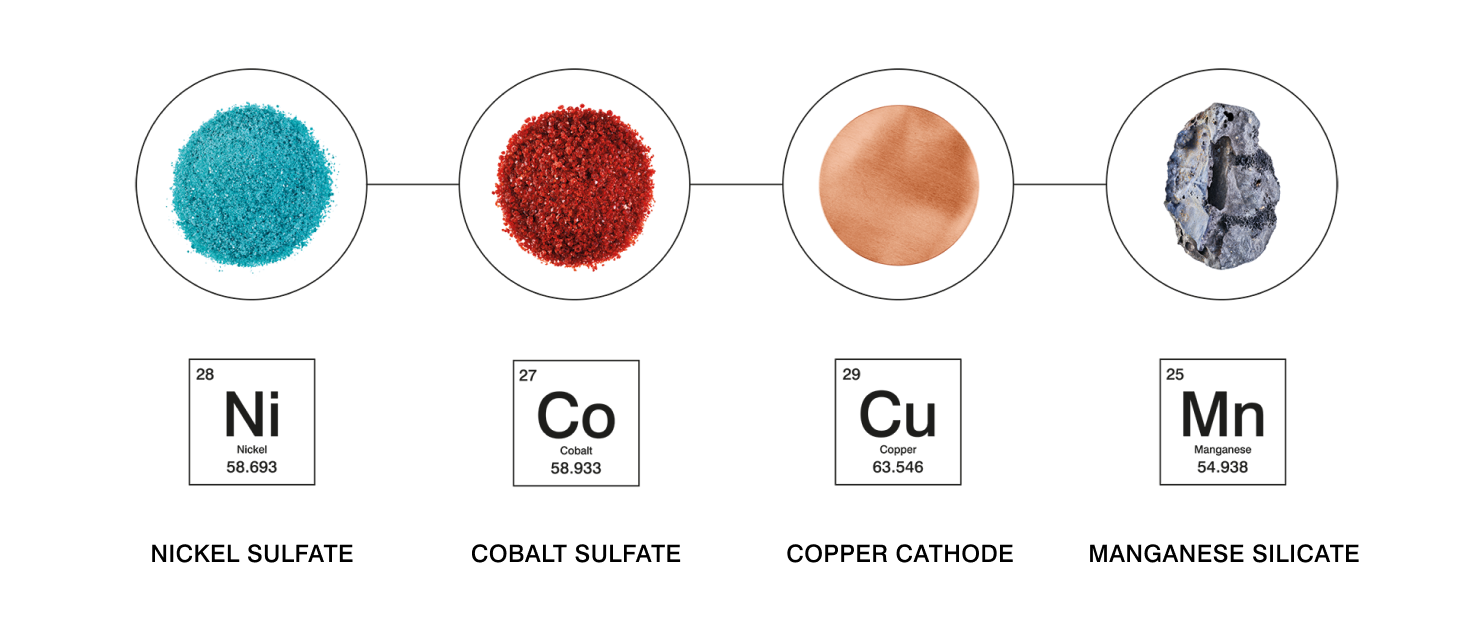
Polymetallic nodules contain critical metals (TMC images)

“the committee directs the Assistant Secretary of Defense for Industrial Base Policy shall, by March 1, 2024, submit a report to the House Armed Services Committee assessing the processing of seabed resources of polymetallic nodules domestically. The report shall include, at a minimum, the following:
(1) a review of current resources and controlling parties in securing seabed resources of polymetallic nodules;
(2) an assessment of current domestic deep-sea mining and material processing capabilities; and
(3) a roadmap recommending how the United States can have the ability to source and/or process critical minerals in innovative arenas, such as deep-sea mining, to decrease reliance on sources from foreign adversaries and bolster domestic competencies.

NDAA, p. 230

The above map shows the offshore carbon disposal leases acquired by Repsol from the Texas General Land Office (GLO) and the adjacent Federal tracts Repsol bid on at OCS Lease Sale 261. There should be absolutely no confusion regarding Repsol intentions at Sale 261. They plan to develop a large CO2 disposal hub offshore Corpus Christi and bid improperly at an OCS oil and gas lease sale to support that objective.

Perhaps blinded by visions of “a stream of U.S. government grants, followed by generous tax credits for every ton of carbon stored,” Repsol (Sale 261) and Exxon (Sales 257 and 259) have made a mockery of the OCS leasing process and the regulations that guide it. The Repsol bids should be promptly rejected.

So what about the Exxon nearshore Texas leases that have already been issued? Given that Exxon misled the Federal government and improperly acquired carbon disposal leases at an oil and gas lease sale, those bids should be cancelled pursuant to 30 CFR § 556.1102:

(c) BOEM may cancel your lease if it determines that the lease was obtained by fraud or misrepresentation. You will have notice and an opportunity to be heard before BOEM cancels your lease.

While Exxon’s oil production increases in the Permian Basin and offshore Guyana are impressive, is it not hypocritical for Exxon and other major producers to capitalize on the capture and disposal of emissions associated with the consumption of their products? Is it not just a bit unsavory for oil companies to cash in on (and virtue signal about) carbon collection and disposal at the public’s expense? Perhaps companies that believe oil and gas production is harmful to society should be reducing production rather than engaging in enterprises intended to sustain it.

As we approach the 55th anniversary of the Santa Barbara blowout (more to follow), pioneering subsea engineer JL Daeschler reminds us of a lesser known, but very serious, drilling blowout that occurred the same year offshore Northern Australia.

As is the case with most historic incidents, the lessons learned are still pertinent today and should be studied by those involved with well operations. Training sessions should consider what went wrong then, how technology and practices have changed since, how similar incidents could still occur, and innovations and improved practices that could further mitigate well control risks.

While well control technology and procedures are much improved, the fundamental issues discussed in the attached video remain the same. Well control must always be considered a work in progress with continuous improvement being the objective.

(The Sedco 135G semisubmersible that drilled this well is of the same design as the Sedco 135B rig that sank offshore Borneo in 1965.)