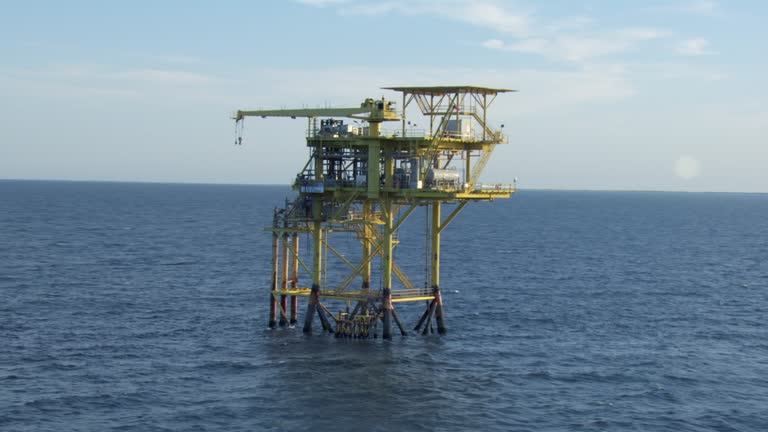
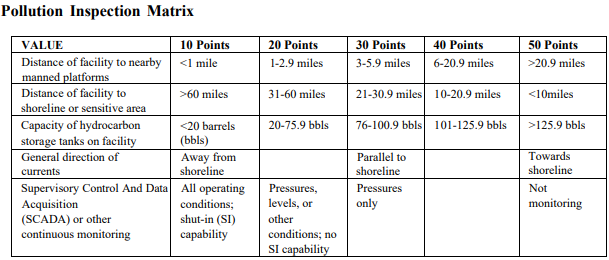
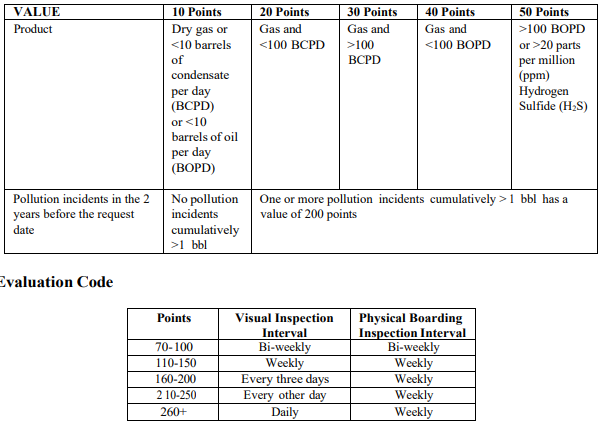
The attached BSEE document provides guidance for determining pollution inspection frequencies for unmanned facilities. Thoughts:
Reasonable risk-based approach
A minimum of bi-weekly visual and physical inspections for low risk platforms producing dry gas
Any platform with significant oil production and storage, and no real time monitoring system, will have to be visually inspected at least every 3 days (daily if other risk factors apply) and boarded weekly
Any platform that had spillage totaling > 1 bbl in the past 2 years will have to be visually inspected every other day and boarded weekly.
Provides for the application of technology (cameras, drones, innovative monitoring systems) to reduce inspection frequencies.
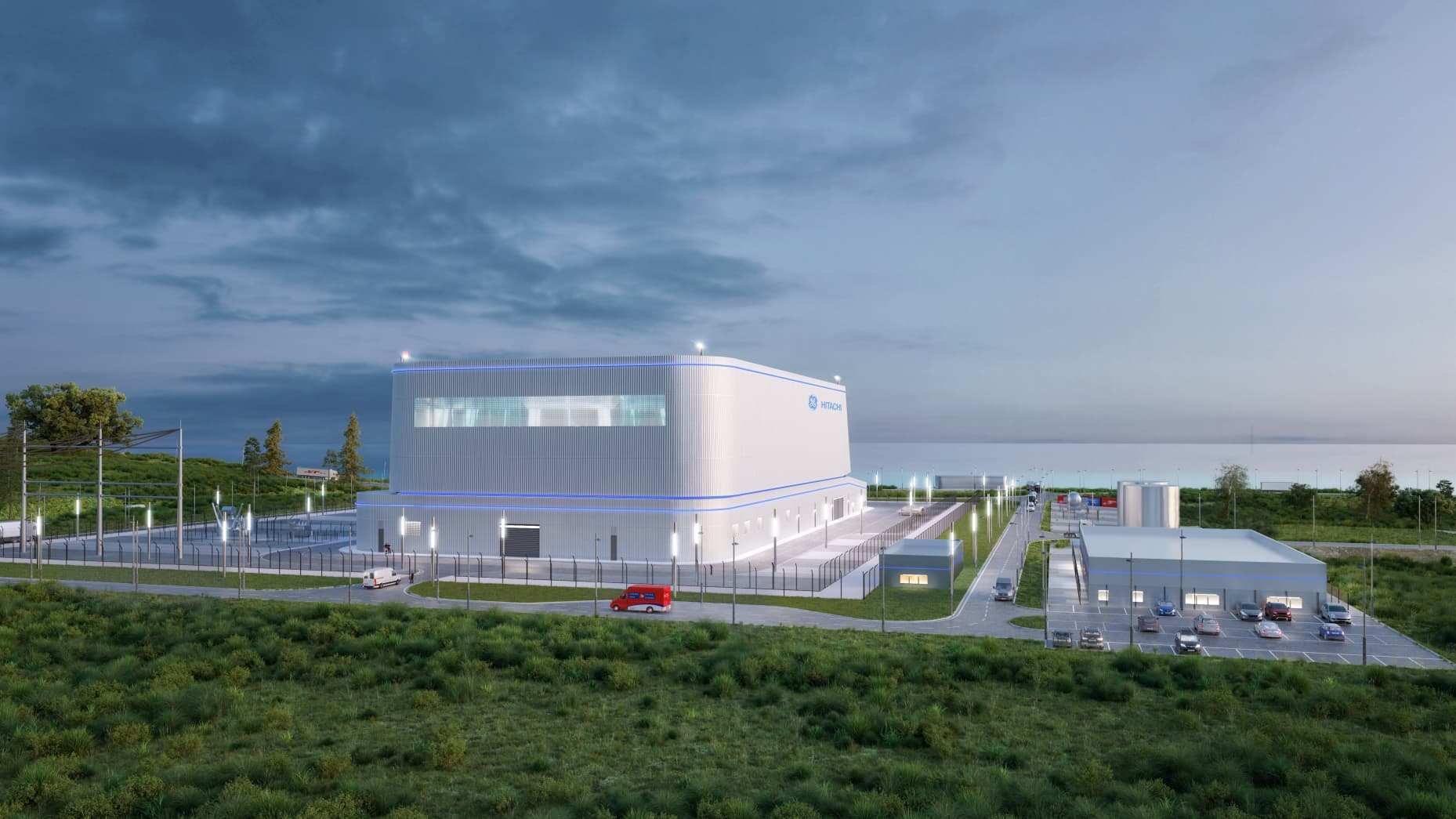
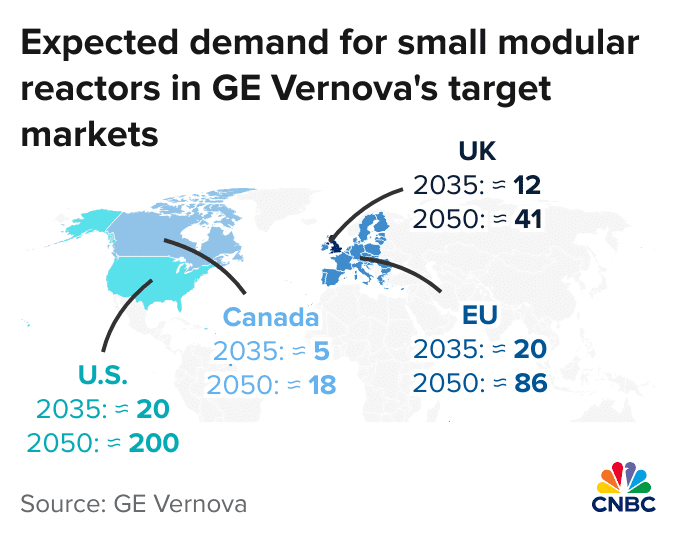
“GE Vernova is aiming to deploy small nuclear reactors across the developed world over the next decade, staking out a leadership position in a budding technology that could play a central role in meeting surging electricity demand and reducing carbon dioxide emissions.“
Jens Christiansen offers this explanation for the absence of bids for wind leases offered in the recent Danish sale:
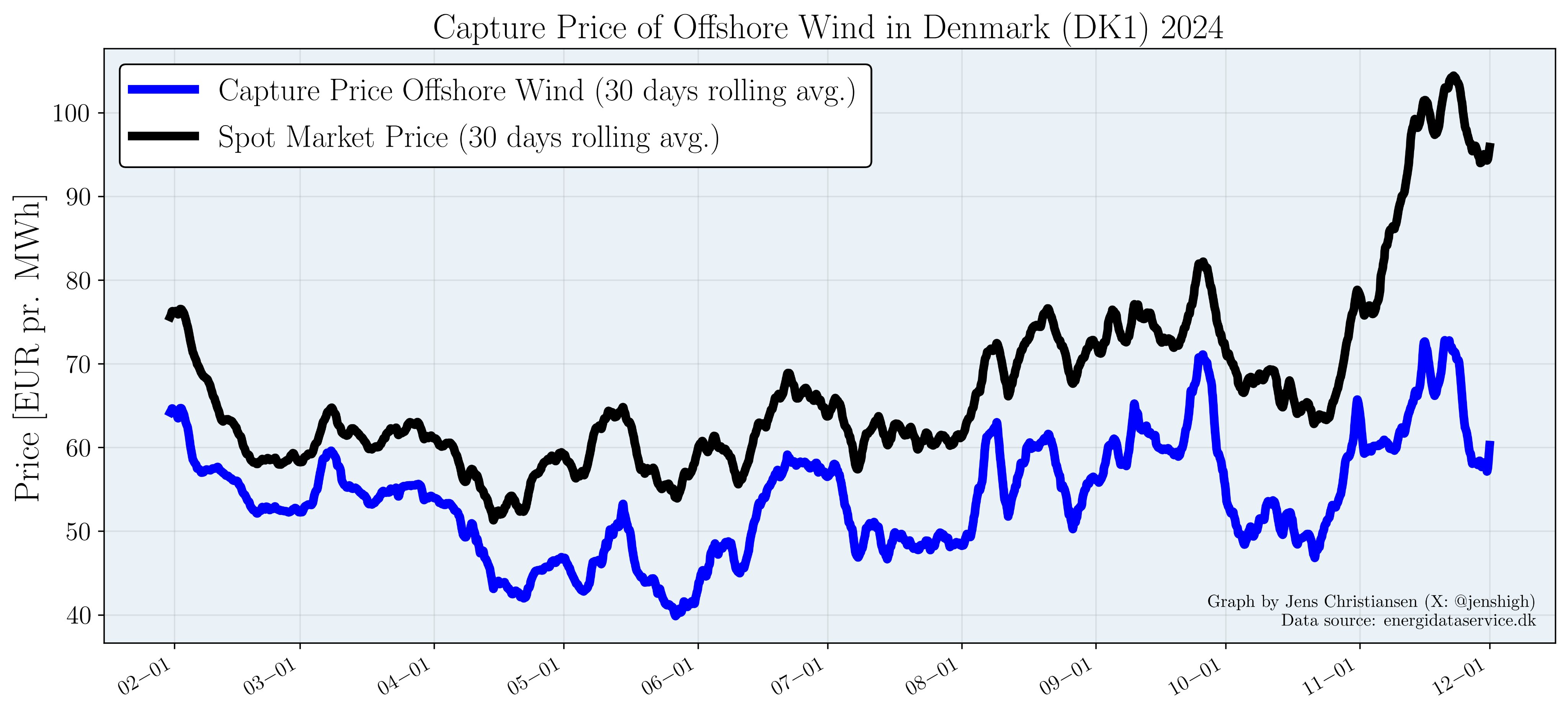
“The value of offshore wind energy in Denmark has declined.
The capture price remains consistently lower than the market price throughout 2024. When the wind blows, the market saturates and the capture price drops This is why the latest offshore wind tender yielded nothing.”
A related BOE post points to the sharp decline in bids for US offshore wind leases.
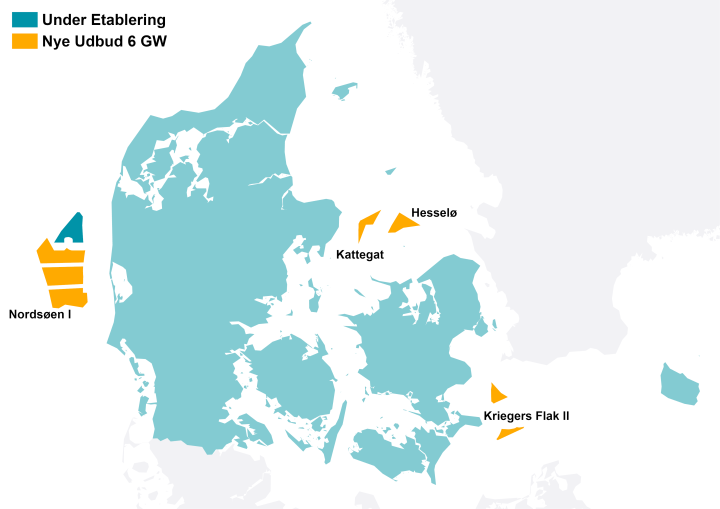
No bids for the 3 large North Sea tracts(yellow) west of Denmark.
Danish Energy Agency: “The deadline for bidding on the first 3 GW of Denmark’s 6 GW offshore wind tendering procedure expired on Thursday. The Danish Energy Agency has not received bids for any of the three offshore wind farms in the North Sea put out to tender. The Minister for Climate, Energy, and Utilities has asked The Danish Energy Agency to engage in dialogue with the market to identify why no bids have been submitted.“
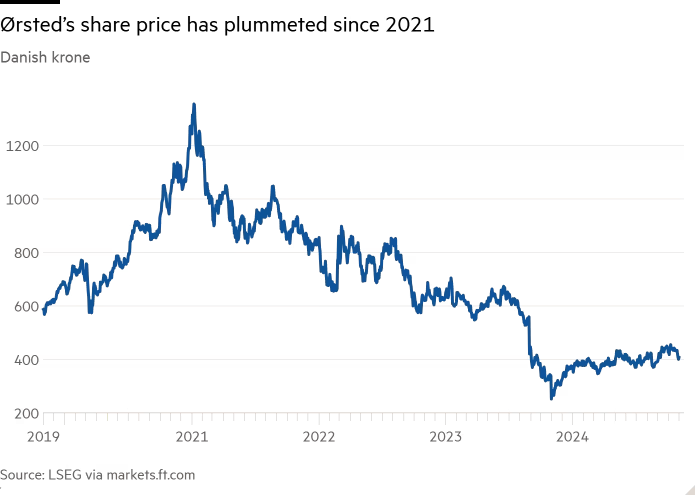
Even Orsted, which is 50.1% Danish govt owned, failed to submit a bid. Perhaps the economic realities of offshore wind, as reflected in Orsted’s share price (below) are sinking in.
“NET ZERO – I want to be clear: I am not against advancement in energy technologies. Humanity should always develop and progress.
What I oppose is bankrupting the country by gambling taxpayers’ money on the emperor’s new clothes. Because that’s what these experimental technologies are currently. The misinformation being fed to the public is a disgrace.
Technologies like carbon capture, flywheels, and large-scale battery storage are being sold to us as the future and that we can lead the world! I don’t want to gamble with my tax thanks. The only thing we will lead the world in, is being the first country to bankrupt itself on the alter of Net zero and they haven’t even given us a choice!
These experimental technologies will cost not £ billions but £ TRILLIONS and provide little benefit to the average citizen, they simply benefit global corporations and those with vested interests.
The government should have focused on upgrading the national grid as a first step. At the very least it would enable us to use the renewable energy we are creating currently, rather than paying £ billions in subsidies for providers not to supply.
Instead, we’re rushing headlong into experimental technologies that are still in test phase. We are investing in these theoretical technologies before we can even observe their real world performance, evaluate value for money, or knowing if practically they will even work! And let’s face it, installations of both fly wheels and carbon capture machines have both failed financially or practically worldwide.
The hypocrisy around emissions and claims that these new technologies are “cleaner and greener” is an outrageous lie. Whether deliberate or misguided, this misinformation is unacceptable. The British public deserves open-book transparency on costs, timelines, and actual impacts. If the government cannot provide this, they must step aside and bring in independent teams—free from vested interests—to evaluate and advise. And then the British public should be offered a vote.
The ideological, socialist pipe dream of hitting a fictitious 2030 target will bankrupt the country. Worse, it will make us entirely dependent on banks and foreign entities that will dictate our policies for decades.
And we are doing all of this whilst we have at least 200 years of domestic energy resources in the ground, the ‘emergency’ propaganda is simply untrue. But instead of bringing energy prices down in order to enable growth, which in turn would generate GDP, which in turn frees up domestic funds to invest in research, we’re sacrificing our economic stability and sovereignty for technology that will be outdated before we’ve even finished building it!.. because technology works like that!
Some people are getting very rich, some people are gaining global attention and others are simply fools. It is unacceptable to me.“
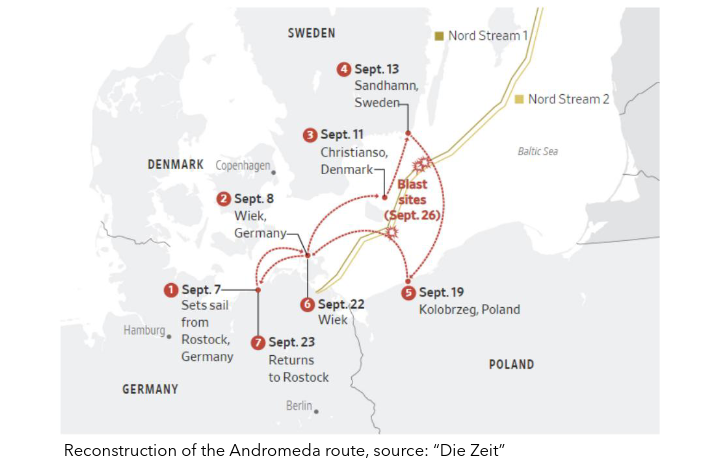
Just when we were settling on Der Spiegel’s account of the Nord Stream sabotage, Michael Kobs provides reasons for skepticism. Are the detailed revelations in Der Spiegel part of a coordinated effort to relieve governments of any responsibility and glorify the destruction of economically important pipelines?
“Since the German arrest warrant for a participant in the Nord Stream terrorist attack, efforts have also increased in Germany to portray the terrorist attack as a “legitimate” or even “admirable” war effort. However, the greatest effort is to relieve the burden on state actors. And so, since recently, the alleged perpetrators seem to be chatting without reservation, spreading out every little detail in front of journalists, and putting every (already revealed) fact in the “right” non-governmental light.” ~Michael Kobs
Meanwhile, independent journalist Jeffrey Brodsky continues to delve deeply into Nord Stream issues. A recent interesting and detailed piece refutes assertions that Gazprom and Russia somehow benefited from the Nord Stream attack. Mr. Brodsky provides evidence to the contrary concluding that the destruction of the pipelines has contributed significantly to Gazprom’s financial problems. He noted that:
Gazprom announced a loss of $6.9 billion for 2023, marking its first annual loss in more than two decades.
Nord Stream 1 supplied EU nations with a whopping 35% of all Russian gas imports.
Gazprom contributed $80 million of Russia’s $407 million in Federal govt revenues in 2022, and was a source of revenue that Russia would not want to jeopardize.
Unsurprisingly, the “experts” and politicians who argued that the Nord Stream sabotage would benefit Gazprom and Russia have failed to modify or correct their assertions. Mr. Brodsky concludes his detailed analysis as follows:
“However, despite the numerous facts that have emerged since the attack, the damage caused to Russia and Gazprom by the sabotage remains willfully ignored. Politicians and experts who claimed that the sabotage would be beneficial to Russia or Gazprom financially, legally or geopolitically seem to have merely skimmed the first chapters of the Nord Stream story. So far, almost none of them have publicly corrected themselves after hastily familiarizing themselves with its complex plot. But since the perpetrator of the sabotage has not yet been unmasked, they still have the opportunity to pre-order the unfinished sequel to the book. Perhaps it will end up being an international bestseller. ~ Jeffrey Brodsky
“Offshore wind, I have decided to put the project on pause” with Trump’s return, Total Chief Executive Officer Patrick Pouyanne said at an energy industry conference in London on Tuesday.
“I said to my team, the project in New York, we’ll see that in four years,”he said. “But the advantage is it’s only for four years.”
Perhaps Mr. Pouyanne thinks Total owns those 84,332 acres in the Atlantic or that they have the right to hold the leased area indefinitely. They do not. The OCS Lands Act calls for diligent development of leases and BOEM has promulgated implementing regulations.
The Total (Attentive Energy) lease was issued on 5/1/2022. Per 30 CFR § 585.235(a)(1), the company must submit a Construction and Operations Plant (COP) no later than 5/1/2027, more than 20 months before the end of the Trump administration. BOEM will have ample time to act on the plan prior to the next administration.
BOEM could also call for progress updates and an earlier COP submittal if there is evidence that the lessee is not moving forward with development plans (as would already seem to be the case given Mr. Pouyanne’s public statements in London).
In the absence of progress in developing the lease, BOEM could seek cancellation (§ 556.1102) for failure to comply with the diligence mandate in OCSLA (556.1102 (a)). Cancellation could also be pursued based on misrepresentations in acquiring the lease (556.1102 (c)) or the threat of unacceptable harm to the environment or national security (556.1102 (d)).
Rather than making rash comments at a public forum in London, perhaps Mr. Pouyanne would have been wise to first meet with energy officials of the new administration early next year. At a minimum, the CEO’s comments will help justify any attempts to cancel the Total (Attentive Energy) lease on diligence grounds.
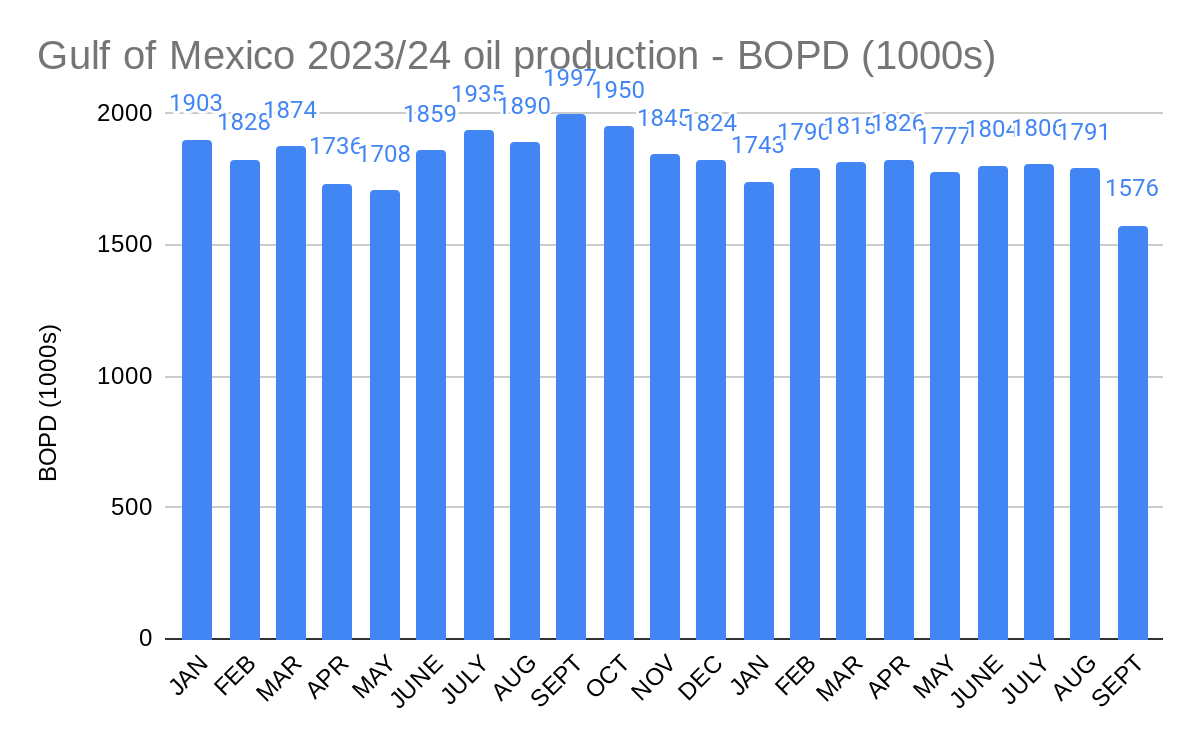
As expected, the Gulf of Mexico’s remarkable 7 month production consistency streak ended in September as a result of shut-ins associated with Tropical Storms Francine and Helene. Nonetheless, average daily production still amounted to 88% of the ~1.8 million bopd average that had been achieved for the previous 7 months. Rather impressive resiliency!
“Blackrock, Vanguard, and State Street utilized the Climate Action 100 and the Net Zero Asset Managers Initiative to signal their mutual intent to reduce the output of thermal coal, which predictably increased the cost of electricity for Americans across the United States.
These firms also deceived thousands of investors who elected to invest in non-ESG funds to maximize their profits. Yet these funds pursued ESG strategies notwithstanding the defendants’ representations to the contrary.”




Total wants to sit on their wind lease until the next administration (2029). Can they do that?
December 3, 2024 by offshoreenergy
Impressive arrogance from the CEO of a foreign company that paid $795 million for a lease (OCS-A 0538) that was worth pennies on the dollar even before the Presidential election:
“Offshore wind, I have decided to put the project on pause” with Trump’s return, Total Chief Executive Officer Patrick Pouyanne said at an energy industry conference in London on Tuesday.
“I said to my team, the project in New York, we’ll see that in four years,” he said. “But the advantage is it’s only for four years.”
Perhaps Mr. Pouyanne thinks Total owns those 84,332 acres in the Atlantic or that they have the right to hold the leased area indefinitely. They do not. The OCS Lands Act calls for diligent development of leases and BOEM has promulgated implementing regulations.
The Total (Attentive Energy) lease was issued on 5/1/2022. Per 30 CFR § 585.235(a)(1), the company must submit a Construction and Operations Plant (COP) no later than 5/1/2027, more than 20 months before the end of the Trump administration. BOEM will have ample time to act on the plan prior to the next administration.
BOEM could also call for progress updates and an earlier COP submittal if there is evidence that the lessee is not moving forward with development plans (as would already seem to be the case given Mr. Pouyanne’s public statements in London).
In the absence of progress in developing the lease, BOEM could seek cancellation (§ 556.1102) for failure to comply with the diligence mandate in OCSLA (556.1102 (a)). Cancellation could also be pursued based on misrepresentations in acquiring the lease (556.1102 (c)) or the threat of unacceptable harm to the environment or national security (556.1102 (d)).
Rather than making rash comments at a public forum in London, perhaps Mr. Pouyanne would have been wise to first meet with energy officials of the new administration early next year. At a minimum, the CEO’s comments will help justify any attempts to cancel the Total (Attentive Energy) lease on diligence grounds.
Posted in energy policy, Offshore Wind | Tagged Attentive Energy, BOEM, CEO comments, COP deadline, diligent development, lease cancellation, OCSLA, Total, wind lease | Leave a Comment »