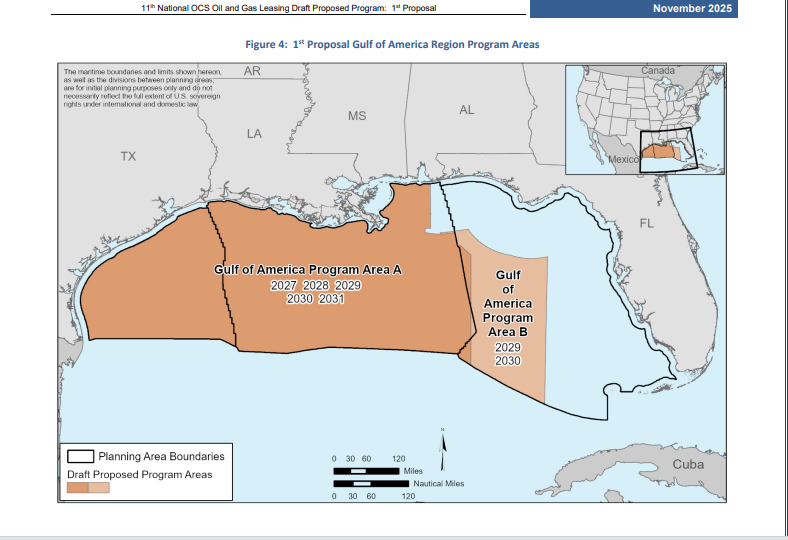
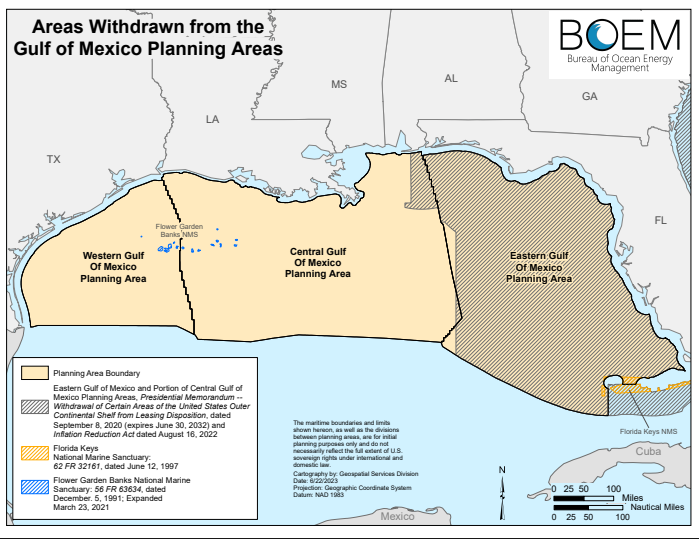
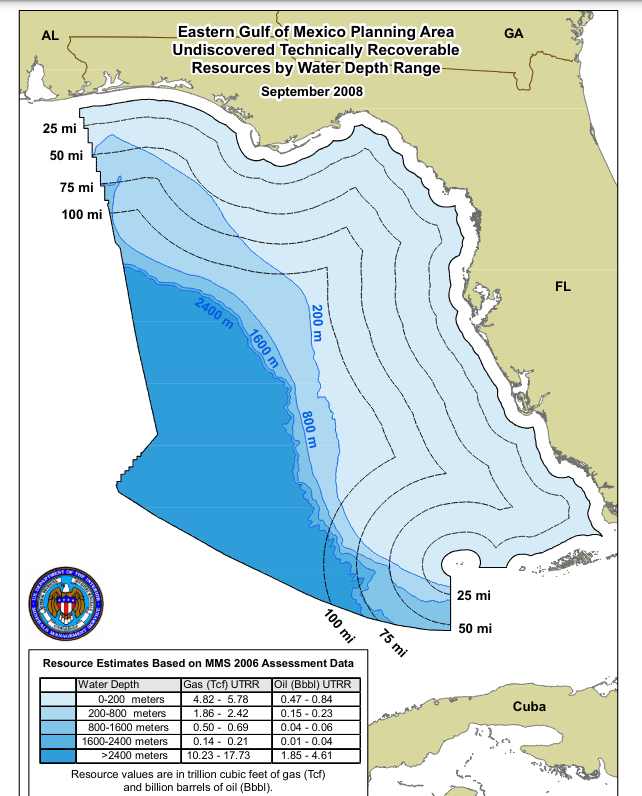
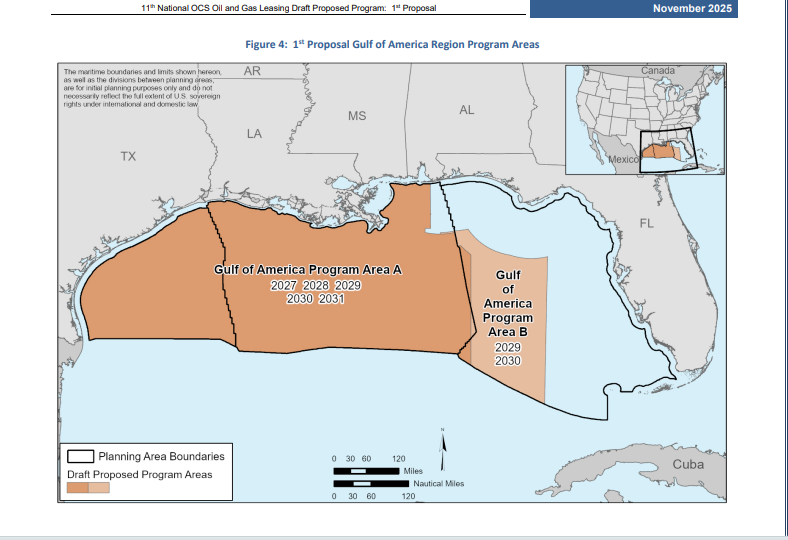
A specific description of the proposed Florida buffer in the Eastern Gulf is found in a footnote on page five of the Draft Proposed Program (DPP):
2 Includes a 100-mile coastal buffer off the coast of Florida and the area eastward of a line extending south from a point approximately 25 miles west of Tallahassee, Florida.
Draft Proposed Program2020 Trump Withdrawal
The 100 mile buffer seems like a reasonable proposal that minimizes the risk of coastal impacts without significantly reducing the oil and gas resource potential. However, the 125 mile buffer established in the Gulf of Mexico Security Act (2006) and the 2020 Trump withdrawal (see the comparison above) has become sacrosanct, and Gov. DeSantis and the Florida delegation oppose any change:
President Trump’s 2020 memorandum protecting Florida’s eastern Gulf waters represents a thoughtful approach to the issue.
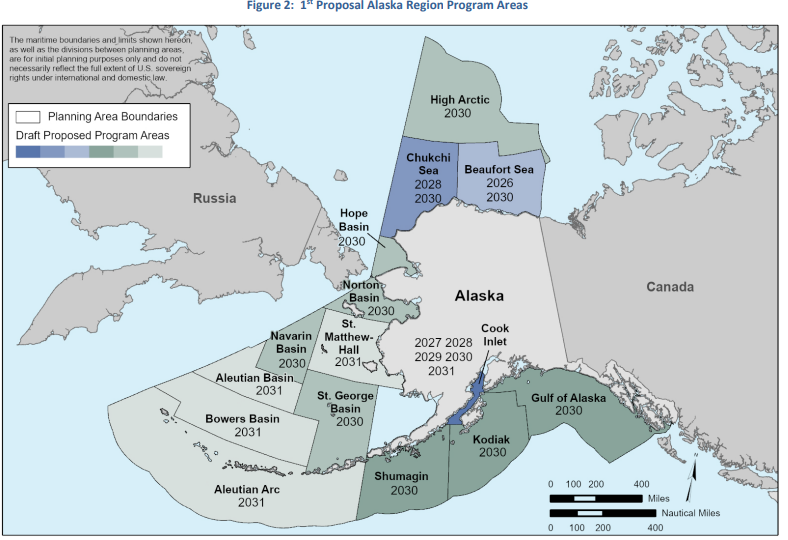
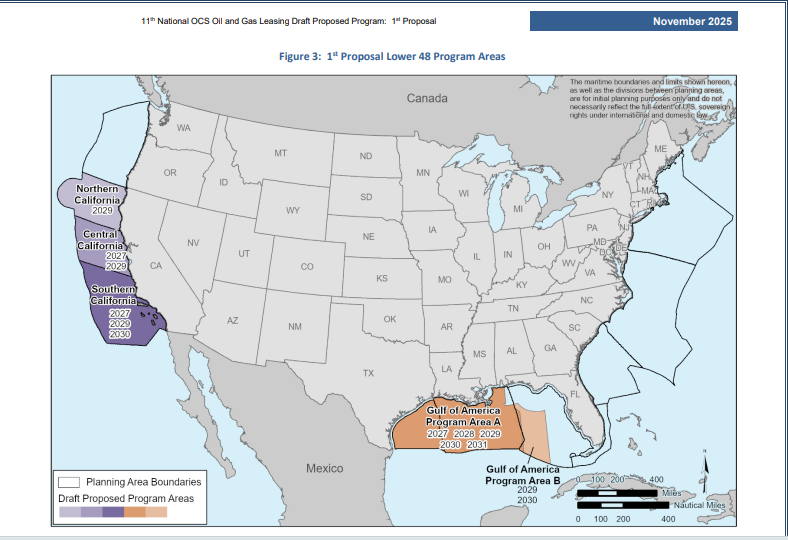
The press release and full program are linked. It looks like the most recent leaks were accurate. See the maps below with the locations and dates. This will stir the pot!
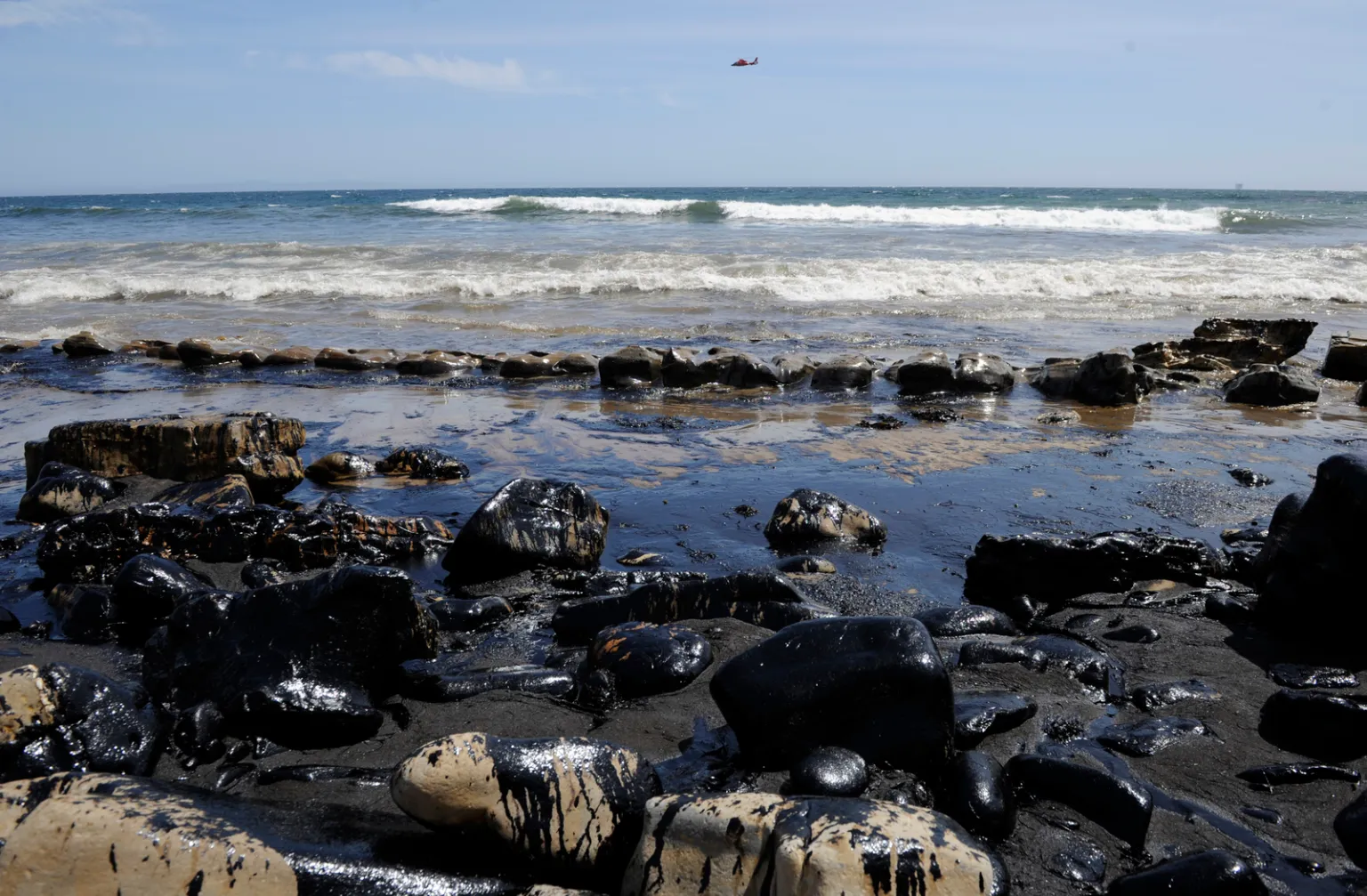
The pipeline spill just north of Refugio State Beach on May 19, 2015, coated miles of shoreline and marine habitat, and dolphins, elephant seals, sea lions, pelicans and other birds. | Santa Barbara Independent
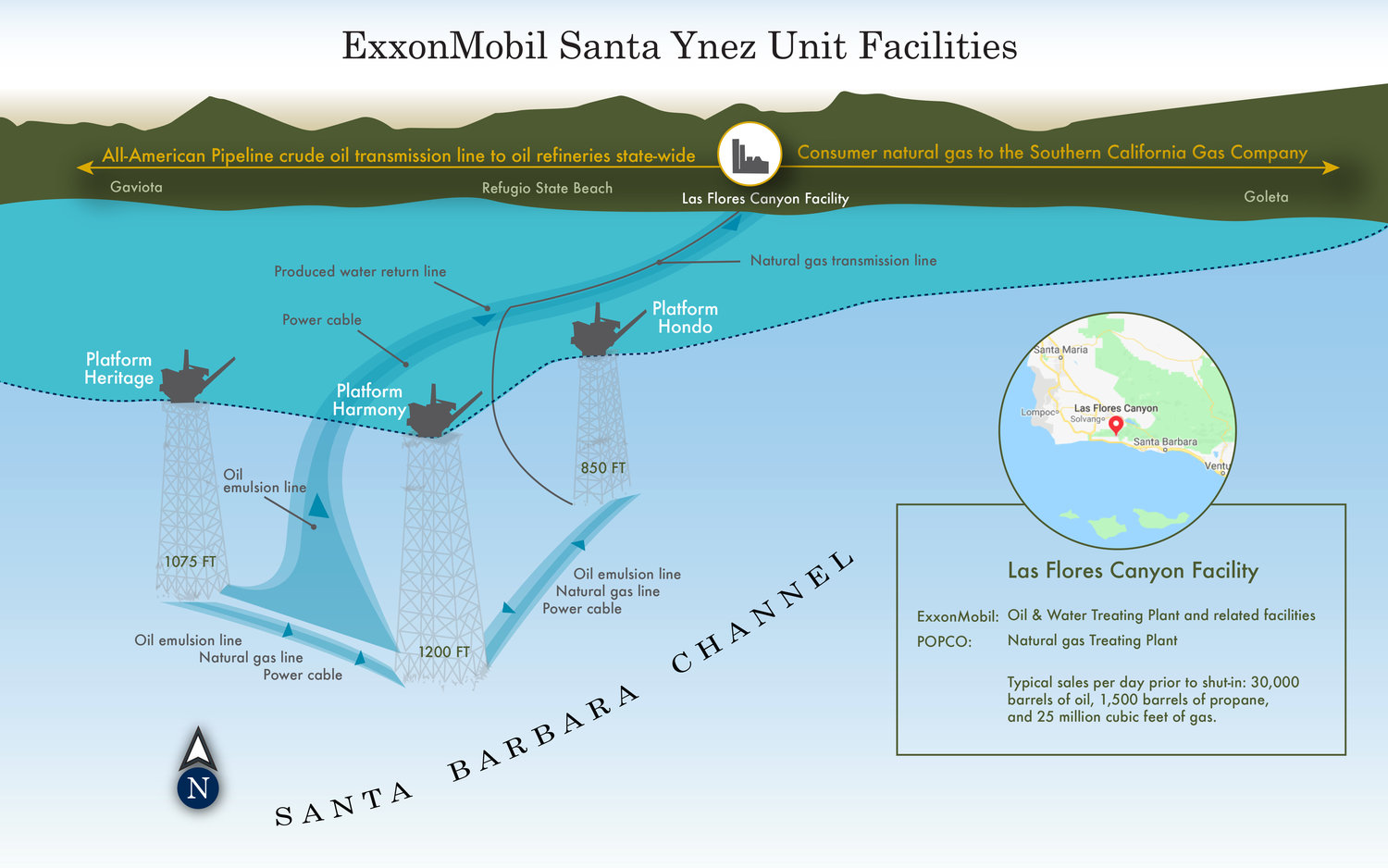
We can scream all we want (with some justification) about the California Coastal Commission, Santa Barbara County, and intractable environmental organizations, but the Santa Ynez Unit would still be producing today were it not for an ugly, preventable pipeline spill.
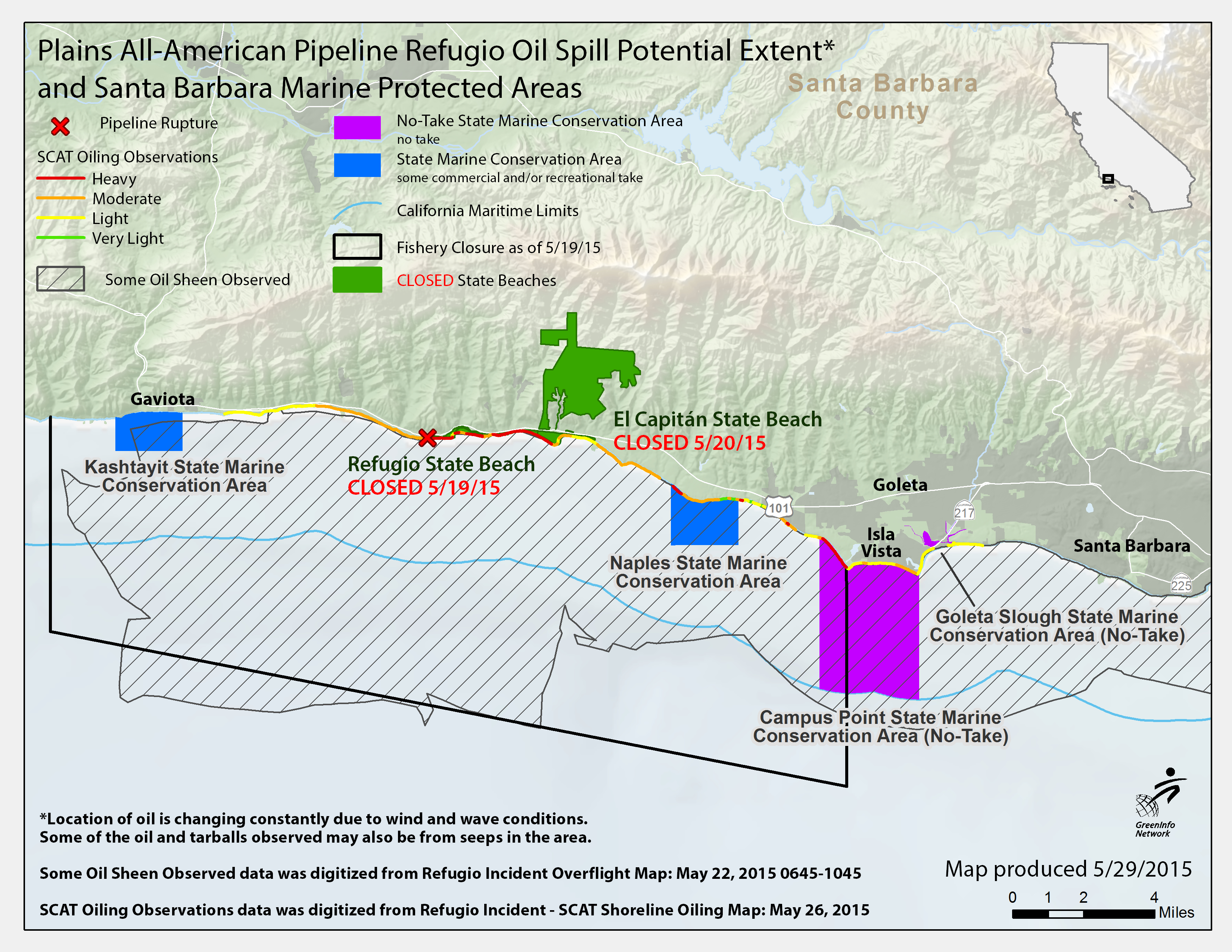
At approximately 10:55 a.m. Pacific Daylight Time (PDT) on May 19, 2015, the Plains Pipeline, LP (Plains), Line 901 pipeline in Santa Barbara County, CA, ruptured, resulting in the release of approximately 2,934 barrels (bbl) of heavy crude oil. An estimated 500 bbl of crude oil entered the Pacific Ocean.
1) Ineffective protection against external corrosion of the pipeline The condition of the pipeline’s coating and insulation system fostered an environment that led to the external corrosion. The pipeline’s cathodic protection (CP) system was not effective in preventing corrosion from occurring beneath the pipeline’s coating/insulation system. 2) Failure by Plains to detect and mitigate the corrosion The in-line inspection (ILI) tool and subsequent analysis of ILI data did not characterize the extent and depth of the external corrosion accurately. 3) Lack of timely detection of and response to the rupture The pipeline supervisory control and data acquisition (SCADA) system did not have safety-related alarms established at values sufficient to alert the control room staff to the release at this location. Control room staff did not detect the abnormal conditions in regards to the release as they occurred. This resulted in a delayed shutdown of the pipeline. The pipeline controller restarted the Line 901 pipeline after the release occurred. The pipeline’s leak detection system lacked instrumentation and associated calculations to monitor line pack (the total volume of liquid present in a pipeline section) along all portions of the pipeline when it was operating or shut down. Control room staff training lacked formalized and succinct requirements, including emergency shutdown and leak detection system functions such as alarms.
Plains Pipeline was the responsible party, but that doesn’t absolve the companies that were dependent on Plains to transport their production. Given the organized opposition that emerged following the Santa Barbara blowout in 1969 (the result of a reckless well plan), the integrity of that pipeline was critical to their business strategy and they should have exercised some oversight.
Offshore disasters have had enormous consequences for the oil and gas industry in terms of lost opportunities. Think about this: prior to the Macondo blowout, the Obama administration had proposed an oil and gas lease sale in the Atlantic and the Florida Senate was holding hearings about leasing in Florida State waters. Such lease sales are now completely out of the question.
Regulations and standards are not enough. We need open discussion about incidents, large and small, and a willingness to be critical of the responsible parties.
SEC filing reveals Sable entered October about a month from potential bankruptcy. The company had $41.6 million as of September 30, with $39.7 million in average monthly burn in 3Q25.
When Sable announced its $250 million financing on November 10 at $5.50 per share, the company likely had single digit millions in the bank based on its reported burn, against over $163 million in accounts payable and accrued liabilities. Sable does not generate any revenue.
Sable needs to raise significantly more money: According to leaked audio of Sable’s CEO briefing for select investors, the company will require $2.3 billion to achieve commercial production of oil and gas from its three platforms off the coast of Santa Barbara.
That includes at least $900 million to buy out Exxon, to which Sable must pay 15% interest on debt due by March 31, 2027. By then, the loan would be about $1.1 billion, accruing $200 million in added debt.
One of Sable’s only known assets other than the oil and gas project is a private plane the company purchased from its CEO, Jim Flores. The plane recently flew round-trip from Houston, where Flores lives, to Louisiana, in time for a football game at the CEO’s alma mater.
Comments from Santa Barbara County Supervisor Steve Lavagnino, an oil industry supporter, that explain his opposition to the transfer of Exxon’s pipeline permit to Sable:
“The final straw for me was a Hunterbrook article, which was as disturbing as anything I’ve read. I have many friends in the oil industry and I will continue to support efforts to access our natural resources, but it has to be done responsibly by operators who put safety above profits.”
Sable’s limited response to the Hunterbrook report includes information on decommissioning financial assurance:
Sable’s original SYU Purchase and Sales Agreement (PSA) with Exxon required Sable to post a $350 million decommissioning bond “150 days following the resumption of production from the wells.”
According to Sable, production resumed on May 15, 2025. The bond would have thus been required in October. (SYU production was halted by court order on June 6, so that “resumption date” may be irrelevant. Regardless, the Oct. financial assurance deadline is immaterial given the recent update to the PSA.)
The PSA update extended the date for posting the decommissioning bond to three business days following the new Exxon Loan Maturity Date of March 31, 2027 or 90 days after first sales of hydrocarbons, whichever comes first. (Note the change in language from “resumption of production” to “first sales.” Brief well test production does not trigger posting of the decommissioning bond.)
Under certain circumstances after the bonding is in place Exxon may seek an increase in the bonding amount to $500 million.
The decommissioning obligations are moot if Sable runs out of funds or is unable to resume SYU production prior to the 3/31/2027 PSA deadline.Exxon would remain fully responsible for SYU decommissioning.
Is it time for a public statement from Exxon on the SYU and Sable?
The COS has been effective in strengthening corporate Safety and Environmental Management Systems, influencing the industry’s safety culture, and sharing best practices and lessons learned. These are important accomplishments.
The COS has fallen short in gathering the data needed to assess the offshore industry’s safety performance. As is the case with most voluntary reporting programs, data completeness and accuracy issues limit the significance of COS performance reviews.
The COS uses accepted performance indicators and a logical classification scheme.
COS reports that their members accounted for 78% of OCS oil and gas activity in 2024. This is accurate when cross-checked with BSEE hours worked data. However, the % of hours worked is not a good measure of the % of incidents reported in any category.
Only two drilling contractors – Helmerich & Payne and Valaris – are members. Major contractors like Noble, Transocean, and Seadrill are not members. Their incidents will thus not be reported if they are not working for a COS member.
No production contractors are COS members. These companies conduct most of the platform operations on the shelf, where many of the lease operators are not COS members.
Pacific and Alaska Region operators do not participate.
Looking only at fatalities (table below), the most important and easily verified incident category, there are troubling omissions:
COS reports no 2024 fatalities when in fact there was a fatality during an operation for a COS member.
COS reports no 2022 fatalities when there were actually five. A workover incident took the life of one worker, and four died in a helideck crash on an OCS platform. In both cases, the facility operator was a non-member company.
COS records one 2021 fatality, but fails to include a 2021 Fieldwood fatality. There were also6 “non-occupational” fatalities on OCS facilities in 2021, as classified by BSEE. Given the importance of worker health (the H in HSE), such a high number of non-occupational fatalities should be of interest industry-wide.
The COS report includes only two of the six 2020 fatalities, 2 of which were classified by BSEE as non-occupational.
The bottom line is that COS accounted for only 3 of 12 (25%) occupational fatalities during the 2020-24 period. There were at least 20 fatalities if you include the non-occupational incidents.
fatalities per COS
occupational fatalities (from BSEE data)
non-occupational fatalities (from BSEE data)
2024
0
1
?
2023
0
0
?
2022
0
5
?
2021
1
2
6
2020
2
4
2
The offshore industry is only as good as its worst performer, so complete participation is essential. Voluntary reporting is seldom complete reporting, because some companies are more concerned about confidentiality than completeness and information sharing.
For industry reporting programs to be comprehensive and credible:
The entity receiving the reports and managing the data must be independent and not affiliated with an industry advocacy organization.
All operating companies must participate and complete reporting must be required. This can be accomplished contractually. If necessary, the regulator can require participation (either as a separate regulation or as a SEMS element).
Company incident submittals should be audited by the independent entity.
Fees should be solely for the purpose of supporting the independent reporting system.
For SP1 and SP2 incidents (per the COS classification scheme), the names of the responsible companies should be included in the performance reports. The current COS system prioritizes confidentiality over accountabiity and information sharing.
Conceptually, this technologically advanced polymetallic nodules collection system looks great. The big challenge that John Smith sees is with the number of moving parts. The numerous manipulators operating at such depths could be prone to breakdowns which reduce recovery rates and significantly increase operating costs.
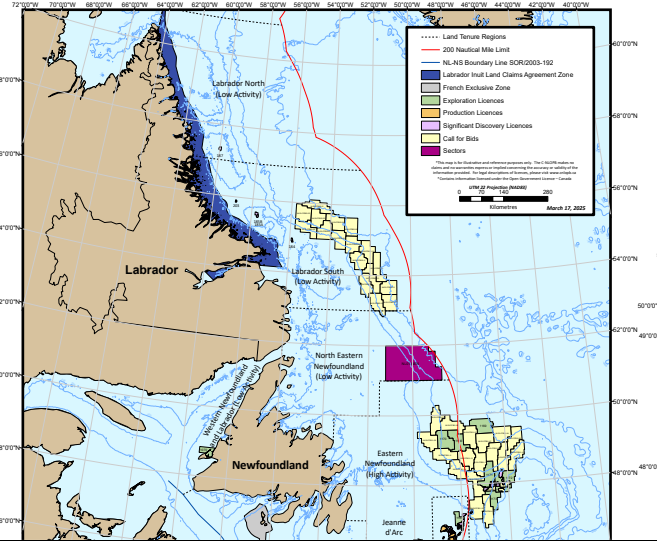
Difficult operating conditions, high costs, and relatively modest oil price projections are no doubt factors contributing to the absence of bids. Energy NL has also pointed to the “complex, inconsistent and burdensome regulatory system” as a contributing factor.
Newfoundland’s newly elected Premier, Tony Wakeham, has said his Progressive Conservative Government will advocate for the cancellation of the emissions cap as it is a cap on production. He also supports incentives for offshore oil and gas projects such as an investment tax credit or the former Petroleum Incentive Program and indicated he would work with Energy NL to review incentives that could be implemented provincially.
The C-NLOER is committed to “review its land tenure system in collaboration with governments and others, to identify opportunities to enhance competitiveness in the Canada-Newfoundland and Labrador Offshore Area.”
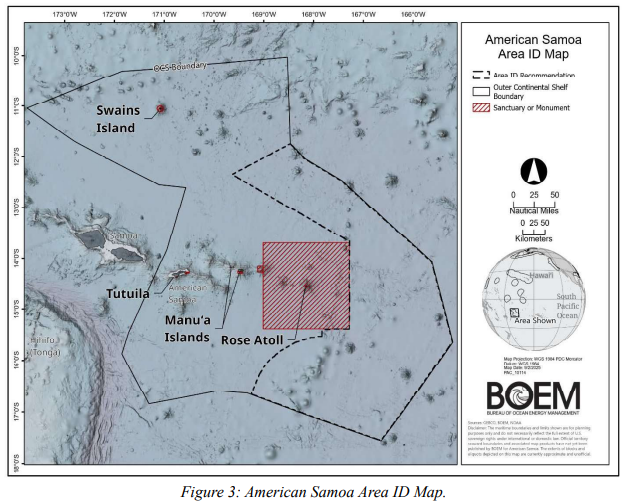
BOEM completed the area identification (outlined in diagram above) for marine minerals offshore American Samoa. The full decision memorandum is attached.
In response to BOEM’s Request for Information, Impossible Metals confirmed their interest in the identified area. Several other companies also expressed interest. The Governor and a number of other parties submitted interesting comments, which are summarized on p. 2 of the attachment.
The first two steps in a process that could ultimately lead to a mineral lease sale have thus been completed. Steps 3 to 6 remain. (See below)
Request for Information and Interest (RFI) published in the Federal Register. complete
Identification of Areas to be considered for leasing. complete
Environmental Analysis for the lease sale.
Proposed Leasing Notice Published in the Federal Register.
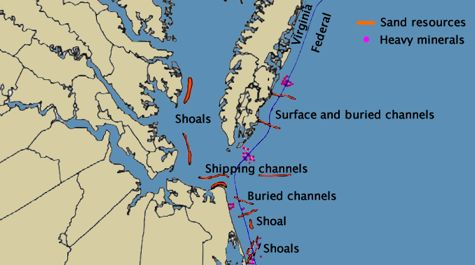
The proposed lease area, located within the U.S. outer continental shelf (OCS) off the Mid-Atlantic coast, is highly prospective for heavy mineral sands rich in titanium, zirconium, rare earth elements (REEs), and phosphate.
This would be a shelf dredging operation rather than the deepwater module collection being proposed for the Pacific.
heavy minerals prospectsheavy minerals sand resources
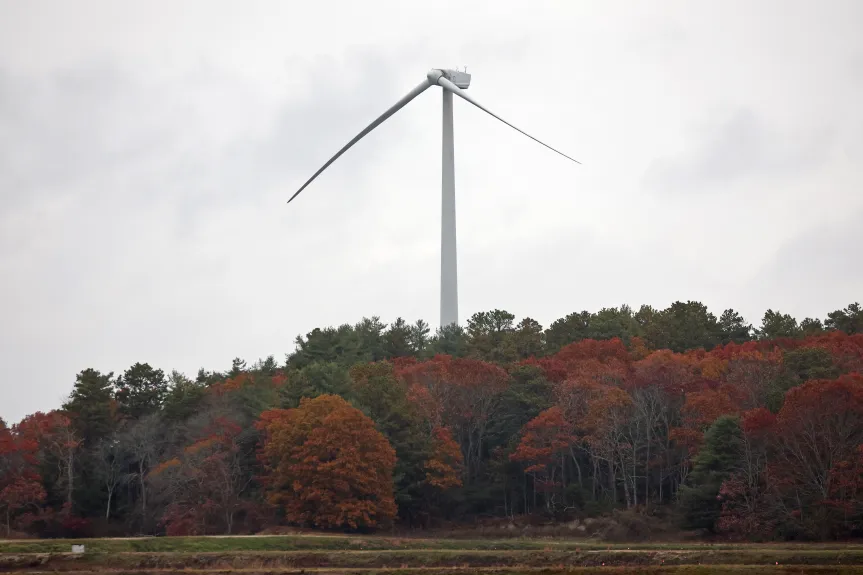
Plymouth MA wind turbine that lost a blade. (Stuart Cahill/Boston Herald)
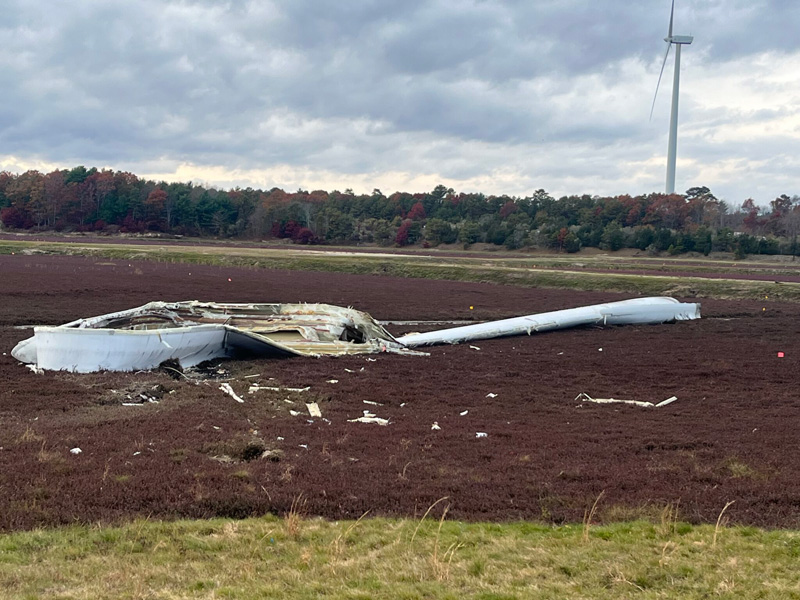
Friday’s turbine blade failure in Plymouth MA is perhaps getting added attention given its proximity to the 7/13/2024 Vineyard Wind blade failure offshore Nantucket. The Plymouth blade landed in a nearby cranberry bog (video and picture below).
Per the MV Times, the turbines for the Plymouth project were manufactured by Gamesa, which is now part of Siemens Gamesa. Both the South Fork Wind and Revolution Wind projects off the coast of the Martha’s Vineyard are being developed by Ørsted using turbines from Siemens Gamesa. Coastal Virginia Offshore Wind, the largest offshore wind project in the United States, is also being developed with Siemens Gamesa turbines. This is not to imply a higher degree of risk for those turbines. Vineyard Wind, where the only US offshore failure has occurred to date, is using GE Vernova turbines.
Unfortunately, turbine blade failures are much too common. Last October, Lars Herbst reported, based on a Wind Power article, that “with an estimated 700,000 blades in operation globally, there are, on average, 3,800incidents of blade failure each year.” Lars noted that the annual blade failure rate of about 0.5% translates to 1.5% of all operating wind turbines experiencing a blade failure every year, a remarkably high failure frequency.
Scotland Against Spin data indicate that blade failure is the second most common accident type in the wind industry, and the most common cause of accidents at operational wind turbine sites. SAS reports further that pieces of blade are documented as travelling up to one mile, and have gone through the roofs and walls of nearby buildings.
Lastly, we are still awaiting BSEE’s report on the Vineyard Wind failures so we can better understand what happened and why.