Operator/licensee responsibility:The definitions correctly establish the operator or license holder as the responsible party. This means that in the event of a well blowout while drilling from a mobile drilling unit, the licensee/operator would be the responsible party. This aligns with the “operator responsibility” mantra that is fundamental to the US offshore program. Drilling and other contractors are managed by the operator and are the operator’s responsibility.
Unlimited liability: The liability section (Part VI) establishes an unlimited liability standard for the responsible party. As previously discussed in more detail, this is a daunting, open-ended obligation that would trouble permittees in any industry. The unlimited liability provision could preclude responsible independent operators, including Guyanese companies, from seeking licenses.
The unlimited liability standard (par. 17) is qualified with a provision (pasted below) that also favors major international companies.
The unlimited liability provision therefore does not seem to apply to parent companies idemnifying a project. This was a point of contention during the parliamentary debate. The Kaieteur News delves into the issue and is not entirely convinced by the Government’s defense. Their article closes as follows:
It is important to note that stakeholders have argued that since ExxonMobil Guyana Limited (the responsible party) does not have adequate assets, the burden of oil spill-related costs could be left on Guyana, especially in the absence of unlimited coverage from the parent company. These and other “flaws” have prompted Guyanese to urge President Irfaan Ali not to assent to the Bill, passed in the National Assembly on May 16, 2025. Be that as it may, the Ministry maintained that the “robust statutory framework now established protects Guyana and its people.”
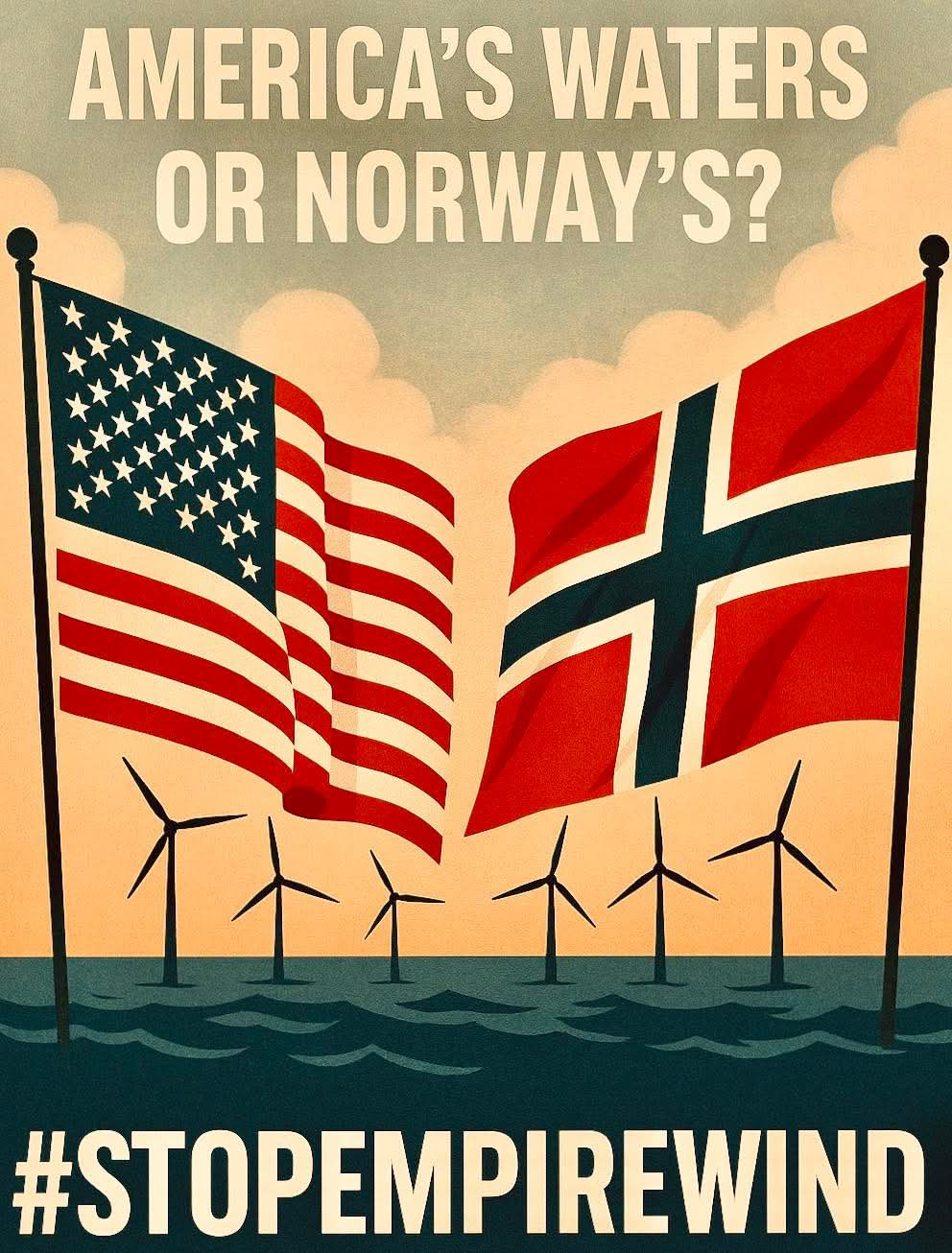
Along with other charges, the attached complaintasserts that awarding a wind lease to Norway’s Equinor, violates the Outer Continental Shelf Lands Act (OCSLA):
As an agency or instrumentality of Norway, Equinor cannot receive a lease on the Outer Continental Shelf for offshore wind turbine development or generation of electric power.
While other elements of the complaint appear to have merit, the charge against Norway does not. Here’s why:
US subsidiaries of foreign companies have long held leases under the OCS Lands Act.
Equinor US Wind is the US subsidiary holding the wind lease.
Equinor USA E&P holds interests in OCS oil and gas leases in the Gulf of America. BOEM credits 548,389 barrels of oil production to Equinor for 2023.
Chinese state-owned CNOOC has been an oil and gas lessee in the Gulf of America.
US subsidiaries of Shell and BP, both foreign corporations, are the top 2 producers in the Gulf. Although not government owned, there is nothing in OCSLA that distinguishes between US subsidiaries of private and govt owned companies. Woodside (Australia) and Eni (Italy) are also important Gulf producers.
The plaintiffs second count (excerpt below) seems to have more merit. The bulk of the filing pertains to this count.
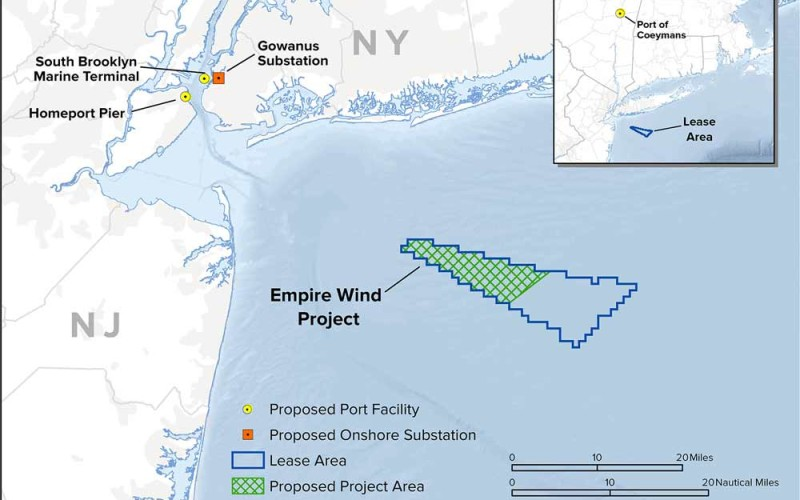
BOEM never completed its “necessary review”, see Stop Work Order, April 16, 2025, and, instead, reinstated the Empire Wind work permit on May 19, 2025 without any explanation or finding, stating as follows: On April 16, 2025, the Bureau of Ocean Energy Management issued a Director’s Order to Empire Offshore Wind LLC to halt all ongoing activities related to the Empire Wind Project on the outer continental shelf. That Order is hereby amended to lift the halt on activities during the ongoing review.
The complaint goes on to discuss the reasons why the plaintiffs believe the review was indeed necessary and should have been conducted.
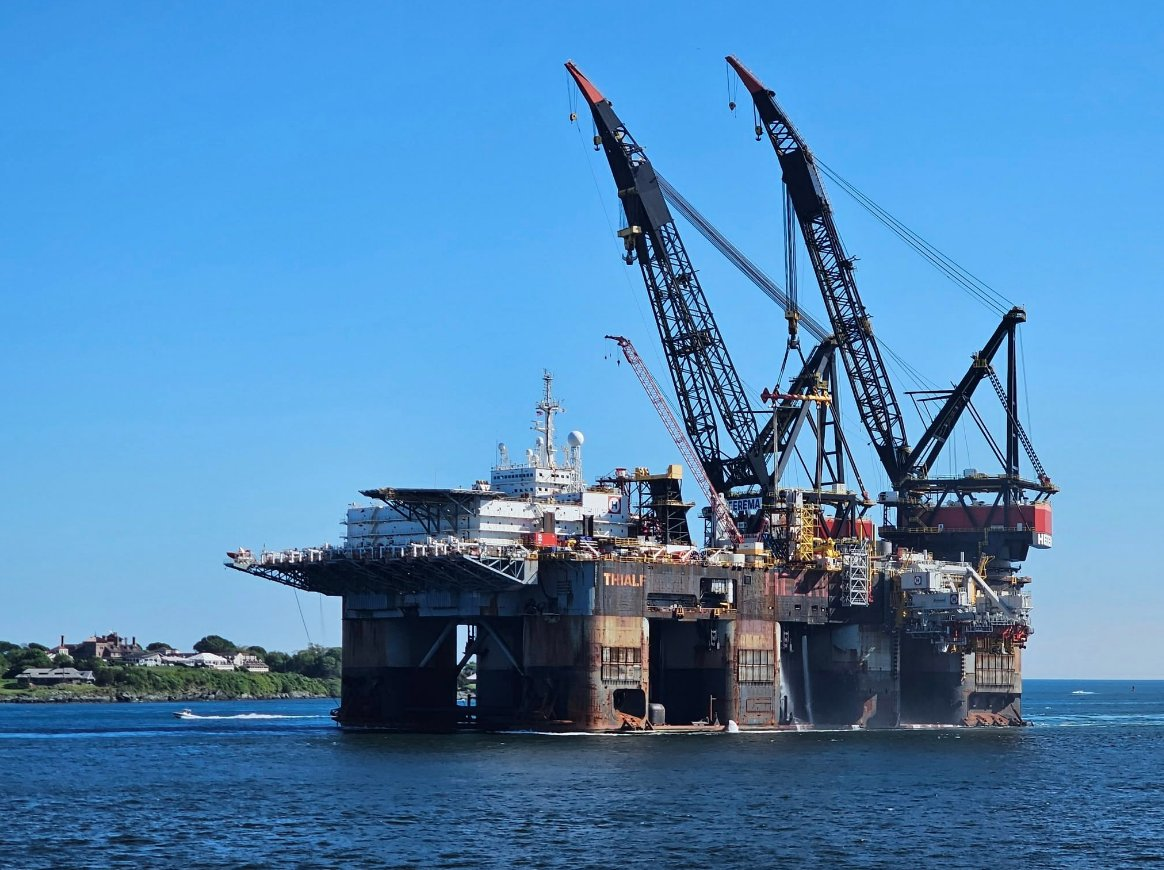
Thialf: a character in Norse mythology who was Thor’s servant.
The Heerema Thialf, a semi-submersible crane vessel (SSCV), is a rather massive presence in coastal waters. The vessel is 661 feet long and 470 feet high, with a lifting capacity of up to 14,200 metric tons, and is the second-largest of its kind.
The Thialf, which set a world record in 2000 by lifting the 11,883-metric-ton Shearwater topside structure in the North Sea, will be driving piles for 54 Vestas 15 MW wind turbines and a substation structure that are part of Equinor’s controversial Empire Wind project.
John Smith tells me that the Thialf is one of the heavy lift vessels being considered for removing California offshore oil and gas platforms. The vessel is too large for the Panama Canal and would have to make the trip around South America or across the Pacific, depending on where it was last working.
The Thialf’s day rate has not been disclosed, but is likely greater than $500k. Equinor claimed to be losing $50 million/week when the project was paused. Thialf costs were presumably a significant chunk of those losses.
John Smith informs me that today (6/6/2025), a Santa Barbara Superior Court issued an order preventing the restart of the Santa Ynez Unit’s onshore pipeline pending Court resolution of the dispute.
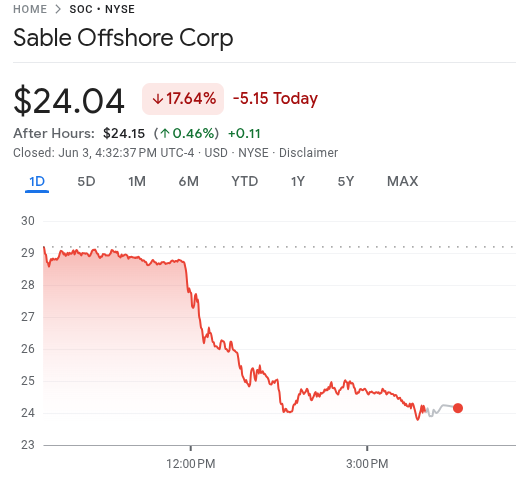
Sable’s shares plunged 18% in response to the news.
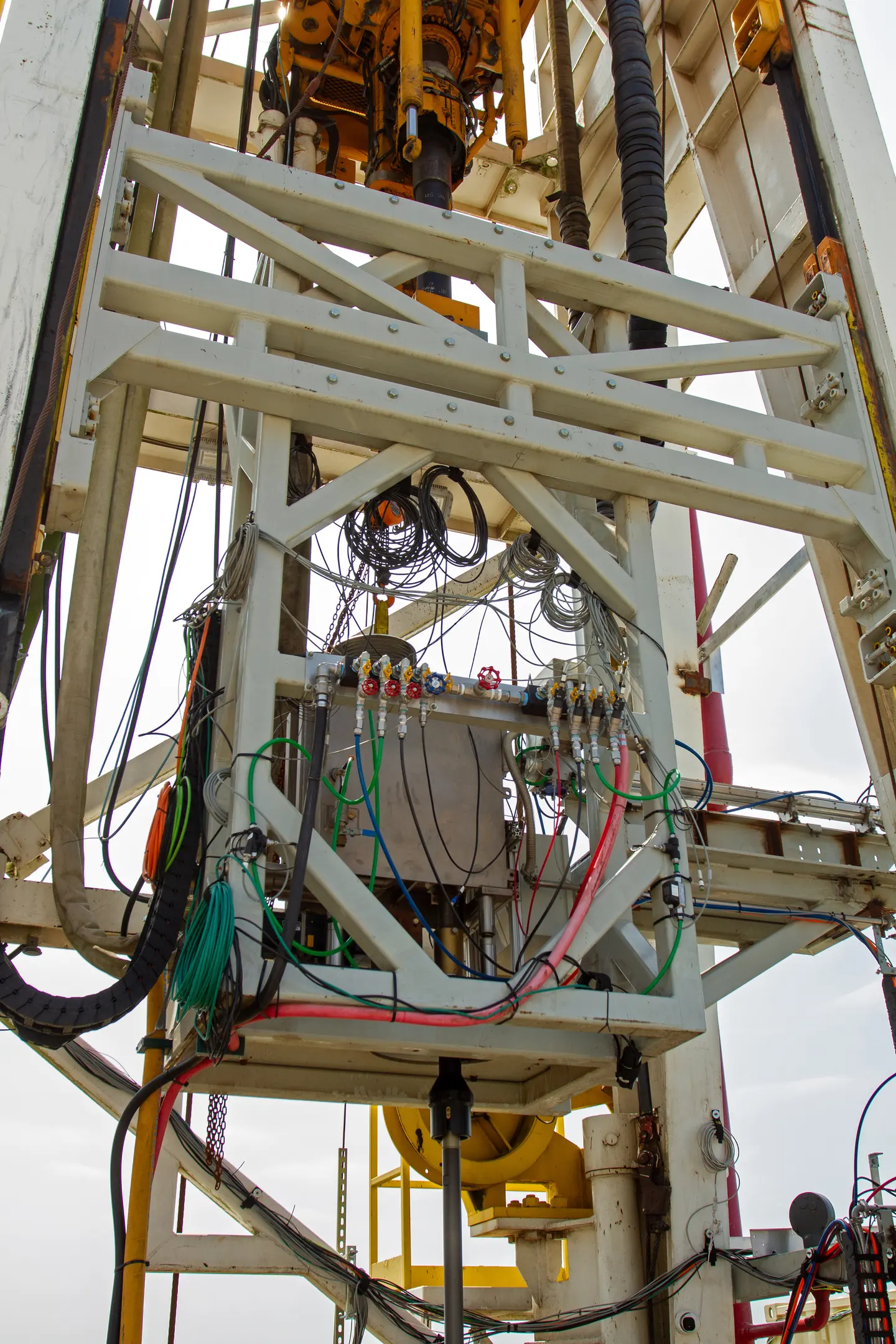
This is the first-ever hybrid drilling rig, combining conventional and millimeter wave capabilities.
Quaise plans to drill superhot geothermal wells that can generate abundant baseload power in record time. They believe there is no other energy solution capable of the same scale and speed.
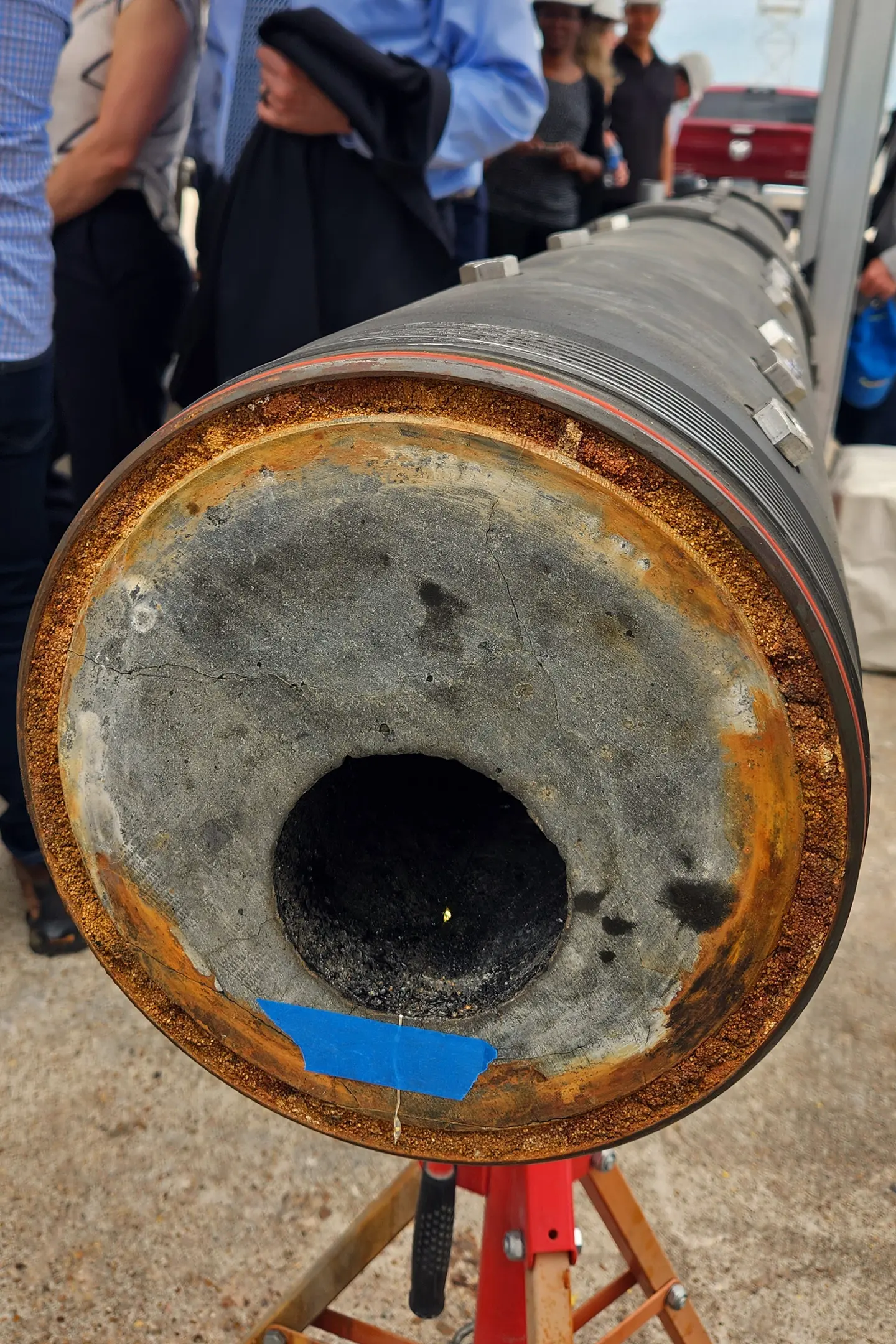
“The cube sends electomagnetic energy to the drill bit to melt rock – New Atlas photoCore showing vitrified granite/basalt walls of the borehole – New Atlas photo
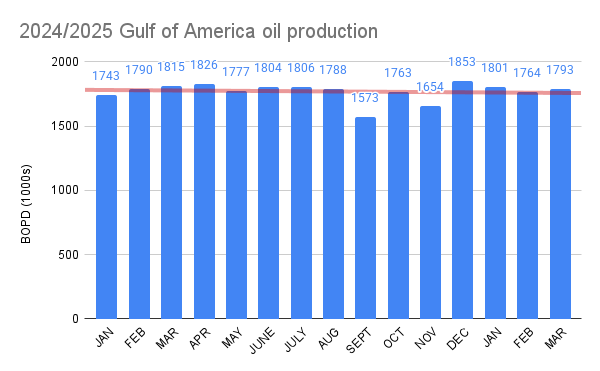
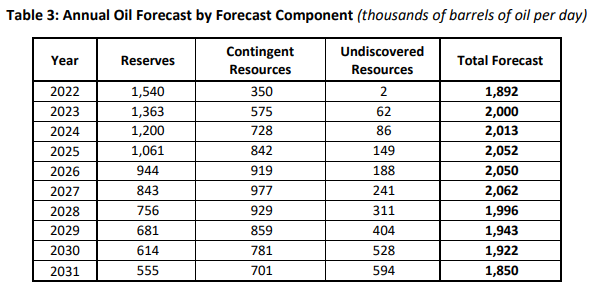
March Gulf of America oil production was nearly identical to the 2024/2025 average, and the trend line (red) is remarkably flat. However, production remains below the volumes forecasted by EIA and well below those forecasted by BOEM.
It appears that new deepwater production is replacing Gulf-wide production declines, but is not yet sufficient to increase total production. We will see if that changes as the year progresses.
March 2025 Gulf of America production: 1.793 million bopd
2024/2025 average production: 1.77 million bopd
2024/2025 average omitting Sept. 2024 (tropical storms): 1.784 million bopd
EIA forecast for 2025 (published 9/16/2024): 1.9 million bopd
BOEM forecast for 2025 (published in 2022, table below): 2.052 million bopd
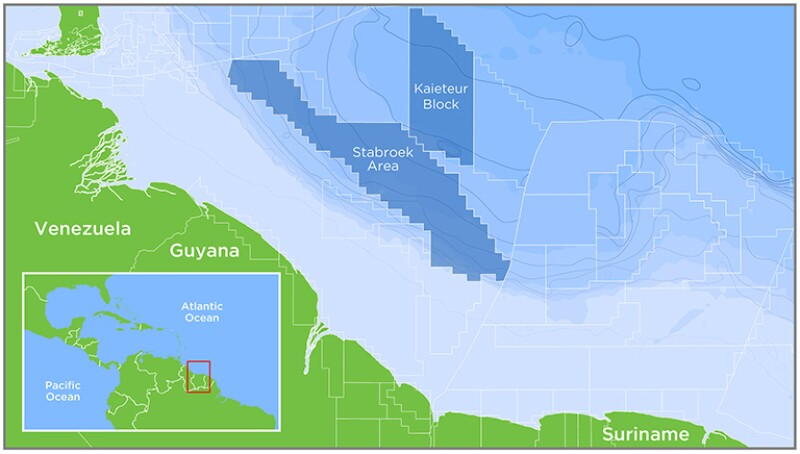
Exxon senior vice president Neil Chapman said he was confident that a three-member arbitration panel would rule in Exxon’s favor and determine it had a right-of-first-refusal to purchase Hess’ stake in a Guyana oil joint venture operated by Exxon.
Hess: “We remain confident that the arbitration will confirm the Stabroek right of first refusal does not apply to the merger.”
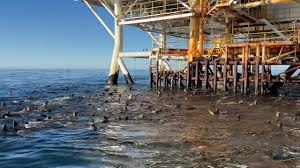
During a recent dive survey at Platform Holly off California’s coast, scientists from the University of California, Santa Barbara (UCSB) had to pause fieldwork because dozens of sea lions took shelter around the structure.
The reason? A pod of killer whales had been spotted hunting near another offshore platform in federal waters.
These real-time encounters reveal more than marine drama. They highlight the ecological role that offshore platforms can play as part of the seascape. UCSB’s work is part of our ongoing study, Understanding Biological Connectivity Among Offshore Structures and Natural Reefs, which explores how marine life moves among natural and manmade habitats.
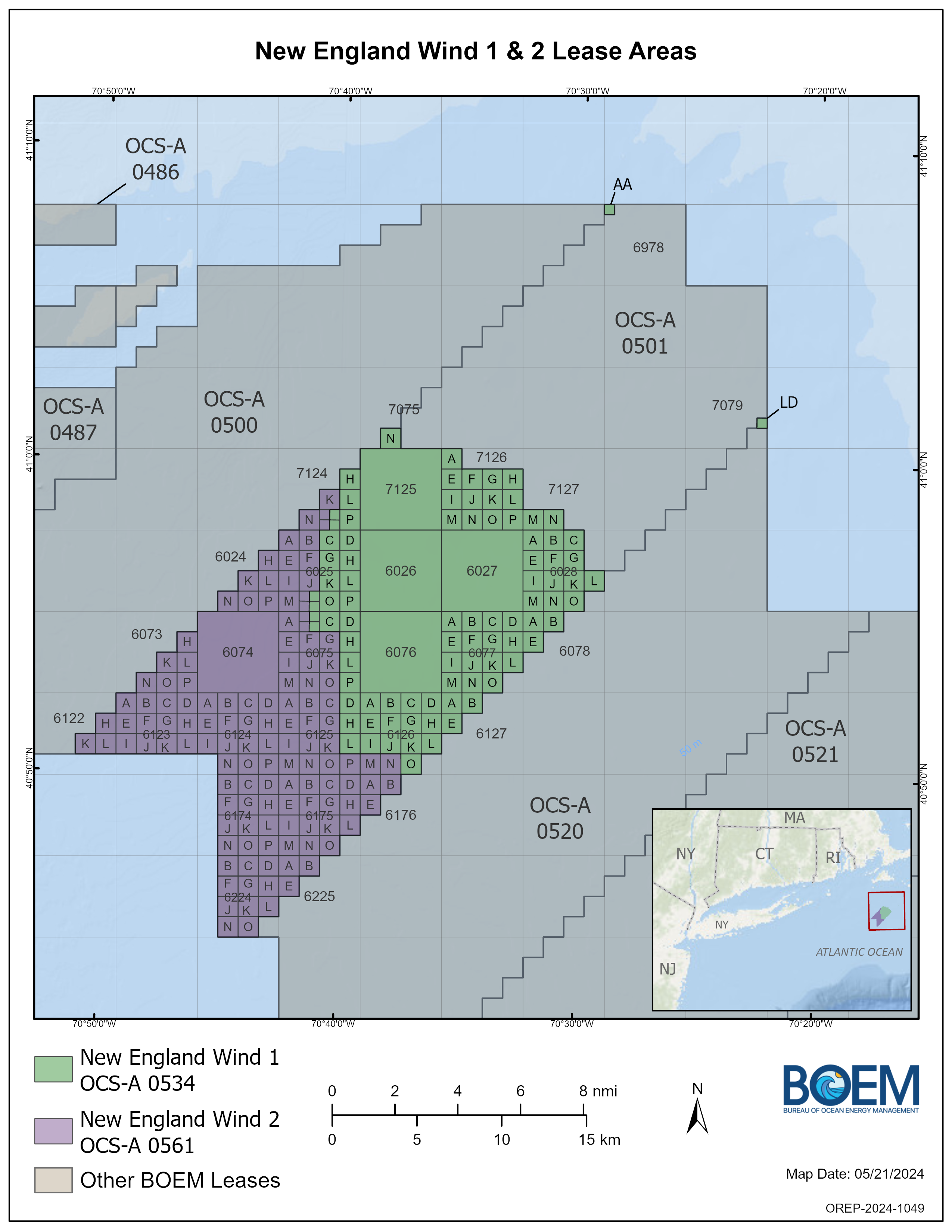
ACK For Whales, the Wampanoag Tribe of Gay Head / Aquinnah, Green Oceans, a coalition of charter fishing groups and seven individuals filed suit in federal court asserting that the Departments of Interior and Commerce violated the law when they approved the Record of Decision (ROD) for the New England Wind 1 and 2 projects.
Construction has not yet begun on the New England Wind 1 and 2 projects. The leases abut Vineyard Wind’s troubled lease 0501 (see above map), site of last summer’s turbine blade failure.
“In offshore wind project after offshore wind project, from Revolution Wind, Vineyard Wind and New England Wind to the others, the government was so desperate to rush these projects that it cut corners and violated the law,” Oliver said. “The government didn’t care if it trampled on the Wampanoag sacred beliefs and rites, hurt the charter boat, fishing and lobster industries or wiped out the Right whales. The only thing that mattered was to get these environmentally destructive turbines built, costs to the rest of us be damned.”
ACK FOR WHALES, INC., VALLORIE OLIVER, AMY DISIBIO, VERONICA BONNET, DOUGLAS LINDLEY, STEVEN AND SHARYL KOHLER, DANNY PRONK, WILLIAM VANDERHOOP, GREEN OCEANS, RHODE ISLAND PARTY AND CHARTER BOAT ASSOCIATION, CAPE COD CHARTER BOAT ASSOCIATION, INC., CONNECTICUT CHARTER AND PARTY BOAT ASSOCIATION, INC., MONTAUK BOATMEN AND CAPTAINS ASSOCIATION, INC. and WAMPANOAG TRIBE OF GAY HEAD AQUINNAH
Defendant:
UNITED STATES DEPARTMENT OF COMMERCE, NATIONAL MARINE FISHERIES SERVICE, BUREAU OF OCEAN ENERGY MANAGEMENT, UNITED STATES DEPARTMENT OF THE INTERIOR, DOUG BURGUM, in his official capacity as Secretary of the Interior, WALTER CRUICKSHANK, in his official capacity as the Director of the Bureau of Ocean Energy Management, HOWARD LUTNICK, in his official capacity as the Secretary of Commerce and EUGENIO PIEIRO SOLER, in his official capacity as the Assistant Administrator of the National Marine Fisheries Service
Stop the bluster about annexation of Canada. Almost no one on either side of the border supports this. Focus instead on strengthening strategic alliances – most notably with regard to energy supply.
Both the US and Canada are energy powerhouses. Both countries are also energy underachievers relative to their potential. The more efficiently our pipelines and transmission systems can be integrated, the better that potential can be realized and the more both countries can prosper.
See the attached energy trade map to get a better understanding of our integrated energy economies.

 Bud's Offshore Energy (BOE)