November 20, 2010 by offshoreenergy
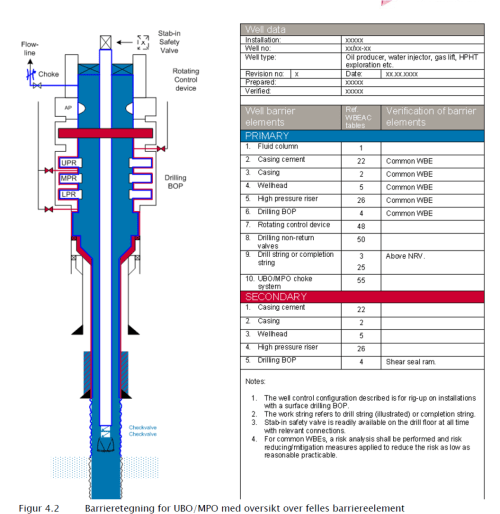
The Petroleum Safety Authority of Norway has commented on Statoil’s report on the well control incident at Gullfaks C:
The PSA regards the incident as very serious. It involved the lengthy loss of a barrier. Only chance averted a sub-surface blowout and/or explosion, and prevented the incident from developing into a major accident.
PSA had directed Statoil to do the following:
- To review and assess compliance with the work processes established to safeguard the quality and robustness of the well construction process on Gullfaks. This must include an investigation of why important deficiencies were not picked up during the work. Necessary improvement measures related to the work processes and their use must be identified and implemented.
- To conduct an independent assessment of why measures adopted after earlier incidents, including the gas blowout on Snorre A in 2004 with similar causes, have not had the desired effect on Gullfaks. Based on the results of this work, the company must assess the need for and implement new and tailored improvement measures on Gullfaks.
- To assess the results of the work done under items 1 and 2 and – on that basis – implement measures in the rest of the company.
- To prepare a binding plan for the way this work is to be executed and followed up. This plan must be submitted to the PSA.
Posted in accidents, Norway | Tagged accidents, Norway, PSA, safety, well control | Leave a Comment »
November 20, 2010 by offshoreenergy
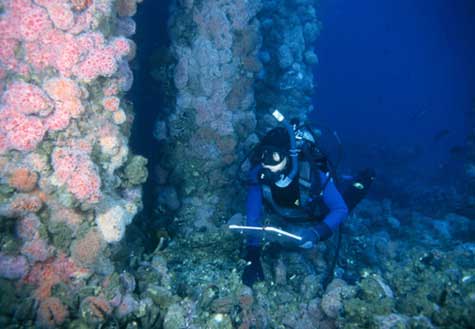
Platform Gina - Santa Barbara Channel
The Marine Science Institute of the University of California Santa Barbara has completed a 6-year study to investigate the differences between the types of fish that live around offshore oil and gas production platforms off the coast of California and the species that inhabit natural reefs in the same geographic area. This research strengthens and confirms observations made in previous studies.
Among the important conclusions (full study linked here):
- There is very extensive diversity in the species assemblages around the oil and gas platforms of California. Factors driving this variability include A) location around the platform, B) geographic location of the platforms, and C) bottom depth of the platform.
- Around each platform, there are three, unique, fish assemblages: midwaters, bottom, and shell mound. While a suite of rockfishes (of 43 species) dominate most platform assemblages, a number of other taxa (e.g., lingcod, combfishes, sculpins, and seaperches) are also important.
- Midwater fish assemblages tend to be similar across platforms; there are substantial differences among those found at bottoms and shell mounds.
- In general, the assemblages of platforms and natural sites are different. These differences are primarily based on differences in species’ densities rather than the presence or absence of taxa.
- The role that habitat complexity plays in structuring platform fish assemblages should not be underestimated.
For a less scientific look at the reef effect and other uses of offshore platforms, see our Rigs-to-Reefs+++ page, a BOE exclusive! 🙂
Posted in Uncategorized | Tagged offshore oil, offshore platforms, rigs-to-reefs, Santa Barbara Channel, UCSB | Leave a Comment »
November 19, 2010 by offshoreenergy
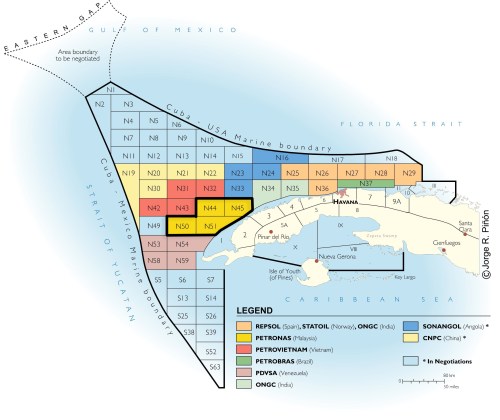
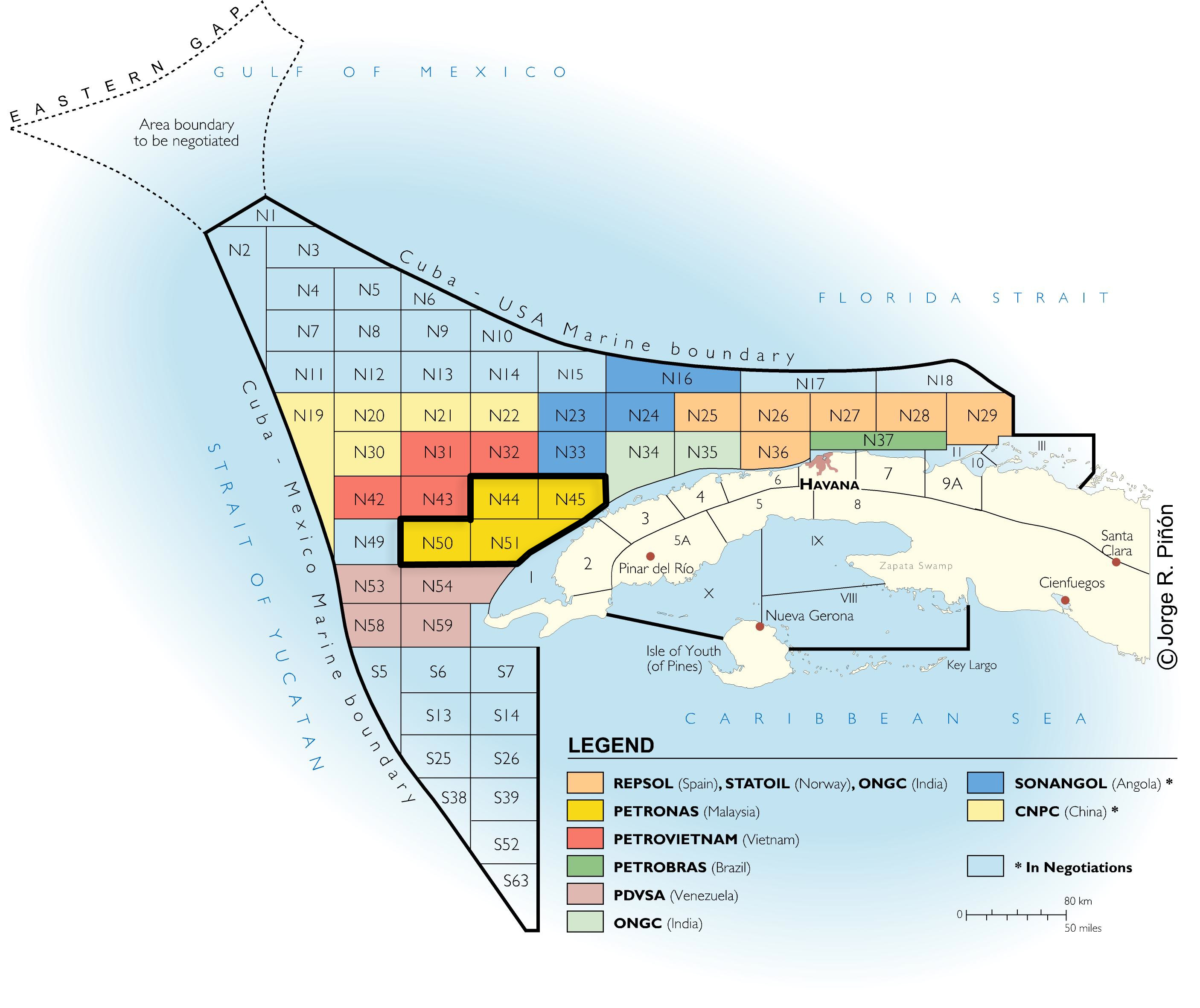
According to CubaStandard.com, we can add Petronas, with Gazprom as a major partner, to the list of companies that will be drilling offshore Cuba next year. So, as best we can determine, beginning in 2011 the following companies will be using Saipen’s Scarabeo 9 to drill wells offshore Cuba:
- Repsol (Spain) with Statoil (Norway) and ONGC (India) each holding a 30% interest
- PdVSA (Venezuela)
- Petronas (Malaysia ) with Gazprom (Russia) holding a 30% interest
Contrary to our energy, economic, and environmental interests, the US continues to prohibit governmental consultations on these important issues and participation by US companies in any aspect of Cuban offshore operations.
Posted in cuba | Tagged cuba, Gazprom, offshore oil, ONGC, Petronas, Repsol, Statoil, venezuela | Leave a Comment »
November 19, 2010 by offshoreenergy
Yesterday, I was fortunate to receive a copy of Bjørn Vidar Lerøen’s excellent book “Drops of Black Gold” which chronicles the history of Statoil and Norwegian offshore oil and gas development. Of particular interest was a letter on page 17 of the book (not available online) that I had heard about but hadn’t seen. The letter, dated October 29, 1962, is from Phillips Petroleum to the chairman of a Norwegian government committee considering offshore oil and gas exploration.
Phillips’ request is quoted below. You have to give Phillips high marks for taking an aggressive negotiating position (or was it pure chutzpah?). No small lease blocks for them. Phillips asked for the whole Norwegian shelf including any future additions! And what would they offer in return – a seismic survey program costing an estimated $1 million.
We have reason for believing that the geologic basin in which large reserves of natural gas have been discovered in Holland may be extended northward into the Norwegian portion of the North Sea. Therefore, Phillips Petroleum Company is interested in obtaining from the Norwegian government an oil and gas concession covering the lands lying beneath the territorial waters of Norway plus that portion of the continental shelf lying beneath the North Sea which may now or in the future belong to or be under the control of Norway.
Posted in Norway, Offshore Energy - General | Tagged Bjorn Vidar Leroen, Drops of Black Gold, North Sea, Norway, offshore oil, Phillips Petroleum, Statoil | Leave a Comment »
November 18, 2010 by offshoreenergy

Sound familiar?:
The amount of failures is unprecedented,” said Richard Woodward, a fellow Qantas A380 pilot who has spoken to all five pilots. There is probably a one in 100 million chance to have all that go wrong.”
But it did.
Solution:
What we have got to ensure is that systems are separated so that no single point of failure can damage a system completely, Woodward said. In this situation the wiring in the leading edge of the wing was cut. That lost multiple systems.
Yahoo link
Posted in accidents | 1 Comment »
November 18, 2010 by offshoreenergy
Judge Wells’ report is quite expansive in a way that may be unprecedented for a helicopter accident review. His commission delves into cultural and organizational issues and regulatory philosophy. Consistent with the international trend, the commission recommends a separate safety authority (page 302):
It is recommended that a new, independent, and stand alone Safety Regulator be established to regulate safety in the C-NL offshore. Such a Safety Regulator would have to be established, mandated, and funded by both Governments by way of legislative amendment, regulation, or memorandum ofunderstanding, or other means.
In his background remarks, Judge Wells makes this comment on regulatory culuture:
I have come to believe that regulation to be effective must encompass more than a list of do’s and don’ts. It must set in place and lead an inclusive regime of many players, some very important, others less so. All the available knowledge, skills, and wisdom of all participant sshould be harnessed in the safety cause.
Posted in accidents, Regulation | Tagged Canada, CNLOPB, helicopter crash, Newfoundland, regulatory philosophy, Robert Wells | Leave a Comment »
November 17, 2010 by offshoreenergy

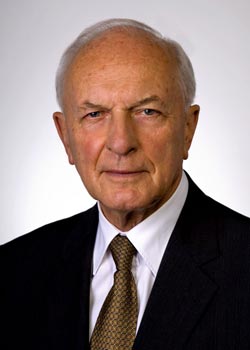
Robert Wells
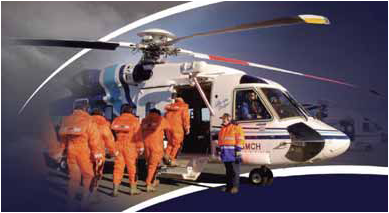
On March 12, 2009, 17 lives were lost when a Sikorsky S-92-A helicopter crashed offshore Newfoundland. The helicopter was en route to the Sea Rose FPSO via the Hibernia platform. The Honorable Robert Wells, a very impressive judge who spoke at the Vancouver regulators conference, directed an official inquiry into the aspects of the crash that were not related to the helicopter’s airworthiness. The airworthiness issues are being investigated by the Canadian aviation authorities. Mr. Wells’ report was released today. If you don’t have time to read the entire report, I suggest that you go to the recommendations beginning on page 289 of volume 1.

Passengers boarding an S-92A helicopter
Posted in accidents | Tagged Canada, CNLOPB, helicopter crash, Hibernia, Robert Wells, Sea Rose | Leave a Comment »
November 17, 2010 by offshoreenergy
Link
The National Academy of Engineering and the National Research Council have released the interim report of the Committee on the Analysis of Causes of the Deepwater Horizon Explosion, Fire, and Oil Spill to Identify Measures to Prevent Similar Accidents in the Future. The interim report includes the committee’s preliminary findings and observations on various actions and decisions including well design, cementing operations, well monitoring, and well control actions. The interim report also considers management, oversight, and regulation of offshore operations.
Comment: No significant surprises.
Posted in accidents, well control incidents | Tagged accidents, blowouts, Deepwater Horizon, drilling, Gulf of Mexico, macondo, NAE, national academies, offshore oil, safety, well control | Leave a Comment »
November 17, 2010 by offshoreenergy
 In conveying our deep condolences and solidarity to the United States Government and while sharing in the anguish of those whose livelihoods had been seriously affected, I asked that the report ofthe investigation into the accident be submitted to IMO as soon as possible after it has been concluded, so that we may move swiftly to introduce, into the regulatory regime of the Organization, whatever lessons may be learned from the incident in order to enhance safetyand environmental protection in the offshore industry and strengthen, should that prove necessary, the provisions of any relevant IMO instrument. Remarks by Secretary-General Efthimios Mitropoulos
The Secretary-General seems to be committed to an expanded role for IMO in regulating offshore oil and gas facilities. Questions:
- Is an organization with a shipping history and culture the right body to be regulating drilling and production operations? While IMO has experience with mobile drilling units, primarily the vessel aspects, the organization has had little or no involvement with well construction and integrity, production operations or pipelines.
- What would an expanded IMO role mean for existing offshore regulators and their cooperative efforts (primarily through the International Regulators’ Forum) to coordinate activities and improve safety performance? Generally speaking, the principal safety regulators for offshore facilities have had a very limited role in IMO activities.
Posted in accidents, Regulation | Tagged Deepwater Horizon, Gulf of Mexico, IMO, macondo, offshore oil, Regulation | Leave a Comment »
November 16, 2010 by offshoreenergy

Nigerian Militants; picture from The Will
As reported in the Nigerian publication
The Will and
Upstream, the Nigerian militant group, Movement for the Emancipation of the Niger Delta (MEND) claims to have detonated explosives at an offshore platform and taken seven workers hostage.
Per
Upstream:
The ExxonMobil attack took place a week after a similar raid on a rig operated by the exploration company Afren in the same waters off the state of Akwa Ibom, in which two Americans, two Frenchmen, two Indonesians and a Canadian were kidnapped.
Posted in Uncategorized | Tagged MEND, militants, Nigerian, offshore oil | Leave a Comment »
« Newer Posts - Older Posts »