On Monday, the offshore world lost Mike Conner, an outstanding engineer and a major contributor to the success of the US offshore program.
Mike is the person most responsible for the Deepwater Operations Plan (DWOP), a pioneering safety-case approach to regulating deepwater oil and gas development. The DWOP program was initiated 30 years ago and facilitated deepwater production at a time when there were no deepwater-specific regulations or standards. Innovative tension leg platform, compliant tower, spar, production semisubmersible, and subsea projects would not have been possible without the DWOP program. 93% of Gulf of Mexico oil production and 76% of the gas is now attributable to deepwater production facilities. Thanks in large part to the DWOP program, these facilities have had a nearly flawless safety and environmental record.
While his obituary is no yet available, this link announces Mike’s well-deserved selection for the OTC Heritage Award in 2017, and provides good information on Mike and his career.
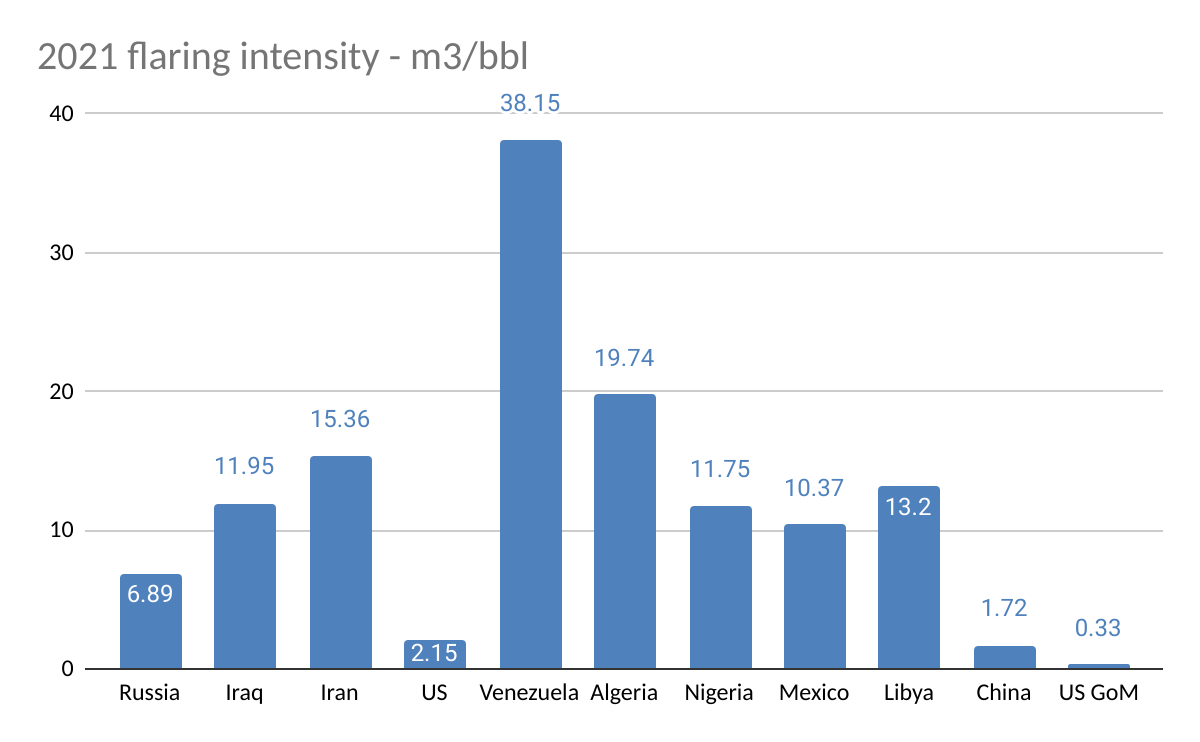
Further discussion: Kudos to the World Bank for their use of satellite data to estimate flaring volumes worldwide. Their primary performance indicator is flaring intensity (volume flared per bbl of oil produced). Absent better worldwide reporting regimes, satellite data are essential. However, there are issues with the World Bank’s system that merit further consideration:
Satellites miss some flares and vented gas (a more significant GHG concern) is not detected
The flaring intensity indicator penalizes higher gas-oil ratio (GOR) wells. Production upsets of the same duration yield higher flaring intensity scores at higher GOR facilities.
Associated gas is an environmentally favorable energy source that should not be discouraged. Most Gulf of Mexico gas production is now from oil wells. Efficient collection and utilization is the key.
There will always be some production upsets that result in flaring. The objective should be to minimize the % of oil-well and gas-well gas that is flared, irrespective of the amount of oil production. See the recent GoM summary data posted here and here.
Using satellite data, SpaceKnow detected 2 “dark ships” near the pipelines prior to the explosions. The ships were operating with their automatic identification system (AIS) transponders turned off or malfunctioning. While this is cause for suspicion, no data were provided on the frequency of such issues in the Baltic. Also, what were the specific routes and timelines for these vessels? Absent this information. the “dark ship” reports aren’t terribly meaningful.
Although the assumption that the explosions occurred outside the pipeline seems most likely, some observers have suggested that the explosions were internal. It’s unknown whether the investigators have ruled out this possibility.
Meanwhile, the folks in Germany and elsewhere in Europe are understandably impatient. They want answers from their governments!
Comments on the proposed revisions to BSEE’s Well Control Rule are due on Monday (11/14/2022). My comments were submitted yesterday, and I have attached a copy for those who might be interested. Bud
100+ tcf and the discoveries keep coming. Here’s the latest:
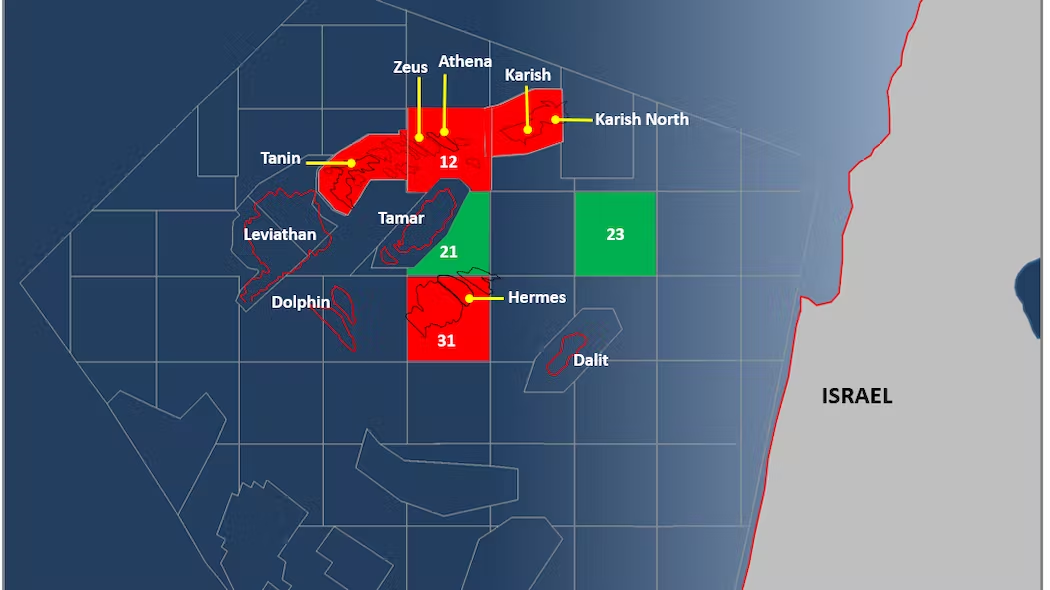
London, 7 November 2022 – Energean plc is pleased to announce that i) the Zeus 01 exploration well has made a commercial gas discovery of 13 bcm ii) contingent resources at Athena have been upgraded following post-well analysis; and iii) the Stena IceMax drilling rig has moved to block 23 to drill the Hercules structure, the final well in Energean’s 2022 drilling campaign.
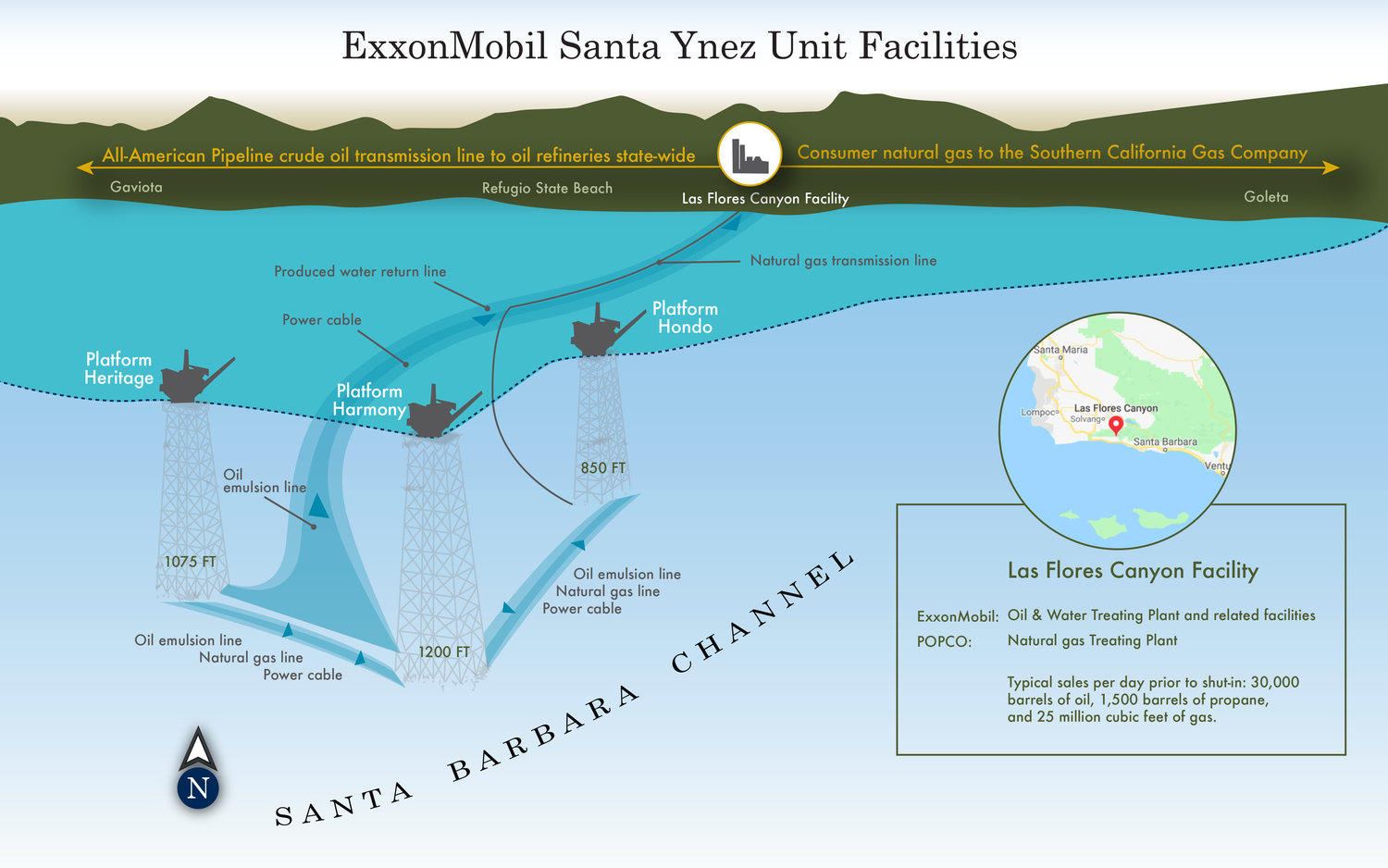
HOUSTON, Nov 6 (Reuters) – Exxon Mobil Corp will take up to a $2 billion loss on the highly leveraged sale of a troubled California offshore oil and gas field that have been idled since a 2015 pipeline spill.
Sable Offshore, a blank check company founded by industry veteran James Flores, will borrow 97% of the $643 million purchase price from Exxon under a five-year loan. Blank check companies raise money to acquire operating businesses. If Flores fails to restart production at the Santa Ynez field by the start of 2026, Exxon could take back the entire operation, Sable disclosed in a filing.Flores will seek permits to restart Santa Ynez and expects to pump about 28,100 barrels of oil and gas per day beginning in 2024, according to a Sable investor presentation. The field has 112 wells and the potential for at least another 100 wells, its presentation showed.
Jim Flores is well known in the offshore industry dating back to his days as CEO of Flores & Rucks, a Gulf of Mexico exploration and production company, in the 1990’s.
And Exxon is no doubt still on the hook for decommissioning these massive platforms.
1 well to be checked to confirm temporary abandonment
Well depths: 2359′ to 11934′
Water depths: 70′ to 477′
11 gas wells, 3 oil wells
Well completion dates: 2006-2008
Last production: 2010-2013 (Presumably, the short productive life of these wells either contributed to or was because of the lessees’ bankruptcies.)
$25,000😀 minimum to $100,000,000 maximum contract guarantee
If I was an offshore contractor, I wouldn’t touch this work without:
Ironclad liability protection after the work is completed and inspected. A contractor should not inherit the perpetual liability that the lessees knowingly and willfully accepted when they purchased the leases and conducted operations; nor is the contractor responsible for the failure of industry and government to establish a financial assurance framework that protects the taxpayer from such liabilities.
Protection against likely cost overruns related to the uncertain downhole condition of the wells.




 Bud's Offshore Energy (BOE)
Comments on revisions to BSEE’s Well Control Rule
November 10, 2022 by offshoreenergy
Comments on the proposed revisions to BSEE’s Well Control Rule are due on Monday (11/14/2022). My comments were submitted yesterday, and I have attached a copy for those who might be interested. Bud
Posted in Offshore Energy - General, Regulation, well control incidents | Tagged BSEE, comments, Well Control Rule | Leave a Comment »