4/17/2023 NTSB data base search results:

Posted in accidents, Gulf of Mexico, Offshore Energy - General, Uncategorized | Tagged 4 fatalities, Bell 407, helicopter crash, NTSB, Rotorcraft, Walter Oil and Gas | Leave a Comment »
A big step forward:
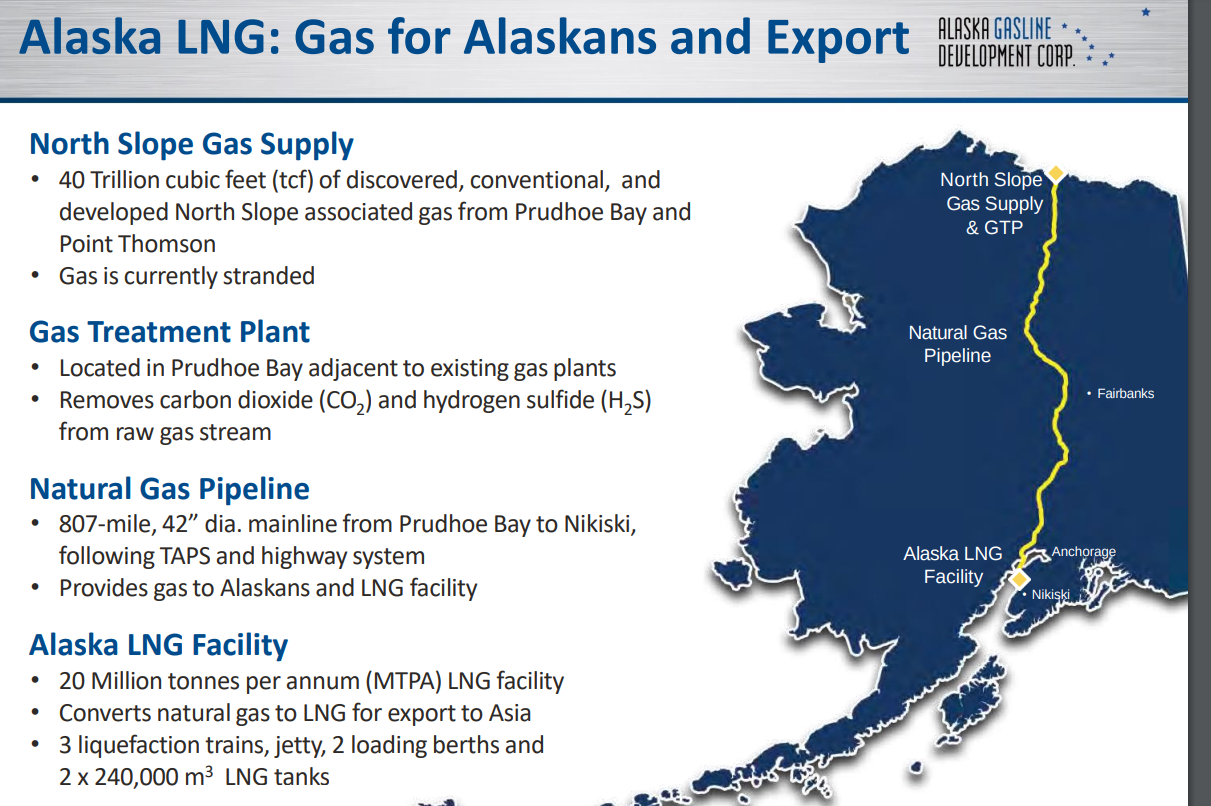
The Department of Energy approved Alaska Gasline Development Corp’s (AGDC) exports of LNG from the project to countries with which the United States does not have a free trade agreement.
Backers of the roughly $39 billion project hope it will be operational by 2030 if it gets investments and all required permits. The LNG would be exported mainly to countries in Asia.
Reuters
53 years of history in 93 seconds:
The basics:
Posted in Alaska, energy policy, natural gas | Tagged 40 tcf, Alaska gas, Alaska LNG, DOE, export approval | Leave a Comment »
This picture was posted by MaritmePhoto. The”Blue Marlin” heavy lift vessel is arriving in Texas (2005) with the massive semisubmersible production platform “Thunder Horse” on board.

Above (from BOE archives): Pre-commissioning inspection of Thunder Horse
Thunder Horse has a most interesting history. The project was initially named Crazy Horse, but the name was changed out of respect for concerns raised by the Lakota nation. The massive structure is 136 m in length and 113 m in width, and is located in 6300′ of water in the Mississippi Canyon area of the Gulf of Mexico.
Many of you no doubt remember the near disaster during Hurricane Dennis (2005) when the platform was being commissioned. In light of the extensive pre-production hype for the “world’s largest production platform,” this was a costly and embarrassing incident for BP and the OCS program.

Per the findings of the MMS investigation team led by my former colleague David Dykes:
Findings indicate that failures associated with the hydraulic control system and its isolation on evacuation led to the partial opening of multiple hydraulically actuated valves in the ballast and bilge systems of the vessel. This allowed ballast water migration to take place, causing the initial listing (to approximately 16 degrees) of the vessel shortly after the hydraulic system was isolated.
The findings also indicate that ballast water migrated into manned spaces in the lower hull, via faulty and improperly installed check valves in the integrated ballast/bilge piping system. As the degree of list increased beyond the 16 degree mark, downflooding of seawater occurred, initially through overboard discharge lines and/or vents, and possibly later through the deck box as it entered the water. Since the PDQ was already listing at a 16 degree angle prior to the passage of Hurricane Dennis, wave action associated with the passage of the hurricane may also have contributed to the downflooding of seawater.
Although not an initiating event, failed Multiple Cable Transits (MCTs) and two unintended openings in the bulkheads allowed water transfer between watertight compartments, which led to extensive flooding and water damage in the lower hull.
Fortunately, there were no injuries. Repairs were made and production was finally initiated in June 2008.
After recent subsea tieback expansions, Thunder Horse is reported to be producing 200,000+ boe/d. OPEC’s Monthly Market Report for April 2023 cites the Thunder Horse expansion as a key driver in the January 2023 GoM production increase (see excerpt below).

Posted in accidents, Gulf of Mexico, Offshore Energy - General | Tagged bp, Gulf of Mexico, listing, Thunder Horse | Leave a Comment »
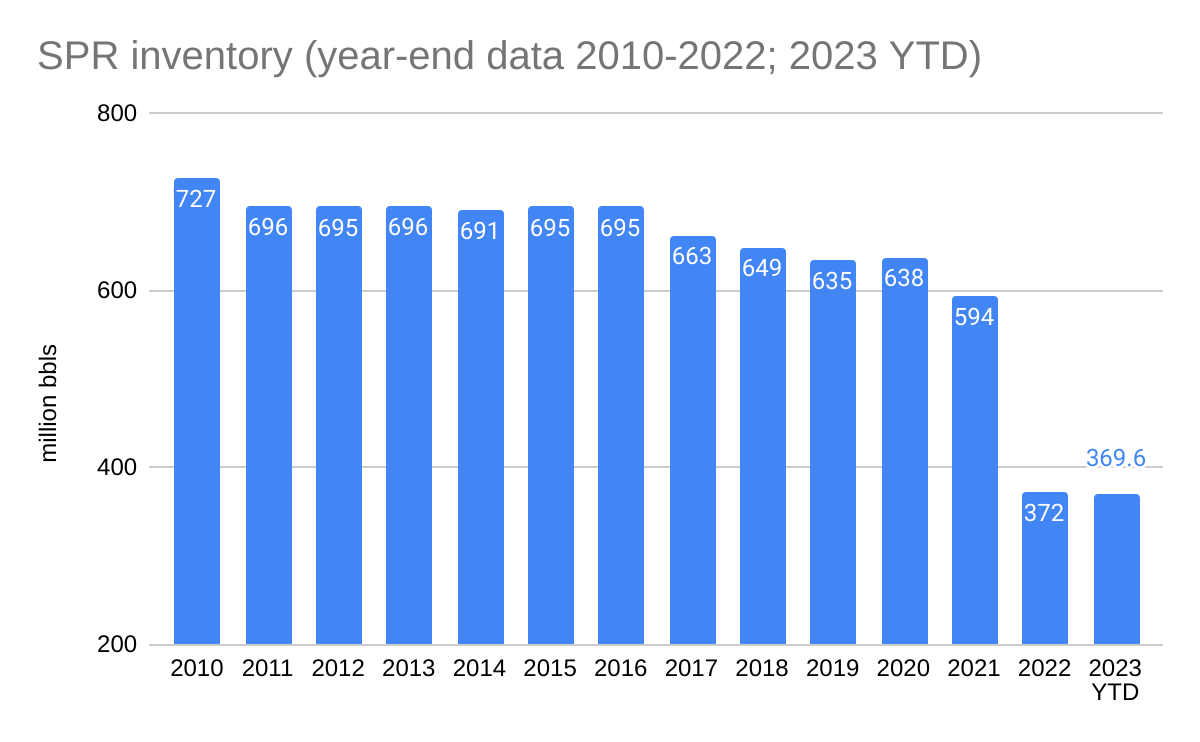
After 12 consecutive weeks at the 371.6 million barrel level, the SPR has declined another 2 million barrels to 369.6 million barrels as of 4/7/2022. The SPR is now at its lowest level since 11/11/1983 when the reserve was still being filled.
Keep in mind that the SPR deficit is now 357 million barrels, and the maximum refill rate is only 685,000 bopd. So a complete refill at the maximum rate would require 521 days plus acquisition, operational, and maintenance delays. Filling the reserve to its 727 million barrel capacity was a 28 year process.
DOE management nonetheless seems maddingly unconcerned.

Posted in energy policy | Tagged SPR depletion, SPR refill, Strategic Petroleum Reserve | Leave a Comment »
On 12/14/2022 I posted that California North Floating LLC was a subsidiary of Copenhagen Infrastructure Partners (CIP), and RWE Offshore Wind Holdings, LLC, a German multinational energy company. Andrew Doba, Director of Communications, has informed me that California North Floating is owned solely by CIP, and is not affiliated with RWE in any way. That post has been updated. Many thanks to Andrew for the correction.
Posted in Offshore Wind, Wind Energy | Tagged California North Floating, California offshore wind sale, CIP, RWE Renewables | Leave a Comment »
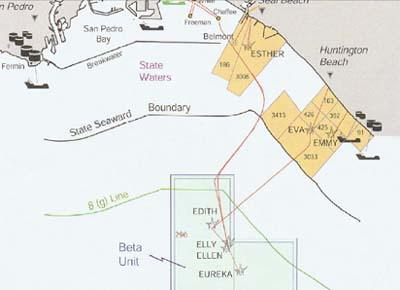
HOUSTON, April 10, 2023 (GLOBE NEWSWIRE) — Amplify Energy Corp. (“Amplify” or the “Company”) (NYSE: AMPY) today announced that it has received the required approvals from federal regulatory agencies to restart operations at the Beta Field. Initial steps to resume full operations will involve filling the San Pedro Bay Pipeline with production, a process which commenced over the past weekend and is expected to take approximately two weeks to complete. Following the line fill process, the pipeline will be operated in accordance with the restart procedures that were reviewed and approved by the Pipeline and Hazardous Materials Safety Administration (PHMSA).
Amplify Energy
Odd that the news release didn’t mention BSEE, the agency which would have had to approve the resumption of production.
18 months after the pipeline spill near Huntington Beach, settlements have been reached, fines have been paid, and production from the Beta Unit has resumed, but the Federal investigation report is still unavailable. Why?
Also, per our 10/6/2021 post:
One would hope that this spill will lead to an independent review of the regulatory regime for offshore pipelines. Consideration should be given to designating a single regulator that is responsible and accountable for offshore pipeline safety (a joint authority approach might also merit consideration) and developing a single set of clear and consistent regulations.
Posted in accidents, California, oil spill response, pipelines | Tagged Amplify Energy, Beta Unit, BSEE, PHMSA, pipeline spill | Leave a Comment »
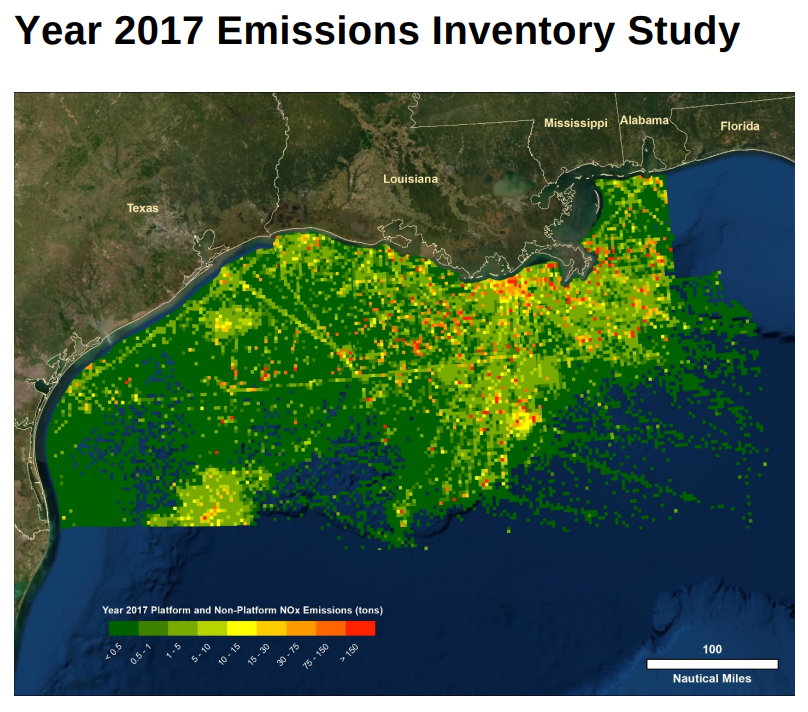
An interesting study published in the Proceedings of the National Academy of Sciences (PNAS) was brought to my attention by leading offshore energy historian Tyler Priest. The study used airborne observations and emissions reports to measure the carbon intensity (CI) of Gulf of Mexico oil and gas production. Their CI measure is grams of CO2 equivalent of greenhouse gas emissions per megajoule of energy produced.
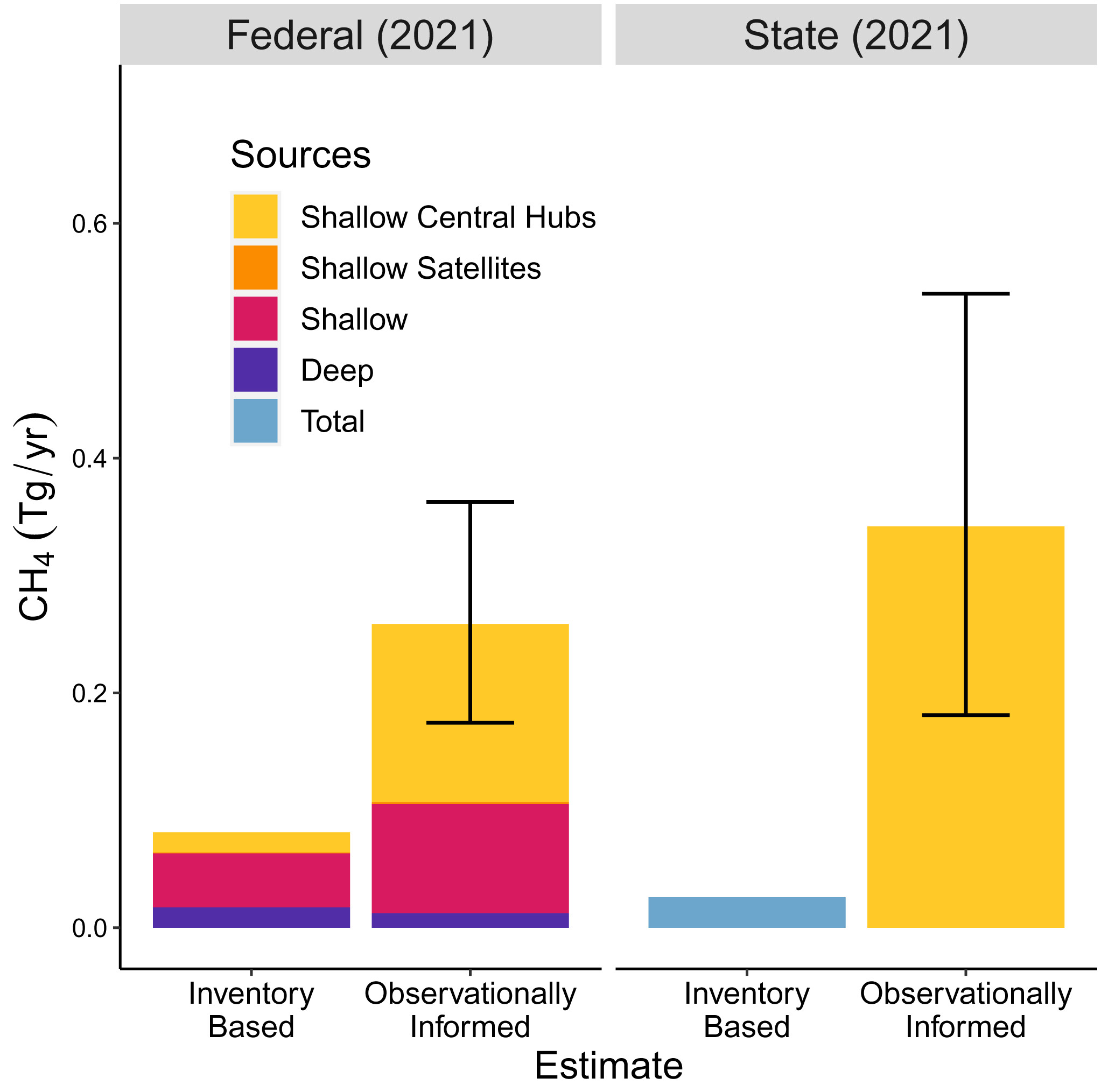
The authors conclude that inventory emissions of CO2 (as reported to BOEM) “are generally consistent with observations from our aircraft survey, suggesting that combustion is well represented in the federal inventory.“
However, that is not the case for methane (CH4) emissions which are underestimated by the Federal inventories. As summarized in the chart below, deepwater facility methane emissions are consistent with the reported inventories, but shelf emissions in State and Federal waters differ significantly.
Comments:
Posted in climate, Gulf of Mexico, Offshore Energy - General | Tagged air emissions, BOEM, carbon intensity, excess methane, flaring, GOADS, Gulf of Mexico, ONRR, PNAS article, venting | Leave a Comment »
The Nord Stream discussion begins at the 21 minute mark, but the entire interview is interesting.
Also, Swedish prosecutor Mats Ljungqvist, is apparently unconvinced by the improbable Nord Stream explanation that was fed to the NY Times.
“We don’t rule out anything, but that it is a state actor who is directly or at least indirectly behind this is of course our absolute main scenario, given all the circumstances.”
Mats Ljungqvist
Posted in energy, pipelines, Russia | Tagged Nord Stream, Ray McGovern, Russia, Sweden, Ukraine | Leave a Comment »
| DW expl | DW dev | shelf expl | shelf dev | |
| Anadarko | 5 | 1 | ||
| Arena | 22 | |||
| BOE | 1 | 4 | ||
| BP | 2 | 3 | ||
| Byron | 2 | |||
| Cantium | 20 | |||
| Chevron | 3 | |||
| Contango | 2 | |||
| Cox | 2 | |||
| Eni | 2 | 5 | ||
| EnVen | 5 | |||
| Greyhound | 2 | |||
| Hess | 2 | |||
| Kosmos | 1 | |||
| LLOG | 3 | 1 | ||
| Murphy | 4 | |||
| QuarterNorth | 2 | |||
| Shell | 25 | 9 | ||
| Talos | 2 | 8 | ||
| Walter | 1 | |||
| Woodside | 3 | 1 |
Posted in drilling, Gulf of Mexico, Offshore Energy - General | Tagged Arena Offshore, BOEM, bp, Cantium, deepwater drilling, Gulf of Mexico drilling, shelf drilling | Leave a Comment »
Cheryl Anderson took oil spill data analysis to a level worthy of a world class offshore program. In my opinion, Cheryl was the top analyst in the history of the OCS program, a true Hall of Famer. Regardless of the politics of the day, she always stuck to the facts and resisted “spin,” and that was a trait her colleagues greatly admired.
Cheryl retired at the end of 2010 and her final update, with assistance from 2 other OCS program icons, Melinda Mayes and Bob LaBelle, was published in June 2012. That update is attached.
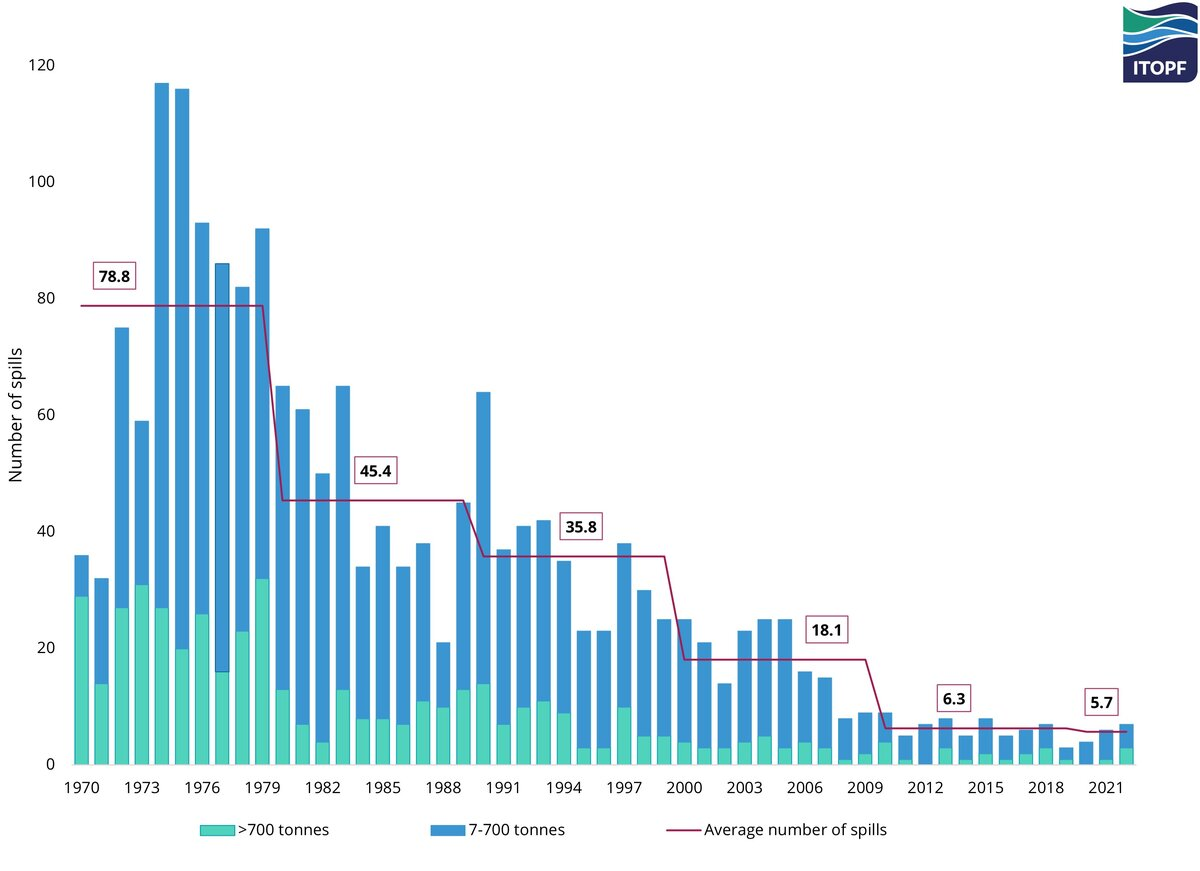
ITOPF also deserves mention for their comprehensive tanker spill data. A recent chart is pasted below. ITOPF’s data are nicely presented on their website. No such data are available for international offshore production.
Posted in accidents, Gulf of Mexico, oil spill response | Tagged Bob LaBelle, Cheryl Anderson, ITOPF, Melinda Mayes, offshore, oil spills | Leave a Comment »
 Bud's Offshore Energy (BOE)