Chris Allard, chief executive officer of Metal Shark, said in August “We believe this formidable, American-made patrol craft will be a game-changer for regional security.
“Encouraged by the Guyana Suriname finds, several other regional bloc member nations, including Barbados and Jamaica, have been ramping up efforts to attract companies to explore offshore acreages. The most determined of them seems to be Grenada, which is just north of oil and gas producers Trinidad and Venezuela.”
“Officials there say they are preparing to put out bids to attract some of the world’s largest exploration companies, but the 14-month new administration has said the previous government secreted away all the documents and data obtained from a 2018 exploration campaign by a little-known Russian firm, the Global Petroleum Group (GPG).”
“The group had told the previous administration that it had found commercial quantities of oil and gas in a well labeled Nutmeg 2, in about 400 feet of water, and that there were other promising prospects right nearby. But as the current Dickon Mitchell government gets ready to assess the island’s prospects, it has said there is nothing to work with.”
Grenada will no doubt be more careful about whom they issue future exploration licenses to and how they manage the data.
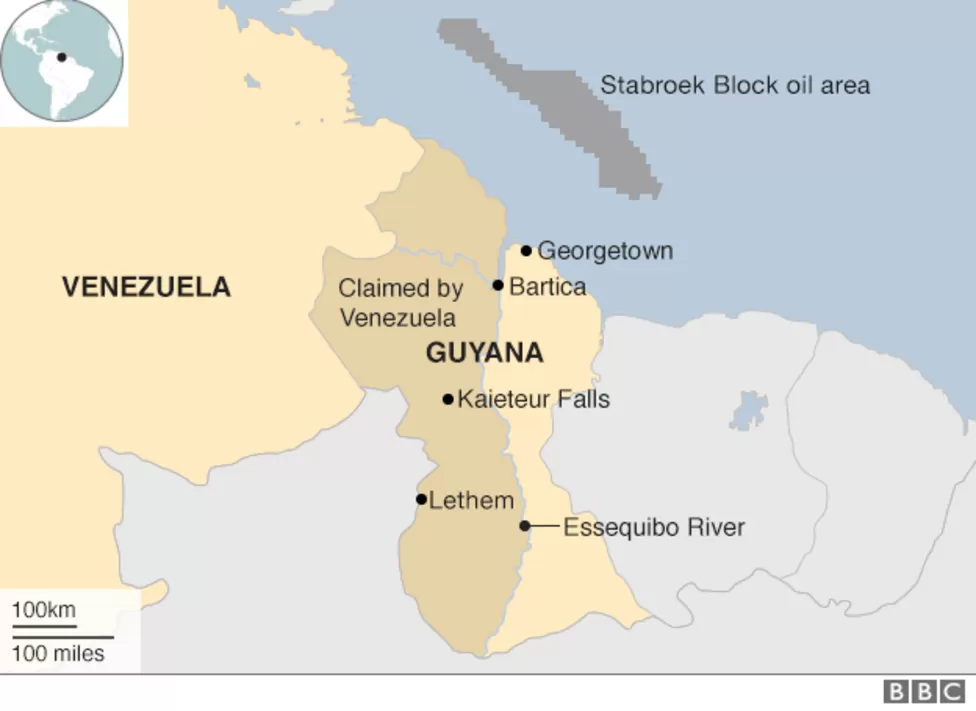
Having severely damaged their own oil industry, the government of Venezuela is intent on taking control of Guyana’s offshore resources. Venezuela seeks to annex 2/3 of Guyana and the adjacent offshore territory. The existing boundary was settled in accordance with international law in 1899.
“Question 5 proposes the creation of Venezuelan state of Guyana Essequibo and an accelerated plan for giving Venezuelan citizenship and identity cards to the Guyanese population.”
I suspect that very few Guyanese are interested in Venezuelan citizenship.
Ambassador Brian A. Nichols, Assistant Secretary for Western Hemisphere Affairs at the U.S. Department of State, emphasized that “efforts to infringe upon Guyana’s sovereignty are unacceptable.”
Venezuela’s referendum is scheduled for December 3.
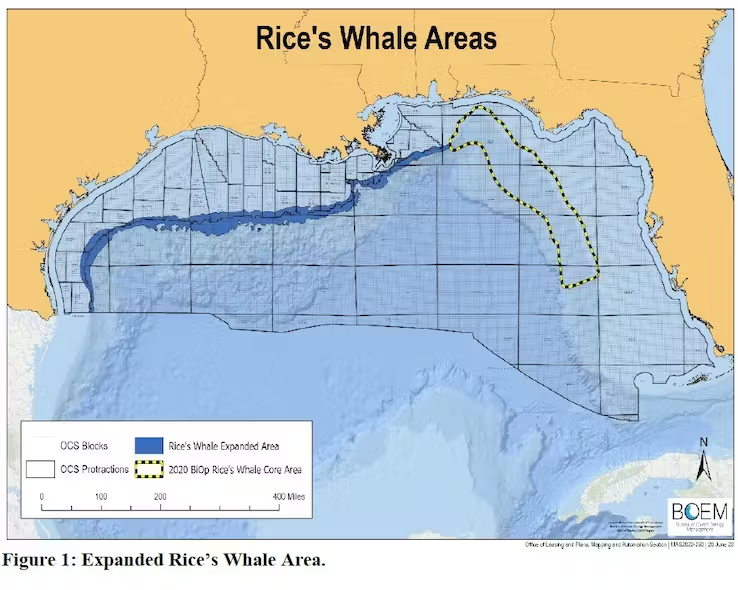
In light of the 5th Circuit’s order, holding the sale on 11/8 would have been messy for all sides in the Rice’s whale dispute. Seemingly, the only option for holding the sale prior to the Court’s decision on the injunction would have been the following:
Allow, but not accept, bids on the tracts in the Rice’s whale expanded area.
Add the Rice’s whale stipulations while providing notice that they might subsequently be removed.
Because the RIce’s whale stipulations would affect the value of all deepwater leases, bidders would be rolling the dice on the outcome of the case.
Also, absent legislative action, there will be no lease sale in 2024. This adds to the importance of Sale 261, and making sure the terms are understood.
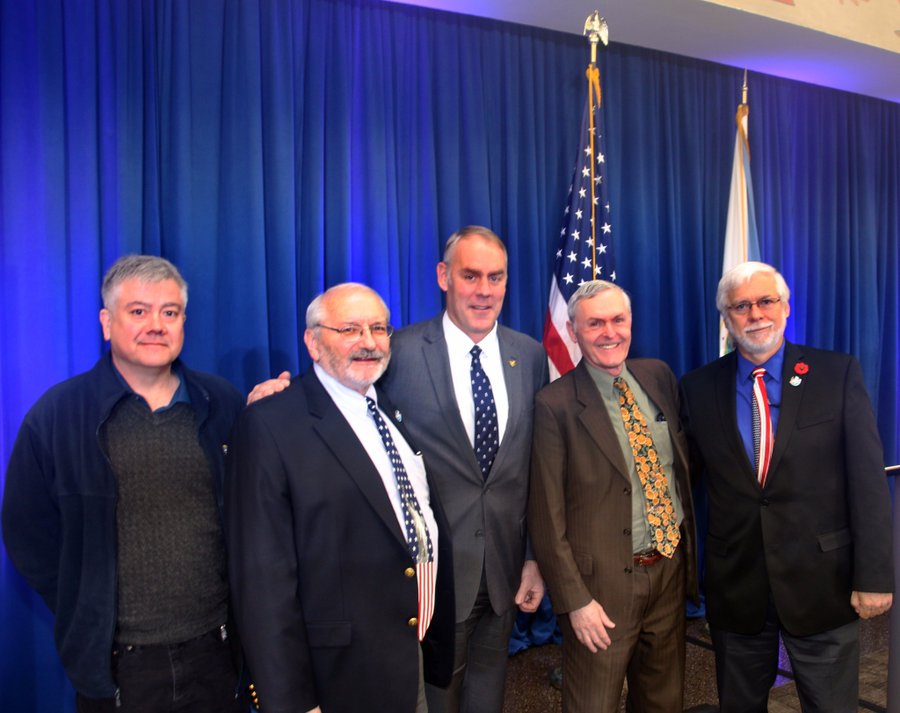
Gig Kocher (second from left) after receiving an honor award from (then) Secretary of the Interior Ryan Zinke (middle)
Gig Kocher recently retired from BSEE after an amazing 57 years of Federal service. Nine of those years were served in the US Air Force, and the remaining 48 were at the US Dept. of the Interior, mostly in the offshore oil and gas program.
Gig is a native New Yorker and a huge Yankees fan (tough year in that regard). However, it’s only fitting that a guy named Gig would eventually become a Texas A&M Aggie (“Gig ’em!”), where he earned a master’s degree in computer science back in the mainframe and punch card era.
Gig was a strategic planning wiz who excelled at concisely outlining the steps and tactics needed to achieve desired objectives. He managed major updates to the documents and information technology systems critical to the success of our offshore energy programs.
Gig will be greatly missed by the troops at BSEE. His retirement event went something like this: 😉
As a result of the order issued by the United States Court of Appeals for the Fifth Circuit on October 26, 2023, in Louisiana v. Haaland (Case No. 23-30666), the Bureau of Ocean Energy Management (BOEM) is postponing Lease Sale 261, which was originally scheduled for September 27, 2023, and later scheduled for November 8, 2023, in response to judicial orders. Until the court rules, BOEM cannot be certain of which areas or stipulations may be included in the sale notice.
Potential bidders in Lease Sale 261 should not submit bids until BOEM provides additional instruction. BOEM will hold any bids already received and will hold the sale after it receives further direction from the Court of Appeals.
The official announcement provides no reasons for his departure. By all accounts, Beaudreau was highly regarded by career employees in the Department. Was he troubled by his experience in NYC and the absence of a response from DOI? Was it difficult being a lone advocate for a more balanced energy policy?
So we found the person who approved the Willow project. His name is Tommy Beaudreau and he is a climate criminal. We profoundly disrupted him five times in a single day.
We will do this to anyone who stands between us and the world we seek to build.
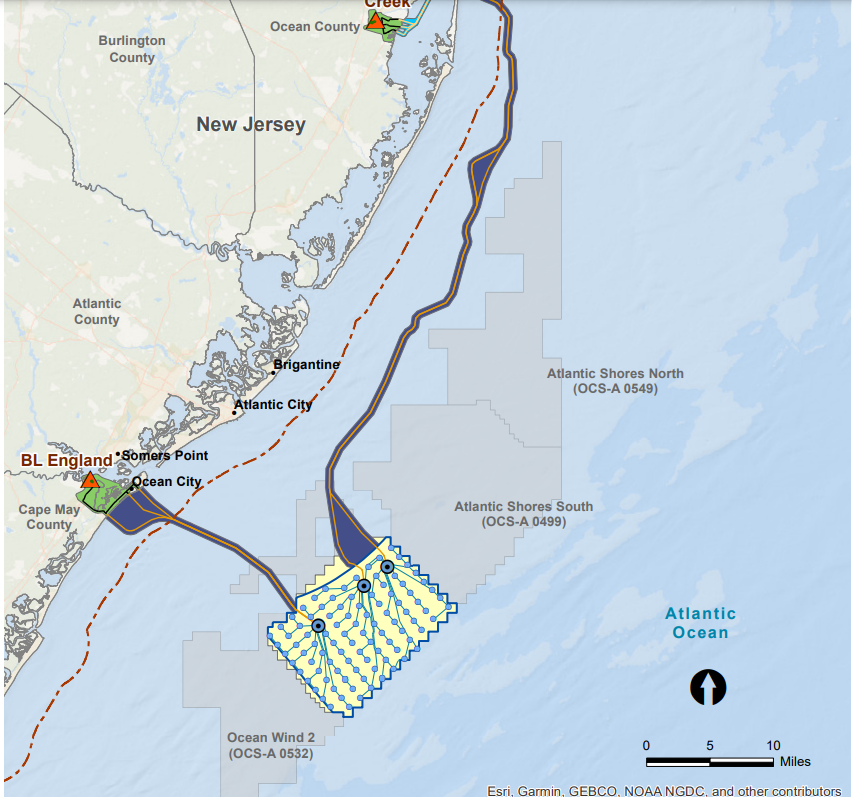
NJ Governor Murphy, an offshore wind promoter, is not pleased:
“Today’s decision by Orsted to abandon its commitments to New Jersey is outrageous and calls into question the company’s credibility and competence,” the Democratic governor said. “As recently as several weeks ago, the company made public statements regarding the viability and progress of the Ocean Wind I project.”
Perhaps the Governor’s credibility and competence is also taking a hit, as is staking the State’s energy future on highly uncertain, intermittent, and facility-intensive power systems. .
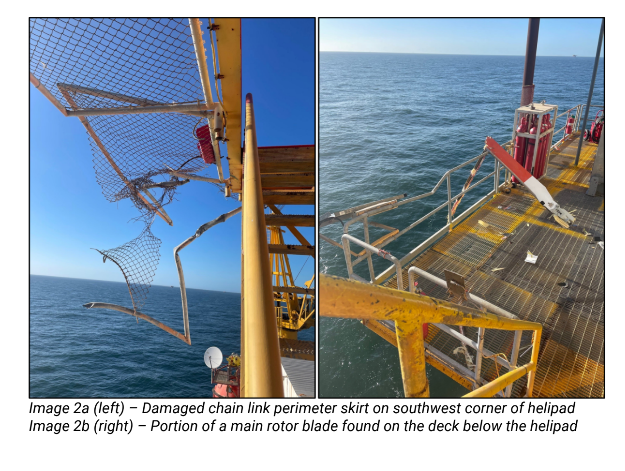
Per the IRF guidelines, “Helicopter operations at or near an Offshore Installation” are supposed to be counted. The fatal 12/29/2022 incident clearly happened at the platform’s helideck (photos below).