Feeds:
Posts
Comments

Posts Tagged ‘Mexico’

World Bank global flaring estimates are now derived from 3 satellites carrying NOAA VIIRS detectors. The increased number of observations improves the precision and accuracy of the flare locations and volume estimates.

The World Bank (WB) Global Gas Flaring Tracker is the only worldwide flaring data source. Offshore and onshore data are segmented, so offshore flaring can be considered separately for each country.

The WB estimates that 21600.03 million cu m (762.5 bcf) of gas were flared at offshore locations worldwide in 2025. This is an increase from 2024 when the total offshore flaring volume was 21159.91 million cu m.

The flaring totals for prominent offshore producers are entered in the table below. Also included are the largest offshore flares for each country.

Unsurprisingly, Norway led the pack in minimizing offshore flaring. Their total of 36.11 million cu m (1.3 bcf) is very impressive for such a large producer. The US offshore total of 160.95 cu m (5.7 bcf) is also quite respectable relative to production.

At the other end of the scale are Iran – 3329 million cu m (118 bcf), Nigeria – 2566 (91 bcf), Angola – 2300 (81 bcf), and Mexico 2068 (73 bcf). These 4 countries accounted for nearly half of all 2025 offshore flaring. They were also massive offshore flarers in 2024: Iran – 3753 million cu m, Nigeria – 2867, Angola – 2040, and Mexico – 2223.

If both onshore and offshore flaring are considered, Iran flared 29931 million cu m in 2025. That equates to 1.057 trillion cu ft!

2025 WB flaring total
million cu meters
largest flarelargest flare volume
Angola2300.26Lombo East862.02
Australia268.36Santos61.89
Brazil969.16Albacora Leste118.93
Canada145.12Terra Nova95.83
China535.56Weizhou 12-168.26
Congo, Rep.788.98Kitina384.12
Gabon368.91Tchatamba Marin37.46
Ghana351.81Sankofa East184.97
Guyana227.38Yellowtail164.06
Indonesia292.16Belida30.84
Iran3329.19Foroozan1360.09
Libya313.78Bouri74.07
Malaysia1459.32Kasawari205.8
Mexico2067.62Akal386.44
Nigeria2565.88Oso308.37
Norway36.11Balder6.38
Qatar688.19Ras Laffan LNG54.65
Russia227.27Yuri Korchagin82.07
Trinidad87.66Atlantic LNG53.23
UK234.08Penguins22.94
US160.95NA*22.77
*The WB lists the field name for the largest US flare as NA. The lat/long for the Whale deepwater platform in the Western Gulf matches the identified flare location (26.22 lat., -94.67 long.)

The WB tracker identifies the Gulf of America facilities with the highest flaring volumes. The 2025 list is pasted below. Repeat top ten Gulf flarers from 2024 were Vito (14.55 million cu m in 2024), Pompano (11.68), and Lucius (5.72).

The WB lists the field name for the largest US flare as NA. The lat/long for the Whale deepwater platform in the Western Gulf matches the identified flare location (26.22 lat., -94.67 long.)

Per the WB tracker, the Terra Nova FPSO, offshore Newfoundland, was the top North American offshore flarer by a considerable margin (data for Canada below). Terra Nova was also the top flarer in 2024 (95.56 million cu m).

The location of the only flare identified offshore California corresponds with that of the Dos Cuadras field in the Santa Barbara Channel. The estimated 2025 flaring volume was 0.10 million cu m.

The WB flaring tracker is an excellent data source, but doesn’t capture vented gas and likely understates the total volume flared. The WB estimated that 160.95 million cu m (5.68 bcf) were flared at US offshore facilities in 2025. This compares with the 9.7 bcf (flaring and venting) and 8.0 bcf (flaring only) totals derived from ONRR data (chart below). The flaring difference is not surprising given that the WB numbers are dependent on satellite imagery and the ONRR data are from mandated/audited production reports. A previous comparison also showed that the WB flaring estimates are significantly lower than the ONRR numbers. From a regulatory oversight perspective, this is rather reassuring given that the reverse (WB>ONRR) would imply serious reporting issues.

Read Full Post »

  • Field: Trion
  • Operator: Woodside
  • Partner: Pemex
  • Water depth: 2500 m (Mexico’s first ultra-deepwater project)
  • Distance from US maritime border: 30 km
  • Distance offshore: 180 km
  • Reserves: 324.7 million BOE proved, 478.7 million BOE probable
  • Production: Floating Production Unit with an oil production capacity of 100,000 B/D connected to an FSO vessel with a capacity of 950,000 bbl. Gas not used to power FPU will be reinjected
  • First oil: 2028
  • Only mentioned here 😉: The predicted Rice’s whale habitat extends southward between the 100 and 400 m isobaths into Mexican waters. Background.

Read Full Post »

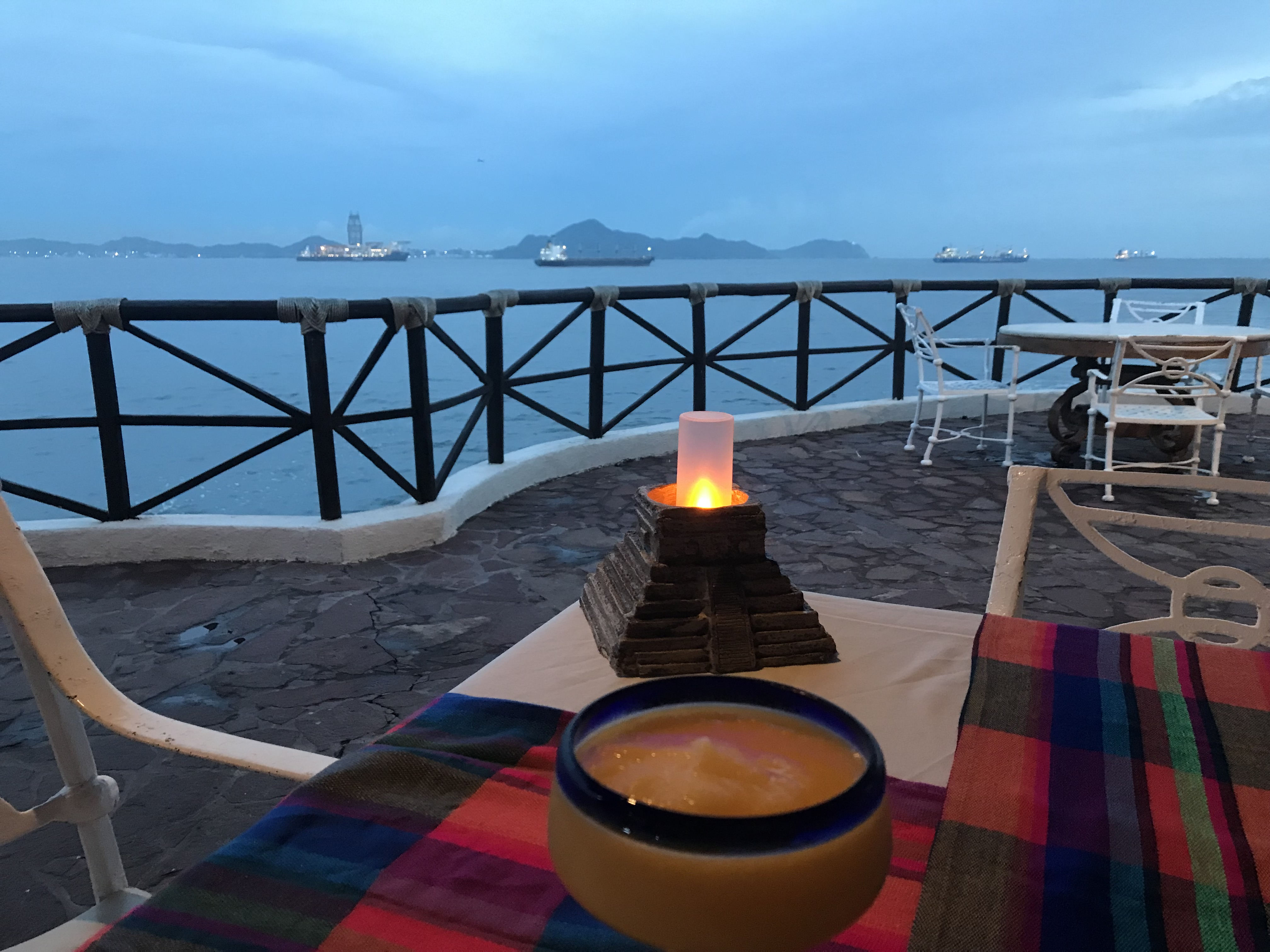
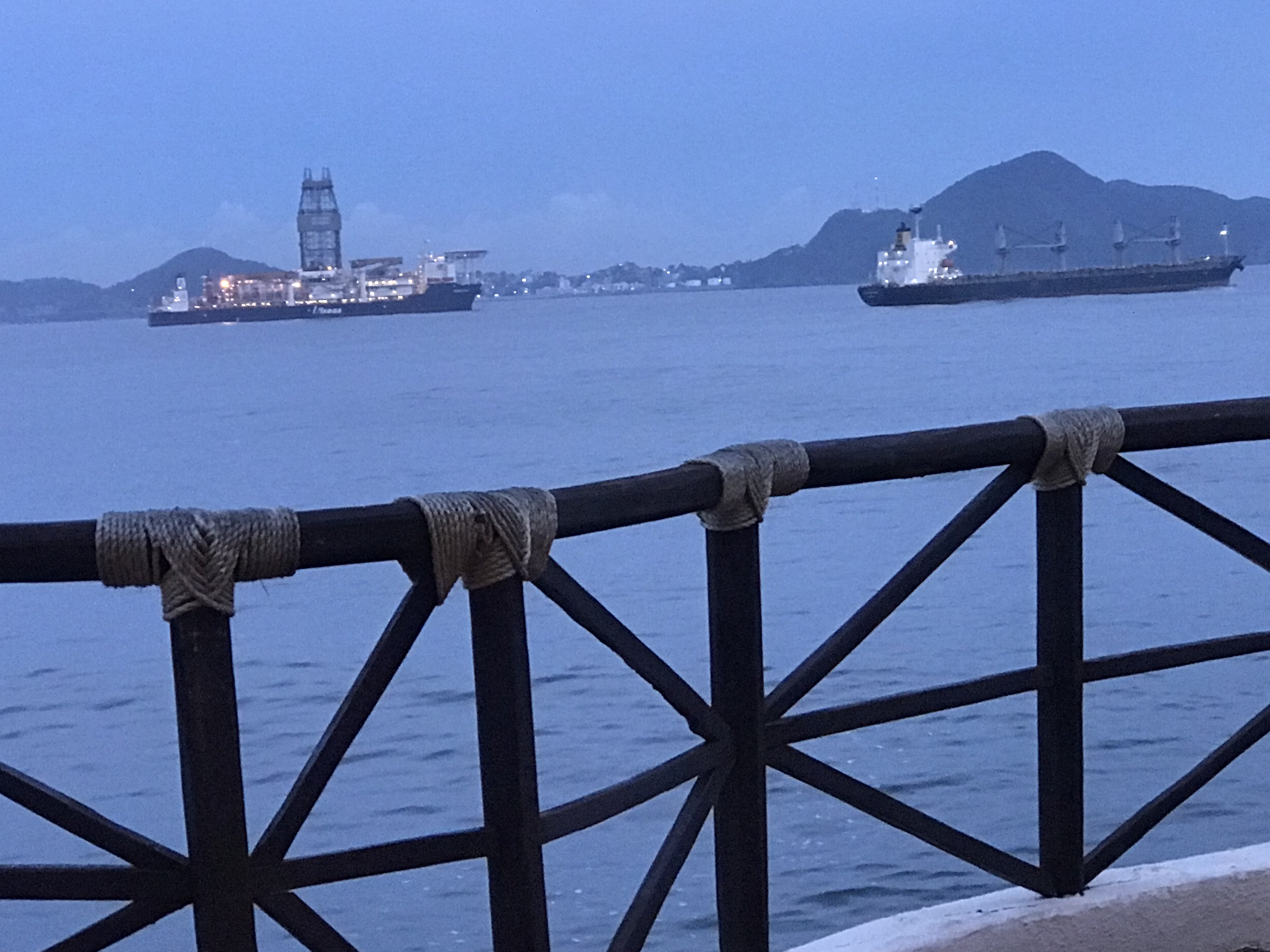
Our Mexican correspondent, Andrew Konczvald, reports that the Hidden Gem, a deepsea mining vessel owned by The Metals Company (TMC) is still parked offshore Manzanillo. The ship has moved a couple of miles and is now near a shipping lane. See Andrew’s pictures below.

Per TMC’s latest update, the earliest that deepsea mining operations could be conducted is late 2025, so the vessel is likely to remain in Manzanillo for Andrew’s viewing pleasure. Nothing like a water view with a rig on the horizon. 😉

Andrew’s viewing location
5X enlargement for a better look at the mining vessel.

Read Full Post »

The fire was triggered by an explosion on the Nohoch-A link platform of the company’s Cantarell Field, in the the Bay of Campeche. It then spread to a compression complex, where the two workers lost their lives. More than 300 people were evacuated. The fire is reported to be controlled.

Read Full Post »

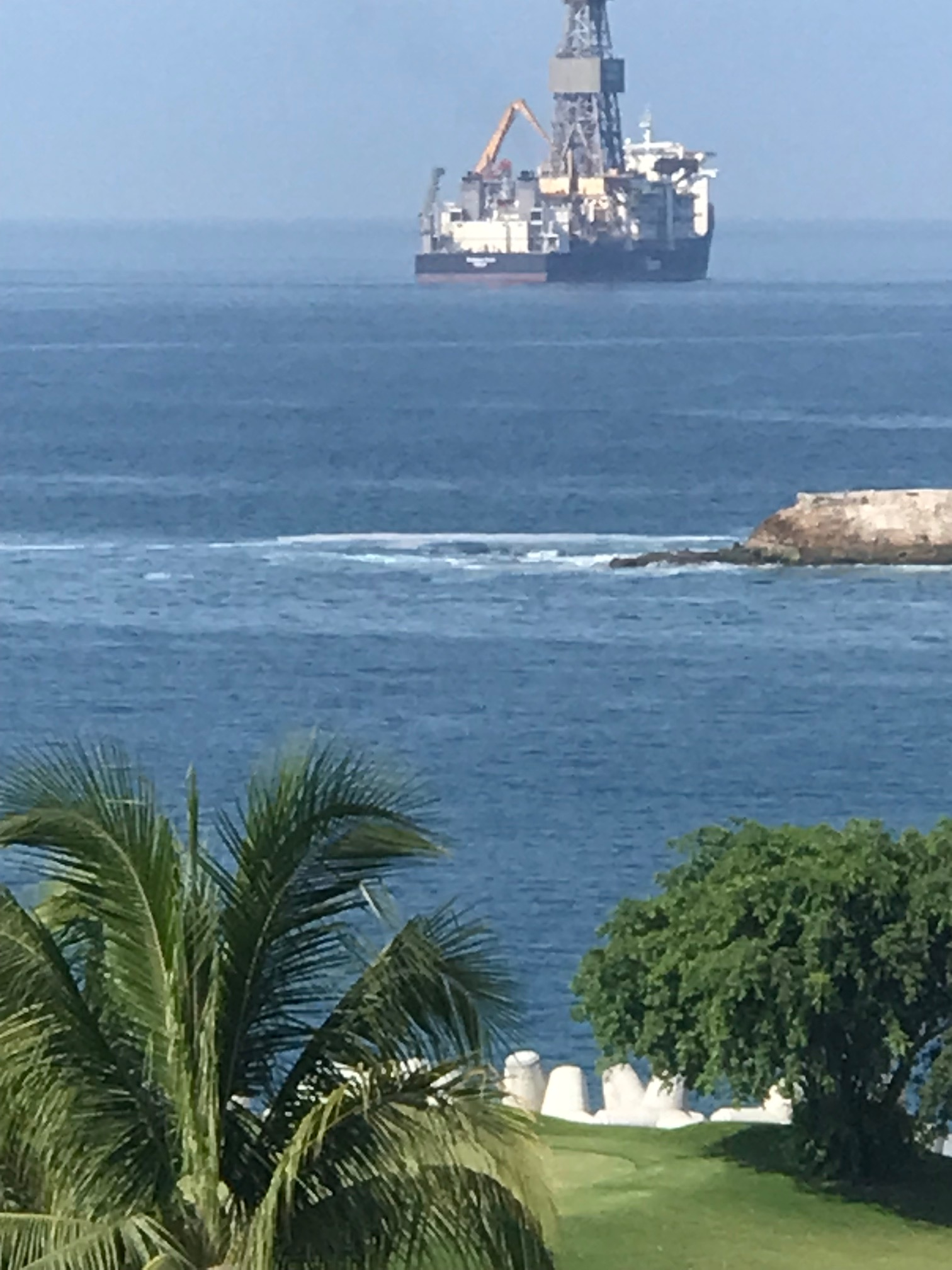
Andrew Konczvald reports that the Hidden Gem, a deepsea mining vessel owned by The Metals Company (TMC) is still parked offshore Manzanillo. Andrew’s latest picture of the Hidden Gem is pasted below.

TMC is awaiting international deepsea mining regulations, hence the extended and costly downtime for this massive rig. Per TMC, the regulations seem to be progressing.

Read Full Post »

Per offshore-energy.biz, Russian giant Lukoil has closed a $450 million deal to acquire operator interest in Mexican offshore tracts. Not a good look for Mexico, but in their defense:

  • The deal was closed on 3 February.
  • Many countries, including the US, continue to import Russian oil and gas.
  • Lukoil continues to sell gasoline in the US and worldwide.
  • Unlike some elements of the US government, Mexico appreciates the domestic and international importance of expanding their offshore program.

Read Full Post »

the Mexican government’s recent decision to anoint Pemex operator of the billion barrel Zama field would seem to merit further scrutiny. Houston-based Talos Energy discovered the Zama field in 2017. The field underlies both Pemex and Zama acreage, and there are common reservoirs. Per Bloomberg:

Mexico’s energy ministry has designated Petroleos Mexicanos as the operator of the country’s largest oil discovery by private companies, in the latest sign of the government’s nationalist approach to the energy industry.

Talos said it was “very disappointed” with the decision and will explore “legal and strategic options” regarding Zama. The company added that the energy ministry had informed Talos of its “sudden” decision only three days after the driller received a letter directly from Pemex arguing for operatorship.

Bloomberg, 7/5/2021

The Mexican government’s decision is indicative of the Lopez Obrador administration’s commitment to rolling back the reforms that had encouraged private sector participation in Mexican offshore exploration and development.

Questions had already been raised about Pemex’s ability to fund Zama development and operate the field safely. This week’s deadly incident and a July pipeline fire add to those concerns. In light of the background political and financial issues, will it be possible to for Pemex and the Mexican regulators to conduct a fully independent investigation of the tragic fire that just occurred?

Read Full Post »

  1. 5 workers killed – 4 contractors and one Pemex employee
  2. 6 workers injured, one in critical condition
  3. 2 workers are missing
  4. The fire occurred in the power generation and compression area of the platform
  5. Contractors Cotemar and BMCI were performing maintenance at the time of the incident
  6. The fire has now been extinguished
  7. No reports of an oil spill
  8. Massive loss of production – 421,000 BOPD shut-in

Defensive and rather shameful comments by the CEO:

“There is not a problem of lack of investment, there is not a problem of lack of resources,” Romero said. “The oil industry is a risky industry. We have had accidents, which in numbers are less than in previous years.”

Reuters

Read Full Post »

Mexico, the third-largest supplier of foreign oil to the United States, could lose the capacity to export crude altogether within a decade without major new investments in exploration and production, warns a research group report released on Friday. New York Times

Read Full Post »

The tragedy in Japan has added yet more uncertainty to nervous energy markets:
Japan will likely need more imported oil and natural gas due to closures of nuclear reactors caused by Friday’s earthquake and tsunami, but volumes can’t be calculated accurately as it is unclear how much industrial output has been affected by the disaster and how long power nuclear and thermal power plants will remain closed. Wall Street Journal
It’s much too early to gauge how the nuclear power industry, which some have touted as a model for safety achievement, will be affected.
    Standards news and discussion:
    Offshore Safety Institute?
    The CEOs of major oil and gascompanies will meet March 18 to decide how to proceed with the formation of a US offshore drilling safety institute, William Reilly, the co-chair of the National Oil Spill Commission, said March 8. Platts Oilgram News
    New twist in Cuban drilling drama – Petrobras relinquishes interest
    Marco Aurelio Garcia, foreign policy adviser to President Dilma Rousseff, told reporters in Havana exploratory work off Cuba’s northern coast had not shown good results and that Brazil wanted to concentrate on its own oil fields.
    Since BP’s disastrous Deepwater Horizon accident in the Gulf of Mexico last April, the risks of offshore oil drilling have been a hot topic. One place it isn’t questioned much is Brazil, whose oil production industry is one of the fastest-growing in the world because of vast new deepwater oil reservoirs discovered in the past five years.
    Mexican Deepwater Update (Platts Oilgram News)
    Pemex has just begun to explore in Mexico’s Gulf of Mexico waters deeper than 1,000 feet, but 28 billion undiscovered barrels of oilequivalent are thought to exist in that area, some of which borders US territorial waters. Pemex officials said the company is forging a development plan for its first deepwater field, Lakach, located northeast of the state of Veracruz in about 3,200 feet of water. First production is expected in 2015.
    Environmentalists are furious at a proposal by the petroleum company Shell to start exploration drilling off one of Western Australia’s most treasured reefs. Ningaloo Reef off the north-west coast, has been nominated for World Heritage listing.

Read Full Post »

Older Posts »