Feeds:
Posts
Comments

Archive for the ‘Regulation’ Category

Dept. of Justice announcement

In addition to the penalty and reimbursement elements of the plea agreement, there are two Amplify commitments that may be of particular interest to BOE readers:

  1. New leak detection system for the pipeline: More information on the leak detection improvements for this low pressure oil pipeline would be helpful.
  2. Notification to regulators of all leak detection alarms:
    • Which regulators? DOT? BSEE? State? All?
    • Real time reporting or periodic compilations? With real time reporting for every alarm, the distinction between the pipeline operator and regulator(s) would be blurred and new organizational and competence risks would be added. The probability of communications errors and delayed decisions would increase, and the operator would no longer be accountable for bad decisions.

Also, given that the investigating agencies have still not issued their report on the October 2021 spill and no action has yet been taken against the shipping companies that caused the pipeline rupture, the congratulatory Coast Guard, EPA, FBI, and DOT quotes in the announcement seem rather premature and self-serving.

Two final thoughts:

Read Full Post »

Read Full Post »

The offshore world lost an important figure over the weekend with the passing of John Gregory Fitzgerald. As Chairman and CEO of the Canada Newfoundland Offshore Petroleum Board in the late 1990’s, John presided over the first production from the massive Hibernia field. He also approved the pioneering Terra Nova project, the first FPSO development in a harsh, iceberg laden environment.

John worked closely with his international counterparts and hosted an important offshore safety meeting in St. John’s in 1996. It was an honor to be associated with such an outstanding individual and dedicated safety leader.

RIP John, your contributions will not be forgotten.

Read Full Post »

Here is a link to the entire bill. Good weekend reading for energy policy nerds. 😀

The energy sections begin on page 232 and continue until the end (page 725!). Some highlights from an offshore energy perspective (more important items in bold):

  • p. 429 – Tax credit eligibility for offshore wind energy components including blades, nacelles, foundations, and towers.
  • p. 447 – Credits for CCS equipment
  • p. 460 – For offshore wind facilities, this section specifies the % of the total costs that must be expended in the US for the facility to qualify as being manufactured in the US. That % rises gradually to 55% after 12/31/2027.
  • p. 518 – Eligibility of CCS for credits
  • p. 615 – $100 million for offshore wind electricity transmission planning, modelling, and analysis. (Seems like a lot for planning and analysis.)
  • p. 621 – $10 million for oversight by DOE Inspector General. (Those folks will have their hands full!)
  • p. 628 – Authorizes wind leasing in the EGOM and South Atlantic areas withdrawn from all leasing at the end of the Trump administration.
  • p. 631 – Authorizes offshore wind leasing adjacent to US territories. (Should be interesting!)
  • p. 632 – Codifies increase in offshore royalty rates: range of 16 2/3% – 18 3/4% for 10 years; not less than 16 2/3 % thereafter
  • p. 640 – The provision requiring that royalty be paid on flared/vented gas could be problematic. The exceptions are not consistent with those currently in the regulations, and would be difficult for BSEE/ONRR to manage. The proposed legislation (exception 1) exempts “gas vented or flared for not longer than 48 hours in an emergency situation that poses a danger to human health, safety, or the environment.” However, current BSEE regulations allow limited (48 hours cumulative) flaring for certain operations (e.g. during the unloading or cleaning of a well, drill-stem testing, production testing, and other well-evaluation testing). This flaring is essential but not normally an emergency situation. Requiring royalty payments for such essential, but not emergency, flaring would be unreasonable and inconsistent with the intent of this provision (minimize unnecessary flaring and venting).
  • p. 641 – Per our previous post, this section reinstates Lease Sale 257 (GoM) and requires that the scheduled 2022 lease sales 258 (GoM) and 259 (Cook Inlet) be held by 12/31/2022. Lease Sale 261 (GoM) must be held by 9/30/2023. Saddle up!

Read Full Post »

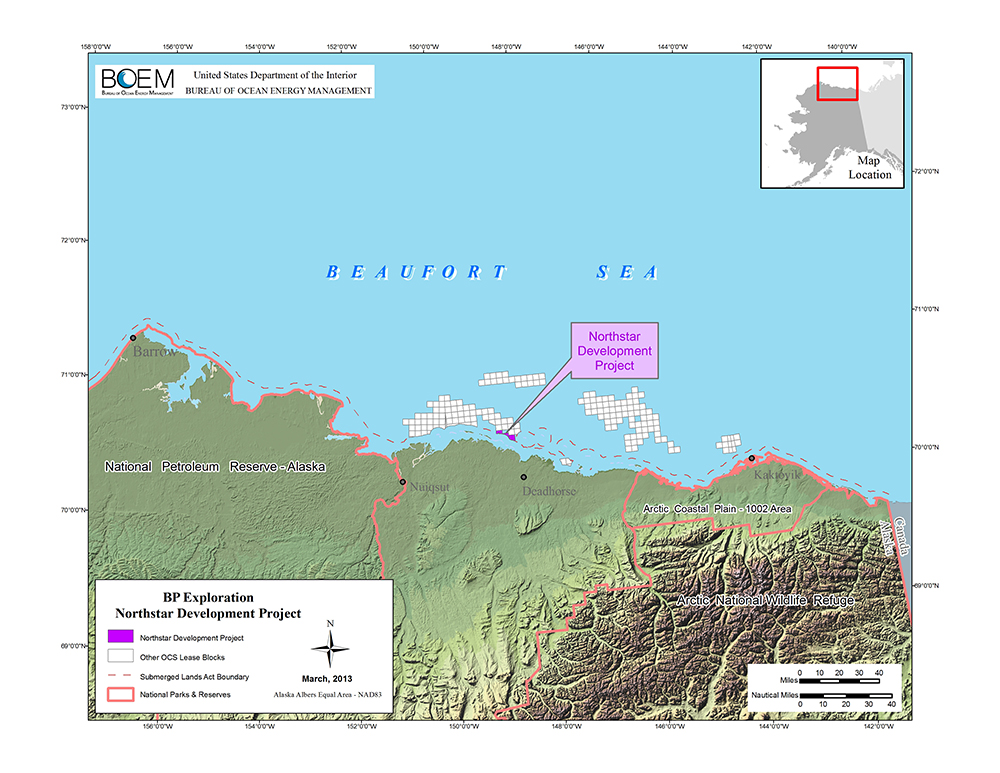
Northstar, Beaufort Sea

The only current Alaskan OCS production is from Northstar, a joint State-Federal Unit in the Beaufort Sea. The production island is in State waters, but 7 of the wells produce from the Federal sector. The field was originally developed by bp, but Hilcorp is the current operator. To date, BSEE has conducted 5 inspections of the facility in 2022, and no incidents of noncompliance (INCs) were identified.

Per BOEM records, 4 companies operate Pacific (California) OCS facilities that are currently producing. Three of those operators have superior 2022 inspection records. No INCs were issued to either Exxon (11 Santa Ynez Unit inspections) or Freeport-McMoRan (24 Platform Irene inspections). Only 2 warning INCs were issued during 12 inspections of Beta Operating Co. platforms Ellen, Elly, and Eureka in the Beta Unit offshore Long Beach.

Marine life on Platform Eureka, from this Hakai article

Read Full Post »

When Congress seems slow to solve problems, it may be only natural that those in the Executive Branch might seek to take matters into their own hands. But the Constitution does not authorize agencies to use pen-and-phone regulations as substitutes for laws passed by the people’s representatives.

Justice Gorsuch in concurrence

Capping carbon dioxide emissions at a level that will force a nationwide transition away from the use of coal to generate electricity may be a sensible “solution to the crisis of the day.” New York v. United States, 505 U. S. 144, 187 (1992). But it is not plausible that Congress gave EPA the authority to adopt on its own such a regulatory scheme in Section 111(d). A decision of such magnitude and consequence rests with Congress itself, or an agency acting pursuant to a clear delegation from that representative body.

Justice Roberts for the majority

At first glance, the SCOTUS decision would seem to affect the regulation of GHG emissions on the OCS and possibly the Lease Sale 257 decision (now being appeal), which was based on BOEM’s failure to estimate the effect of reduced OCS production on GHG emissions outside the US.

Read Full Post »

Good response from Exxon to the White House letter.

In the short term, the U.S. government could enact measures often used in emergencies following hurricanes or other supply disruptions — such as waivers of Jones Act provisions and some fuel specifications to increase supplies. Longer term, government can promote investment through clear and consistent policy that supports U.S. resource development, such as regular and predictable lease sales, as well as streamlined regulatory approval and support for infrastructure such as pipelines.

Exxon

Perhaps Exxon will return to the Gulf of Mexico if the Administration commits to regular and predictable oil and gas lease sales. The company hasn’t drilled a well in the Gulf since 2019.

The longer API letter comments on the fundamentals of refining markets and operations while also addressing the Administration’s “end fossil fuel rhetoric” and negative regulatory signals. Who would want to make major refinery investments under these circumstances?

Read Full Post »

IG Report

We determined that over approximately 5 years, the energy company’s venting and flaring activities exceeded regulatory limits without the required approvals, resulting in a loss of Federal mineral royalties and resources. More specifically, we identified approximately 229,066 MCF of vented and flared natural gas as suspicious or exceeding the allowable amount across four platforms in the Gulf of Mexico between January 2014 and April 2020. We presented our findings to ONRR, which assisted us in analyzing the energy company’s venting and flaring activities and determining the amount of lost Federal mineral royalties. Based on this analysis, ONRR submitted and secured a proof of claim in the amount of $712,857.82 for unpaid mineral royalties during the energy company’s bankruptcy proceeding.

OIG report 6/13/2022

Comments:

  1. The report doesn’t name the company, but one can make an educated guess based on some of the information provided (e.g. number of platforms the company operated, bankruptcy proceedings, etc.)
  2. The regulator usually finds out about false or misleading recordkeeping. Reports from employees, anonymous or otherwise, are a common source of such charges, as was the case here. (In my District in California, a toolpusher informed us that BOP pressure test records were being falsified. This led to multiple felony convictions.)
  3. The IG’s recommendations to BSEE and ONRR are reasonable and appropriate:
    1. Examine venting and flaring reports for patterns that may reflect violations or amounts that exceed permissible limits.
    2. Develop a process to ensure that royalties are being paid for improperly flared or vented gas.
  4. As BOE has previously reported, available public flaring data do not match. These data inconsistencies should be addressed.
  5. BSEE/ONRR should make more detailed flaring/venting data publicly available so differences between facilities and sectors (e.g. deepwater vs. shelf) can be assessed. Efforts should also be made to post these data in a more timely manner. Data for 2021 are still not available.

Read Full Post »

Department of the Interior spokesperson: “there are 10.9 million acres of offshore federal waters already under lease to industry,” and “of those, the industry is not producing on more than three-quarters (75.7% or 8.26 million acres).”

Fox Business

As if the preventable expiration of the 5 year leasing program wasn’t bad enough, we get to hear the non-producing leases bit yet again. This pitch was popularized during the oil embargoes in the 1970’s and resurfaces whenever it is deemed to be politically helpful.

New comments:

Old comments:

  • 539 days since the last US offshore oil and gas lease sale
  • 182 lease sales since 1954, but none since 2020
  • Only 0.5% of US offshore land is leased for oil and gas exploration and production (assuming commercial quantities of oil and gas are discovered).
  • When you acquire a lease, you are not purchasing oil and gas. You are acquiring the right to explore for, and hopefully produce, those resources. Most leases will never produce.
  • Drilling strategies are linked to geophysical data and geologic information obtained in drilling other wells in the area and region.
  • Leases expire if they are not producing by the end of the lease term, which is 5 to 10 years depending on location.
  • You pay bonuses for all leases and annual rental fees for non-producing leases. None of these payments are returned if no discoveries are made.
  • US offshore leases are among the smallest in the world, only a fraction of the sized of those offered by most other nations with offshore oil and gas programs. This complicates exploration and often makes development contingent on the acquisition of additional tracts at future sales.
  • Oil is where you find it, not where you or the government think it is or want it to be.

Read Full Post »

Background:

Questions:

  • What are the costs per ton of offshore carbon sequestration including emissions collection, offshore wells and platforms, the associated pipeline infrastructure, ongoing operational and maintenance costs, and decommissioning?
  • What is the timeframe given that the starting point is likely years away?
  • How long would CO2 sequestration continue.
  • Who pays? Polluters? Federal subsidies? Tax credits?
  • Who is liable for:
    • safety and environmental incidents associated with these projects?
    • CO2 that escapes from reservoirs, wells, and pipelines (now and centuries from now)?
    • decommissioning?
    • hurricane preparedness and damage?
  • For Gulf of Mexico sequestration, how much energy would be consumed per ton of CO2 injected? Power source? Emissions?
  • To what extent will these operations interfere with other offshore activities?
  • Relatively speaking, how important is US sequestration given:
  • What are the benefits of offshore sequestration relative to investments in other carbon reduction alternatives?
  • Will BOEM conduct a proper carbon sequestration lease sale with public notice (as required by BOEM regulations) such that all interested parties can bid?
    • What will be the lease terms?
    • Environmental assessment?
    • How will bids be evaluated?
  • What happens to the Exxon bids if the Judge’s Sale 257 decision is reversed?
  • What is the status of the DOI regulations mandated in the legislation with an 11/15/2022 deadline?
    • When will we see an Advanced Notice or Notice of Proposed Rulemaking?
    • Given that DOI has no jurisdiction over the State waters and onshore aspects of these projects, what is the status of parallel regulatory initiatives?
  • Finally and most importantly, how does drilling offshore sequestration wells instead of exploration and development wells increase oil and gas production?
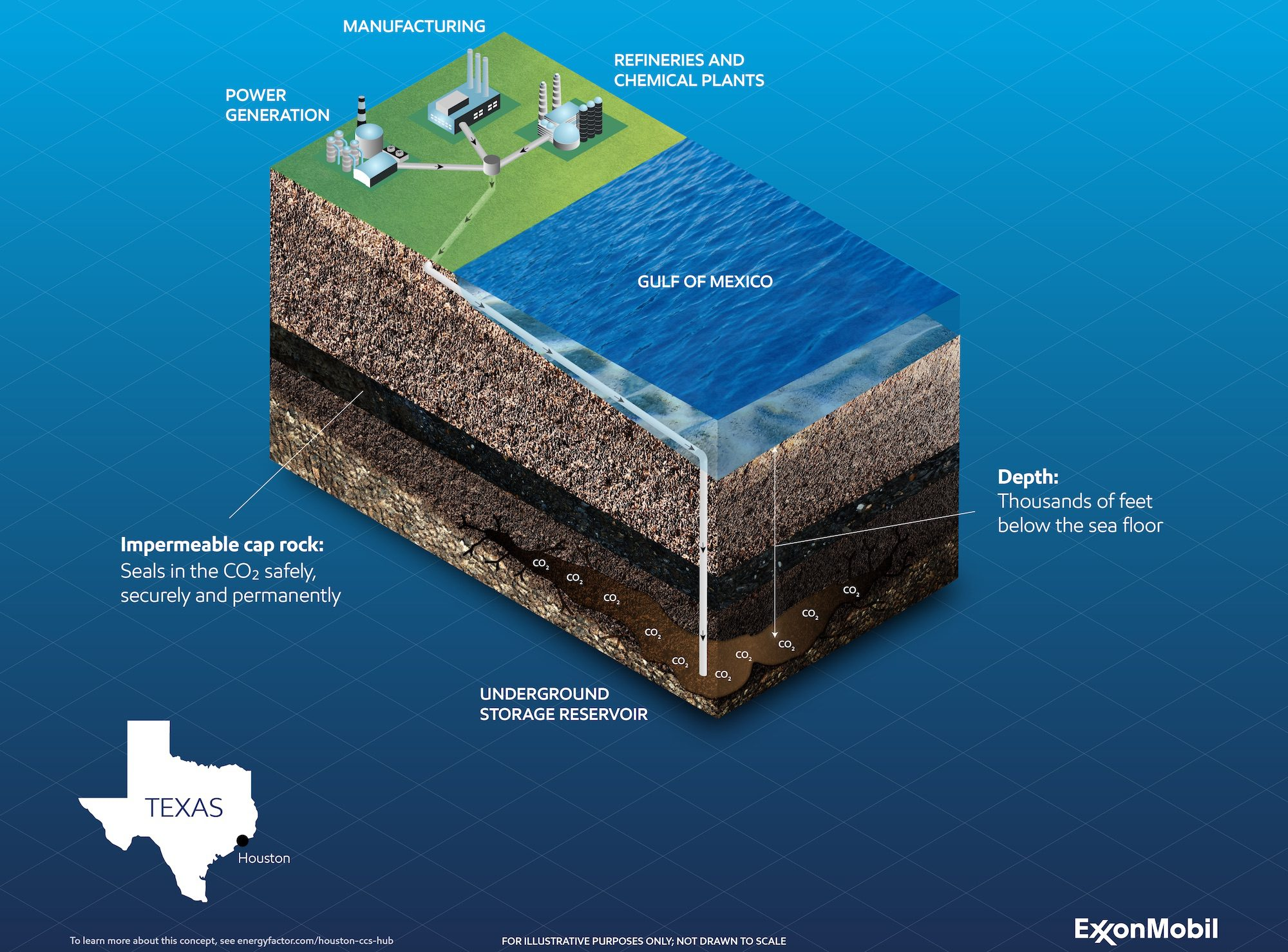
highly simplified conceptual diagram

Read Full Post »

« Newer Posts - Older Posts »