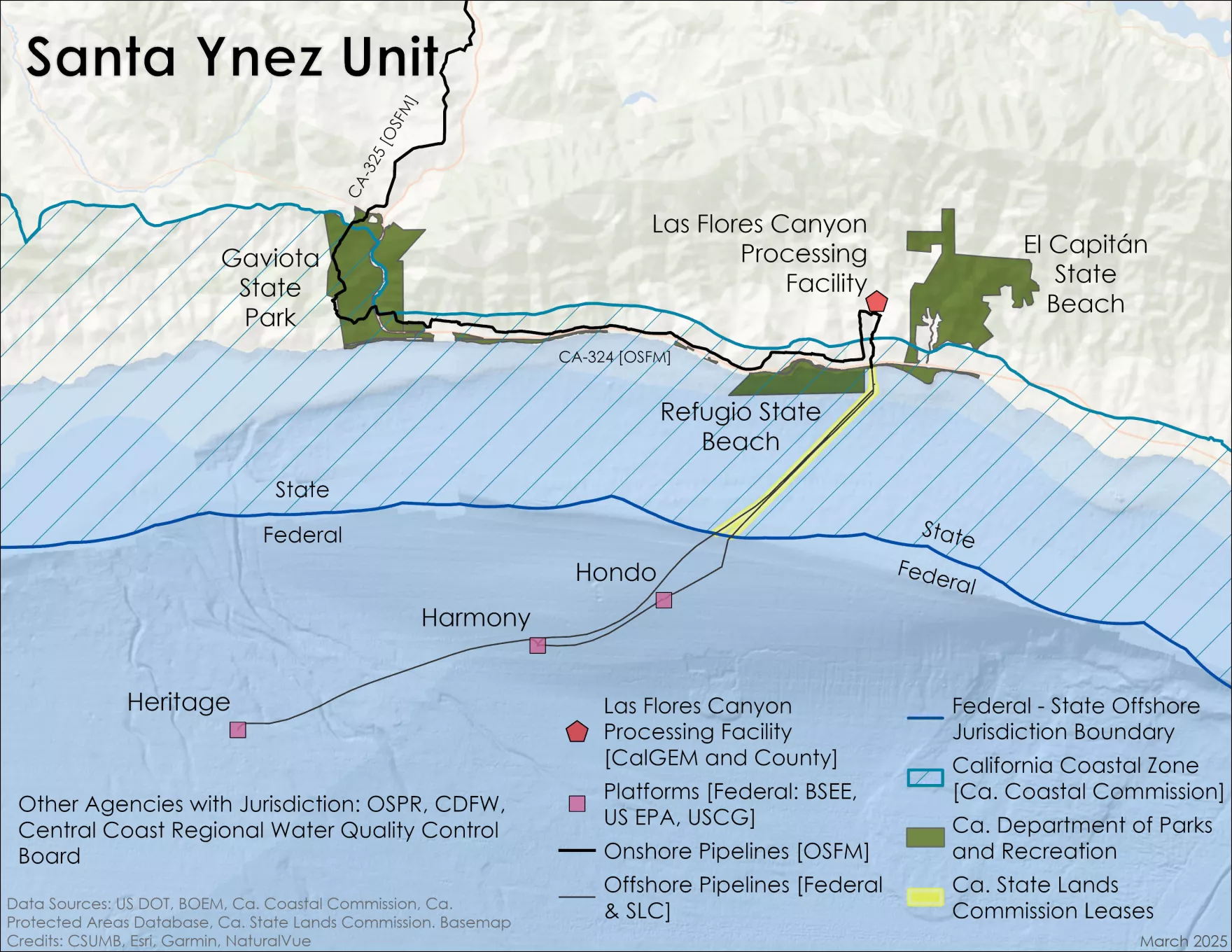
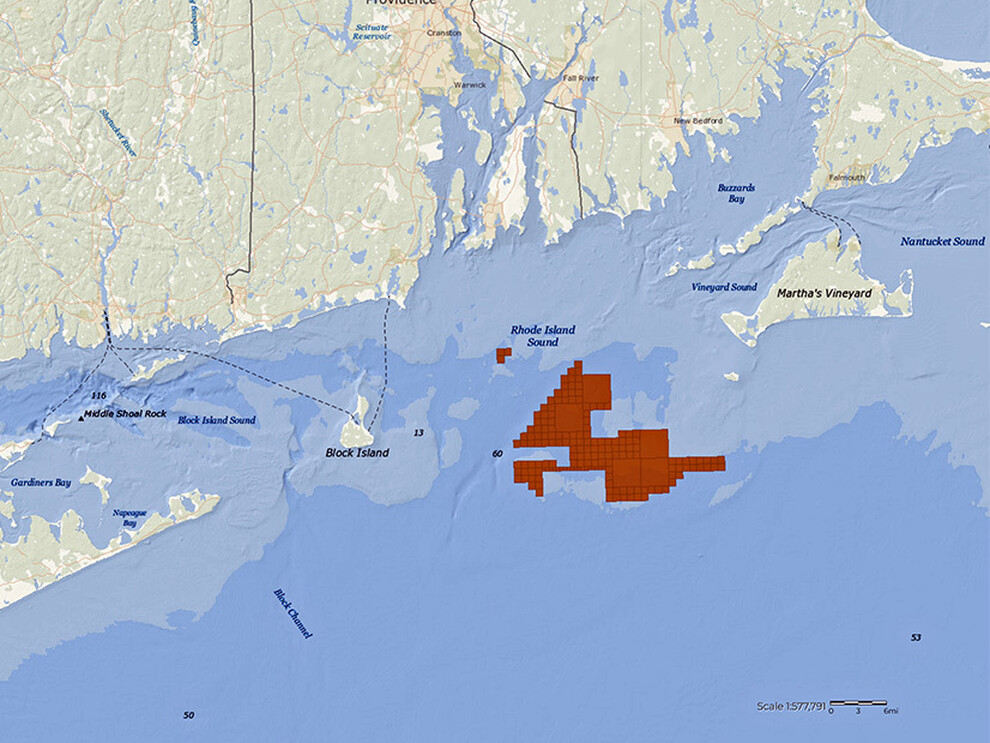
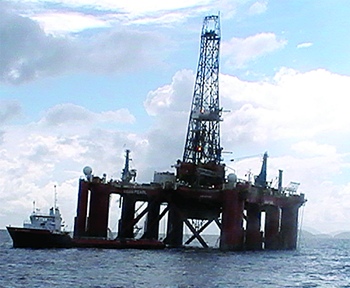
“Exxon spinoff Sable Offshore faces seven barriers to restart its pipeline, idled since a major oil spill in 2015. One of those approvals needs to come from the California Coastal Commission, which Sable CEO Jim Flores criticized for its “Teflon” “eco-Nazi attitude” in a leaked call recording newly obtained by Hunterbrook. Because of these barriers — and despite Trump Administration intervention — Sable’s project, originally scheduled to go online in Jan 2024, may never sell oil. At least not under the ownership of Sable ($SOC), which is quickly running out of cash.“
Exxon’s options per Hunterbrook:
The Exxon purchase agreement gives Exxon a free reassignment option: If Sable fails to “restart production” by Mar. 31, Exxon can demand reassignment of the assets within 180 days, “without reimbursement of any Purchaser costs or expenditures.”
In other words: Exxon can just take back the asset. For free.
And if Sable’s regulatory pathway is really just delayed, not denied — as Sable claims — that may be a more appealing proposition for Exxon than it once was.
Or, perhaps, Exxon will decide to retire the project, recognizing the Sisyphean path to production. (Exxon already took a $2.5 billion write-down as part of exiting offshore operations in California.)
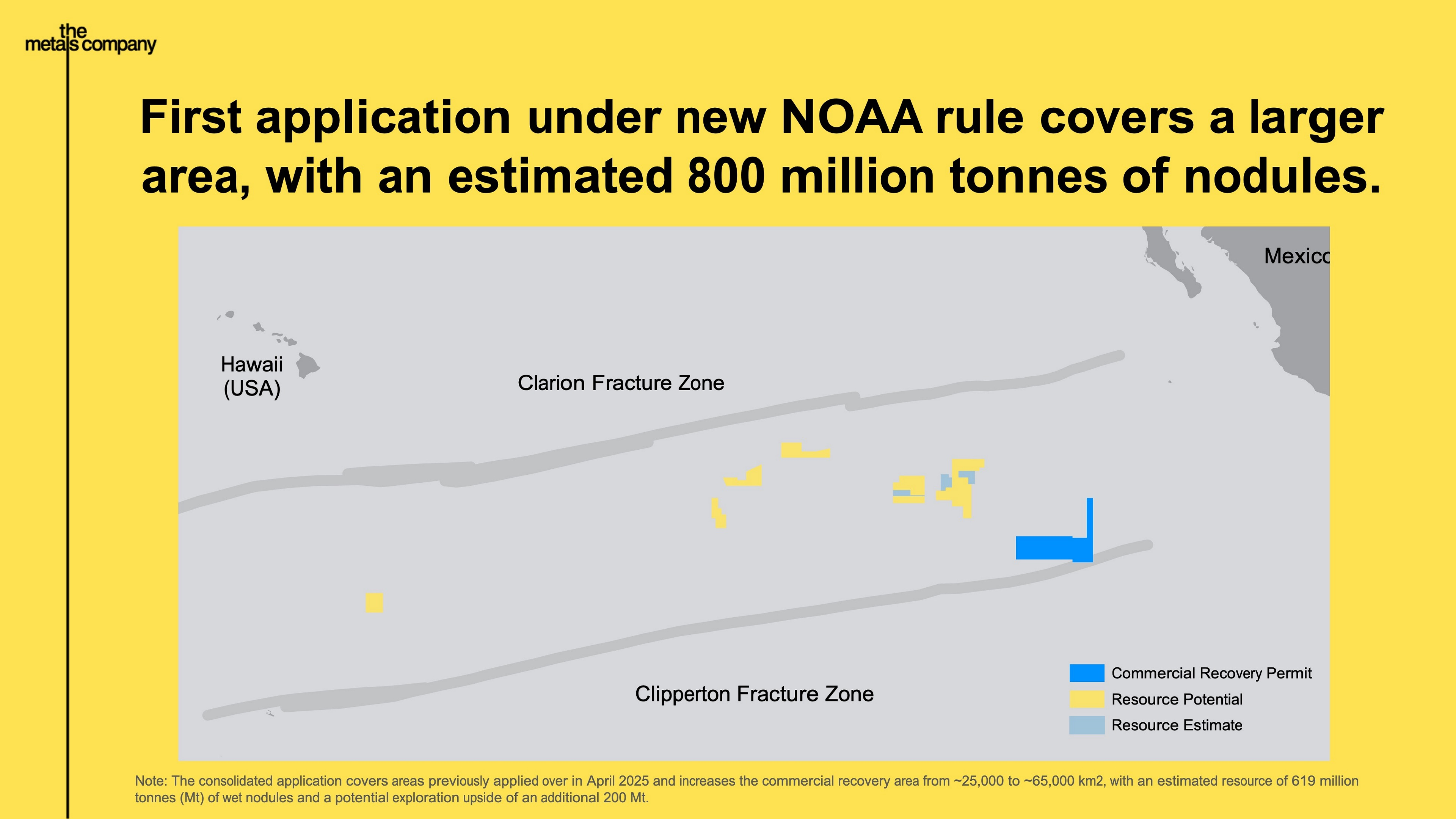
“The objective of this rule is to provide the option for a consolidated application streamlining the process for qualified applicants.”
Reflecting on advances in environmental science, seafloor mapping, and offshore mineral-collection technologies, the revised rule allows qualified companies that gather the necessary site information to proceed to the collection phase. Deepsea mining is now more closely aligned with offshore oil and gas in that companies acquiring licenses are able to proceed to production after regulatory approvals.
The preamble nicely summarizes the opposition to the rule for environmental and jurisdictional reasons:
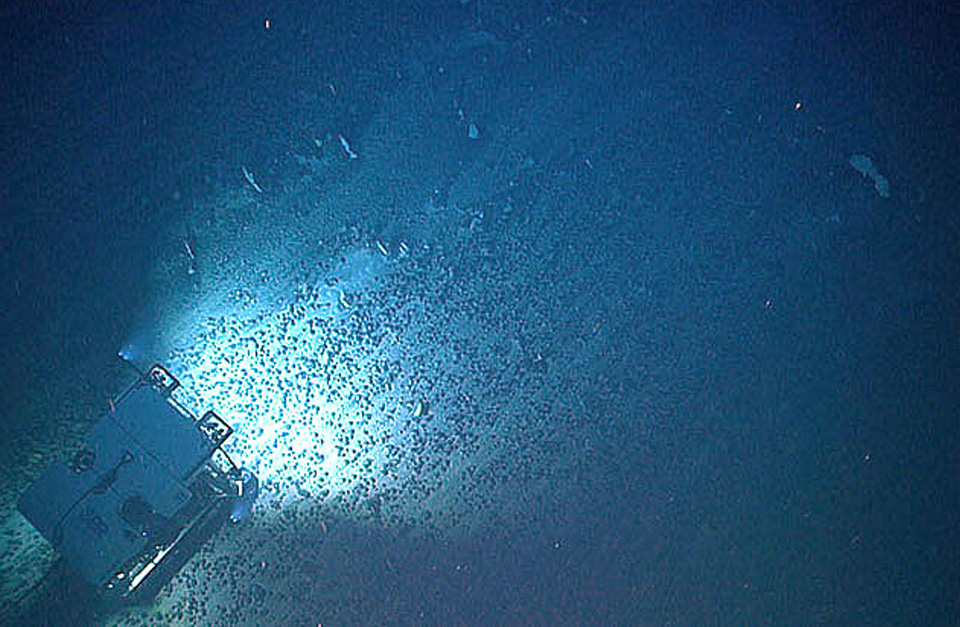
“General opposition to deep seabed mining was expressed for a variety of stated reasons, including, but not limited to the following assertions: effects on the environment; effects on seabed habitat and to marine species including undiscovered species especially in the Clarion-Clipperton Fracture Zone; harm to cultural resources and Pacific Islander livelihoods and beliefs; inadequate scientific research and information; inadequate resource protection measures and regulations; uncertainties regarding environmental impacts and a nascent industry; significant technical challenges to deep seabed mining; opposition to deep seabed mining from many U.S. states, countries, and global companies; that deep seabed mining is contrary to international agreements and efforts; the need for moratoria; that deep seabed minerals are not needed to meet U.S. demand for critical minerals and domestic sources and recycling of such minerals should be used instead; the U.S. needs to focus on building domestic refineries; using renewable and alternative resources rather than deep-sea minerals; and jeopardizing vital carbon sinks.”
“Commenters stated that acting unilaterally on deep seabed mining undermines the ISA (International Seabed Authority) process, international norms, global stability, and the rule of law, and that it could result in harm to protected areas, such as Areas of Particular Environmental Interest designated by the ISA.”
“The Santa Barbara Channel has been dubbed the Galápagos of North America” ~ Maggie Hall, Environmental Defense Center attorney. (comments: 1. clever branding ala calling ANWR “America’s Serengeti!;” 2. no natural oil seeps in the Galapagos Islands; 3. 130 years of oil production history in the Channel)
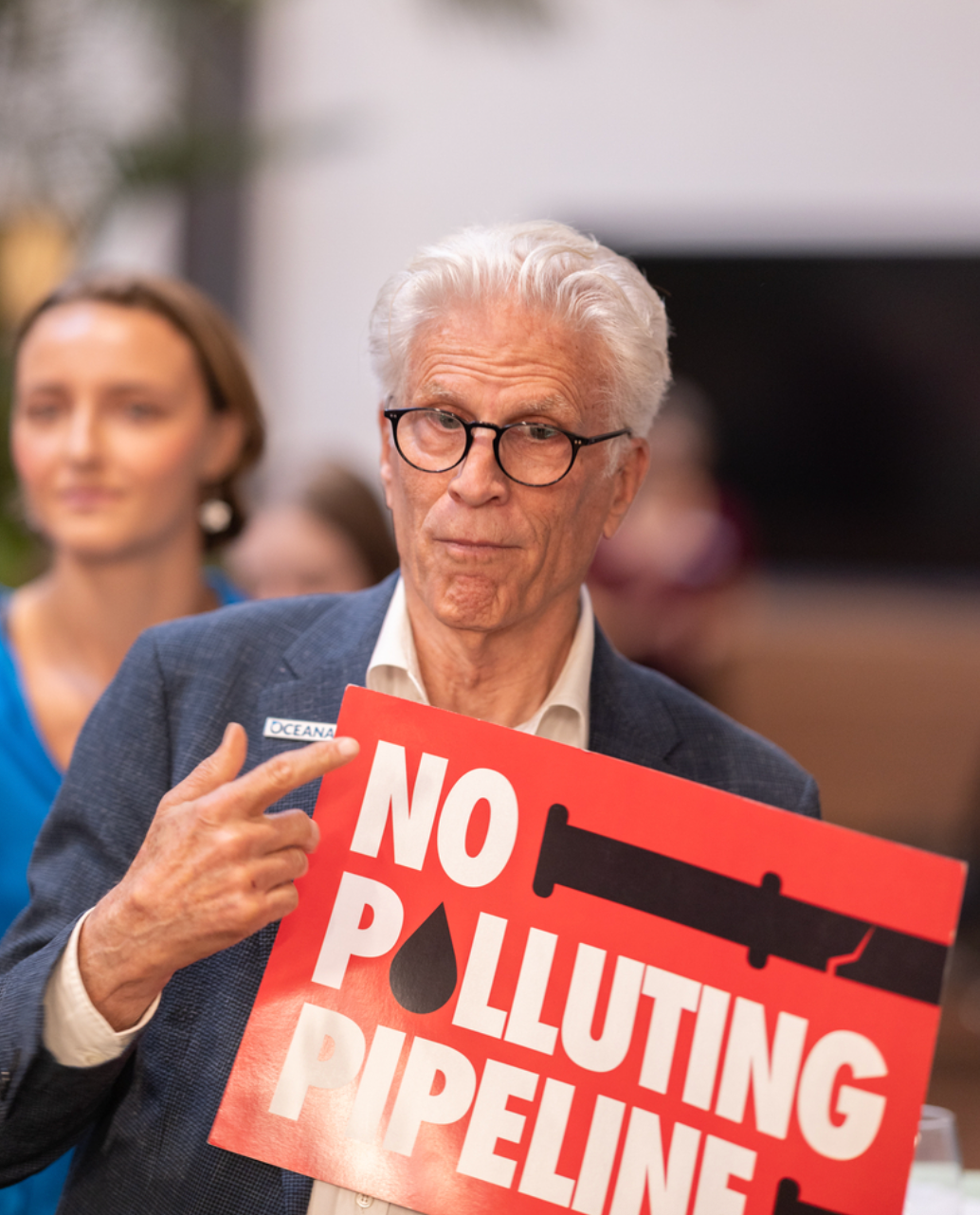
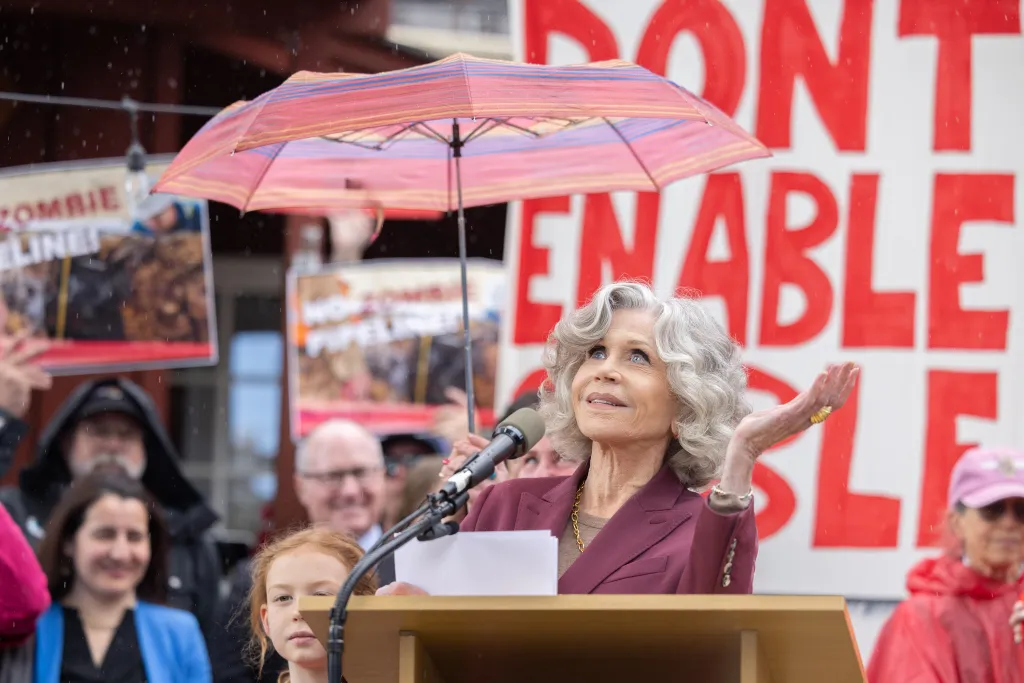
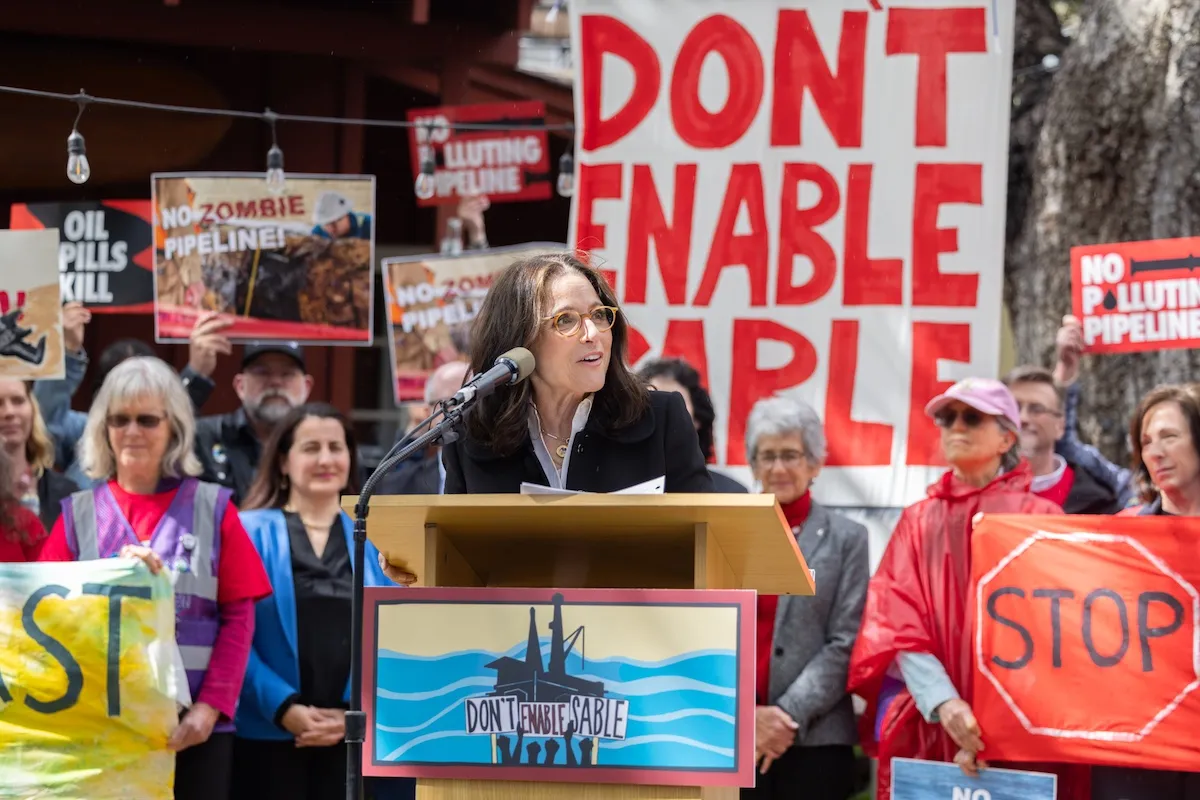
Sable opponents organize entertaining rallies featuring famous celebrities:
Ted Danson Jane FondaJulia-Louis Dreyfus
Meanwhile, Sable has some starpower of its own with strong public support from golfer Phil Mickelson.
Senior Federal officials and key agencies are outspoken Sable supporters:
“Only in California! Newsom is blocking oil production off California’s coast from reaching their own refineries, driving gasoline prices even higher for Californians! Now, this oil production will have to be shipped elsewhere, lowering gas prices for other areas— just not for California! This is the opposite of common sense!” ~ Energy Secretary Chris Wright
BSEE declared victory 6 months ago: “This is a significant achievement for the Interior Department and aligns with the Administration’s Energy Dominance initiative, as it successfully resumed production in just five months.”
Perhaps most entertaining are the exchanges on X between Sable bulls and short-sellers. A few examples are embedded below:
Listen Lassy, you could take your signing bonus and have $10 million in cash right now. But that’s short term thinking. Once Big Daddy Trump gets the regulations fixed Sable stock will be worth 50, 60, maybe even 100x that. We’ll be sipping Coffee for Wellness on our yachts in… pic.twitter.com/H2le8c0otE
Good luck but this stock & company are train wrecks. I live close to pipeline so state, local opposition to a restart remains steadfast. Here’s latest news, do your homework.https://t.co/ZfKSKwwrcW
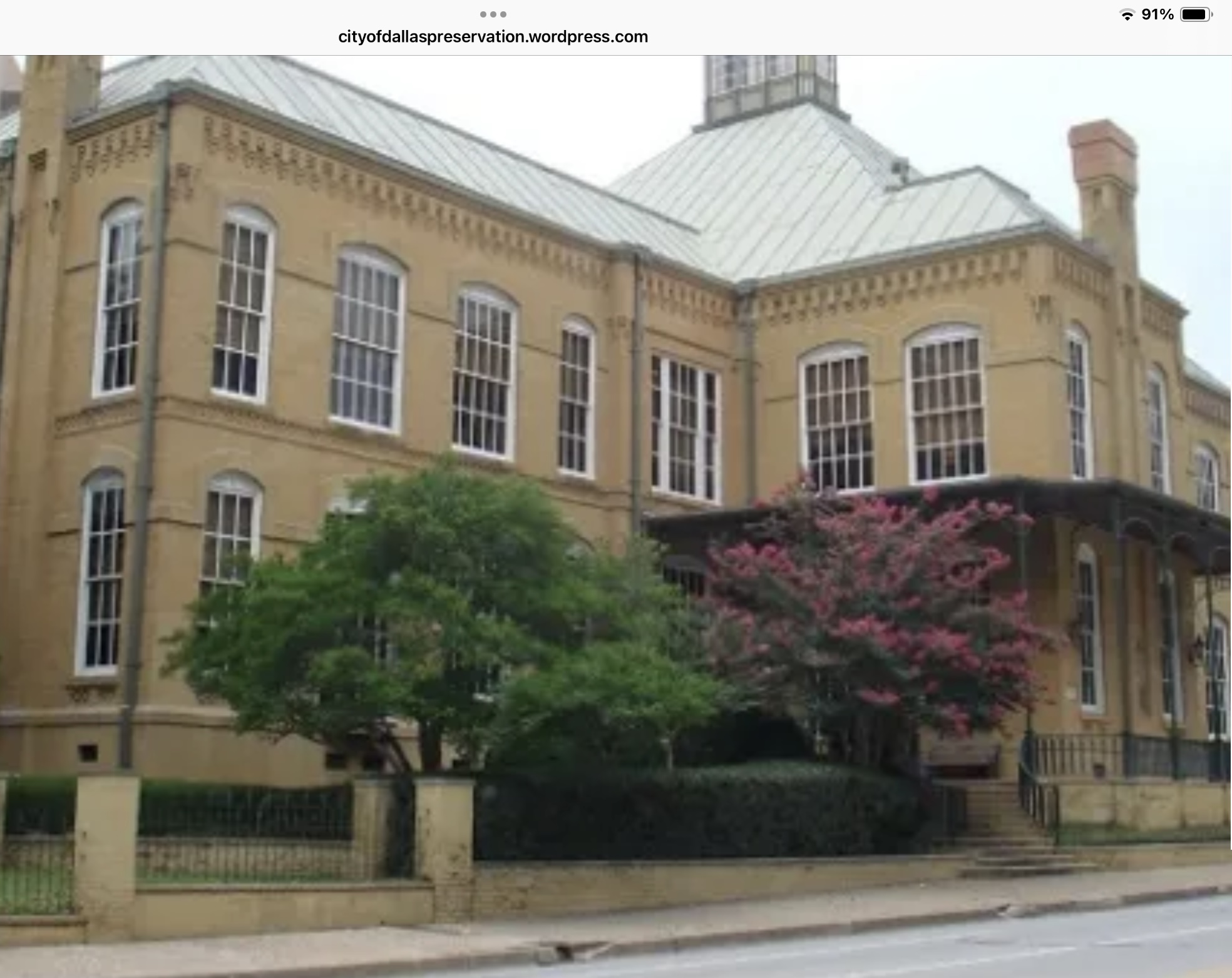
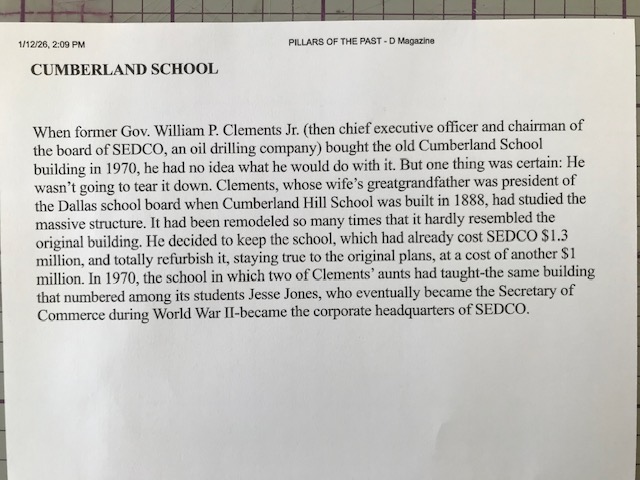
Per JL Daeschler, Sedco’s Far East, North Sea, and South America operations were all run from Dallas in the late 60’s. In 1970, an old schoolhouse became Sedco’s corporate headquarters (see picture and narrative pasted above). Thank you Bill Clements for saving this historic building – what a beautiful headquarters for the challenging and booming offshore industry!
JL: After 2 years with SEDCO in Miri, East Malaysia (1971) I moved to Brownsville Tx. But in 1979 I returned to the old school house in Dallas in secondment to Sedco Hamilton Production Services from Hamilton Brothers Oil & Gas. The main objective of the joint venture was promotion of floating production systems and in particular use of semi sub technology. One project assignment was the BP “Buchan” field in the North Sea. (Note: this work was a precursor to the deepwater floating production units that are now the method of choice for deepwater development in the Gulf.)
JL is pictured (right below) on the Sedco 135 during operations offshore East Malaysia.
Wisdom from JL: Rules were pretty simple, as you can read on the rig wall in the picture. No App, pin, or password…. In fact no internet and mobile phone, just a radio operator.
Safety was grounded in the attitude and respect of 100 + people living and working together (47 working / 47 sleeping and 6 managing and protecting others. More difficult was the integration of the visiting contractors, logging/cementing / diving / VIPs. (Still true today!) No division amongst ages, nationality ( sometimes 6 of them) religions, Job position , and ethnicity. Just get along and do what you get paid for! Safety issues were dealt with immediately with short, unscheduled “toolbox” meetings – less reporting and more fixing.
(As an aside, Dan Bourgeois and I were on assignment to Petronas in 1977 and visited their East Malaysian operations. Does anyone in Petronas remember us? 😉)
Orsted has a lease contract, and no matter where you stand on offshore wind, you have to have a compelling case to halt a project that is in the advanced stages of development.
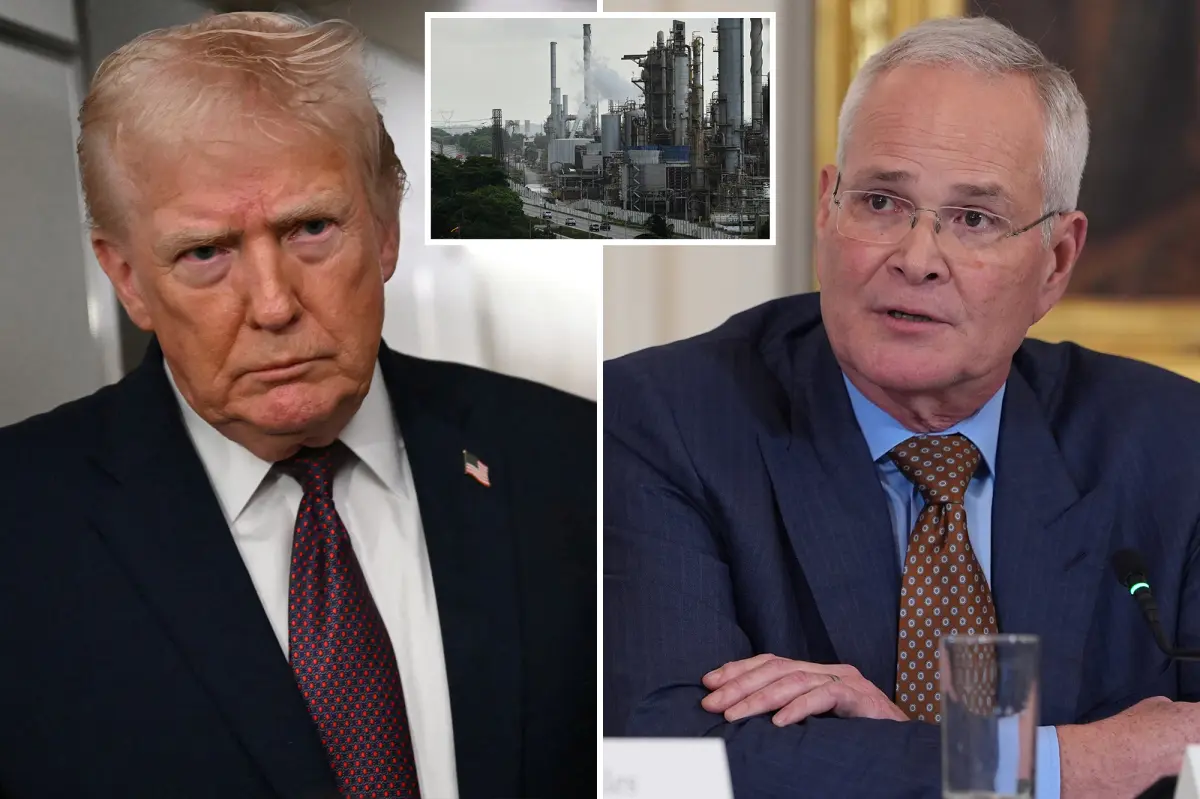
Unsurprisingly, President Trump was not particularly pleased with Darren Woods’ “uninvestable” quote, the main media takeaway from Friday’s meeting on redevelopment of Venezuela’s oil and gas resources.
Exxon CEO Darren Woods: “If we look at the legal and commercial constructs and frameworks in place today in Venezuela — today, it’s uninvestable.”
The response from President Trump: “I didn’t like Exxon’s response,” Trump said to reporters on Air Force One as he departed West Palm Beach, Florida. “They’re playing too cute.” He told reporters he was inclined to deny Exxon any role in rebuilding Venezuela’s oil industry.
If Exxon is now in the President’s doghouse, what does this mean for the Santa Ynez Unit, an Exxon orphan that was adopted by Sable Offshore? Given Sable’s financial challenges, the SYU may soon be returning to Exxon.
Regardless of ownership, an SYU production restart faces strong opposition in California and is fully dependent on an assertive and supportive Federal government. Meanwhile, an injunction on SYU production remains in place, and despite rumors to the contrary, Sable confirms they are complying with that order.
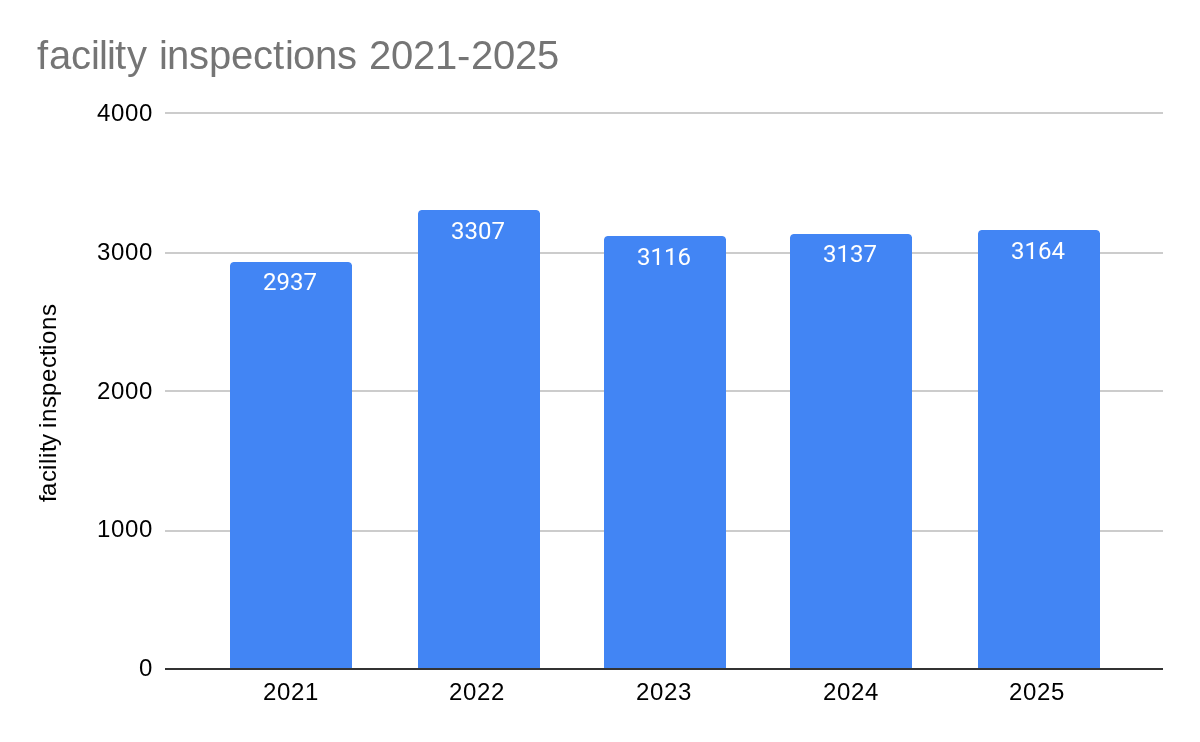
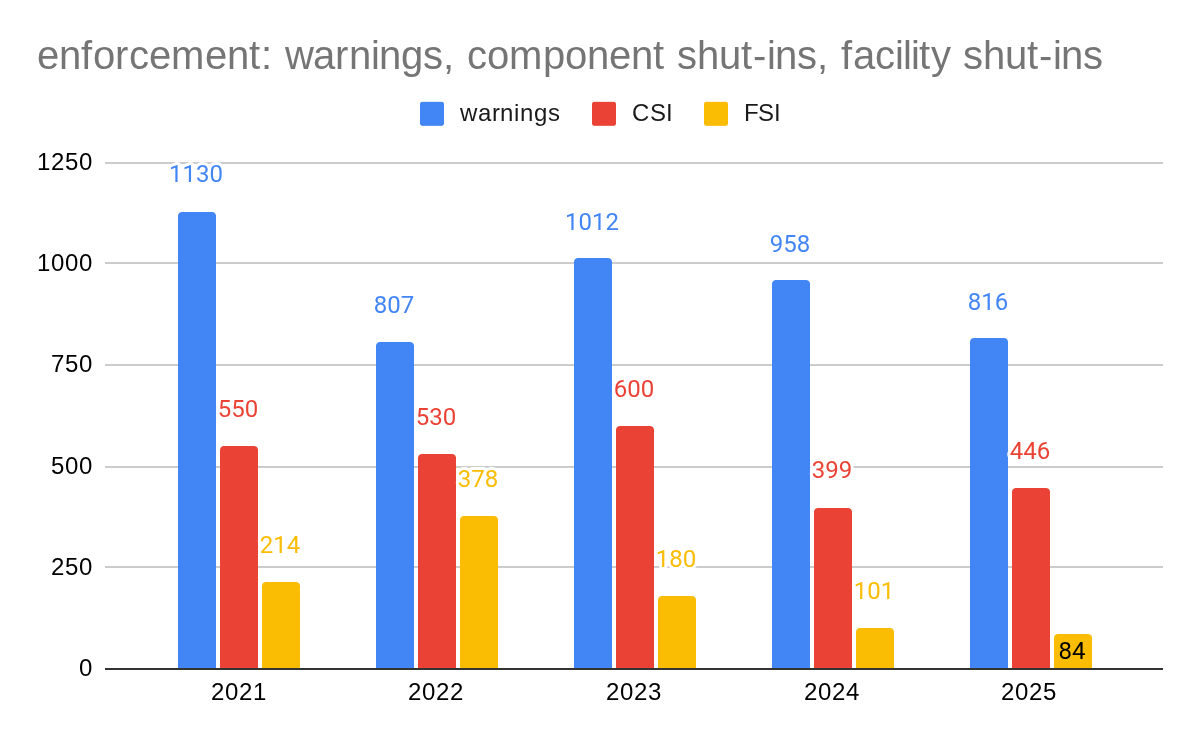
The number of BSEE inspections in 2025 (first chart) remained relatively constant despite the extended government shutdown.
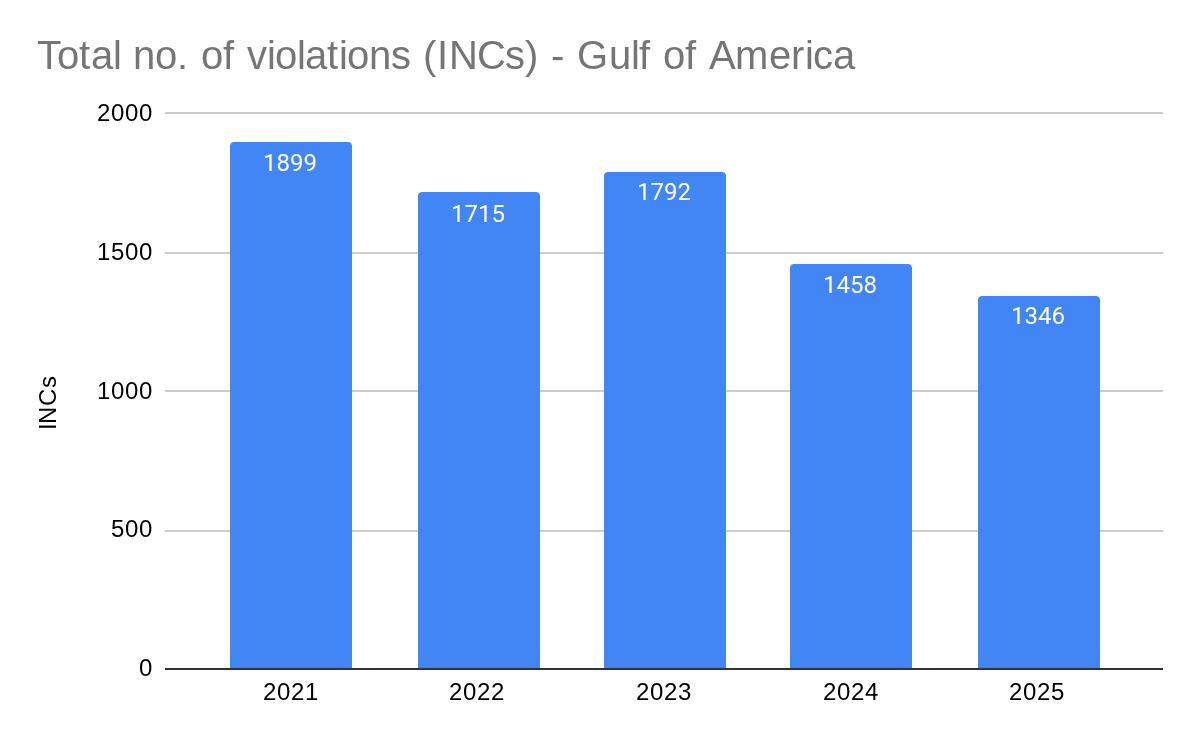
The decline in the number of Incidents of Noncompliance (INCs) in 2025 is encouraging (chart 2).
Given that BSEE’s tables have yet to be updated to include 2024 incidents, let alone 2025, it’s difficult to assess whether there have been similar declines in the number and severity of incidents. We do know that there were no occupational fatalities in 2025. (Note that OCS incident tables were once updated within 30 days at the end of each quarter. The public has a right to timely information on the type of incidents that are occurring, the operating companies, and the resulting casualties, pollution, and property damage.)
Chart 3 shows the decline in INCs by type – warnings, component shut-ins, and facility shut-ins
As is typically the case, a few companies accounted for a disproportionate number of violations, most notably the Cox legacy operators. More on this in a subsequent post.
The top 6 oil producers all had excellent compliance records, as did a leading shelf operator. More to follow.
Sable Offshore, California’s most notorious operator, fared well during 77 inspections of their three platforms in the Santa Barbara Channel.
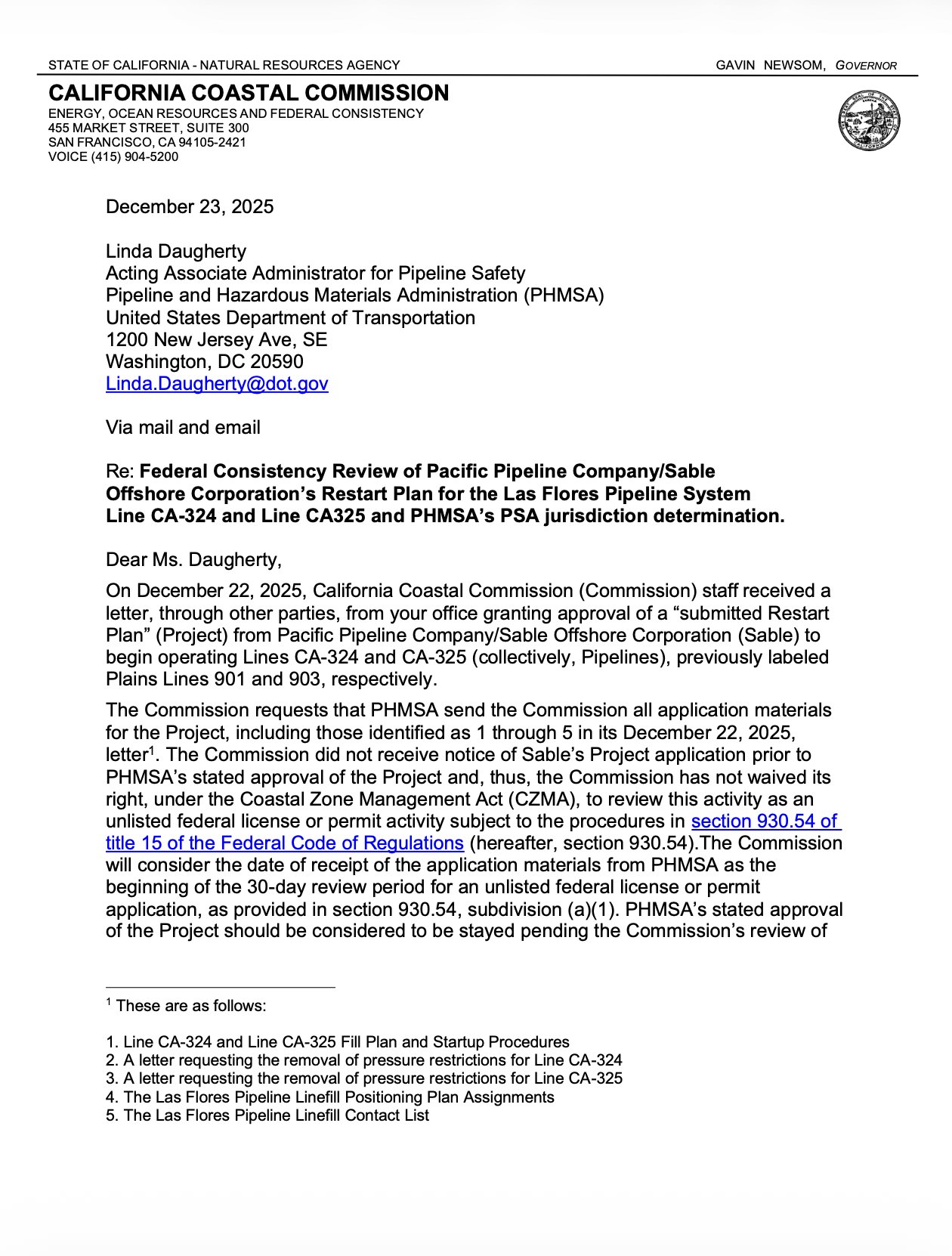
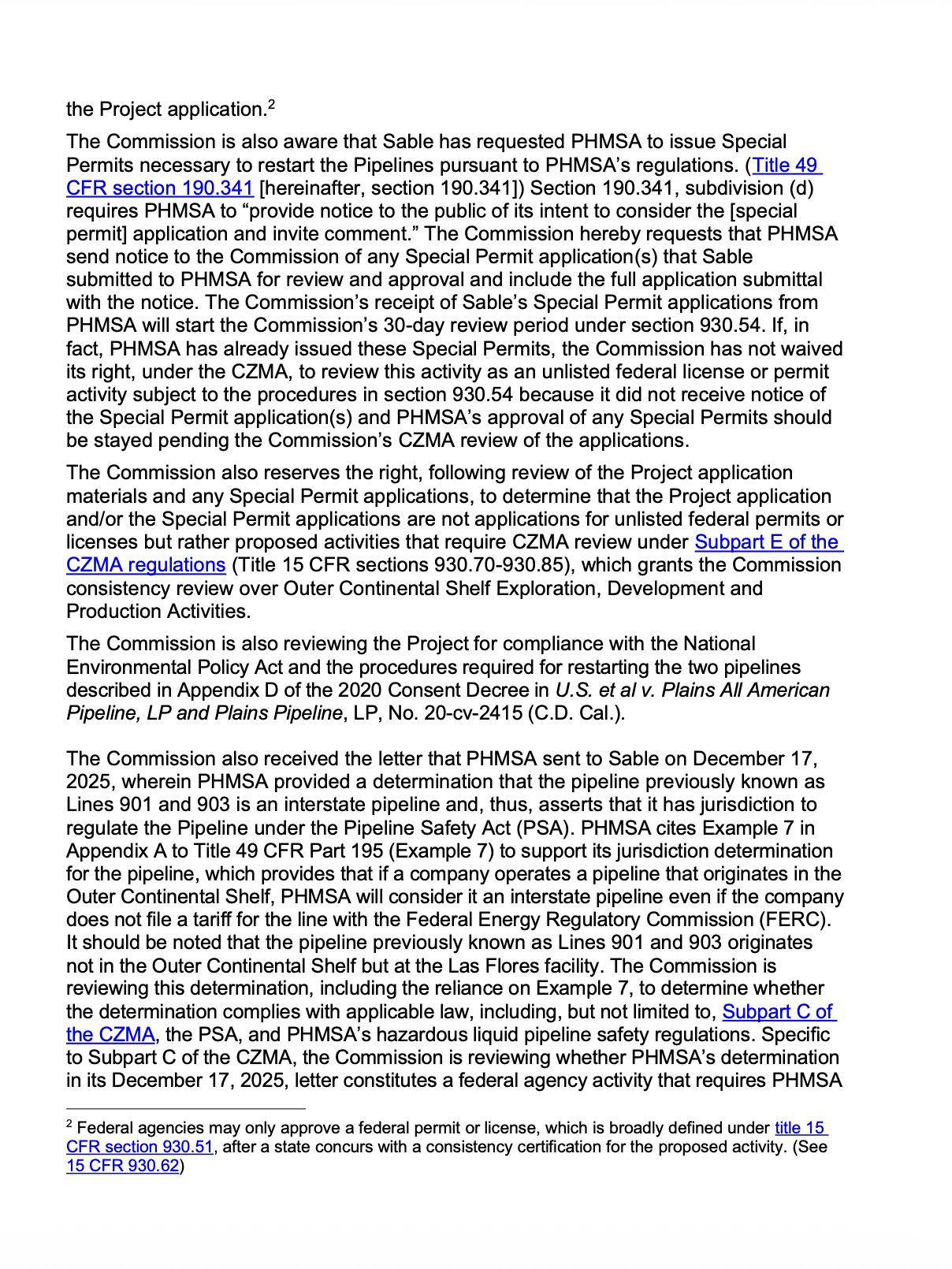
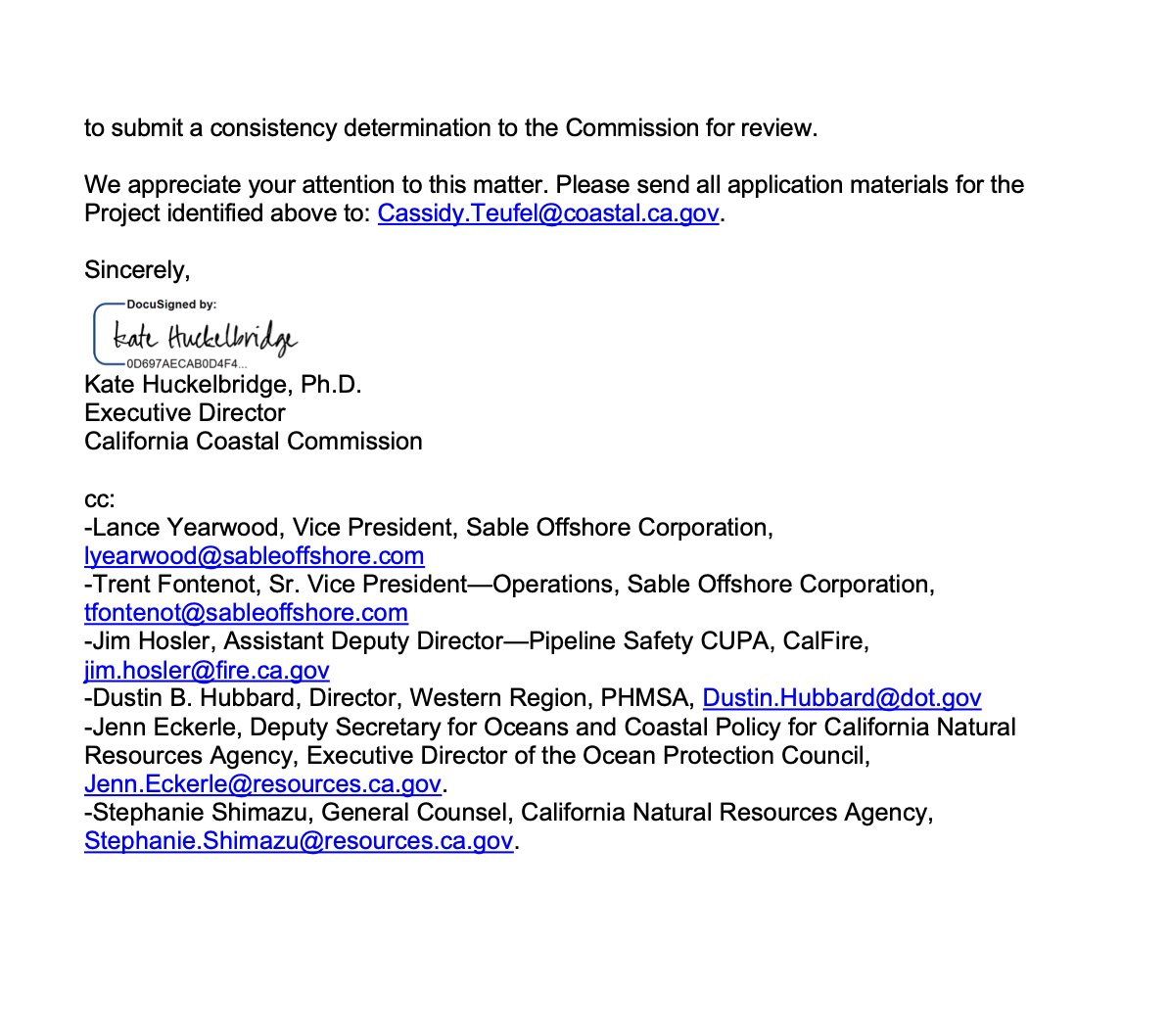
The Commission’s letter to PHMSA is attached (click on pages to enlarge). The CCC asserts the right, pursuant to the Coastal Zone Management Act, to review Sable’s restart/special permit application and further asserts that PHMSA’s special permit should be stayed pending their review.
The Commission also raises NEPA and Consent Decree compliance issues, and implies that PHMSA’s designation of the pipeline as “interstate” is subject to consistency review.
Note: In light of last night’s events, I’m re-posting this 10/13/2025 BOE post.
Nobel Peace Prize winner Maria Corina Machado wisely calls for privatizing Venezuela’s oil and gas industry, which was highly respected prior to the Chavez regime. The national oil company, Petróleos de Venezuela (PDVSA), is now a corrupt arm of the Maduro government.
“The whole Board is responsible for the loss of about 800,000 barrels per day of oil production; for the fraudulent certification of “proven oil reserves” in the Orinoco heavy oil region; for the irregular contracting, with a ghost company, of the offshore drilling barge Aban Pearl for twice the amount really paid to the owners of the barge; for the importing of 180,000 tons of food that later went to rot in Venezuelan ports but provided some of the members of the board with millions of dollars in criminal profits; and in numerous other corrupt practices that are well documented.“
Machado’s oil and gas platform is pasted below. She has a good perspective on the proper role of govt.
Privatization and reactivation of oil and gas production by attracting specialized international and national companies. Venezuela has one of the world’s largest reserves of oil and natural gas. As per the Organization of Petroleum Exporting Countries (OPEC) and the International Energy Agency (IEA), the country has reserves of over 300 billion barrels of oil and 200 trillion cubic feet of natural gas. The goal in this area is to steadily increase oil and gas production in order to leverage the window of opportunity that exists in today’s global demand for hydrocarbons. Achieving this objective will require enormous investments that the Venezuelan State cannot undertake. The solution is to attract private capital, and the strategy to achieve this end is the industry’s privatization. Where appropriate, all the industry’s productive activities will be privatized in order to secure massive private investments and a sustained increase in production, under conditions that guarantee legal certainty and an environment that is attractive for investors. The State will continue to receive fiscal income in the form of royalties and taxes, and will ensure that an operational framework exists in which private companies can increase production in the shortest possible timeframe. A Venezuelan Energy and Petroleum Agency will be established to exercise the role of industry regulator. Oil privatization will allow Venezuela to regain its position as a safe and reliable supplier, and will provide unparalleled investment opportunities in the industry.