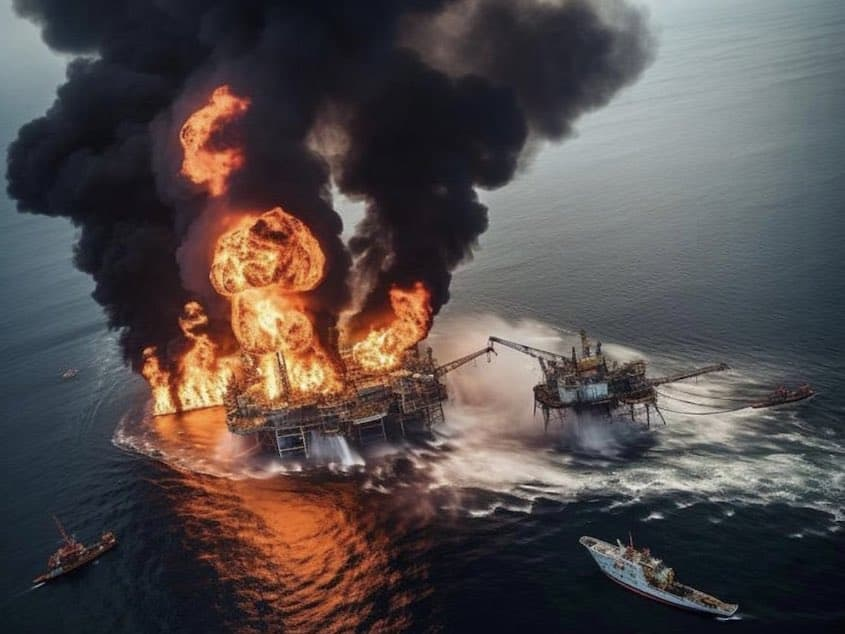
Desde el campo Quesqui en #Huimanguillo, Tabasco, el Director General de #PEMEX, Ing. @OctavioRomero_O, reporta al día de hoy sobre el incendio de ayer en Cantarell.
Los compañeros lesionados se encuentran estables y continúa la búsqueda de la persona desaparecida.
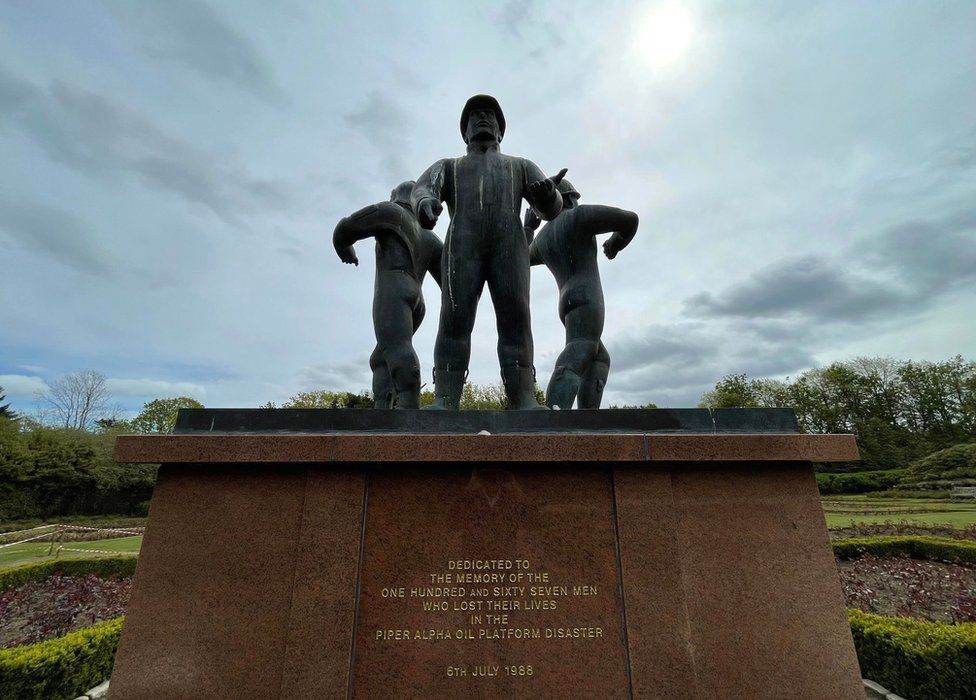
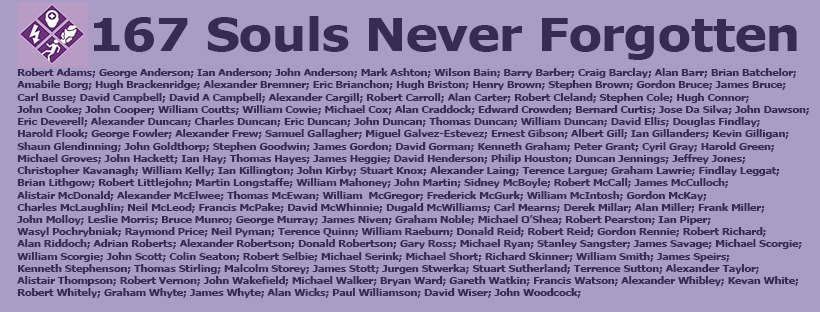
The Piper Alpha fire was the worst disaster in the history of offshore oil and gas operations and sent shock waves around the world. Eight months later another interactive pipeline-platform fire killed 7 workers at the South Pass 60 “B” facility in the Gulf of Mexico. A US Minerals Management Service task group reviewed the investigation reports for both fires and recommended regulatory changes with regard to:
the identification and notification procedures for out-of-service safety devices and systems,
location and protection of pipeline risers,
diesel and helicopter fuel storage areas and tanks,
Lord Cullen’s comprehensive inquiry into the Piper Alpha tragedy challenged traditional thinking about regulation and how safety objectives could best be achieved, and was perhaps the most important report in the history of offshore oil and gas operations. Per Cullen:
“Many current safety regulations are unduly restrictive because they impose solutions rather than objectives. They also are out of date in relation to technological advances. Guidance notes lend themselves to interpretations that discourage alternatives.There is a danger that compliance takes precedence over wider safety considerations and that sound innovations are discouraged.“
Cullen advocated management systems that describe the safety objectives, the system by which those objectives were to be achieved, the performance standards to be met, and the means by which adherence to those standards was to be monitored. He called for safety cases that describe major hazards on an installation and provide appropriate safety measures. Per Cullen, each operator should be required in the safety case to demonstrate that the safety management systems of the company and the installation are adequate to assure that design and operation of the platform and its equipment are safe.
In 1979 Gulf of Mexico oil production had declined to 263 million barrels and many believed that further declines were inevitable. 40 years later, a record 693 million barrels were produced.
Onshore, lateral drilling and hydraulic fracturing capabilities are continuing. As a result, Exxon and others are predicting projecting higher recovery factors in the Permian Basin. Per Exxon CEO Darren Woods: “We are beginning to see the signs of some very promising new technologies that will significantly improve recovery.”
Opportunity + Ingenuity ➡ Energy Independence + Prosperity
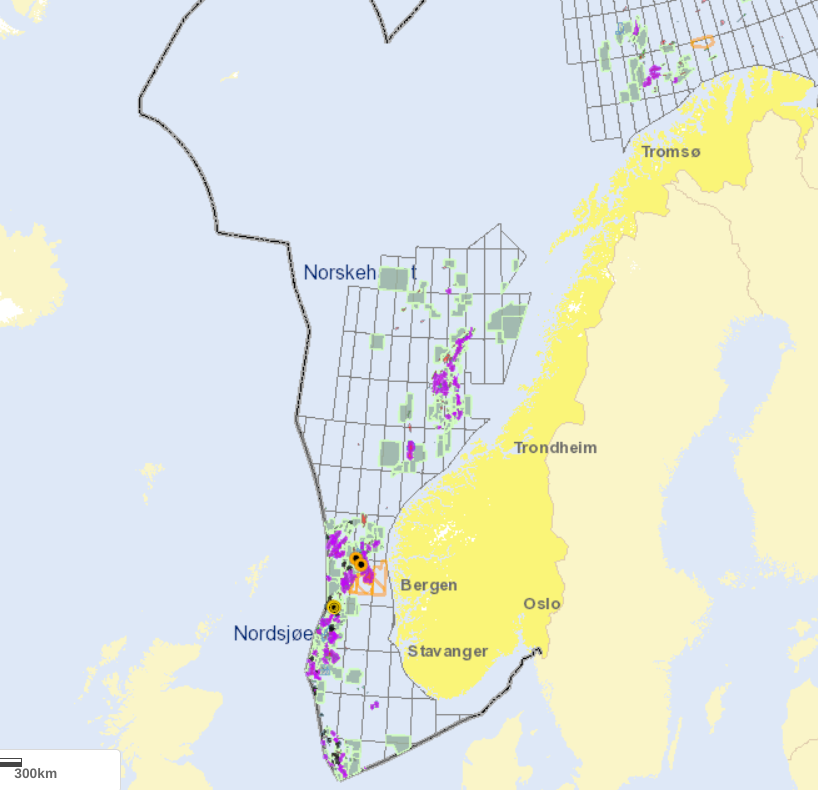
OSLO, June 28 (Reuters) – Norway’s government said on Wednesday it has given approval for oil companies to develop 19 oil and gas fields with investments exceeding 200 billion Norwegian crowns ($18.51 billion), part of the country’s strategy to extend production for decades to come.
“These are projects that will contribute to a continued high and stable output from Norway’s continental shelf as well as employment and value creation,” Minister of Petroleum and Energy Terje Aasland told a news conference.
The Bureau of Ocean Energy Management (BOEM) today announced proposed changes to modernize financial assurance requirements for the offshore oil and gas industry, in order to better protect American taxpayers from incurring the costs associated with the oil and gas industry’s responsibility to decommission offshore wells and infrastructure, once they are no longer in use. The proposed changes will publish in the Federal Register on June 29, which will open a 60-day public comment period that ends on August 28.
It looks like BOEM punted on the contentious issue of considering predecessors when determining financial assurance requirements:
The proposed regulatory changes would provide additional clarity and reinforce that current grant holders and lessees bear the cost of ensuring compliance with lease obligations, rather than relying on prior owners to cover those costs. BOEM is interested in public comments on the costs and benefits of considering predecessors when determining how much financial assurance a company must provide.
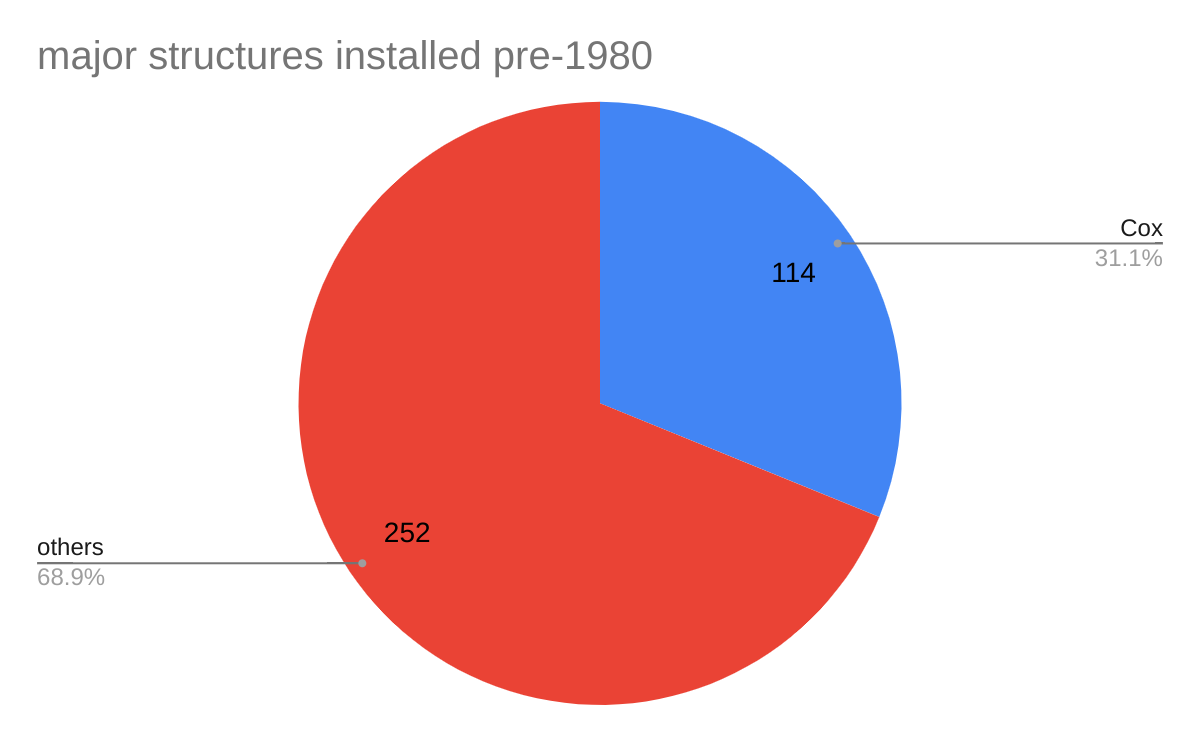
As illustrated in the charts below, Cox has the distinction of being the Gulf of Mexico (world?) leader in aging offshore platforms. Per BOEM data, Cox (includes affiliates Energy XXI GOM and EPL) operates more than 1/4 of all GoM platforms. 44% of these platforms were installed prior to 1980, 114 of which are major structures (defined in notes below). 27 of these major structures were installed prior to 1960!
Notes: (1) A major structure contains at least 6 well completions or more than 2 pieces of production equipment. (2) The platform numbers in an earlier post are incomplete in that they include only structures with helidecks.
From the outset, deepwater oil and gas exploration and development were not dependent on divers or manned submersibles – far too dangerous. UUVs are used for maintenance, inspections, surveys, positioning equipment, and other operational purposes.
UUV technology advanced with demand as deepwater discoveries drove worldwide exploration and production. In 2021, deepwater (>1000′) leases accounted for 93% of GoM oil production and 76% of the gas production. For comparison, in 1985 only 6.0% of the oil and 0.8% of the gas were from deepwater leases.
In 2021, TechnipFMC won NOIA’s Safety in Seas Award for the Gemini® ROV System which can dive for a month at a time and change tools subsea instead of on deck. The Gemini® ROV System also includes a blowout preventer intervention system that supports well control and pipe shearing functions.
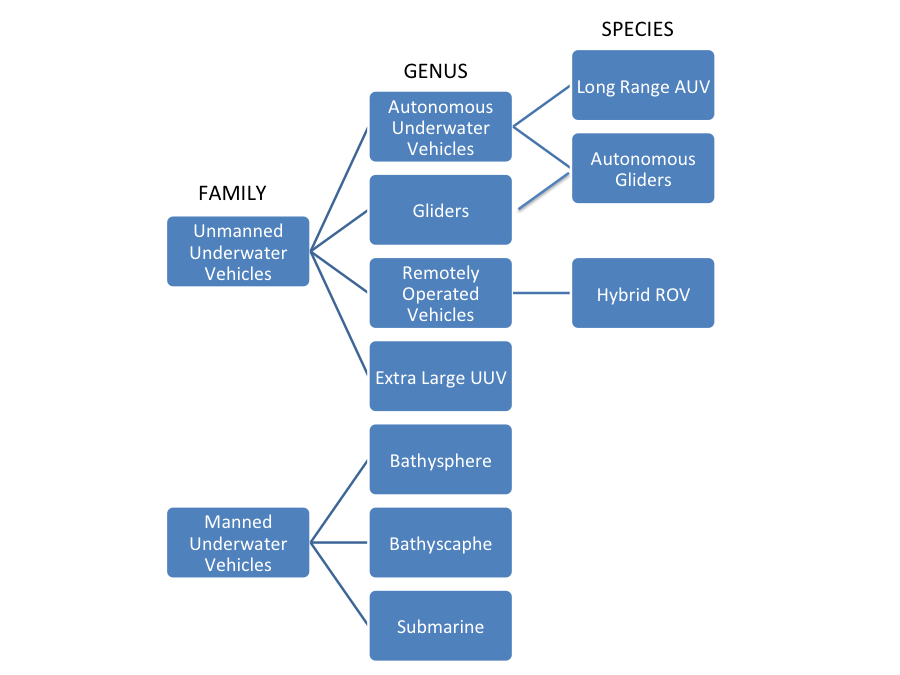
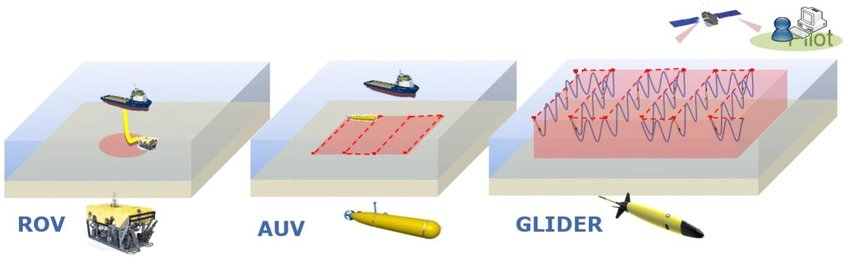
Below is a taxonomy for UUVs. The linked article provides further details. Gliders are particularly useful for surveying given the large distances they can cover (last image).





 Bud's Offshore Energy (BOE)