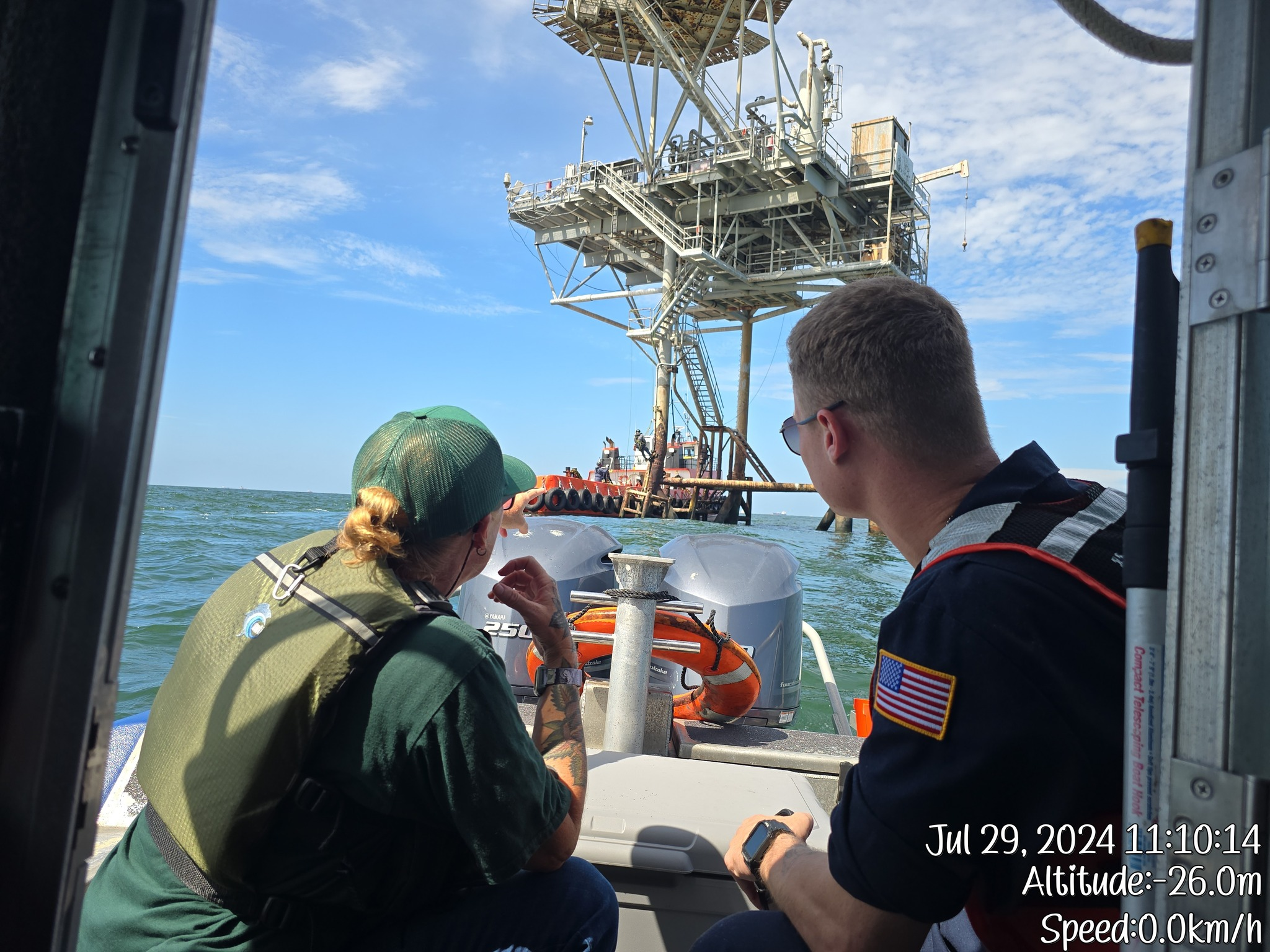
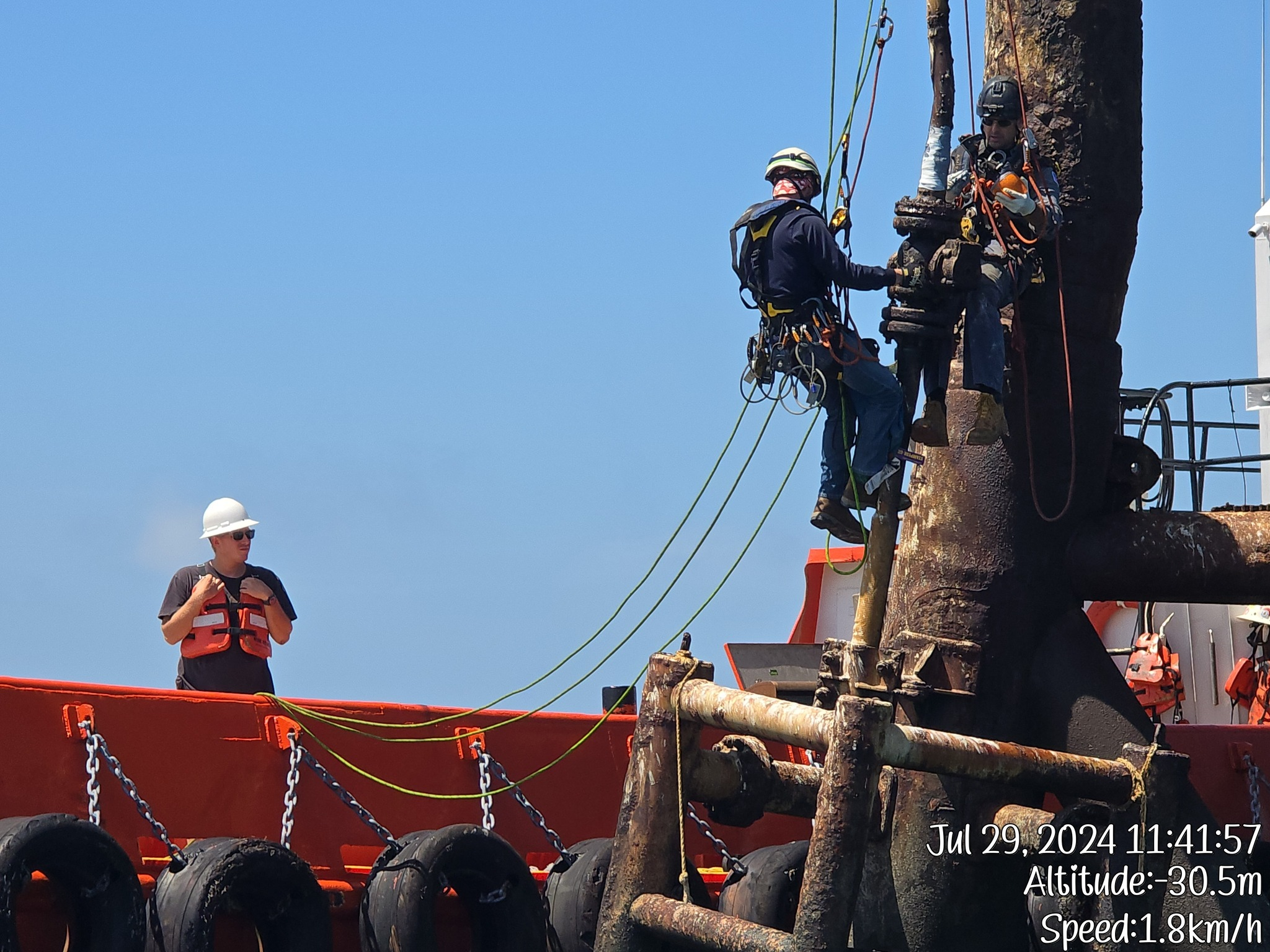
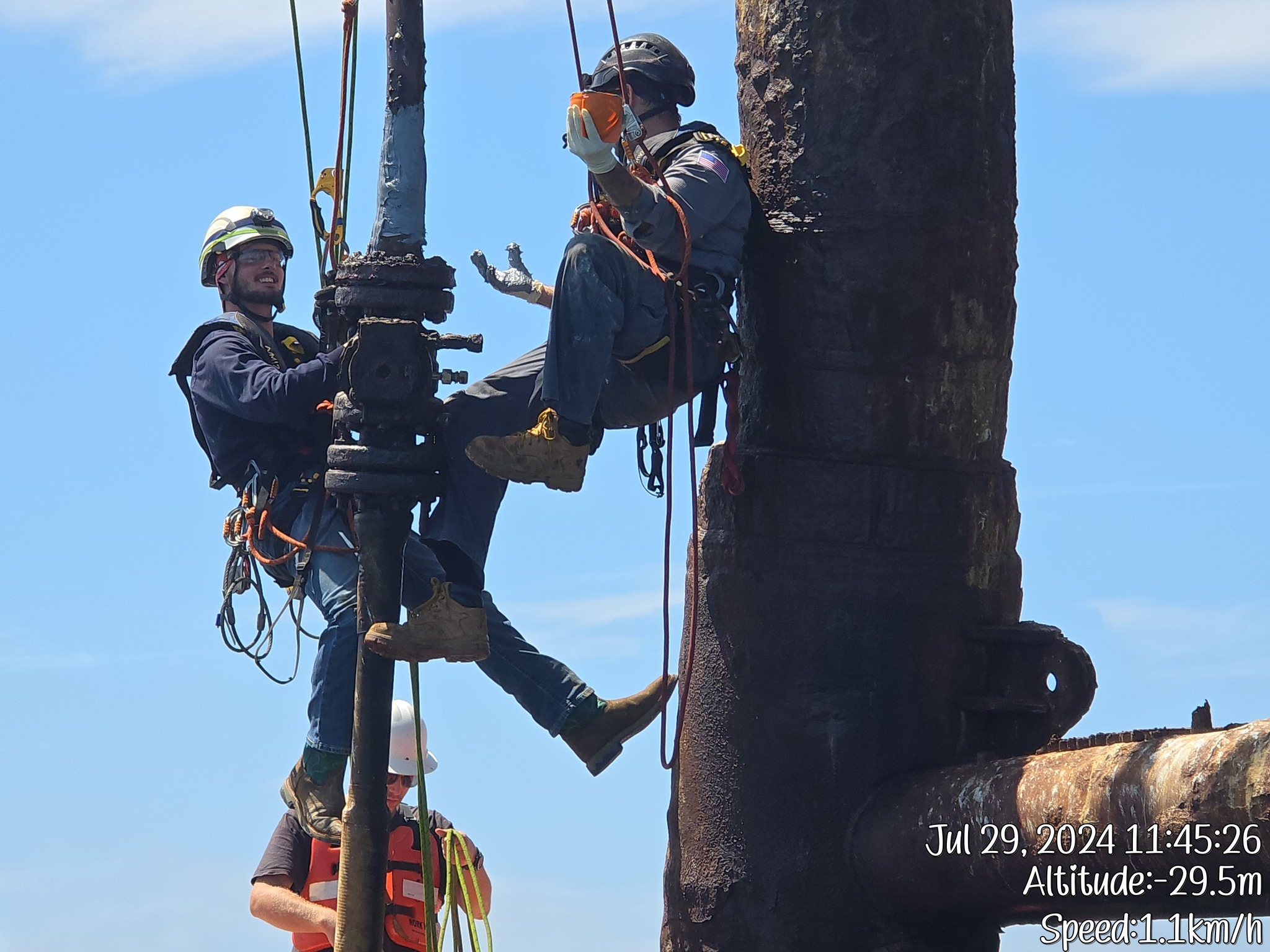
Crews from the U.S. Coast Guard, Texas General Land Office, and the Texas Railroad Commission monitored the operation. It’s unclear who the responsible party is and who funded and performed the work.
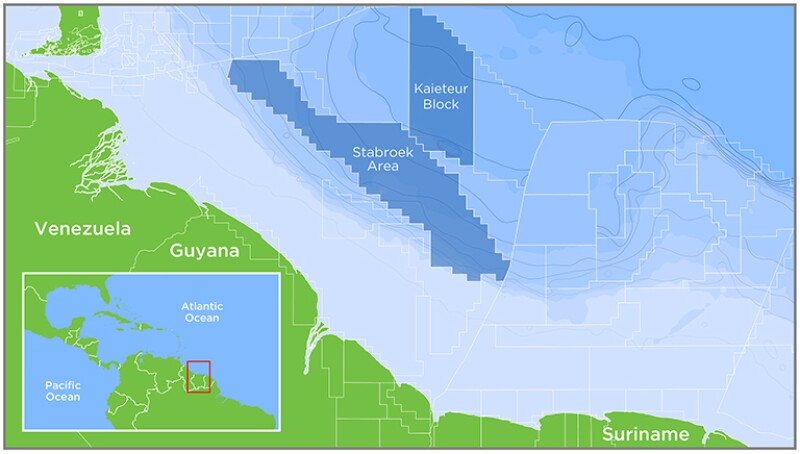
An International Chamber of Commerce panel has set a May 2025 date for the hearing on the dispute over Chevron’s acquisition of Hess’s share of Guyana’s Stabroek field. This is a massive delay considering the impact of this arbitration case on Chevron’s purchase of Hess.
As noted in a previous post, the Exxon/CNOOC position seems to be a stretch. Chevron did not buy the Stabroek share; they bought the company that holds that share. Hess is to be part of Chevron and there would be no change of control from the standpoint of the partnership. The panel will decide, but given the May 2025 hearing date, we probably won’t know the outcome for a year.
The Guyanese government has not taken a position in this dispute, but in my opinion, there are reasons for them to be concerned. Stabroek is Guyana’s offshore gem, their most important economic asset. The dispute has to affect teamwork and communication.
From safety, environmental, and production standpoints, do you want feuding partners managing such an important national asset? Those are Guyanese resources that the Stabroek partners are licensed to produce. I would have liked to have seen the government tell them to get this resolved in 30 days or we’ll resolve it for them.
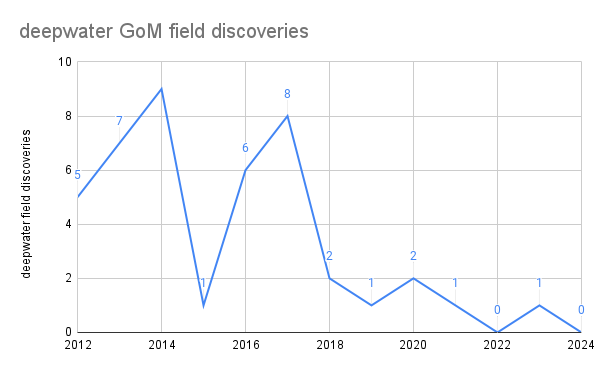
The dearth of deepwater discoveries over the past 6 years (chart below derived from BOEM data) should be a major concern to those engaged in energy policy. Technical innovation has facilitated simpler, safer, and greener deepwater development. However, most of those discoveries were made 7-15 years ago.
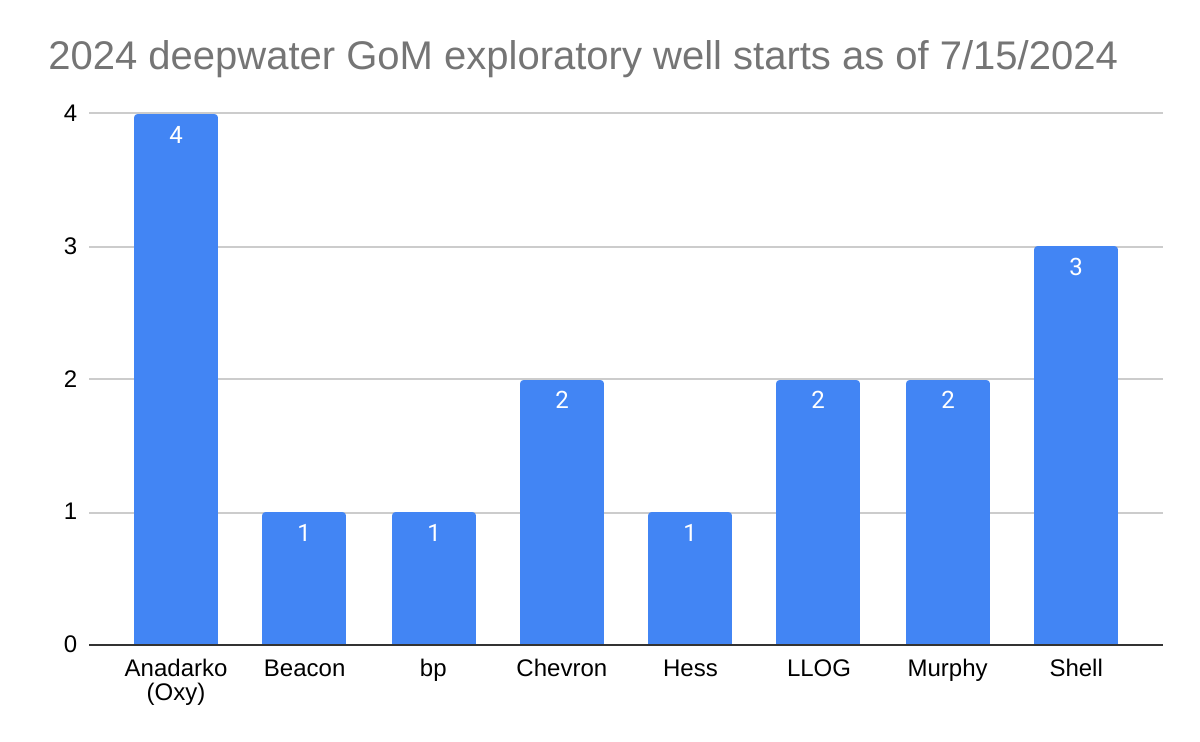
The decline in discoveries is no surprise given the decline in deepwater exploratory drilling documented by Lars Herbst in Dec. 2022. That trend continues, and the BSEE data summarized below indicate that deepwater exploratory drilling has remained at historically low levels.
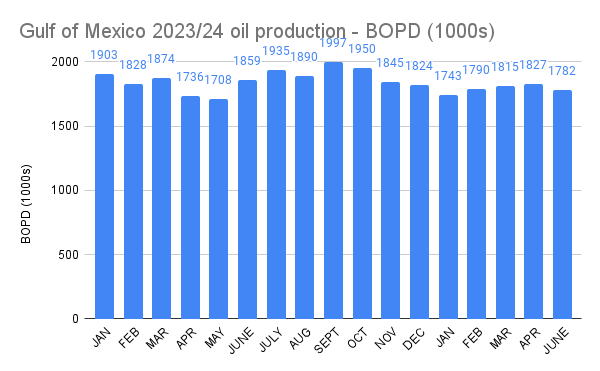
Onshore oil and gas production, mostly from private lands, has responded to growing US demand, but the offshore sector could be contributing more and offers some important advantages:
The Deepwater Advantage:fewer facilities + fewer wells + high production rates + efficient power generation + advanced processing + restricted flaring + pipeline transportation = fewer environmental impacts and low GHG intensity production
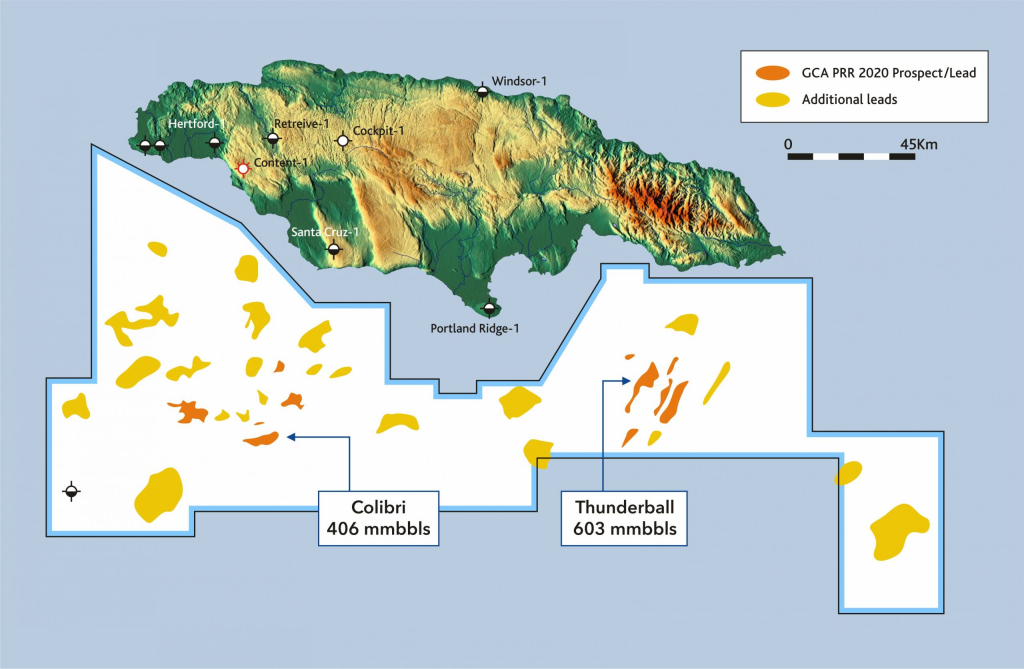
United Oil and Gas excels at promotion and isn’t shy about making bold statements. Can they find a strong partner and move their Jamaican exploration program forward?
The term “string of pearls” was used about 30 years ago to describe discoveries in the Beaufort Sea and on adjacent Alaska lands. Although they were modest individually (by Arctic standards), the sense was that these discoveries would collectively support sustained production in the region. While there has been some success in that regard, the optimistic expectations have not been realized.
Below is a recent United Oil & Gas presentation to prospective investors. Previous Jamaica posts.
… for their coverage of the Vineyard Wind turbine blade incident and their investigative reporting. From a recent Current article (emphasis added):
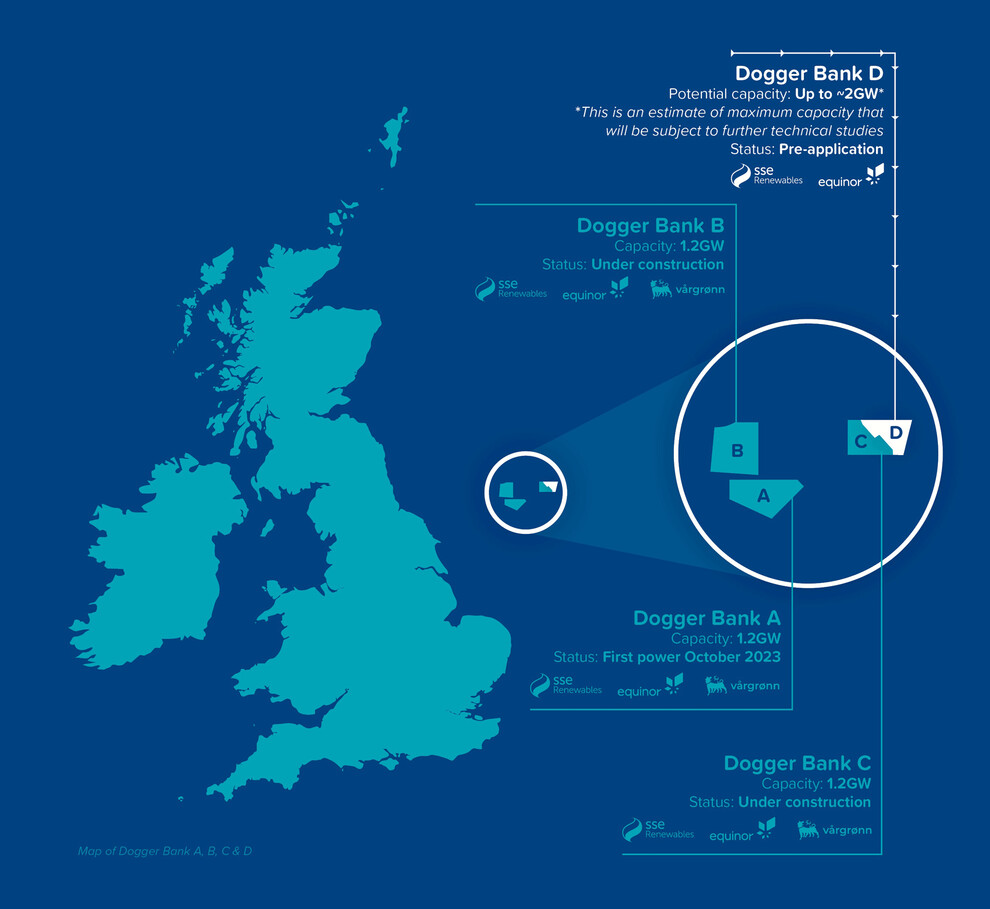
“The technology may not be new, but the size and scale of the Haliade-X turbine is novel for the offshore wind industry. And these jumbo-sized turbines have only recently been installed in just two locations in the world within the last year – at Vineyard Wind off Nantucket, and the Dogger Bank Wind Farm off the northeast coast of England. The Haliade-X turbine blades – which are supposed to have at least a 25-year lifespan – have suffered failures in both locations.“
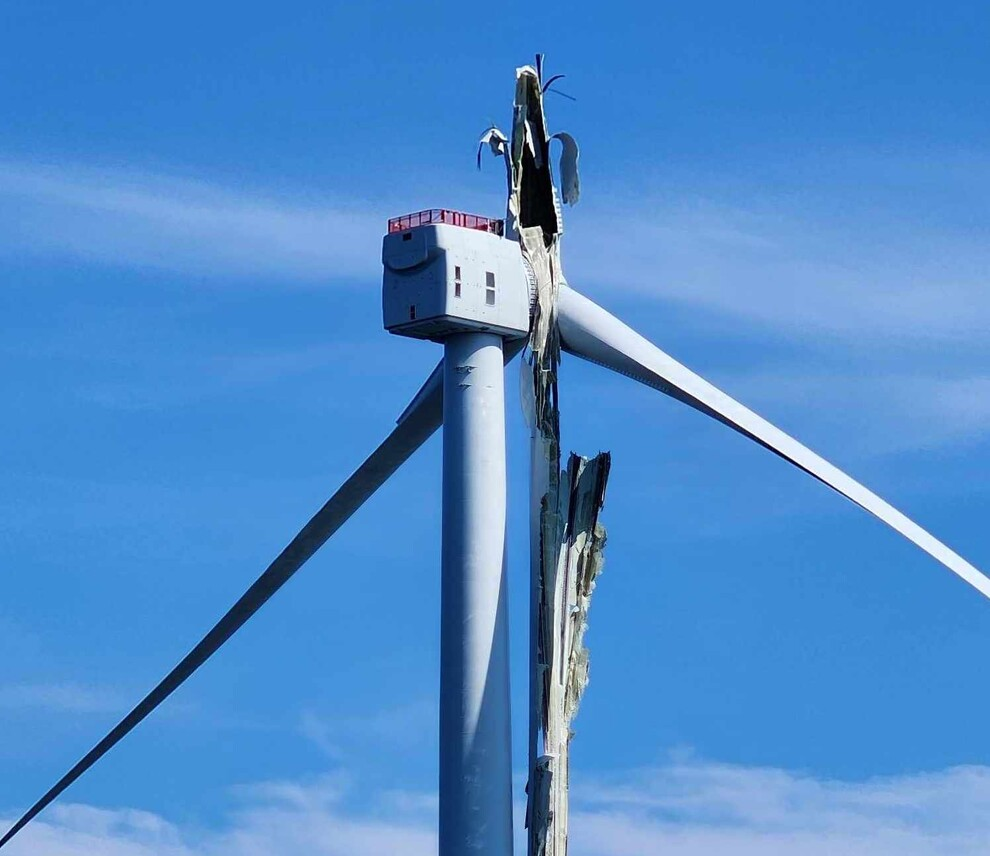
“At the Dogger Bank Wind Farm – which is being completed in three sections which combined will make up the largest offshore wind farm in the world – the first GE Vernova Haliade-X turbine was installed in the fall of 2023 and began producing power on Oct. 10. But little is known about the blade failure that occurred just months later during the first week of May 2024. The damaged blade was disclosed by Dogger Bank’s owners – SSE Renewables, Equinor, and Vårgrønn – a week after the incident. In a statement, the companies said only that “damage was sustained to a single blade on an installed turbine at Dogger Bank A offshore wind farm.”
“One reason the turbine blade incident at the Dogger Bank may not have generated more attention at the time is that the wind farm is located 100 miles off the coast of England, rather than just the 15 miles in the case of Vineyard Wind and Nantucket. If any debris was generated, it would have a far wider area to disperse in before nearing land – if it made it that far at all.“
Interestingly per the Current:
The Haliade-X turbine is the same one Orsted – a partner in Vineyard Wind – is planning to use for offshore wind farms slated for the waters off New Jersey and Maryland.
Land-based turbines have come apart in Sweden, Germany, Lithuania, Cypress, Brazil, and the US (and presumably elsewhere).
Greater transparency regarding turbine incidents, both in the US and internationally, is clearly needed. As we have learned from decades of experience with the oil and gas industry, most companies prefer reporting systems (if any) that protect details and information about the responsible parties from public disclosure. It’s the responsibility of the regulators to make sure that incident data and investigation reports are timely, complete, and publicly available. This is made more difficult by the promotional role that government agencies have assumed for offshore wind.
“The order comes as the bureau continues its oversight and investigation into the July 13, 2024, turbine generator blade failure. The order continues to prohibit Vineyard Wind 1 from generating electricity from any of the facilities or building any additional wind turbine generator towers, nacelles, or blades. This order also requires Vineyard Wind 1 to submit to BSEE an analysis of the risk to personnel and mitigation measures developed prior to personnel boarding any facility. Vineyard Wind 1 is not restricted from performing other activities besides those specifically directed for suspension or additional analysis. For example, Vineyard Wind 1 is still permitted to install inter-array cables and conduct surveys outside of the damaged turbine’s safety exclusion zone.”
BSEE also advises that they are conducting their own investigation, and promises to release the findings to the public.
July 24 (Reuters) – The amount of electricity produced by wind farms in the U.S. fell to a 33-month low on Monday, forcing power generators to crank up natural-gas fired plants to keep air conditioners humming during a hot summer day.
Over the past few years, much of the money energy firms have invested in new generation has gone into renewable power sources like wind and solar. But when the wind stops blowing and the sun does not shine, gas is still needed to keep the lights on.
Funny how that works! Being trendy and highly promoted doesn’t make you reliable!
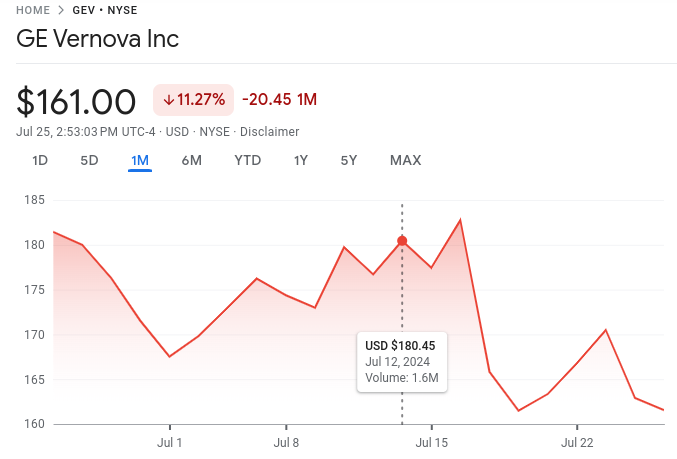
GE Vernova’s SEC filing for the second quarter of 2024 is attached. The Vineyard Wind turbine blade incident, the main reason for the sharp decline in their stock value in mid-July, is described as follows:
VINEYARD WIND OFFSHORE WIND FARM. We are the manufacturer and supplier of turbines and blades and the installation contractor for Vineyard Wind 1 offshore wind farm in the Atlantic Ocean (Vineyard Wind), at which we have installed 24 of 62 Haliade-X 220m wind turbines to date. Subsequent to the period covered by this report, a wind turbine blade event occurred at Vineyard Wind. Debris from the blade was released into the Atlantic Ocean and some has washed ashore on nearby beaches. On July 15, 2024, the U.S. Bureau of Safety and Environmental Enforcement (BSEE) issued a suspension order to cease power production and the installation of new wind turbines at the project site, pending an investigation of the event. As of the date of the filing of this report, we are currently engaged in a root cause analysis of the incident. We do not have an indication as to when BSEE will modify or lift its suspension order. Under our contractual arrangement with the developer of Vineyard Wind, we may receive claims for damages, including liquidated damages for delayed completion, and other incremental or remedial costs. These amounts could be significant and adversely affect our cash collection timelines and contract profitability. We are currently unable to reasonably estimate what impact the event, any potential claims, or the related BSEE order would have on our financial position, results of operations and cash flows
“Within only two to three years of commercial operation, the GE wind turbine generators have exhibited numerous material defects on major components and experienced several complete failures, at least one turbine blade liberation event, and other deficiencies,” alleged AEP.
GE Vernova retained Arcadis US, Inc., to perform an initial assessment of environmental considerations associated with the presence of the blade debris in the water and along the shoreline. That report is attached. Linked is a Nantucket Current article on the assessment.
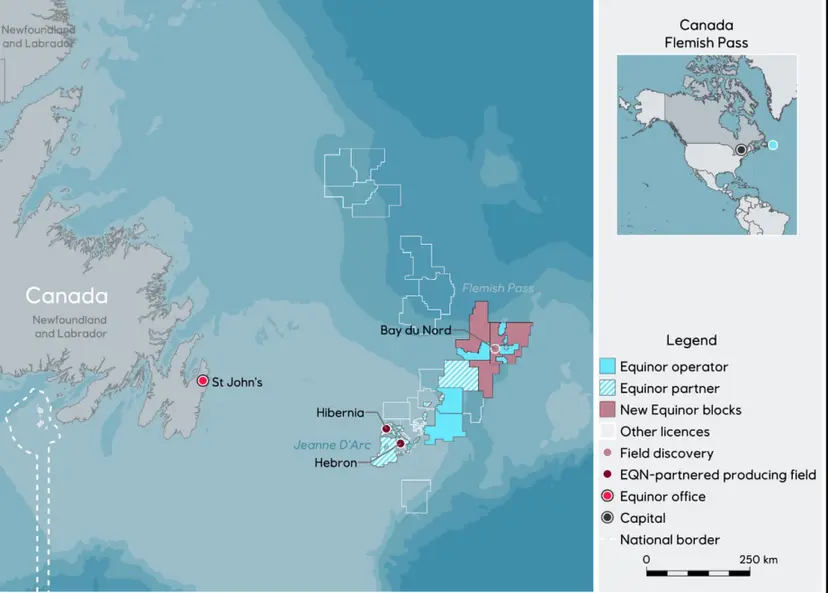
Per the CNLOPB weekly activities report, Equinor spudded the important Sitka C-02 well in the Flemish Pass area on July 10, 2024. This well will help clarify the resource potential in the Bay du Nord project area with the goal of better defining development plans.
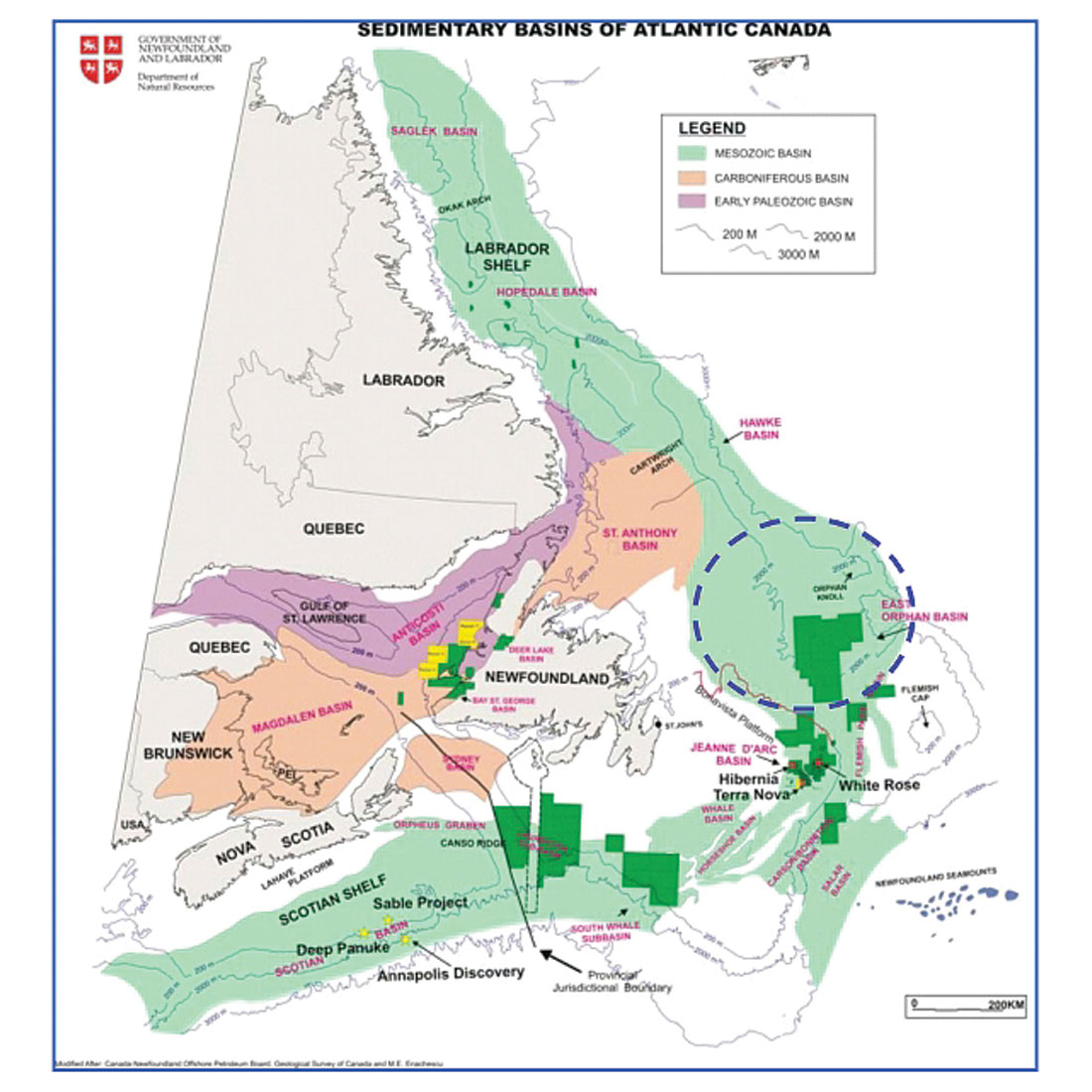
Meanwhile, operations on Exxon’s important Persephone well in the Orphan Basin have now been ongoing for 2 months. Some type of announcement by Exxon is expected after operations are completed and the well has been plugged.
 Bud's Offshore Energy (BOE)