After a zero fatality year in 2023, the first in at least 60 years, Jason Mathews of BSEE advises that one worker was killed during US OCS oil and gas operations in 2024.
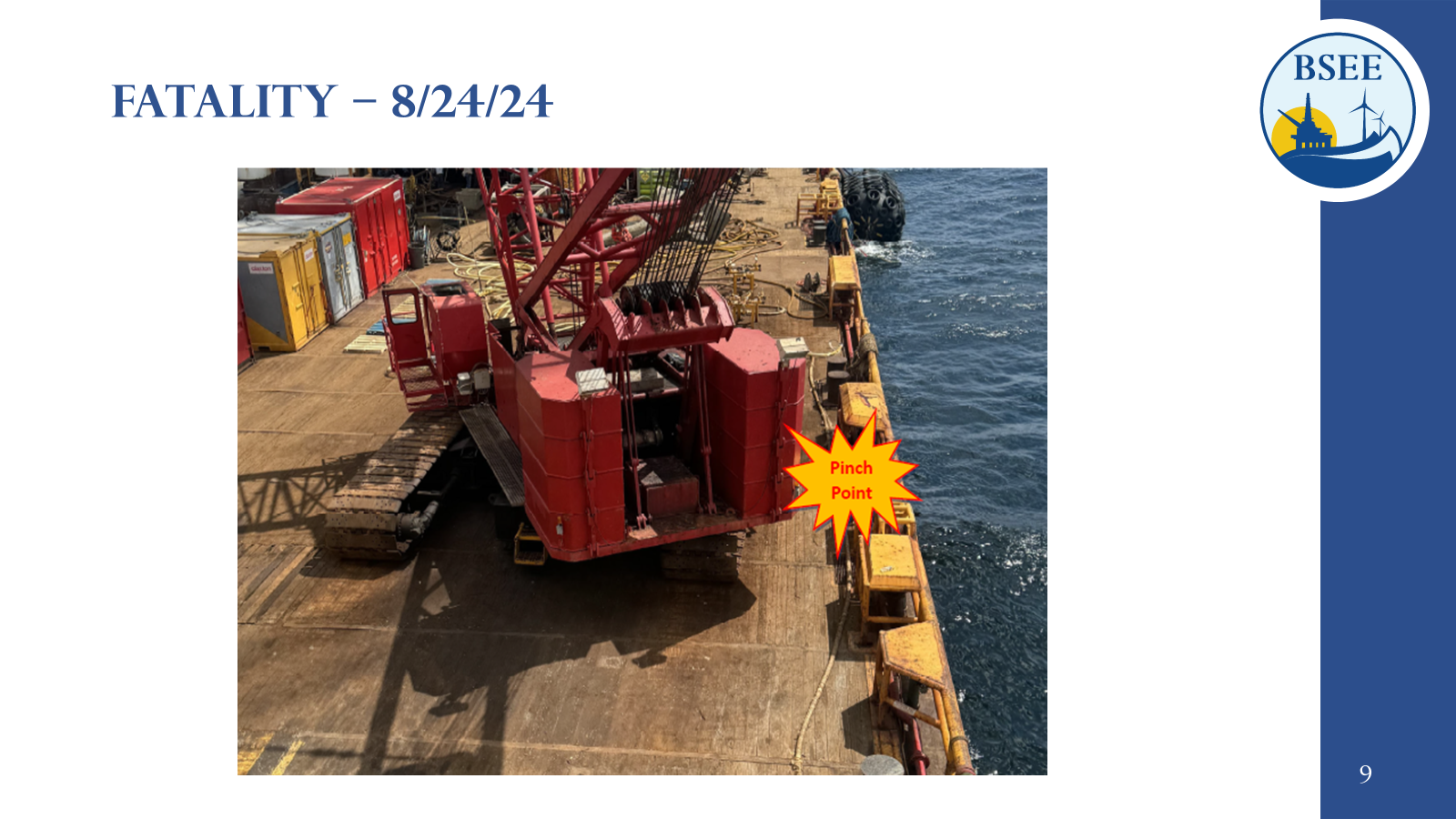
The fatality occurred during decommissioning operations on the Helix D/B EPIC HEDRON at Talos Energy’s Ship Shoal Block 225 “D” platform in the Gulf. The platform was to be reefed in Eugene Island Block 276.
The victim, who worked for Triton Diving Services, was moving hoses on the port side of the barge and got caught between the bulwark and counterweight of the crawler crane (see picture below).
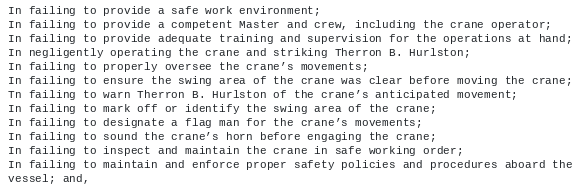
The victim’s family have filed a wrongful death lawsuit against Helix Energy Services and Triton Diving Services. The plaintiffs assert that prior to the crane movement the crane operator and crew had not undertaken measures to assure that the crane’s swing area was clear of other crew members. Per their filing, Triton and Helix were negligent as follows:
As expected, the White House announced the largest ever permanent ban on offshore oil and gas leasing in the US, and to the best of my knowledge, anywhere in the world.
The sheer magnitude of the ban makes other such withdrawals appear modest by comparison. It’s amazing how bold Presidents (and their handlers) become when they are about to leave office.
The permanent ban includes:
The entire Atlantic Outer Continental Shelf (OCS): While there are no current oil and gas leases in the US Atlantic, the region is highly prospective and could contain more than 20 billion barrels of oil equivalent (BOE).
The Eastern Gulf of Mexico: This is the OCS area that many petroleum geologists find most attractive. The best prospects are >100 miles from shore which minimizes coastal risks, and the high natural gas potential aligns with Florida legislation supporting the use of gas for power generation.
The entire Pacific OCS: While the resources are substantial, their loss has been a foregone conclusion for 25 years. When you can’t even decommission old platforms or restore production on important existing facilities (i.e. the Santa Ynez Unit), how can you possibly expect to issue new leases?
The remainder of the OCS offshore western Alaska. The wishes of the majority of Alaskans, who support offshore exploration and development, have been largely ignored for decades.
President-elect Trump has vowed to reverse President Biden’s leasing ban, but that may not be so easy. This is not a matter of simply reversing an executive order. Sec. 12(a) of OCSLA grants the authority to withdraw lands to the President and does not provide for reversal by future Presidents. The attached NYU Law brief concludes that “a subsequent president lacks authority to restore previously withdrawn lands to the federal oil and gas leasing inventory.”
The new Administration will no doubt have a different view than that expressed in the NYU Law brief, but any reversal decision will likely be challenged in court.
Those who wrote and approved Sec. 12(a) should have had more foresight. However, 72 years ago the authors presumably thought Presidents would only use the authority to remove small, especially sensitive areas from leasing consideration, and never thought that a President would remove both of our oceans and much of the Gulf of Mexico!
Congress could of course reverse the Biden bans, but given the complexity of offshore energy issues, such legislation may be difficult to pass.
The two ruling parties in Norway want to cut the two power inter-connectors that link the country with Denmark when they come up for renewal in 2026. The smaller coalition party, the Center Party, wants to revisit similar energy links with the UK and Europe.
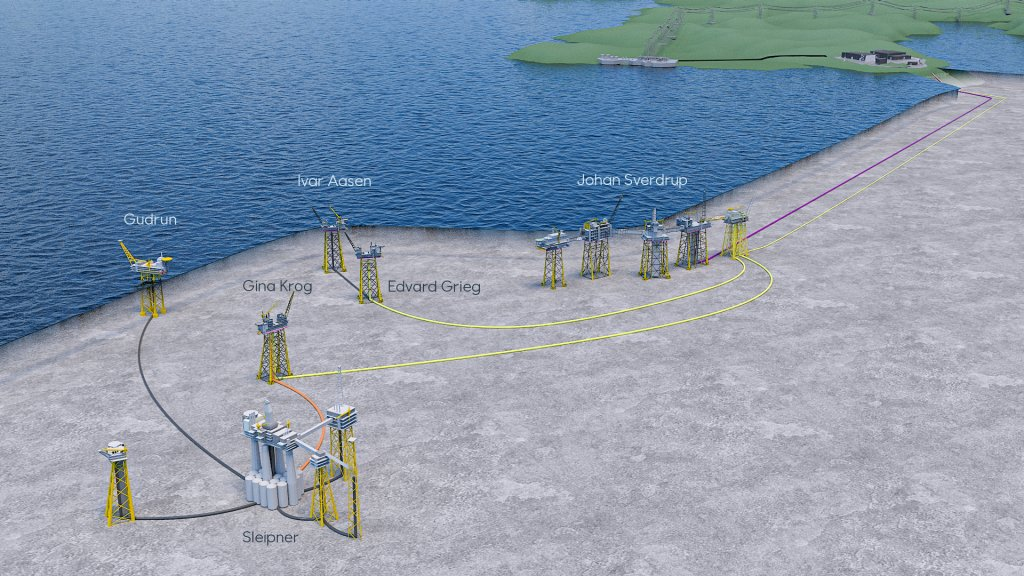
A related matter is Norway’s push to power offshore platforms with electricity from shore. This policy makes neither economic nor environmental sense, and introduces new safety and operational risks.
This BOE post cites the obvious (per NPD): “The power from shore projects will lead to an increase in electricity prices in Norway.” The post also presents seven other reasons why powering those facilities from shore is not a good idea.
Sec. 12(a) of the Outer Continental Shelf Lands Act (OCSLA, 43 U.S. Code § 1341(a)): “The President of the United States may, from time to time, withdraw from disposition any of the unleased lands of the outer Continental Shelf.”
As previously posted, the Sec. 12(a) authority has been cynically exercised by Presidents from both parties and should be repealed or revised.
Unsurprisingly, there are now reports that President Biden intends to permanently withdraw large areas of the OCS from leasing consideration before he leaves office in 2 weeks. Apparently, the leasing ban will include large segments of the Atlantic, Pacific, and the eastern Gulf of Mexico.
Sec. 12(a) facilitates (encourages?) rash, politically motivated decisions that could have major long-term implications for energy security and the economy, and allows Presidents to ignore the deliberate, multi-phase review and comment process that has been established for making leasing decisions.
Can a President reverse a Sec. 12(a) decision made by a predecessor? That is a massive legal question that has yet to be fully considered by the legal system.
Could legislative action reverse a Sec. 12(a) decision? Yes, but such legislative action would be difficult to enact (just as it would have been difficult for any of the Sec. 12(a) withdrawals to have been enacted legislatively).
Is a revision to Sec. 12(a) being considered? Not that I am aware of. Given that the authority has been exercised by both parties and that strong opposition is likely, a revision would be challenging.
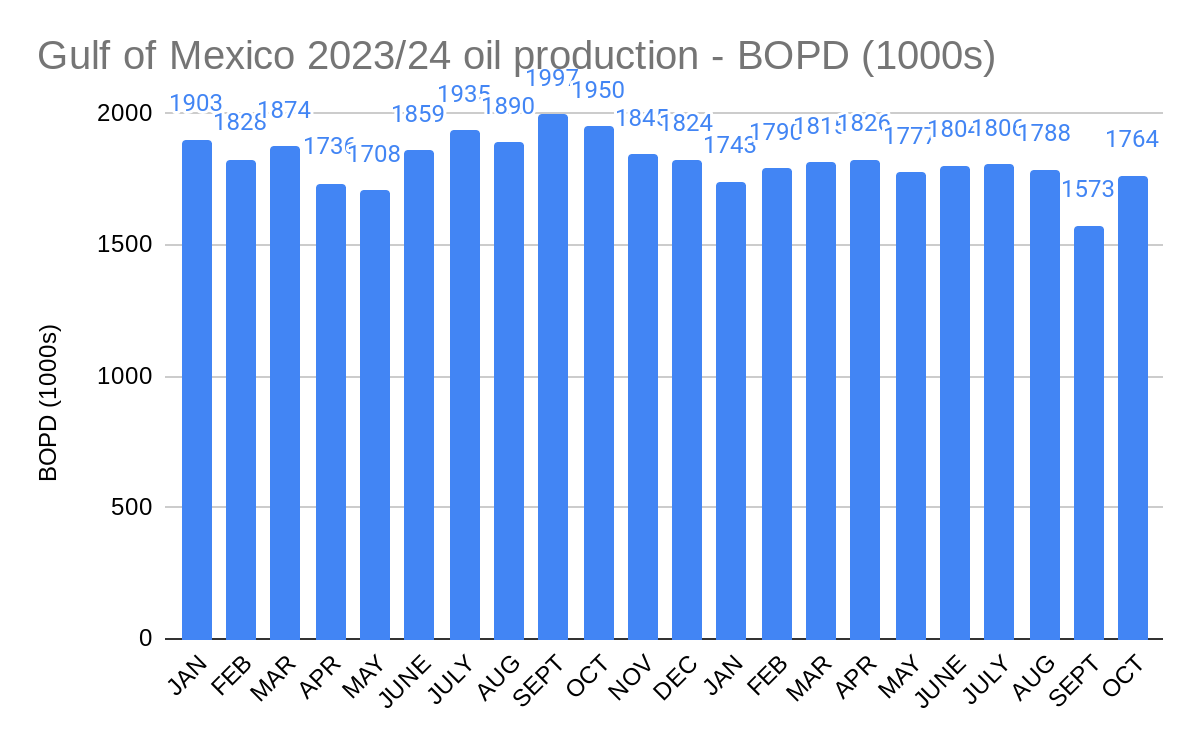
Following the 200,000 bopd decline in Sept. because of Tropical Storms Francine and Helene, Oct. GoM oil production was once again in the normal range for 2024. With the exception of Sept., average 2024 production has been remarkably consistent from month to month.
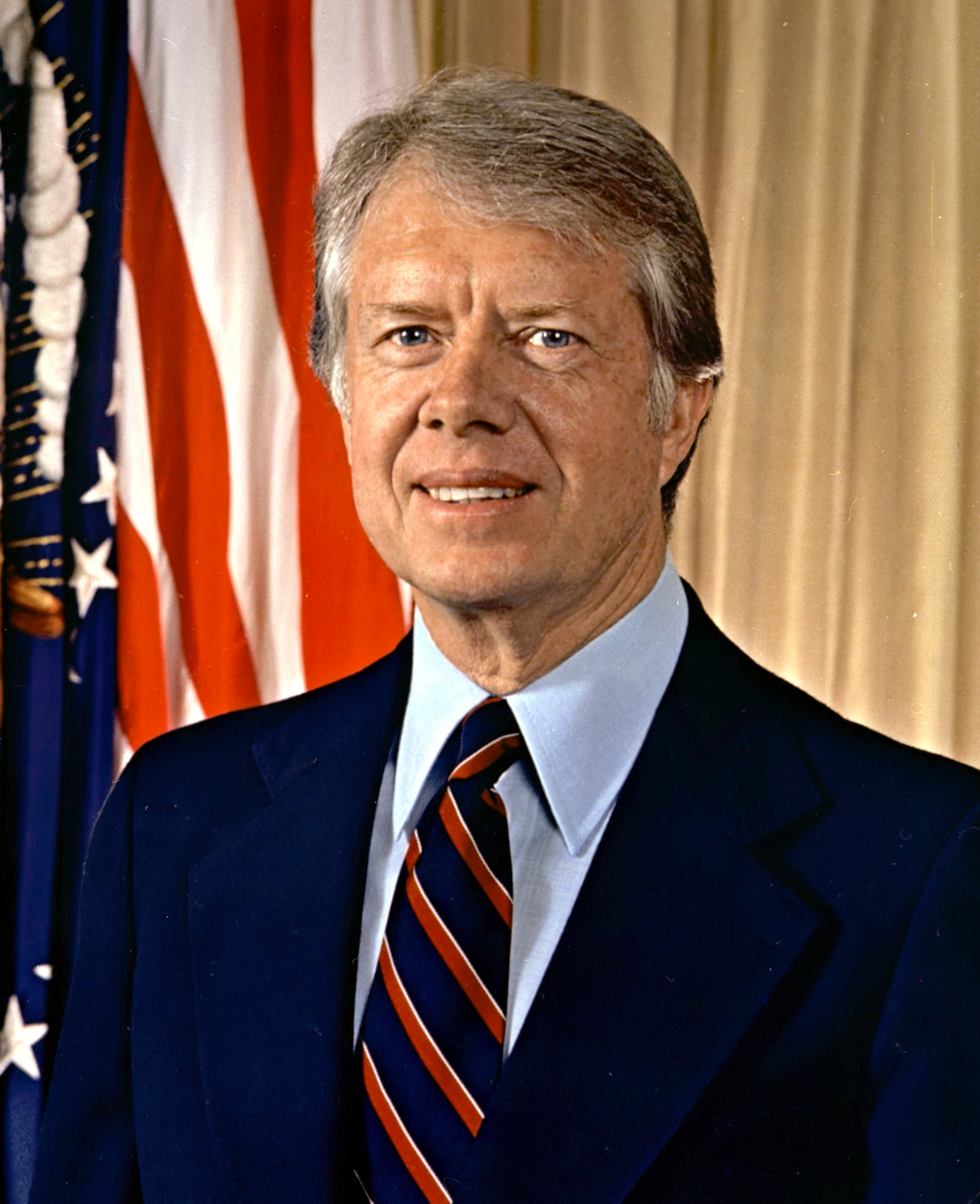
Opinions on Jimmy Carter’s presidency vary, but he merits praise for his administration of the OCS program from 1/1977 to 1/1981. Carter oversaw an active leasing program in all OCS regions. On the operations side, he appointed Don Kash to head the Conservation Division of the US Geological Survey, the OCS regulator at the time. Dr. Kash was an outstanding leader and a gifted communicator and program manager.
Some of the Carter administration’s impressive accomplishments during his 4 year term:
15 lease sales including 3 offshore Alaska, 3 in the Atlantic, and 1 offshore California
Drilling activity in all 4 regions: GoM, Pacific, Alaska, and Atlantic
North, Mid, and South Atlantic District offices for permitting and inspections
5300 well starts including 97 in water depths > 1000′
314 new platforms including Cognac, the world’s first platform in > 1000′ of water
Comprehensive amendments to the OCS Lands Act (1978)
Annual natural gas production reached nearly 5 tcf (approximately 6 times current OCS gas production)
Annual oil production was approximately 1/2 current levels which is impressive given that the deepwater era was just beginning and shelf wells had relatively low productivity.
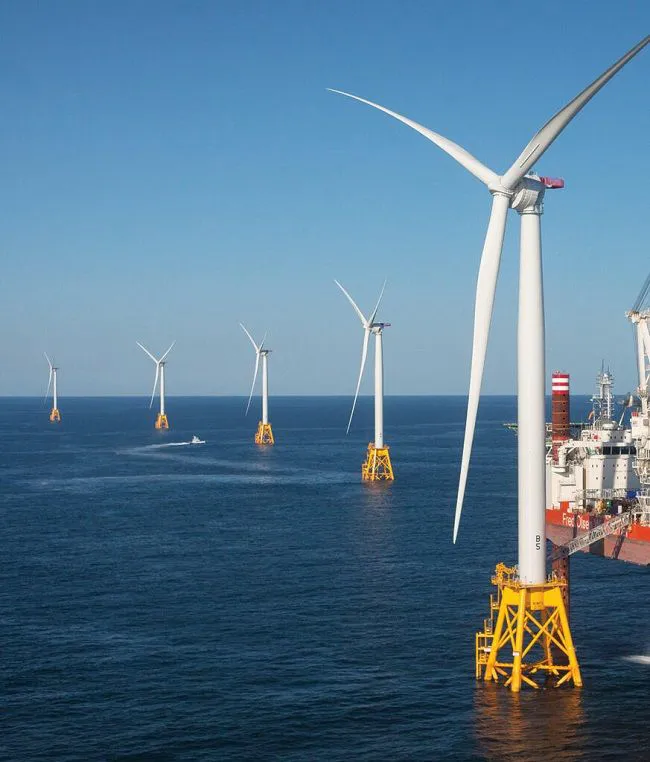
Per a provision in the “Inflation Reduction Act,” no offshore wind leases may be issued after 12/20/2024, the one year anniversary of the last oil and gas lease sale (no. 261).
Although the 4 leases receiving bids at the most recent wind sale (10/29/2024, Gulf of Maine) have presumably been issued, BOEM’s lease table does not reflect that. If those leases have not been issued, it’s too late now.
Assuming that the Gulf of Maine leases have in fact already been issued, the legislative restriction on issuing new leases should not be an issue. A qualifying oil and gas lease sale will likely be held in the Gulf of Mexico in the first half of 2025.
The bigger question is whether the new administration will hold any wind lease sales. Pre-election energy policy comments imply that new wind sales are unlikely.
33 years before Elon and Vivek’s DOGE, there was the Clinton-Gore Government efficiency initiative known as the National Performance Review, aka the National Partnership for Reinventing Government (NPR).
President Clinton (March 3, 1992): “Our goal is to make the entire federal government less expensive and more efficient, and to change the culture of our national bureaucracy away from complacency and entitlement toward initiative and empowerment.”
Al Gore led this effort with gusto. While not revolutionary, the NPR was quite successful in streamlining government programs. VP Gore presented symbolic and prestigious “Hammer Awards” (image above) to initiatives that were judged to have accomplished the NPR objectives:
put customers first
cut red tape
empower employees
get back to basics
My Division in the Minerals Management was one of the few government offices to be honored with two hammers. Kudos to Bill Hauser and Kumkum Ray for leading these two efforts:
reducing the pressure test frequency for blowout preventers after completing a detailed statistical analysis demonstrating that there would be no increase in failure risk.
simplifying the operating regulations and rewriting the text in plain, easy-to-understand English.
Who would have thought Al Gore, Elon Musk, and Vivek Ramaswamy had so much in common? 😉
Addressing regulatory fragmentation will improve efficiency and lower costs for industry and government while reducing safety and environmental risks.
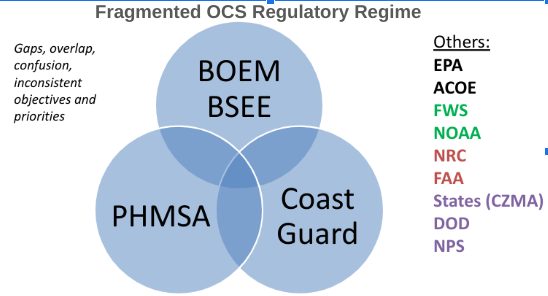
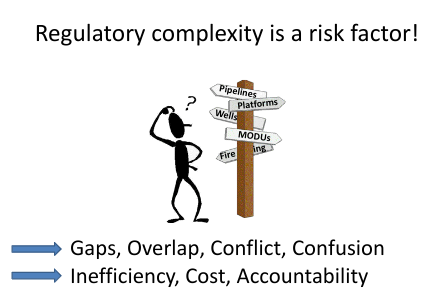
Unfortunately, the regulatory regime for US offshore oil and gas operations is noteworthy for redundancy, uncertainty, and complexity that divert industry and governmental attention from safety and environmental protection objectives to administrative processes, interpretations, and jurisdictional boundaries.
“Poster Child”for regulatory fragmentation?
The 12 Federal entities that have some OCS regulatory responsibilities are identified in the above chart. The organizations with core regulatory roles are included in the overlapping circles. The responsibilities of BOEM and BSEE are so inextricably intertwined that those bureaus occupy the same circle.
Coastal states also have OCS regulatory roles through authority granted in the Coastal Zone Management Act.
When multiple agencies have jurisdiction over a facility, system, or procedure, the redundancy inevitably results in inconsistency, ambiguity, and gaps in oversight. The focus of operating companies and contractors is diverted from safety and risk management to understanding and satisfying the regulators. The inevitable result is a compliance mentality that weakens the safety culture.
Interagency agreements in the form of MOUs and MOAs, which are ostensibly for the purpose of managing redundancy, are often unclear or inconclusive. They tend to be more for the benefit of the agencies than the regulated industry. The interests of the regulators and protecting turf are paramount.
Where legislation is not required (e.g. BOEM and BSEE), use executive orders to combine and streamline the regulatory functions.
Where agencies have separate legislative authority, establish a lead regulator by executive order pending corrective legislation. Under the EO, the agencies would function as a joint authority under the direction of the lead regulator.
A combined BOEM/BSEE would be the logical choice for leading the joint authority given that OCS energy is their sole focus and they are accountable for the success of OCS programs.
Use a management system regulatory approach that holistically considers all of the legislatively enacted regulatory objectives.
Increase the attention given to regulator and operator performance in terms of both outcomes and efficiency.
Reduce and simplify permitting requirements for operating companies that have demonstrated outstanding safety and environmental performance over a sustained period.



 Bud's Offshore Energy (BOE)