Archive for the ‘Offshore Energy – General’ Category
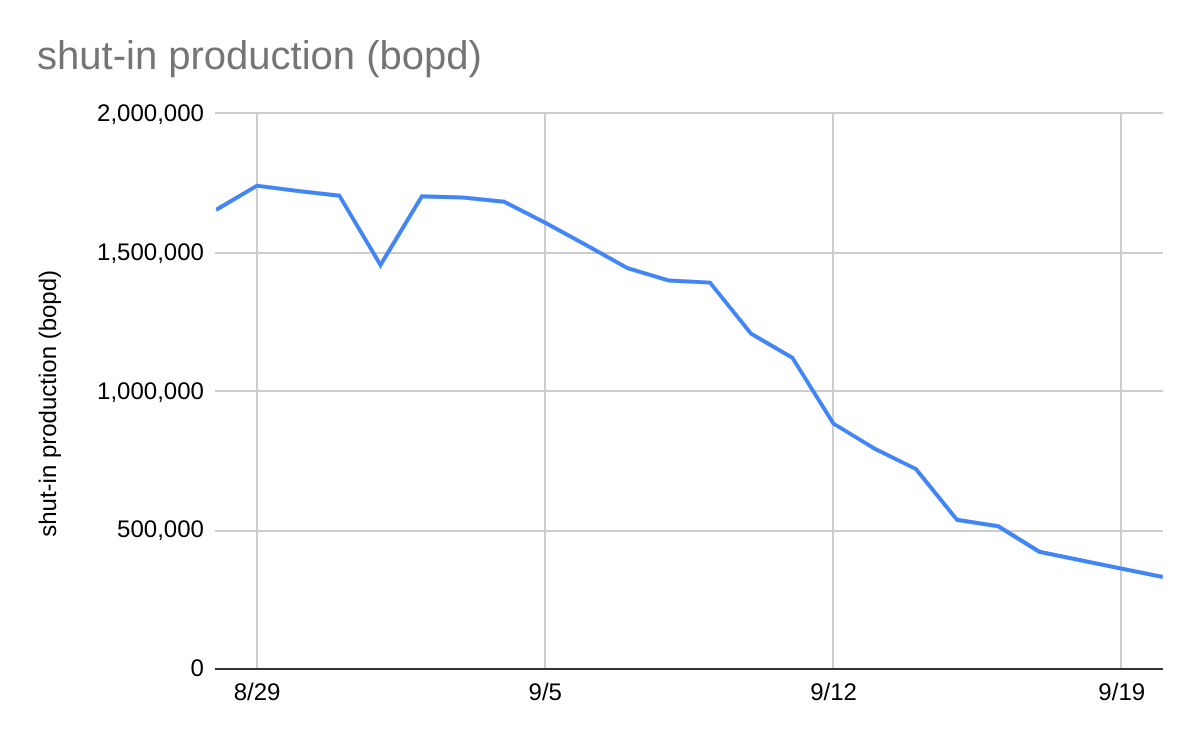
9/20 BSEE Ida update: 18% of GoM oil production still not restored
Posted in Gulf of Mexico, hurricanes, Offshore Energy - General, oil, tagged Gulf of Mexico, Hurricane Ida, oil production on September 20, 2021| Leave a Comment »
Offshore gas to the rescue?
Posted in gas, natural gas, Norway, Offshore Energy - General, tagged Equinor, European energy crisis, North Sea, Norway, Oseberg on September 20, 2021| Leave a Comment »
European power prices have spiraled to multi-year highs on a variety of factors in recent weeks, ranging from extremely strong commodity and carbon prices to low wind output.
CNBC
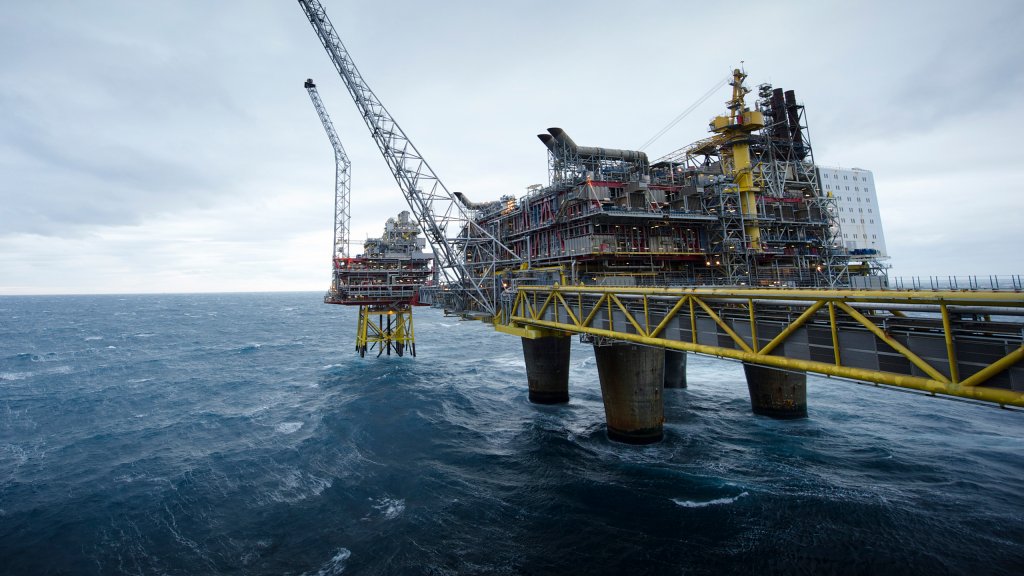
Equinor and its partners have received permission to increase gas exports from two fields on the the Norwegian continental shelf to supply the tight European market. Production permits for the Oseberg and Troll fields have each been increased by 1 billion cubic meters (bcm) for the gas year starting 1 October.
Equinor
I hope the folks organizing the 10/28 congressional hearing are paying attention, but somehow I doubt it.
Only about 1/4 of GoM oil production remains shut-in from Ida
Posted in Gulf of Mexico, hurricanes, Offshore Energy - General, oil, tagged Gulf of Mexico, Hurricane Ida, oil production on September 17, 2021| Leave a Comment »

No oil and gas leasing pause in Norway
Posted in Norway, Offshore Energy - General, tagged APA 2021, Ministry of Petroleum and Energy, Norway on September 15, 2021| Leave a Comment »
15 Sept 2021: The Ministry of Petroleum and Energy received applications from 31 companies in connection with the announcement of Allocation in Predefined Areas (APA) 2021. The Ministry’s announcement includes some good lessons on resource management:
It is gratifying that the oil companies still see good opportunities on the Norwegian shelf. Exploration is important for maintaining activity and good resource management, and it lays the foundation for value creation and safe jobs throughout the country, says Minister of Petroleum and Energy Tina Bru.
Predictability about which areas it is possible to apply for in APA and regular replenishment of new area is important to achieve an effective exploration. APA rounds are therefore conducted annually.
Ministry of Petroleum and Energy
Norwegian Elections: Major shift in offshore oil policy seems unlikely
Posted in energy policy, Norway, Offshore Energy - General, tagged elections, energy policy, Jonas Gahr Stoere, Norway, offshore oil and gas on September 15, 2021| Leave a Comment »

While Conservative Party leader Erna Solberg will no longer be Prime Minister, her likely replacement, Labor leader Jonas Gahr Støre, seems to be a moderate on energy issues:
“I believe that calling time on our oil and gas industry is the wrong industrial policy and the wrong climate policy,” Stoere told reporters.
KFGO
Monday’s result means Labour neither needs the Marxist Red Party nor the anti-oil Green Party to rule, thus lessening the pressure for big shifts.
“Labour will not make any dramatic changes to the oil industry,” said Teodor Sveen-Nilsen, an energy analyst at Sparebank 1 Markets.
EuroNews
GoM reserves tick upward after long decline
Posted in energy policy, Gulf of Mexico, Offshore Energy - General, oil, tagged BOEM, Gulf of Mexico, oil and gas reserves on September 14, 2021| 1 Comment »
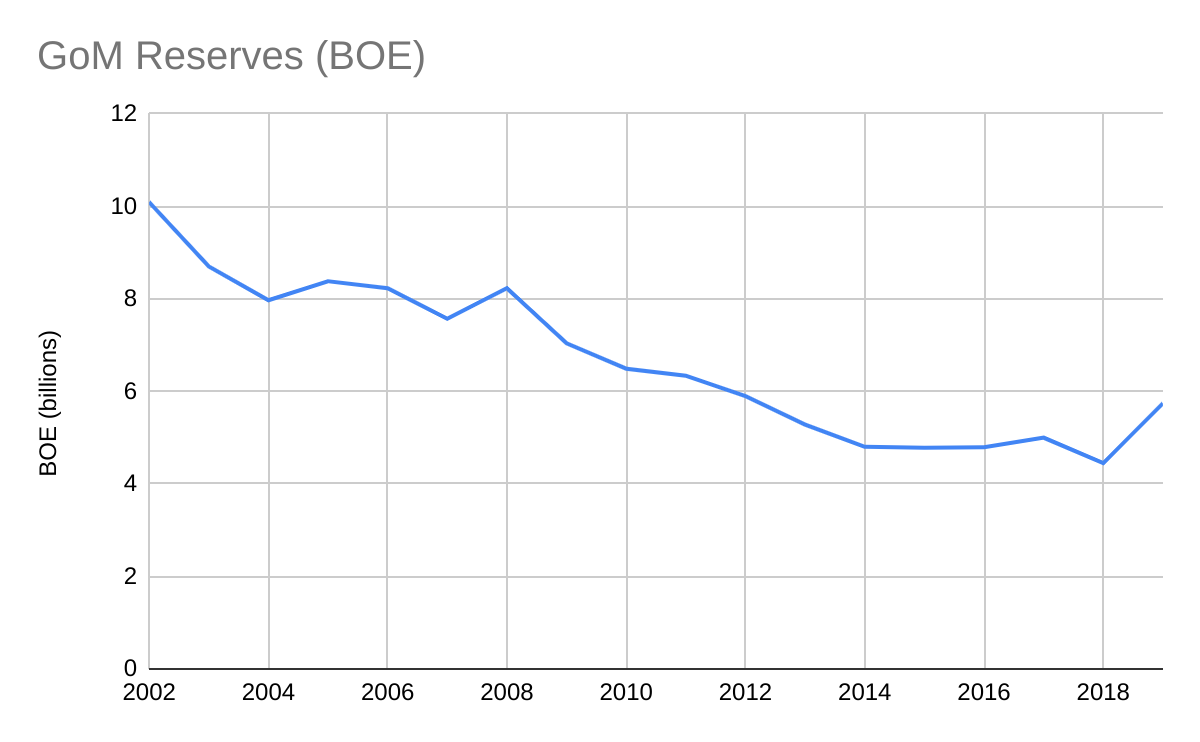
BOEM just released their update of Gulf of Mexico OCS oil and gas reserves as of 12/31/2019. Oil reserves increased by 35.2% as a result of 6 new fields being added.
The reserve additions are necessary and welcome given the high depletion rates from 2002 to 2018 when reserves (plotted above) declined steeply while production rates held steady or increased. The concerns about the sustainability of current GoM production rates, as expressed in our 7/26/2021 post, remain given the historically low levels of exploratory drilling. For the reasons presented in that post, our view is that the importance of GoM production will increase, not decrease, over the next decade.
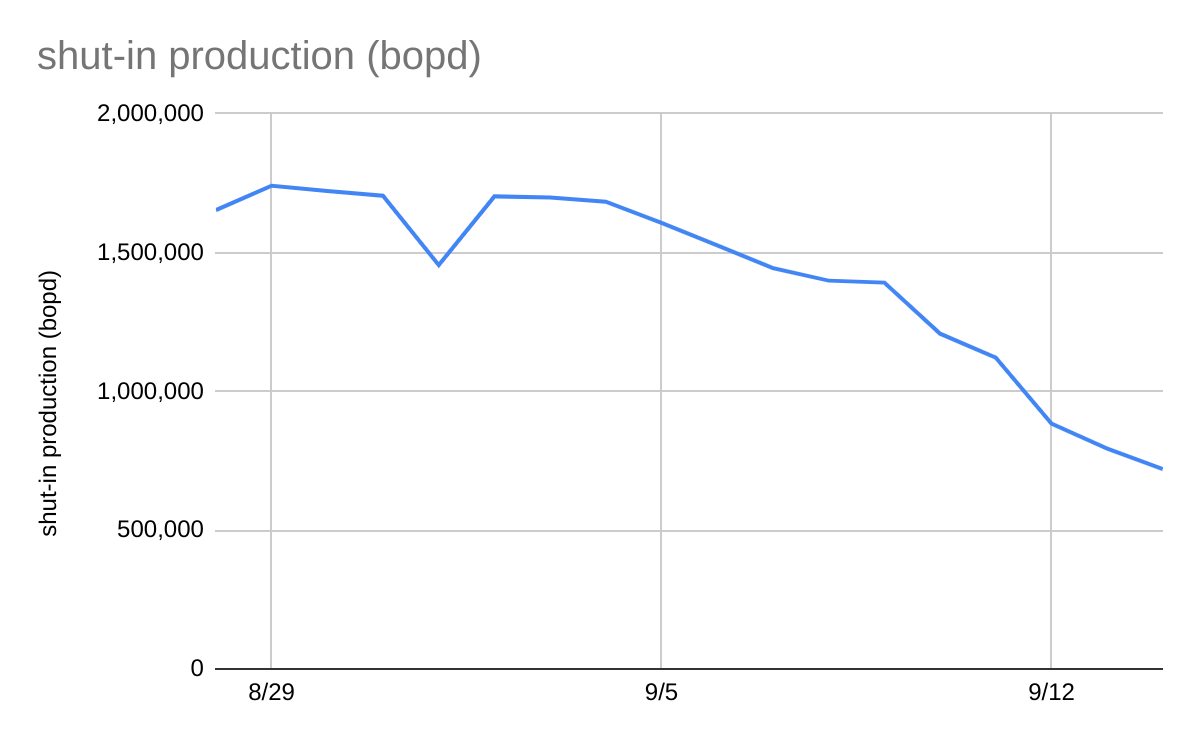
About 80% of GoM oil production is still shut-in
Posted in Gulf of Mexico, hurricanes, Offshore Energy - General, oil, tagged Gulf of Mexico, Hurricane Ida, oil production on September 7, 2021| Leave a Comment »
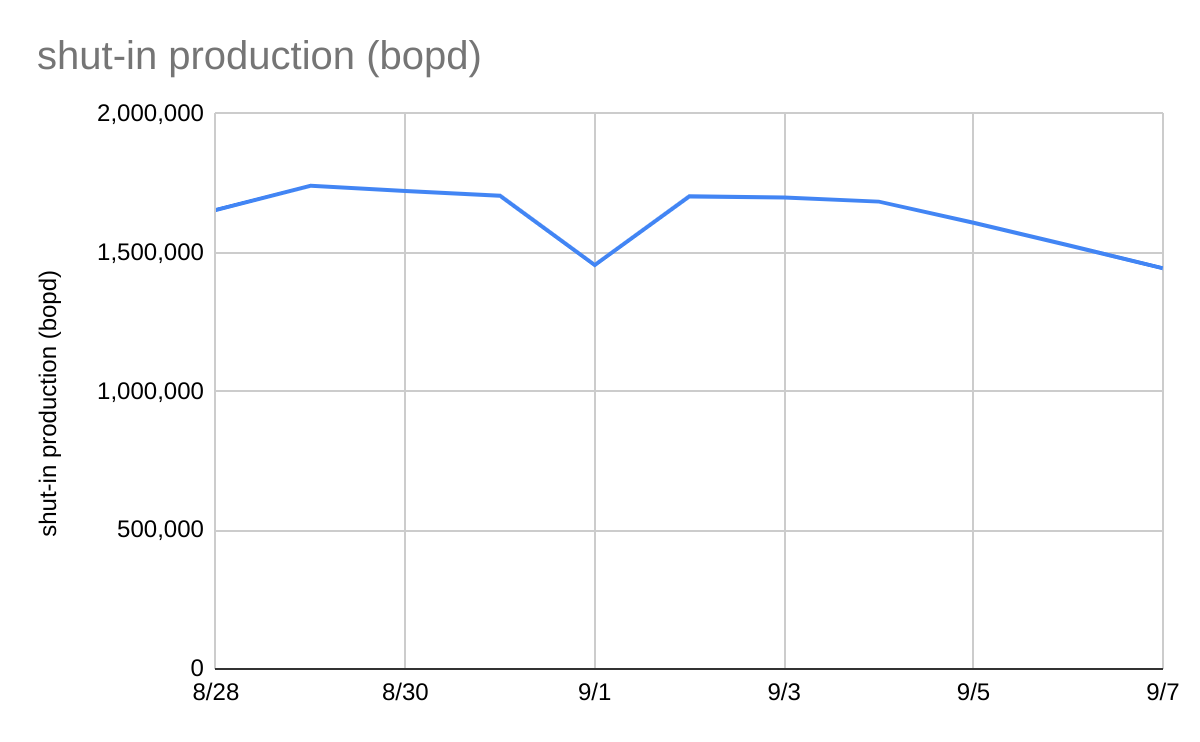
As expected given the magnitude and track of Ida, the necessary inspections, and the onshore damage, most GoM production remains shut-in. (BSEE data)
Bay Marchand Pipeline Leak
Posted in accidents, Gulf of Mexico, Offshore Energy - General, oil, tagged Bay Marchand, Hurricane Ida, pipeline spill, Talos on September 6, 2021| Leave a Comment »

- 12″ pipeline displaced by Ida
- Approximately 2 miles south of Port Fourchon which took a direct hit from Ida. (Appears that the pipeline is in Louisiana State waters).
- Water depth = 34′
- Talos funding spill response, although the company said it was not their pipeline
- Leak has slowed significantly; apparently production is not entering the line and the spill is limited to pipeline inventory
- This type of incident is not surprising given the magnitude and track of Ida and the pipeline infrastructure that was exposed to major hurricane conditions
Consensus opinions are often wrong.
Posted in Offshore Energy - General, Regulation, tagged Penn State, regulations, safety, standards, Wisconsin on September 5, 2021| Leave a Comment »

In sports, the experts are soon exposed. In regulations and standards, consensus misjudgments are less obvious and may take years to be demonstrated. Also, regulations and standards are often outdated and may not reflect best practices. That is why compliance with regulations and adherence to industry standards is not sufficient. We need to continuously assess risks, observe, listen, review data, and actively manage our operations to achieve safety and environmental objectives.
 Bud's Offshore Energy (BOE)