- The leak was in Federal waters 4 miles from shore. This could be significant from a liability standpoint.
- A 13-inch split was found in a section of pipeline that appears to have been displaced by more than 100 feet This essentially confirms that a ship’s anchor was the culprit. Which ship, how, when?
- A big question relates to leak detection. In the uber-complex world of pipeline regulation, this was technically a Dept. of Transportation pipeline. DOT leak detection requirements do not take effect until 10/1/2024. However, Department of the Interior (BSEE) regulations do require leak detection capabilities and may have been applied. If so, they were apparently ineffective, possibly because the operating range was too broad and the activation (pressure) settings were too low. More to follow on this important topic.
Archive for the ‘Offshore Energy – General’ Category
Huntington Beach Pipeline Spill Update
Posted in accidents, California, offshore, oil, Regulation, tagged Beta Unit, BSEE, DOT, Huntington Beach, pipeline spill on October 5, 2021| Leave a Comment »
More on the Huntington Beach Pipeline Spill
Posted in accidents, California, offshore, oil, Regulation, tagged Huntington Beach, oil spill, pipeline spill, Platform Elly, SkyTruth, unified command on October 4, 2021| Leave a Comment »
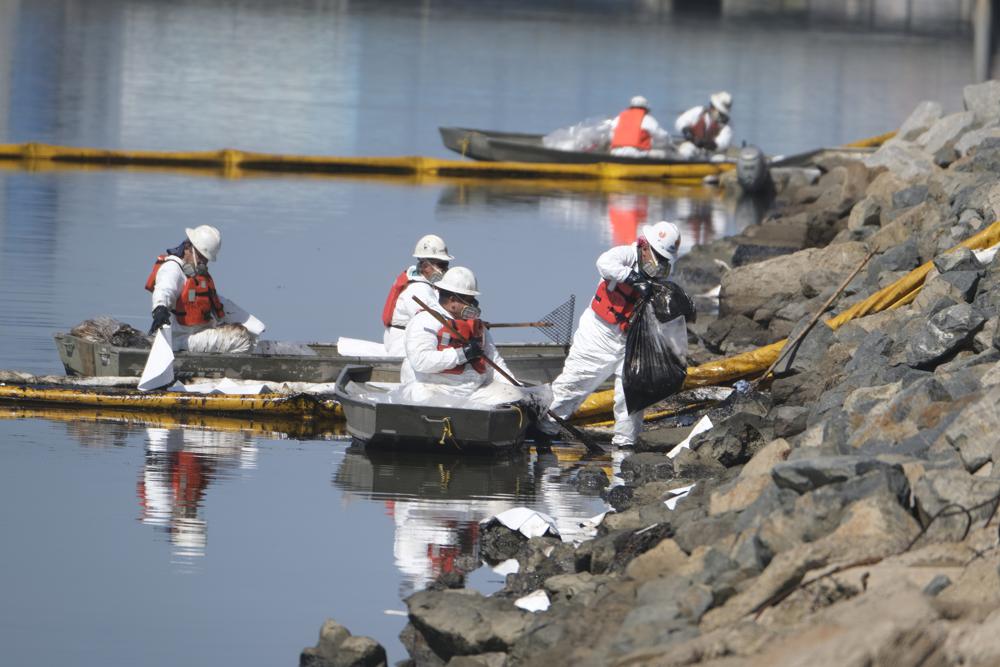
Per the latest update from the Unified Command, a total of only 75 barrels of oil have been recovered (up from 29 bbls reported on Sunday). The 75 bbls no doubt includes some water. It’s unclear as to why so little oil has been recovered (unfavorable offshore conditions? response focused on the shoreline?). Perhaps the volume of oil spilled was less than the 3000 barrel estimate. A few hundred barrels of oil can generate a very large slick.
As BOE and others have suggested, the most likely cause of the spill was a ship’s anchor. SkyTruth’s review of satellite data points to that possibility.

The Orange County District attorney seems unhappy with the possibility that (1) the pipeline was struck by an anchor and (2) the leak was in Federal waters:
The Orange County district attorney, Todd Spitzer, said he has investigators looking into whether he can bring state charges for the spill. Spitzer said his jurisdiction ends 3 miles offshore.
Spitzer also said Amplify’s divers should not be allowed near the pipeline without an independent authority alongside them.
AP article
The DA’s insistence that independent divers accompany the company’s divers may be a first in the history of the US offshore program. Isn’t video documentation sufficient? Diving is not risk free.
Comments on the Huntington Beach Pipeline Spill
Posted in accidents, California, energy policy, Offshore Energy - General, Regulation, tagged Beta Unit, BSEE, Huntington Beach, pipeline spill, Platform Elly on October 4, 2021| Leave a Comment »
- Large, sudden pipeline spills are usually caused by external impacts (e.g. anchor dragging). If that was not the case, the spill was presumably caused by significant, undetected corrosion.
- The internal (smart pig) and external inspection history of the pipeline will be an important part of the investigation.
- Another important consideration is the extent to which pressure and volumetric monitoring systems were in place and functioning. Early reports imply that the leak was not discovered until the slick was observed on the water surface.
- An excellent 2008 case study details the challenges that were experienced in internally inspecting this pipeline. This presentation provides good background information on the pipeline and the initial internal inspection efforts.
- Why isn’t BSEE, the Federal bureau that inspects the Beta Unit facilities and approves the spill response plan, part of the Unified Command? BSEE is also a leader in spill response research.
- Per the Unified Command, 1218 gallons of oil-water mix were recovered as of Sunday. This is pretty minimal – only 29 barrels (including water) and <1% of the estimated spill volume, but is not atypical for mechanical spill response operations. It may also be that the 3000 bbl spill estimate was overly conservative (i.e. high).
- Also per the Unified Command: “One oiled Ruddy duck has been collected and is receiving veterinary care. Other reports of oiled wildlife are being investigated.” If this was the extent of wildlife impacts as of Sunday, some of the reporting on this spill has been hyperbolic.
- A comprehensive review of the balkanized regulatory regime for offshore pipelines is long overdue, as is an update to Federal pipeline regulations.
- This spill, Hurricane Ida, and offshore COVID issues have further demonstrated the importance of BSEE. Why has the Administration still not appointed a BSEE Director? Keep in mind that this appointment does not require Senate confirmation.
Gulf of Mexico Production
Posted in Gulf of Mexico, hurricanes, Offshore Energy - General, oil, tagged EIA, Gulf of Mexico, Hurricane Ida, oil production on October 1, 2021| Leave a Comment »
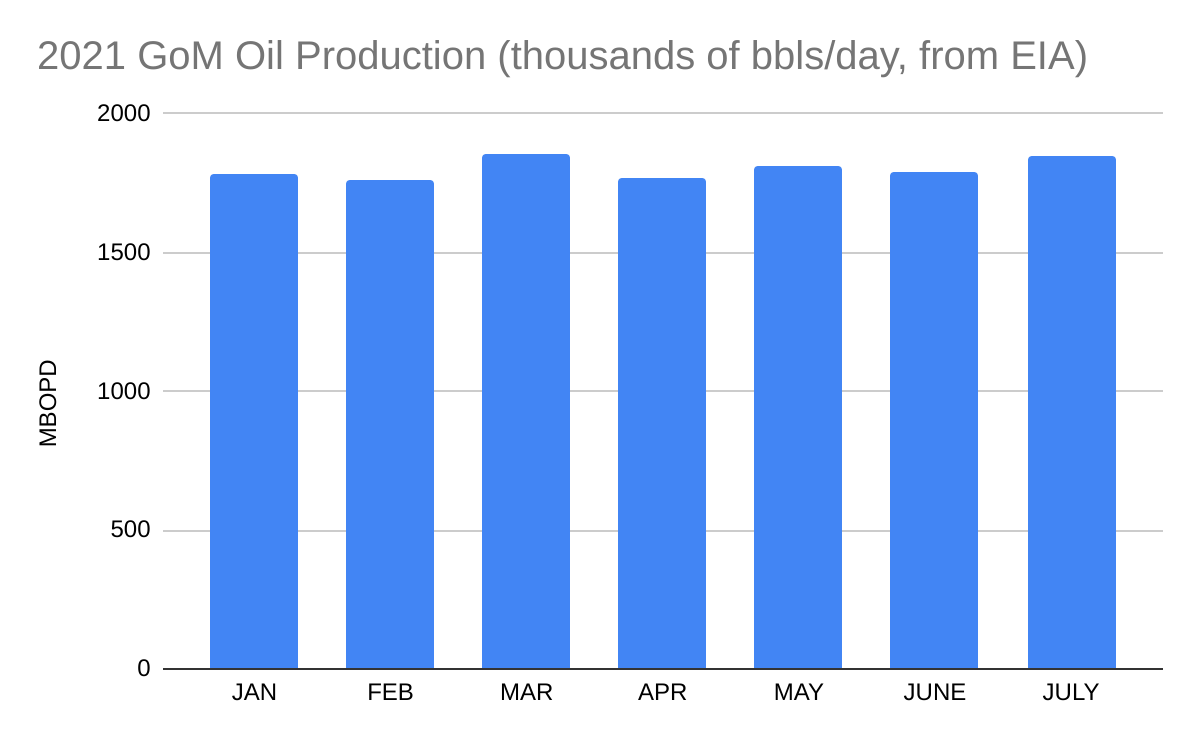
EIA just released the July data, and GoM oil production averaged 1.845 million BOPD, which was consistent with expectations. 2021 production through July was relatively stable averaging from 1.762 to 1.845 million BOPD. This will, of course, change dramatically when the August data are released, and even more so for September. Most production was shut-in for Ida beginning on 8/28 and some production has not yet been restored. Per BSEE’s final update (9/23), about 300,000 BOPD remained shut-in.
The EIA data are plotted below:
“Boats see boats; boats don’t see platforms”
Posted in accidents, Gulf of Mexico, offshore, Offshore Energy - General, tagged Gulf of Mexico, John Borne, MMS, State Command, USGS on September 30, 2021| Leave a Comment »
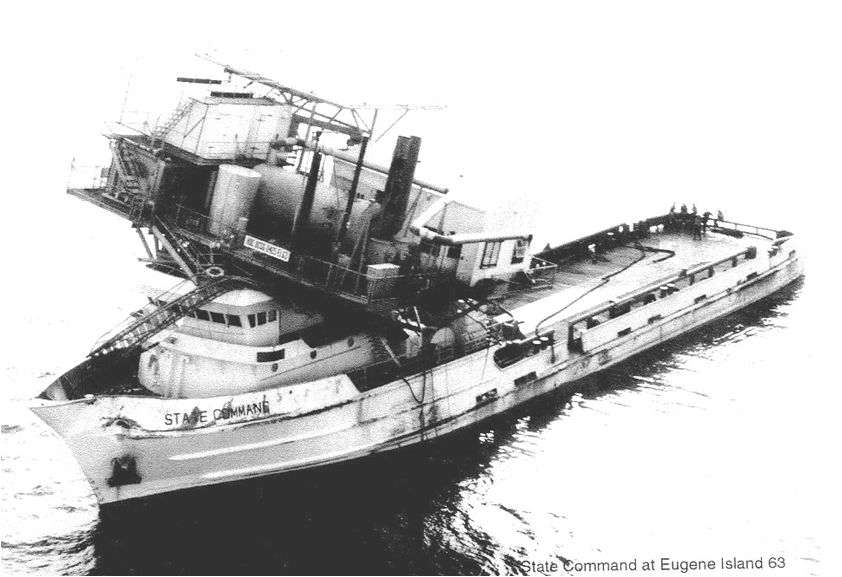
This comment by the late John Borne, an outstanding USGS and MMS engineer/philosopher, reflects on the persistent vessel allision incidents over the years. The reporting of these incidents was spotty, but some could not be denied. Pictured below is the State Command arriving in Morgan City (~1973?) topped by a platform deck. Fortunately, the platform was unmanned and there were no injuries to vessel personnel. You could say this was the first floating production platform 😃
Gulf of Mexico Incident Trends
Posted in accidents, Gulf of Mexico, Offshore Energy - General, Regulation, tagged BSEE, Gulf of Mexico, incidents, safety, trends on September 27, 2021| Leave a Comment »

Attached is an outstanding presentation by Jason Mathews that reviews the latest Gulf of Mexico incident data and trends. The collection and analysis of incident data are critical to safety achievement and continuous improvement, and are among an offshore energy regulator’s most important functions. Kudos to BSEE’s Gulf of Mexico Region for their timely and comprehensive reviews and alerts.
CALIFORNIA OCS PLATFORM DECOMMISSIONING OUTLOOK AND CHALLENGES
Posted in California, decommissioning, Offshore Energy - General, tagged California, decommissioning, John B Smith on September 24, 2021| Leave a Comment »

For those interested in California offshore decommissioning, attached is an excellent update presented at a 2020 forum by my former colleague John Smith.
Green Hydrogen and the Great Rick Carrier
Posted in Offshore Energy - General, Offshore Wind, Wind Energy, tagged Bald Eagle Energy, Buchenwald, DDay, Green Hydrogen, Lynn Ramsey, MMS, Offshore Wind, Rick Carrier on September 23, 2021| Leave a Comment »

The growing interest in green hydrogen inspired me to write a post about Rick Carrier, a war hero and visionary who is largely unknown to the offshore energy community. Rick’s plan for a Mid-Atlantic wind-hydrogen demonstration project was the first offshore wind proposal submitted to the Minerals Management Service, the bureau that initiated the offshore wind program in the U. S.
Rick Carrier lived an amazing life – WWII hero, artist, playwright, diver, conservationist, green hydrogen pioneer, and more. Perhaps most noteworthy were his military accomplishments. He was among the first Americans to land on Utah Beach during the D-Day invasion. He subsequently became the first allied soldier to discover the Buchenwald concentration camp. The next day, April 11, 1945, he marched into the camp with Patton’s Third Army and liberated the prisoners. Rick is pictured above at the 2012 March of The Living, an annual walk down the 3-kilometer path from Auschwitz to Birkenau. In June of 2014, Rick returned to Normandy for a ceremony marking the 70th anniversary of D-Day. Later that year, the President of France awarded him the Chevalier of the Legion of Honor — France’s highest honor.
Rick founded the USA Bald Eagle Command in 1975 to protect the endangered American Bald Eagle. The organization’s efforts played a role in President Reagan’s declaration of June 20, 1982 as National Bald Eagle Day. Through the efforts of this and other conservation groups, the Bald Eagle was removed from the Endangered Species list in 2007.
Rick’s green hydrogen proposal was yet another patriotic venture. Through his non-profit, Bald Eagle Energy, he sought to demonstrate the commercial potential for using offshore wind energy to produce hydrogen from sea water. Unfortunately, the framework for permitting such projects had not yet been established. While we tried to find a way to make the project possible, the obstacles were too great.
RIck passed away peacefully on December 12, 2016, at his home in New York City. It was an honor to have met him and worked with him on his green hydrogen initiative.
Hogan and Houchin Part II: California State Waters
Posted in California, decommissioning, offshore, Offshore Energy - General, tagged California, Hogan, Houchin, MMS, Signal Hill, State Lands Commission on September 22, 2021| Leave a Comment »
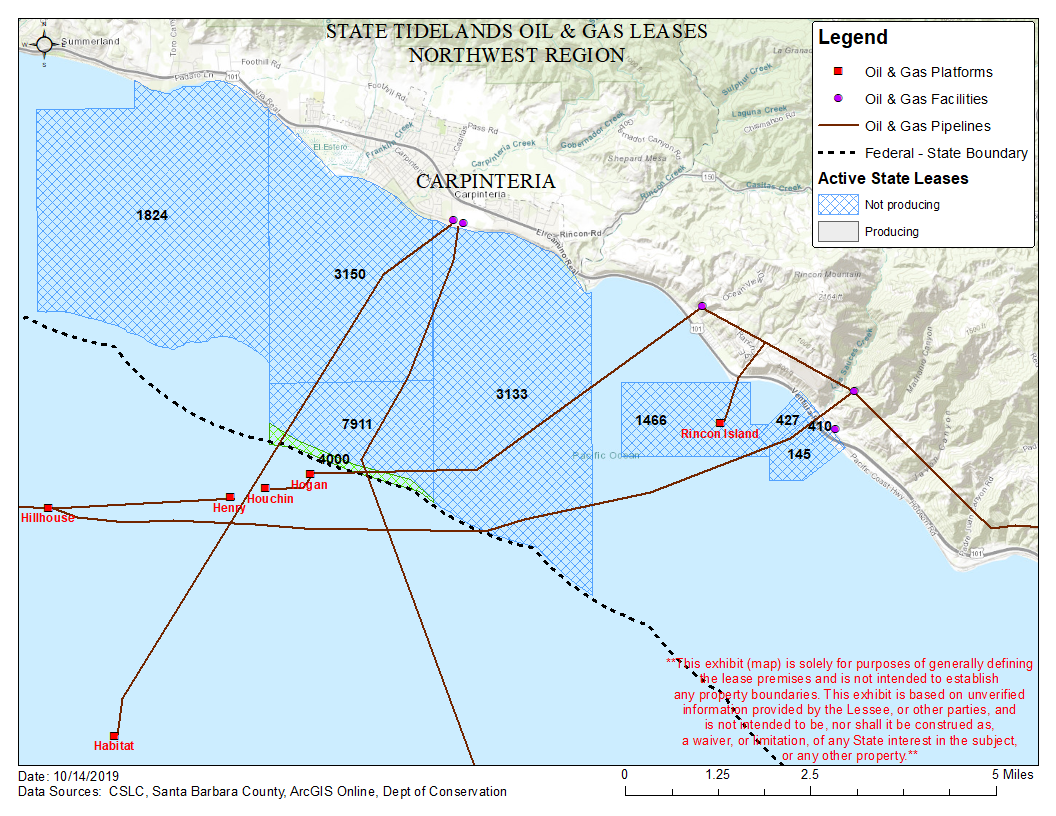
The troubled past of Platforms Hogan and Houchin extends into California State waters. In the 1990’s, Signal Hill and affiliates launched plans to drill directionally from Hogan into adjacent State leases 4000, 7911, and 3133 (see map above). These plans were dubious from the outset given MMS (Federal regulator) concerns about Hogan’s structural integrity. The planning process was never successfully concluded and the 3 State leases were terminated in 2019. For full details see this California State Lands Commission report:
In a related action, the State is suing Signal Hill for unpaid rentals on the pipeline lease that carried production from Hogan to shore. The amount due is approximately $287,000.
The troubling case of Platforms Hogan and Houchin, Santa Barbara Channel
Posted in California, Offshore Energy - General, Regulation, tagged BOEM, BSEE, decommissioning, Hogan, Houchin, OIG, Santa Barbara Channel on September 21, 2021| Leave a Comment »
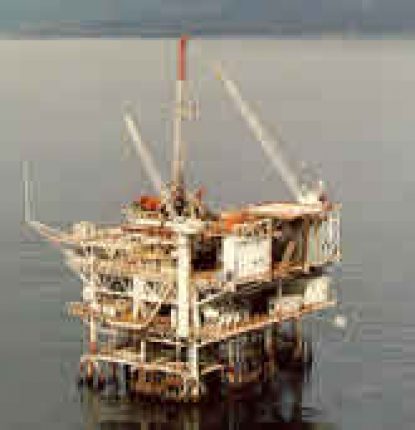
Platforms Hogan and Houchin were installed 52 and 53 years ago respectively on Lease OCS P-0166 in the Santa Barbara Channel. The lease, which had initially been issued to Phillips Petroleum, Cities Service Oil Co., and Continental Oil Co., was assigned to Signal Hill Service effective 2/19/1991. The assignment was approved despite concerns within the Minerals Management Service (MMS) about the financial strength of Signal Hill and the technical competence of Pacific Operators Offshore Inc (POOI), the affiliate that would operate the facilities.
Three decades of frustration followed for MMS, BOEM, and BSEE regulators in the Pacific Region. Per the terms of the assignment, Signal Hill was required to establish an Abandonment Escrow Account, funded from oil production revenue, with a “target balance” equal to the abandonment cost, plus 25 percent. These payments were seldom made in a timely and consistent manner.
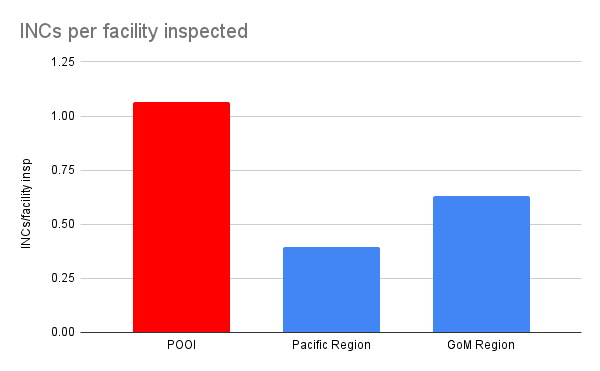
Compliance with safety regulations was also poor. In that regard, violations data are consistent with anecdotal reports from inspectors. POOI accounted for a high percentage of the regional Incidents of Noncompliance (INCs), and Platforms Hogan and Houchin had INC/inspection ratios that were far higher than Pacific or Gulf of Mexico platform averages (see inspection data below).
| INC’s | Warnings | Component Shut-ins | Facility Shut-ins |
| POOI | 485 | 562 | 46 |
| All companies (Pacific Region) | 1965 | 3103 | 281 |
| POOI % of total | 24.6 | 18.1 | 16.4 |
A 9/20/2020 Inspector General report found significant irregularities in the use of funds from an offshore production company’s escrow account. While the IG’s summary (pasted below in its entirety) doesn’t say so, the company is assumed to be Signal Hill.
The OIG investigated allegations that an offshore oil and gas production company improperly paid operational expenses with money from an escrow account dedicated to paying expenses related to decommissioning offshore platforms in Federal waters.
DOI OIG, 9/20/2020
We found that the company routinely used funds from its decommissioning account to pay what appeared to be various operating expenses. We also found instances where the company appeared to claim reimbursement for duplicate expenses.
Based on our findings, the company submitted credits and adjustments, totaling $1.9 million, to the decommissioning account to cover these expenses and other disbursements. In addition, we referred a number of unresolved expenses for non-decommissioning activities to the Bureau of Safety and Environmental Enforcement and the Bureau of Ocean Energy Management for resolution.
We referred this matter to the U.S. Department of Justice, which declined to pursue it.
Questions:
- Why haven’t BOEM, BSEE, or the OIG released the full report? The public and the offshore industry certainly have a right to know given the potential costs to the taxpayer and the reputational damage to the industry.
- Why was a company with such a poor payment and compliance record allowed to withdraw funds from their decommissioning account to cover operating expenses?
- Signal Hill owes the State $287,000 in unpaid rentals. What unpaid royalties are owed to the Federal government?
- BSEE (2014) estimated decommissioning costs of $74.3 million. What is the current estimate? What is the remaining balance in the escrow account?
- How do the escrow account irregularities affect the decommissioning obligations of prior lessees?
 Bud's Offshore Energy (BOE)