Feeds:
Posts
Comments

Archive for the ‘Gulf of Mexico’ Category

As expected, the White House announced the largest ever permanent ban on offshore oil and gas leasing in the US, and to the best of my knowledge, anywhere in the world.

The sheer magnitude of the ban makes other such withdrawals appear modest by comparison. It’s amazing how bold Presidents (and their handlers) become when they are about to leave office.

The permanent ban includes:

  • The entire Atlantic Outer Continental Shelf (OCS): While there are no current oil and gas leases in the US Atlantic, the region is highly prospective and could contain more than 20 billion barrels of oil equivalent (BOE).
  • The Eastern Gulf of Mexico: This is the OCS area that many petroleum geologists find most attractive. The best prospects are >100 miles from shore which minimizes coastal risks, and the high natural gas potential aligns with Florida legislation supporting the use of gas for power generation.
  • The entire Pacific OCS: While the resources are substantial, their loss has been a foregone conclusion for 25 years. When you can’t even decommission old platforms or restore production on important existing facilities (i.e. the Santa Ynez Unit), how can you possibly expect to issue new leases?
  • The remainder of the OCS offshore western Alaska. The wishes of the majority of Alaskans, who support offshore exploration and development, have been largely ignored for decades.

President-elect Trump has vowed to reverse President Biden’s leasing ban, but that may not be so easy. This is not a matter of simply reversing an executive order. Sec. 12(a) of OCSLA grants the authority to withdraw lands to the President and does not provide for reversal by future Presidents. The attached NYU Law brief concludes that “a subsequent president lacks authority to restore previously withdrawn lands to the federal oil and gas leasing inventory.”

The new Administration will no doubt have a different view than that expressed in the NYU Law brief, but any reversal decision will likely be challenged in court.

Those who wrote and approved Sec. 12(a) should have had more foresight. However, 72 years ago the authors presumably thought Presidents would only use the authority to remove small, especially sensitive areas from leasing consideration, and never thought that a President would remove both of our oceans and much of the Gulf of Mexico!

Congress could of course reverse the Biden bans, but given the complexity of offshore energy issues, such legislation may be difficult to pass.

Read Full Post »

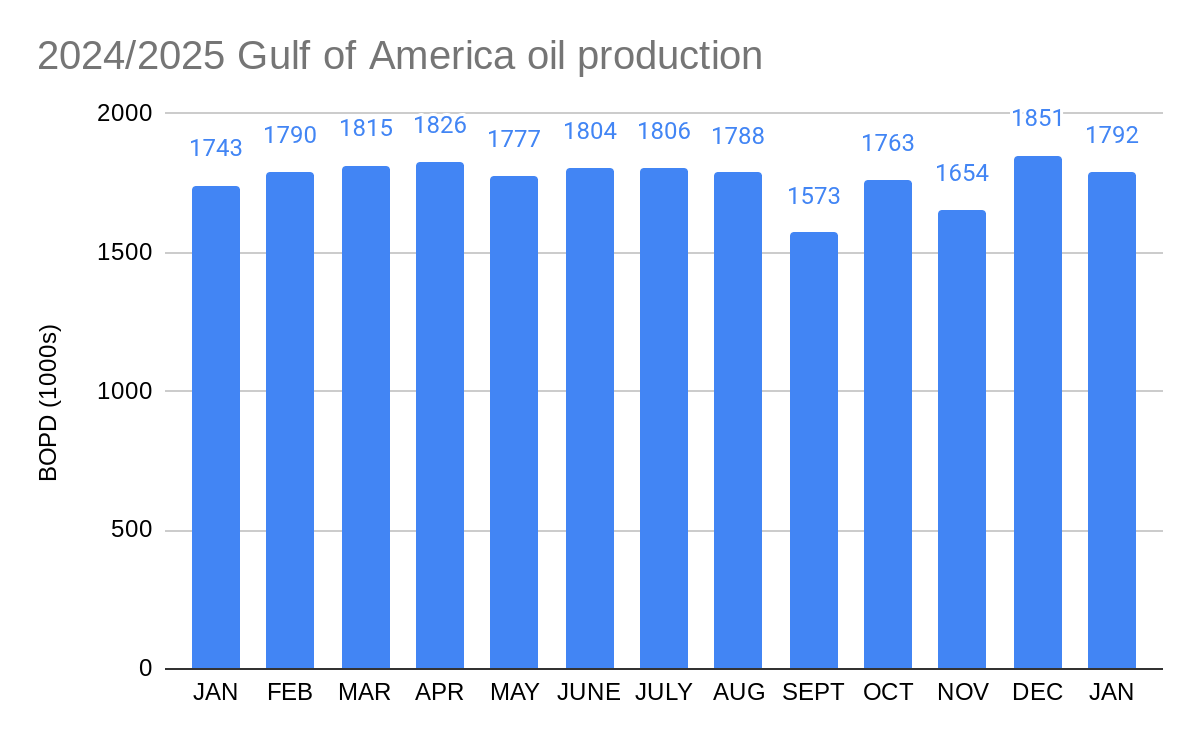
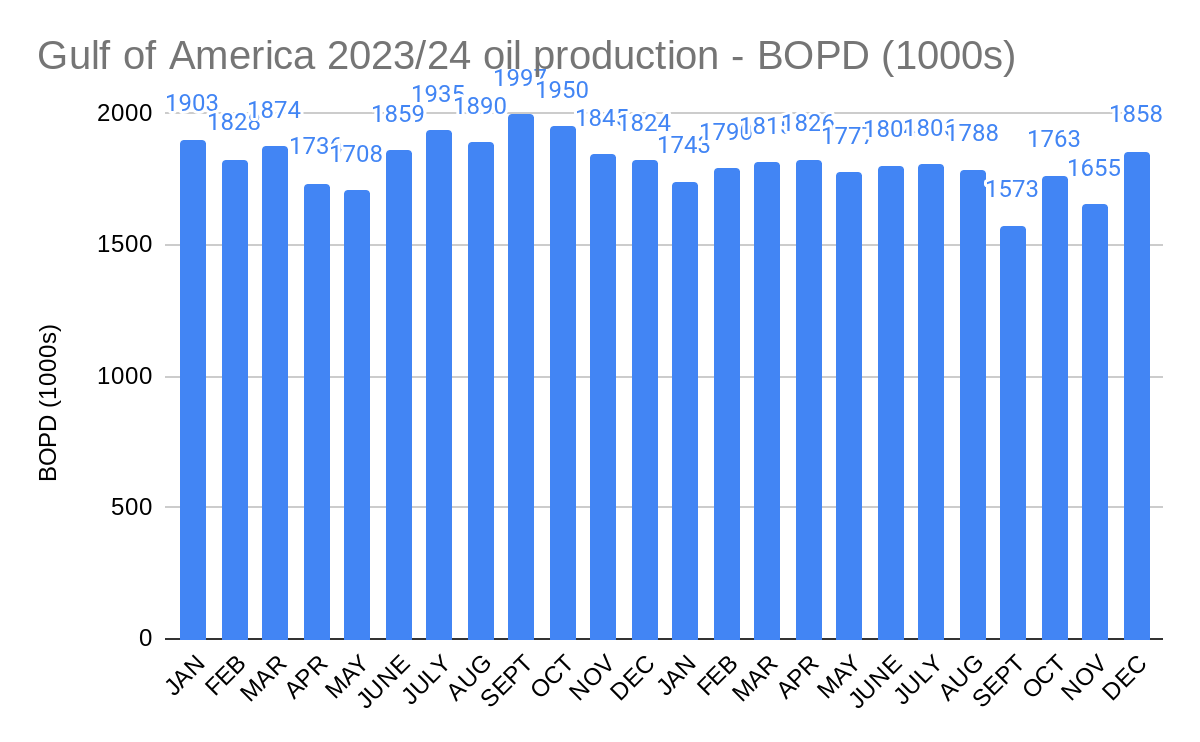
Following the 200,000 bopd decline in Sept. because of Tropical Storms Francine and Helene, Oct. GoM oil production was once again in the normal range for 2024. With the exception of Sept., average 2024 production has been remarkably consistent from month to month.

Read Full Post »

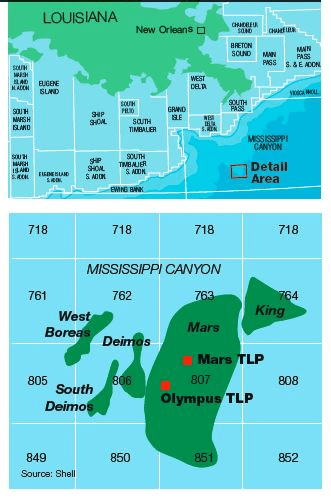
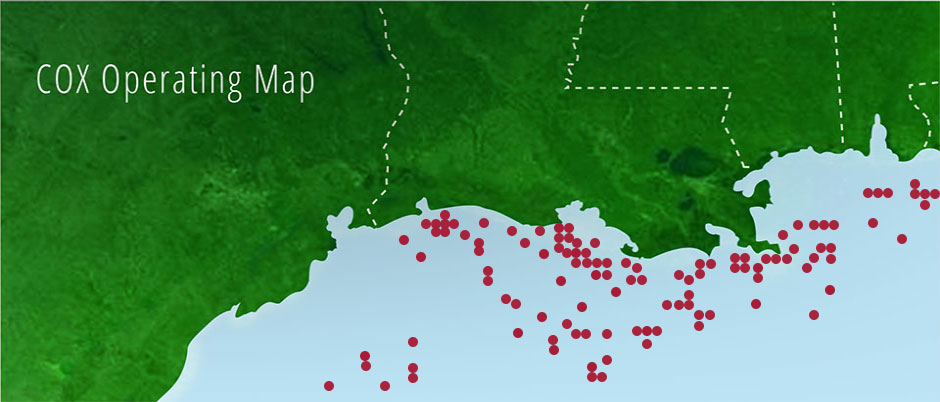
W&T (lease and facility map above) claims that insurers have colluded to damage the company by jointly demanding additional collateral and premiums.

Comments on excerpts from the W&T press release follow:

At the heart of the dispute are rules from the federal Bureau of Ocean Energy Management – BOEM – which require energy producers in the Outer Continental Shelf to provide a bond to pay for well, platform, pipeline and facilities cleanup if the operating company fails to do so.”

Comment: Despite disagreeing with aspects of the BOEM financial assurance rule, this blog has defended the rule against unfair criticism. Better solutions are achievable, but that will require industry leaders from all factions to come to the table with a commitment to reach a balanced agreement that protects the public interest.

“These insurance companies and their unreasonable demands for increased collateral pose an existential threat to independent operators like W&T.”

Comment: If insuring offshore decommissioning is so risk-free and lucrative, why aren’t other companies entering the market?

Several states, including Texas, are challenging the BOEM rule and in one case they specifically cite W&T as an example of how the rule could be misused to irreparably harm energy producers.

Comment: As previously posted, the concerned States should propose alternative solutions that would promote production while also protecting taxpayer interests. Arguing that decommissioning financial risks are not a problem is neither accurate nor a solution.

“In over 70 years of producer operations in the Gulf of Mexico, the federal government has never been forced to pay for any abandonment cleanup operations associated with well, platform facility, or pipeline operations.”

Comment: Shamefully, from the standpoints of both the offshore industry and the Federal government, that statement is no longer true. The taxpayer has now funded decommissioning operations in the Matagorda Island Area offshore Texas (BSEE photo below) and more significant decommissioning liabilities loom.

Other thoughts:

Read Full Post »

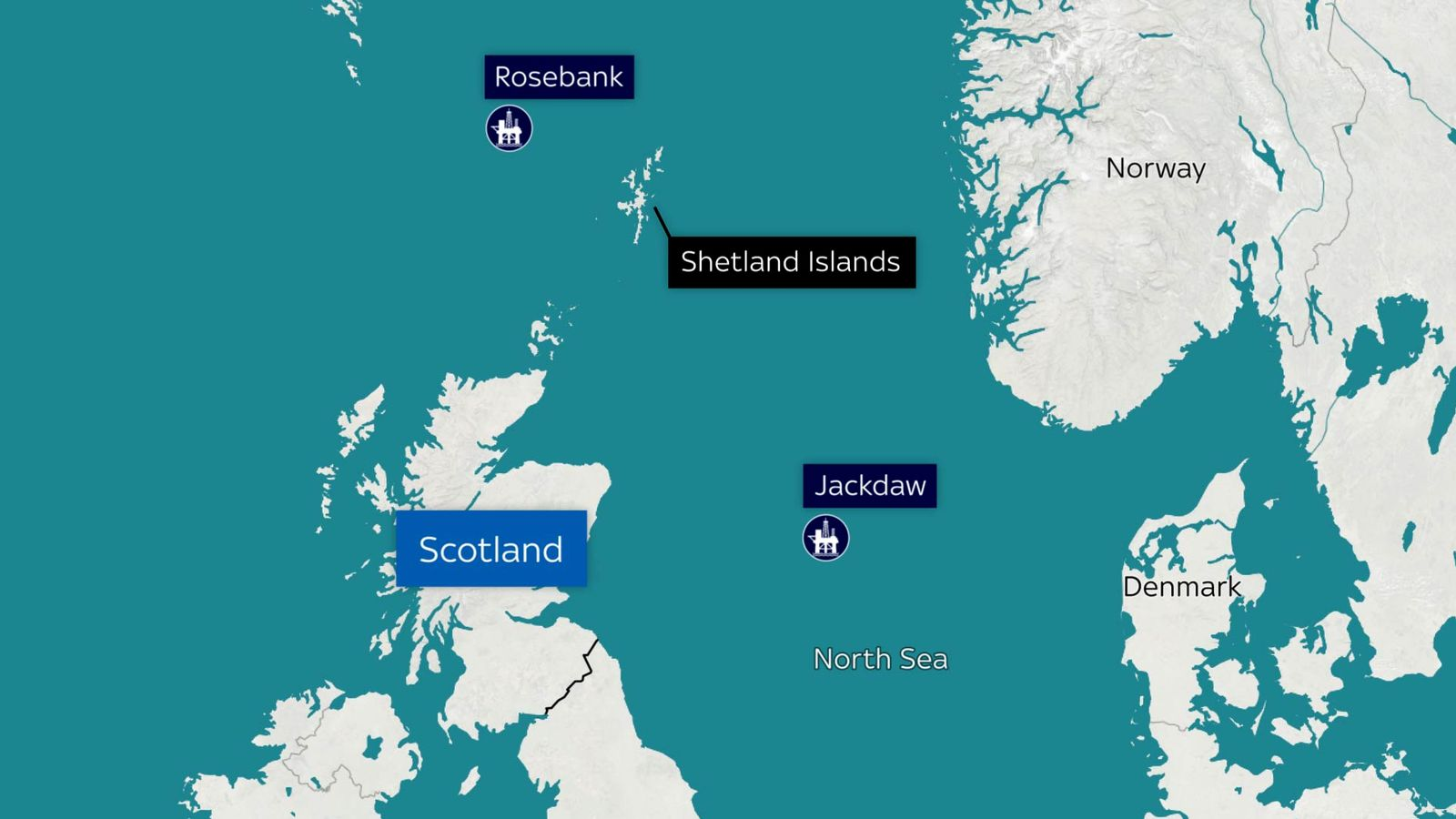
Northern Endurance Partnership (bp, Equinor, and Total) has been awarded the UK’s first permit to “store” CO2 beneath the North Sea. NEP plans to begin construction in the middle of 2025 with start-up expected in 2028 (bet the over!). Climate solution or costly virtue signaling at the public’s expense?

Fortunately, from the standpoint of US consumers and taxpayers, the push for carbon disposal in the Federal waters of the Gulf of Mexico has stalled, perhaps permanently. Oct.1 marked the 2 year anniversary of the 94 leases improperly acquired by Exxon at Sale 257 for carbon disposal purposes. Those leases will expire in 33 months (with the remaining 105 rogue leases expiring 1-2 years later) barring another legislative maneuver by industry advocates.

All of the previously posted questions about carbon disposal in the Gulf of Mexico remain, and most apply elsewhere. In particular, detailed cost-benefit analyses and risk assessments for these projects have not been provided. The intended permanency of offshore, subsurface carbon disposal raises complex monitoring, maintenance, liability, and decommissioning issues.

What are the carbon disposal proponents selling and why should governments be buying? If CO2 emissions are a significant threat to society (and informed opinions differ), is carbon disposal a cost effective solution? Policy decisions on subsidies for carbon disposal will be a good indication of how serious the new administration is about cutting Federal spending.

199 GoM oil and gas leases were wrongfully acquired for carbon disposal purposes. At Sale 261, Repsol acquired 36 nearshore Texas tracts in the Mustang Island and Matagorda Island areas (red blocks at the western end of the map above). Exxon had acquired 163 nearshore Texas tracts (blue in map above) at Sales 257 (94) and 259 (69).

Read Full Post »

Timeframe for government and industry actions following the 2005 hurricane season.


Optimally, the regulator establishes clear objectives for the operating companies and a schedule for achieving those objectives. This approach was demonstrated with great success following the 2005 hurricane season (Katrina and Rita) when numerous mooring system and other stationkeeping issues were identified.

Minerals Management Service Director Johnnie Burton sent a letter (attachment 1) to industry leaders calling for a face-to-face meeting with Department of the Interior Secretary Gale Norton. The Secretary outlined her concerns and informed offshore operators that there would be no drilling from moored mobile drilling units or jackup rigs during the next hurricane season until the issues identified during Hurricanes Katrina and Rita were addressed.

The collaborative effort that followed was a resounding success (2nd attachment). In addition to addressing station keeping concerns, a comprehensive list of hurricane issues was developed. Industry and government then worked together to assess mitigations and develop new standards and procedures. The essential MODU standards were completed before the 2006 hurricane season, and all of the related concerns were effectively addressed prior to the 2009 hurricane season. Had the government elected to promulgate regulations to address all of these issues, much of this work would have never been completed.

Read Full Post »

The attached BSEE document provides guidance for determining pollution inspection frequencies for unmanned facilities. Thoughts:

  • Reasonable risk-based approach
  • A minimum of bi-weekly visual and physical inspections for low risk platforms producing dry gas
  • Any platform with significant oil production and storage, and no real time monitoring system, will have to be visually inspected at least every 3 days (daily if other risk factors apply) and boarded weekly
  • Any platform that had spillage totaling > 1 bbl in the past 2 years will have to be visually inspected every other day and boarded weekly.
  • Provides for the application of technology (cameras, drones, innovative monitoring systems) to reduce inspection frequencies.

Read Full Post »

As expected, the Gulf of Mexico’s remarkable 7 month production consistency streak ended in September as a result of shut-ins associated with Tropical Storms Francine and Helene. Nonetheless, average daily production still amounted to 88% of the ~1.8 million bopd average that had been achieved for the previous 7 months. Rather impressive resiliency!

Read Full Post »

The EIA reports an 8% increase in 2023 US associated gas production as crude oil production rose to record levels.  The Permian Basin, the dominant US crude oil producer, is unsurprisingly the leading associated gas producer.

EIA’s analysis inexplicably ignores the Gulf of Mexico OCS. The Gulf produced an average of 1.64 bcf/d of casinghead (associated) gas in 2023, ranking the GoM just behind the Eagle Ford and significantly above the Niobrara and Anadarko regions (see chart above). It’s also noteworthy that most production from the regions on the EIA chart is from private land, and is not constrained by 5 year leasing plans and other restrictive Federal policies.

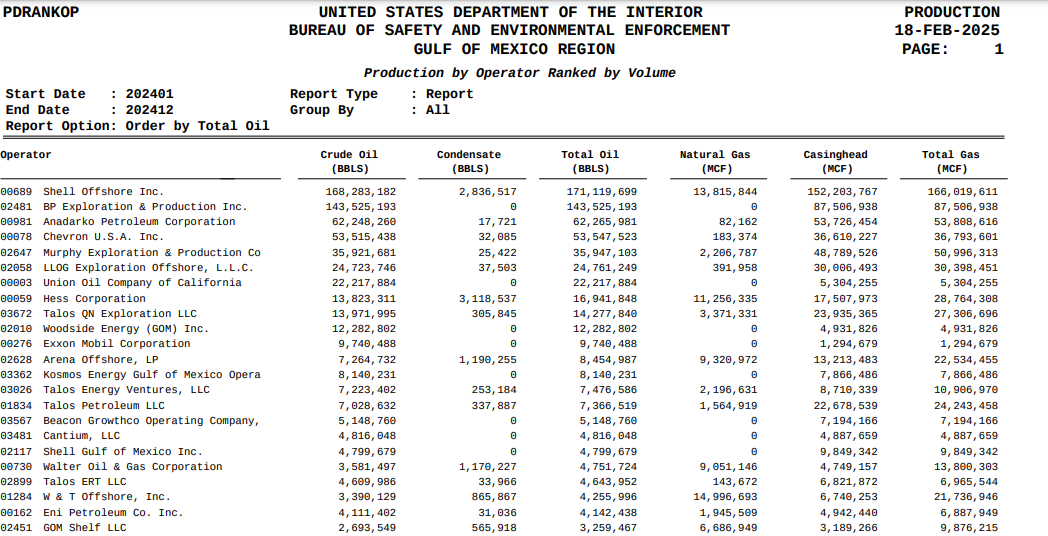
80% of GoM gas production is from deepwater leases. The % of associated gas produced on deepwater leases is even higher. The 2 leading GoM gas producers, Shell and bp, only operate deepwater leases. The % of their 2023 gas production that was associated gas was 93% for Shell and 100% for bp.

Read Full Post »

Mike Werth’s response to Jim Kramer’s question about US production leadership is spot-on (see the clip below).

Kudos to Kramer for visiting Chevron’s Anchor platform in the Gulf of Mexico. More business/energy reporters and government officials with energy responsibilities need to (1) learn more about offshore oil and gas exploration and development and (2) visit offshore facilities.

Read Full Post »

The streak of unprecedented Gulf of Mexico oil production stability was extended to 7 months in August.

As a result of shut-ins for Tropical Storms Francine and Helene, the streak will end when the production for Sept. is posted.

Read Full Post »

« Newer Posts - Older Posts »