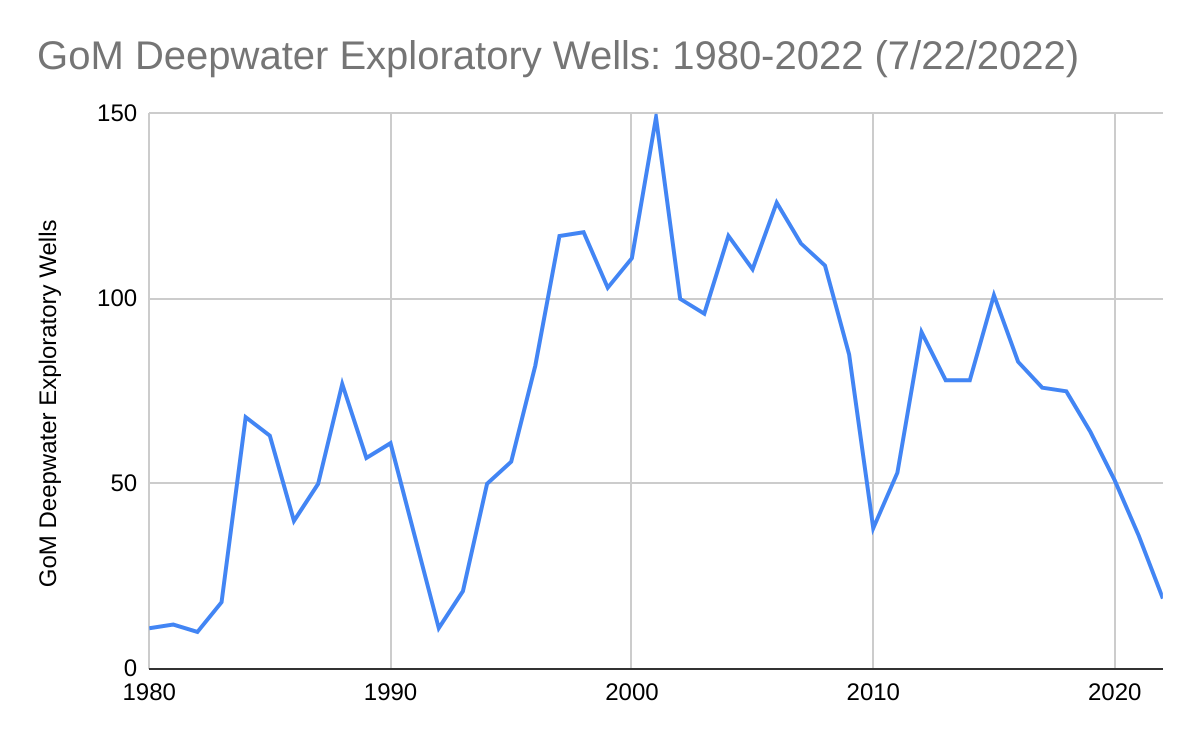
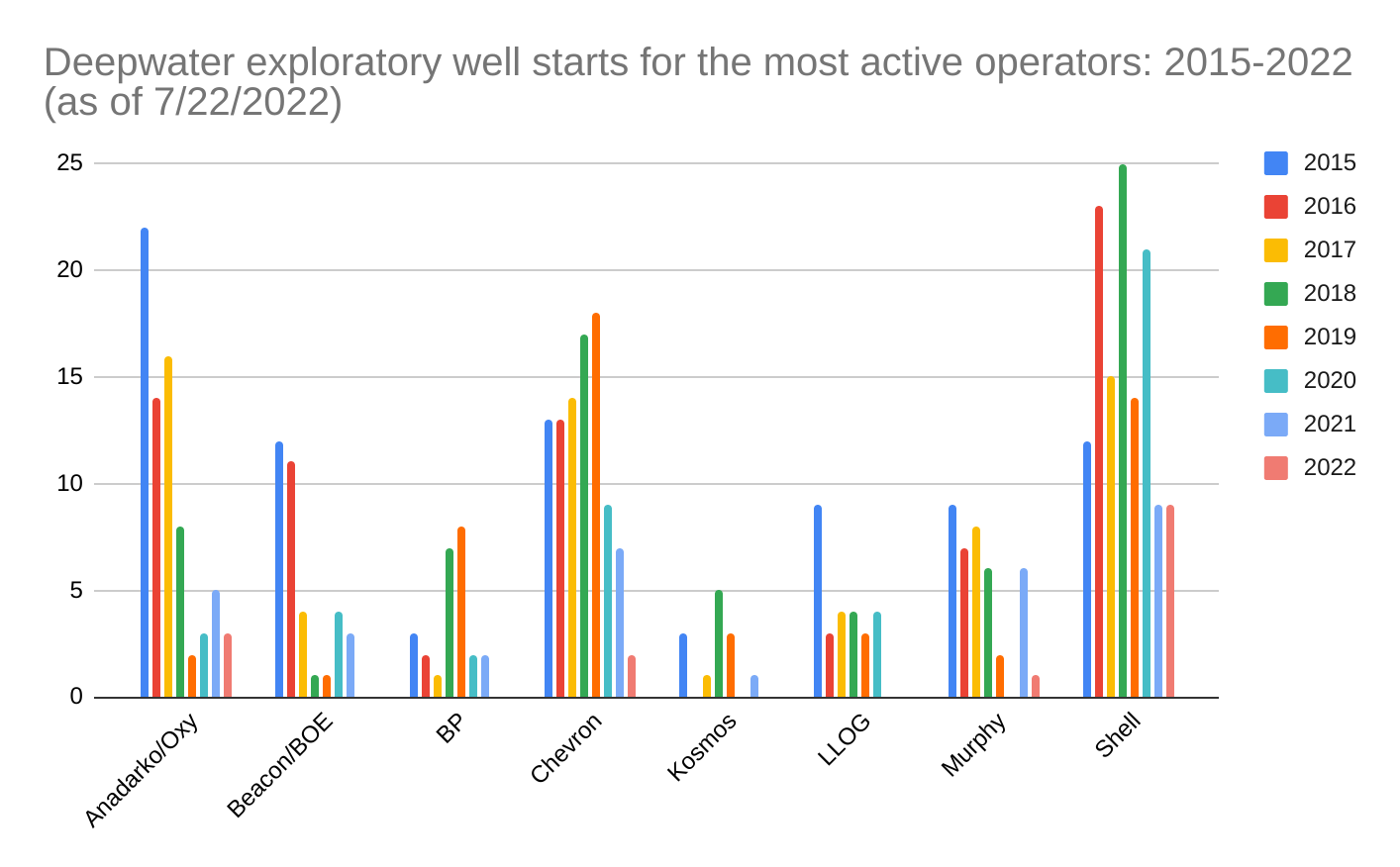
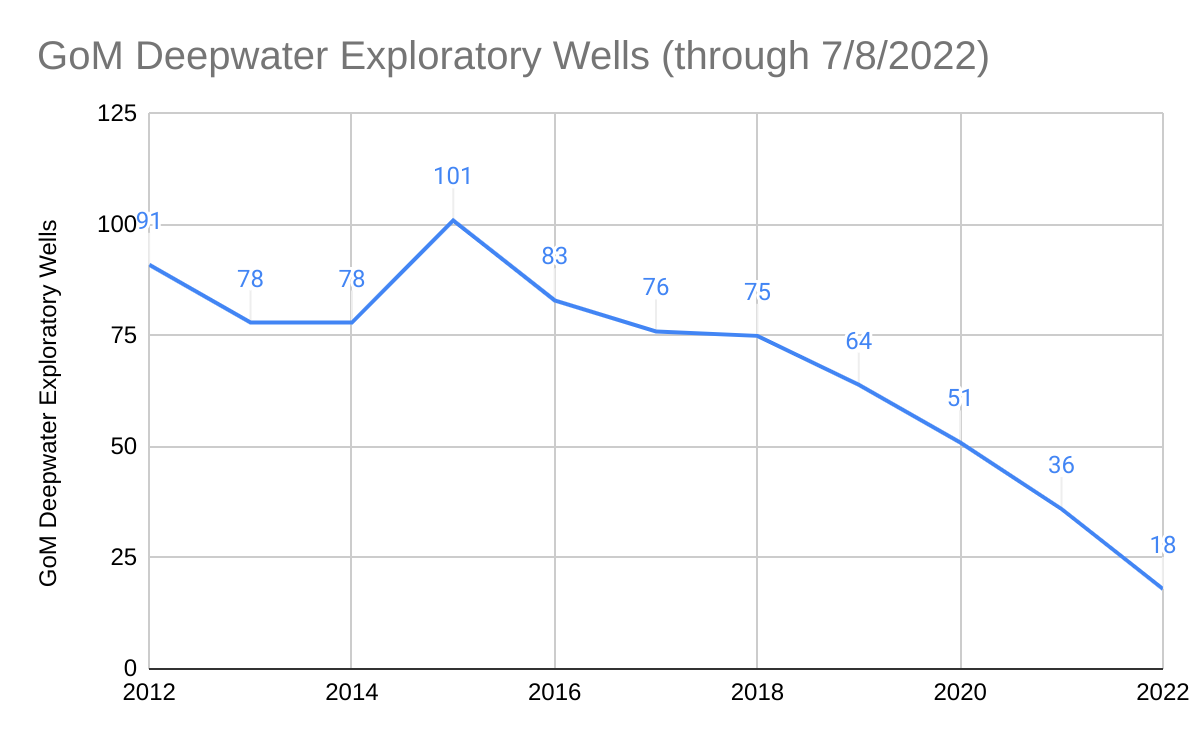
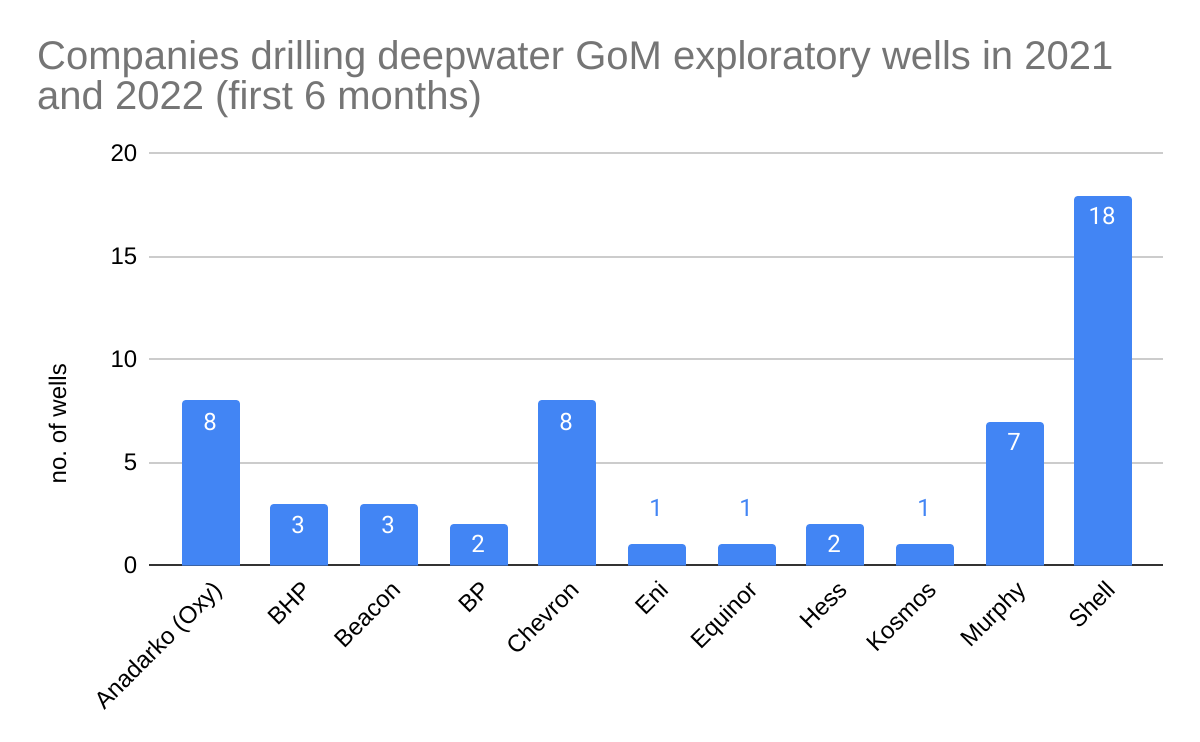
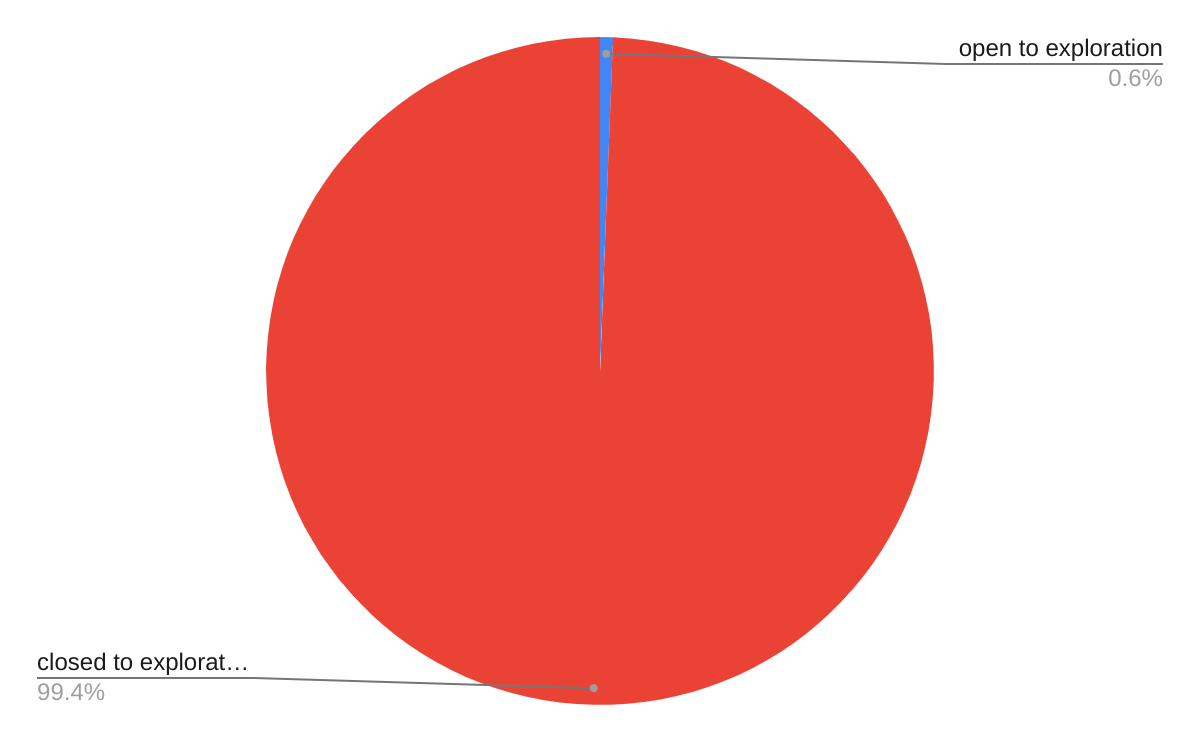
The rig count remains low at 12 (see the updated chart below). Per BSEE’s borehole file, only 3 deepwater exploratory wells have been spudded in 2022 YTD (2/21) – one each for Shell, Hess, and Anadarko.
What’s going on? Better opportunities elsewhere? Uncertainty about lease sales? Concerns about legal challenges and the future of the US offshore program?
Meanwhile, however, drillers may be running out of sweet spots in the shale basins of the country. In an article citing well data, the Wall Street Journal reported earlier this month that because of the quick depletion rates of shale wells, low-cost resources are giving way to higher-cost deposits. And this is motivating a warier approach to production growth.
The shale revolution made the US a net oil exporter, but skepticism about shale production forecasts suggests the need for other supply sources. Given the shale uncertainty and the unrealistic expectations regarding the energy transition, greater US dependence on imported oil is on the horizon. This bodes well for OPEC, but not so well for US and international consumers.
On 2/11/2022 Judge Cain (Western District of Louisiana) issued ruled that a Biden executive order contradicts Congress’ intent regarding the consideration of global effects:
The Court finds that EO 13990 contradicts Congress’ intent regarding legislative rulemaking by mandating consideration of the global effects. The Court further finds that the President lacks power to promulgate fundamentally transformative legislative rules in areas of vast political, social, and economic importance, thus, the issuance of EO 13990 violates the major questions doctrine.
Judge Cain’s order seems, at least to this non-lawyer, to contradict the 1/27/2022 ruling by Judge Contreras, DC Federal Court, that BOEM “acted arbitrarily and capriciously in excluding foreign consumption from their greenhouse gas emissions calculation.” The plaintiffs had asserted that BOEM failed to consider the effect that reduced US offshore production (and higher prices) would have on foreign consumption and the associated GHG emissions. (Poverty is good?)
For a second time this week, Fatih Birol, the executive director of the International Energy Agency (IEA), called on the OPEC+ group on Wednesday to narrow the widening gap between its production quotas and the much lower actual supply to the market.
“At a time of rising energy costs and heightened geopolitical tensions, the misguided decision to cancel the only lease sale held last year is contributing to significant uncertainty for U.S. natural gas and oil producers and limiting access to the affordable, reliable energy that’s needed here in the U.S. and around the world. We call on the Department of Interior to join us in this effort and appeal the court’s ruling …
My home State (Commonwealth) of Pennsylvania is producing nearly 10 times as much natural gas as the US OCS (Federal offshore). Who would have dreamed this was possible 20 years ago? Among the states, PA is second to Texas in gas production.
Oil production in Texas is now nearly 3 times as high as on the OCS. In 2010, US offshore production was substantially higher (567 million barrels vs. 427 million barrels).
Thanks largely to Texas, North Dakota, and New Mexico, US oil production is rebounding.
Thanks to TX, PA, LA, AK, WV, OK, NM, and OH, US gas production has also strengthened.
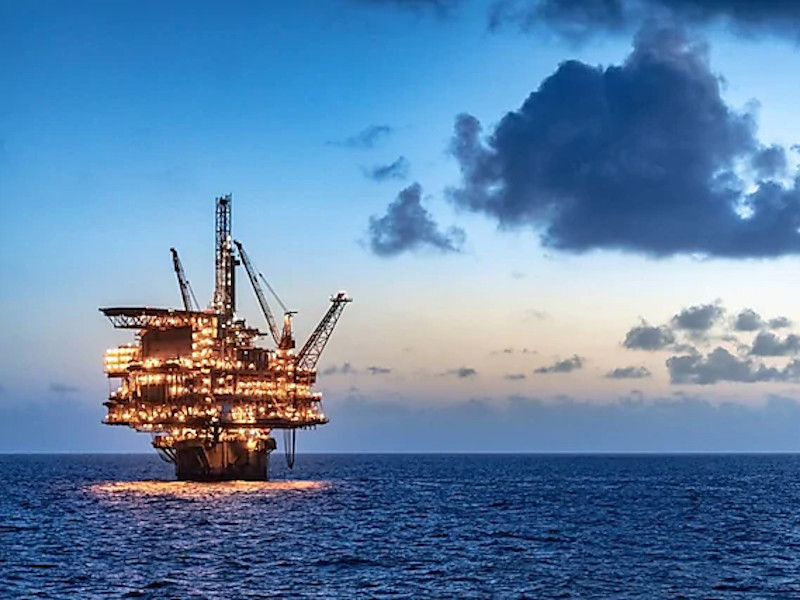
Pictured above are BSEE inspectors from the famed Houma District conducting one of their (always) thorough pre-production inspections at Murphy’s King’s Quay semisubmersible production platform in the Gulf of Mexico. [Trivia question: Who was the first Houma District Supervisor?]
King’s Quay is one of six deepwater platforms expected to begin production in the Gulf over the next several years. Others include Shell’s Vito and Whale, BP’s Argos, Chevron’s Anchor, and Beacon’s Shenadoah. All are semisubmersible platforms, the current design of choice for the deepwater Gulf. Production semis have become smaller and more efficient, greatly improving the economics of deepwater projects.
These platforms feature efficient gas turbines and compression systems that should increase the GHG intensity advantage of deepwater Gulf production.
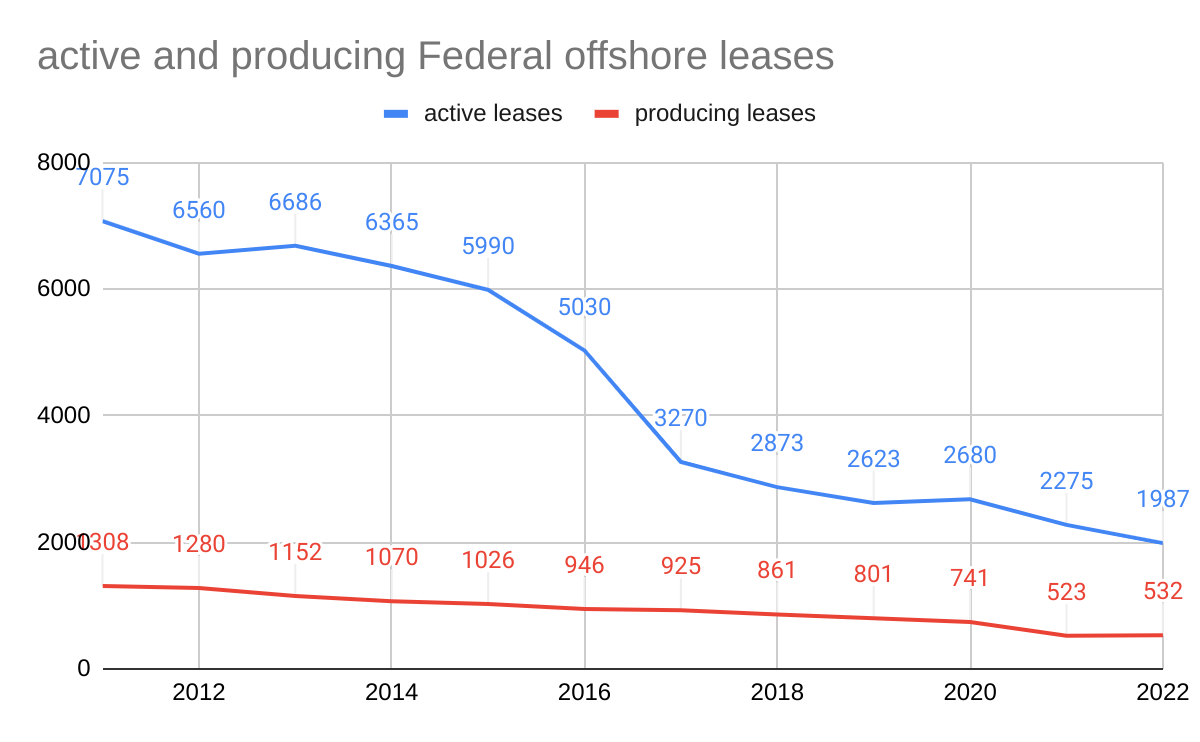
These are the first deepwater production structures to be installed in the Gulf since Shell’s Appomattox in 2018. Per our previous post on this topic, current GoM production rates are not sustainable without regular, predictable lease sales and increased exploration.
This interesting Time Magazine interview with Saudi Arabia’s Energy Minister includes a discussion of the Kingdom’s decision to increase production capacity by 3 million bopd. A few excerpts follow:
Abdulaziz insists Saudi Arabia can roll out multibillion-dollar solar, wind, and hydrogen projects at home, even while remaining a giant oil producer. Choosing between the two is absurd, he says, and those who predict the inevitable decline of fossil fuel use are “living in a fantasy land.”
We believe oil consumption will continue to grow. The demand for oil will continue growing. At what level, I do not know, because the jury is out. Anyone who tells you that they have a good grasp of where and when and how much is certainly living in a fantasy land. We are human, and we could prove to be wrong, but that is exactly what we believe.
Three billion people lack any meaningful energy source, any clean energy, just for cooking. These people use biomass, everything, to burn, including cutting trees. Just to get through the day, they expose themselves to all sorts of hazards, including sickness and even death. For $500 million you would be able to give energy to 750 million people, in order to cook using clean energy, using propane energy, giving them a stove.
BOEM had correctly determined that, from a GHG standpoint, US offshore production was preferable to more carbon intensive foreign production.
The plaintiffs, who are seemingly intent on stopping all oil and gas production regardless of the economic consequences, argued that BOEM failed to consider the “positive” effect that higher prices (the logical result of lower production) would have on reducing demand.
In particular, the plaintiffs asserted that BOEM failed to consider the effect that reduced production (and higher prices) would have on foreign consumption and the associated GHG emissions.
The judge not only decided in favor of the plaintiffs, but ruled that BOEM’s omission was so serious that the lease sale had to be vacated.
The judge reached this decision even though (1) the five year leasing plan expires in June leaving the timing of any future sale very much in doubt and (2) all of the sale 257 bids are now public information compromising the integrity of the leasing process at the next sale (if and when that occurs).
So, if BOEM has to consider the environmental benefits of higher oil and gas prices, shouldn’t they also have to consider the negative economic and environmental effects from the resulting price inflation and energy poverty? Are higher prices, which are most detrimental to the poor and to developing nations, “energy justice?”
If your only objective is the destruction of the US offshore oil and gas program, this was a great decision. For everyone else, this is yet another reason to be concerned about our energy future.