North Sea pioneer, JL Daeschler, reports from Scotland that “more than 13,000 Scots oil and gas jobs have been lost in the space of just one year while over 40% of the UK’s energy needs is being imported ….”
The UK’s self destructive energy policy, while sadly not unique, is particularly troubling because of the North Sea’s enormous contribution to the domestic economy over the past 50 years. As Gillian Bowditch aptly commented:
“We all want to protect our environment and Scotland, with its vast natural resources and expertise in energy, should be leading the way. Instead, we have squandered an opportunity in favour of a facile show of moral posturing.”
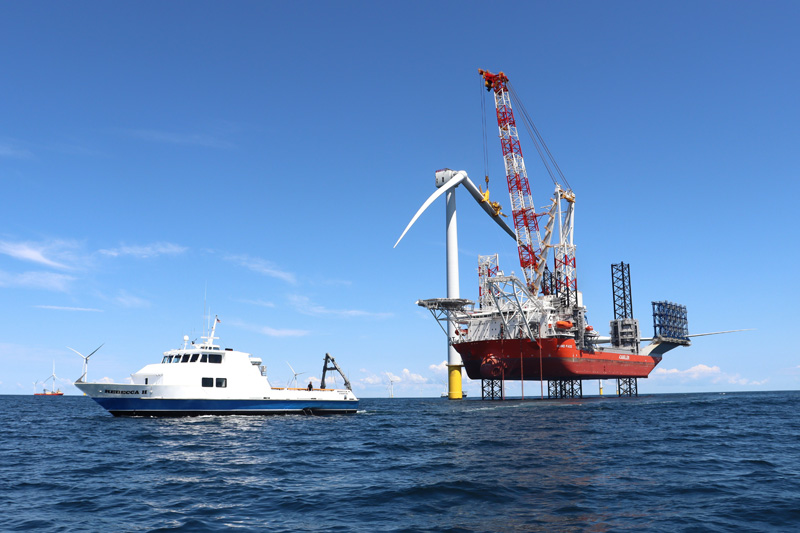
MV Times: “The recent site visit raised questions on the production of the wind farm. The Times has been able to neither verify the report independently nor confirm disparities between visuals on the ground and the Iberdrola report.”
Avangrid, an Iberdrola subsidiary and one of Vineyard Wind’s developers, reported that 17 out of 62 turbines were currently sending power to the Massachusetts grid.
The MV Times counted between five and nine turbines spinning at different points, and for different intervals, in their two hour visit.
BOE comment: Although there are many possible reasons for this discrepancy, it’s reasonable to question the absence of turbine output data. Developers assert that generator specific data are sensitive and could have market implications. However, these turbines are operating on public lands and were in part publicly funded. Output data and other performance metrics clearly have policy implications.
Note that Iberdrola “expect[s] no impact from new federal budget legislation, as it doesn’t impact 1,000 megawatts under construction.”
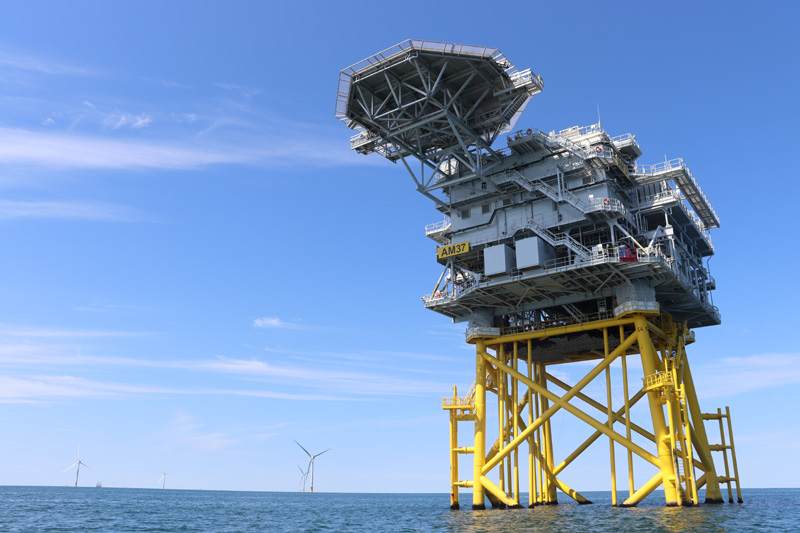
An MV Times photo of a Vineyard Wind substation is pasted below. These substations are large structures. Per the Construction and Operations Plan (COP) for Vineyard Wind, the topsides for a conventional electrical service platform (ESP) (also known as an offshore substation or OSS) are 45 x 70 x 38 m, which is larger in surface area than a typical 6-pile oil and gas platform (~30 x 30 m), and is comparable in size to a large jackup drilling rig.
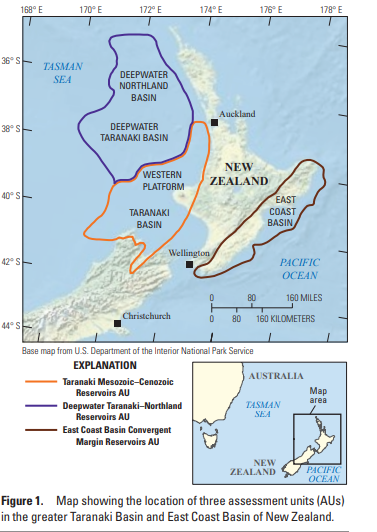
New Zealand may again issue new oil and gas permits following yesterday’s action by parliament.
The extent to which this will result in new exploration remains to be seen. Increased natural gas production is the primary objective.
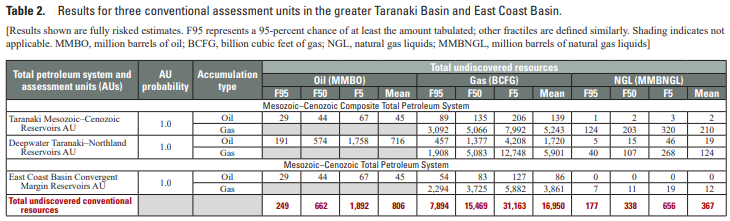
USGS (2020) undiscovered resource estimates are encouraging. The fully risked total for natural gas is 17 Tcf (mean), with a range of 7.9 to 31.1 Tcf. See the table pasted below.
Policy shift at a glance:
April 2018:New Zealand is halting all new offshore oil and gas exploration to become a global leader in the fight against climate change, the centre-left government said Thursday, but opponents accused it of “economic vandalism”.
June 2024: The country’s coalition government is preparing to invite energy companies to resume exploration in the three major offshore fields that supply most of its gas. It comes after National Grid operator Transpower was last month forced to warn families to limit their electricity usage to avoid a shutdown during a cold snap.
July 31, 2025: Parliament reverses the law banning new offshore oil and gas exploration permits.
“By rescinding WEAs, BOEM is ending the federal practice of designating large areas of the OCS for speculative wind development, and is de-designating over 3.5 million acres of unleased federal waters previously targeted for offshore wind development across the Gulf of America, Gulf of Maine, the New York Bight, California, Oregon, and the Central Atlantic.”
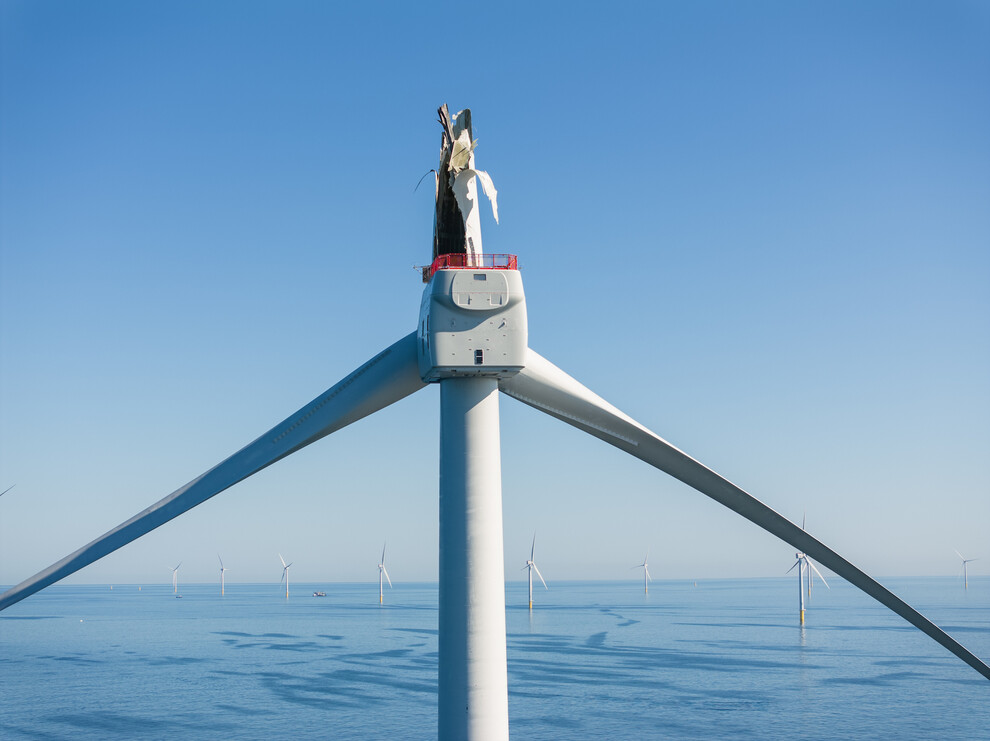
On Tuesday morning, the Nantucket Select Board blasted Vineyard Wind and gave the company 2 weeks to respond to their 15 demands. The Nantucket Current provides good coverage of the press conference. The specific demands are listed below.
Text emergency notifications to designated Town officials within 1 hour.
Alert the same officials when blade monitors detect anomalies.
Share with Nantucket the content of any written communications with or from federal agencies regarding project failures that have impacts on Nantucket.
Email detailed monthly project updates to the Select Board and Town Manager.
Present updates and take public questions at Select Board meetings upon request and no less than quarterly.
Respond to written questions from the Select Board within three business days.
Provide relevant project reports within 1 week of submission to any agency.
Share all studies or data reports on adverse effects within five business days of receipt.
Disclose correspondence with regulatory agencies within 15 business days.
Notify the Town if the company is asserting any confidentiality claims to shield public disclosure of reports or data in regulatory filings.
Pay liquidated damages ($250,000) per violation of the above communication protocols.
Pay liquidated damages ($25,000) per turbine per day) for each day that turbine lights are on without the Aircraft Detection and Lighting System (ADLS) being active.
Within 2 months, initiate a process to seek public input on new emergency response plans—including blade failure scenarios.
Establish and maintain a $10 million escrow fund to ensure coverage of cleanup costs from future failures.
Permanently suspend new projects if any future incident forces beach closures or shellfish harvesting bans for seven consecutive days or 14 total days in any 6-month period.
I observed the press conference on the Town’s YouTube channel, and my sense is that this may be Vineyard Wind’s last chance to amicably resolve these issues. Board member Dawn Hill, who now regrets signing the increasingly unpopular Good Neighbor Agreement with Vineyard Wind, didn’t hold back when she said:
“These wind turbines are bigger, brighter, and much more impactful than we ever thought, and not to mention the environmental hazard from failures. But my choice would be with our new, federal administration to really wake up and try and put an end to these things, because they’re not worth it to the coast of the United States.”
NRW contracted with Array Petroleum to operate the former Cox Assets. Array subsequently sued NRW, asserting that NRW received $78,000,000 in revenue, but disbursed only about $48,000,000 to pay Array’s invoices and those of the subcontractor.
The court filing claimed that NRW failed to pay Array $2.5 million, the subcontractors $10.7 million, and the United States $12 million. A large share of the subcontractor costs were probably for well operations given that 21 Array workover applications were approved in 2024 and 2025. The $12 million due to the Federal government is reportedly for royalty payments. Were any revenues set aside for decommissioning liabilities?
Array’s lawsuit was dismissed by the court on January 3, 2025, after a joint motion to dismiss was filed by the defendants. Information on the reasons for the dismissal is not publicly available.
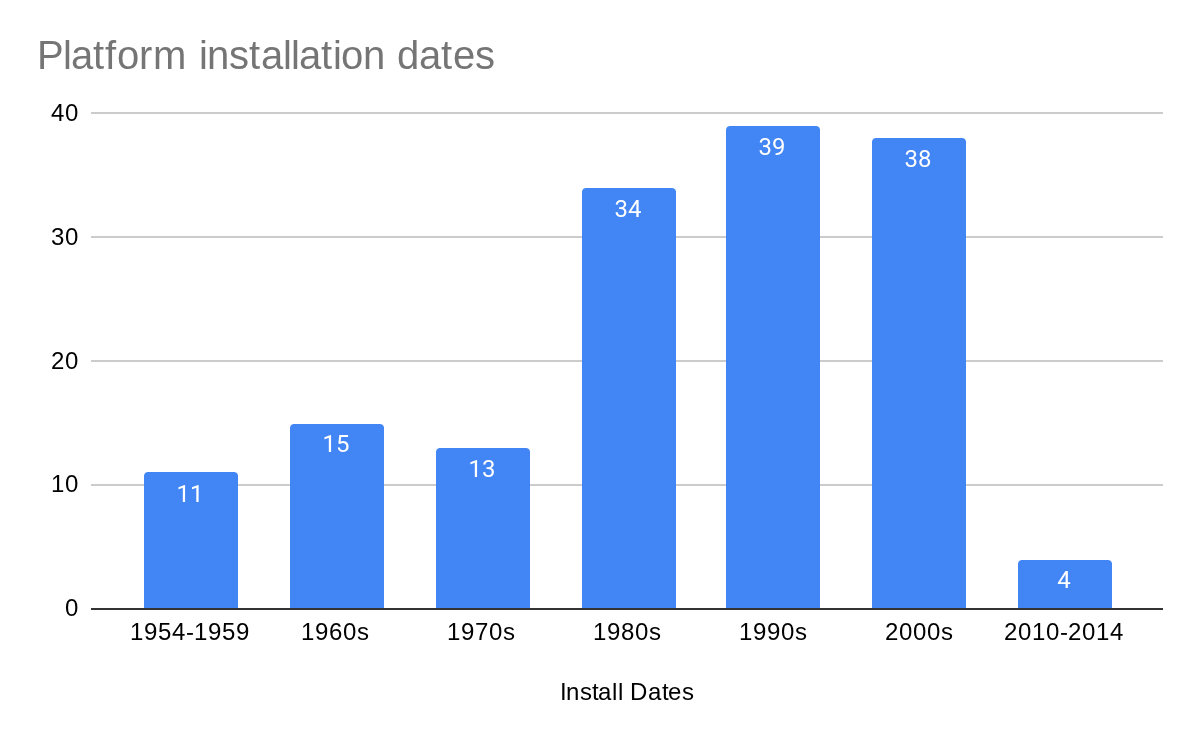
Old platforms: According to BOEM records, Array operates 154 platforms previously owned by Cox. These platforms are in the Ship Shoal, South Marsh Island, and West Delta areas of the Gulf of America. Most are >30 years old and four are more than 70 years old (see chart below). 41 are classified as major structures including 15 of the 26 platforms installed in the 1950s and 1960s. 44 are manned on a 24 hour basis. 79 have helidecks. Massive decommissioning liabilities loom.
Violations: NRW/Array ranks 37th out of 42 companies in GoA oil production (2025 YTD) and 36th out of 42 companies in gas production, but leads the pack in Incidents of Noncompliance (INCs):
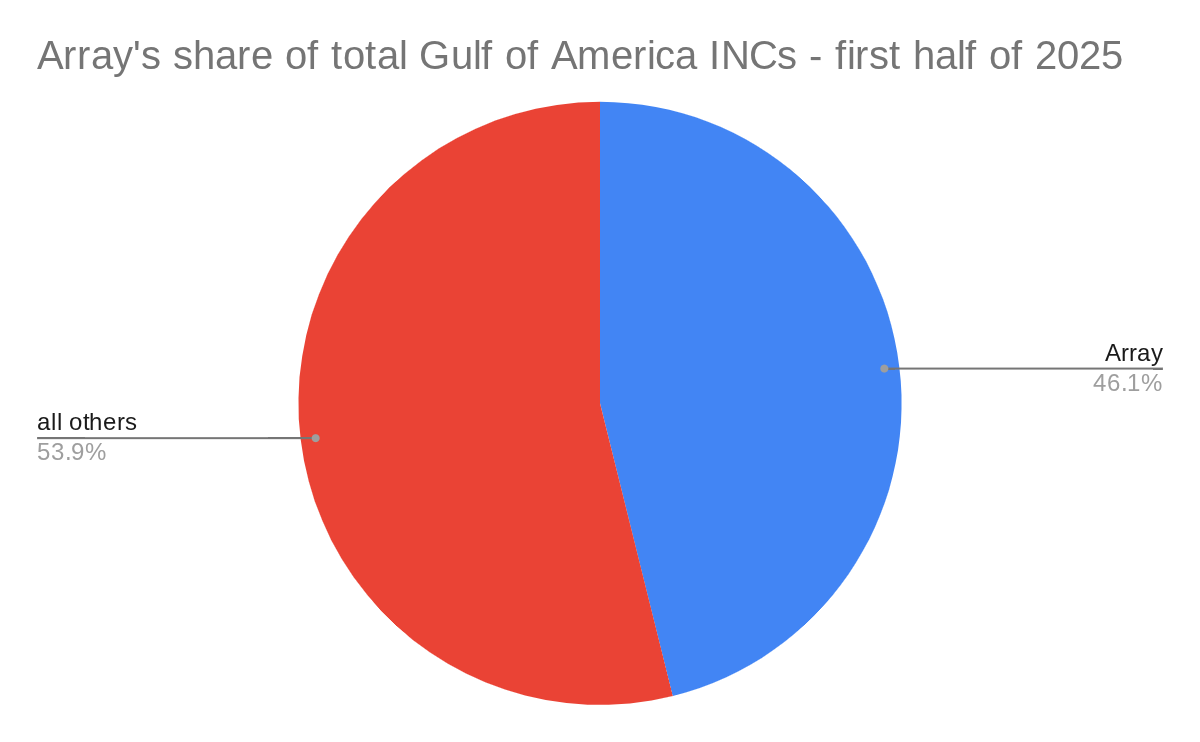
Array accounted for nearly half of all GoA INCs issued in the first half of 2025 (chart below).
Array was issued 9 times more warning INCs (311) than any other operator. Apache was second with 34.
There are many small and mid-sized companies that are responsible operators. Their participation in the OCS program should be encouraged. However, others have demonstrated, by their inattention to financial and safety requirements, that they are not fit to operate OCS facilities.
The growth of Fieldwood, Cox, Signal Hill, and Black Elk was in part facilitated by lax lease assignment and financial assurance policies.
Operating companies should have to demonstrate that they can operate safety and comply with the regulations before they are approved to acquire more properties.
Expect the ultimate public cost of the Cox bankruptcy, in terms of decommissioning liabilities and the need for increased oversight, to be large.
The Federal govt (Justice/Interior) should strongly oppose bankruptcy court asset sales that increase public financial, safety, and environmental risks.
The attached petition from Save the East Coast Inc. et al requests that NOAA revoke the Empire Wind Letter of Authorization using the emergency authority delineated at 50 C.F.R. § 216.106(f).
This is a strong filing, but revocation would be difficult given the extensive development activity to date and the Administration’s decision in May to allow the project to go forward.
Nantucket Current:Nantucket officials and attorneys will hold a press conference next Tuesday, July 29th, at 9:30 a.m. regarding “Vineyard Wind’s failure to meet its legal and public commitments to the community.”
“BSEE’s comprehensive and independent investigation is ongoing,” an agency spokesperson wrote in an email to the Current on Tuesday. “There is no timetable for the completion of the investigation, as BSEE focuses on ensuring that the investigation is thorough and complete.”
Not mentioned in the film are the extraordinary efforts of the Mineral Management Service’s Villere Reggio in establishing the Rigs to Reefs program. Villere (pictured below), has a most interesting family history as summarized in the caption. See p. 3 of this issue of MMS Today for the complete article.
My comments in response to the Dept. of the Interior’s regulatory reform notice are attached. First and foremost, I believe these recommendations would reduce safety and environmental risks. Second, I am confident that they would also reduce governmental costs and the regulatory burden on industry.
The first attachment discusses regulatory fragmentation and recommends actions to reduce the complexity and redundancy of the offshore regulatory regime. The second attachment proposes a Drilling Safety Leaders Pilot Program as a means of evaluating a more adaptable framework regulatory framework for operators with outstanding performance records.






Regulatory reform comments
Posted in energy policy, Offshore Energy - General, Regulation, tagged comments, Department of the Interior, drilling Safety leaders, pilot program, regulatory burden, regulatory fragmentation, regulatory reform on July 23, 2025| Leave a Comment »
My comments in response to the Dept. of the Interior’s regulatory reform notice are attached. First and foremost, I believe these recommendations would reduce safety and environmental risks. Second, I am confident that they would also reduce governmental costs and the regulatory burden on industry.
The first attachment discusses regulatory fragmentation and recommends actions to reduce the complexity and redundancy of the offshore regulatory regime. The second attachment proposes a Drilling Safety Leaders Pilot Program as a means of evaluating a more adaptable framework regulatory framework for operators with outstanding performance records.
Read Full Post »