Feeds:
Posts
Comments

Archive for the ‘decommissioning’ Category

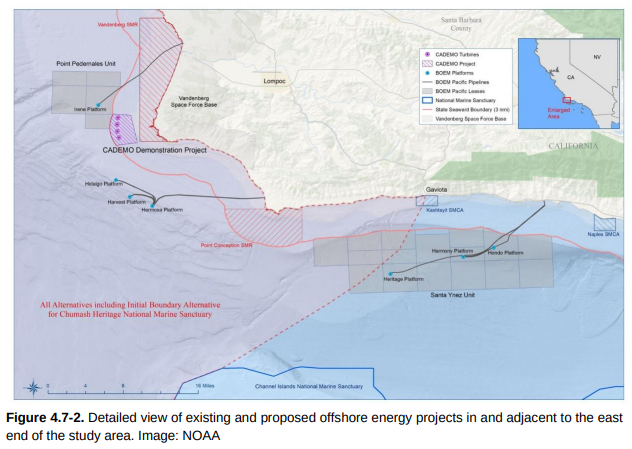
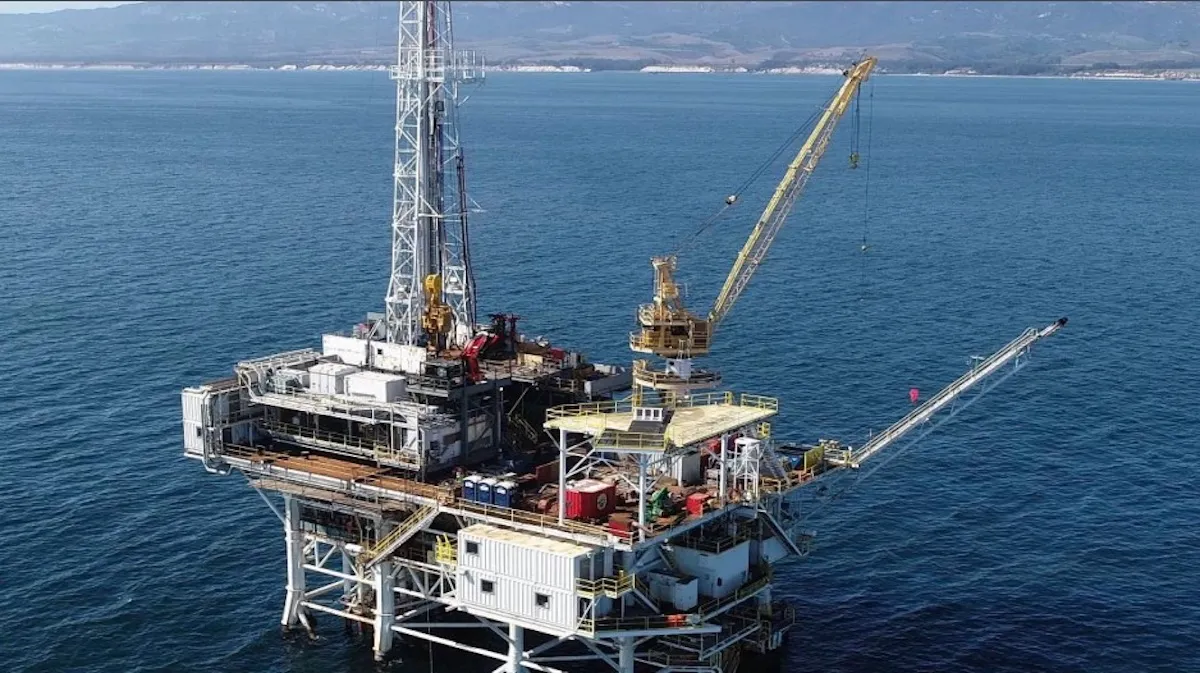
Almost 40 years ago, four large oil and gas platforms were installed in the beautiful offshore area that was part of our Santa Maria District (Pacific Region of the Minerals Management Service). Those platforms are now within the boundaries of the Chumash Heritage National Marine Sanctuary (see map above).

We watched those platforms being installed, inspected the drilling and production operations, and performed a myriad of other duties including the curtailment of offshore operations prior to launches from Vandenberg AFB. Those Vandenberg launches weren’t always perfect as this link clearly demonstrates. Even knowing that, it was still a bit unnerving when missiles were recovered during post-abandonment site clearance trawls.

All four of those Santa Maria District platforms are now on terminated OCS leases. All were installed by companies that are now part of Chevron Corp. (Chevron, Texaco, and Unocal). They are currently maintained by Freeport-McMoRan Oil & Gas, with Chevron retaining financial responsibility for decommissioning.

PlatformInstall yr.installed bywater depth (ft)Est. removal weight (short tons)wells drilled
Harvest1985Texaco67535,15019
Hermosa1985Chevron60330,86813
Hidalgo1986Chevron43023,38414
Irene1985Unocal2428,76226

BSEE reports that the 46 wells on Harvest, Hermosa, and Hidalgo have been plugged and tested, and that the well conductors have been removed. No information has been posted on the status of the wells at Platform Irene, but presumably they are (or will soon be) plugged in accordance with BSEE regulations.

Will the inclusion of these platforms in the Chumash Marine Sanctuary further complicate the already difficult decommissioning process? Decommissioning specialist John Smith thinks it may:

In addition to the BOEM and BSEE approval process, Chevron and FMC are going to be dealing with the NOAA permitting regime for Sanctuaries.  Those permitting and environmental compliance requirements are extensive.  NOAA’s NEPA documentation for West Coast marine sanctuaries will also need to be amended to include the Chumash.”

So the “Mission Impossible” that is California OCS decommissioning now has yet another complex regulatory element.

John also thinks the Sanctuary designation presents yet another obstacle for Sable’s plans to restart Santa Ynez Unit production:

“Even though most of the SYU facilities are outside the Sanctuary, the proximity of the operations to the Sanctuary is problematic. The Chumash are now going to be a co-manager of the Sanctuary, adding another player in the process.   Sable is going to obtain multiple Federal, State and local permits to restart SYU, and law suits are likely at every stage of the process.” 

BOE will be watching!
Read Full Post »

Platform Holly, California State waters in the Santa Barbara Channel, formerly operated by Venoco

Platform Holly sits immediately offshore from the Univ. of California at Santa Barbara, and UCSB scientists have studied the platform and surrounding ecology extensively. Multiple studies have shown that production from Holly reduced natural seepage and methane pollution from shallow formations beneath the Channel. Platform Holly was thus a “net negative” hydrocarbon polluter.

The natural seepage in the Santa Barbara Channel was important to the earliest inhabitants of the area. The Chumash used the tar for binding and sealing purposes, including caulking their canoes. Since Holly shut down in 2015 following the Refugio pipeline spill, offshore workers and supply boat crews have reported a considerable increase in gas seepage.

Earlier this month, it was reported that well plugging operations at Holly had now been completed, but decisions regarding the final decommissioning of the platform remain.

Venoco declared bankruptcy in 2015 and the State of California became the platform owner. According to the State Lands Commission, Exxon will pay the costs for decommissioning the platform. This is because Exxon acquisition Mobil operated the platform from 1993-1997 before Venoco became owner.

The most recent Holly development is that Venoco has settled its law suit with Plains, the company responsible for the 2015 Refugio pipeline spill that halted production from Holly. Terms of the settlement have not been disclosed.

Note: As an aside, I’m curious as to whether Mobil provided a decommissioning guarantee as part of the sale to Venoco or whether the State is simply holding ExxonMobil accountable as a legacy owner. If it’s the latter, why isn’t bp (bp acquisition Arco was Holly’s operator from 1966-1993) also liable? Is it a matter of Mobil being the more recent predecessor owner?

Read Full Post »

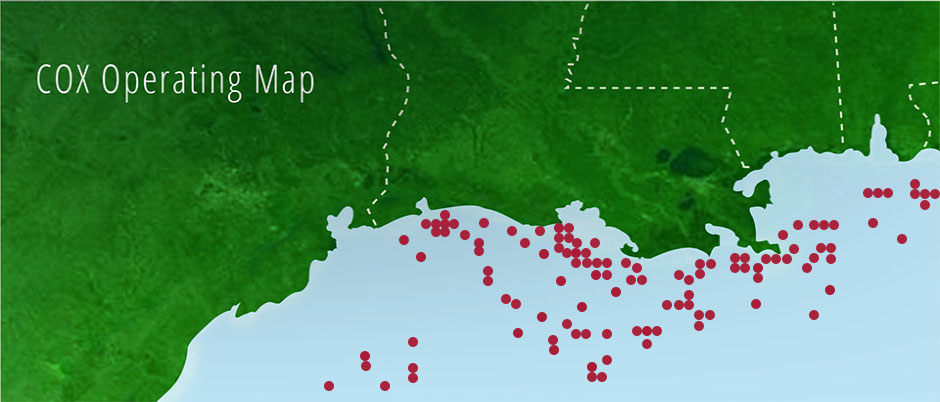
The previously discussed sale of Cox assets in 6 GoM fields to W&T was completed in January for $72 million, $16.5 million less than the proposed price. W&T, an established GoM operator, believes they can increase the pre-bankruptcy production (8300 boepd) through workovers, recompletions, and facility repairs.

The extent to which W&T is assuming decommissioning liability for the Cox assets is unclear to this observer. Decommissioning information from W&T’s SEC filing is pasted at the end of this post.

In February, Cox won court approval to sell “about a dozen oil fields to Natural Resources Worldwide LLC for about $20 million following a bankruptcy court auction.” This sale is more concerning given that the purchaser has no operating history in the GoM, and scant information about the company can be found online. Perhaps they are affiliated with Natural Resources Partners L.P., an energy investment firm which “owns mineral interests and other rights that are leased to companies engaged in the extraction of minerals,” but “does not mine, drill, or produce minerals, has no operations, and conducts business solely in an office environment.”

Per BOEM data, Cox filed requests to assign a number of leases to Natural Resources Worldwide (NRW) in May, but those requests have yet to be approved. Hopefully, BOEM is taking a hard look at these requests and their obligations following the court auction. Decommissioning liabilities should be their number one concern. (Note: NRW was just listed as the operator of the former Cox platform at EI 361, so presumably at least some of those assignments have now been approved.)

According to BOEM’s platform data base, Cox and affiliates Energy XXI and EPL still operate 243 platforms, down from 435 in June 2023. Also per the data base, the Cox companies have not removed any platforms during 2023 or 2024 YTD, so the reduction in platforms is presumably the result of the W&T transaction. Most of the remaining Cox platforms are old – 16 of their 77 major platforms were installed in the 1950s!

Meanwhile, Cox and affiliates continue to be the GoM violations leader by far with 549 incidents of non-compliance (INCs) in 2024 YTD, 45% of the GoM total for all operators. No other company has more than 100 INCs (although Whitney Oil and Gas has a disappointing 93 INCs, including 33 facility shut-ins on only 65 inspections!)

operatorplatforms/
major platforms
warning INCscomponent shut-in INCsfacility shut-in INCs
Cox209/69407444
Energy XXI19/77312
EPL5/11611
Total Cox233/77496467
Total GoM1519/73683131768
INCs are for 2024 as of 9/17/2024. A major platform has at least 6 well completions or more than 2 pieces of production equipment.

From W&T’s quarterly SEC filing:

Contingent Decommissioning Obligations

The Company may be subject to retained liabilities with respect to certain divested property interests by operation of law. Certain counterparties in past divestiture transactions or third parties in existing leases that have filed for bankruptcy protection or undergone associated reorganizations may not be able to perform required abandonment obligations. Due to operation of law, the Company may be required to assume decommissioning obligations for those interests. The Company may be held jointly and severally liable for the decommissioning of various facilities and related wells. The Company no longer owns these assets, nor are they related to current operations.

During the three months ended March 31, 2024, the Company incurred $2.6 million in costs related to these decommissioning obligations and reassessed the existing decommissioning obligations, recording an additional $5.3 million. As of March 31, 2024, the remaining loss contingency recorded related to the anticipated decommissioning obligations was $20.8 million.

Although it is reasonably possible that the Company could receive state or federal decommissioning orders in the future or be notified of defaulting third parties in existing leases, the Company cannot predict with certainty, if, how or when such orders or notices will be resolved or estimate a possible loss or range of loss that may result from such orders. However, the Company could incur judgments, enter into settlements or revise the Company’s opinion regarding the outcome of certain notices or matters, and such developments could have a material adverse effect on the Company’s results of operations in the period in which the amounts are accrued and the Company’s cash flows in the period in which the amounts are paid. To the extent that the Company does incur costs associated with these properties in future periods, the Company intends to seek contribution from other parties that owned an interest in the facilities.

Read Full Post »

Federally funded decommissioning in the Matagorda Island area of the Gulf of Mexico. Not a success story.

I’m not typically aligned with the sponsors of the attached “Plug Offshore Wells Act,” but the call for transparency is understandable given that taxpayer funds are, for the first time, being used to decommission offshore platforms in the Matagorda Island area of the Gulf of Mexico, massive liabilities associated with the Cox bankruptcy loom, and the Hogan and Houchin saga drags on without resolution.

The bill would require an annual report on well, platform, and pipeline decommissioning including applications, deadlines, and enforcement actions. BSEE does have a good facility infrastructure page for the GoM, but much of the information called for in H.R. 9168 is not publicly available.

Improved oversight of decommissioning requirements for offshore wind projects should also be considered in light of the precedent setting waiver granted to Vineyard Wind and BOEM’s “modernization rule” that relaxes financial assurance requirements for wind development.

Read Full Post »

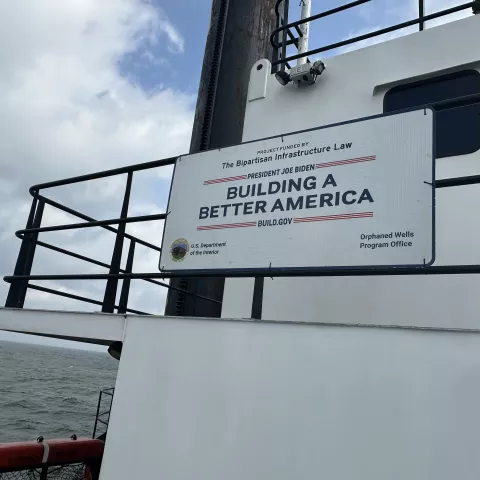
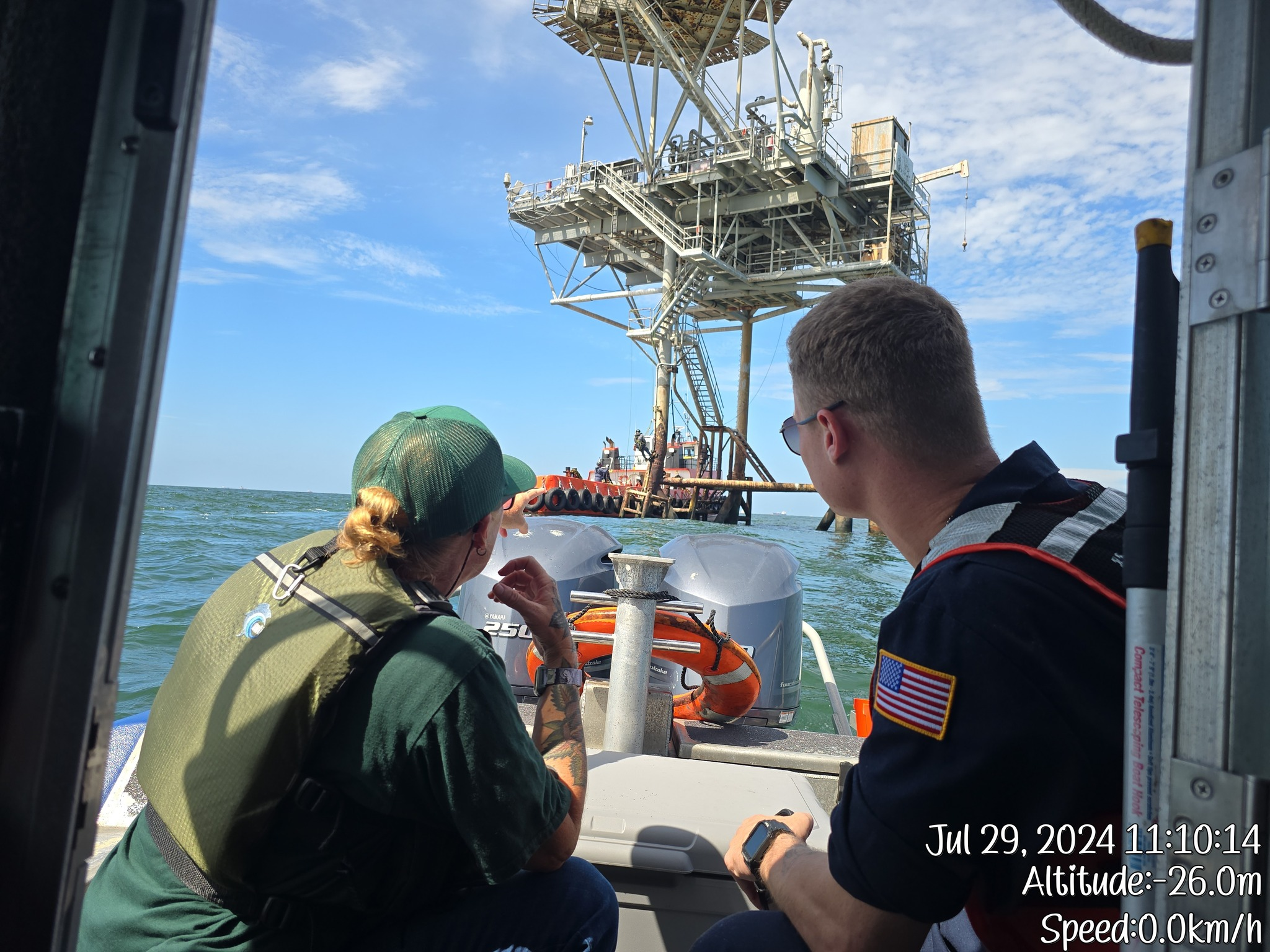
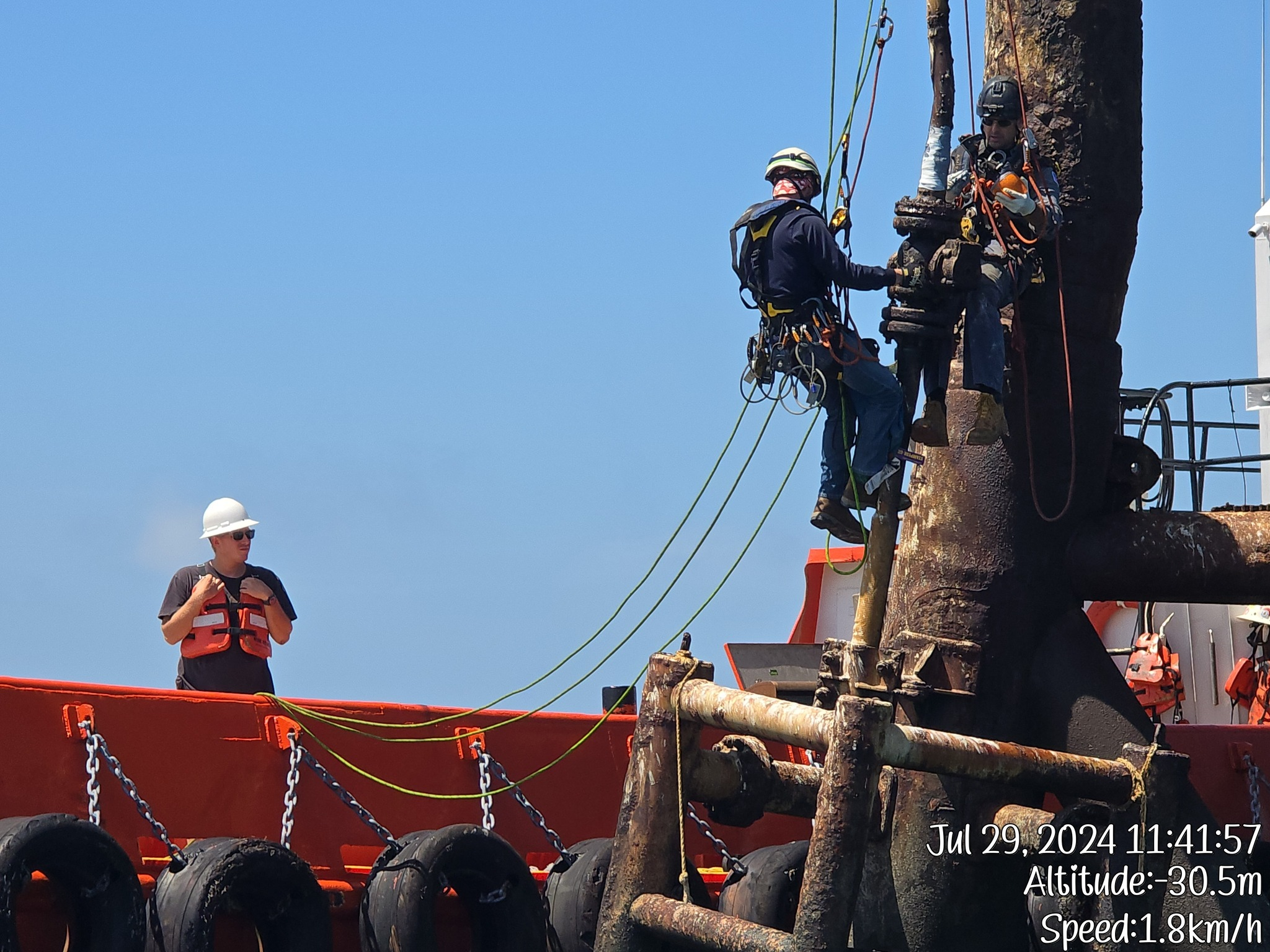
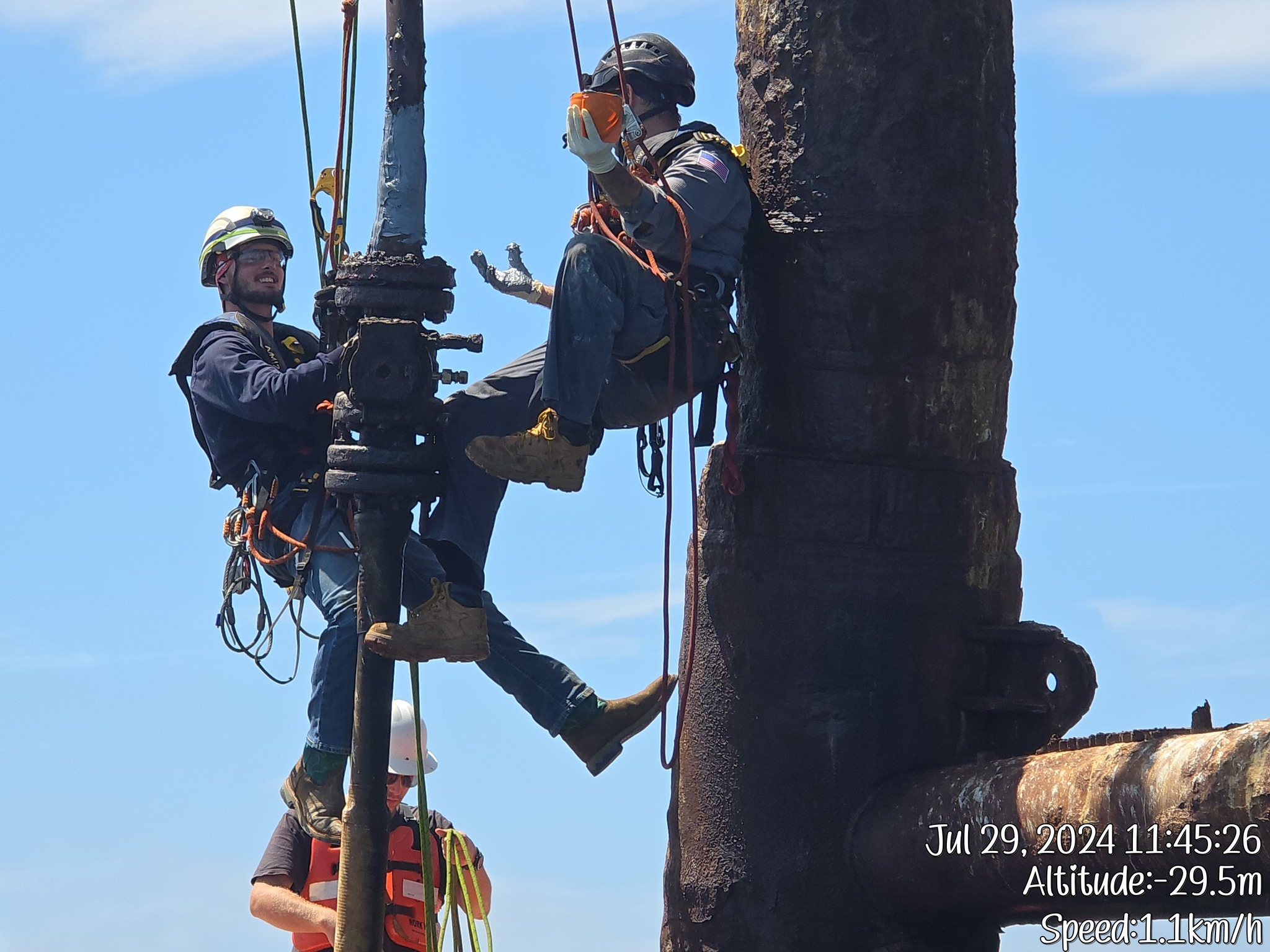
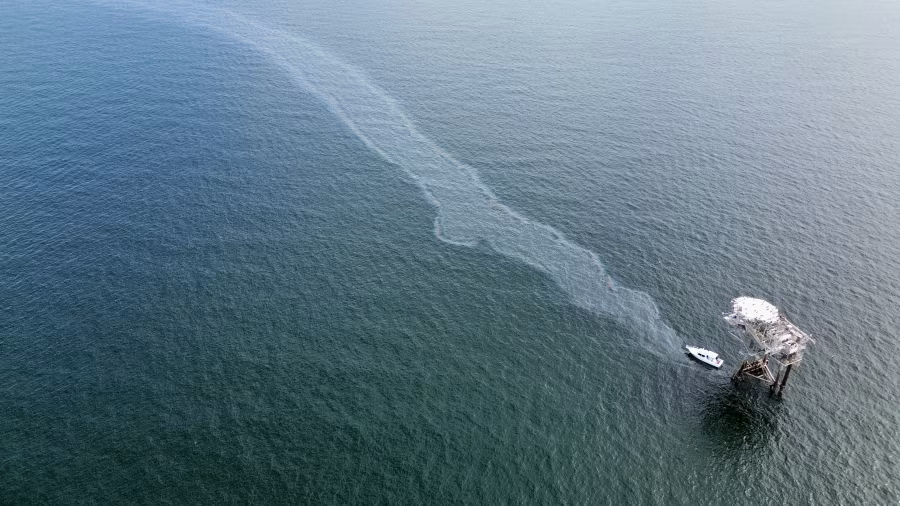
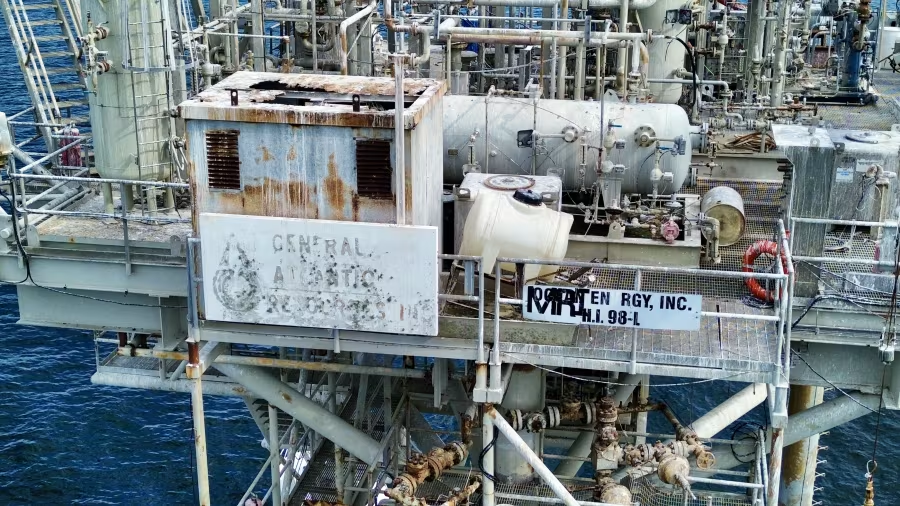
According to the Texas General Lands Office, which provided the above photos, a patch has been applied to the leaking pipeline riser on an abandoned platform in High Island Block 98-L. The gas condensate spray has been stopped.

Crews from the U.S. Coast Guard, Texas General Land Office, and the Texas Railroad Commission monitored the operation. It’s unclear who the responsible party is and who funded and performed the work.

Read Full Post »

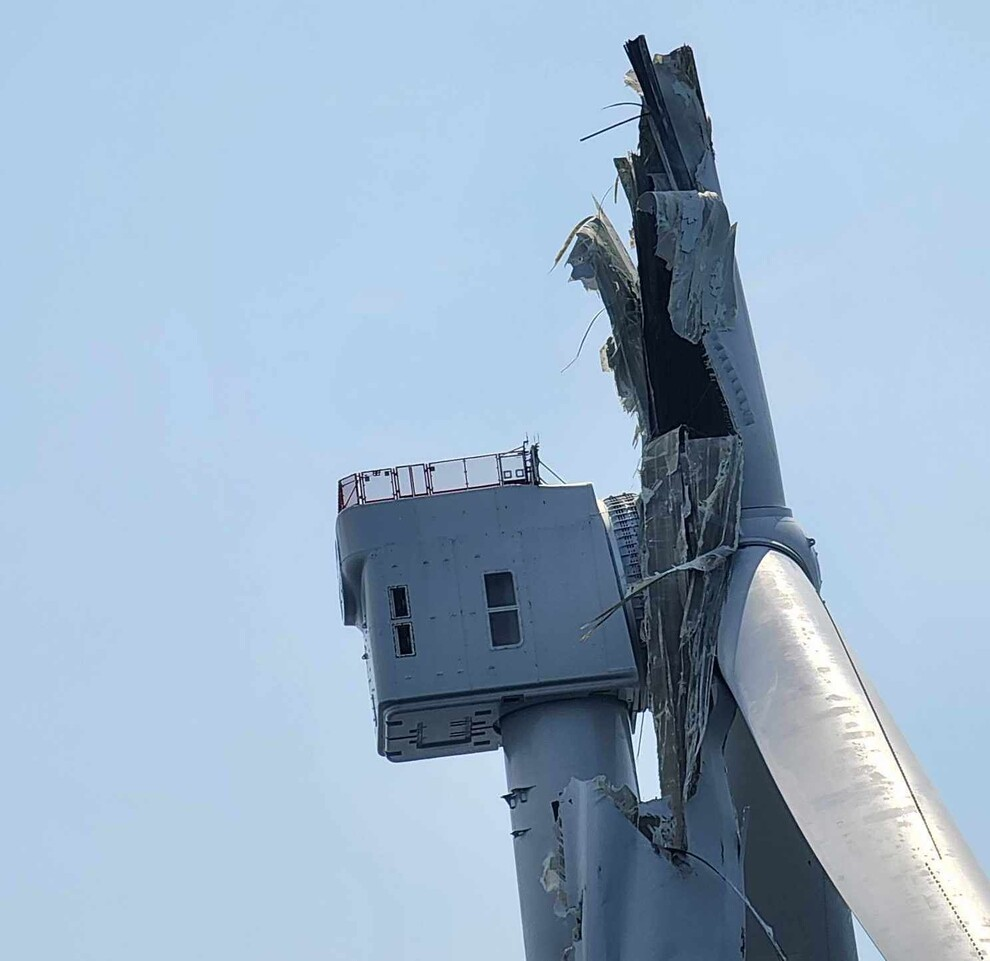
Nantucket Current photo: damaged Vineyard Wind turbine

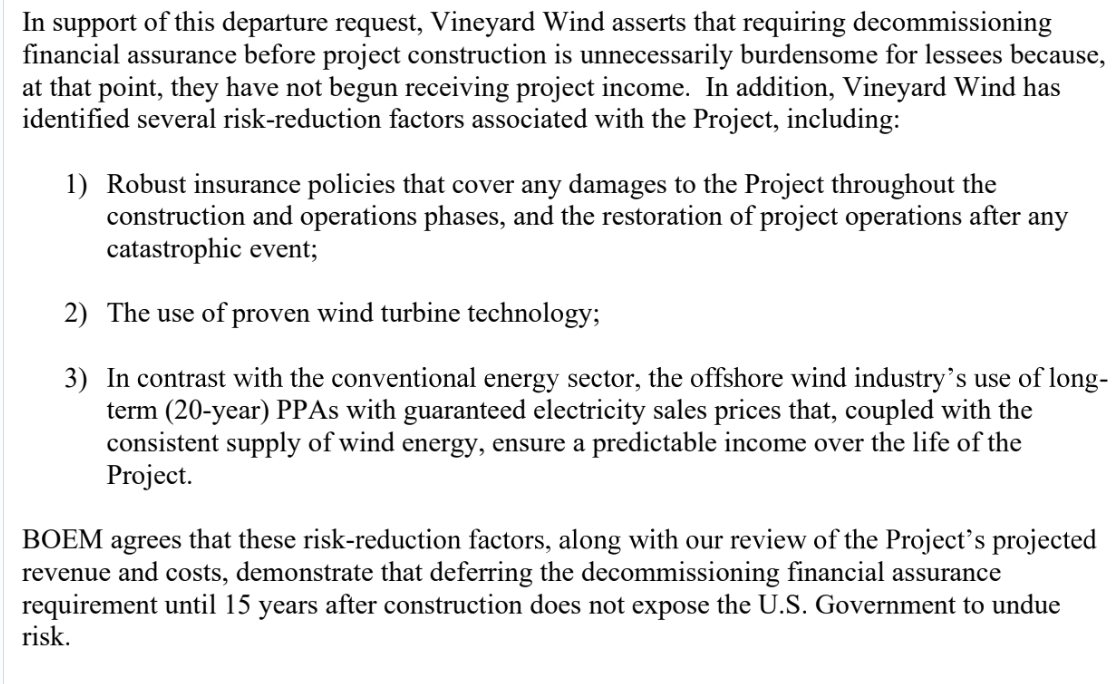
Pasted below is an excerpt from the BOEM letter waiving the“pay as you build” financial assurance requirement for the Vineyard Wind project.

Comments on the 3 risk reduction factors cited in the letter:

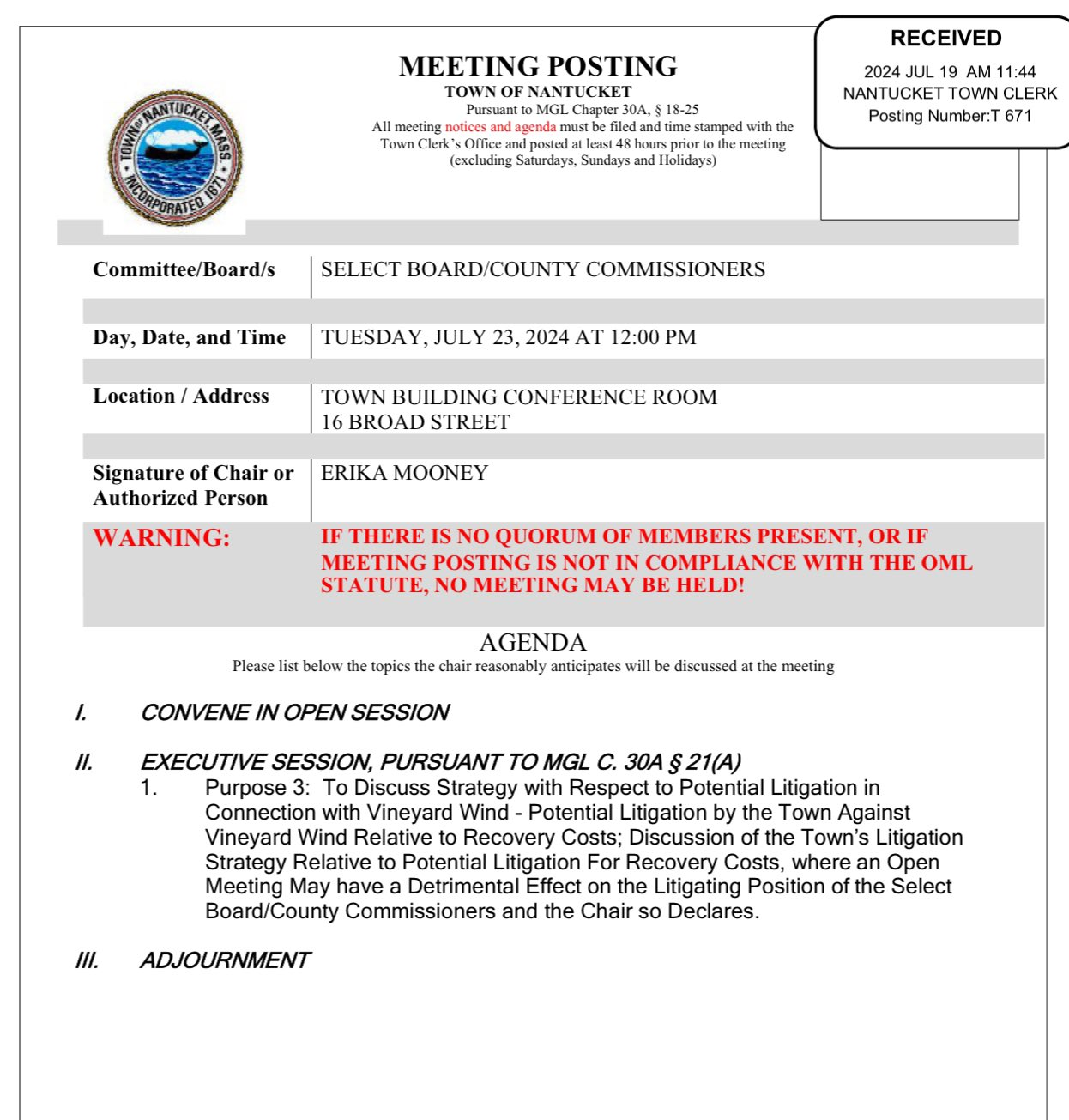
Factor 1: Those “robust insurance policies” may soon be tested given the costs associated with the turbine blade incident and potential law suits. (The notice pasted below informs that Nantucket officials will meet on Tuesday to consider litigation. A question for attorneys is the extent to which Nantucket is compromised by their good “Good Neighbor Agreement” with Vineyard Wind. That agreement essentially calls on Nantucket to promote the Vineyard Wind projects in return for payments that seem modest relative to the economic benefits from tourism and fishing.)

Factor 2: To the extent that GE Vernova Haliade-X 13 megawatt turbines are proven technology (and that is very much in doubt), the use of proven technology doesn’t prevent premature abandonment associated with unexpected incidents.

Factor 3: Reliable power generation and predictable long-term income remain to be demonstrated.

Read Full Post »

Pictures from Click2Houston:

This is yet another example of the importance of proper well plugging, platform removal, and decommissioning financial assurance. It’s noteworthy that Texas is among the states suing to block BOEM’s financial assurance rule for Federal waters. A serious collaborative Federal, State, and industry effort to address decommissioning issues is long, long overdue.

Key points from the Facebook post by State Representative Terri Leo Wilson (full post pasted below):

  • 8 miles offshore Galveston County (TX State waters extend 3 marine leagues/9 nautical miles/10.35 statue miles offshore)
  • flowline riser leaking natural gas and condensate (badly corroded platform)
  • no recoverable oil
  • abandoned platform
  • additional research is needed to fully determine ownership of the leak source (???)

HIGH ISLAND BLOCK 98-L INCIDENT :

The Texas General Land Office (GLO) is sharing the following information:

On Sunday, July 14, 2024, at 8:00 pm, the Oil Spill La Porte Office Response Officer received notification of a natural gas/oil discharge off the coast of Crystal Beach, Galveston County. The spill was reported to be from a platform in High Island Block 98-L, about eight miles offshore in the Gulf of Mexico. Oil Spill personnel traveled via response boat to investigate on Monday morning and determined the discharge to be from a flowline riser leaking natural gas and condensate. Although the leak can be seen from the water, no recoverable oil was visible. The platform is abandoned, as defined by the Texas Railroad Commission, placing it within the Railroad Commission’s statutory authority for administration. The wells are not covered as part of the GLO’s current well plugging MOU with the Railroad Commission. The platform and associated wells are documented in the Oil Spill program’s abandoned well listings.

On Wednesday, July 17, La Porte office staff, with US Coast Guard and Railroad Commission personnel, inspected the platform area again. The leak is still present but has not increased. Railroad Commission staff stated that additional research is needed to fully determine ownership of the leak source.

The Coast Guard reports receiving a call from Channel 2-KPRC (NBC) in Houston regarding the leak and also seeing social media posts by a local area fishing group.

At this time: No injuries reported, No impact to commerce, No impact to wildlife.

Read Full Post »

Some of us remember the Brent Spar saga (1995). The subsequent Brent field decommissioning activities have been less controversial, including the removal of the Brent C topsides on July 9. The Allseas single lift technology is most impressive. Check out the video!

Read Full Post »

BOEM’s land rush approach to offshore wind leasing will add up to 1086 turbine towers and 28 offshore substations (OSSs) in the Atlantic just from active projects with approved Records of Decision (RODs). (See the table below.) Another 17 active Atlantic commercial projects have yet to reach the ROD stage. Those projects should increase the total number of structures to >3000. Five more Atlantic wind lease sales are scheduled.

projectturbine towersoffshore substations
Coastal VA Offshore Wind2023
Revolution Wind1002
Sunrise Wind941
Atlantic Shores South200up to 10
Ocean Wind 198up to 3
Vineyard Wind 11002
Empire Wind 1 & 21472
New England Wind (phases 1&2)1505

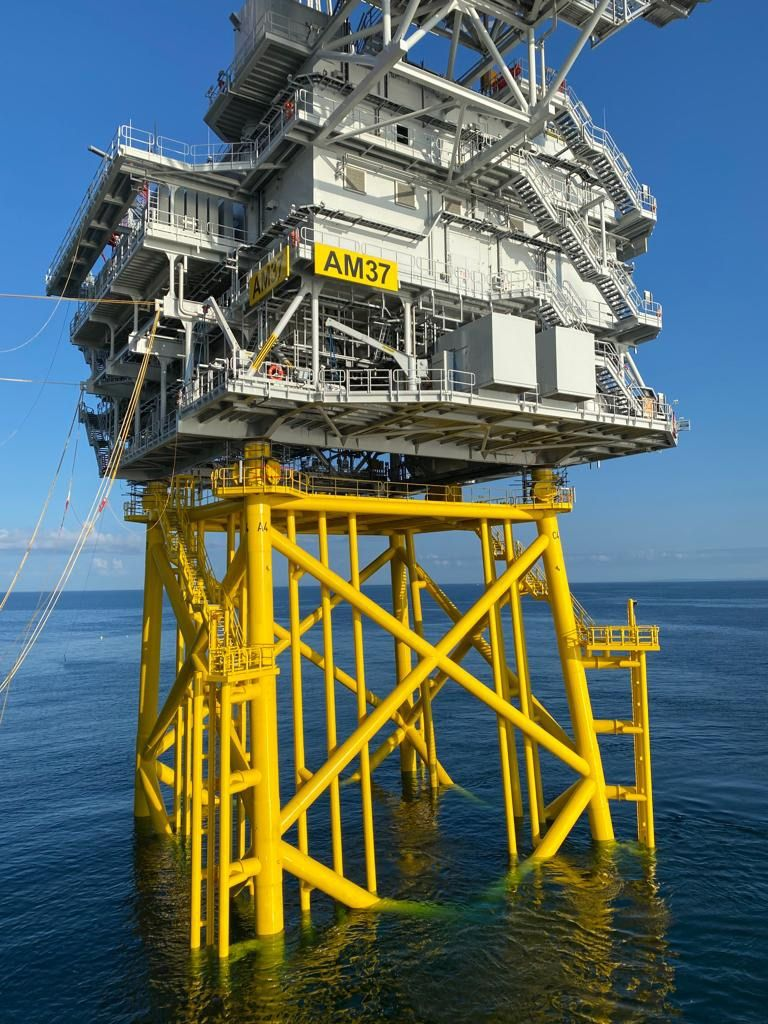
Per the Construction and Operations Plan (COP) for Vineyard Wind, the topsides for a conventional electrical service platform (ESP) (also known as an offshore substation or OSS) are 45 x 70 x 38 m, which is larger in surface area than a typical 6-pile oil and gas platform (~30 x 30 m), and is comparable in size to a large jackup drilling rig.

The Atlantic Shores plan calls for 10 small, 5 medium, or 4 large OSSs. (Uncertainty regarding the number and types of structures seems rather common in wind COPs.) The large OSSs have topsides that are 90 m by 50 m and rise to 63 m above MLLW. These are large offshore structures whether for wind or oil and gas.

Vineyard Wind ESP

Despite the looming decommissioning obligations, BOEM’s financial assurance requirements have been relaxed to facilitate wind development.

Per BOEM, the “Rule to Streamline and Modernize Offshore Renewable Energy Development” is intended to “make offshore renewable energy development more efficient, [and] save billions of dollarsUnfortunately, the savings associated with relaxed financial assurance requirements translates to increased risk for power customers and taxpayers.

BOEM signaled their intentions on offshore wind (OSW) decommissioning three years ago when they granted a precedent setting financial assurance waiver to Vineyard Wind. Despite compelling concerns raised by commenters, the “streamlining” regulations codified this decision.

No one knows what the financial future will be for wind projects and the responsible companies. Financial assurance should therefore be established when the structures are installed, not years into the future as allowed by the revised regulations. What leverage will BOEM have then?

Nordsee One substation, Germany. Rystad Energy projects 137 new power substations offshore continental Europe this decade, requiring $20 billion in total investment.

Read Full Post »

None of the plaintiffs issued a press release or otherwise announced the lawsuit on their websites.

How often do Attorneys General from 3 States sue the Federal government without broadly publicizing their actions? Neither the AG for Louisiana, Texas, nor Mississippi issued a press release to announce their suit to block BOEM’s financial assurance rule.

The limited media coverage of the lawsuit originated from a single Reuters article. Apparently Reuters learned about the suit and reached out to the litigants. Their article quoted Louisiana Attorney General Liz Murrill as follows:

This is a really egregious direct assault on intermediate level producers of oil and gas, and that affects a lot of business in our state,” Murrill told Reuters in an interview.

That quote is all we have from the AGs. Why the absence of announcements:

State of Louisiana et al v. Deb Haaland et al

Plaintiff:State of Louisiana, Louisiana Oil & Gas Association, State of Mississippi, State of Texas, Gulf Energy Alliance, Independent Petroleum Association of America and U S Oil & Gas Association
Defendant:Deb Haaland, U S Dept of Interior, Bureau of Ocean Energy Management, Elizabeth Klein, Steve Feldgus and James Kendall
Case Number:2:2024cv00820
Filed:June 17, 2024
Court:US District Court for the Western District of Louisiana
Presiding Judge:James D Cain
Referring Judge:Thomas P LeBlanc
Nature of Suit:Other Statutes: Administrative Procedures Act/Review or Appeal of Agency Decision
Cause of Action:28 U.S.C. § 2201 Constitutionality of State Statute(s)
Jury Demanded By:None

Read Full Post »

« Newer Posts - Older Posts »