Fleming is opposed to carbon capture and sequestration: “If elected to the U.S. Senate, the first bill I will submit will be to fully defund and repeal the 45Q tax credits that pay for this. There’s no market for this. People don’t buy this technology.”
“This is purely crony capitalism, where you have the government paying wealthy companies that are going to make a lot of money out of this, and the average landowner is going to suffer from it. So I’ve committed that I will submit the bill that will defund it so that money will no longer be available, and it will stop all these projects.”
The carbon disposal industry, which overplayed its hand on the OCS, has managed to alienate traditional oil and gas industry supporters, sparking grassroots opposition in conservative areas of Louisiana. Carbon Capture and Sequestration (CCS) is also opposed by climate activists and the environmental justice movement.
The Advocate has nicely summarized opponents concerns: “land rights; the impact on underground aquifers if CO2 leaks; skepticism of climate change; skepticism of its effectiveness in fully capturing CO2; and opposition to the use of federal money and tax credits to finance the effort.”
Gov. Landry issued an executive order on Oct. 15 in an apparent attempt to calm the opposition. Following 34 “whereas” clauses intended to justify carbon disposal in Louisiana, the EO directs a pause in the review of new Class VI CO2 disposal wells. As evidenced by the attached press release, Save My Louisiana and other opposition groups are far from satisfied.
Unsurprisingly, the carbon capture and sequestration (CCS) hype is fading fast. No other carbon strategy is so strongly opposed by both climate change activists and skeptics.
Support for CCS seems to be limited to those seeking to profit from subsidies, mandates, and disposal fees. In 2022, Exxon projected a $4 trillion CCS market by 2050. Pipe dream?
“Highlights” of the Gulf of America OCS carbon disposal era:
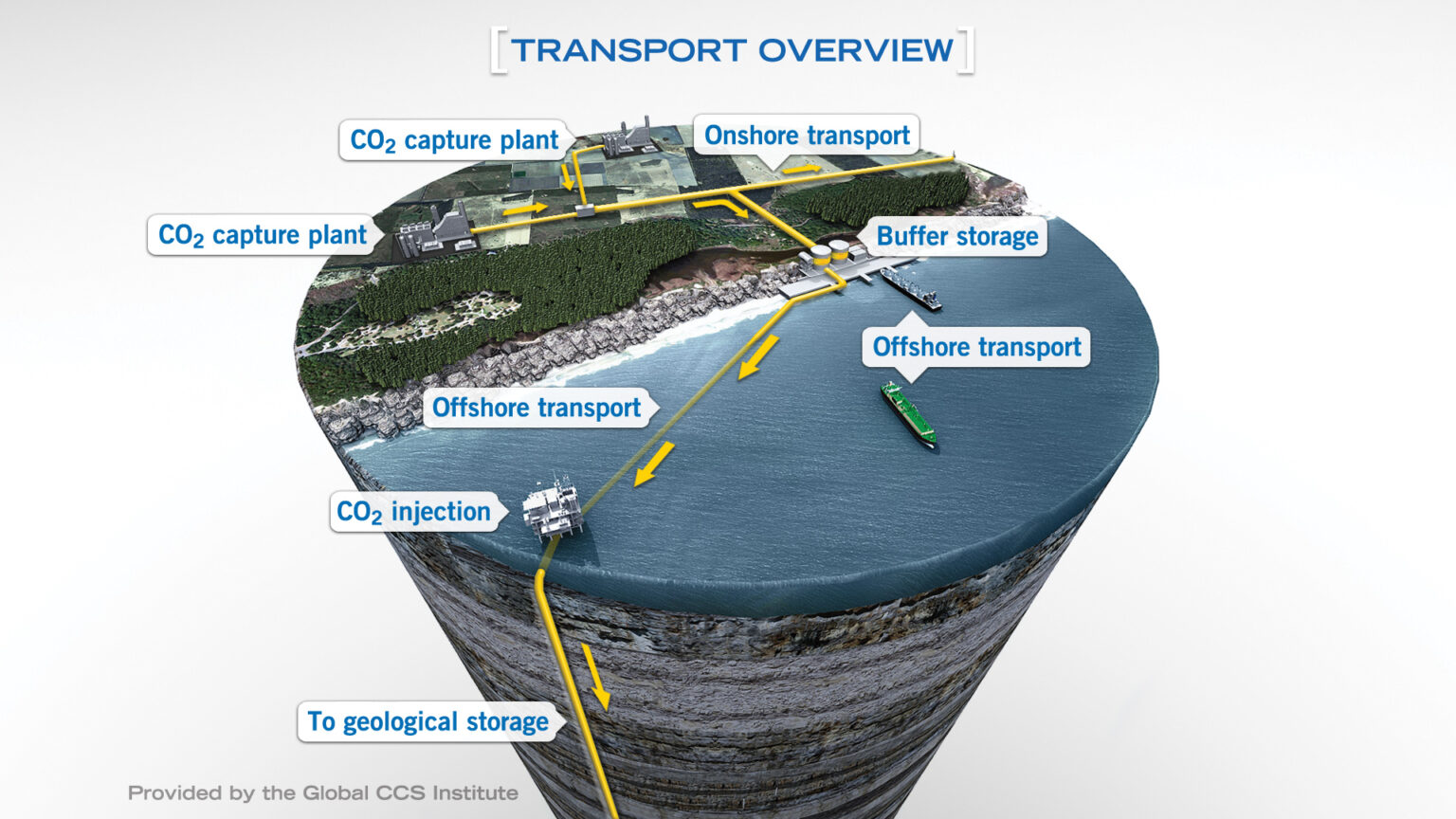
amended the OCS Lands act to authorize “the injection of a carbon dioxide stream to sub-seabed geologic formations for the purpose of long-term carbon sequestration.”
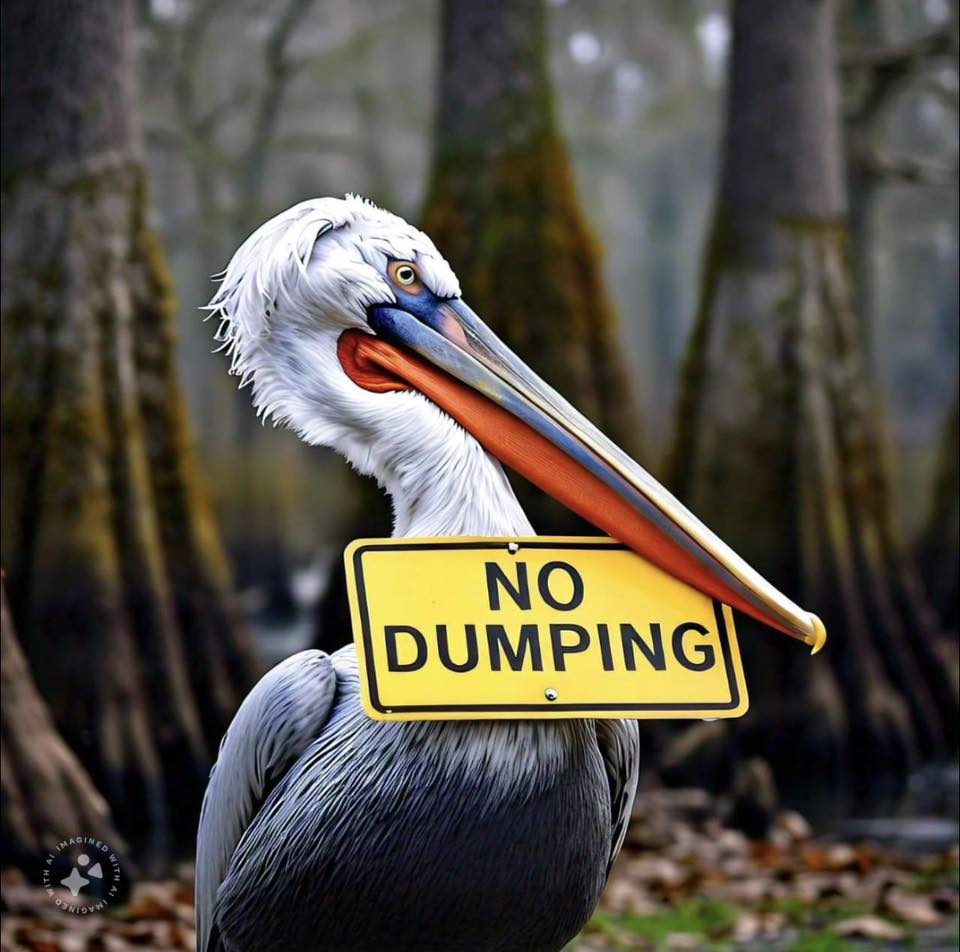
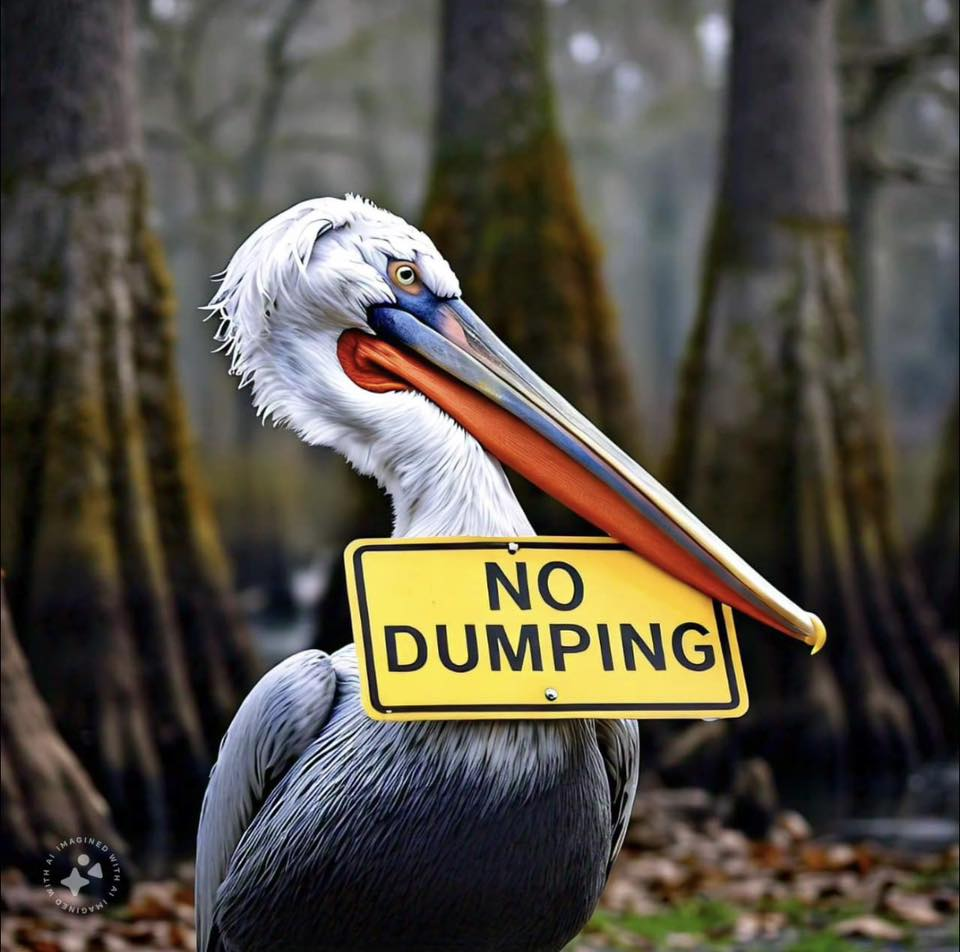
exempted CO2 injection from the restrictions on ocean dumping by stipulating that such injection “shall not be considered to be material (as defined in section 3 of the Marine Protection, Research, and Sanctuaries Act of 1972.” Without this exemption, CO2 streams would clearly be “material,” as defined in 33 U.S.C. 1402, and would be subject to the stringent requirements of that act.
directed that “not later than 1 year after the date of enactment of this Act, the Secretary of the Interior shall promulgate regulations to carry out the amendments made by this section.” (This deadline is long past, which is not uncommon for such legislative directives.)
11/17/2021: Not coincidentally, two days after the enactment of this legislation, Exxon was the sole bidder on 94 nearshore tracts with very limited oil and gas production potential. This was an oil and gas lease sale and there were no provisions for carbon sequestration leasing. Nonetheless, Exxon was awarded leases for all 94 tracts. As a result of litigation delaying the issuance of Sale 257 leases until Oct.1, 2022, those 5 year leases will expire in 2027.
3/29/23: Exxon bid at Sale 259 on 69 nearshore tracts with little oil and gas potential. Once again, this was strictly an oil and gas lease sale and Exxon’s CCS intentions were clear. Nonetheless, the leases were awarded.
6/25/2025: For the first time ever, the Federal government felt compelled to stipulate the obvious (proposed lease sale notice for OCS Sale 262) – that an Oil and Gas Lease Sale is only for oil and gas exploration and development.
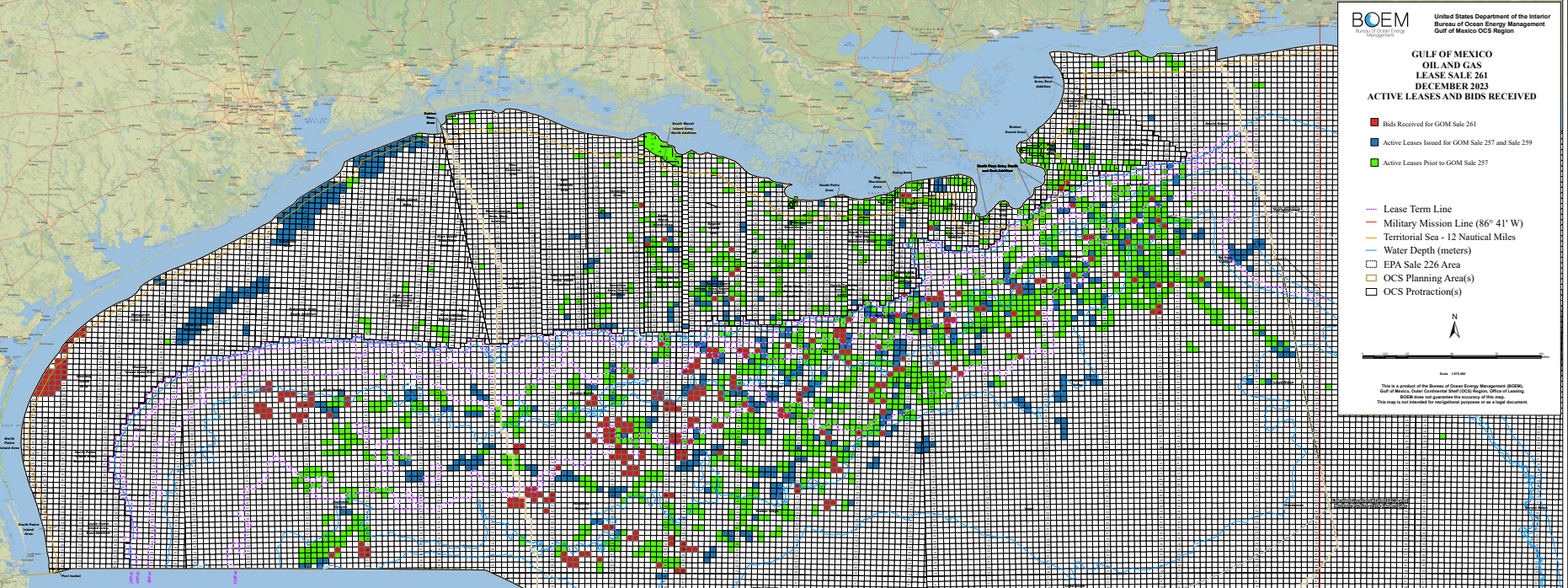
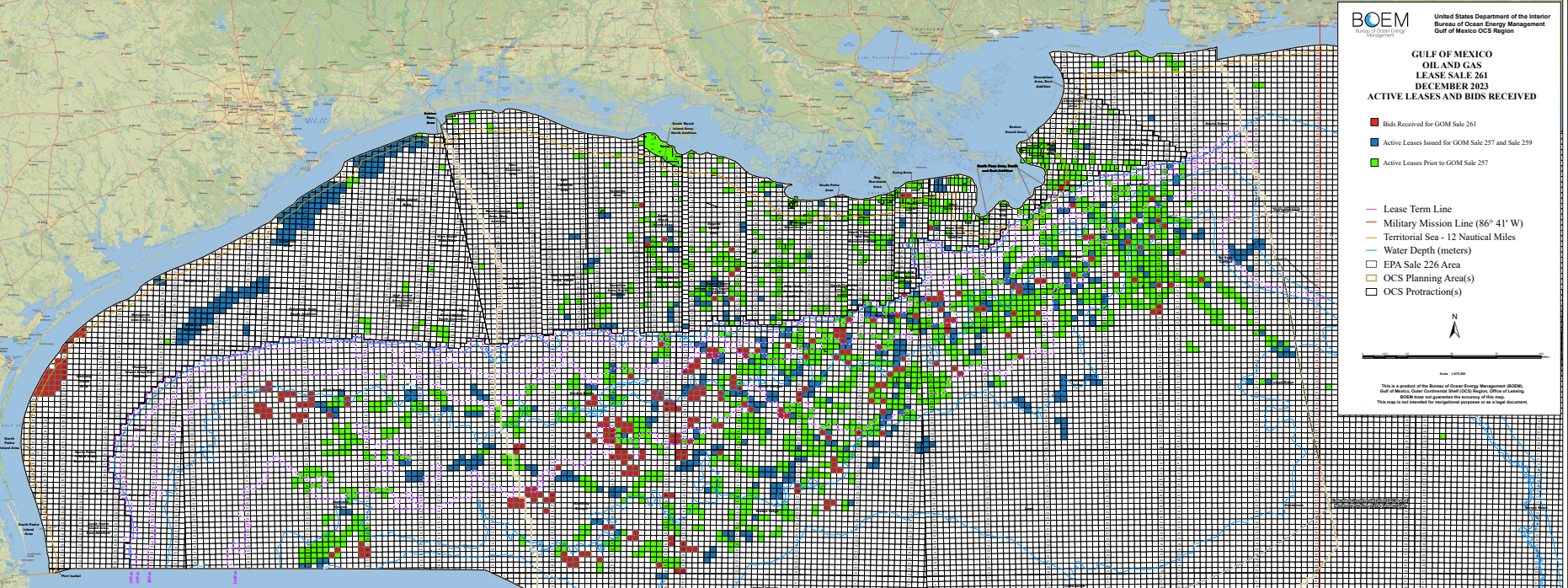
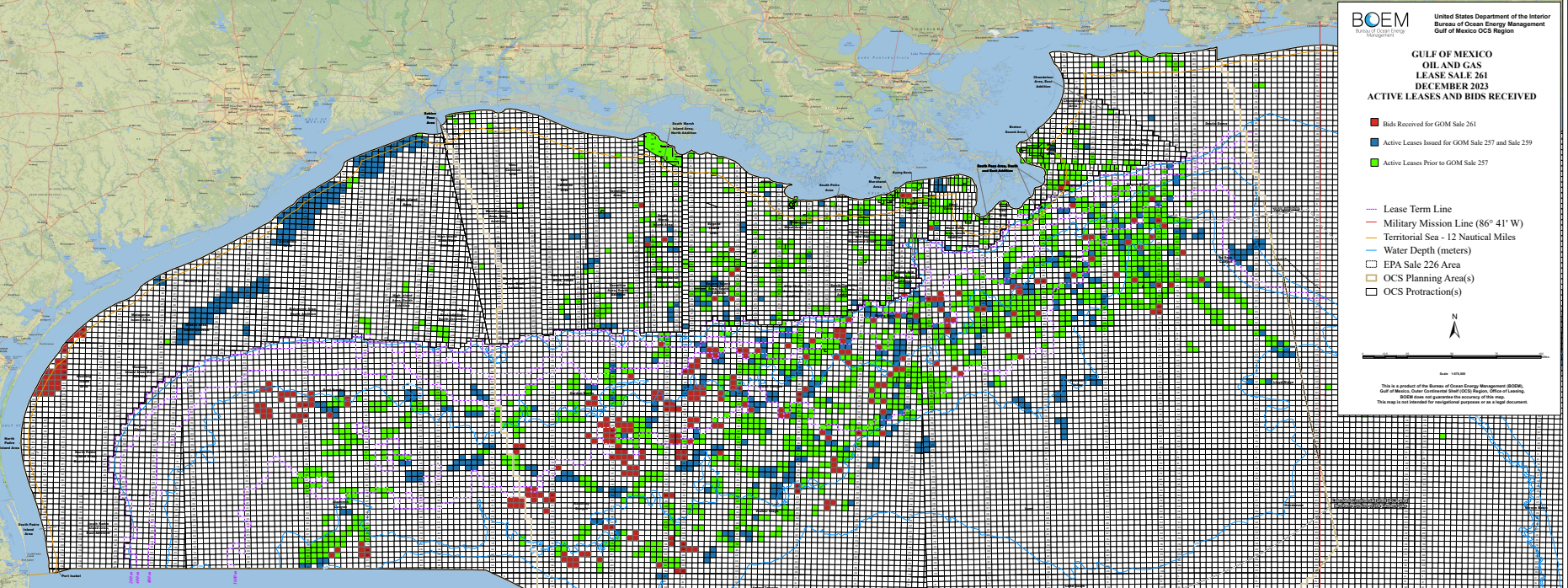
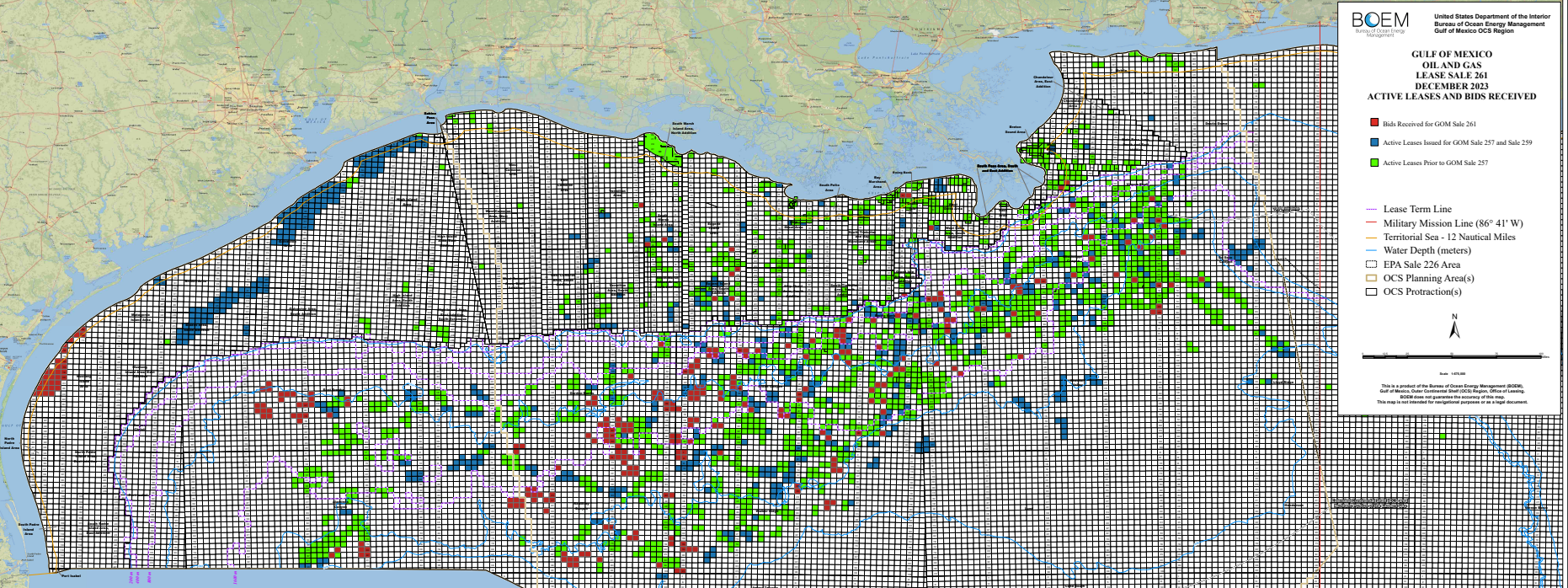
Gulf of America lease map: 199 oil and gas leases were wrongfully acquired for carbon disposal purposes. At Sale 261, Repsol acquired 36 nearshore Texas tracts in the Mustang Island and Matagorda Island areas (red blocks at the western end of the map above). Exxon had acquired 163 nearshore Texas tracts (blue in map above) at Sales 257 (94) and 259 (69).
Even those of us who are supporters of responsible offshore oil and gas production find it a bit unsavory that some companies are looking to cash in on (and virtue signal about) carbon collection and disposal at the public’s expense. Perhaps companies that believe oil and gas consumption is harmful to society should be seeking to reduce production rather than engaging in enterprises intended to sustain it.
“Despite our previously unified stance, some Members of our conference now feel compelled to defend wind and biofuel credits, advocate for carbon capture and hydrogen subsidies, or protect solar and electric vehicle giveaways. Keeping even one of these subsidies opens the door to retaining all eight. How do we retain some of these credits and not operate in hypocrisy?The longstanding Republican position has been to allow the market to determine energy production. If every faction continues to defend their favored subsidies, we risk preserving the entire IRA because no clearly defined principle will dictate what is kept and what is culled.“
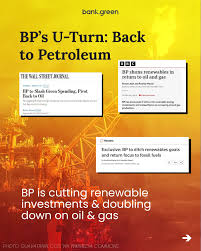
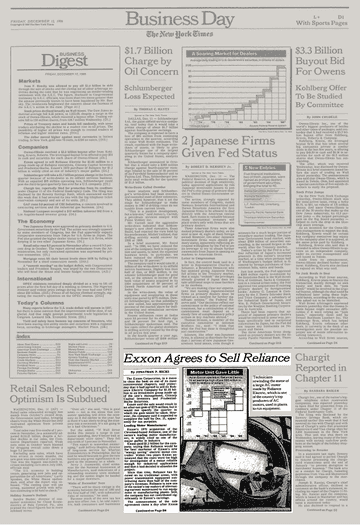
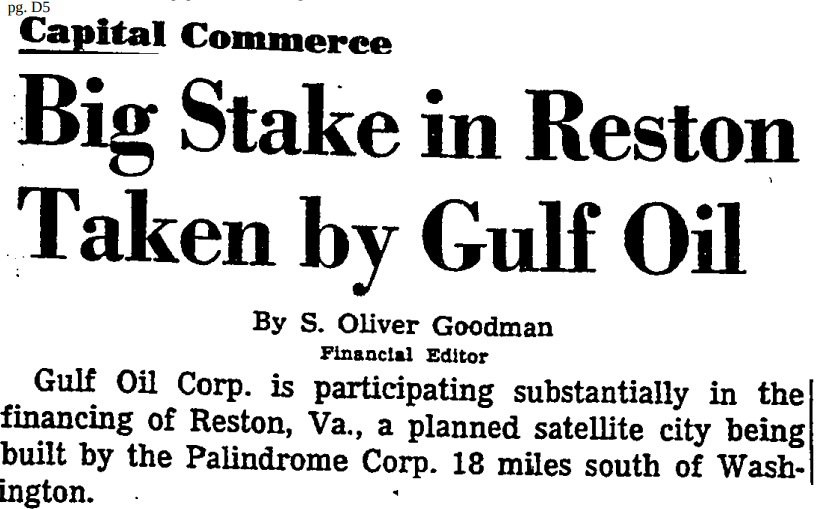
Farther in the past, there were noteworthy failures (below) like Mobil’s acquisition of Montgomery Ward, Exxon’s investment in Reliance Electric, and Gulf’s real estate ventures.
Mobil – Montgomery WardExxon – Reliance ElectricGulf Land – Reston
Finally, don’t expect the carbon sequestration boom that some are forecasting. As wind investors have discovered, industries dependent on mandates and subsidies are risky.
Not much unites climate activists and skeptics, but they are largely aligned in their opposition to carbon sequestration (euphemism for disposal), as are fiscal conservatives. The word chutzpah comes to mind when companies seek public funds to dispose of emissions associated with the combustion of their products.
199 oil and gas leases were wrongfully acquired at Sales 257, 259, and 261 with the intent of developing these leases for carbon disposal purposes. Repsol was the sole bidder at Sale 261 for 36 nearshore Texas tracts in the Mustang Island and Matagorda Island areas (red blocks at the western end of the map above). Exxon acquired 163 nearshore Texas tracts (blue in map above) at Sales 257 (94) and 259 (69).
In a peer reviewed paper, AI (Grok-3) debunks the man-made climate crisis narrative.
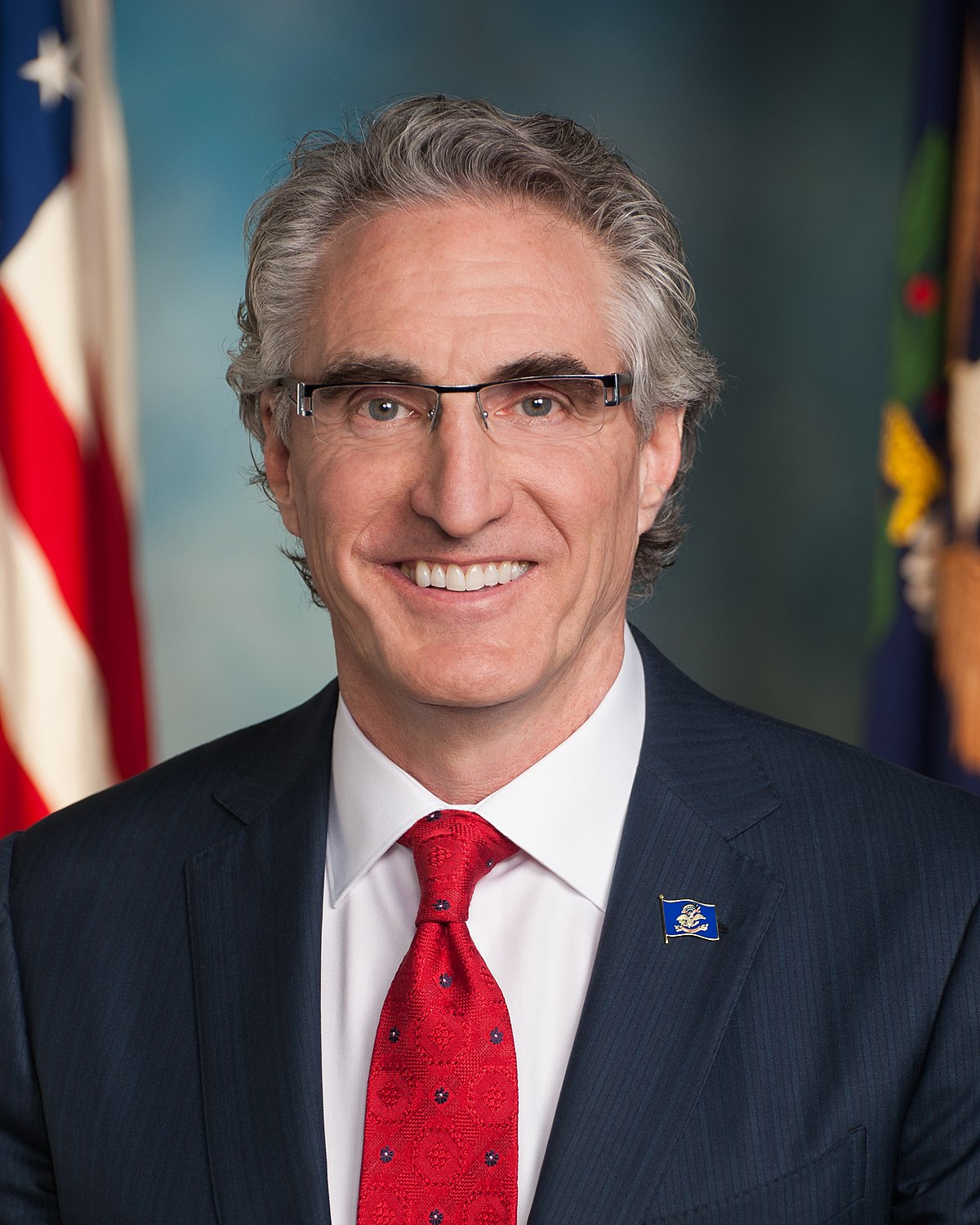
Doug Burgum: Hydraulic fracturing technology is “one of the reasons why the U.S. shale revolution is a miracle. But that miracle keeps on getting better and better. It’s the thing that has literally turned around the economy.” Posted here 15 years ago: Natural Gas Bonanza – Why Aren’t We Celebrating?
Government’s backing of unproven, first-of-a-kind technology to reach net zero is high-risk.
Government should assess whether its full carbon capture, usage and storage (CCUS) program will be affordable for taxpayers and consumers, given wider pressures on energy bills and the cost of living.
There are no examples of CCUS technology operating at scale in the UK.
CCUS may not capture as much carbon as expected.
International examples show that CCUS performanc expectations are far from guaranteed.
3/4 of the almost £22bn envisaged to support the projects will come from levies on consumers who are already facing some of the highest energy bills in the world.
The Government’s downgraded target of storing 20 to 30 million tonnes per year of CO2 by 2030 is now seen as no longer achievable
How will the Trump administration view offshore carbon disposal? Some elements of the oil industry see CCUS as a lucrative business opportunity. Budget and inflation hawks, along with most environmental organizations, are strongly (and rightfully in my opinion) opposed.
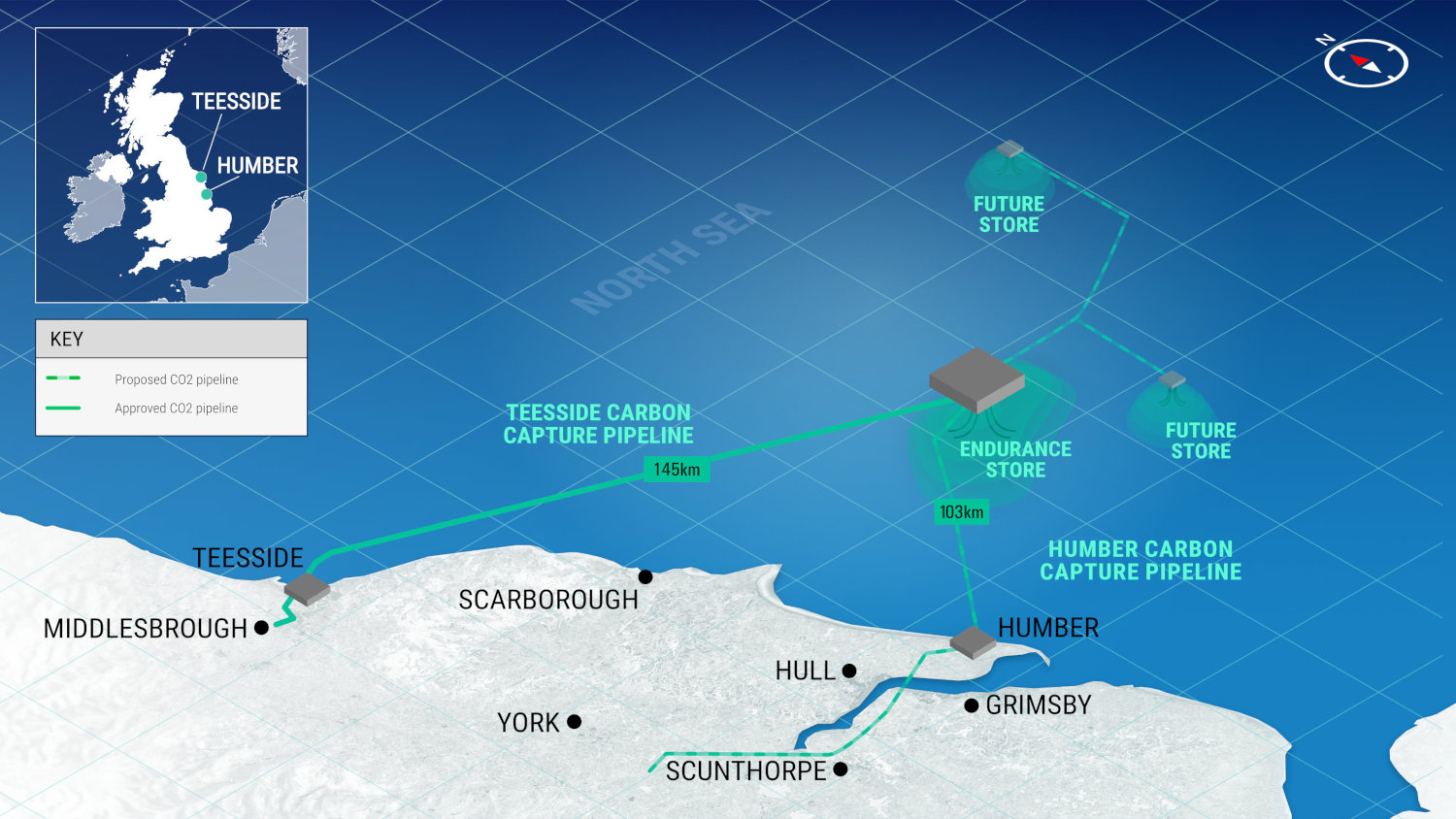
Northern Endurance Partnership (bp, Equinor, and Total) has been awarded the UK’s first permit to “store” CO2 beneath the North Sea.NEP plans to begin construction in the middle of 2025 with start-up expected in 2028 (bet the over!). Climate solution or costly virtue signaling at the public’s expense?
Fortunately, from the standpoint of US consumers and taxpayers, the push for carbon disposal in the Federal waters of the Gulf of Mexico has stalled, perhaps permanently. Oct.1 marked the 2 year anniversary of the 94 leases improperly acquired by Exxon at Sale 257 for carbon disposal purposes. Those leases will expire in 33 months (with the remaining 105 rogue leases expiring 1-2 years later) barring another legislative maneuver by industry advocates.
All of the previously posted questions about carbon disposal in the Gulf of Mexico remain, and most apply elsewhere. In particular, detailed cost-benefit analyses and risk assessments for these projects have not been provided. The intended permanency of offshore, subsurface carbon disposal raises complex monitoring, maintenance, liability, and decommissioning issues.
What are the carbon disposal proponents selling and why should governments be buying? If CO2 emissions are a significant threat to society (and informed opinions differ), is carbon disposal a cost effective solution?Policy decisions on subsidies for carbon disposal will be a good indication of how serious the new administration is about cutting Federal spending.
199 GoM oil and gas leases were wrongfully acquired for carbon disposal purposes. At Sale 261, Repsol acquired 36 nearshore Texas tracts in the Mustang Island and Matagorda Island areas (red blocks at the western end of the map above). Exxon had acquired 163 nearshore Texas tracts (blue in map above) at Sales 257 (94) and 259 (69).
The Secretary of the Interior is the most important energy production position in the US govt, particularly for the offshore sector.
In recent years energy policy has been increasingly influenced (if not directed) by White House staff, most notably the White House Climate Office. Given that Burgum will also lead the new created National Energy Council, direction from White House staffers or other departments should not be an issue.
Burgum should work effectively with Dept. of Energy appointee Chris Wright, an engineer who understands energy production.
There is no apparent Republican dissent, so Burgum should have no problem being confirmed.
All of the offshore policy forecasts in the post-election post still stand.
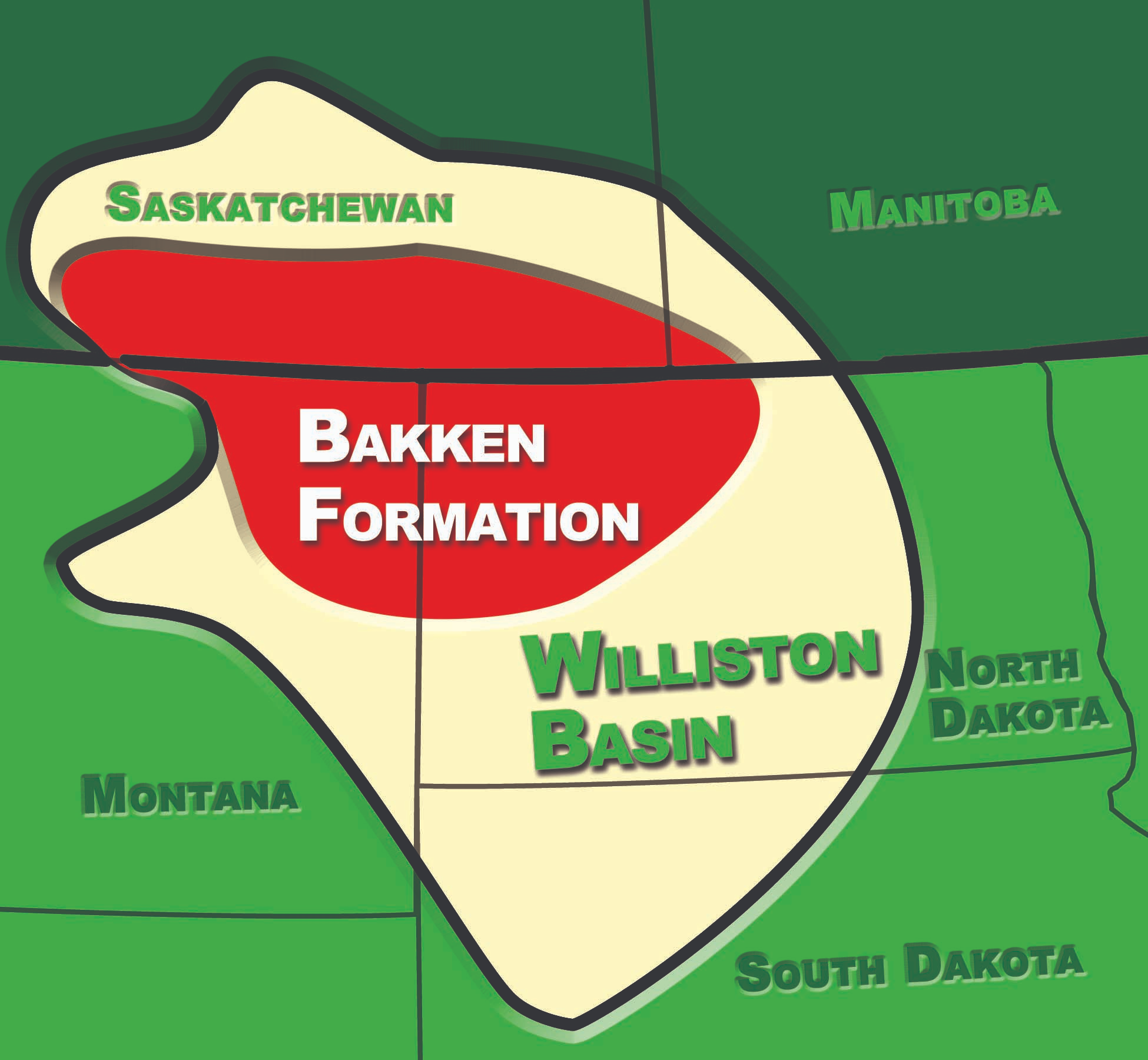
Burgum is currently the Governor of North Dakota. Some energy production stats for the state:
ND ranks 4th if the OCS, for which Bergum will soon be responsible, is included. The OCS ranked 2nd in oil production, behind only TX, despite seemingly being managed to fail.
Wind: In 2023, wind was the second-largest electricity generating source in ND behind coal. At the beginning of 2024, ND had about 4,000 megawatts of installed wind power generating capacity.
What about carbon sequestration (disposal)?
As Governor, Burgum supported CCS projects that could be lucrative for North Dakota.
As Interior Secretary and Energy Czar, he will have to consider the high Federal subsidy costs, efficacy, and net environmental benefits.
Companies looking to benefit from publicly financed CCS projects will lobby hard for Federal support. Budget hawks and most environmental activists will be strongly opposed. It will be interesting to see who prevails.
Exxon CEO Darren Woods’ is concerned that US withdrawal from the Paris climate agreement would threaten carbon capture and sequestration (CCS), the foundation for which is government mandates and generous taxpayer subsidies.
Exxon sought an edge over CCS competitors by improperly acquiring 163 OCS oil and gas leases (map below) for carbon disposal purposes. Conversion of these leases is not authorized, which means they will expire at the end of their primary (5 year) term absent legislative or regulatory action.
The only solid support for CCS is from companies hoping to benefit from subsidies and charges to industries and individual energy consumers. It’s time to end the Federal government’s CCS programs.
199 oil and gas leases were wrongfully acquired at Sales 257, 259, and 261 with the intent of developing these leases for carbon disposal purposes. Repsol was the sole bidder at Sale 261 for 36 nearshore Texas tracts in the Mustang Island and Matagorda Island areas (red blocks at the western end of the map above). Exxon acquired 163 nearshore Texas tracts (blue in map above) at Sales 257 (94) and 259 (69).






 Bud's Offshore Energy (BOE)