Feeds:
Posts
Comments

Archive for the ‘accidents’ Category

New 5MB hard drive to be used for spill rate estimates.

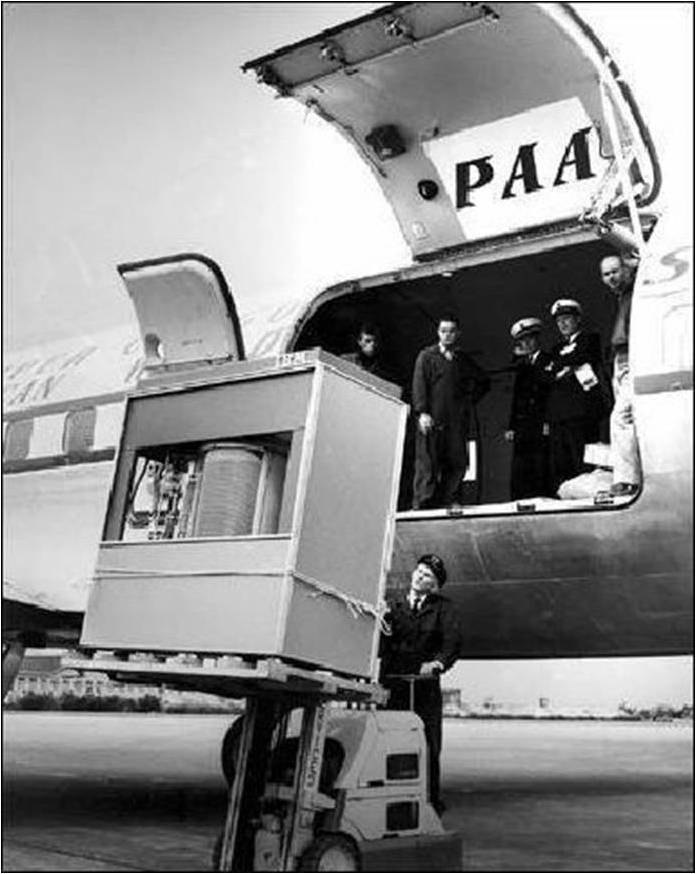
BOE exclusive: We have learned that the Flow Rate Technical Group (FRTG) has imported sophisticated new computer equipment (pictured above) which will finally settle the Macondo flow rate debate.  The dart boards used in making previous estimates are being shipped to the Smithsonian for public viewing 🙂

The FRTG has four teams of distinguished scientists and engineers, but only 2 have provided estimates – the Plume Team and the Mass Balance Team.  The Plume Team seems to be getting the most publicity, probably because their large range (20,000 – 40,000 bopd) includes the highest “official” flow estimate to date.  Before embracing these results, you may want to take a look at their statement and the summary paper, neither of which instills great confidence.

The Reservoir Modeling Team seems to be the best hope for a reasonably accurate estimate, but has yet to provide any findings.  Their approach is described below:

This team will describe the geologic formations as well as composition and pressures of the oil, natural gas, and other compounds that are being released.  Using open-hole logs; pressure, volume, and temperature data; core samples; and analog well or reservoir data; the team will populate computer models and determine flow rate from targeted sands in the well as a function of bottomhole pressure.

Don’t expect this controversy to be settled soon.

Read Full Post »

Has US bloodlust at BP gone too far?

Many will argue that BP deserves to die, and anger is entirely understandable. But critics should be careful what they wish for. America is a nation with a tradition of due process and everybody – even “big oil” – is entitled to a fair trial.

Read Full Post »

I have received the letter from Chairmen Waxman and Stupak of the of the House Committee on Energy and Commerce, requesting that the CSB investigate the BP Deepwater Horizon blowout.  It is my desire that the CSB do everything it can to facilitate the request and to undertake the investigation and determine what factors led to the explosion and failure of the blowout prevention system. ~John Bresland, CSB Chairman

In addition to the House and Senate Hearings, this would bring the number of official investigations to four:

  1. MMS-Coast Guard investigation required by the OCS Lands Act
  2. National Academy review requested by the Department of the Interior
  3. National Commission established by the President
  4. Chemical Safety Board review requested by the House Committee on Energy and Commerce

I have long advocated an independent investigation capability for major OCS incidents and recommended a special commission in my testimony before the Senate Committee on Energy and Natural Resources Committee on May 11.  However, is four official reviews too many?  The MMS-CG investigation is well underway and is required by statute, but the 3 independent reviews have yet to begin.  Perhaps these efforts can be consolidated.  If not, their respective missions must be very clearly defined.  Otherwise, there is a significant risk of gaps, confusion, and unnecessary overlap.  We need to make sure that each group knows their role and is staffed to obtain the information needed to prevent the recurrence of other offshore tragedies, in the US and elsewhere.

Read Full Post »

BOE reader Tore Fjågesund of WellBarrier AS has provided this schematic of the Macondo well’s casing program.  The color-coded format simplifies assessment of the barriers, and identifies a probable flow path.  Click here to view the full-size diagram (pdf) – Macondo Well Barriers.

Read Full Post »

Kudos to Secretary Chu and the Department of Energy for providing online access to Macondo schematics, pressure tests, diagnostic results and other data. This is the type of data that BOE and others have been requesting.  Well done!

Read Full Post »

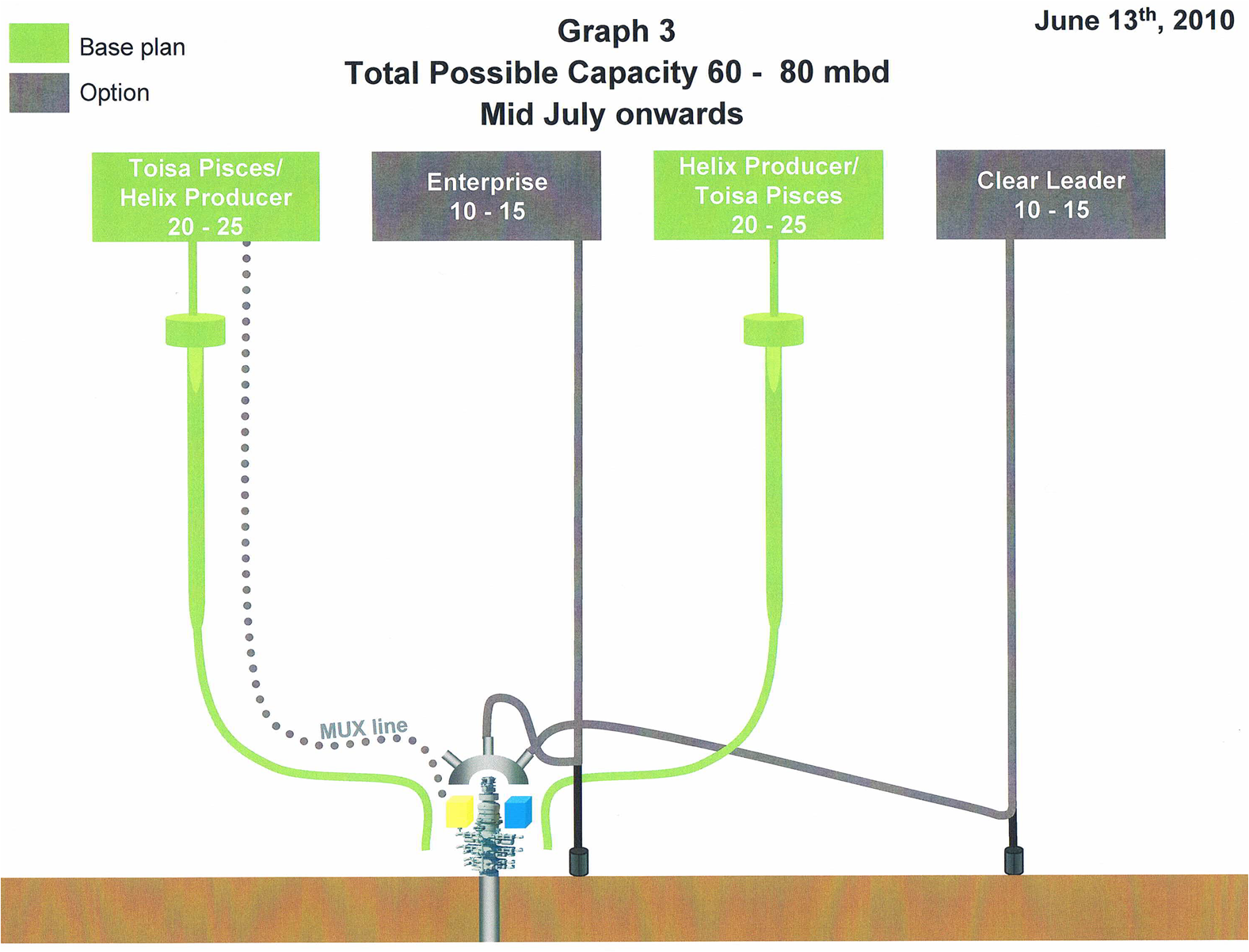
By the end of June, BP hopes to have the following arrangements in place:

  1. New well cap with improved sealing mechanism
  2. New seafloor manifold feeding production to a floating production storage and offloading (FPSO) vessel
  3. Shuttle tankers supporting FPSO
  4. Alternative flow path via choke and kill lines back to the Q4000 support vessel

The challenge will be minimizing production system downtime and the associated spikes in spillage, particularly during hurricane evacuations.

Read Full Post »

When they sheared the riser prior to installing the LMRP cap, the video clearly shows two segments of sheared drill pipe inside the riser.  How that happened is a mystery.  Did the explosion break the work string into multiple segments which fell back toward the BOP?

Read Full Post »

Dette kan skje igjen (This could happen again)~ Magne Ognedal, Director General, Petroleum Safety Authority Norway

Magne’s quote in the Stavanger Aftenblad acknowledges that tragic accidents like the Macondo/Horizon blowout or Alexander Kielland sinking could happen again (see English translation of full article by BOE Europe Chief Odd Finnestad).  Magne goes on to say:

We must appreciate there are risks associated with our petroleum activities, and in our yearly risk assessments we attempt to put in concrete terms what those inherent risks are.  It is up to our national political system to determine whether this risk picture should be accepted or not.

and

We must endeavor to learn from whatever happens around the world, and if there is something that is also relevant to Norway we must apply those lessons, both regulators and industry

Industry and government officials would be wise to follow Magne’s lead and avoid “can’t happen here” statements.  A few of these statements were made in the US after the Montara (Timor Sea) blowout, and we know how that worked out.

Some very experienced and capable offshore managers have had “there but for the grace of God go I” moments in the wake of this disaster.  They know that this is not the time for boasting, piling-on, or schadenfreude.  Like Magne, real leaders are focused on monitoring the investigations, studying the findings and recommendations, and applying the lessons as necessary to further reduce their operating risks and the risks of others who conduct offshore oil and gas operations.

Read Full Post »

Aban Pearl

Global insurance broker Willis Group Holdings has revealed that the Deepwater Horizon and Aban Pearl drilling rig losses have given upstream energy insurers a record breaking monthly financial hit of $795m.

link

Read Full Post »

spill response methods

But I can tell you, based on 21 years’ experience analyzing and observing oil spills, that the best minds in the business are already doing all they can. No special techniques that would work well to clean up the oil in this situation aren’t being tried or planned. There simply are no foolproof solutions. ~ Dagmar Schmidt Etkin

link

Read Full Post »

« Newer Posts - Older Posts »