“The Bureau of Ocean Energy Management (BOEM) is initiating the first steps that could potentially lead to a lease sale for minerals on the Outer Continental Shelf (OCS) offshore Alaska by publishing this request for information and interest (RFI).”
Next week, BOE will rank the 2025 Gulf of America Safety Compliance Leaders according to the number of incidents of non-compliance (INCs) per facility inspection.
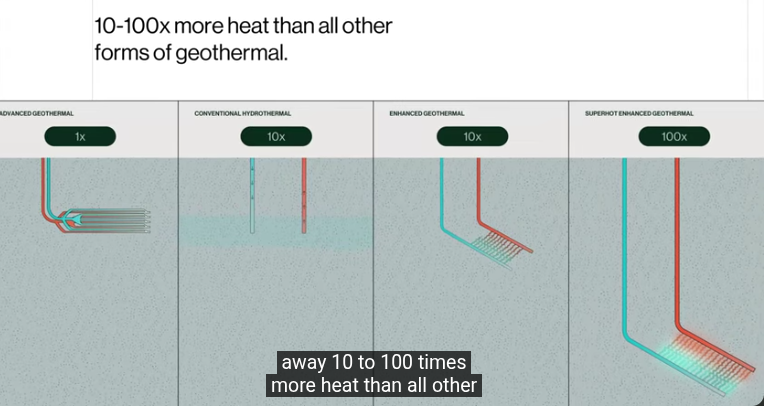
As we descend into hotter, deeper tiers, the process shifts from pressure-driven to density-driven stimulation. With larger density contrasts between the injected water and pore fluid in the rocks, density takes the lead. The deeper we go, fracturing becomes easier, not more challenging, and reduces the need for massive pumping fleets.
It all results in a superhot subterranean network sweeping away 10-100x more heat than all other forms of geothermal. We are sending water coursing through engineered permeability, harnessing Earth’s most abundant energy and powering the next century of global innovation.
Supercritical fluid dynamics are thus the key to superhot geothermal completions. Water above and 22 mega pascals (3191 psi) enters a supercritical state with liquid-like density and gas-like viscosity. The water that is injected into a hot, supercritical reservoir is thus much denser than the surrounding superhot fluid. The injection of relatively cool water into superhot rock creates and widens fractures increasing permeability without increased pumping pressure.
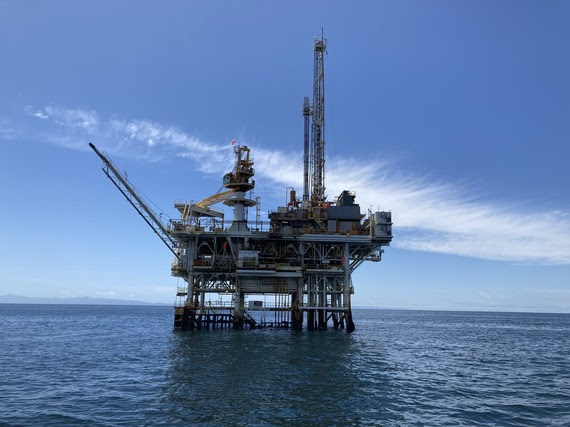
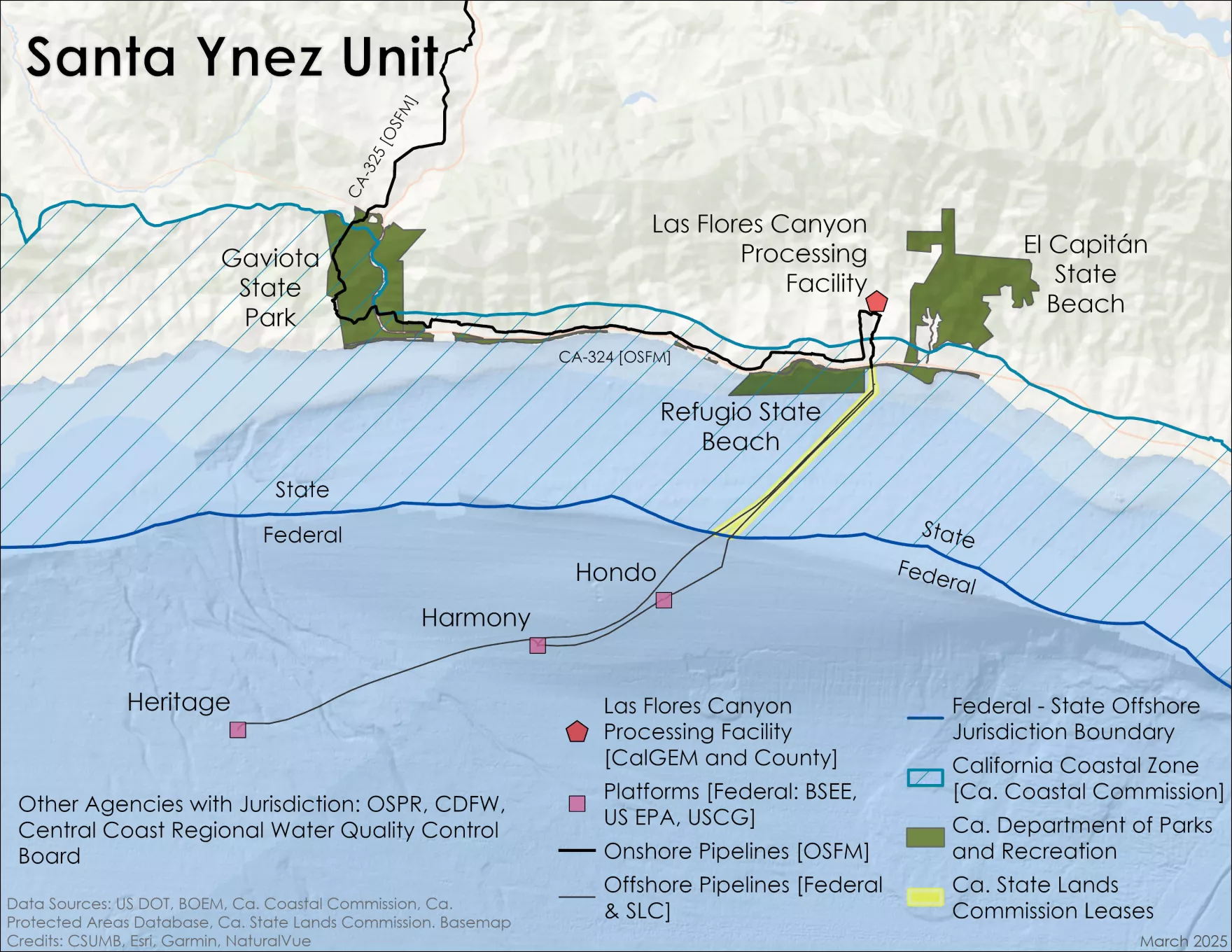
John comments that the project description, which calls for removing the jacket, seep tents and pipelines, and partially removing the upper 5 feet of the 23-foot-high shell mounds, does not make much sense given the abundant fish and invertebrates that reside on or around the platform jacket.Cutting the jacket off 85 feet below the water line and converting the remaining structure to an artificial reef would make more sense and should have been designated the proposed project.
The plan is to send the materials to the Ports of Long Beach, Los Angeles or Hueneme or possibly Ensenada, Mexico. The project involves complex logistics and is going to be a very long (3 years), ambitious and expensive project that will likely set a precedent for future platform decommissioning projects.
According to their agreement with the CSLC, Exxon is responsible for the decommissioning costs.
Scientific American: The steel “jackets” that support California’s offshore oil platforms are covered in millions of organisms and provide habitat for thousands of fishes. Joe Platko
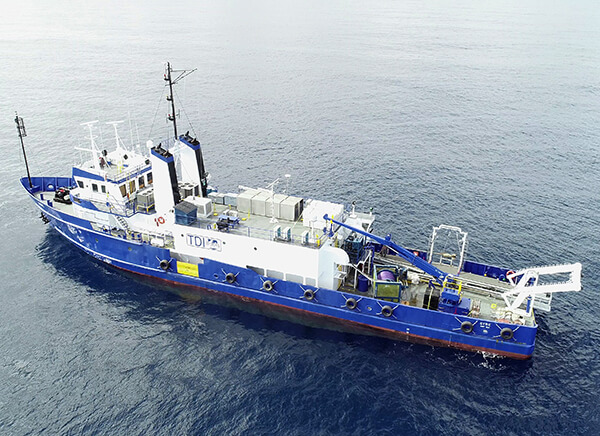
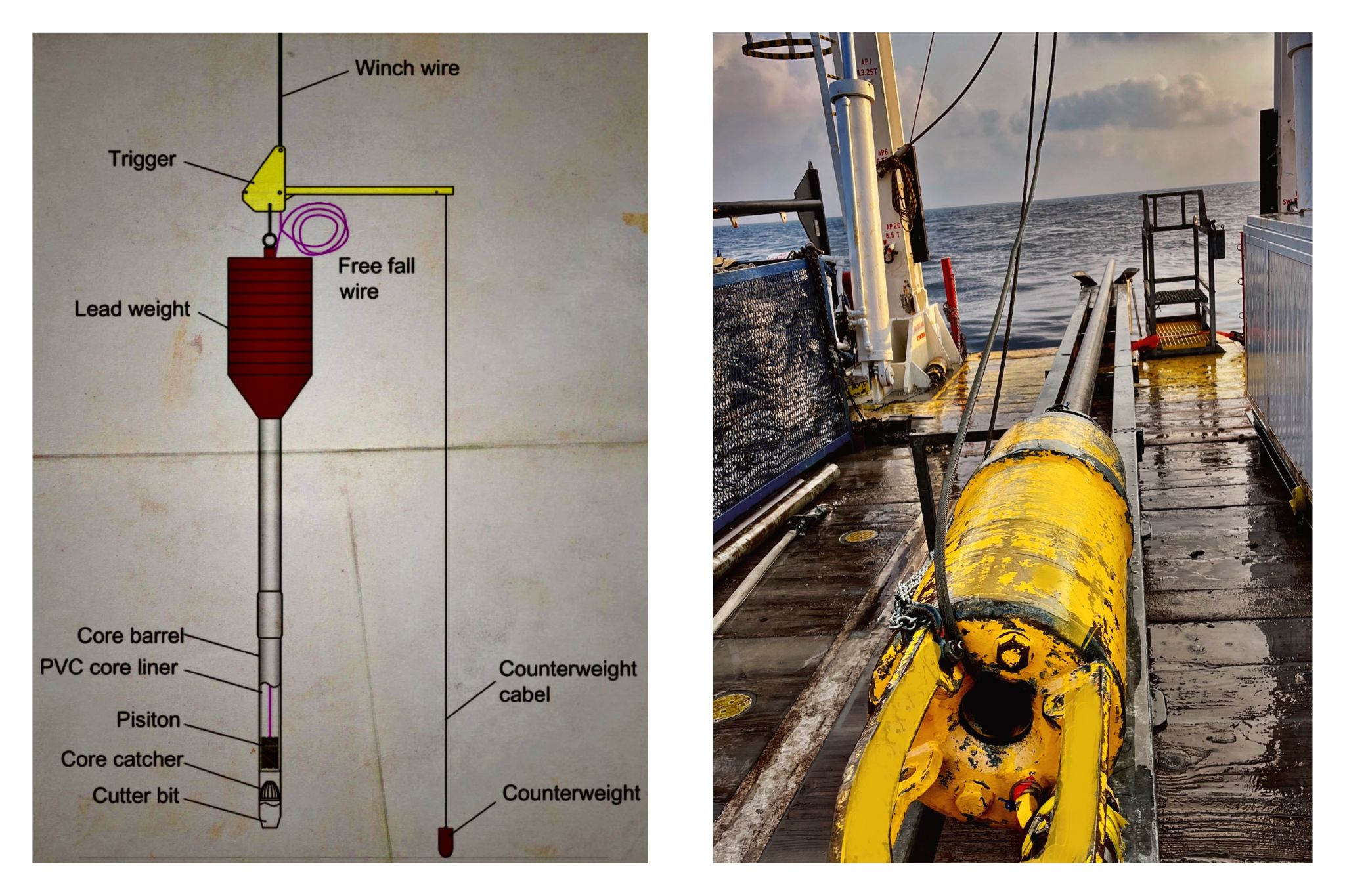
The piston coring survey will involve the collection of 40–60 seabed core samples across the Walton and Morant Basins, accompanied by bathymetric, multibeam echo-sounding, and heat-flow surveys.
The data will be analyzed for geochemical and thermal signatures to confirm the presence of thermogenic hydrocarbons, assess source rock maturity, and refine basin modeling, materially enhancing the definition of key prospects, including Colibri and Oriole.
“Exxon spinoff Sable Offshore faces seven barriers to restart its pipeline, idled since a major oil spill in 2015. One of those approvals needs to come from the California Coastal Commission, which Sable CEO Jim Flores criticized for its “Teflon” “eco-Nazi attitude” in a leaked call recording newly obtained by Hunterbrook. Because of these barriers — and despite Trump Administration intervention — Sable’s project, originally scheduled to go online in Jan 2024, may never sell oil. At least not under the ownership of Sable ($SOC), which is quickly running out of cash.“
Exxon’s options per Hunterbrook:
The Exxon purchase agreement gives Exxon a free reassignment option: If Sable fails to “restart production” by Mar. 31, Exxon can demand reassignment of the assets within 180 days, “without reimbursement of any Purchaser costs or expenditures.”
In other words: Exxon can just take back the asset. For free.
And if Sable’s regulatory pathway is really just delayed, not denied — as Sable claims — that may be a more appealing proposition for Exxon than it once was.
Or, perhaps, Exxon will decide to retire the project, recognizing the Sisyphean path to production. (Exxon already took a $2.5 billion write-down as part of exiting offshore operations in California.)
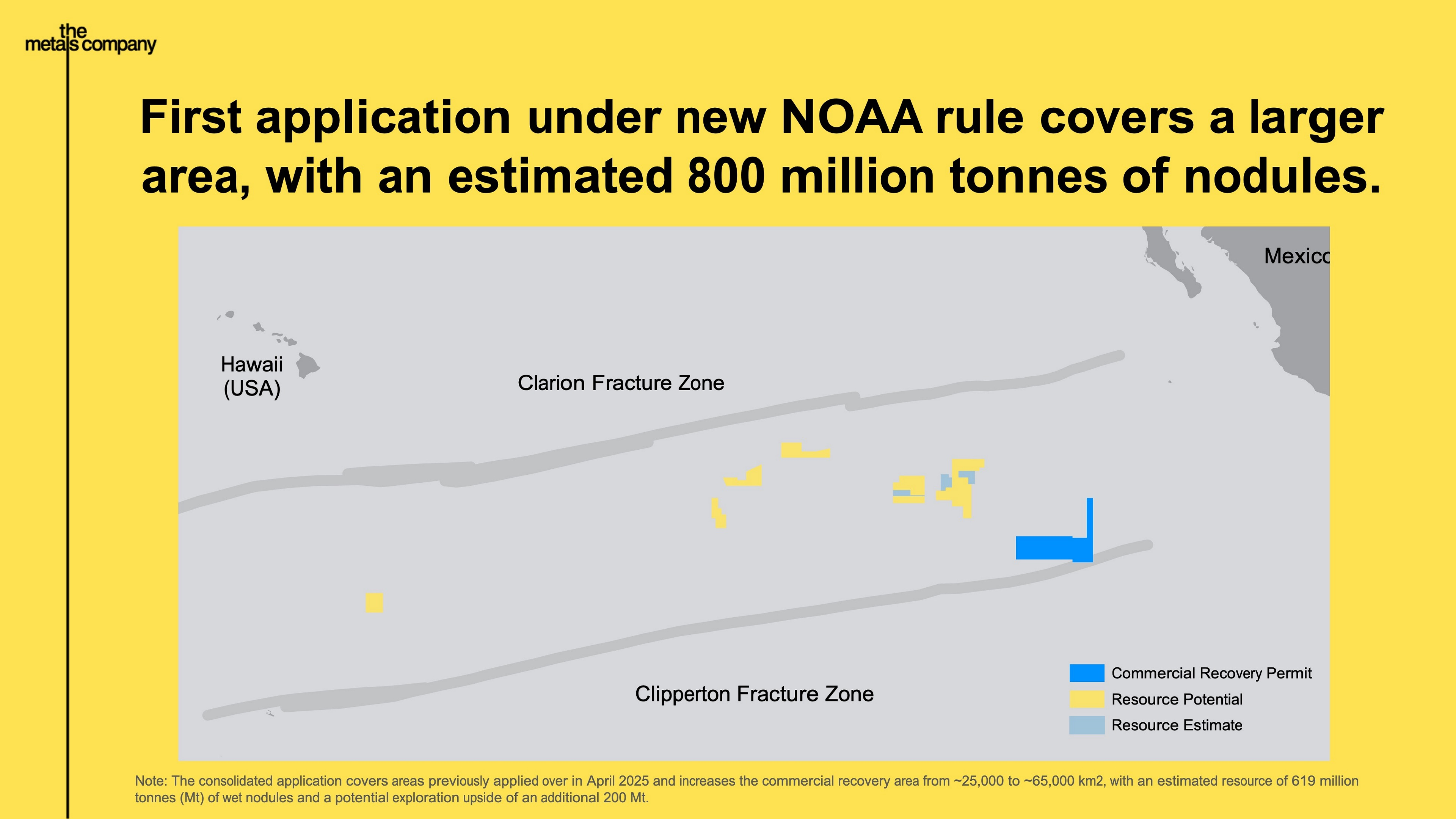
“The objective of this rule is to provide the option for a consolidated application streamlining the process for qualified applicants.”
Reflecting on advances in environmental science, seafloor mapping, and offshore mineral-collection technologies, the revised rule allows qualified companies that gather the necessary site information to proceed to the collection phase. Deepsea mining is now more closely aligned with offshore oil and gas in that companies acquiring licenses are able to proceed to production after regulatory approvals.
The preamble nicely summarizes the opposition to the rule for environmental and jurisdictional reasons:
“General opposition to deep seabed mining was expressed for a variety of stated reasons, including, but not limited to the following assertions: effects on the environment; effects on seabed habitat and to marine species including undiscovered species especially in the Clarion-Clipperton Fracture Zone; harm to cultural resources and Pacific Islander livelihoods and beliefs; inadequate scientific research and information; inadequate resource protection measures and regulations; uncertainties regarding environmental impacts and a nascent industry; significant technical challenges to deep seabed mining; opposition to deep seabed mining from many U.S. states, countries, and global companies; that deep seabed mining is contrary to international agreements and efforts; the need for moratoria; that deep seabed minerals are not needed to meet U.S. demand for critical minerals and domestic sources and recycling of such minerals should be used instead; the U.S. needs to focus on building domestic refineries; using renewable and alternative resources rather than deep-sea minerals; and jeopardizing vital carbon sinks.”
“Commenters stated that acting unilaterally on deep seabed mining undermines the ISA (International Seabed Authority) process, international norms, global stability, and the rule of law, and that it could result in harm to protected areas, such as Areas of Particular Environmental Interest designated by the ISA.”





 Bud's Offshore Energy (BOE)