Feeds:
Posts
Comments

Archive for April, 2025

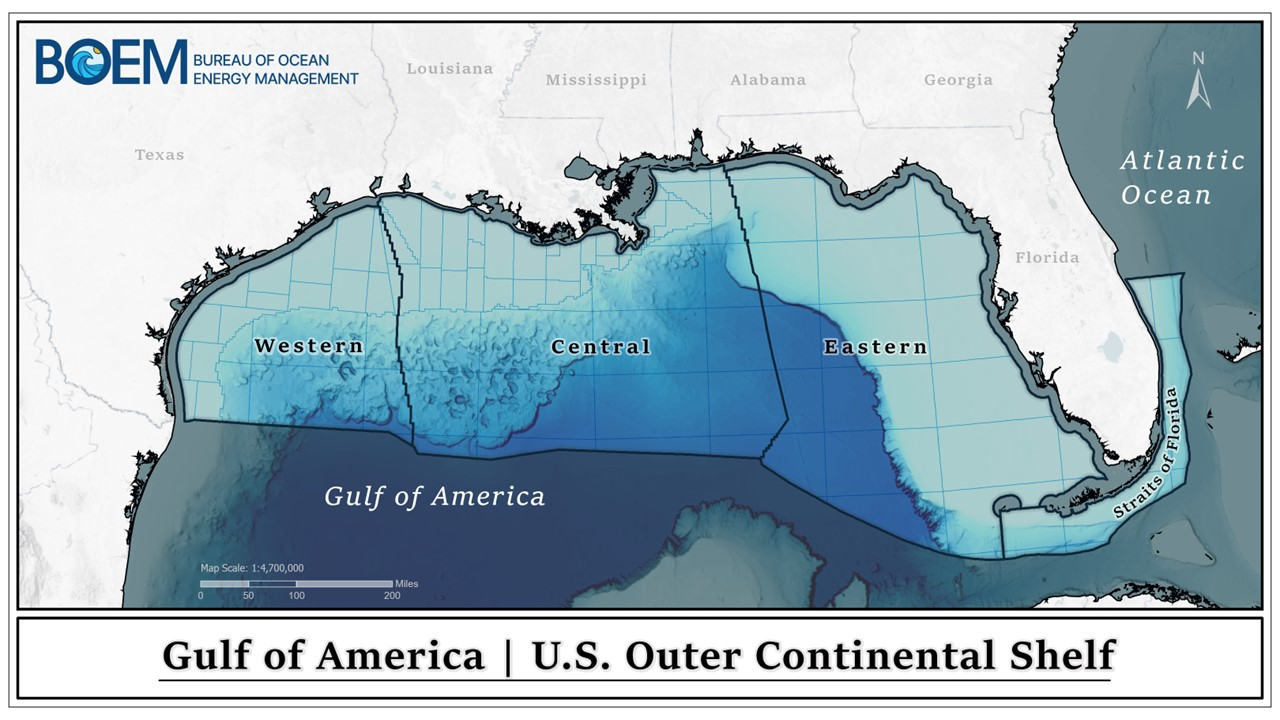
“The Bureau of Ocean Energy Management’s analysis reveals an additional 1.30 billion barrels of oil equivalent since 2021, bringing the total reserve estimate to 7.04 billion barrels of oil equivalent. This includes 5.77 billion barrels of oil and 7.15 trillion cubic feet of natural gas—a 22.6% increase in remaining recoverable reserves.” 

YearNumber of fieldsOriginal ReservesHistorical Cumulative ProductionReserves
Oil BbblGas TcfBOE BbblOil BbblGas TcfBOE BbblOil BbblGas TcfBOE Bbbl
19752556.6159.917.33.8227.28.662.7932.78.61
19804358.0488.923.94.9948.713.663.0540.210.20
198557510.63116.731.46.5871.119.234.0545.612.16
199078210.64129.933.88.1193.824.802.5336.18.95
199589912.01144.937.89.68117.430.572.3327.57.22
20001,05014.93167.344.711.93142.737.323.0024.67.38
20051,19619.80181.852.214.61163.943.775.1917.98.38
20101,28221.50191.155.517.11179.349.014.3911.86.49
20151,31223.06193.857.619.58186.552.783.487.34.78
20161,31523.73194.658.420.16187.553.583.576.84.79
20171,31924.65195.259.720.78188.954.213.876.35.00
20181,31924.86195.559.721.42189.855.213.445.74.45
20191,32526.77197.061.822.12190.956.094.656.15.74
20231,33630.43201.266.224.66194.059.195.777.27.04
Oil and gas reserves and cumulative production at end of year, 1975-2023, Gulf of America, Outer Continental Shelf and Slope. “Oil” includes crude oil and condensate; “gas” includes associated and non-associated gas. Reserves estimated as of December 31 each year.

This increase in reserves will not please those responsible for the current 5 Year Oil and Gas Leasing Plan. They told us that we don’t need more OCS lease sales and that our biggest concern is producing too much oil and gas for too long!

Page 6 of the Leasing Plan:

The long-term nature of OCS oil and gas development, such that production on a lease may not begin for a decade or more after lease issuance and can continue for decades, makes consideration of net-zero pathways relevant to the Secretary’s determinations on how the National OCS Program best meets the Nation’s energy needs.

Energy experts like Dan Yergin and Vicki Hollub have a much different view. Per Hollub:

Crude reserves are being found and developed at a much slower pace than they’ve been in the past. Specifically, she said the world has only newly identified less than half the amount of crude it’s consumed over the course of the past 10 years. Given the current trends, this means demand will exceed supply before the end of 2025.

A bit off-topic, but Jeff Walker, a former colleague and the MMS Regional Supervisor in Alaska, had the best quip about reserve numbers. In explaining an operator’s revised reserve numbers for a producing unit which had leases with different royalty rates, Jeff noted that “oil always migrates to the lower royalty leases.”😉
Read Full Post »

  1. Responsible Offshore Development Alliance (RODA), Petitioner, Amicus briefs submitted by Green Oceans, America First Policy Institute, and the Save Right Whales Coalition
  2. Seafreeze Shoreside, Inc., Petitioner, Amicus briefs submitted by Green Oceans, Protect Our Coast NJ, America First Policy Institute, and the Save Right Whales Coalition

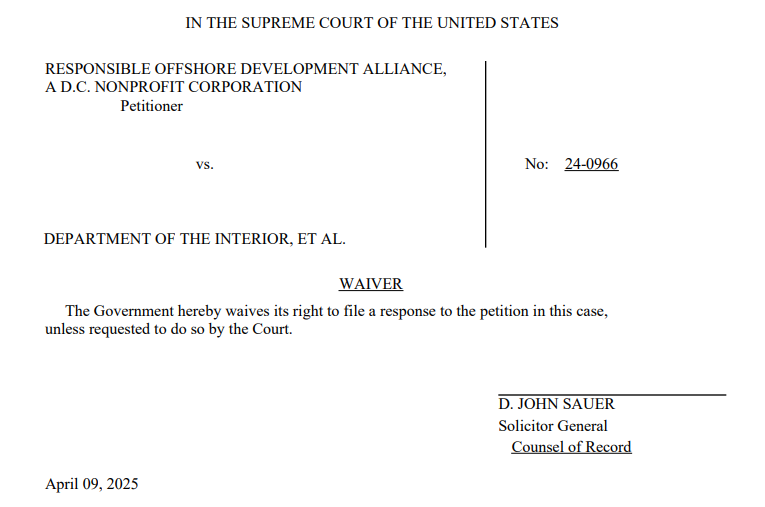
Given that the SCOTUS declined to hear a Vineyard Wind challenge by the Nantucket-based ACK for Whales group, the odds of the new challenges being heard would seem to be low. However, it’s noteworthy that both Vineyard Wind and the Federal Government have waived their right to respond to these petitions. The Government’s waiver to respond to the RODA petition is pasted below.

Read Full Post »

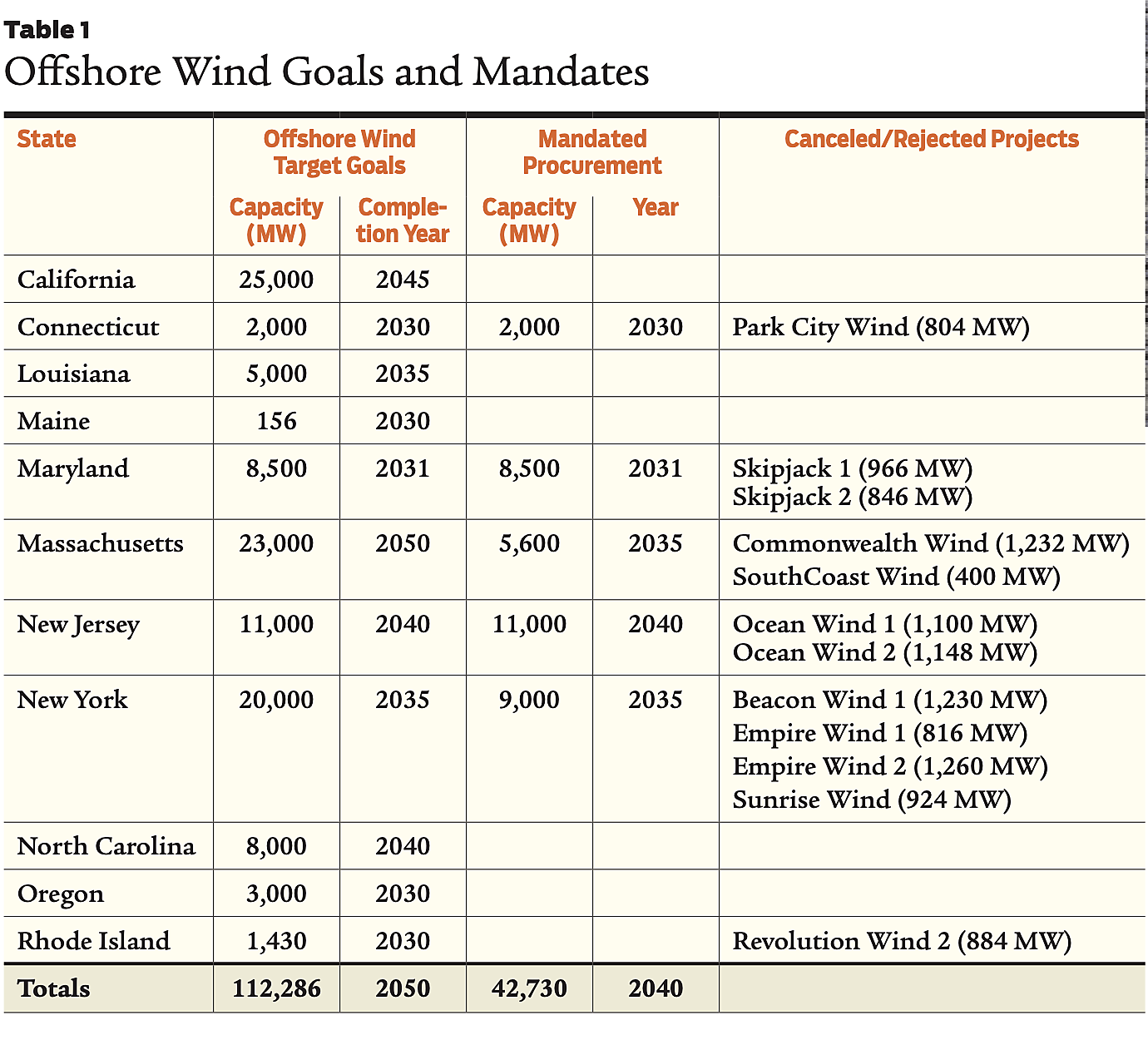
Analysis by Jonathan A. Lesser:

Of all commercial renewable generation technologies, offshore wind is the costliest, far more so than solar photovoltaics and onshore wind. The newest incarnation of offshore wind—floating turbines that can be sited in deep water—are more expensive still. Although offshore wind is supposed to benefit from more prevalent ocean breezes, it remains, like land-based wind and solar power, an intermittent source of electricity. Hence, as offshore wind comprises a larger share of total electricity capacity, it requires ever more backup generation or storage to compensate.”

Offshore wind’s high cost and intermittency raise a simple question: Why have renewable energy advocates and policymakers in many Atlantic Coast states, as well as those on the West Coast, placed such emphasis on this technology? One justification, like all forms of renewable energy, is that offshore wind will reduce U.S. greenhouse gas emissions. Whether that is true remains an open, empirical question. Offshore wind’s high costs, which require substantial—and increasing—taxpayer and ratepayer subsidies, will raise electricity rates and reduce electricity consumption. Even offshore wind manufacturers such as German-based Siemens Energy admit this. By itself, reduced electricity consumption may reduce greenhouse gas emissions slightly, as will offshore wind replacing lower-cost natural-gas-fired generation. However, any such reductions will be so small as to have no measurable effect on climate.

Full article

Read Full Post »

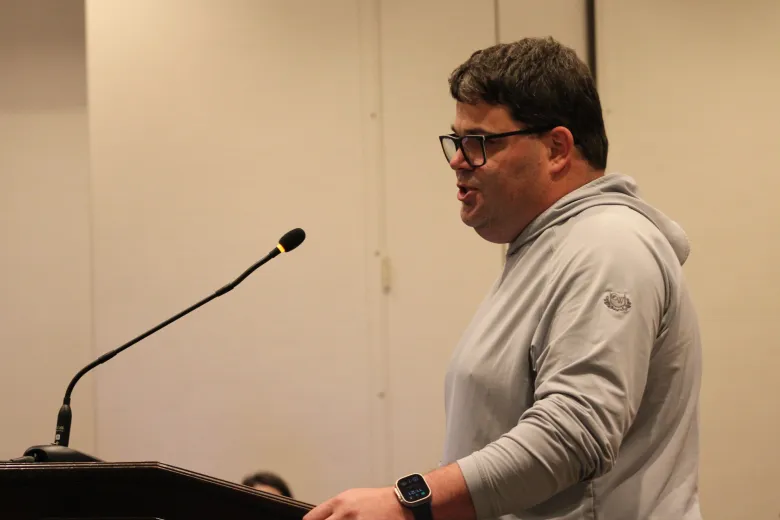
Sable supporter Trent Fontenot calls out the CCC for government overreach.  Daniel Green / Noozhawk photo

Yesterday, the California Coastal Commission voted 8-3 to fine Sable Offshore $18,022,500 for performing pipeline repairs necessary to minimize operating risks and comply with the FIre Marshall’s requirements.

In the minds of at least some commissioners, Santa Barbara County, which reached agreement with Sable on pipeline repairs, is also a villain in this matter. Per Commissioner Harmon:

“We have not gotten a foothold with Sable, and we’ve not gotten a foothold with Santa Barbara County either. So, we are where we are, and because of this absolute failure of communication and Sable’s, to be frank, absolute failure to follow the law, this hearing has become necessary,” Harmon said.

We’ll see how this gets sorted out in the courts. Sable appears to have a strong case against the Commission, but litigation in California courts is not exactly ideal for oil companies.

Read Full Post »

China National Offshore Oil Corp. (CNOOC) has surrendered its 21% interest in the Appomattox (Mississippi Canyon 391, 392, and 393) project and its 25% stake in Stampede (Green Canyon 468, 511, and 512). Those ownership positions were acquired in CNOOC’s takeover of Calgary-based Nexen in 2013.

CNOOC had been quite positive about the prospects for Appomattox and Stampede, which are producing at higher than expected rates. However, because of sanctions concerns, an exit from operations in the US, Canada, and the UK had been under consideration for at least 2 years.

CNOOC’s shares of Appomattox and Stampede were acquired by INEOS Energy, a UK company.

The transaction is also discussed in CNOOC’s 2024 Annual Report (p.19).

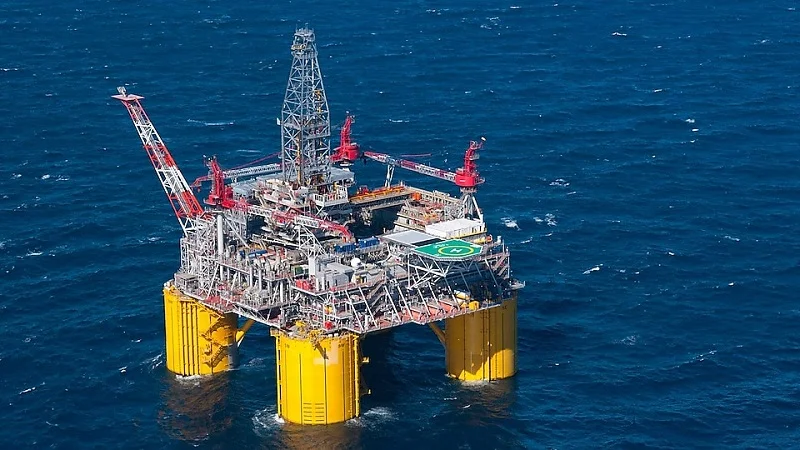
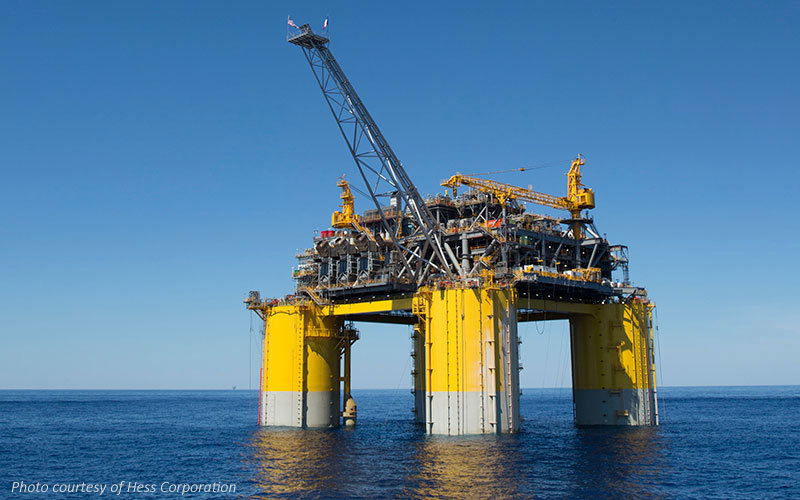
Stampede TLP

Read Full Post »

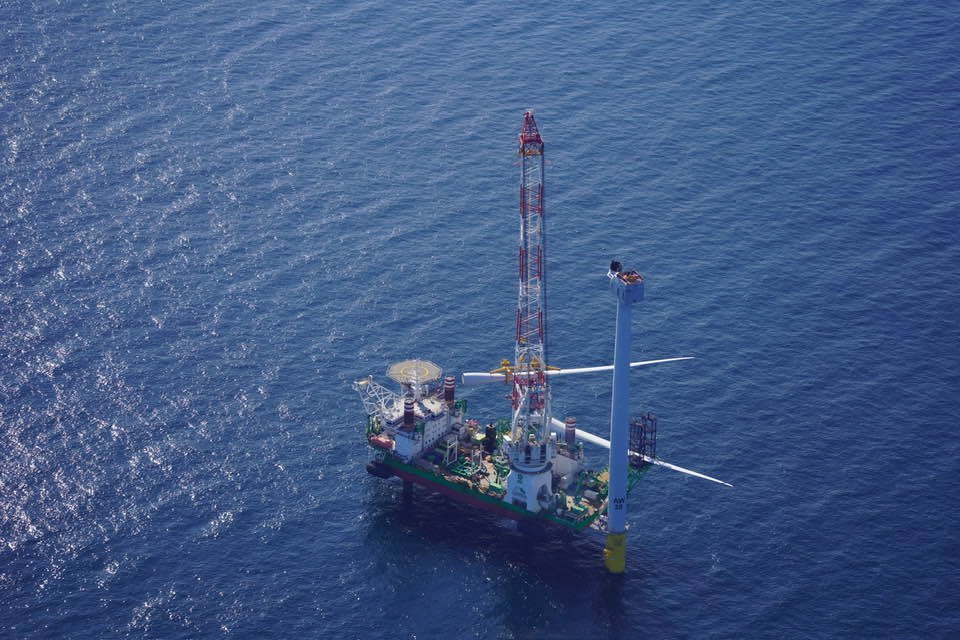
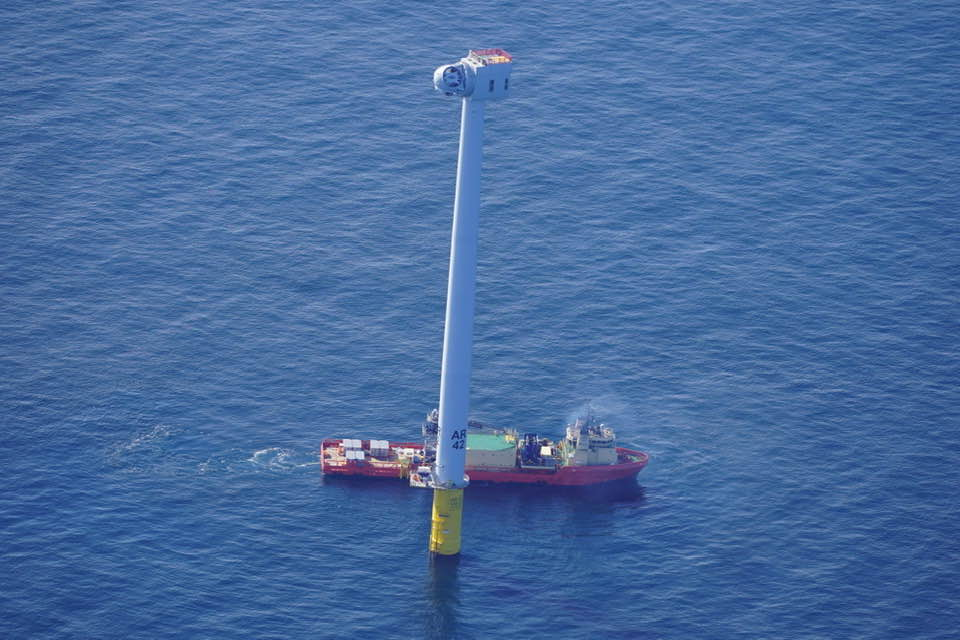
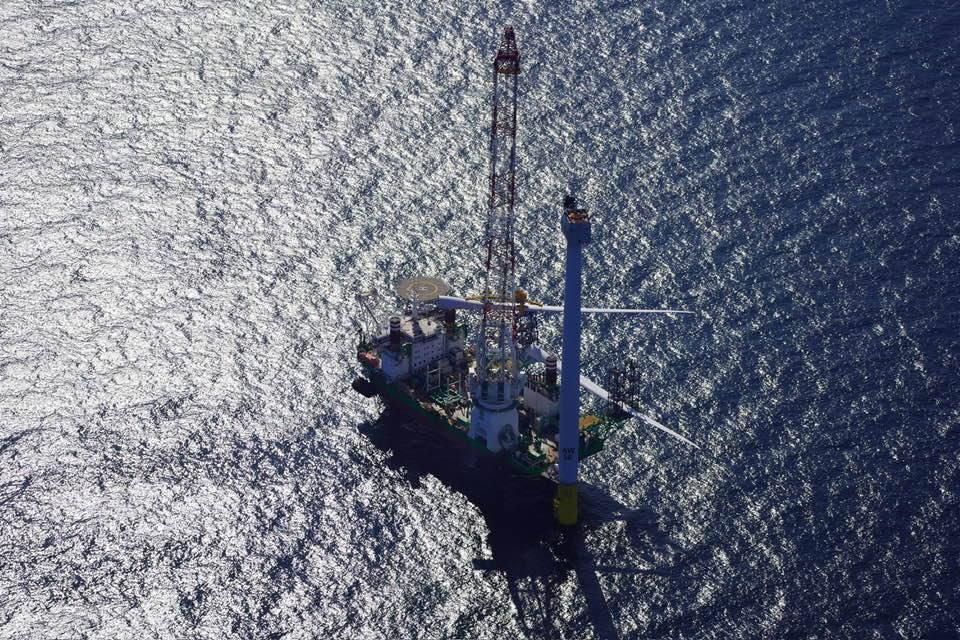
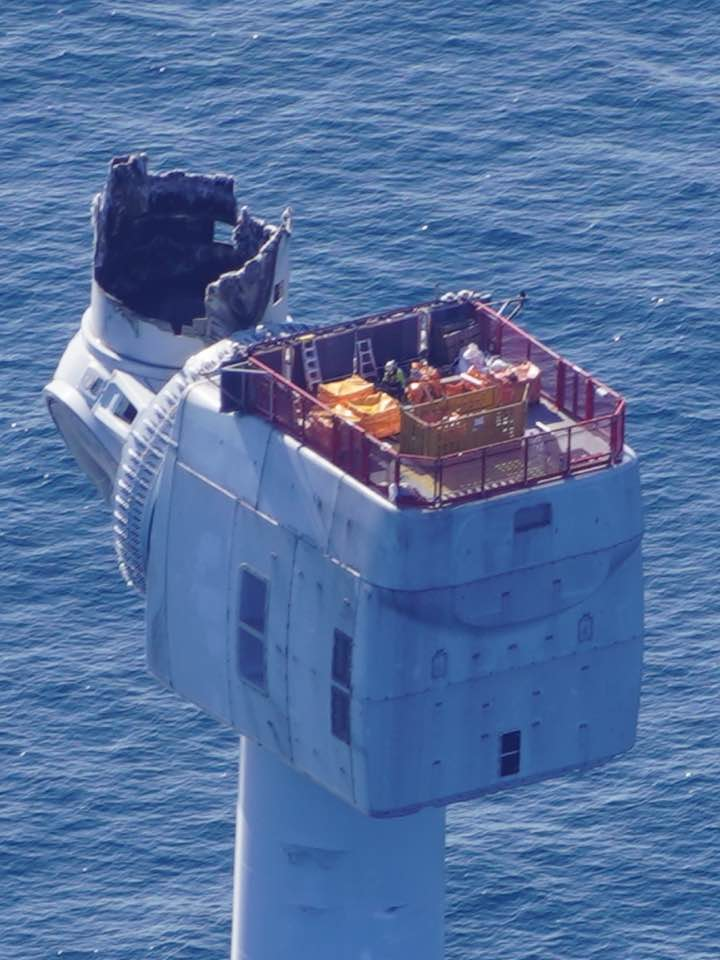
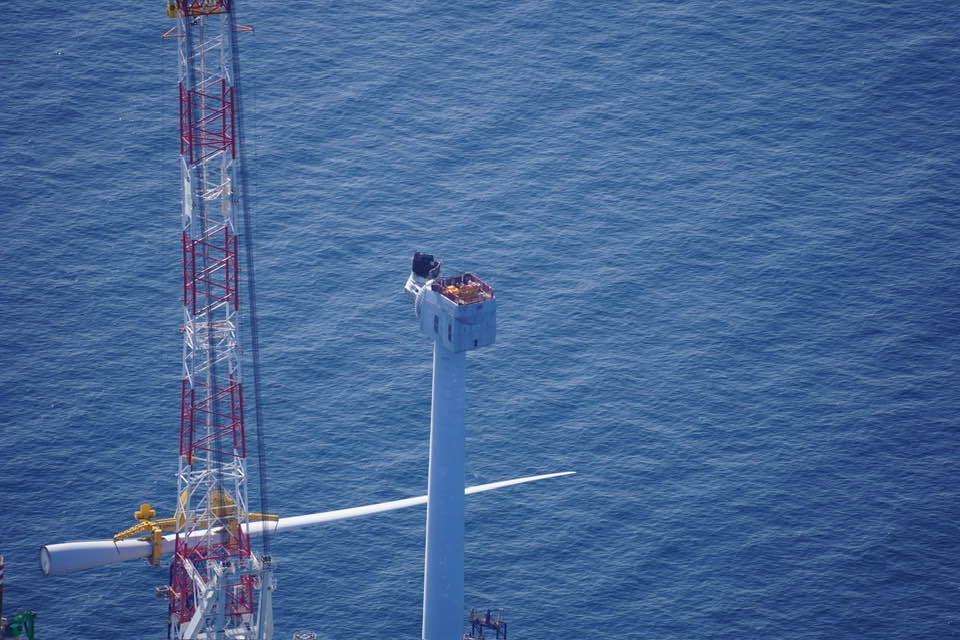
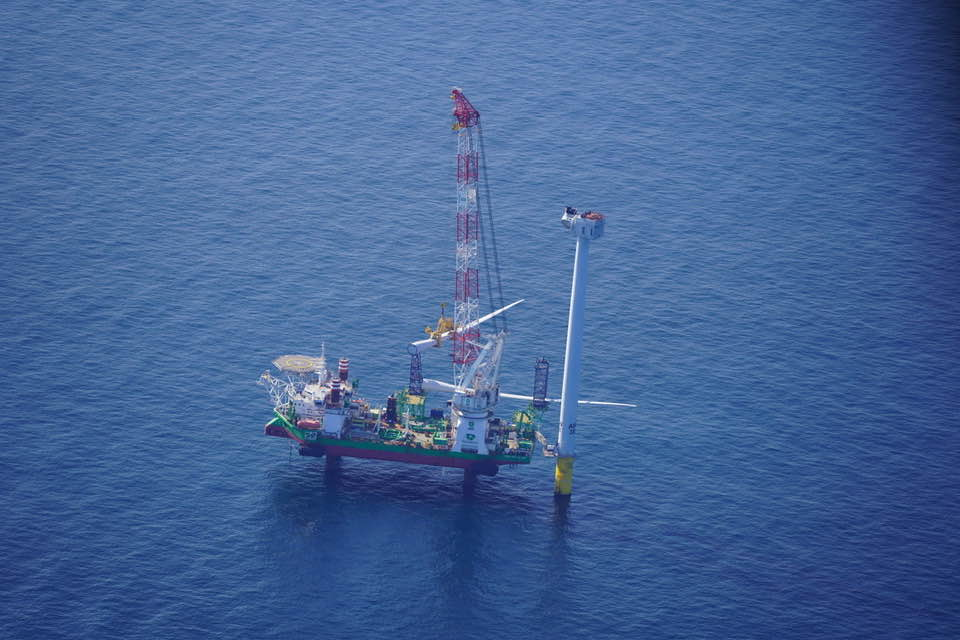
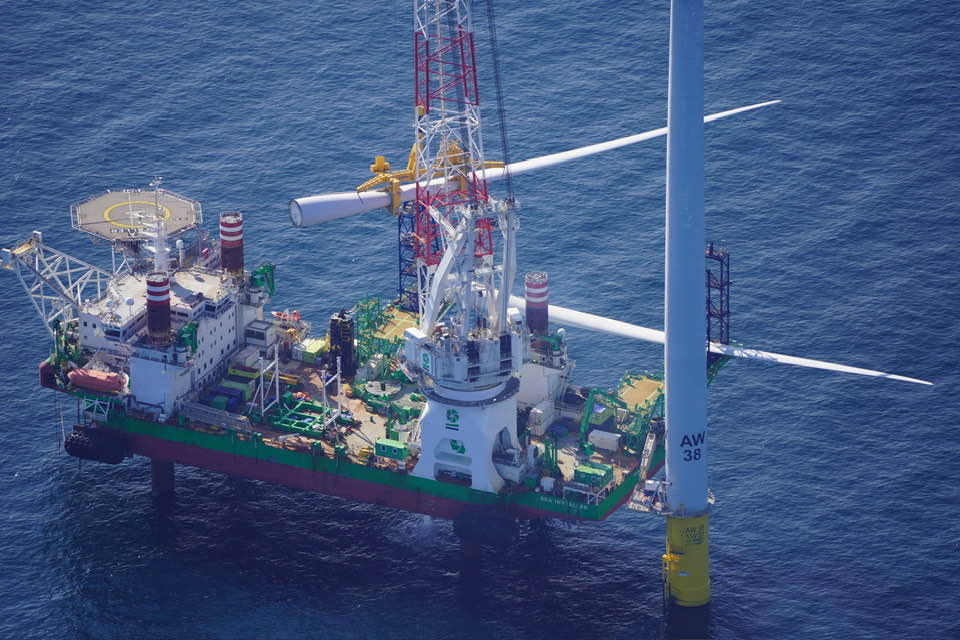
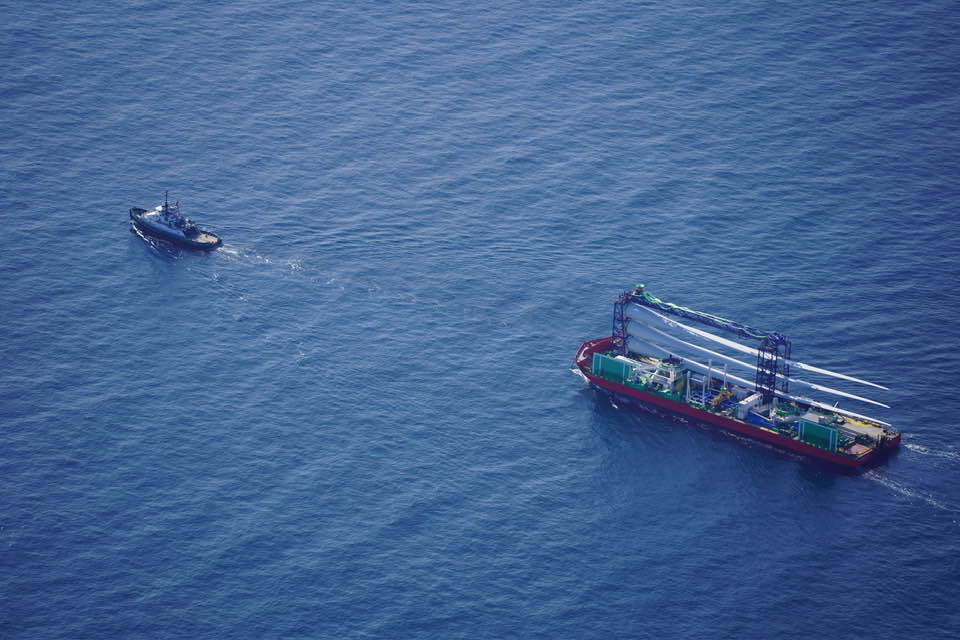
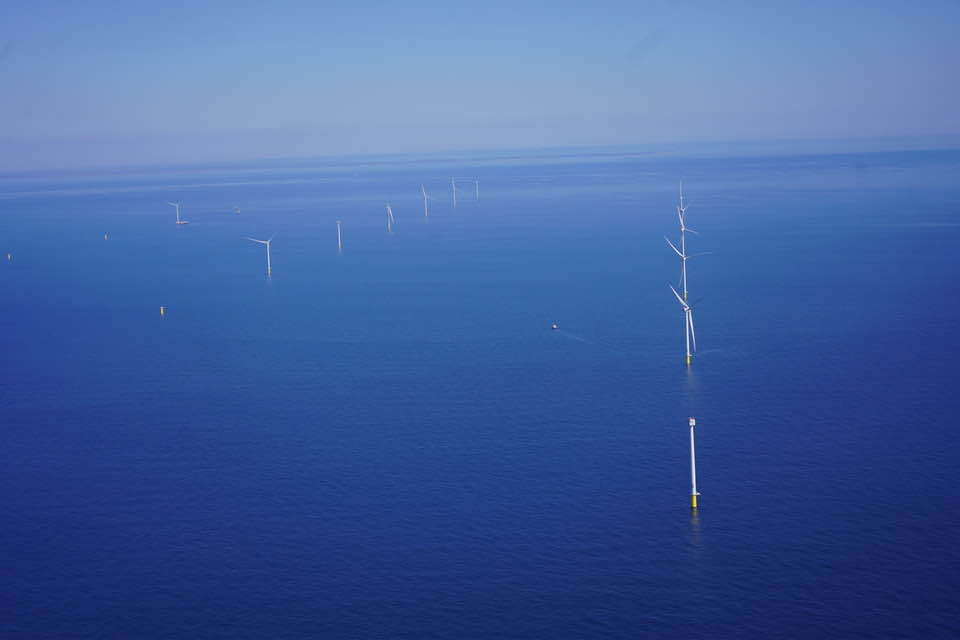
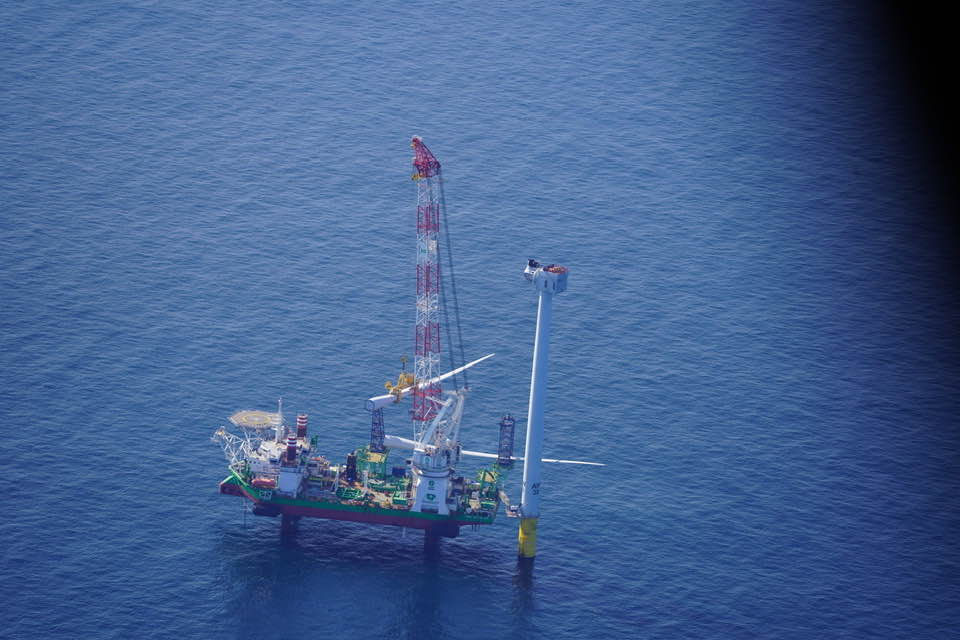
Below are interesting pictures of Vineyard Wind’s repair and installation activity taken today by Nantucket pilot Doug Lindley. He commented that only of the turbines was spinning.

Note the lightning damage to the turbine with the failed blade. The lightning protection system was not operational on that turbine.

Also note the vessel transporting replacement blades.

It’s a bit difficult to rationalize all of this, but the Administration of Massachusetts Governor Maura Healey sees these projects as being critical to the Commonwealth’s energy future.

In December 2023, the Governor ordered a transition away from natural gas and set a goal of making Massachusetts carbon-neutral by 2050. As a candidate for governor in October 2022, then-Attorney General Maura Healey bragged,Remember, I stopped two gas pipelines from coming into this state. This in a State where half of the households are heated with natural gas.

Read Full Post »

BSEE incident investigations are another window into OCS safety performance.

Panel reports are published for the most significant OCS incidents (e.g. fatalities, serious injuries, significant pollution). Unfortunately, these reports have been unacceptably delayed in recent years. Status reports are not provided leaving the public in the dark as to what is being investigated and why.

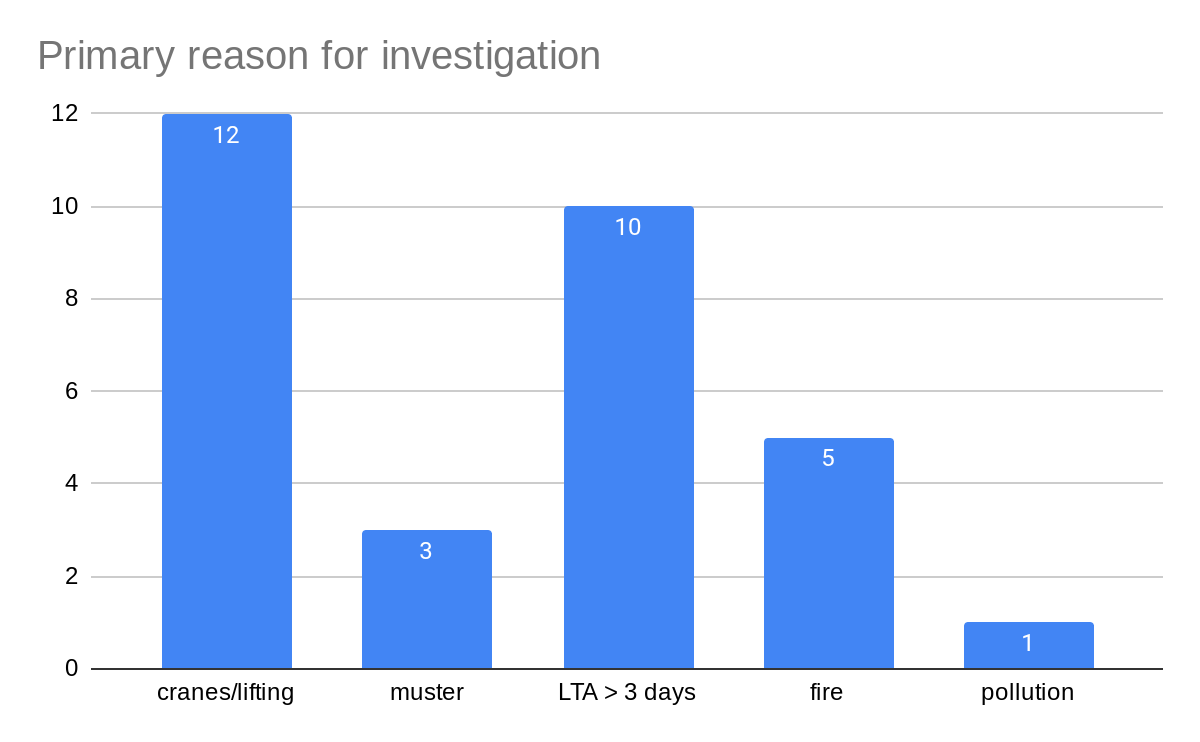
The more common investigations, conducted by BSEE’s district offices, are timely and informative. The Districts typically investigate lost time (>72 hours) injuries, crane and lifting equipment incidents, small fires, pollution events, property damage > $25k, gas releases, and other incidents requiring workers to muster for possible evacuation.

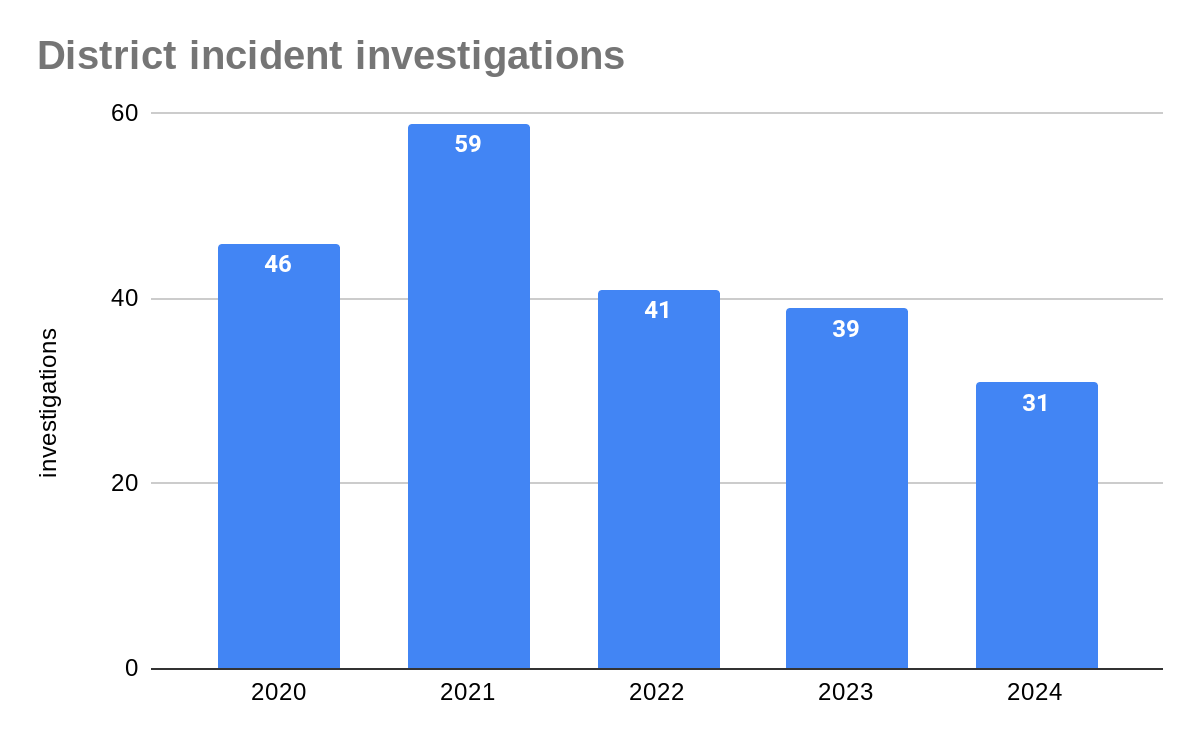
The number of District investigations in 2024 declined significantly to 31, one-third fewer than the average of 46.25 for the past 4 years.

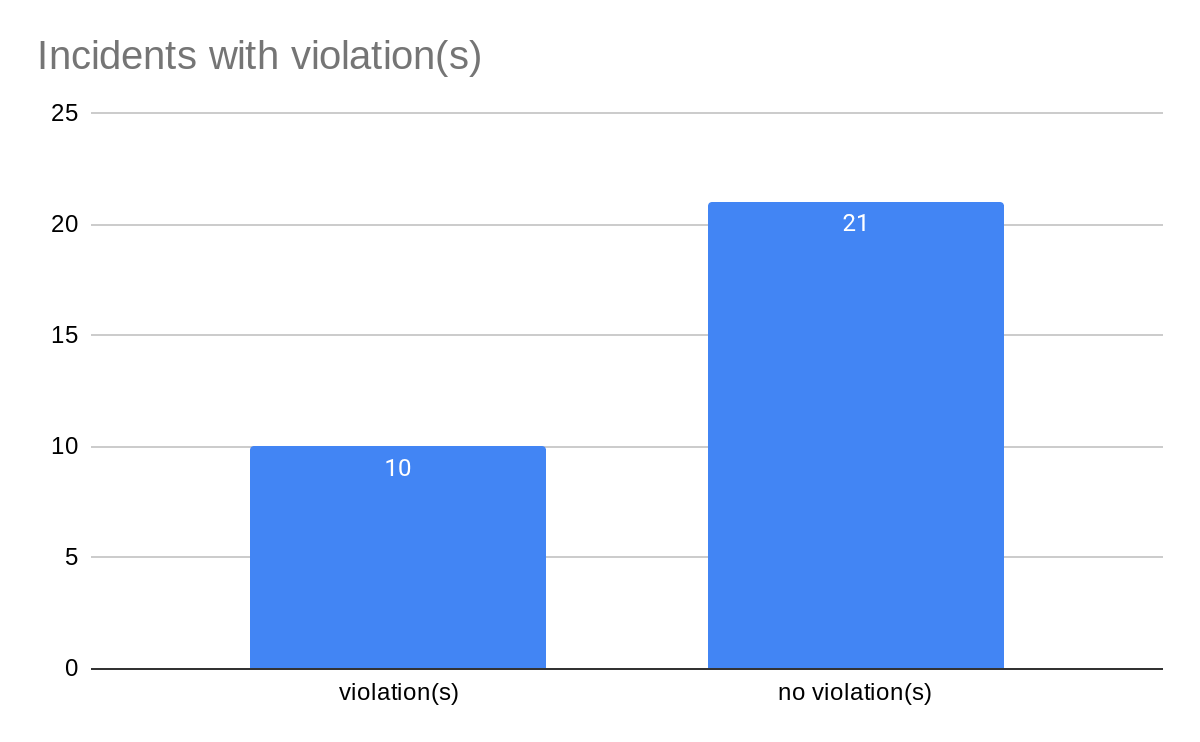
Violations were not identified for 2/3 of the incidents.

A complete list of the 2024 District investigations follows. Hyperlinks are provided for those who want to review the reports.

DateOperatorTimeViolation(s)Area/BlockAccident Type
12-25-2024bp1330noGC 584lifting, LTA
11-24-2024Anadarko1710noVK 915Muster, gas release
11-15-2024Anadarko837noGB 668Muster
11-10-2024Murphy145noGC 432LTA
10-12-2024LLOG540yesAC 337LTA – Lifting
10-03-2024Shell900noAC 857Fire, > $25K damage
09-27-2024LLOG200noAC 337LTA, Crane
09-21-2024Talos1630noSM 160LTA
08-11-2024Gulf Offshore1910yesVR 170Fire, Explosion, >$25k, Muster, LTA
07-20-2024Talos2200noSS 224DLTA
07-11-2024Manta Ray730noHI A 5LTA
07-08-2024Cantium1908yesST 23CCLifting
06-05-2024Kosmos1538noMC 727Muster, > $25K
05-31-2024MC Offshore100yesGC 52Crane, > $25K
05-02-2024Murphy1620noGC 478Crane; > $25K
04-24-2024Murphy815noGC 389LTA
04-04-2024Renaissance2230yesVR 369 ALTA
03-28-2024BOE2200yesWR 51LTA
03-20-2024Talos700yesGB 506LTA
03-19-2024Chevron1330noMC 607Lifting, <$25k
03-13-2024Walter2010noSS 189Crane
03-07-2024LLOG1500yesKC 785LTA, lifting
03-05-2024Shell415yesMC 391Pollution, >$25k
02-25-2024Talos930yesSM 130 BCrane,> $25K
02-21-2024W&T1319noHI A 379BFire
02-16-2024Chevron1335noWR 29LTA, Crane
02-13-2024Shell2035noMC 899LTA
02-07-2024Williams855noGA A 244JPLTA
01-29-2024Cantium1900noST 23 CCFire,>$25K
01-18-2024Murphy1303noGC 478Lifting, > $25k
01-16-2024Arena252noSM 128 BFire, > $25K

Read Full Post »

BOE contributor John Smith has shared (attached) his highlighted version of the 89 page California Coastal Commission staff report recommending imposition of a $15 million fine

John finds it noteworthy that the report documents that Santa Barbara County did not concur with the CCC, and that the California State Lands Commission approved the span remediation work. John thinks this raises legitimate questions as to whether the CCC is overreaching in terms of asserting permitting authority for the repair and maintenance work. 

John thinks it will be interesting to see how the Courts rule on this and expects an appeal regardless of the outcome. He points to the Court ruling against the CCC on Pismo Beach offroading case as being pertinent to the Sable-CCC dispute. (“Is the Friends of Oceano Dunes court victory a good omen for Sable?“)

In particular, note the text John has highlighted in green. These issues will likely be central to the Court deliberations.

Read Full Post »

This image has an empty alt attribute; its file name is image-3.png

The 2024 Gulf of America Safety Compliance Leaders are ranked below according to the number of incidents of non-compliance (INCs) per facility inspection. To be ranked, a company must:

  • operate at least 2 production platforms
  • have drilled at least 2 wells during the year
  • average <1 INC for every 3 facility inspections (0.33 INCs/facility inspection)
  • average <1 INC for every 10 inspections (0.1 INCs/inspection). Note that each facility inspection may include multiple types of inspections (e.g. production, pipeline, pollution, Coast Guard, site security, etc). In 2024, there were on average 3.4 inspections for every facility inspection.

This ranking is based solely on BSEE’s published compliance data. The absence of timely public information on safety incidents (e.g. injuries, fires, pollution, gas releases, property damage) precludes inclusion of these data.

District investigation reports are more timely and provide additional insights into safety performance. Impressively, Hess had no incidents warranting a District investigation, and was the only ranked operator with this distinction. I will comment more on the District reports in a future post

Chevron’s 2024 compliance record was among the best in the history of the US OCS oil and gas program. Was it the absolute best? Were it not for the FSI INC at a Unocal (Chevron) facility, one could unequivocally assert that it was. Further evaluation of that INC would be helpful. However, details on specific INCs are not publicly available, so the significance of that violation cannot be evaluated.

operatorWCSIFSItotal INCsfacility inspINCs/
fac insp
inspINCs/
insp
Chevron10121170.023110.006
BP2305930.052510.02
Anadarko891181430.133440.05
Hess2305260.19670.07
Walter64111500.221610.07
Shell23175451990.234950.09
Cantium2480321230.265370.06
Murphy89118700.261910.09
Arena29283601890.328030.07
Gulf-wide957398109146431330.47106640.14
Notes: Numbers are from published BSEE data; INC=incident of non-compliance; W=warning INC; CSI=component shut-in INC; FSI=facility shut-in INC; INCs/fac insp= INCs issued per facility inspection; each facility-inspection may include multiple types of inspections (e.g. production, pipeline, pollution, Coast Guard, site security, etc), in 2024, there were on average 3.4 inspections for every facility inspection

Not meeting the production facilities requirement to be ranked among the top performers, but nonetheless noteworthy, was the compliance record of BOE Exploration & Production (no relation to the BOE blog 😀). See their impressive inspection results below:

WCSIFSItotal INCsfacility inspINCs/
fac insp
inspINCs/
insp
BOE1102210.1480.04

Transparency on inspections and incidents is important for a program that is dependent on public confidence. For independent observers to better evaluate industry-wide and company-specific safety performance, publication of the following information should be considered:

  • quarterly updates of the incident tables, as was once common practice
  • posting of violation summaries for inspections resulting in the issuance of one or more INCs
  • more timely publication of panel reports for more serious incidents
  • real time list of ongoing investigations including the reason for each investigation
  • status summary for civil penalties that have been proposed, including the violations and responsible parties

Read Full Post »

Santa Ynez Unit items (thanks to John Smith for the links):

Cuts in carbon capture spending coming? These are cuts that both climate activists and skeptics can support.

In a peer reviewed paper, AI (Grok-3) debunks the man-made climate crisis narrative.

Doug Burgum: Hydraulic fracturing technology is “one of the reasons why the U.S. shale revolution is a miracle. But that miracle keeps on getting better and better. It’s the thing that has literally turned around the economy.” Posted here 15 years ago: Natural Gas Bonanza – Why Aren’t We Celebrating?

Read Full Post »

« Newer Posts - Older Posts »