Feeds:
Posts
Comments

Posts Tagged ‘safety’

from Platts Oilgram News:

Representatives Ed Markey of Massachusetts and Rush Holt of New Jersey introduced the so-called No Free Inspections for Oil Companies Act (H.R. 2566) July 15, in reaction to House Republicans’ proposal for funding the Bureau of Ocean Energy Management, Regulation and Enforcement. About $35 million short of the Obama administration’s request, the GOP’s $154 million budget rejected new and more expensive fees on offshore operators. The administration wanted to ratchet up industry fees to $65 million a year, from $10 million, to pay for a tougher inspections regime.

The annual inspection fees debate, a budget season ritual for 20+ years, has picked up intensity and financial significance in the post-Macondo spotlight. However, discussions about regulatory philosophy and the fundamental program decisions that dictate inspection strategy are still absent. Safety and pollution prevention are the goals, not inspections. While inspections are an essential part of any safety regime, they are just one component of a comprehensive regulatory program. More inspections would not have prevented Macondo. Better standards, training, technology, and attention to prior incidents (most notably Montara) may have.

Read Full Post »

Encouraging report from Steve Walker and his HSE colleagues.

Figures from the Health and Safety Executive (HSE) show that there were 73 major or significant hydrocarbon releases associated with offshore installations in 2010/11, compared with 85 the previous year. There were 61 recorded in 2008/09 – the lowest since HSE began regulating the industry. Overall, there continues to be a downward trend in the total of all reported hydrocarbon releases offshore.

For the fourth year running, no workers were killed during offshore activities regulated by HSE and 2010/11 also saw a fall in the number of major injuries. There were 42 reported compared with 50 the previous year, bringing the total in line with the average of the previous five years.

Read Full Post »

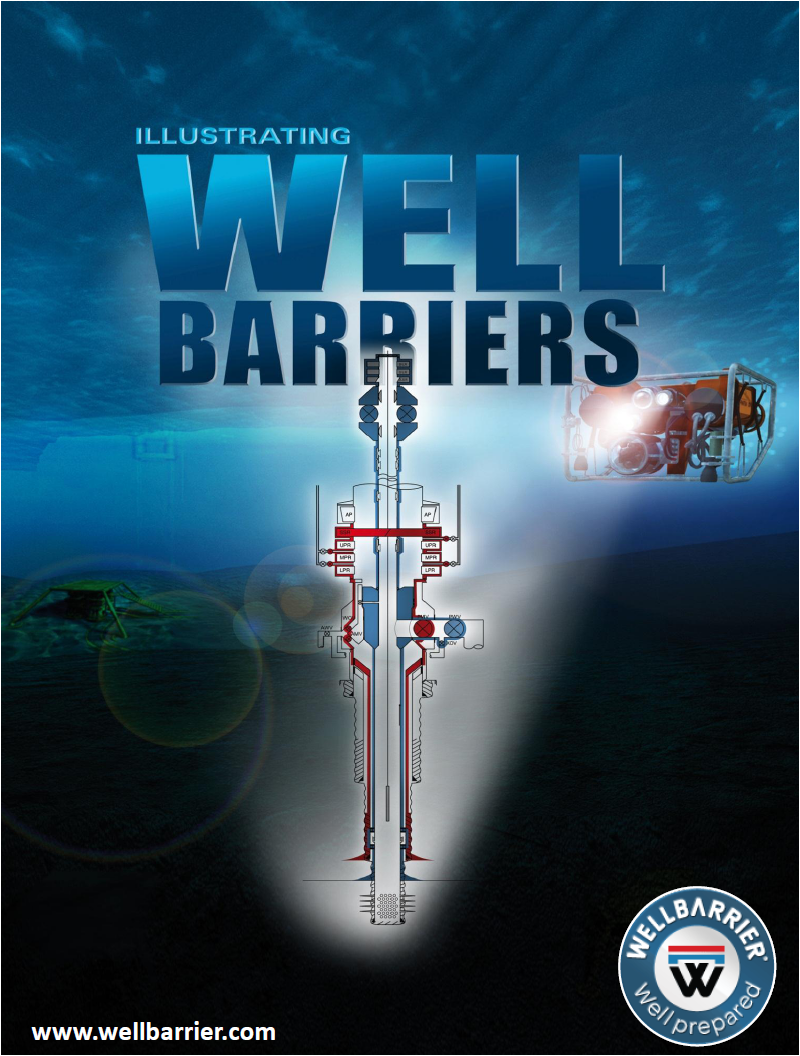
Our friend Tore Fjågesund from WellBarrier sent us this clever poster.

Read Full Post »

14.07.2011 | On Wednesday 13 July, a fire broke out in the compressor area of Valhall PCP. Today the Petroleum Safety Authority Norway (PSA) will send two representatives to Valhall to investigate the incident.

The fire, which was reported to the authorities yesterday afternoon, started at around 4.40 p.m. A standby vessel was deployed to put out the fire and at 6.45 p.m. it was confirmed that the fire had been extinguished. All personnel were evacuated and there were no injuries.

link

Read Full Post »

If someone had asked me a few years ago what the highest risk offshore system was, I certainly would not have said a fully cased well in the process of being suspended. Yet that was the scenario for both of the recent mega-incidents, Montara and Macondo.

I would have instead suggested that dynamic production risers were the highest risk offshore system. The combination of relatively new technology, movement,  fatigue potential, exposure in the splash zone, and continuous hydrocarbon flow poses risks that must be carefully managed.  That is why investigations of incidents like the Visund gas leak are so important. In that regard, PSA does an excellent job and prominently posts all of their reports so that we all may benefit. I recommend that you take a look at this one.

In connection with the planned shutdown on Visund on 9 April 2011, a hydrocarbon leak occurred from well A21’s 6” flexible riser UK-18-0009. The Petroleum Safety Authority Norway (PSA) has carried out an investigation of certain aspects of the incident.

 We have identified three nonconformities within the areas of establishment and follow-up of preconditions for safe operation of dynamic risers, training and expertise and governing documentation.

Read Full Post »

From the West Australian:

A new system to regulate the offshore gas and oil industry – a direct response to the 2009 Montara north of the Kimberley – has been approved by the Federal Parliament’s lower house.

Under the changes, the seven state and territory authorities will be replaced by a single Commonwealth body, the National Offshore Petroleum Safety and Environmental Management Authority.

It will regulate all safety issues from exploration to well decommissioning.

In the US, the jurisdictional conflicts (offshore) differ in that they typically involve multiple Federal regulators with overlapping jurisdiction and different priorities. Since most of the necessary streamlining would only involve Federal agencies, one would think that regulatory reform would be achievable, especially after a major blowout that killed eleven. Unfortunately, meaningful US reform appears to be highly unlikely.

Read Full Post »

Per information provided by one of our readers (see comment on the original Marianas post), the rig was in transit offshore Ghana, west of Takoradi. This report indicates that “they have got control over the list at the moment.”

Read Full Post »

This information is unconfirmed but the source is highly reputable:

We just received word this morning that the Transocean Marianas rig  has developed a large crack in one of the pontoons on the #5/#6 anchor chain locker while they were picking up anchors, and is currently taking on water and listing.  The bilge pumps are keeping up (barely), but there’s certainly concern that it might sink on location. So far, 68 people have been evacuated from location.

According to RigZone, the Marianas was working offshore Nigeria. [Per one of our readers, (see comment below) Petrodata shows the rig operating offshore Ghana.]

More:  The Marianas, spudded the Macondo in October, 2009, but was damaged by Hurricane Ida and towed to shore.  The Deepwater Horizon was the rig that replaced the Marianas.

Read Full Post »

I don’t buy the argument that industry and regulators have paid too much attention to personal safety at the expense of process safety. Casualties from falls, falling objects, helicopter crashes, and other workplace activities have been persistent, and safety management programs must emphasize practices and procedures that will reduce occurrence rates.

Also, process safety has hardly been ignored. API RP 14 C has proven to be an effective safety analysis procedure for addressing undesirable events associated with each process component of a production facility.  For more complex facilities, Deepwater Operating Plans and API RP 14J, “Recommended Practice for Design and Hazard Analysis for Offshore Production Facilities, ” are good risk management supplements to RP 14C.

That said, we need better programs for sustaining the focus needed to further reduce the probability of low frequency, high consequence events.  When memories about the most recent disaster start to fade, what do we do to keep workers on edge and prevent complacency? What more can be done to prevent events with enormous consequence potential?  Some thoughts:

  1. Establish programs to remind employees about past disasters – how they happened and how they could have been prevented. How many offshore workers know the chain of events that led to the Santa Barbara blowout, Ocean Ranger sinking, Alexander Kielland capsizing, Piper Alpha fire and explosion, Ixtoc blowout, and other historic incidents? When discussing international incidents, we need to explain how our facilities or region might have been vulnerable under similar circumstances.
  2. Present information on minor incidents that could have escalated into disasters, emphasizing what could have gone wrong and why.
  3. Don’t just focus on the last disaster.  While addressing the operational and organizational issues that surfaced at Montara and Macondo, we also must assess incident data and identify activities and practices that could lead to the next disaster.
  4. Operators should not rely on the regulator to manage their operations. Reading about Montara and Macondo, one senses that the regulators were called on to referee internal company disputes and protect the operators and contractors from themselves.
  5. Regulators should not be making day-to-day operating decisions. Regulators should make sure that the regulations are clear and that operators have effective management procedures for adjusting programs as new information is obtained. Regimes that provide for regulator approval of each activity or adjustment promote operator complacency and are not in the best interest of safety over the long term.
  6. Service companies and contractors must challenge operators and regulators.  Operators should expect contractors to think and question, not to simply execute orders. There are impressive examples of contractors insisting on safety improvements, and being willing to forego business rather than compromise on safety.
  7. All sectors of the offshore industry should participate in standards development. Effective standards are dependent on diverse input.
  8. Industry and government leaders should promote innovation. Obvious weaknesses should be identified and industry should be challenged to propose solutions. For example, why do concerns about “false alarms” preclude automatic alarm activation (see Transocean’s Macondo report)? Data from redundant sensors can be analyzed by predictive software that is capable of quickly identifying real events. Similarly, why have advances in BOPE, including monitoring systems, been so slow? Why are BOP capabilities still poorly understood? Why are well integrity and casing pressure issues (producing wells) so common?

Read Full Post »

Links

Animation of Transocean’s BOP analysis

Transocean’s BOP Defense:

Forensic evidence from independent post-incident testing by Det Norske Veritas (DNV) and evaluation by the Transocean investigation team confirm that the Deepwater Horizon BOP was properly maintained and did operate as designed. However, it was overcome by conditions created by the extreme dynamic flow, the force of which pushed the drill pipe upward, washed or eroded the drill pipe and other rubber and metal elements, and forced the drill pipe to bow within the BOP. This prevented the BOP from completely shearing the drill pipe and sealing the well.

In other words, Transocean contends that properly maintained BOPE was not up to the task of shutting-in and securing a high-rate well. If true, this finding has significant implications for the offshore industry.  I’m looking forward to reading the government’s findings on the BOP failure when the Joint Investigation Team report is issued next month.


Read Full Post »

« Newer Posts - Older Posts »