Feeds:
Posts
Comments

Posts Tagged ‘safety’

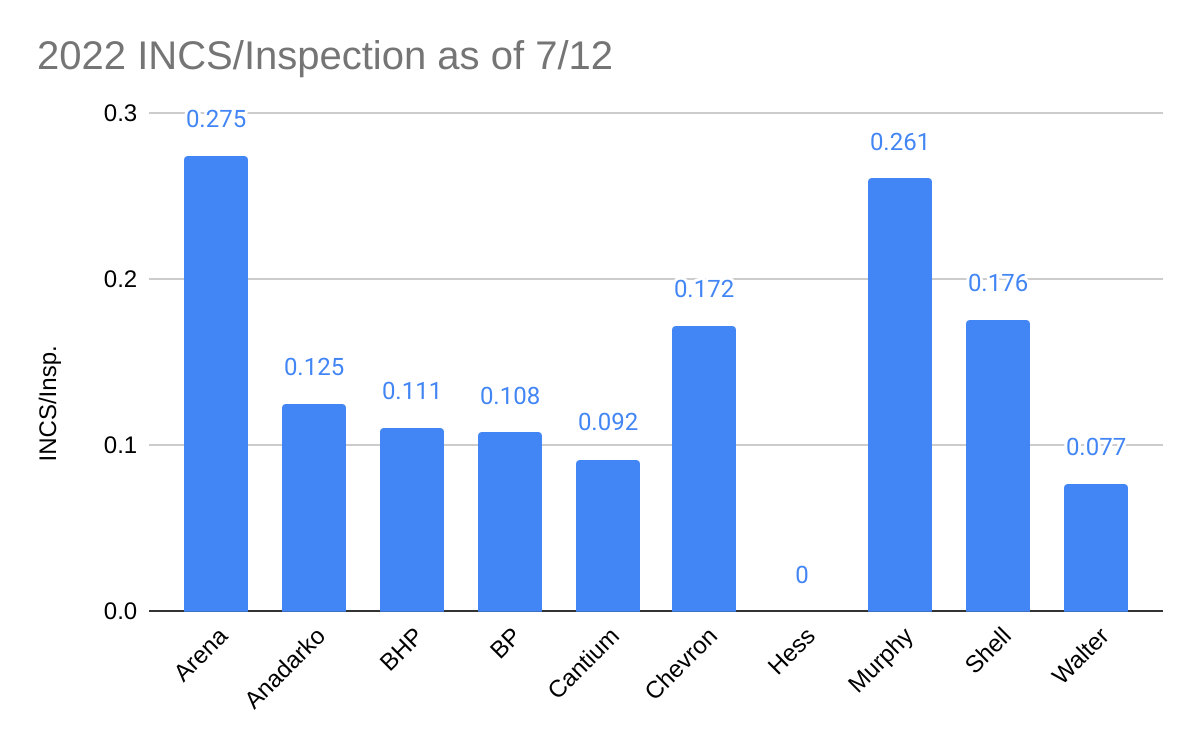
Chevron may be the only GoM operator to own its helicopter fleet. Data on their safety performance relative to GoM helicopter contractors do not appear to be available online.

Their news release focuses on hurricane preparedness and the benefits of owning their fleet. I’m not sure how significant these advantages are given that other companies can ensure similar availability through their contracts. A comparative analysis would be of interest.

“Other companies that depend on contracted helicopters to evacuate can’t create their own schedule and might have to start departing the platform days in advance,” said Jose Jaramillo, manager of Chevron’s aircraft operations in the Gulf of Mexico. “With our own helicopters on standby, we have more flexibility in determining when to safely shut down the platform, and after the storm passes, we can quickly remobilize, assess our facilities and bring production back online days faster.”

Chevron.com

The Helicopter Safety Advisory Conference (HSAC) does a very good job of identifying and addressing Gulf of Mexico helicopter safety issues. Per HSAC (report attached):

The leading causes, not all inclusive, of the accidents since 1999 are listed below, and secondary causes of these events include 13 related to helideck size or design related issues.
• 21 engine related,
• 25 loss of control or improper procedures,
• 18 helideck obstacle strikes,
• 13 controlled flight into terrain, and
• 12 other technical failures

Read Full Post »

Paul, his father Hank, and the rest of the Danos team have always had a strong commitment to safety achievement. In recognition of their outstanding safety, pollution prevention, and compliance record, Danos won multiple National and District MMS SAFE Awards in the Production Contractor category. Danos is also a 2-time recipient of NOIA’s Safety in Seas Award. Paul will no doubt be an outstanding NOIA leader.

NOIA press release

Read Full Post »

Yesterday, BSEE issued investigation reports for 2 of the fatal 2020 incidents. Both of these incidents involved falls, a chronic and preventable cause of offshore worker casualties. Not enough industry and trade association attention is given to such incidents, which have been trivialized in the past by categorizing them as “slips, trips, and falls.” The reports are linked below:

The reports describe how the incidents occurred and what we can do better to prevent similar events in the future. Despite the advance in safety management programs over the past 30 years, there has been no discernible improvement in preventing these incidents. We need to rethink training programs, planning, and methods. Deadly falls are not inevitable.

Read Full Post »

For illustration only - One of Shell's platforms in the U.S. Gulf of Mexico / Image by Stuart Conway - Photographic Services, Shell International Limited.

Attached is an outstanding presentation by Jason Mathews that reviews the latest Gulf of Mexico incident data and trends. The collection and analysis of incident data are critical to safety achievement and continuous improvement, and are among an offshore energy regulator’s most important functions. Kudos to BSEE’s Gulf of Mexico Region for their timely and comprehensive reviews and alerts.

Read Full Post »

Image

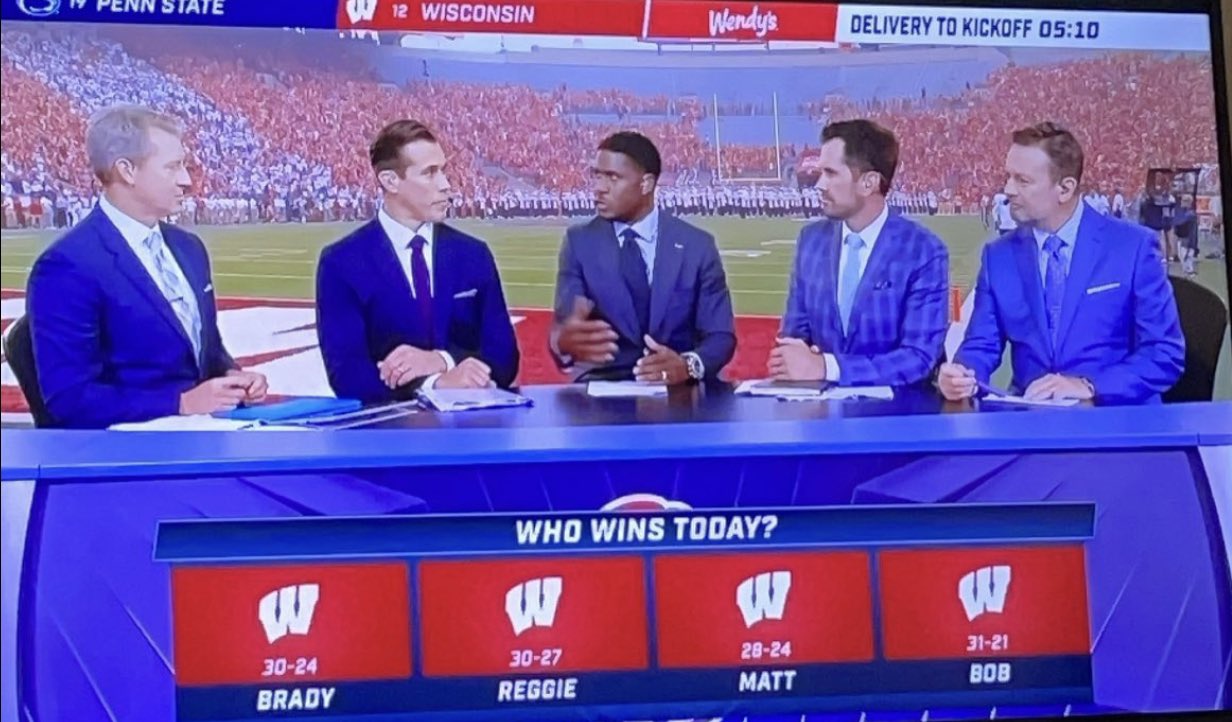
In sports, the experts are soon exposed. In regulations and standards, consensus misjudgments are less obvious and may take years to be demonstrated. Also, regulations and standards are often outdated and may not reflect best practices. That is why compliance with regulations and adherence to industry standards is not sufficient. We need to continuously assess risks, observe, listen, review data, and actively manage our operations to achieve safety and environmental objectives.

Read Full Post »

the Mexican government’s recent decision to anoint Pemex operator of the billion barrel Zama field would seem to merit further scrutiny. Houston-based Talos Energy discovered the Zama field in 2017. The field underlies both Pemex and Zama acreage, and there are common reservoirs. Per Bloomberg:

Mexico’s energy ministry has designated Petroleos Mexicanos as the operator of the country’s largest oil discovery by private companies, in the latest sign of the government’s nationalist approach to the energy industry.

Talos said it was “very disappointed” with the decision and will explore “legal and strategic options” regarding Zama. The company added that the energy ministry had informed Talos of its “sudden” decision only three days after the driller received a letter directly from Pemex arguing for operatorship.

Bloomberg, 7/5/2021

The Mexican government’s decision is indicative of the Lopez Obrador administration’s commitment to rolling back the reforms that had encouraged private sector participation in Mexican offshore exploration and development.

Questions had already been raised about Pemex’s ability to fund Zama development and operate the field safely. This week’s deadly incident and a July pipeline fire add to those concerns. In light of the background political and financial issues, will it be possible to for Pemex and the Mexican regulators to conduct a fully independent investigation of the tragic fire that just occurred?

Read Full Post »

  1. 5 workers killed – 4 contractors and one Pemex employee
  2. 6 workers injured, one in critical condition
  3. 2 workers are missing
  4. The fire occurred in the power generation and compression area of the platform
  5. Contractors Cotemar and BMCI were performing maintenance at the time of the incident
  6. The fire has now been extinguished
  7. No reports of an oil spill
  8. Massive loss of production – 421,000 BOPD shut-in

Defensive and rather shameful comments by the CEO:

“There is not a problem of lack of investment, there is not a problem of lack of resources,” Romero said. “The oil industry is a risky industry. We have had accidents, which in numbers are less than in previous years.”

Reuters

Read Full Post »

Following the Piper Alpha tragedy (1988) and the Exxon Valdez spill (1989), the Minerals Management Service, under the direction of Dr. Charles Smith, embarked on new research to address the human and organizational factors that are fundamental to offshore safety. An important 1993 report, MMS project 167, Management of Human Error in Operation of Marine Systems by Robert Bea and William Moore, observed that:

High consequence accidents resulted from a multiplicity of compounding sequences of breakdowns in the human, organization, and system; often there are precursors or early-warning indications of the breakdowns that are not recognized or are ignored.” The human element is complex and “states” such as “fatigue, negligence, ignorance, greed, folly, wishful thinking, mischief, laziness, excessive use of drugs, bad judgement, carelessness, physical limitations, boredom, and inadequate.” Environmental factors such as weather conditions, time of day, smoke, and noise further complicate human performance.

Bea and Moore, 1993

COVID 19 has further complicated human performance and facility management. In an effort to better understand human factors during COVID, NOPSEMA (the Australian offshore safety regulator) has partnered with industry, and labor organizations, and universities to survey offshore workers.

Per the survey announcement:

Your unique insight on the impacts of the COVID-19 pandemic on members of the offshore workforce are vital to informing industry and the development of strategies that best support employee mental health and well-being.

BOE is looking forward to learning about the results of this survey and other efforts to better assess and understand mental health challenges facing offshore workers. The effective integration of mental health considerations into management systems is critical to safety achievement.

Read Full Post »

Phil Rae piece in Fuel Fix

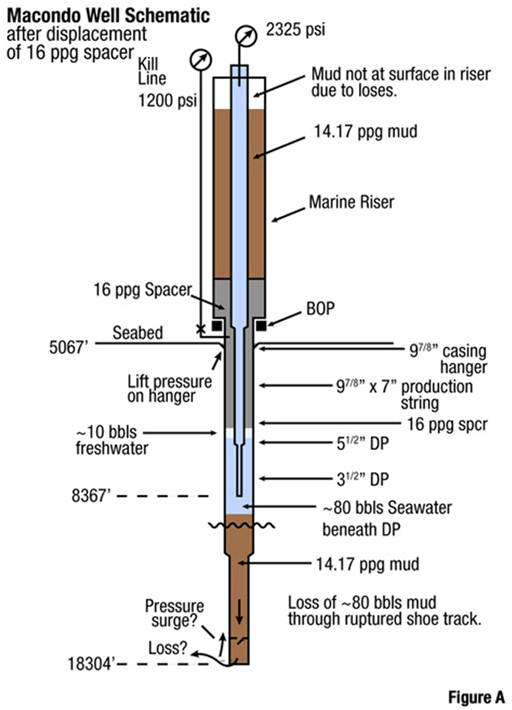
  1. The well clearly had losses through the shoe during the initial displacement of the heavy spacer with seawater, immediately prior to the negative test.
  2. Allowing for, and accepting, losses of ~80 bbls during spacer displacement, explains ALL pressure and flow anomalies without the need to create or invoke undocumented and unsubstantiated valve closures or manipulations that contradict witness testimony of events. It also eliminates the need to adopt unrealistically-low pump efficiencies for the rig pumps, hypothetical washed-out tubing and ridiculously high viscosities for the drilling mud, in an effort to fit questionable computer models.
  3. Despite extensive examination by investigators and the publication of several reports, the fact that the well experienced losses, making it even more severely underbalanced than was planned, has been given little credence or has received little or no attention, despite several clear indications that this was the case. While this statement regarding losses may be self-evident, its significance on the outcome at Macondo merits closer examination since it explains many previous, apparently-contradictory aspects of the disaster.
  4. Under-displacement of heavyweight spacer, as a result of losses during displacement, caused U-tubing and partial evacuation of the kill line, the lower end of which was later refilled with heavyweight spacer, driven by pressure and flow from the formation. The vacuum, initially, and subsequent invasion of heavy fluid rendered the kill line useless for monitoring the well since the line was effectively blind to pressure changes in the well.
  5. While initial flow into the well was through the shoe, pressure above the casing hanger seal during the negative test was reduced to levels that could have allowed the casing to lift, compromising the seal and possibly also allowing flow from the external annulus.
  6. The well encountered further losses during the second displacement (to displace the riser), after completion of the negative test. These losses, which were perhaps as much as 200 bbls, effectively replaced heavy mud with sea water in the casing below the drill pipe. This further underbalanced the well to the point that it was being kept under control only by pumping friction pressure. As the pump rate was reduced prior to shut down for the sheen test, effectively reducing system backpressure, the now severely underbalanced well began to flow.

Read Full Post »

Much ado about nothing courtesy of the Associated Press:

Copies of the forms submitted by more than 100 inspectors, engineers and permit reviewers in five Gulf coast offices were obtained by the AP under the Freedom of Information Act. Personal information, such as the names of the employees, their friends and their family members, was blacked out to protect privacy. But the companies with ties to government workers were disclosed, and they represent a who’s who of the offshore oil and gas industry, from majors like Chevron, Shell and BP to smaller companies such as W&T Offshore Inc., Ankor Energy LLC and Hilcorp Energy Co.

So yesterday we linked an article about proposed legislation that would, among other things, require that offshore inspectors have “at least three years experience in the oil and natural gas field.” Today, we read contradictory (and silly) comments like the one below in the AP piece that criticize such experience. How would you like to be an oil and gas inspector or prospective offshore regulator?

“It’s nearly impossible to determine where the oil industry ends and the government’s regulatory agency begins,” said Scott Amey of the Project on Government Oversight, after reviewing AP’s data. “These new instances indicate that BOEMRE staff are connected to individuals and oil companies, which raises concerns about lax oversight and the integrity of the agency. Without enhanced enforcement authority and independent oversight of these potential conflicts, I’m uncertain that BOEMRE can assure the public that it is truly watchdogging the offshore oil industry.”

Give these people a break. I have seen absolutely no evidence that improper government-industry relationships or compromised inspections had anything to do with the Macondo blowout or any other recent incident. Inspection and engineering personnel are under continuous scrutiny well beyond what most employees would accept, and recuse themselves from assignments if there could be even a perception of a conflict of interest.

The US offshore program, and every other safety regulator, needs people who understand the operations and technology that they regulate. These regulators need to communicate regularly with industry personnel on operational and regulatory issues. Too little interaction with their professional peers is a greater danger than too much. You don’t advance safety technology and procedures, and resolve concerns, without communication.

DOI offshore personnel have had and will continue to have more than enough oversight; time to move on to another cause.

Read Full Post »

« Newer Posts - Older Posts »