Feeds:
Posts
Comments

Posts Tagged ‘regulations’

This interesting Scientific American article ends with a short paragraph that our regulatory scholars may want to ponder:

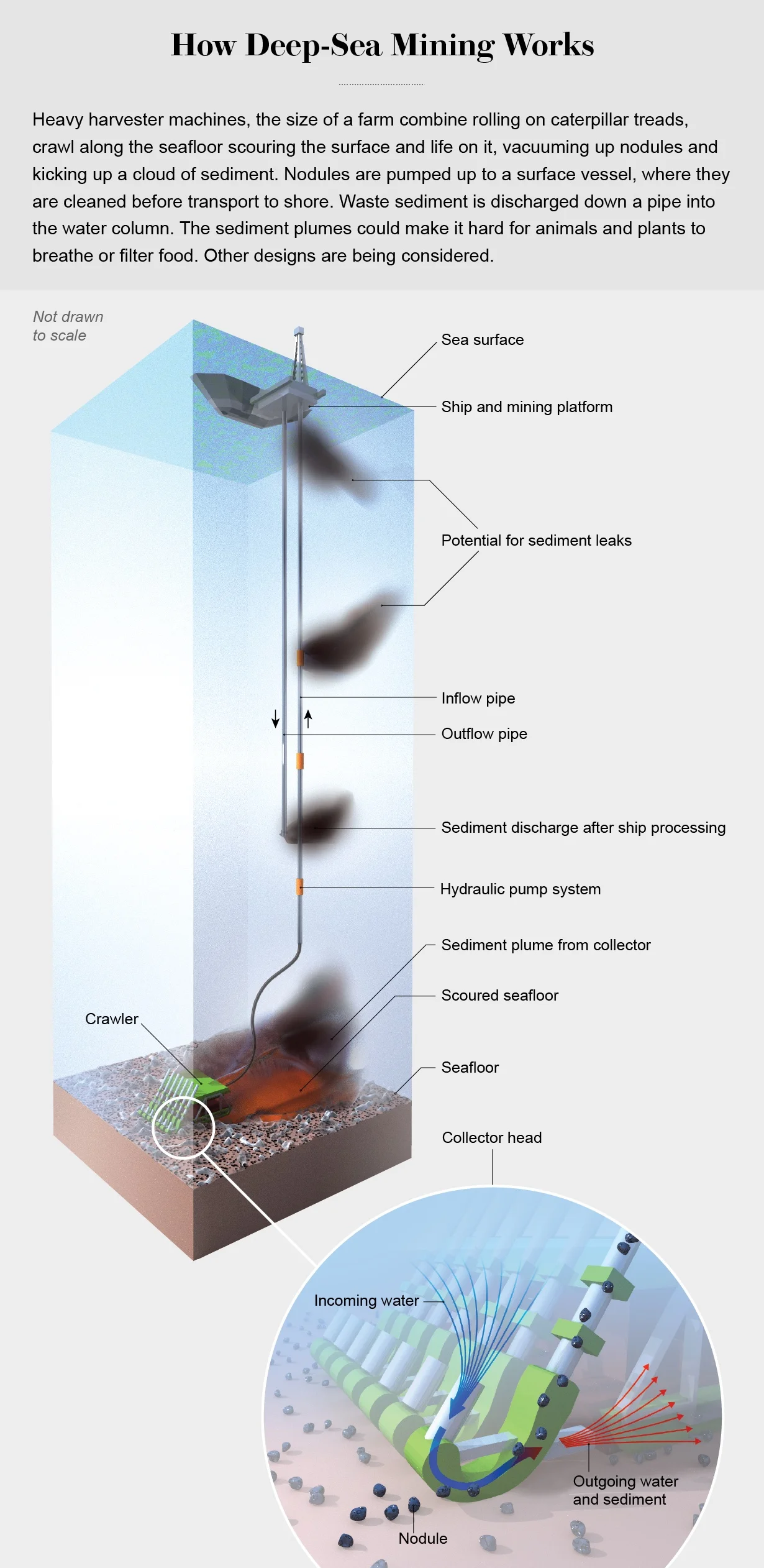
Mining’s larger future will rest largely on how ISA (the International Seabed Authority) finalizes its rule book amid the rush to scour the seafloor. ISA has a rare chance to regulate an industry before the industry has begun.

Thoughts:

  • Deep sea mining is not an entirely new industry. The technology and procedures evolved from other industries, most notably deepwater drilling, and from decades of ocean exploration. Keep in mind that the Hidden Gem mining vessel is a converted deepwater drillship.
  • The offshore oil and gas industry’s risk assessment and safety management practices can be adapted to deep-sea mining.  
  • Effective regulations are not static. The deep-sea mining regulations should not be considered “final” when they are blessed by ISA and the governing body.
  • Before permits are issued, ISA can establish general safety and environmental management requirements, and should specify planning, monitoring, reporting, and liability requirements. (ISA appears to have made an extensive effort on these elements of the regulatory program.)
  • The more prescriptive elements of regulations are dependent on operational experience, observations, and performance data. These must evolve over time.
  • Timely revisions to equipment and procedural requirements through updates to operator management systems and industry standards are critical. In most cases, formally revising regulations takes much too long and is an ineffective means of mitigating emerging risks.
  • Long, detailed regulations are indicative of a weak regulatory regime, not a strong one.  Optimal regulations specify goals, not methods, and are implemented by focused regulators who inquire, challenge, analyze, and where necessary penalize.
  • The respective roles of the operating companies and the regulating authority must be clearly articulated.
  • With continuous improvement as the primary objective, the regulator should develop a strategy for measuring safety and environmental performance.

 

Read Full Post »

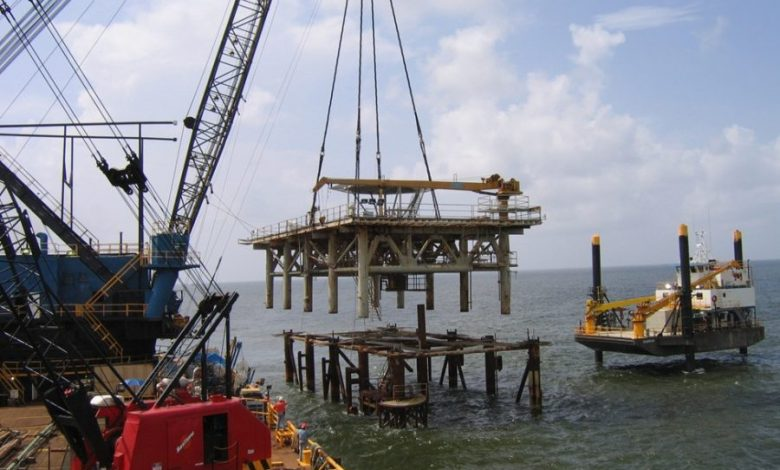
BSEE will continue to evaluate the process for issuing decommissioning orders and will continue to issue decommissioning orders to jointly and severally liable parties on a case-by-case basis.

Final decommissioning rule (preamble). 4/18/2023

Although the news release for BSEE’s final decommissioning rule asserts that the regulations “provide the certainty requested by industry,” that does not seem to be the case. The main change in the final rule was to delete the reverse chronological order (RCO) provision which called for issuing decommissioning orders to the most recent predecessor first. Instead, BSEE may continue to issue decommissioning orders arbitrarily.

While deleting the RCO provision may be advantageous for the regulator, and in some cases for the public, claiming that the decision provides certainty for industry is quite a stretch. BSEE may continue to issue a decommissioning order to anyone in the ownership chain, whether the company was a recent lessee or one that had owned the lease decades ago. Original or early lessees may be held liable for decommissioning old facilities regardless of subsequent damage, modifications, or neglected maintenance.

The absence of a defined procedure for issuing decommissioning orders may also expose BSEE to new legal challenges, particularly in cases where a company has not held the lease for decades. A 1988 letter from the Director of the Minerals Management Service to Amoco (attached below) explicitly relieves the assignor (predecessor) of decommissioning liability after the lease has been assigned. A revised bonding rule published on May 22, 1997 reversed that policy, but decommissioning liability for leases assigned prior to the 1997 rule may still be very much in question.

Another concern is the split jurisdiction for decommissioning between BSEE and BOEM. The financial, land management, operational, and environmental aspects of decommissioning are inextricably intertwined and attempts to divide these responsibilities between two bureaus with separate regulations is a prescription for gaps, overlap, inconsistency, inefficiency, disputes, and confusion. Decommissioning should be regulated holistically, not with separate “BOEM-only” and “BSEE-only” regulations.

Finally, wind facility decommissioning may prove to be even more challenging given the higher facility density and economic uncertainties. The regulatory regime needs to be clearly established early in the development phase.

Related posts:

Read Full Post »

US Coast Guard Subchapter N (current language as of 9/29/2021)

33 CFR §140.4   Relationship to other law.

(b) Any apparent conflict between the application of any requirement of this subchapter and any regulation or order of the U.S. Geological Survey should immediately be brought to the attention of the Officer in Charge, Marine Inspection.

I was proud to have worked for the Conservation Division of the U.S Geological Survey (USGS) when the US offshore program was at its peak in terms of scope and activity. I therefore like the nostalgia value of this provision. That said, USGS has not been the offshore safety regulator since 1982. While updating regulations can be extraordinarily difficult, simple administrative fixes are not. Such corrections are a good way to give old, outdated rules a fresh look. 😃

Read Full Post »

Image

In sports, the experts are soon exposed. In regulations and standards, consensus misjudgments are less obvious and may take years to be demonstrated. Also, regulations and standards are often outdated and may not reflect best practices. That is why compliance with regulations and adherence to industry standards is not sufficient. We need to continuously assess risks, observe, listen, review data, and actively manage our operations to achieve safety and environmental objectives.

Read Full Post »

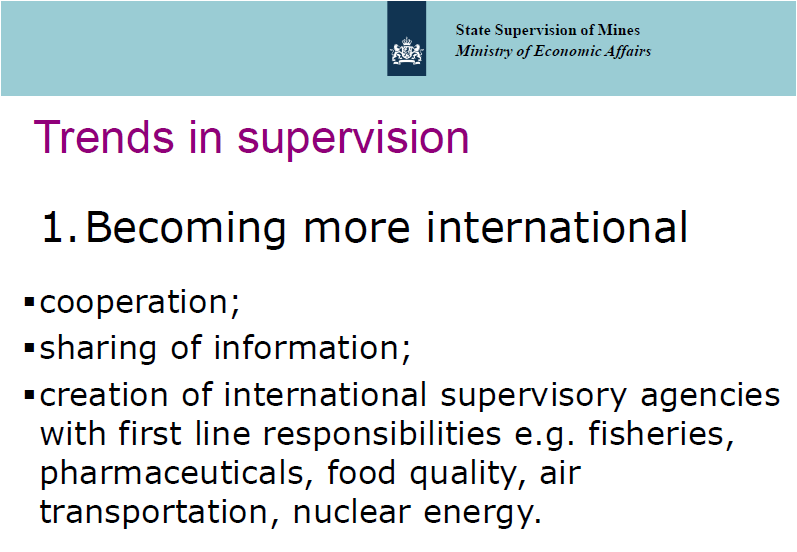
The above slide is from the excellent presentation that Jan de Jong (Inspector General, State Supervision of Mines, the Netherlands) never got to deliver in Vancouver. As session chair, Jan graciously yielded his time to his panelists.

Jan’s presentation notes the growing importance of international cooperation. This trend has the potential to improve regulatory capabilities, expand data availability and access, reduce regulatory costs through the sharing of resources, reduce costs for industry through greater international consistency and regulatory certainty, and improve international relations.  The Netherlands, Russia, Norway, Cuba, the US, and everyone else should be on the same team when it comes to offshore safety and pollution prevention.  Some near-term suggestions follow:

  • Except where regional conditions dictate otherwise, the same standards should be applied worldwide.  Government and industry should be collectively questioning, testing, and improving these standards. Remember that the goal is continuous improvement, not mere compliance.
  • An international information system should provide for the collection and verification of incident and performance data.
  • Using international data and expertise, a cooperative risk assessment program should be initiated.
  • An organized international audit capability should be established to evaluate operators and regulators.
  • To improve access to expertise and reduce costs, a network of specialists should assist regulators worldwide.
  • Industry training requirements should be uniform and consistently applied, and regulator training programs should be consolidated regionally or internationally.
  • The international research network should be expanded.
  • To ensure that accidents are investigated independently and to minimize the potential for political influences on the investigation process, an international accident investigation capability should be established.
  • The safety culture message should be promoted worldwide.  Successes and failures should be cooperatively examined.

Read Full Post »

Safety and Environmental Management Systems

This rulemaking will incorporate in its entirety and make mandatory the AmericanPetroleum Institute’s Recommended Practice 75, Development of a Safety andEnvironmental Management Program for Offshore Operations and Facilities, with respectto operations and activities under the jurisdiction of BOEMRE. This final rule will applyto all OCS oil and gas and sulphur operations and the facilities under BOEMREjurisdiction including drilling, production, construction, well workover, well completion,well servicing, and DOI pipeline activities.

The rule will become effective on November 15, 2010.

Read Full Post »

Today, BOEM released fact sheets describing the Drilling Safety and Safety and Environmental Management (SEMS) rules. The complete documents will be available for review as soon as they are published in the Federal Register.

Based on the fact sheet, the Drilling Safety Rule does not appear to include any significant surprises.  The rule seems to be generally consistent with the recommendations in Secretary Salazar’s 27 May Safety Measures Report to the President (the “30-Day Report”).  This is an Interim Final Rule that will be effective upon publication.

According to the fact sheet, the SEMS Rule will incorporate all elements of API RP 75 into BOEM regulations.  This is an improvement, in my opinion, from the proposed rule which incorporated only 4 elements of RP 75.  The effective date for this rule is not indicated in the fact sheet.

Read Full Post »