Feeds:
Posts
Comments

Posts Tagged ‘Norway’

Carbon capture and storage
NPD

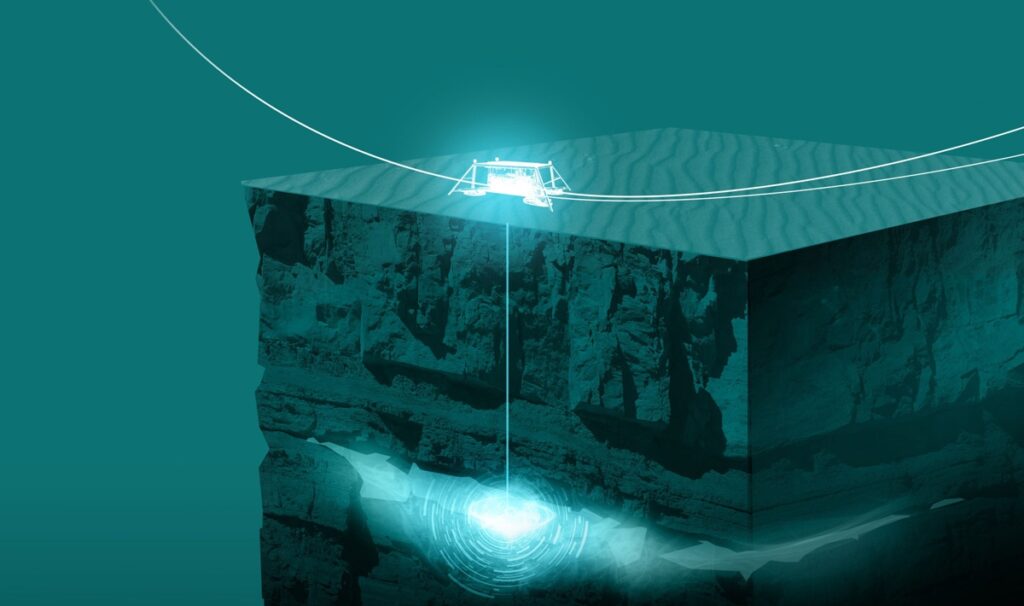
Several actors have approached the ministry with a desire to be allocated two specific areas for storage of CO 2 . One area in the North Sea and one in the Barents Sea were therefore announced on 10 September in accordance with the storage regulations.

By the application deadline of 9 December, the ministry had received applications from five companies. The Ministry will process the received applications and allocate area in accordance with the storage regulations during the first half of 2022.

Ministry of Petroleum and Energy, Norway

Contrast the situation in Norway with Exxon’s apparent attempt to acquire 94 Gulf of Mexico leases at Oil and Gas Lease Sale 257 solely for CCS purposes. BOEM’s Notice of Sale made no mention of CCS, and there had been no environmental or economic assessment of CCS activity.

And how much will the public pay for grand CCS ventures that (although interim measures) will take years to initiate, add new safety and environmental risks, and may never achieve their objectives? The public burden will no doubt include direct subsidies, tax credits, increased petrochemical prices, and the erosion of purchasing power associated with the resulting inflation pressures.

More on Sale 257 and the CCS bidding.

Read Full Post »

European power prices have spiraled to multi-year highs on a variety of factors in recent weeks, ranging from extremely strong commodity and carbon prices to low wind output.

CNBC

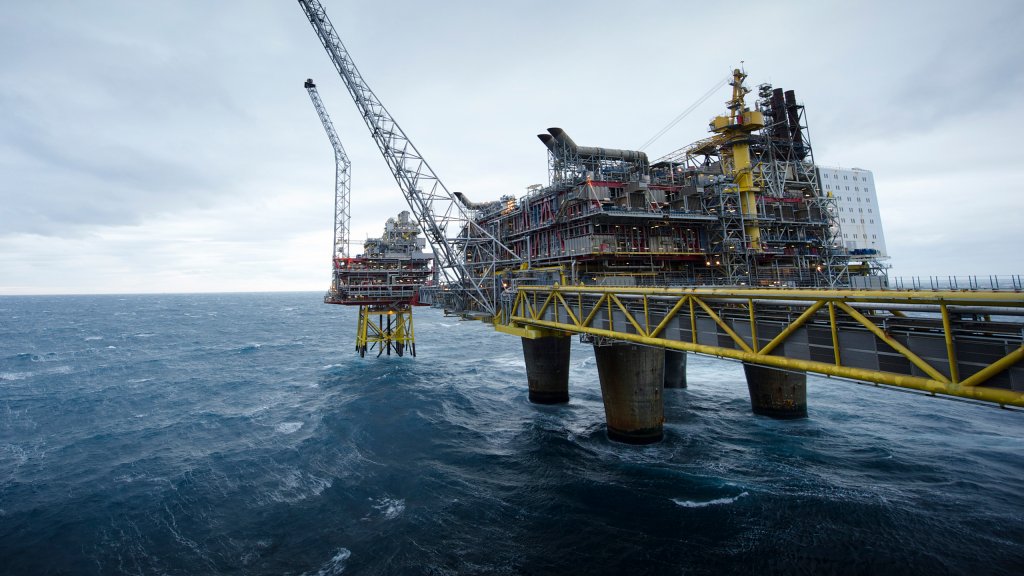
Equinor and its partners have received permission to increase gas exports from two fields on the the Norwegian continental shelf to supply the tight European market. Production permits for the Oseberg and Troll fields have each been increased by 1 billion cubic meters (bcm) for the gas year starting 1 October.

Equinor
Oseberg field centre in the North Sea
Equinor’s Oseberg field, North Sea.

I hope the folks organizing the 10/28 congressional hearing are paying attention, but somehow I doubt it.

Read Full Post »

15 Sept 2021: The Ministry of Petroleum and Energy received applications from 31 companies in connection with the announcement of Allocation in Predefined Areas (APA) 2021. The Ministry’s announcement includes some good lessons on resource management:

It is gratifying that the oil companies still see good opportunities on the Norwegian shelf. Exploration is important for maintaining activity and good resource management, and it lays the foundation for value creation and safe jobs throughout the country, says Minister of Petroleum and Energy Tina Bru.

Predictability about which areas it is possible to apply for in APA and regular replenishment of new area is important to achieve an effective exploration. APA rounds are therefore conducted annually.

Ministry of Petroleum and Energy

Read Full Post »

Election Results 2021: Norway Set for New Prime Minister - Life in Norway

While Conservative Party leader Erna Solberg will no longer be Prime Minister, her likely replacement, Labor leader Jonas Gahr Støre, seems to be a moderate on energy issues:

“I believe that calling time on our oil and gas industry is the wrong industrial policy and the wrong climate policy,” Stoere told reporters.

KFGO

Monday’s result means Labour neither needs the Marxist Red Party nor the anti-oil Green Party to rule, thus lessening the pressure for big shifts.

“Labour will not make any dramatic changes to the oil industry,” said Teodor Sveen-Nilsen, an energy analyst at Sparebank 1 Markets.

EuroNews

Read Full Post »

14.07.2011 | On Wednesday 13 July, a fire broke out in the compressor area of Valhall PCP. Today the Petroleum Safety Authority Norway (PSA) will send two representatives to Valhall to investigate the incident.

The fire, which was reported to the authorities yesterday afternoon, started at around 4.40 p.m. A standby vessel was deployed to put out the fire and at 6.45 p.m. it was confirmed that the fire had been extinguished. All personnel were evacuated and there were no injuries.

link

Read Full Post »

Per Upstream:

A fire at BP’s Valhall oil platform off Norway in the southern part of the North Sea forced the UK supermajor to halt production and evacuate the facility today. 

Valhall Complex (www.mfox.nl)

Read Full Post »

If someone had asked me a few years ago what the highest risk offshore system was, I certainly would not have said a fully cased well in the process of being suspended. Yet that was the scenario for both of the recent mega-incidents, Montara and Macondo.

I would have instead suggested that dynamic production risers were the highest risk offshore system. The combination of relatively new technology, movement,  fatigue potential, exposure in the splash zone, and continuous hydrocarbon flow poses risks that must be carefully managed.  That is why investigations of incidents like the Visund gas leak are so important. In that regard, PSA does an excellent job and prominently posts all of their reports so that we all may benefit. I recommend that you take a look at this one.

In connection with the planned shutdown on Visund on 9 April 2011, a hydrocarbon leak occurred from well A21’s 6” flexible riser UK-18-0009. The Petroleum Safety Authority Norway (PSA) has carried out an investigation of certain aspects of the incident.

 We have identified three nonconformities within the areas of establishment and follow-up of preconditions for safe operation of dynamic risers, training and expertise and governing documentation.

Read Full Post »

From the standpoint of post-Macondo safety and regulatory issues, this concise summary is the most comprehensive and useful report that I have read since the blowout.

I have pasted (below) comments about information management – one of the many important topics considered in the report – and hope you take time to read the entire summary. It is only 12 pages.

Conducting a critical review of the information used to manage major accident risk is one of the measures relevant for the companies. This work could include an assessment of
 the relevance, reliability and modernity of the indicators used to follow up risk trends
 inappropriate use of indicators, incentives and reward systems
 the need for better indicators and other information about the business which can be used to secure an early warning about a weakening in safety-critical barrier elements.
The PSA is of the opinion that the quality of information applied in managing major accident risk is also a question of what overview the players have of their own business, and thereby a question of the players’ own control. The PSA assumes that managing major accident risk cannot be outsourced. In light of the DwH accident, it could be relevant for the companies to review the processes intended to provide the necessary information about the business, assess in part how these processes support a culture of accountability and how various management and audit functions, third-party verifications and so forth contribute in this connection.


Read Full Post »

Like the National Commission on the BP Deepwater Horizon Oil Spill and Offshore Drilling, the Montara Commission of Inquiry, the Norwegian government, and leading safety and regulatory authorities around the world, the IADC recognizes the risks associated with complex, multi-agency regulatory regimes. A single authority should be responsible and accountable for safety and pollution prevention at offshore facilities, and should draw on the expertise of other agencies and organizations as necessary to achieve performance objectives. 

The safety and environmental  risks associated with fragmented or compartmentalized regulation include gaps, overlap, confusion, inconsistencies, and conflicting standards. Industry and governmental personnel spend too much time coordinating with multiple parties and not enough time managing safety and environmental risks.

Link to IADC comments.  Key quotes:

IADC continues to be concerned by seemingly duplicative regulatory requirements imposed by the Coast Guard and BOEMRE, particularly where the agencies appear to have divergent views regarding the placement of regulatory responsibility.

One cannot holistically address safety when faced with the unyielding and overlapping demands of multiple narrowly-focused regulatory agencies.

Read Full Post »

PSA release and link to report:

The direct cause of the incident was that the container being lifted began swinging too much and got caught up in another container. A deck worker standing in an unsecured area was struck and injured.

This incident could potentially have killed the person concerned. Substantial material damage could also have been caused.

Read Full Post »

« Newer Posts - Older Posts »