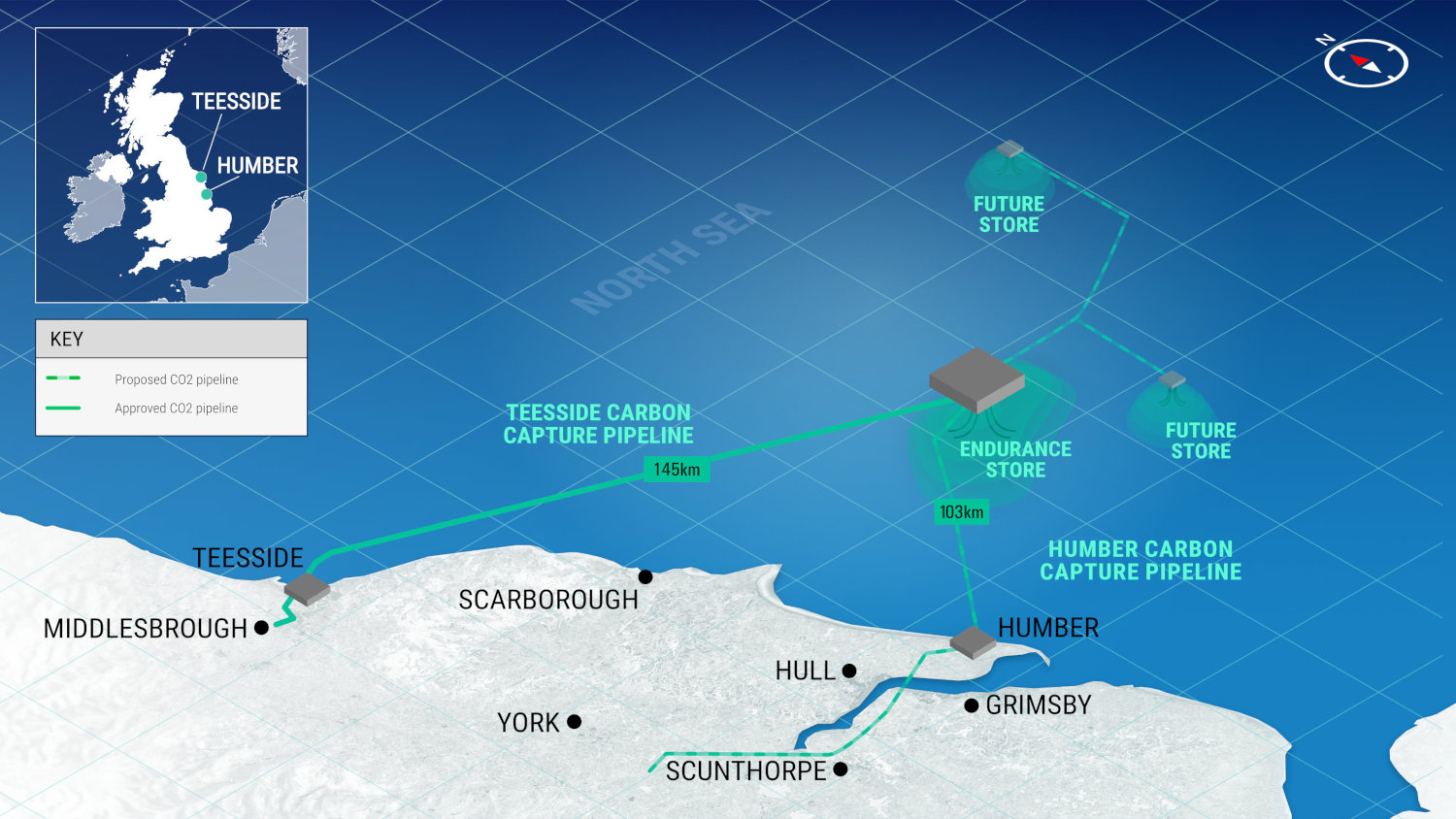
Northern Endurance Partnership (bp, Equinor, and Total) has been awarded the UK’s first permit to “store” CO2 beneath the North Sea.NEP plans to begin construction in the middle of 2025 with start-up expected in 2028 (bet the over!). Climate solution or costly virtue signaling at the public’s expense?
Fortunately, from the standpoint of US consumers and taxpayers, the push for carbon disposal in the Federal waters of the Gulf of Mexico has stalled, perhaps permanently. Oct.1 marked the 2 year anniversary of the 94 leases improperly acquired by Exxon at Sale 257 for carbon disposal purposes. Those leases will expire in 33 months (with the remaining 105 rogue leases expiring 1-2 years later) barring another legislative maneuver by industry advocates.
All of the previously posted questions about carbon disposal in the Gulf of Mexico remain, and most apply elsewhere. In particular, detailed cost-benefit analyses and risk assessments for these projects have not been provided. The intended permanency of offshore, subsurface carbon disposal raises complex monitoring, maintenance, liability, and decommissioning issues.
What are the carbon disposal proponents selling and why should governments be buying? If CO2 emissions are a significant threat to society (and informed opinions differ), is carbon disposal a cost effective solution?Policy decisions on subsidies for carbon disposal will be a good indication of how serious the new administration is about cutting Federal spending.
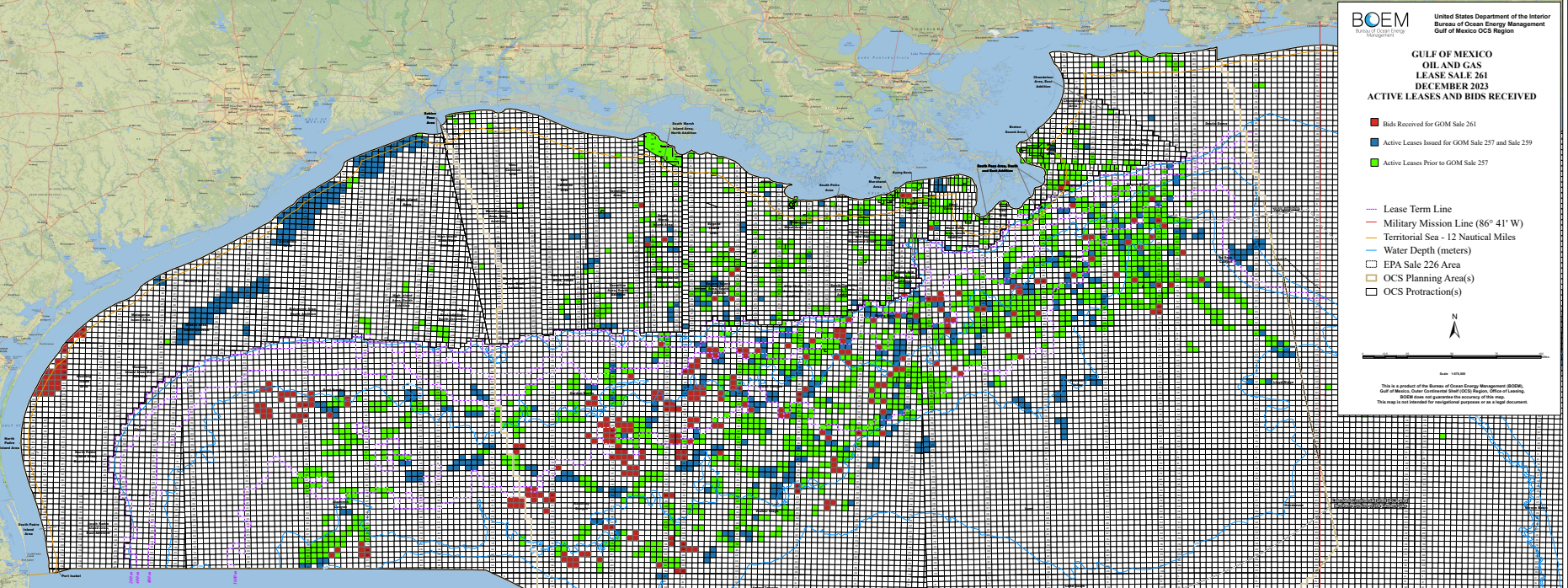
199 GoM oil and gas leases were wrongfully acquired for carbon disposal purposes. At Sale 261, Repsol acquired 36 nearshore Texas tracts in the Mustang Island and Matagorda Island areas (red blocks at the western end of the map above). Exxon had acquired 163 nearshore Texas tracts (blue in map above) at Sales 257 (94) and 259 (69).
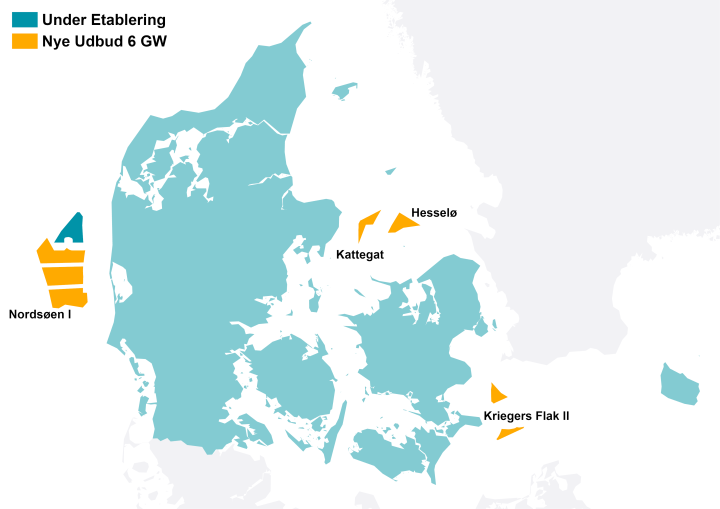
No bids for the 3 large North Sea tracts(yellow) west of Denmark.
Danish Energy Agency: “The deadline for bidding on the first 3 GW of Denmark’s 6 GW offshore wind tendering procedure expired on Thursday. The Danish Energy Agency has not received bids for any of the three offshore wind farms in the North Sea put out to tender. The Minister for Climate, Energy, and Utilities has asked The Danish Energy Agency to engage in dialogue with the market to identify why no bids have been submitted.“
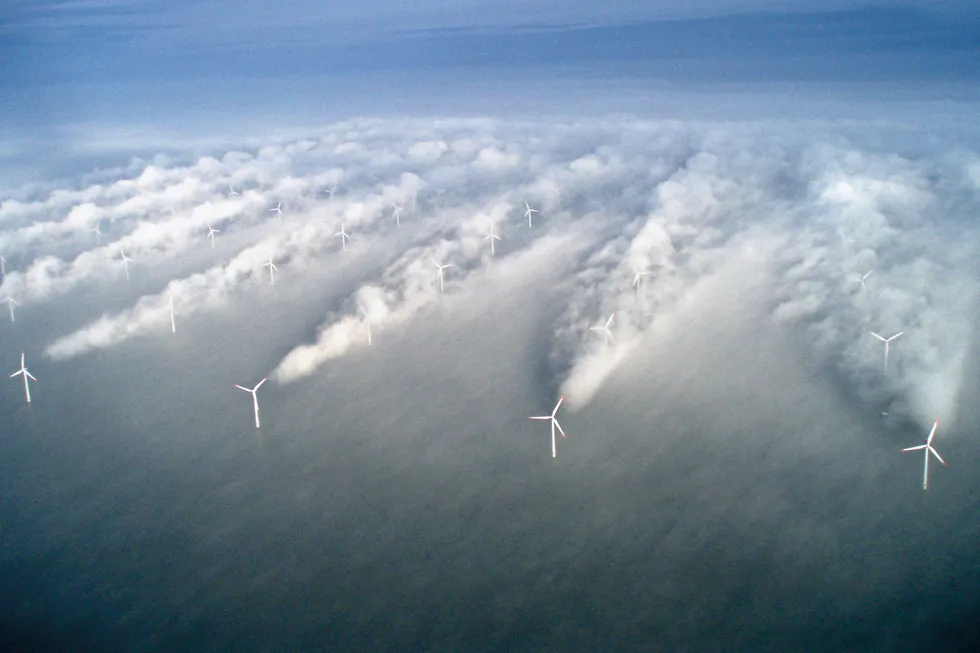
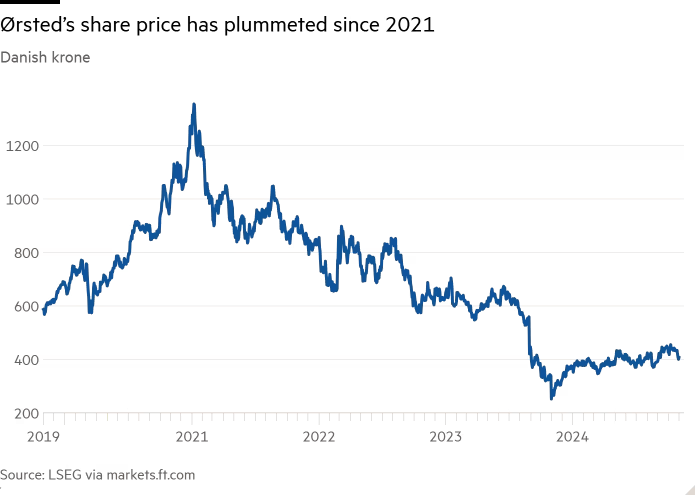
Even Orsted, which is 50.1% Danish govt owned, failed to submit a bid. Perhaps the economic realities of offshore wind, as reflected in Orsted’s share price (below) are sinking in.
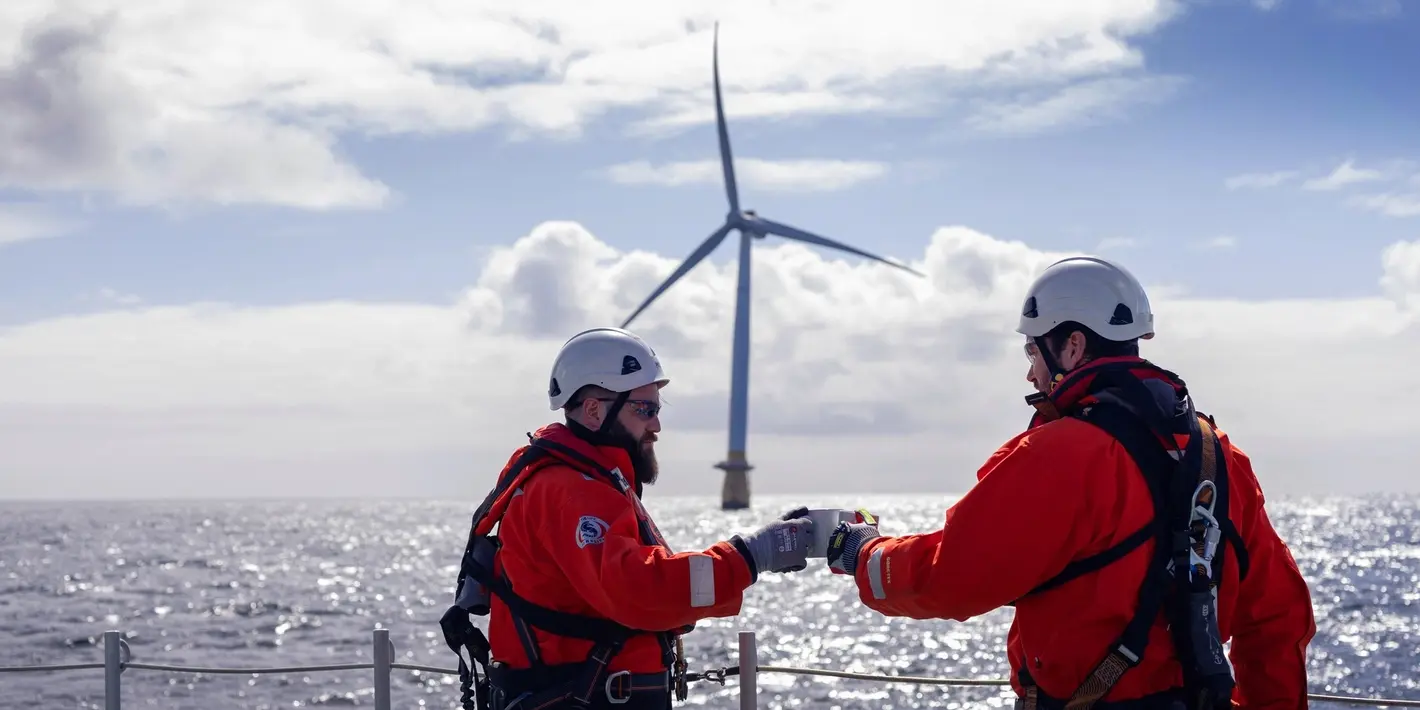
Equinor reports that all 5 Hywind turbines have been returned to service after being towed to Norway as part of a 4-month maintenance campaign.
Even though the turbines had only been in operation since 2017, Equinor puts a positive spin on the 4-month maintenance outage, declaring total victory:
“The successful completion of the maintenance campaign on Hywind Scotland is a testament to the collaborative efforts of our teams and partners. As the world’s first floating offshore wind farm, Hywind Scotland has demonstrated the immense potential of floating wind. Through this maintenance campaign, we’ve gained valuable insights that will help us refine maintenance practices and optimise this technology for the future. By sharing our learnings, we aim to contribute to the growth and development of the floating wind industry.”
Some of the folks in Scotland have a different take as evidenced in this video:
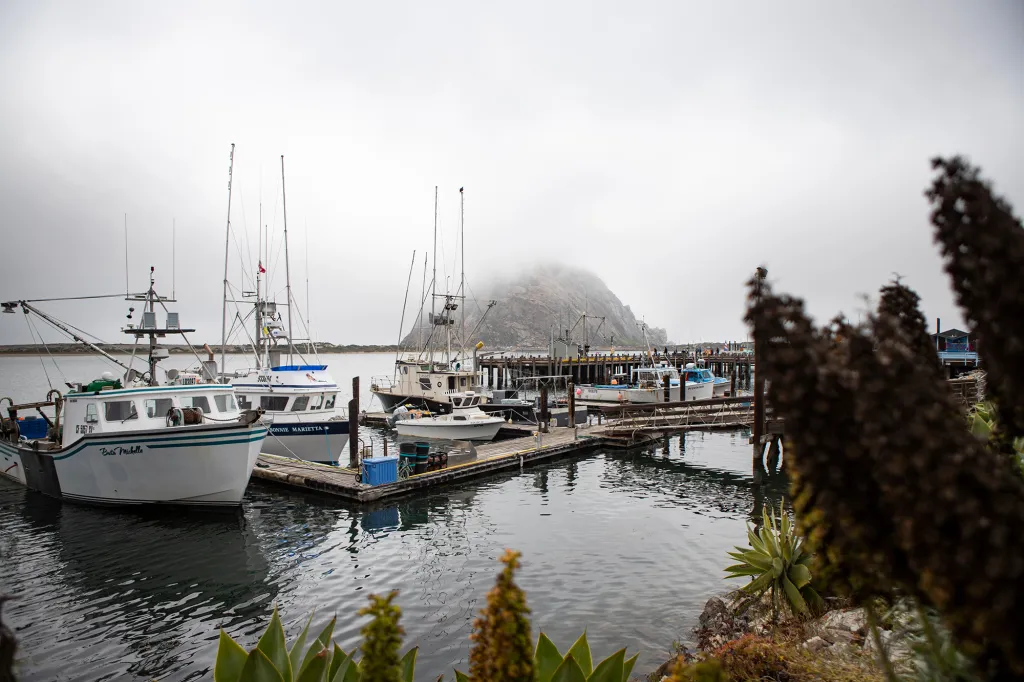
Meanwhile, the turbines planned for offshore Central California will also have to be towed to shore for major maintenance. Nearby harbor areas like Morro Bay (pictured below) would be overwhelmed by the large structures and the maintenance and repair operations. Central Coast residents are not enamored with “another attempt to industrialize the coast.” Towing the towers to LA/Long Beach, albeit rather distant from the leases, would seem to be the preferred option for such work.
Looking forward, the first power generation from floating wind turbines on the Central Coast is forecast for 2034. Betters may want to take the over!
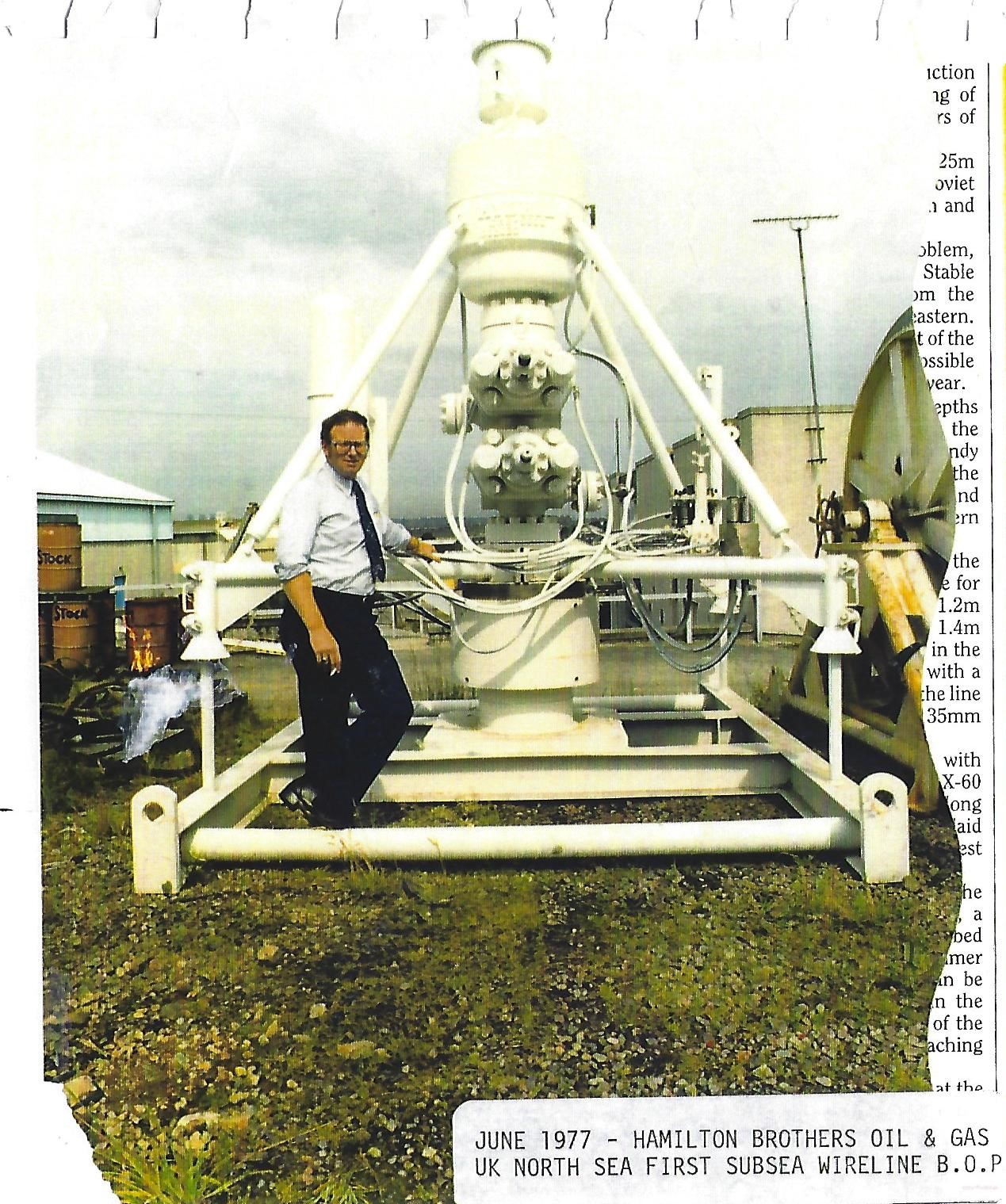
JL Daeschler, pioneering subsea engineer and BOE contributor, recounted a frightening incident in 1976, a year after UK North Sea production began:
We found ourselves in a drastic situation. While working on a subsea well, the wireline retrievable tubing safety valve got tangled up in the tree area. We had an open well situation and couldn’t cut the wire in the subsea tree. Further, the weather was bad, and keeping on location was difficult. The riser hydraulic release was faulty, so there was an imminent high risk of a “jammed ” subsea tree, bent/damaged riser, and uncontrollable well flow.
We got through this, but recognized that improved well control capabilities were needed during workover operations. Management decided that any future workover operations on a subsea tree/well would require a small diameter workover BOP with shearing capability immediately above the Xmas tree. A year later, we had the hybrid kit pictured below (with JL). Note that the guide funnels are slim to run on guide lines and not overshoot the guide base posts.
JL’s story reminds us once again that safety achievement is dependent on continuous improvement driven by experience, research, and technological advances.
When I was a young engineer with the US Geological Survey, the OCS safety regulator at the time, my boss and mentor Richard Krahl (known as “Mr. OCS” for his commitment to offshore safety) slammed😀 a copy of the first edition of API RP 14C (Analysis, Design, Installation, and Testing of Safety Systems for Offshore Production Facilities) on my desk and told me to read it carefully. That pioneering process safety document has grown with the offshore industry and is now in its 8th edition.
Similarly, API RP 2A-WSD (Planning, Designing, and Constructing Fixed Offshore Platforms— Working Stress Design) is now in its 22nd edition and API STD 53 (Well Control Equipment Systems for Drilling Wells) is in its 5th edition. There are countless other examples of the progression in safety equipment and practices.
As individuals, companies, agencies, and collectively as an industry, there can be no standing still. Nothing is routine and the challenges continue to grow: deeper wells, more complex geology, higher temperature and pressure, deeper water, harsher environments, remote locations, new security risks, and more. We get better or we get worse, and the latter is not an option. Onward!
PSA Norway, now Havtil, has long been a pacesetter in analyzing offshore incident and performance data, and publishing timely, comprehensive assessments. Their key findings for 2023 are pasted below (emphasis added):
Hydrocarbon leaks: four on the NCS in 2023 – the lowest figure since the RNNP survey began. None of them are considered particularly serious.
Well control incidents: 11 in 2023. The level is stable, with the figure unchanged from 2022, and all had a low potential.
Structural damage: three incidents were reported in 2023, a halving from the year before.
Total major accident indicator: the annual value is the lowest ever, and the average for the past three years declined. No particularly serious incidents occurred in 2023.
Personal injuries: no accidents resulting in fatalities occurred in the petroleum sector during 2023, while 25 serious personal injuries were reported. The serious injury frequency rose to 0.6 per million hours worked (back to the 2021 level), and lay within the expected range based on the 10 previous years.
Questionnaire survey: responses to this biennial poll showed an improvement from 2021 in most of the indices for the HSE climate and the psychosocial working environment. Furthermore, some challenges are seen with regard to language and parallel operations leading to hazardous conditions.
Havtil informs me that the complete “Trends in Risk Level (RNNP)” report for 2023 will be available in English later this month. A link to the report will be posted on this blog.
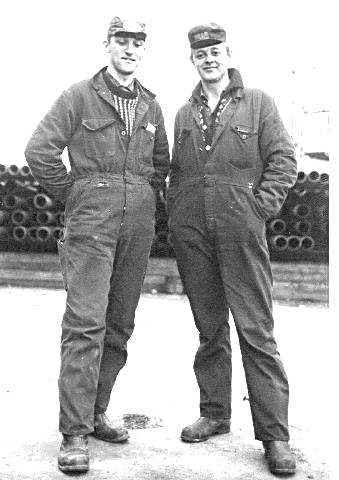
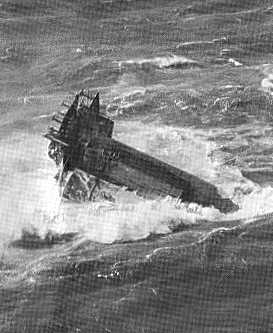
On a related note, JL Daeschler has brought The Norwegian Oil Pioneer Club’s website to my attention. Those interested in the history of North Sea exploration and production should take a look! A couple of pictures from the site are pasted below.
Svein and Axel, North Sea pioneers, 1966Sinking of the Ocean Prince, 1968
JL Daeschler is a pioneering subsea engineer and artist extraordinaire who is a native of France (Brittany) and lives in Scotland. He has shared 2 more of his exceptional drawings. (Click on the images to enlarge.)
This is a drawing of the Ocean Viking (Odeco) in the Norwegian North Sea in 1968. The rig was built in Oslo as a sister ship to the Ocean Traveler, which was already working at the same location. The Ekofisk field was discovered later in 1969. The mast-type derrick could be lowered for long ocean tow or bridge clearance. It would have been difficult to evacuate a 100 + personnel to the standby vessel, a decommissioned trawler. Things have changed so much in 56 years!Inclined jack up legs with rack and pinion drive ( Marathon Le Tourneau), Gulf of Mexico
One person has died following the helicopter crash outside Bergen in Norway on the night of Wednesday 28th February. The helicopter was on a training assignment for Equinor ’s SAR service for the Oseberg area in the North Sea.
Search and rescue service is critical to offshore safety, and North Sea operators have excellent SAR capabilities. Sadly, one person died and five were injured (two seriously) when a Sikorsky S-92 helicopter, owned by Bristow and under contract to Equinor, crashed offshore Bergen last night. The crew was training to serve offshore workers in need.
converted semi-submersible initiates production at the Argyll field
JL Daeschler, a pioneering subsea engineer who lives in Scotland, has fond memories of his interactions with Fred and Ferris Hamilton, the brothers whose company was the first to produce oil in the UK sector of the North Sea (1975). Their small company aced the super-majors by initiating production at the Argyll Field with subsea wells and the Transworld 58, a converted semi-submersible drilling rig. Their rig conversion was an early predecessor to the modern floating production units that have become the surface facilities of choice for deepwater development.
JL recalls that Ferris and Fred took time to discuss any problem with any employee. Should there be arguments, they were often followed by more relaxed discussions about sailing, cars, cooking, and other topics of mutual interest. The brothers would travel from Denver for the annual Christmas dinner in Aberdeen, and invited everyone from the warehouse crew to the production manager. There was a great sense of community among the employees and contractors.
As JL notes, there were no satellite positioning systems, and real time communications with the rig were short and limited to the normal marine radio channels. This was a remarkable era of achievement for the North Sea and the offshore industry, as operations expanded and technology advanced to support them. I have much respect for these offshore pioneers and their contributions to societies around the world.
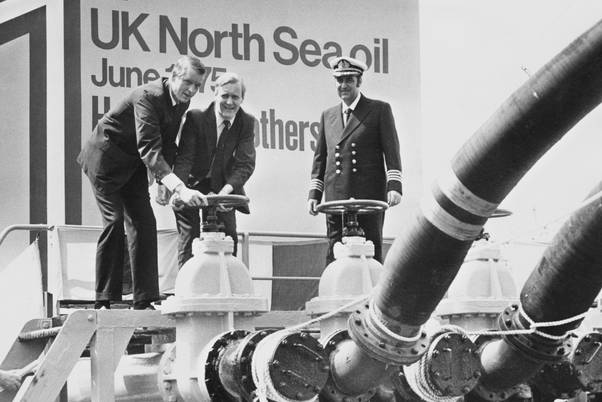
British Secretary of State for Energy Tony Benn, center, with Frederic Hamilton and Captain Harry Koutsoukos opening a valve to release the first oil from the North Sea into the BP refinery on the Isle of Grain in 1975.
Each annual licensing round will only take place if key tests are met that support the transition to net zero. The first test is that the UK must be projected to import more oil and gas from other countries than it produces at home.
The second is that the carbon emissions associated with the production of UK gas are lower than the equivalent emissions from imported liquefied natural gas.
If both these tests are met, the NSTA will be required to invite applications for new licences annually.
The “key tests” would seem to ensure annual licensing rounds for the foreseeable future. The charts below are from UK EiTi. The first chart illustrates the sharp decline in UK production over the past 20 years. The second and third charts illustrate the large projected gaps between supply and demand, particularly for natural gas.
In 2050, total production of oil and gas is estimated at ~10 million tonnes of oil equivalent. The projected 2050 demand is estimated at ~35 tonnes. For domestic production to exceed imports over the next 20-30 years, resource licensing and field development would have to be very successful and efficient.
Projections of UK Gas Demand and ProductionProjections of UK Gas Demand and Production
With regard to the second test, carbon emissions from the production of UK gas should maintain their advantage over imported LNG given the energy required to liquefy and transport that gas.
It would have perhaps been more transparent to simply stipulate annual licensing rounds, but that would probably not have been politically acceptable.
“At about 2 am on the day of the storm, the rig’s superstructure was torn off during a gale. By 7:10 am about a third of the drilling plattform had dissapared under 60 feet water.”
I didn’t realize that some early North Sea wells were drilled with semisubmersible rigs that were sitting on bottom, ala submersibles.
Per JL Daeschler, “the barge master on Ocean Prince was unsettled about sitting on a sandbank in the North Sea with waves as deep as the water depth, hence accelerating the scouring around the pontoon on the sea bed and distorting the forces on an unsupported hull. On a semisubmersible floating rig there is a great level of compliance between the mooring system and the forces on the leg and bracing. Worst case, you let the mooring go and drift.
It’s noteworthy that: “During the same storm which claimed the ”Ocean Prince,” the rig’s sister ship ”Ocean Viking,” while drilling afloat, withstood winds and waves of equal force.”
The entire crew of the Ocean Prince was safely evacuated.The helicopter pilot’s last name was fitting given his bravery during the rescue!
“Hero of the rescue effort was Capt. Robert Balls, 32, a former naval pilot who was alerted to remove the stranded crewmen. Within 45 minutes after he was awakened at Scarborough Hotel at 6 a.m., he was piloting a Wessex 60 helicopter across the North Sea fighting gale winds 400 feet up.”
“Captain Balls flew the copter with a minimum load of fuel in order to carry more than a full passenger load to the oil rig ”Constellation,” which was drilling about 20 miles south of the ”Ocean Prince.” On the first lift he transported 19 men. Usually, the capacity of the Wessex 60 is 16. On the second trip he took 18 crewmen. The final trip, he flew eight men directly to Scarborough.”