Feeds:
Posts
Comments

Posts Tagged ‘Jason Mathews’

The following message is from Jason Mathews – petroleum engineer, football coach, proud father, and outstanding offshore safety leader.

Happy Easter – BSEE Family and Friends

The explosion on the Deepwater Horizon oil rig occurred on April 20, 2010, at approximately 9:45 p.m. CDT. Shortly after the initial explosion, a series of further explosions and a firestorm engulfed the platform that forever changed our industry and eleven families.

This past week, I was in Orlando with my family attending an International Cheer event – All Star World Championship. As I was sitting there, I noticed a young athlete with a date written on her shoes, and she touched the date as she walked back with her team. My assumption was it was something to inspire her.

It quickly reminded me of a young man by the name of Shane Roshto. At only 22 years young, he was a victim of the Deepwater Horizon explosion, and he had written the date of his wedding and his son’s birthday on the inside of his hard hat. Those dates served as reminders of the important people and events in his life while working on the rig miles away from those who meant the most to him.

On Wednesday evening, they brought the top ten teams at the cheer competition onto the stage and called out each finalist on the stage until there were three left, and my daughter’s team was still remaining. While those girls were on stage, I thought back on the countless hours her coaches pushed her and always requested more from them because they had a collective goal to win Nationals and Worlds, and then they called the third-place finisher. It seemed like forever before they called the second-place finisher, but when they did, I got to witness athletes, coaches and families reach something they had put everything into since they began cheer. A date LA Spirit – Fame will never forget – April 16th, and only four days from a day we will never forget – April 20th.

At the conclusion of the day after taking everything in and calming down, I sent this message to the coaches of my daughter’s team – “Coaches thanks for “living your legacy” with our girls at LA Spirit. Every one of your goals, expectations, and coaching styles foster a meaningful life well beyond cheer that leaves a positive impact on our girls. All too often, our girls are told what they can and can’t do with their schedules, their abilities, or their choices. Y’all showed them they can do whatever they set their mind to if they want it bad enough and are willing to make sacrifices for it. As a parent, thank you for making positive memories and experiences that have a ripple effect and continue to inspire our girls for years to come.”

Although the two events have nothing in common (one being a tragedy and one being a highlight), they both drive individuals to live their legacies. At BSEE, all of us (not just inspectors and engineers) have an awesome responsibility to live our legacy in the oil and gas industry by actively shaping our life’s story and influence by focusing on our values, actions, and contributions to those around us (and those who work offshore).

Whether you have days like April 20th or April 16th, always “Live Your Legacy.”

Respectfully,

Jason Mathews
Read Full Post »

I had the pleasure of working with Jason Mathews when he was a young MMS engineer. He truly cared about our safety mission and has taken that commitment to the next level at BSEE. Jason shared this important, heartfelt message on the anniversary of the Macondo blowout.

One of the greatest gifts I ever received in life is having a little girl and having the opportunity to go home every evening and spending time with her at cheer, softball, doing homework, etc. I have a great deal of respect for the men and women who work offshore and put their lives on hold for 14-28 days to deliver much needed OCS production to meet US demand. Undoubtedly, they are better / tougher people than me.

Over the last year, my team has seen multiple incidents that had a high potential severity that could have led to a fatal / serious injury or major incident in the GOM. Although we can sit and debate the causal factors for hours, one that jumps to the top of the discussion is the Human Factor – Complacency. Of all the things a leader should fear, complacency heads the list. There is no doubt success breeds complacency, and complacency breeds failure.

To this day, I am still shook by the mindset and complacency of many onboard the Deepwater Horizon prior to the incident. During testimony in the public hearings, John Guide, the BP well team leader for the Horizon, believed that the rig crew had become “too comfortable” because of its good track record for drilling difficult wells. Ross Skidmore, a BP contractor on the rig on April 20, testified that the crew became complacent after completing drilling because “when you get to that point, everybody goes to the mindset that weʹre through, this job is done.”  To me, the complacency on the Deepwater Horizon could be attributable to the crew not having access to all of the well data (OptiCem reports – cement job risk) available to BP personnel onshore and the well site leaders on the rig. Our investigation concluded, the overall complacency of the Deepwater Horizon crew was a possible contributing cause of the kick detection failure.

As regulators, we have special roles in the GOM as it relates to safety:

  • Driving the avoidance of complacency and risk-free mindsets of the offshore employees
  • Understanding we can’t be selfish – Our success is not our individual personal growth / gains, but it is being unwavering in your promotion of offshore safety to ensure all offshore employees return home to their families safely
  • Holding each other (internally) and industry (externally) accountable when necessary

In order to achieve greatness offshore, we ,as a regulator,  have to believe we can, and never sit still until we achieve it. 

Everyone on this email has a very critical function and role. Never underestimate the value of what you do, have the proper mindset, and avoid complacency.

Do whatever it takes to ensure the people offshore are gifted the same gift we receive every day – going home to our families.

All In –

Jason P. Mathews, Petroleum Engineer, Field Operations – OSM

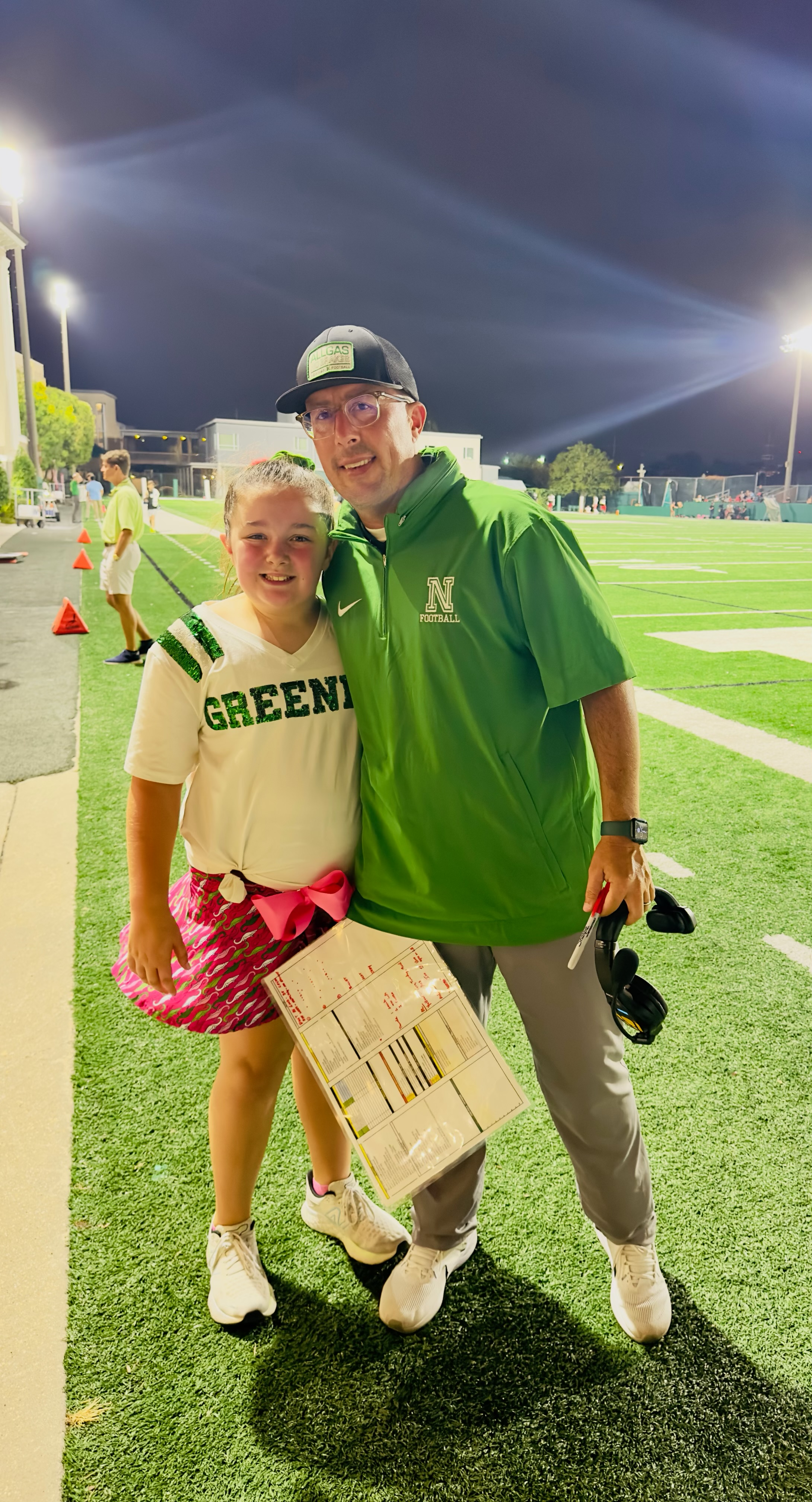
Friday Night LIghts: Coach Mathews and his daughter

Read Full Post »

An excellent compliance and incident update by Jason Mathews is attached. BSEE’s focus on risk assessment, compliance and incident trends, high potential near-misses, medivac capabilities, hot work safety, lifting operations, and gas releases is encouraging. Good work by the folks in BSEE’s Gulf of Mexico Region.

Observations:

  • Zero 2023 occupational fatalities through Q3. Hoping this holds through the end of the year and beyond.
  • INCs/component are down but INCs/inspection are slightly higher. This may imply a relative increase in the inspection of high component deepwater facilities.
  • No. of hours worked is increasing; good sign for the offshore program.
  • Hand and finger injuries are driving up the injury count.
  • Well control incidents are stable at a low level.
  • Improved fire data help facilitate risk assessments
  • No YTD explosions
  • No. of collisions is down
  • 10 YTD spills> 1 barrel (total volume not specified)
  • Some evidence of decline in lifting incidents in Q2 and Q3
  • Gas releases are up (aging facilities, decommissioning related?)

Read Full Post »

Kudos to BSEE’s Gulf of Mexico Region for their timely safety alerts and comprehensive updates on offshore incidents, trends, and compliance issues. Their most recent update is linked below.

For the past 50 years. my main goal for US offshore operations has been a zero fatality year. Sadly, that goal has never been achieved and will not be achieved this year (see slide 15).

Many casualties are associated with activities that are not perceived to be of high risk. The message on slide 22 of Jason’s presentation is thus very important:

Perceived low risk activities can still result in impactful injuries. Continually risk assess the work being undertaken, no matter if it permitted or nonpermitted work.

Know your personal limits and stop before you reach your limit. Pause and ask for help before you are at your limit.

Jason Mathews, BSEE, 6/7/2022

Read Full Post »

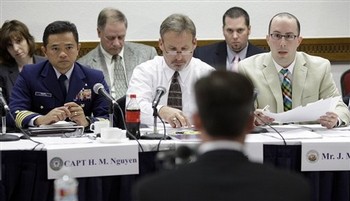
Capt. Hung Nguyen, David Dykes, and Jason Mathews question the witness. Sylvia Murphy and Kirk Malstrom monitor attentively from the 2nd row.

The panel that is most closely investigating the technical and operational aspects of the Macondo blowout reconvenes on Monday morning at 0800 CT in New Orleans.

I would assume that one of the CSpan stations will be covering the hearings, but their broadcast schedule for next week has not yet been posted.

Read Full Post »

Platts has an interesting report on yesterday’s hearing:

Guide said the decision to use a long string of casing instead of a liner
was made because it provided better long-term well bore integrity, not because a liner would have cost an additional $7 million to $10 million. He said the liner would have added only one additional barrier in the well.
  John Guide, BP’s Well Team Leader 

Comment:  One additional barrier is very significant when you only have 2 others and there are issues with the primary barrier (production casing cement).

Jason Mathews, a BOEM panel member, asked Guide if he knew that in the past year, Schlumberger had been brought to rigs 74 times for cement bond logs, and only three times they had been sent away without doing the logs; in two instances BP, sent the crews away.

Comment: Interesting statistic; good research by Jason and the BOEMRE team.

Read Full Post »

Jason Mathews

Kudos to Jason Mathews, David Dykes, John McCarroll, and their Coast Guard colleagues for their excellent work on the MMS-USCG investigation of the Macondo blowout.  Catch some of the testimony on C-Span.

Read Full Post »