Feeds:
Posts
Comments

JL Daeschler recalls the inauguration of production at the Argyll field (18 June 1975) and Forties field (3 Nov 1975):

  • While some were bitter that Hamilton Brothers, a company owned by 2 brothers from Denver, was able to start production before British giant BP, there was never a race between the companies.
  • Instead there was a broad industry effort to initiate production during a financial crisis.
  • All operators exercized caution. We learned slowly with safety in mind. There was a great transfer of knowledge between operators small and big.
  • BP’s Forties field was a major achievement – designed for 400,000 bopd.  240 miles of 36″ pipeline were required (110 miles offshore and 130 miles onshore). The biggest delay was associated with the pipeline system, not the platform or wells.
  • The Hamilton Brothers Argyll field project (30,000 bopd) was not comparable in magnitude, requiring only a few wells and short infield flowlines.
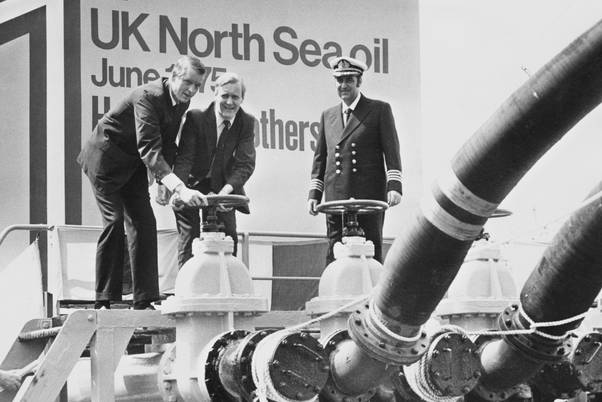
  • The inauguration of Argyll  (photo above) was with the UK Energy Minister, Ferris and Fred Hamilton, and a  Greek tanker captain. There was minimal promotion and PR followup.
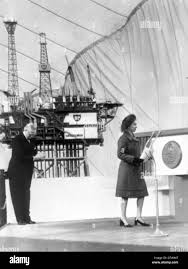
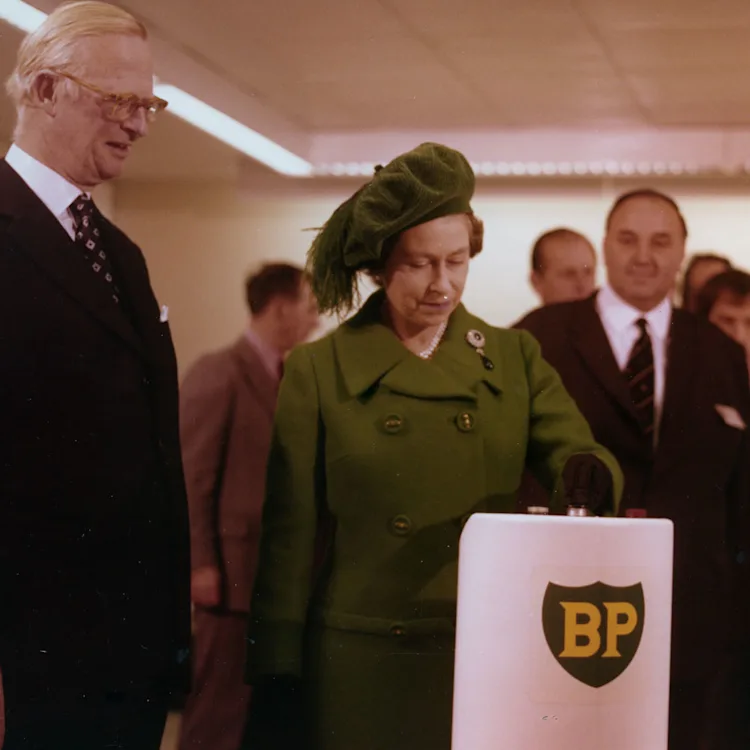
  • Contrast that with the Forties inauguration (photo above), a big event featuring Queen Elizabeth!
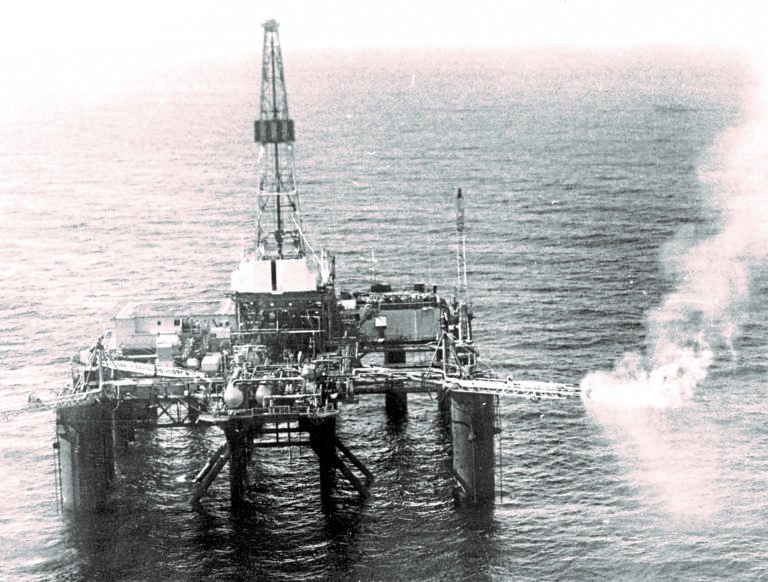
Converted semi-submersible initiates production at the Argyll field in the UK sector of the North Sea
British Secretary of State for Energy Tony Benn, center, with Frederic Hamilton and Captain Harry Koutsoukos opening a valve to release the first oil from the North Sea into the BP refinery on the Isle of Grain in 1975.

Congratulations to JL Daeschler and other North Sea pioneers! Your important contributions to the UK and the world have not been forgotten.

See the attached summary shared by JL and a related 2023 post.

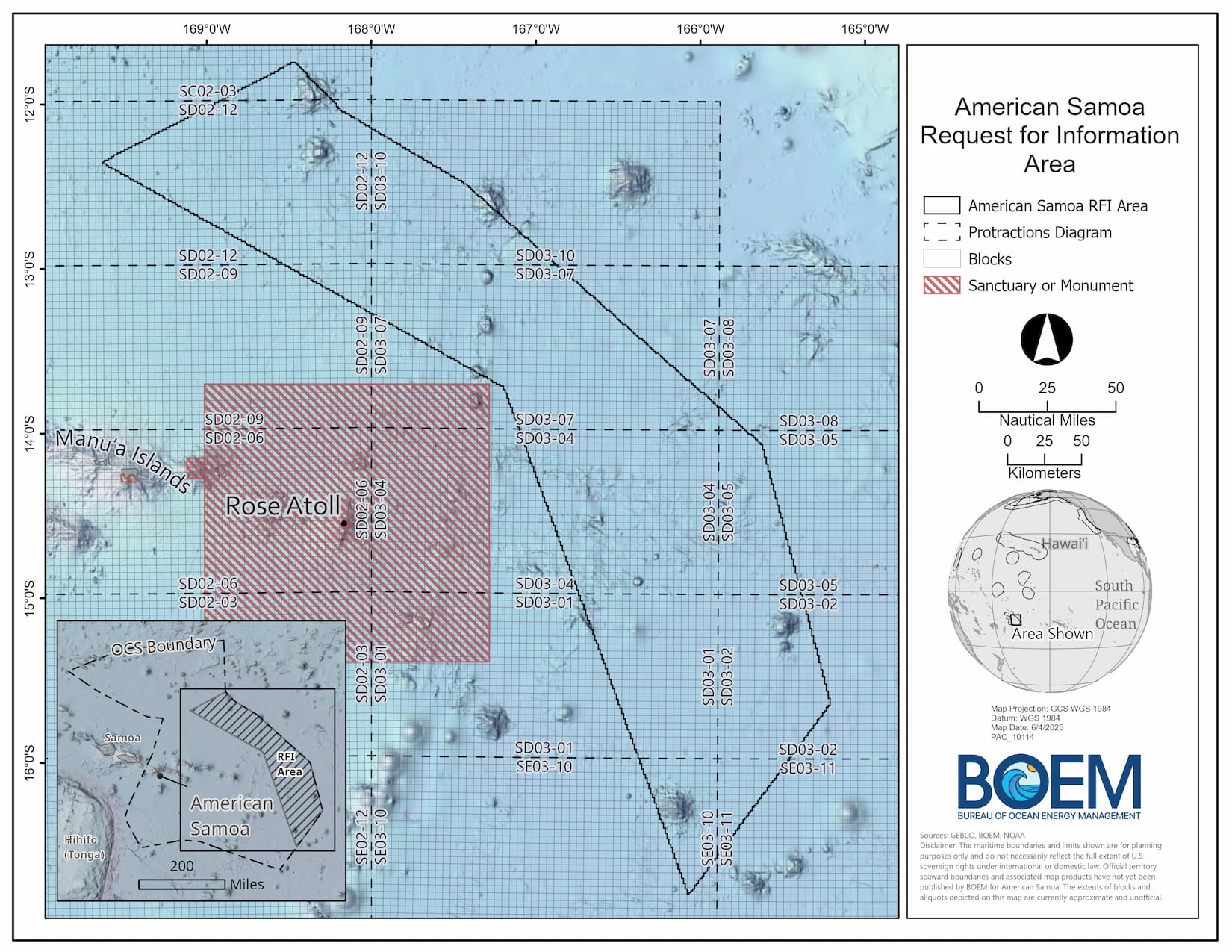
For those who want to provide input on an American Samoa marine minerals sale, now is your chance. See the attached Request for Information and Interest.

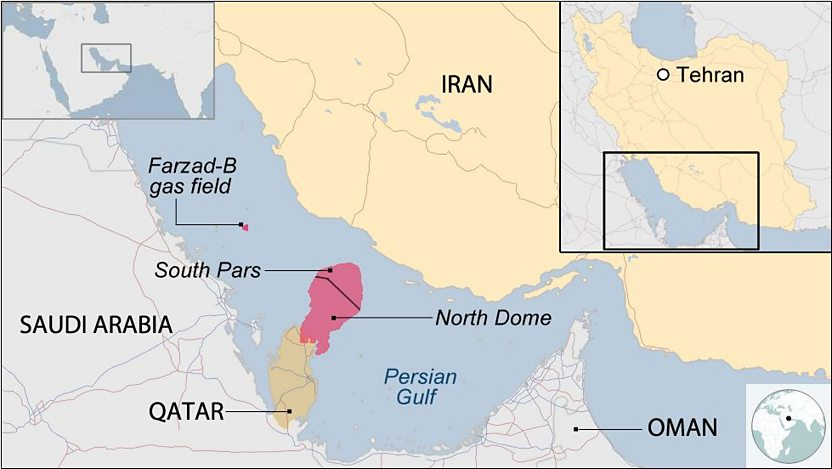
Iranian media reports a “massive explosion” following an Israeli drone strike on the South Pars gas field in the southern port city of Kangan. According to a 2019 report, the field accounts for 74 per cent of the country’s gas production.

Judging by available video (below), it appears that onshore processing facilities were struck and not the offshore infrastructure.

“the greatest song ever written” ~ Paul McCartney

Brian Wilson, the music genius who passed away this week, was indirectly connected (sort of) to the OCS oil and gas program.

In 1983, Secretary of the Interior James Watt, whose overzealous approach to offshore oil and gas leasing galvanized opposition, bizarrely banned the Beach Boys from performing at the National Mall 4th of July concert. This stunned Nancy Reagan and almost everyone else in Washington. The Washington Post reported, “a ban on apple pie couldn’t have brought a stronger reaction.”

Congressman George Miller, who later restored the OCS civil penalties program, dropped the names of Beach Boys songs while commenting on the House floor:

‘I was sitting ‘in my room’ ‘all summer long’ saying, “‘Do you remem- ber,’ Mr. Watt, ‘Do you remember’ those ‘Good Vibrations’ from the ‘Fourth of July’ when all we did was ‘dance, dance, dance,’ ‘all summer long’ to the Beach Boys in the ‘spirit of Americas?”” Miller said according to Congressional records. “But ‘help me, Ronald, help, help me Ronald,’ ‘don’t let him run wild.’ And if you cannot do it alone, get help from ‘Barbara Ann.'”

The White House gave Watt a plaster foot with a hole as a symbolic gesture of his mistake. The Beach Boys returned to the National Mall the following, playing in front of a crowd of more than half a million people.

The Beach Boys had another indirect connection to the OCS program in that they attended Hawthorne High with Glenn Shackell, one of our top engineers. Glenn served in Vietnam, studied petroleum engineering at USC, and had an outstanding career in our Pacific Region office. He has an encyclopedic knowledge of oil and gas operations in the Pacific.

Here is a video of Brian Wilson returning to Hawthorne High:

As explained in the attached Safety Alert, BSEE’s risk-based inspection program has identified deficiencies in safety device bypass practices including:

  • inadequate documentation
  • inoperative data history software
  • bypassing more devices than is necessary
  • bypassing devices for longer than necessary
  • missing audit documentation
  • mistakenly bypassing the entire safety system during production

The regulations restricting the bypassing of safety devices are core elements of OCS regulatory and operator management programs. Because they are critical to process safety, these requirements are widely supported and strictly enforced.

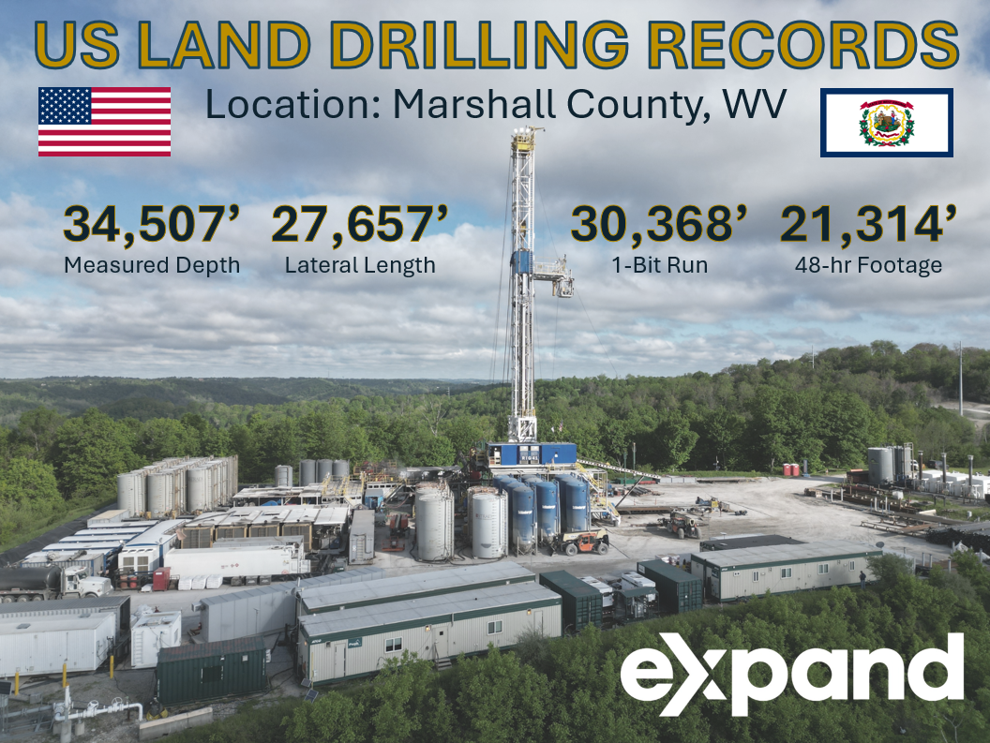
“Country roads” take us to Moundsville, West Virginia where new records were set drilling a “postcard well.”

In addition to the records noted in the picture, these impressive company marks were achieved:

  • 24-hour footage record: 12,370 feet
  • daily footage record: 2,774 feet/day

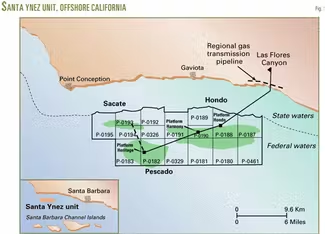
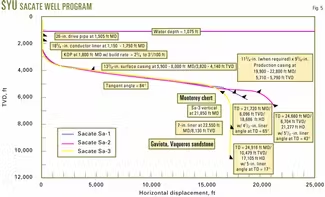
The record US offshore lateral well is in the Santa Ynez Unit, which has been much discussed on this blog and elsewhere in light of Sable Offshore’s efforts to resume production. In 2010, Exxon drilled a well with a horizontal reach of 6 miles from Platform Heritage into the Sacate field (see the diagrams below).

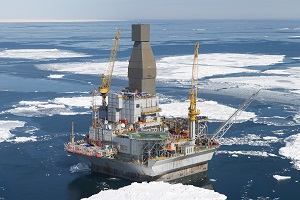
The world’s longest horizontal reach well appears to be the O-14 well drilled by the Sakhalin-1 Consortium in the Sea of Okhotsk, Russia, in April 2015. This well had a horizontal reach of 14,129 meters (46,358 feet).

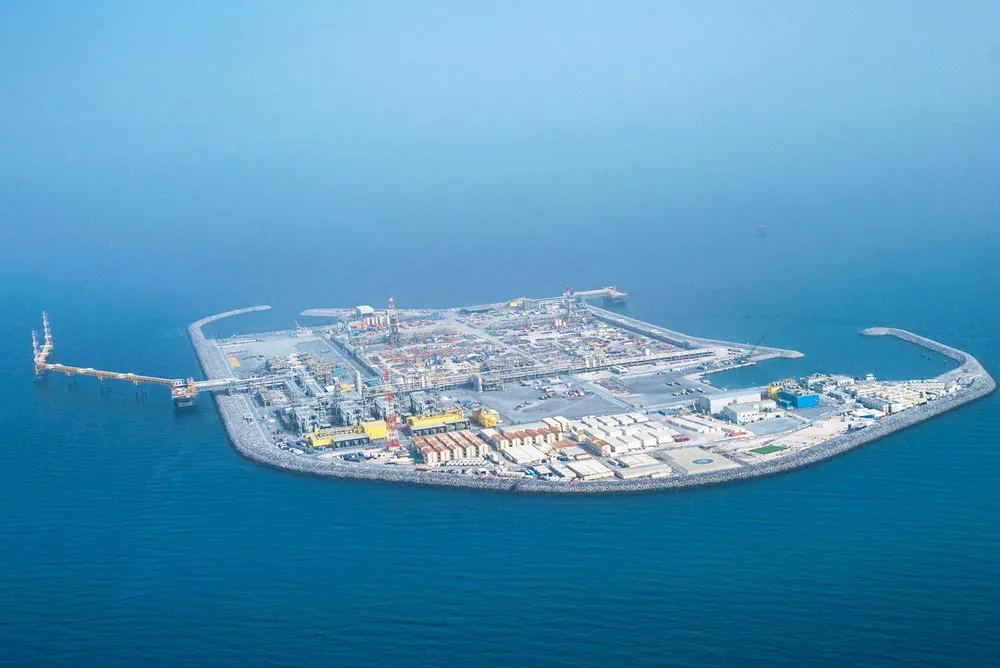
ADNOC, the Abu Dhabi National Oil Company, has the world record (2022) for the longest well (50,000′) in the Upper Zakum field. However, no horizontal reach distance is provided, so it is assumed that the Sakhalin well had the longer reach.

Artificial islands at Adnoc’s Upper Zakum field.Photo: Adnoc

Congratulations to Walter Cruickshank on his retirement from the U.S. Dept. of the Interior!

Walter’s policy acumen, in depth understanding of the offshore program, and balanced perspective on energy development earned him the respect of the political leadership from both parties, a rare achievement. As a result, Walter served more time as Director and Deputy Director of both the Minerals Management Service and Bureau of Ocean Energy Management than any other individual. He also served as Acting Secretary of the Interior during the latest transition, a first for a career offshore program employee.

Walter earned a Bachelor of Arts in Geological Sciences from Cornell University and a Doctorate in Mineral Economics from the Pennsylvania State University (We Are!). Although his Federal career spanned more than 40 years, he has rather remarkably retained his intellect and sanity! 😉

Best wishes to Walter going forward. I hope he finds time to root for his Harwich Mariners in the Cape Cod Baseball League!

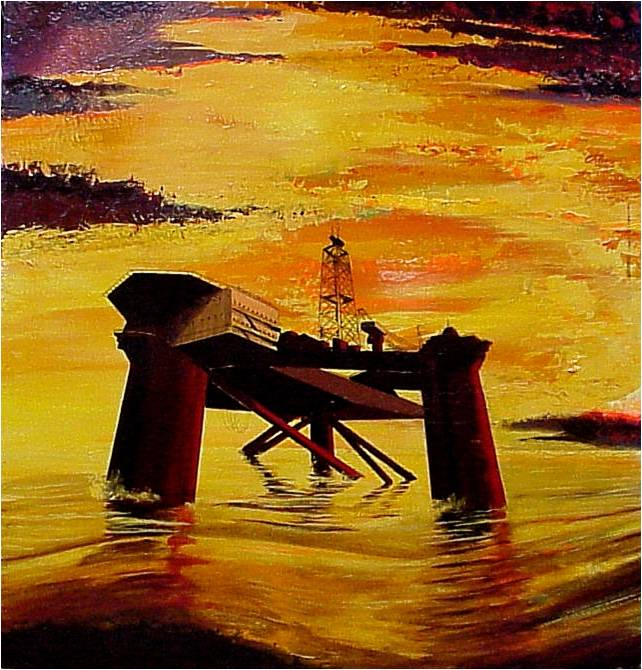
Consistent with the proud tradition of the OCS program, I am posting the masterpiece “Rig at Sunset” in Walter’s honor.

“Rig at Sunset” was painted 50 years ago by a US Geological Survey (USGS) employee who chose to remain anonymous. The masterpiece was presented to USGS (later MMS) engineers and scientists who had made important contributions to the offshore oil and gas program. Understandably, the intended recipients were so humbled by the magnificence of the painting that they could not accept it. As the painting grew in value and international prominence, framed copies were presented to retirees and the original painting was kept at a secure, undisclosed location. More on the painting’s important symbolism at a later date. 😉

Radar interference is one of the key issues in the law suit against the Empire Wind project. Congressman Smith’s press release (attached) focuses on that issue.

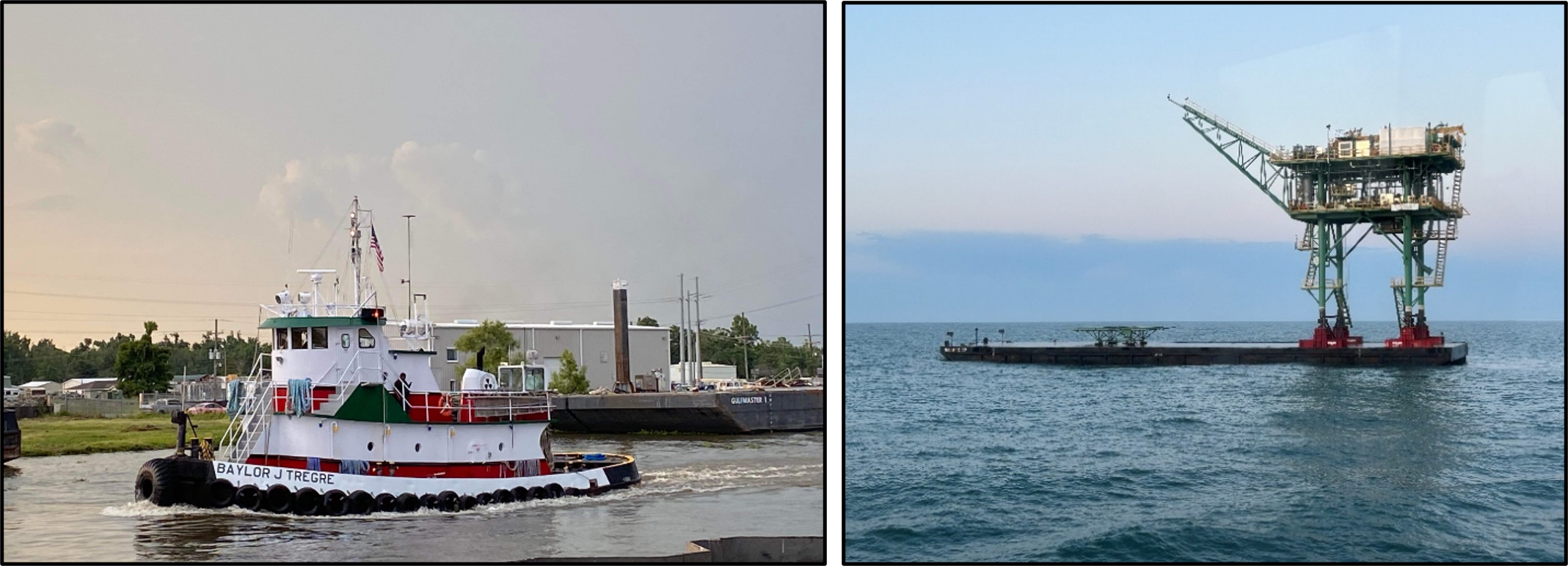
Attached is the full NTSB report. Here’s what happened:

  • In May 2024, the Baylor J. Tregre tugboat was towing a platform on the barge MARMAC 27 to Brazos Block 538 in the Gulf of America.
  • The tug capsized in stormy conditions.
  • The 4 crew members were rescued by the Coast Guard.
  • The NTSB determined that the probable cause of the capsizing was “the mate’s inability to maneuver the tow into the wind due to the overwhelming towline force generated by the towed barge during the sudden onset of severe weather, resulting in unrecoverable heeling.”

Comments:

  • Who knew? When a tugboat capsizes while towing a platform on a barge, endangering the crew, that’s a very serious incident. Yet there was no public announcement by the companies involved or the Coast Guard, and there was no media coverage following the incident (May 2024). The NTSB docket includes only the final investigation report.
  • The NTSB report says a production platform was being towed, but it was actually a gas transmission platform owned by Transco Gas Pipe Line Co. There is no production in Brazos Area Block 538, an unleased block.
  • Here and here are bits of information on the Transco’s Brazos Area 538 Platform modification project.
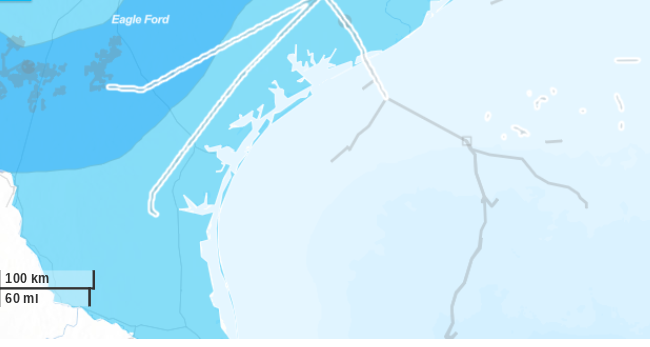
  • Per a 2007 article, Williams’ Seahawk gathering system, which collects deepwater gas production, connects at Brazos Block 538 with a pipeline that transports gas to the Transco processing plant in Markham, TX (see map below).
  • The NTSB report lacks context needed to understand the planning process, organizational factors, and timing/urgency of the project.
  • The NTSB report attributes the failure to the mate’s inability to respond to the weather conditions, but provides no information on the safety management system, risk assessment, job safety job planning process, crew training, and other project management factors.
  • Two of the crew members are suing Trinity Tugs alleging that they suffered personal injuries resulting from the negligence of Trinity and the unseaworthiness of the M/V BAYLOR J. TREGRE.
Deepwater gas gathering system connects with Brazos 538 transmission platform at the “Y” in the center of the screen.