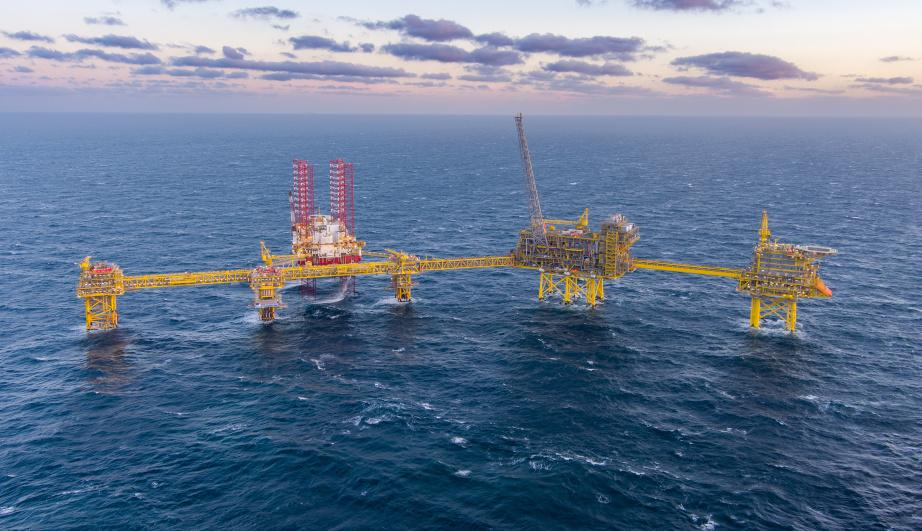
The Danish government will “initiate a process” to look at possibly extending one or more production licences in the Danish North Sea until 2050, to contribute to European energy security and independence, it said.
The government has asked the Danish underground consortium (DUC) — which operates the Tyra hub — to “explore an extension” beyond the current 2042 expiry.
Europe is in dire need of energy independence, and while renewables expansion can help the bloc achieve that goal, natural gas will still play a significant part of the energy mix in the coming year, the Danish government said. “Europe must stand on its own two feet,” Danish industry and trade minister Mortern Bodskov said
Attached are proposed revisions to BOEM’s marine minerals regulations as published today in the Federal Register. As advertised, the revisions appear to be largely administrative in nature and do not substantively change the marine minerals program.
The proposal does require BOEM to act on unsolicited lease sale requests within 28 days (currently 45 days), which may prove to be a challenge. See the excerpt pasted below.
G. Revise 30 CFR 581.11(b) “Unsolicited request for a lease sale”
The requirement for the BOEM Director to decide “within 45 days” of receipt of a lease request is not based on a statutory requirement. BOEM proposes to replace this 45-day timeframe with 28 days to ensure timely processing of such requests.
Per Baker Hughes, the latest (2/20/2026) Gulf of America rig count (2/20/2026) slipped to 9. The count was 10 the previous week and 12 a year ago. In 2023 and 2024, the BH rig count was a more healthy 15-20.
8 of the 9 rigs currently drilling are at high potential deepwater locations: 3 in the Mississippi Canyon Area, 3 in Green Canyon, 1 in Walker Ridge, and 1 in Alaminos Canyon. One rig was drilling on the shelf in the Eugene Island Area.
Per MMS data,the active Gulf rig count in 2001 was 148. The 2001 count was not a one year blip; the number of rigs active in the Gulf exceeded 100 for the ten year period from 1994-2003.
Although drilling and production have become more efficient with improved exploration technology, modern well completion practices, high pressure/temperature equipment, and enhanced recovery programs, drilling activity must still be sufficient to replace reserves and sustain production over the longer term.
2025 may have been a record production year for the Gulf; we’ll find out at the end of this week. However, that level of production is not sustainable without increased drilling activity.
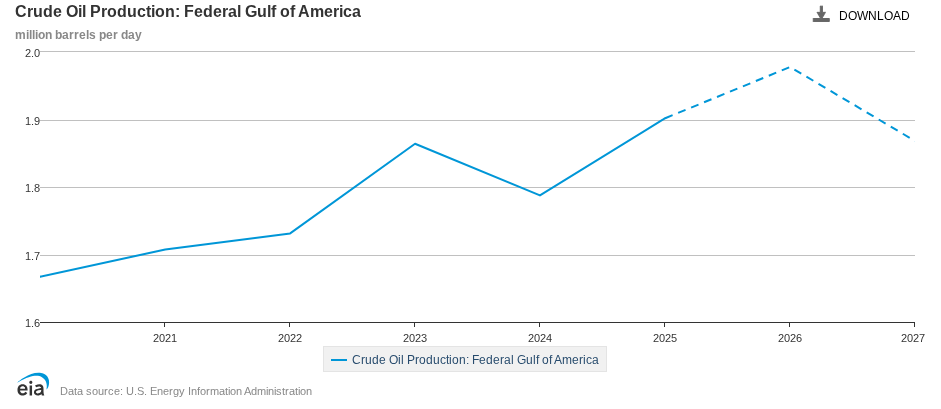
The EIA (chart below) is forecasting another banner year for Gulf oil production in 2026. However, they are pointing to a decline in 2027, when new production is not anticipated to be sufficient to offset natural declines. The decline in production is likely to continue beyond 2027 absent increased drilling.
BH rig count criteria: To be counted as active a rig must be on location and be drilling or ‘turning to the right’ for 4 out of 7 days during a week. A rig is considered active from the moment the well is ‘spudded’ until it reaches target depth or “TD”. Rigs that are in transit, rigging up, or being used in non-drilling activities such as workovers, completions, or production testing, are NOT counted as active.
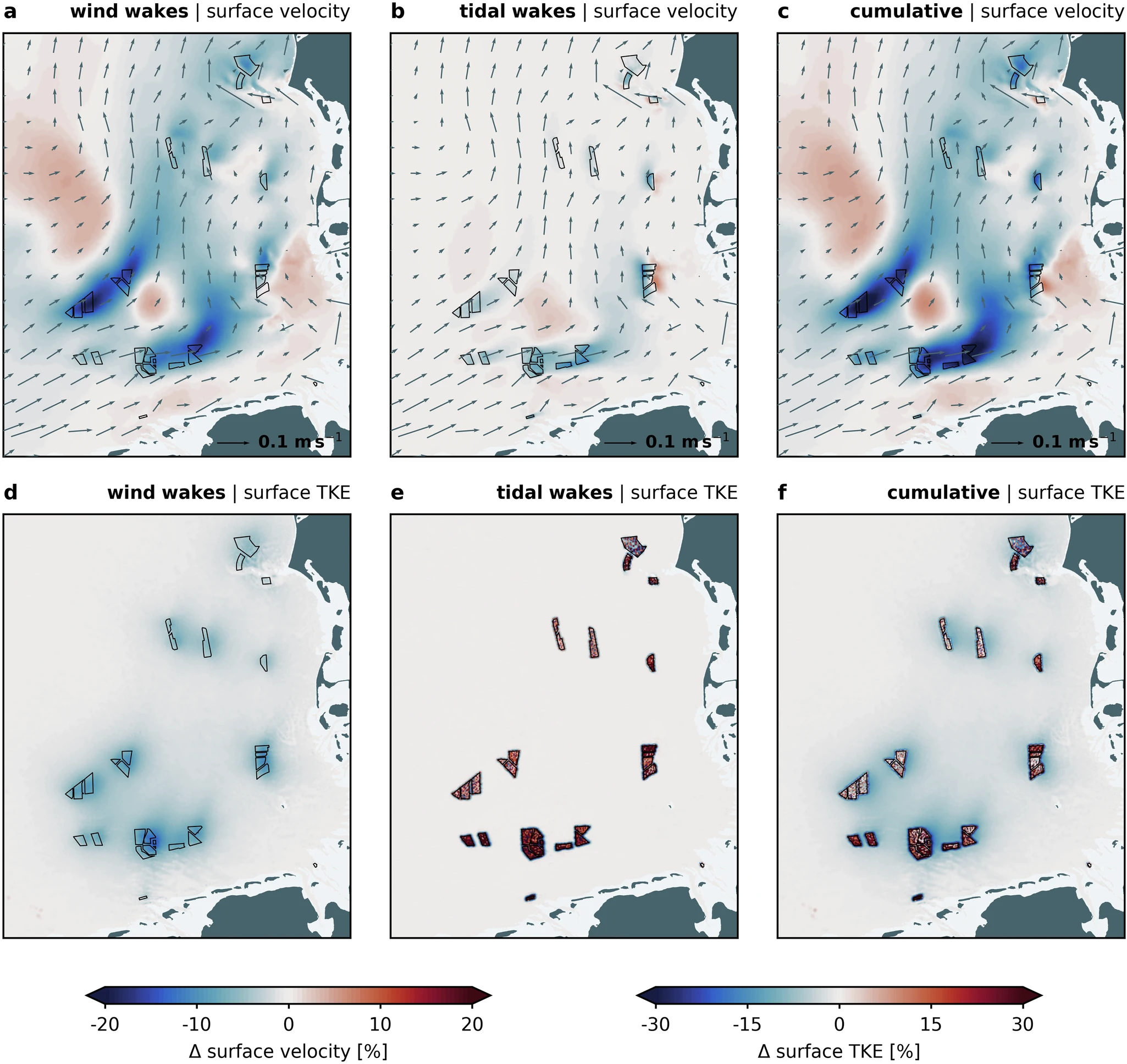
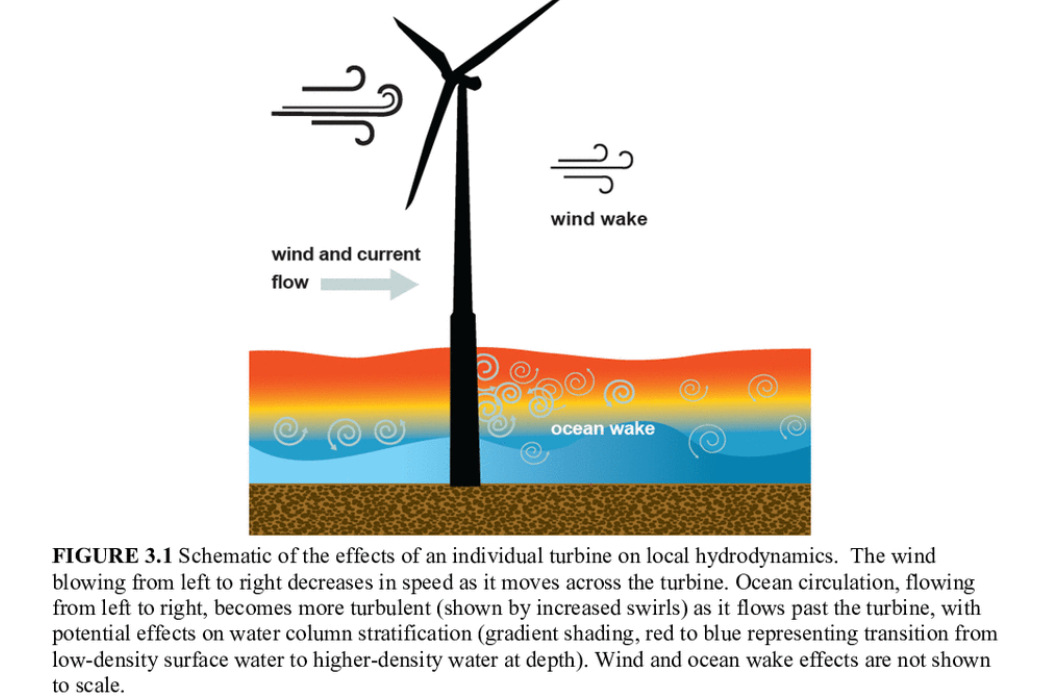
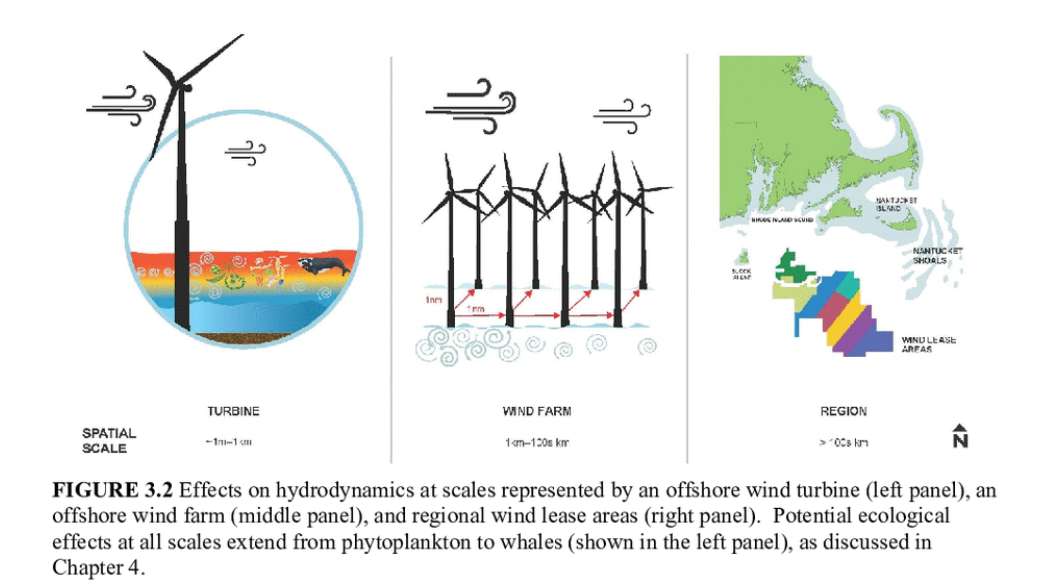
Per PHYS.ORG: Researchers at the Helmholtz Center Hereon have analyzed the long-term overall impact of this large number of wind farms on the hydrodynamics of the North Sea for the first time. They found that the current pattern could change on a large scale.
The peer reviewed German study is attached. Excerpt:
The near- and far-field wake effects affect vertical mixing and surface heat fluxes – primarily driven by large-scale wind stress reductions – leading to shallower mixed layers and long-term surface warming of up to 0.2 deg. C in wind farm areas. Our findings reveal a basin-scale physical footprint of offshore wind energy and highlight the need to account r hydrodynamic impacts in future offshore wind farm planning.
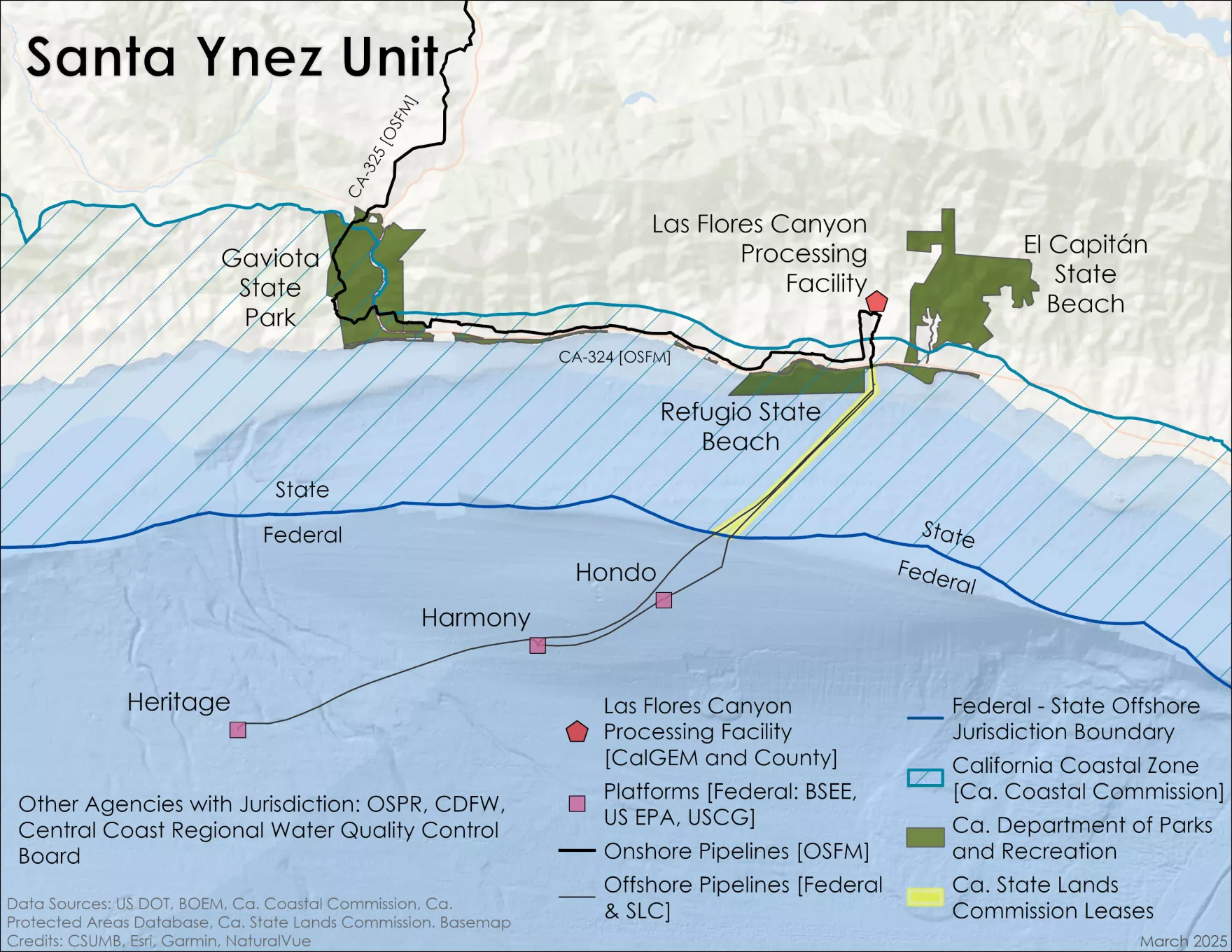
As posted on 9/10/2025 (prior to PHMSA’s assertion of jurisdiction): Given that the Sable pipeline will carry OCS production, it would seem to fundamentally be an interstate line (Federal jurisdiction), as it was when owned by Plains. Could DOT reverse the 2016 letter agreement? That is conjecture for the attorneys and courts to consider.
A new Bloomberg Law article explains PHMSA’s position after a challenge by the California AG:
PHMSA said state-based hurdles are preempted by federal authorizations in the emergency permit notice letter the agency sent to Sable last year. Because the pipeline originates on the Outer Continental Shelf, the system automatically comes under federal oversight, the agency said.
The administration is invoking interstate commerce to classify the pipeline as a federal issue, “arguing that this is between a place in a state and outside that state,” said Hannah Wiseman, a professor at the Penn State Dickinson Law.
They are claiming this under their interpretational authority, as opposed to the actual language of the Pipeline Safety Act,” she said.
The language of the law only assigns PHMSA jurisdiction over oil operations that run outside or between state lines, but here the agency is arguing the pipeline’s start point is on the OCS, not at the onshore processing facility, she said.
Not mentioned in the article but pertinent:
In PHMSA’s favor, the onshore pipeline was initially under their jurisdiction.
In California’s favor, a court approved Consent Decree clearly identifies the California Fire Marshal as the sole oversight authority.
Meanwhile, Kruti Shah cleverly summarizes the Santa Ynez Unit story in a series of posts on X. Click on the post below to get the full thread. Great read for Sable/SYU followers:
A company bought a cursed oil field that ExxonMobil abandoned after 7 years of failure.
They financed the purchase mostly with a loan from… Exxon itself.
Now they're fighting California, the courts, the Coastal Commission, and their own investors — simultaneously.$SOC is… pic.twitter.com/rdGSNMQE1A
Updatedincident tables for OCS oil and gas operations. The most recent data are for 2023! Providing timely details on incidents is a fundamental responsibility of a safety regulator.
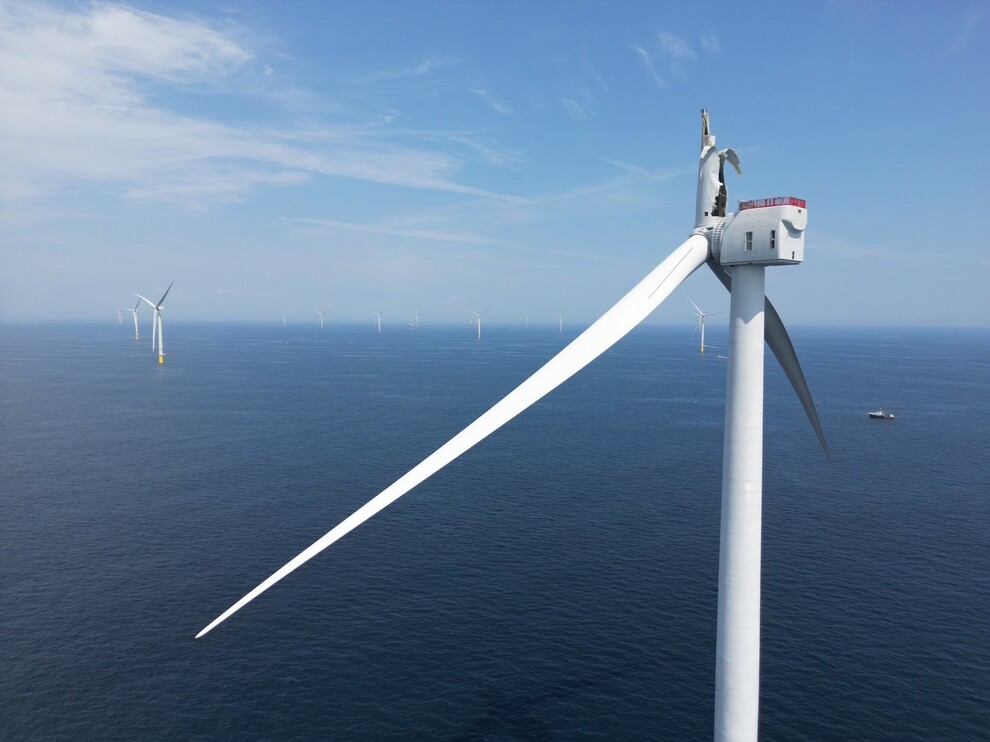
A summary of incidents associated with the OCS wind program. From press reports, we know about the fatality during Empire Wind construction. What other incidents have occurred to date?
Information on the mysterious sinking of the Aban Pearl semi-submersiblein May 2010. An investigation was conducted, but the report was never shared. In the interest of offshore safety, the new regime in Venezuela should release this report.
Thirty years ago, when industry majors shied away from exploration offshore Israel, Noble Energy (then Samedan) boldly stepped forward and partnered with the Delek Group to explore the Eastern Mediterranean.
Exploration success was accompanied by national security, legal, and regulatory challenges. Nonetheless, Israel’s gas production has grown rapidly and is expected to exceed 3 bcf/day in 2026, which is > current gas production in the Gulf of America.
Chevron is now the main operator in Israel, having purchased Noble’s assets in 2020. The company has taken another major step by signing an MOU with Syrian Petroleum Co. and Qatar-based Power International Holding. The document is not currently accessible online, but appears to be substantive based on press reports.
The agreement focuses on preliminary cooperation for exploring and developing offshore oil and gas resources offshore Syria. It’s noteworthy that the MOU will only remain in effect for two months, after which “formal contracts and operational work are expected to follow.”
Having done some work for Noble Energy in the 2010s, I’m very impressed by the progress that has been made given the geopolitical challenges.
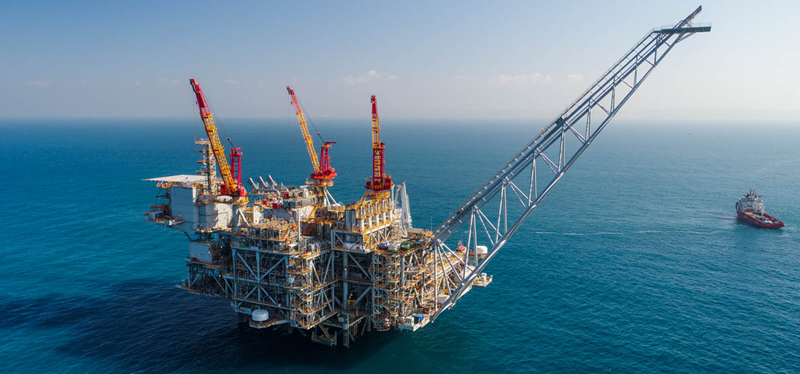
Production at Chevron’s Leviathan, a giant gas field offshore Israel
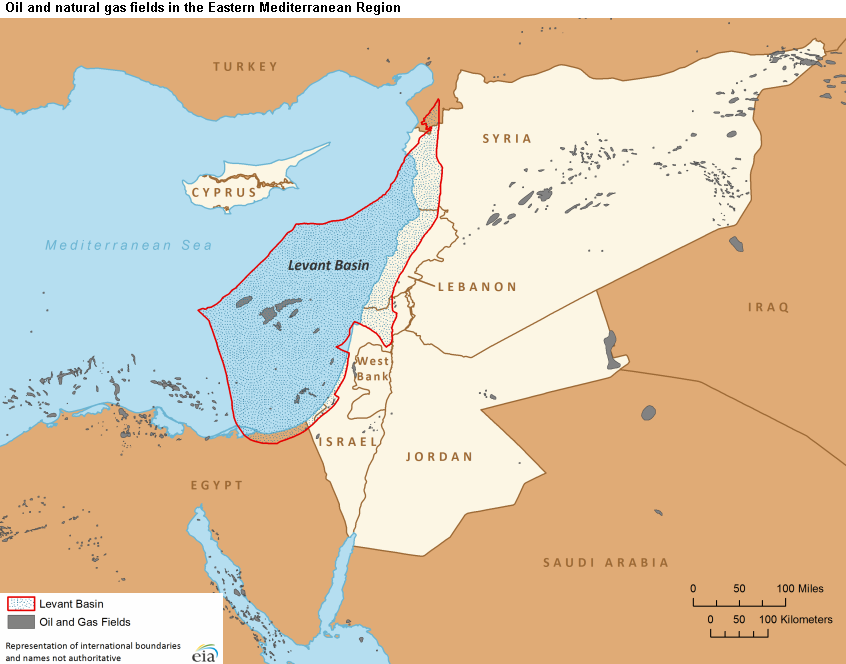
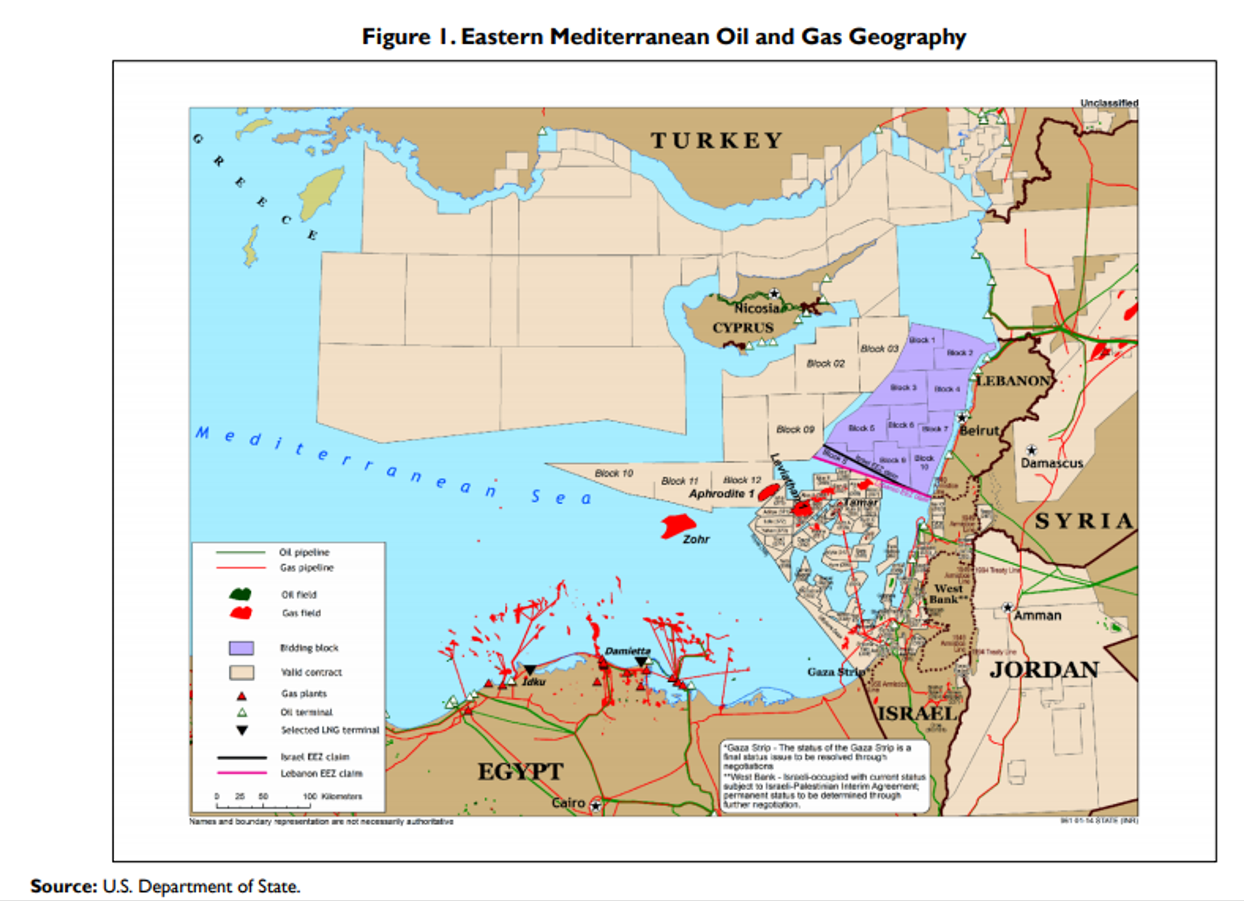
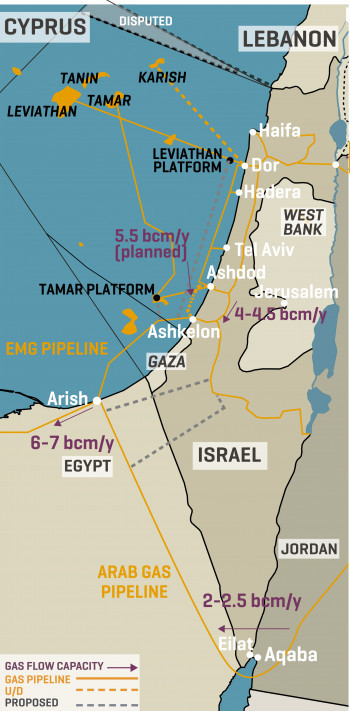
The EIA’s Eastern Mediterranean overview is attached.
This video reports on the United Oil and Gas geochemical exploration program. At the 3 minute mark, Jamaican Energy Minister Daryl Vaz does a good job of expressing optimism about Jamaica’s prospects while downplaying expectations and warning about uninformed rumors.
More difficult to understand is why the Jamaican govt granted 3 license extensions to a company that doesn’t have the financial strength to drill an exploratory well. Would it not have made more sense for the govt to deal directly with stronger companies that want full ownership, not just a share?
“The company is also operating under financial constraints. It currently has no producing assets and remains reliant on equity raises and a successful farm-out to fund future activity, according to its latest annual report. That reality makes low-cost, high-information work programmes particularly important.”
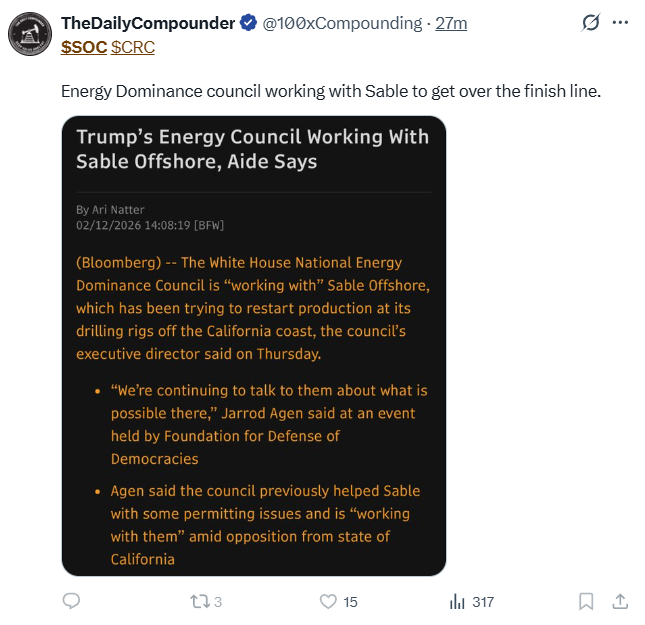
Jarrod Agen is Deputy Assistant to the President and Executive Director, National Energy Dominance Council. A question about Sable Offshore’s Santa Ynez Unit project was raised at a Foundation for Defense of Democracies (FDD) event on “The State of American Energy Dominance.” See the Bloomberg blurb and X post below. The full event video is here.
Here is the extent to which the Trump administration is helping $SOC, from a talk w Trump lackey Jarrod Agen. Sounds convincing lol pic.twitter.com/1NrCmyY6jt