Howard Pike forwarded this comprehensive Ocean Ranger video. Worth watching.
Posted in accidents, Offshore Energy - General | Tagged 40th anniversary, Canada, never forget, Newfoundland, Ocean Ranger, unsinkable | Leave a Comment »
This is an excellent tribute written by two brothers who lost their father in the Ocean Ranger tragedy. I highly recommend that you listen and reflect.
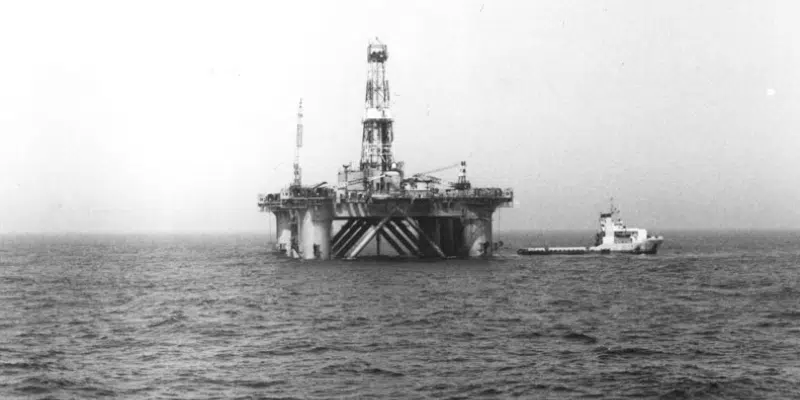
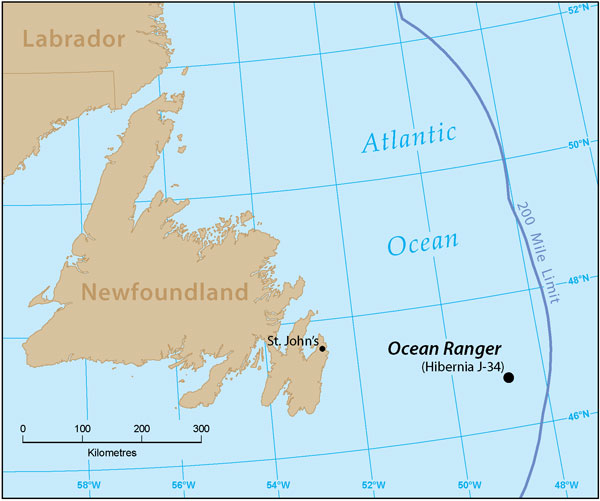
Condensed below is important background information from my notes and from an outstanding presentation by Howard Pike in St. John’s Newfoundland in 2017.
- 84 men aboard; no survivors
- Largest semisubmersible drilling rig of its day
- US registered MODU
- The “unsinkable” rig had weathered more than 50 significant storms
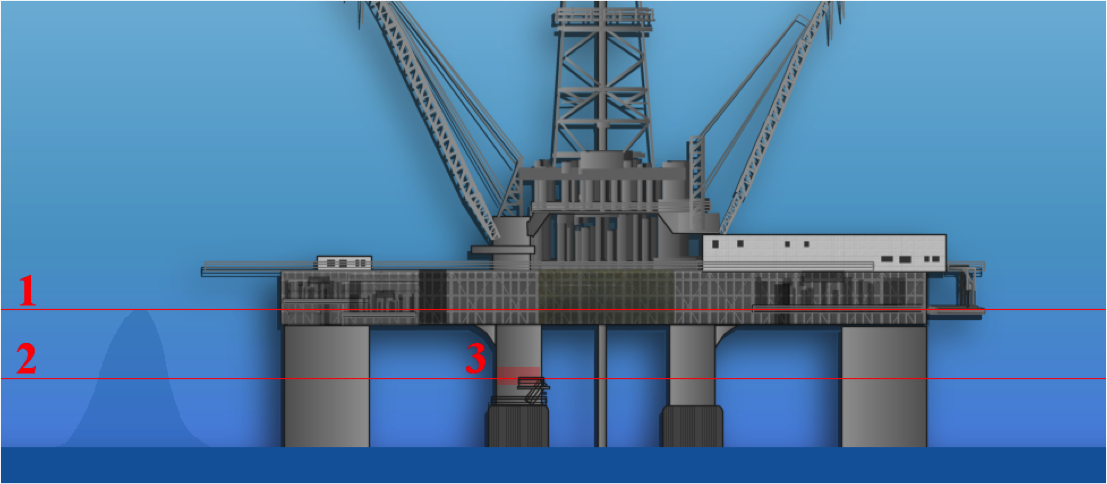
- Unlike most semisubmersibles, the ballast control room was located in one of the legs (starboard column No.3). At drilling draft, it was just 28 feet above mean sea level.
- Water depth was 240′, rig was moored with 12 anchors
- Ballast control operators had minimal training
- Incident with the ballast control system just a week before the disaster.
- On February 14th, the Ocean Ranger was battered by a severe storm; wave heights up to 21m; rogue wave damaged deck items on nearby Sedco 706
- Crew stopped drilling when the heave exceeded 15′, forced to shear the drill pipe during the disconnect process
- Crew did not deballast to the storm draft from the 80′ drilling draft
- Waves broke portlight in the ballast control room
- Salt water soaked the ballast control console
- Short circuits or inadvertent operator commands caused ballast tank valves in the bow to open.
- Water flooded the forward ballast tanks, and the rig began to list toward the bow.
- Crew inadvertently opened more pontoon valves
- Forward list passed the point of recovery
- The Ranger’s standby vessel, the Seaforth Highlander, was contacted but was delayed by sea conditions
- At approximately 1:10 a.m. on February 15 th , the Ocean Ranger began sending mayday signals.
- Zapata Ugland and Sedco 706, working in the area, sent their standby vessels
- At 1:30 a.m. the Ocean Ranger’s radio man sent his final transmission. The crew was boarding the lifeboats.
- Investigators later determined that as the lifeboats descended, violent winds threw them against the side of the rig, damaging some lifeboat hulls before they ever touched the water.
- Crew did not have survival suits
- Seaforth Highlander attempted unsuccessfully to rescue survivors from a damaged lifeboat
At the time of the Ocean Ranger tragedy, 3 rigs – the Alaskan Star, Rowan Midland, and Zapata Saratoga were working on Georges Bank in the US North Atlantic. The nor’easter had passed over Georges Bank before strengthening as it moved toward the Grand Banks. Among the small Georges Bank drilling community there was a kinship with those working in the even harsher environment on the Grand Banks. 40 years later, we are still greatly saddened by what transpired. Many lessons were learned and applied, but the ocean is unforgiving and we must continue to assess storm preparedness. Reflection on past tragedies is an important part of the process.
Posted in accidents, Georges Bank, Offshore Energy - General | Tagged 40th anniversary, Grand Banks, Newfoundland, Ocean Ranger | Leave a Comment »
“At a time of rising energy costs and heightened geopolitical tensions, the misguided decision to cancel the only lease sale held last year is contributing to significant uncertainty for U.S. natural gas and oil producers and limiting access to the affordable, reliable energy that’s needed here in the U.S. and around the world. We call on the Department of Interior to join us in this effort and appeal the court’s ruling …
API release
When will we hear from the Department of the Interior?
Update: We understand that Louisiana has also appealed the Sale 257 decision.
Posted in energy policy, Gulf of Mexico, Offshore Energy - General | Tagged API, appeal, DOI, Lease Sale 257 | Leave a Comment »
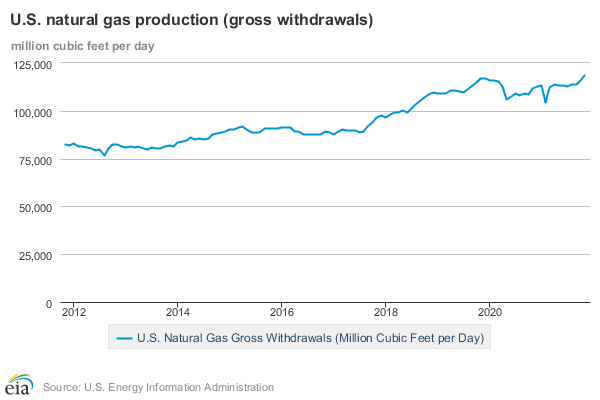
- My home State (Commonwealth) of Pennsylvania is producing nearly 10 times as much natural gas as the US OCS (Federal offshore). Who would have dreamed this was possible 20 years ago? Among the states, PA is second to Texas in gas production.
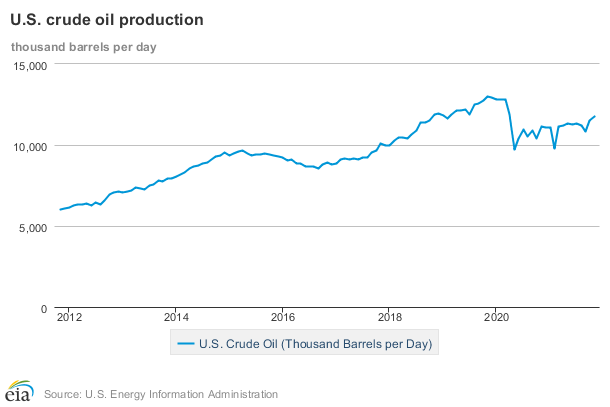
- Oil production in Texas is now nearly 3 times as high as on the OCS. In 2010, US offshore production was substantially higher (567 million barrels vs. 427 million barrels).
- Thanks largely to Texas, North Dakota, and New Mexico, US oil production is rebounding.
- Thanks to TX, PA, LA, AK, WV, OK, NM, and OH, US gas production has also strengthened.
EIA production data through 11/20/2021:
Posted in energy policy, natural gas, Offshore Energy - General | Tagged EIA', natural gas production, oil production, US OCS vs. PA, US OCS vs. TX | Leave a Comment »
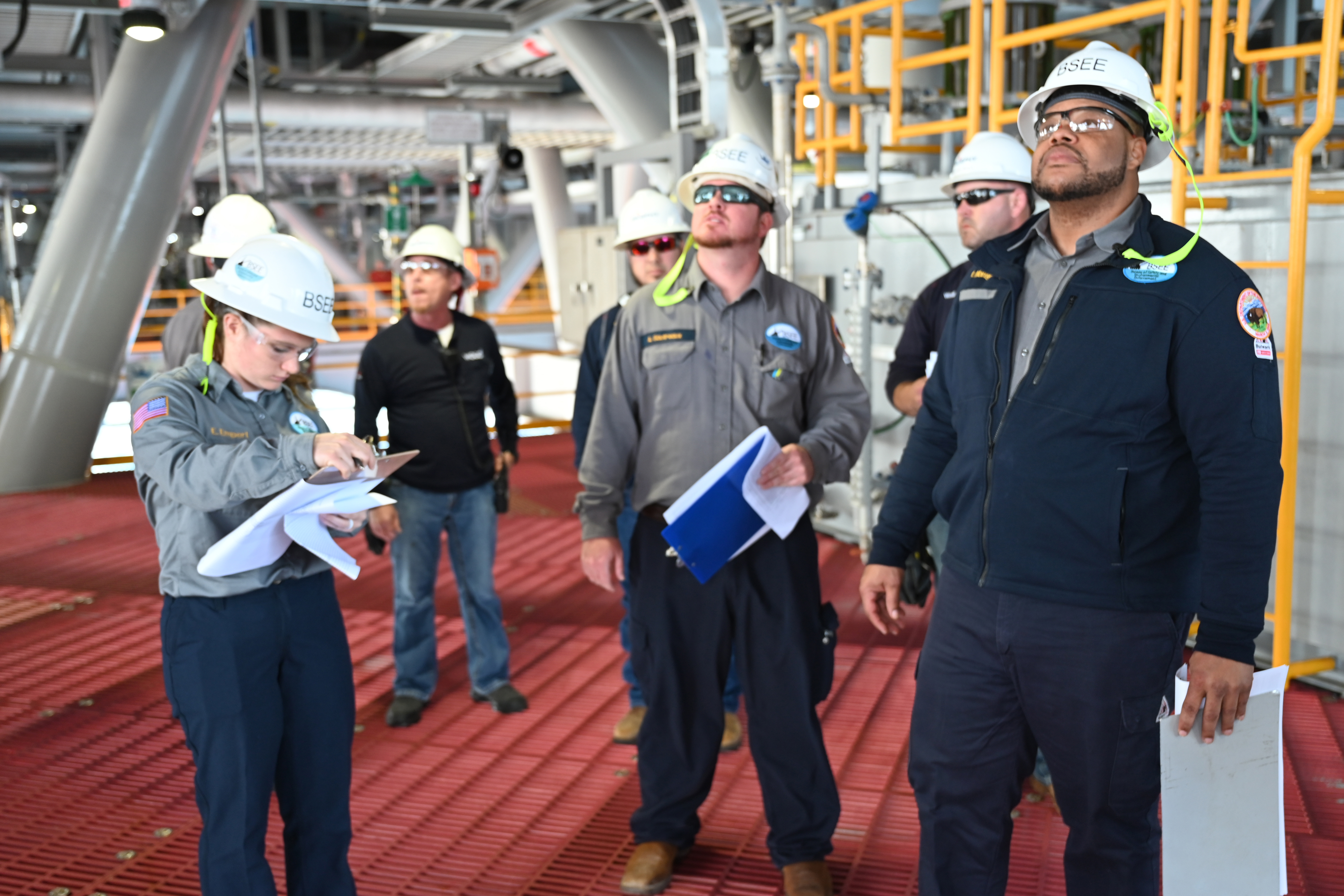
- Pictured above are BSEE inspectors from the famed Houma District conducting one of their (always) thorough pre-production inspections at Murphy’s King’s Quay semisubmersible production platform in the Gulf of Mexico. [Trivia question: Who was the first Houma District Supervisor?]
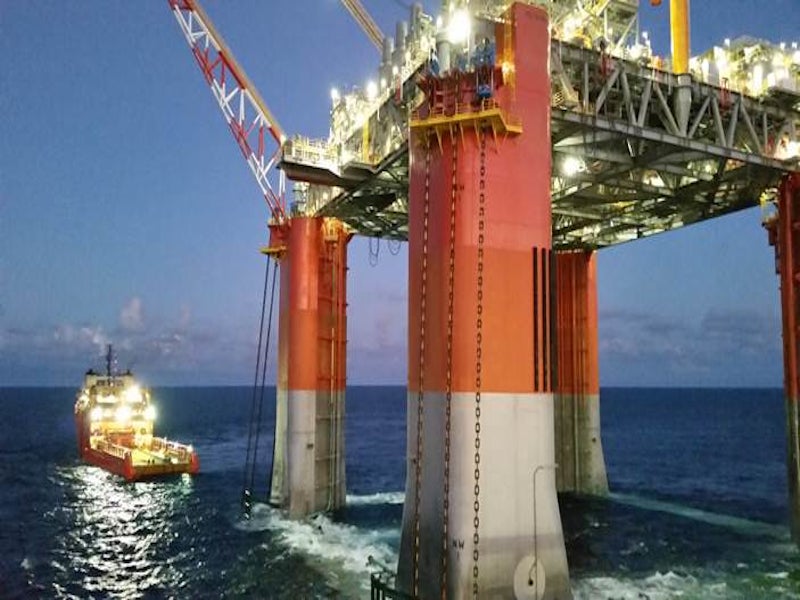
- King’s Quay is one of six deepwater platforms expected to begin production in the Gulf over the next several years. Others include Shell’s Vito and Whale, BP’s Argos, Chevron’s Anchor, and Beacon’s Shenadoah. All are semisubmersible platforms, the current design of choice for the deepwater Gulf. Production semis have become smaller and more efficient, greatly improving the economics of deepwater projects.
- These platforms feature efficient gas turbines and compression systems that should increase the GHG intensity advantage of deepwater Gulf production.
- These are the first deepwater production structures to be installed in the Gulf since Shell’s Appomattox in 2018. Per our previous post on this topic, current GoM production rates are not sustainable without regular, predictable lease sales and increased exploration.
Posted in energy policy, Gulf of Mexico, Offshore Energy - General | Tagged Anchor, Argos, BSEE, deepwater Gulf of Mexico, Houma, King's Quay, Murphy Oil, production semisubmersibles, Shenandoah, Vito, Whale | 4 Comments »
On October 19, 2021, RODA issued the government agencies a 60-day Notice of its Intent to Sue if they did not comply with the Clean Water Act, Endangered Species Act, Outer Continental Shelf Lands Act, and other federal environmental statutes. “The Alliance received no reply, and the environmental violations were not remedied,” Hawkins stated. “The decisions on this project didn’t balance ocean resource conservation and management, and must not set a precedent for the enormous “pipeline of projects” the government plans to facilitate in the near term. So we had no alternative to filing suit.”
Responsible Offshore Development Alliance
Vineyard Wind 1 is a 62-turbine offshore wind project to be built 15 miles south of Martha’s Vineyard, and is the first commercial-scale wind project approved for US offshore waters.
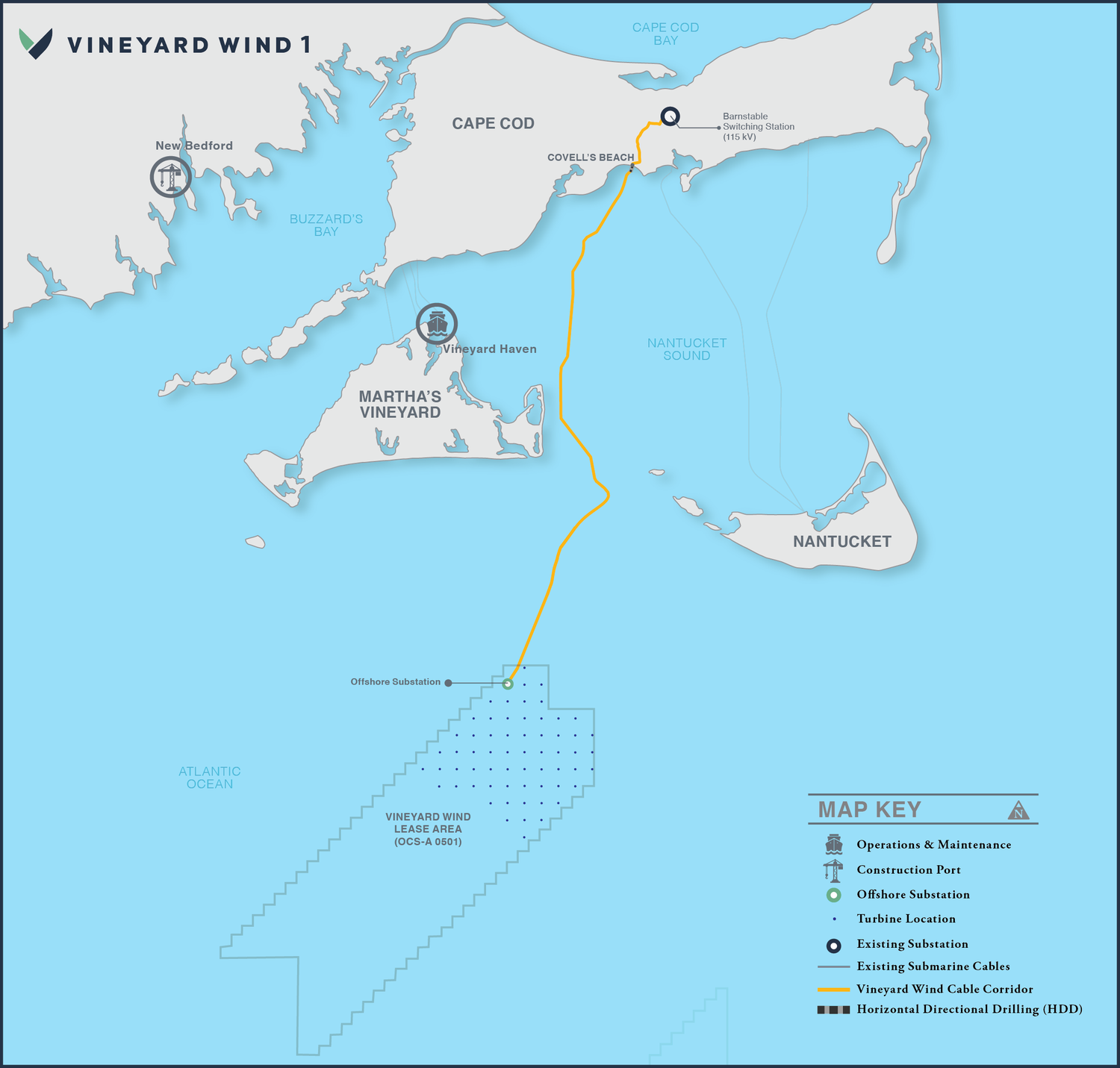
Of particular interest to the offshore industry, RODA’s court filing raises concerns about the structural integrity of the 13 MW Haliade-X turbines during Atlantic hurricanes, ice shedding in the winter, radar interference, pile driving noise, Jones Act violations, and failure to consider decommissioning issues.
Posted in Offshore Wind, Wind Energy | Tagged litigation, Offshore Wind, RODA, Vineyard Wind I | Leave a Comment »

This interesting Time Magazine interview with Saudi Arabia’s Energy Minister includes a discussion of the Kingdom’s decision to increase production capacity by 3 million bopd. A few excerpts follow:
Abdulaziz insists Saudi Arabia can roll out multibillion-dollar solar, wind, and hydrogen projects at home, even while remaining a giant oil producer. Choosing between the two is absurd, he says, and those who predict the inevitable decline of fossil fuel use are “living in a fantasy land.”
We believe oil consumption will continue to grow. The demand for oil will continue growing. At what level, I do not know, because the jury is out. Anyone who tells you that they have a good grasp of where and when and how much is certainly living in a fantasy land. We are human, and we could prove to be wrong, but that is exactly what we believe.
Three billion people lack any meaningful energy source, any clean energy, just for cooking. These people use biomass, everything, to burn, including cutting trees. Just to get through the day, they expose themselves to all sorts of hazards, including sickness and even death. For $500 million you would be able to give energy to 750 million people, in order to cook using clean energy, using propane energy, giving them a stove.
Saudi Arabia’s energy minister Prince Abdulaziz Bin Salman
Posted in climate, energy policy | Tagged energy fantasy land, Energy Minister, increasing oil production capacity, Saudi Arabia | Leave a Comment »
Ikemefuna Okafor, the executive officer of Shebah Exploration & Production Company Ltd (SEPCOL), the vessel owner, said late Sunday “three crew members have been found alive in the community”.
Barron’s
Posted in accidents, Uncategorized | Tagged FPSO fire, Nigeria, SEPCOL | Leave a Comment »
The incident occurred last Wednesday (2/2), but the only public statement from the operator was the following day:
“At this time there are no reported fatalities but we can confirm that there were 10 crewmen on board the vessel prior to the incident and we are prioritising investigations with respect to their safety and security,” SEPCOL Chief Executive Ikemefuna Okafor said in a statement.
That statement has been contradicted by at least 2 Nigerian press reports:
Meanwhile, three persons have been confirmed dead while eleven others declared missing following the explosion. Sources told reporters in Warri yesterday that three bodies had been recovered while 12 others were yet to be accounted for at the time of filing this report.
This Day
Daily Trust had, however, gathered that three Seafarers working onboard the Floating Production Storage and Offloading (FPSO) facility may have lost their lives in the fire
Daily Trust
The only public statement by the Nigerian regulator (NUPRC) echoed the SEPCOL statement:
“There has been no report of any casualties or fatalities and the Commission will take necessary measures to ensure that all safety and environmental measures in line with global best practices to safeguard lives and the environment are put in place.”
Comments:
- Apparently, the fate of the workers was unknown, and the “no report of any casualties” comments were misleading and inappropriate given the gravity of the situation.
- Neither the operator nor the regulator have provided any update on the number of workers safely recovered or missing, or the status of any ongoing search.
- There is not a single mention of the fire on either the operator or regulator website.
- There seems to be uncertainty about the size of the crew at the time of the incident.
Troubling comment from a ship captain quoted in the Daily Trust article:
It was an accident waiting to happen since 2017. It should not even have been allowed to stay or operate in Nigerian waters.

Posted in accidents | Tagged casualties, FPSO fire, Nigeria, NUPRC, Trinity Spirit | Leave a Comment »
This Nigerian source is now reporting that there are 3 confirmed deaths, and 11 workers declared missing. No other sources are reporting casualties at this time.
The latest AFP report indicates that the fire has been extinguished.
Posted in accidents | Tagged fatalities, FPSO fire, Nigeria, SEPCOL | Leave a Comment »

