A. Pangea dining


B. Seismic touchdown
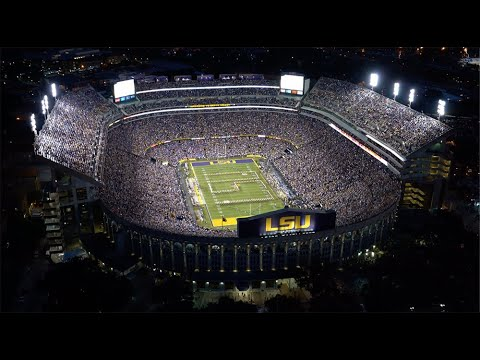
Lars Herbst assures us that no marine mammals were harmed by the Baton Rouge shock waves!
A. Pangea dining
B. Seismic touchdown
Lars Herbst assures us that no marine mammals were harmed by the Baton Rouge shock waves!
Posted in Uncategorized | Tagged geoscience, LSU, pangea, Tiger Stadium | Leave a Comment »
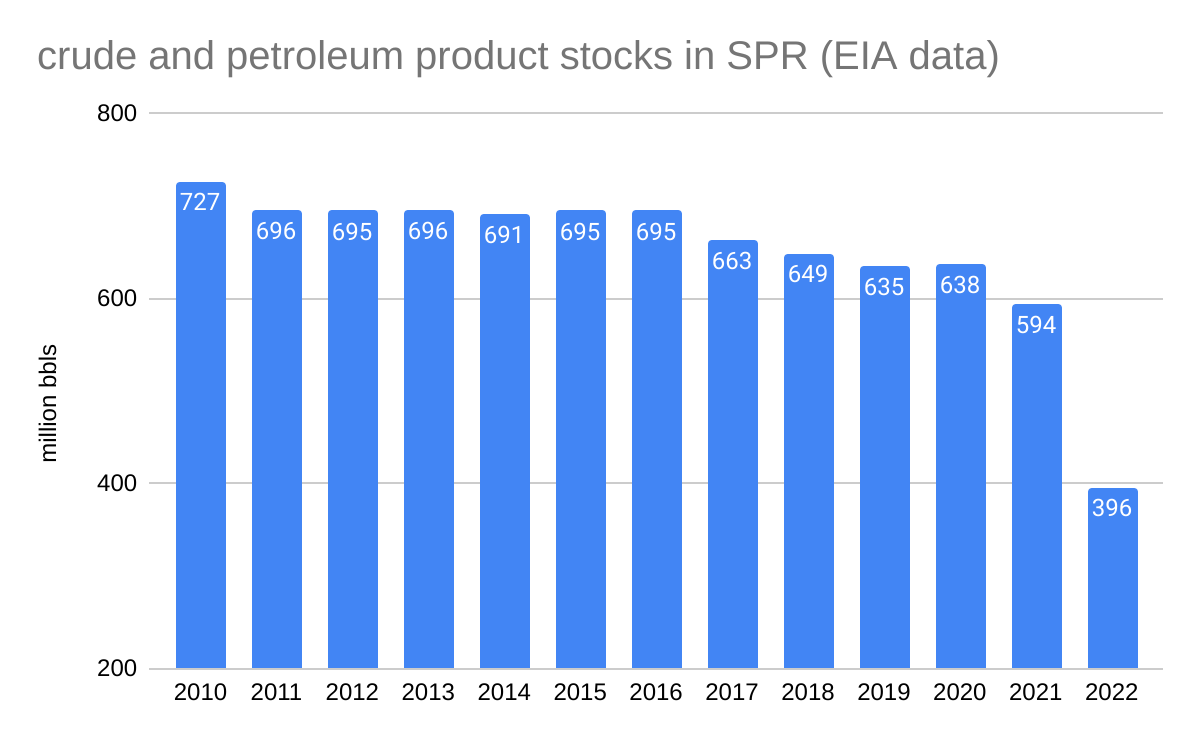
Lowest since April 1984.
Posted in energy policy | Tagged SPR depletion, Strategic Petroleum Reserve | Leave a Comment »
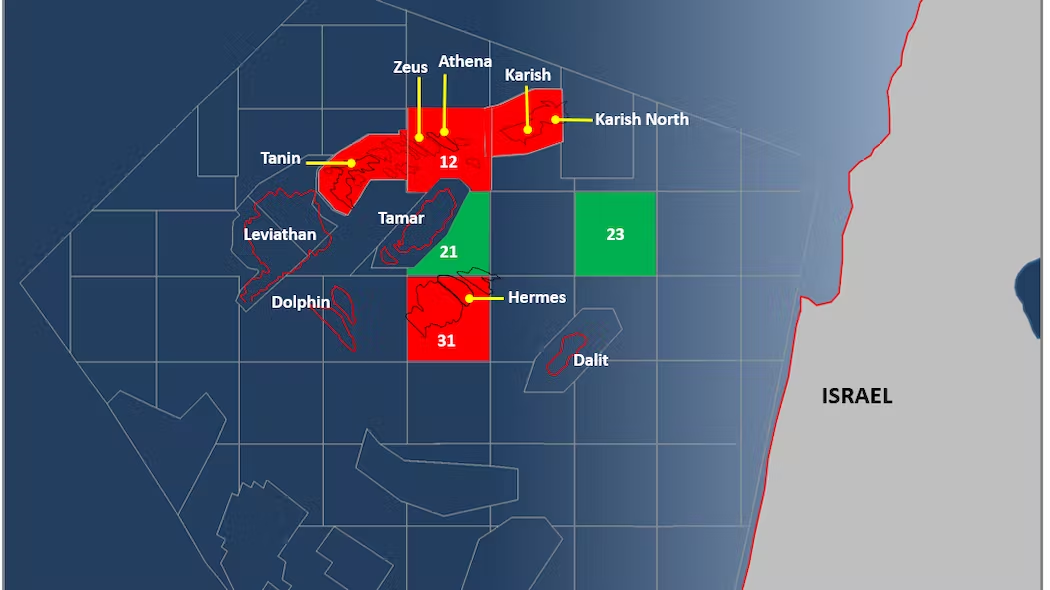
100+ tcf and the discoveries keep coming. Here’s the latest:
London, 7 November 2022 – Energean plc is pleased to announce that i) the Zeus 01 exploration well has made a commercial gas discovery of 13 bcm ii) contingent resources at Athena have been upgraded following post-well analysis; and iii) the Stena IceMax drilling rig has moved to block 23 to drill the Hercules structure, the final well in Energean’s 2022 drilling campaign.
Posted in energy policy, Guyana, Offshore Energy - General, pipelines | Tagged Cyprus, Eastern Mediterranean, Israel, Lebanon, natural gas | Leave a Comment »
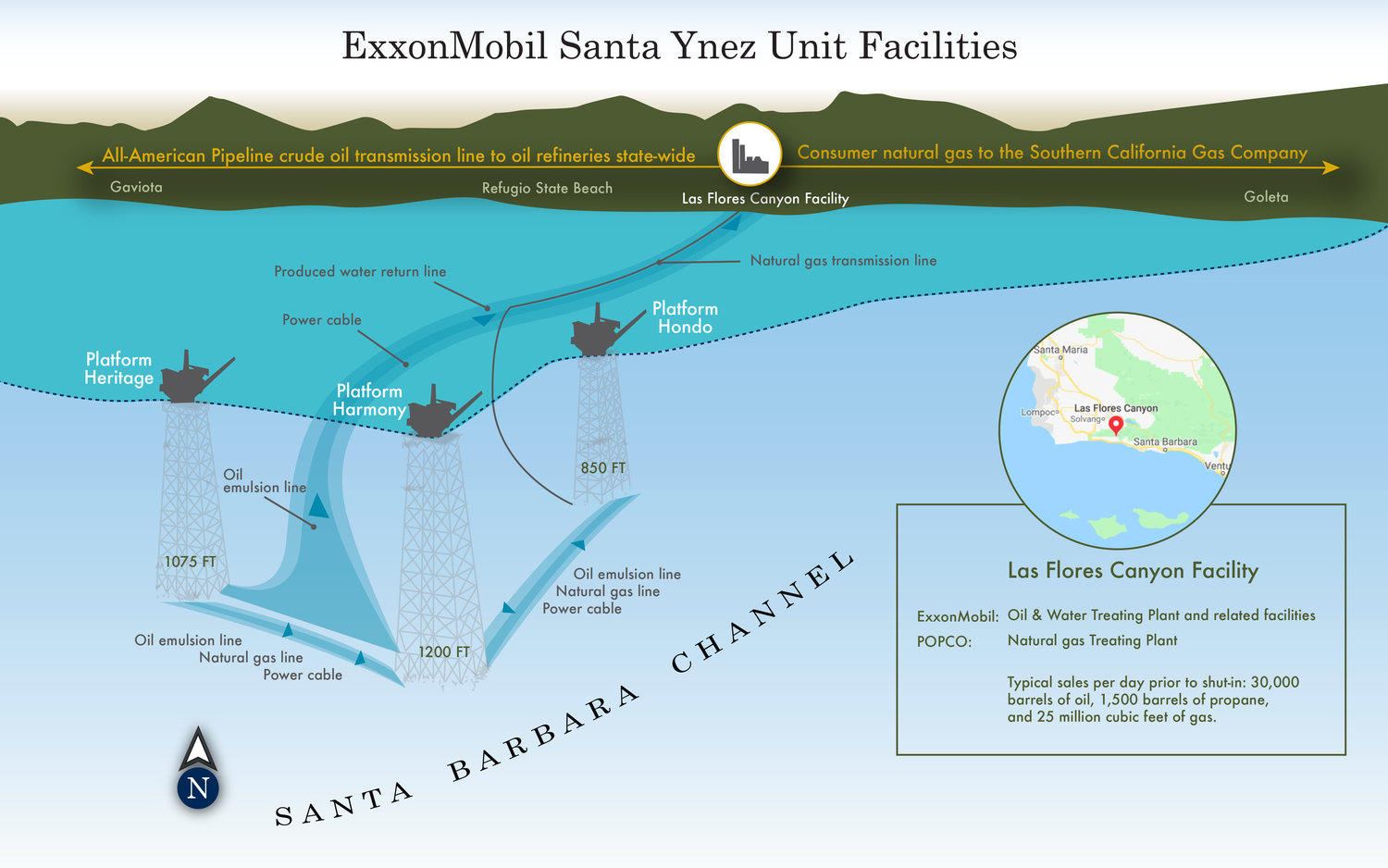
HOUSTON, Nov 6 (Reuters) – Exxon Mobil Corp will take up to a $2 billion loss on the highly leveraged sale of a troubled California offshore oil and gas field that have been idled since a 2015 pipeline spill.
Sable Offshore, a blank check company founded by industry veteran James Flores, will borrow 97% of the $643 million purchase price from Exxon under a five-year loan. Blank check companies raise money to acquire operating businesses. If Flores fails to restart production at the Santa Ynez field by the start of 2026, Exxon could take back the entire operation, Sable disclosed in a filing.Flores will seek permits to restart Santa Ynez and expects to pump about 28,100 barrels of oil and gas per day beginning in 2024, according to a Sable investor presentation. The field has 112 wells and the potential for at least another 100 wells, its presentation showed.
Jim Flores is well known in the offshore industry dating back to his days as CEO of Flores & Rucks, a Gulf of Mexico exploration and production company, in the 1990’s.
And Exxon is no doubt still on the hook for decommissioning these massive platforms.
Posted in California, decommissioning, Offshore Energy - General | Tagged Exxon, James Flores, Santa Ynez Unit | Leave a Comment »
BSEE’s temporary abandonment/decommissioning solicitation has been posted. Some details:
If I was an offshore contractor, I wouldn’t touch this work without:
Previous posts on this matter:
Taxpayer funded decommissioning – troubling precedent for the US offshore program
Posted in decommissioning, Gulf of Mexico, Offshore Energy - General, Regulation | Tagged BSEE, contract solicitation, decommissioning, Gulf of Mexico | Leave a Comment »
Netherlands climate activist Niklas Hohne succinctly summarizes the “end of fossil fuels” strategy (first quote) that the US Department of the Interior seems intent on implementing in the proposed 5 Year OCS Leasing Plan (second quote). What is DOI’s legislative authority for phasing out offshore oil and gas production? It’s certainly not the OCS Lands Act which calls for the expeditious and orderly development of OCS resources. Neither the EIA nor any other reputable forecaster believes we can even reduce, let alone eliminate, oil and gas consumption in the next 20-30 years.
“The plan was not to build any new infrastructure, because everything new you build has to run for 20 or 30 years to pencil out, long past the point we want to be off fossil fuels,” Hohne said.
Niklas Hohne, founder of the New Climate Institute (Netherlands) to the Washington Post
“The long-term nature of OCS oil and gas development, such that production on a lease can continue for decades makes consideration of future climate pathways relevant to the Secretary’s determinations with respect to how the OCS leasing program best meets the Nation’s energy needs.“
5 Year Leasing Program, p.3
Posted in climate, energy policy, Offshore Energy - General | Tagged 5 year leasing plan, DOI, Niklas Hohne, OCS oil and gas program | Leave a Comment »

Posted in energy policy, UK | Tagged Stonehenge, time change | Leave a Comment »
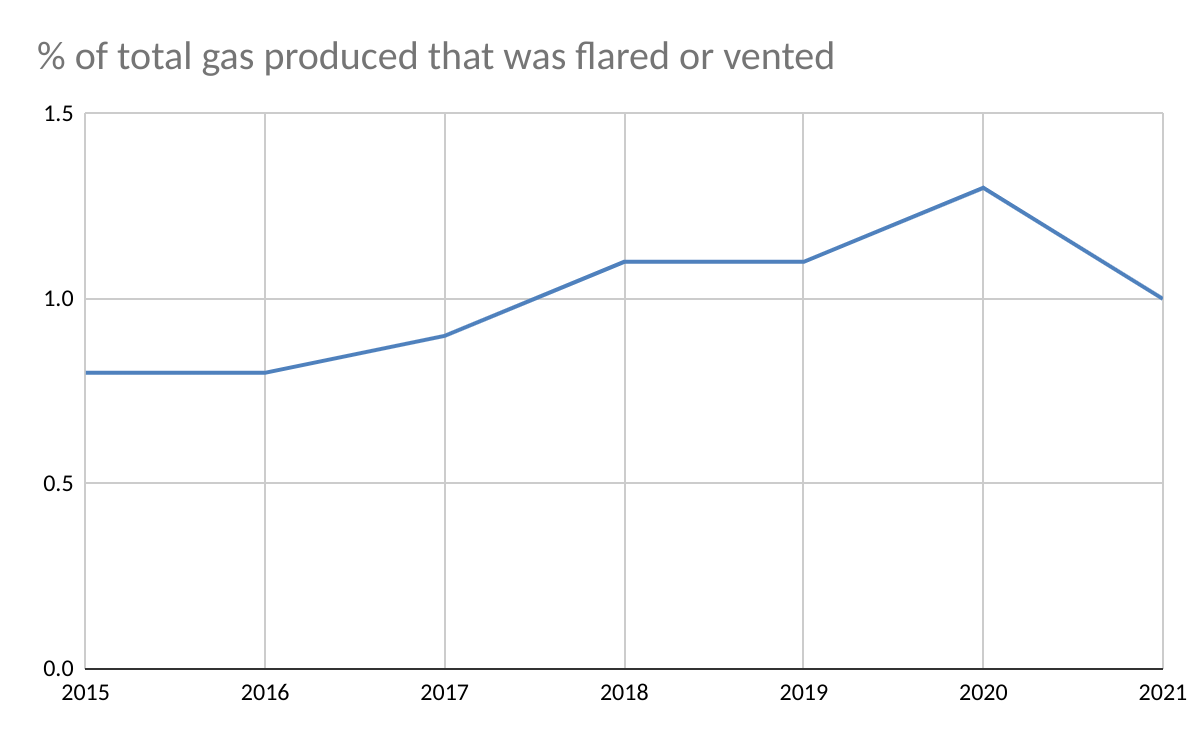
| Oil-Well Gas Produced (BCF) | Gas-Well Gas Produced (BCF) | total gas produced (BCF) | total gas flared or vented (BCF) | % flared or vented | |
| 2015 | 588.4 | 719.4 | 1307.8 | 10.3 | 0.8 |
| 2016 | 631.7 | 589.1 | 1220.8 | 9.7 | 0.8 |
| 2017 | 637.3 | 441.2 | 1078.5 | 9.9 | 0.9 |
| 2018 | 623.1 | 370.1 | 993.2 | 10.6 | 1.1 |
| 2019 | 670.2 | 364.1 | 1034.3 | 11.7 | 1.1 |
| 2020 | 581.4 | 224.9 | 806.3 | 10.4 | 1.3 |
| 2021 | 582.2 | 209.5 | 791.7 | 8.2 | 1 |
Posted in climate, energy policy, gas, Gulf of Mexico, Offshore Energy - General | Tagged flaring, Gulf of Mexico production, natural gas, ONRR | Leave a Comment »
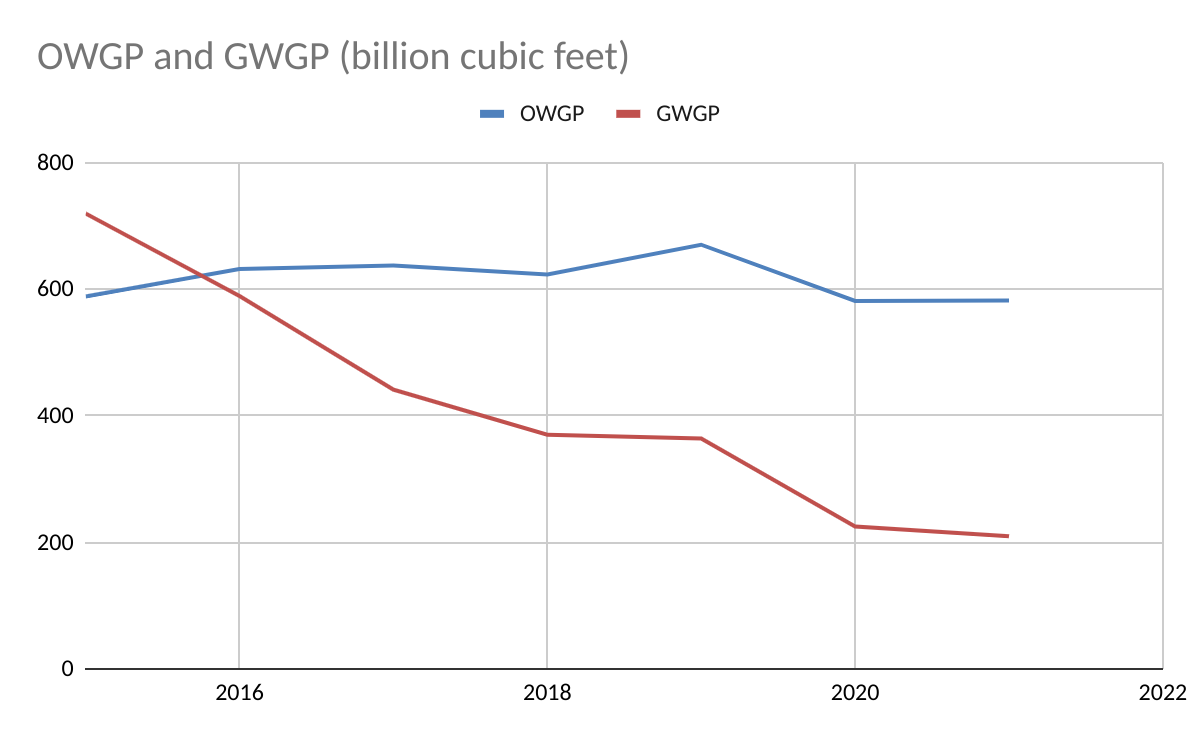
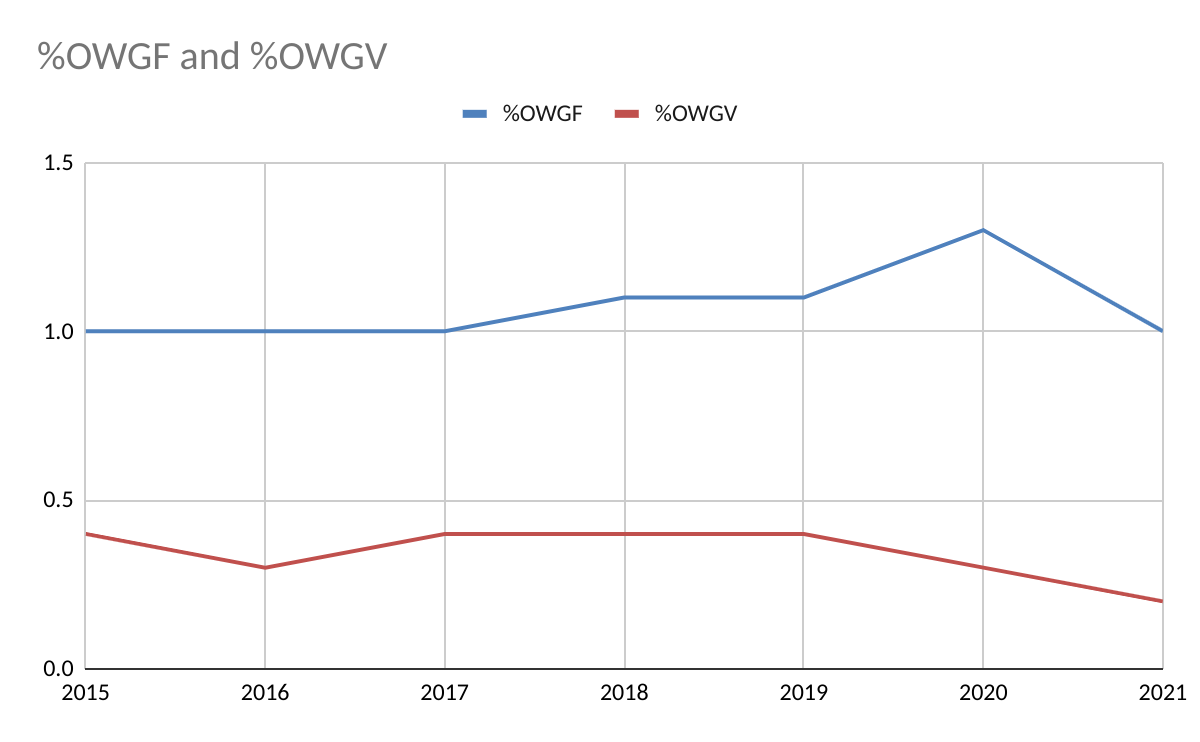
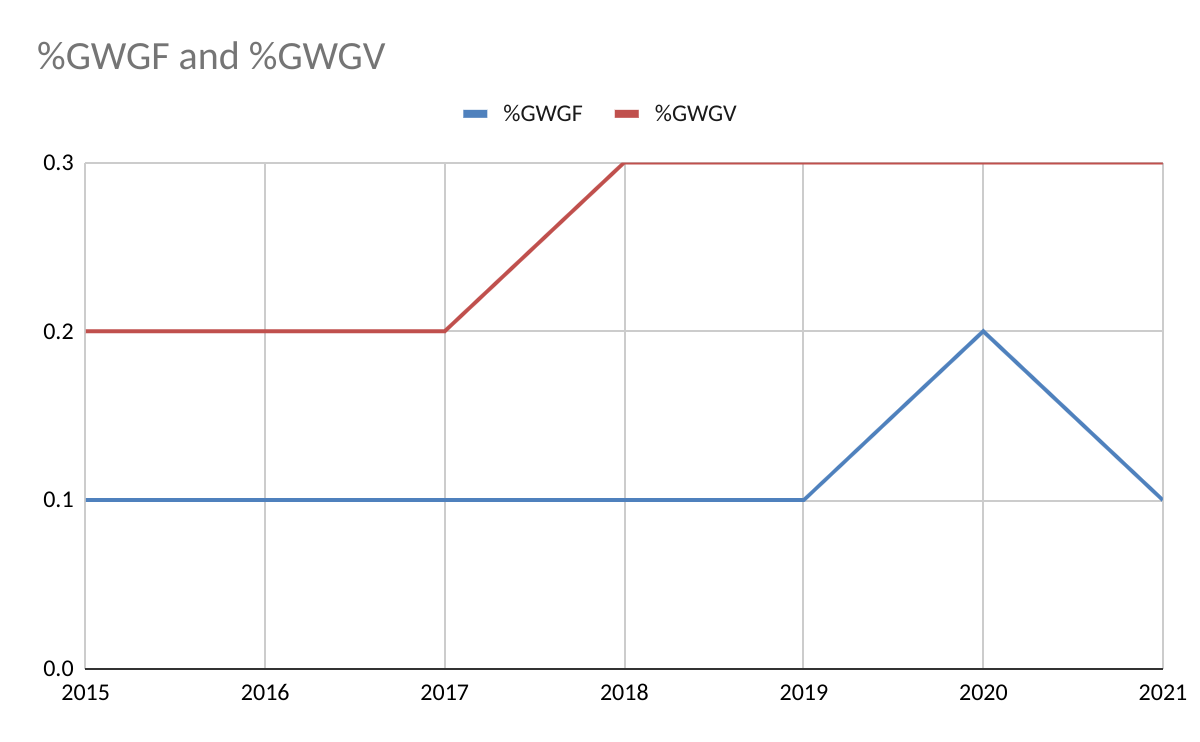
Gulf of Mexico flaring and venting data have been sorted for the years 2015-2021. The reporting of these data is mandatory and strictly enforced, so these ONRR numbers should be accurate.
Biggest surprise: The biggest surprise is that there were no big surprises in the data. The % of gas flared and vented were generally consistent with expectations based on familiarity with historical data.
Biggest disappointment: the continued sharp decline in nonassociated (gas-well) gas production. GoM gas well gas production exceeded 4 tcf annually in the 1990s and was still above one tcf ten years ago. Since then, GWG production has declined by 80%. Nonassociated offshore natural gas has important environmental advantages, so the decline in production should be a major concern to policy makers
Encouraging sign: The % of oil-well gas vented has ticked down over the past 2 years which is encouraging from a GHG standpoint. This is presumably because most associated gas is produced on modern deepwater facilities equipped with flare booms. An astute politician would be rushing to take credit for this achievement.😀
Unfavorable ratio: Although the volumes are low (<1 Bcf combined in 2021), more gas-well gas was vented each year than flared. This is presumably because older shelf facilities without flare booms still produce much of the natural gas.
Abbreviations:
Posted in climate, energy policy, flaring and venting, gas, Gulf of Mexico, Offshore Energy - General | Tagged flaring, Gulf of Mexico, natural gas production, ONRR, venting | Leave a Comment »


Comments on revisions to BSEE’s Well Control Rule
November 10, 2022 by offshoreenergy
Comments on the proposed revisions to BSEE’s Well Control Rule are due on Monday (11/14/2022). My comments were submitted yesterday, and I have attached a copy for those who might be interested. Bud
Posted in Offshore Energy - General, Regulation, well control incidents | Tagged BSEE, comments, Well Control Rule | Leave a Comment »