Feeds:
Posts
Comments

Archive for the ‘Regulation’ Category

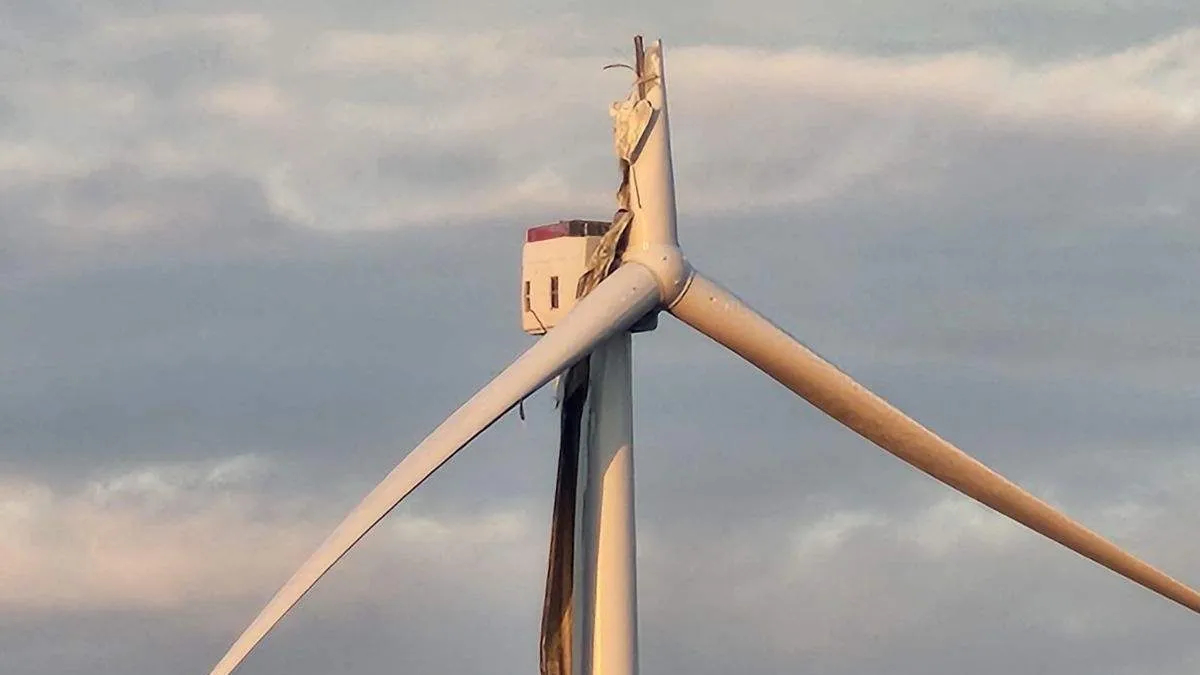
MV Times -blade replacement continues

MV Times: “The recent site visit raised questions on the production of the wind farm. The Times has been able to neither verify the report independently nor confirm disparities between visuals on the ground and the Iberdrola report.”

  • Avangrid, an Iberdrola subsidiary and one of Vineyard Wind’s developers, reported that 17 out of 62 turbines were currently sending power to the Massachusetts grid.
  • The MV Times counted between five and nine turbines spinning at different points, and for different intervals, in their two hour visit.
  • BOE comment: Although there are many possible reasons for this discrepancy, it’s reasonable to question the absence of turbine output data. Developers assert that generator specific data are sensitive and could have market implications. However, these turbines are operating on public lands and were in part publicly funded. Output data and other performance metrics clearly have policy implications.
  • Note that Iberdrola “expect[s] no impact from new federal budget legislation, as it doesn’t impact 1,000 megawatts under construction.”

An MV Times photo of a Vineyard Wind substation is pasted below. These substations are large structures. Per the Construction and Operations Plan (COP) for Vineyard Wind, the topsides for a conventional electrical service platform (ESP) (also known as an offshore substation or OSS) are 45 x 70 x 38 m, which is larger in surface area than a typical 6-pile oil and gas platform (~30 x 30 m), and is comparable in size to a large jackup drilling rig.

Decommissioning financial assurance requirements were relaxed to reduce development costs, thus increasing taxpayer liability risks. This policy decision should be reviewed.

Vineyard Wind substation

Read Full Post »

On July 25, 2025, more than 2 months after Sable’s brief production restart and 7 weeks after a court decision halted further production, BSEE surprisingly announced the resumption of Santa Ynez Unit (SYU) production boasting:

This is a significant achievement for the Interior Department and aligns with the Administration’s Energy Dominance initiative, as it successfully resumed production in just five months.

Were the authors of the press release unaware that the SYU production, which was largely from well tests, was halted by court order shortly after it began? More philosophically, is such cheerleading appropriate for the principal safety regulator, particularly given that BSEE is engaged in litigation over its practices in facilitating SYU production?

Ironically, just 3 days after BSEE hailed the resumption of production, the attached lawsuit was filed on behalf of investors who purchased Sable Offshore securities between May 19, 2025 and June 3, 2025. BOE contributor John Smith shared the filing.

The plaintiffs allege misleading statements regarding the resumption of production. Some of the key points cited in the filing:

  • On May 19, 2025, before the market opened, the Company issued a press release entitled “Sable Offshore Corp. Reports Restart of Oil Production at the Santa Ynez Unit and Anticipated Oil Sales from the Las Flores Pipeline System in June 2025.”
  • The release informed that Sable expected to fill the ~540,000 barrels of crude oil storage capacity at LFC (Los Flores Canyon onshore processing facility) by the middle of June 2025 and subsequently recommence oil sales in July 2025.
  • Following the May 19 Press Release, Sable Offshore stock climbed from a closing price of $28.86 per share on May 16, 2025 to $33.02 per share on May 19, 2025, a 14.4% climb in share price.
  • Contrary to Defendants’ representations, Sable Offshore had not resumed commercial production off the coast of California.
  • Defendants then used the share price appreciation following the May 19 Press Release to conduct a secondary public offering (or “SPO”) at a higher offering price per share than would have otherwise been possible.
  • State Lands Commission staff informed the Lt. Gov./Commission Chair that the limited oil flows were the result of well-testing procedures required by BSEE prior to restart. These activities did not constitute a resumption of commercial production or a full restart of the SYU.
  • Characterizing testing activities as a restart of operations is not only misleading but also highly inappropriate –particularly given that Sable has not obtained the necessary regulatory approvals to fully resume operations at SYU.
  • Any attempt to restart commercial operations at the SYU without final regulatory approvals may place the company in violation of its lease terms and jeopardize the status of Sable’s holdover State lease.
  • Santa Barbara County Judge Thomas Anderle granted a preliminary injunction requested by the California Coastal Commission against Sable Offshore for alleged violations of The California Coastal Act.

      Read Full Post »

      Background: On February 12, 2024, the bankruptcy court approved the sale of certain Cox Operating assets to Natural Resources Worldwide LLC (NRW), a company that “does not mine, drill, or produce minerals, has no operations, and conducts business solely in an office environment.”

      NRW contracted with Array Petroleum to operate the former Cox Assets. Array subsequently sued NRW, asserting that NRW received $78,000,000 in revenue, but disbursed only about $48,000,000 to pay Array’s invoices and those of the subcontractor.

      The court filing claimed that NRW failed to pay Array $2.5 million, the subcontractors $10.7 million, and the United States $12 million. A large share of the subcontractor costs were probably for well operations given that 21 Array workover applications were approved in 2024 and 2025. The $12 million due to the Federal government is reportedly for royalty payments. Were any revenues set aside for decommissioning liabilities?

      Array’s lawsuit was dismissed by the court on January 3, 2025, after a joint motion to dismiss was filed by the defendants. Information on the reasons for the dismissal is not publicly available.

      Old platforms: According to BOEM records, Array operates 154 platforms previously owned by Cox. These platforms are in the Ship Shoal, South Marsh Island, and West Delta areas of the Gulf of America. Most are >30 years old and four are more than 70 years old (see chart below). 41 are classified as major structures including 15 of the 26 platforms installed in the 1950s and 1960s. 44 are manned on a 24 hour basis. 79 have helidecks. Massive decommissioning liabilities loom.

      Violations: NRW/Array ranks 37th out of 42 companies in GoA oil production (2025 YTD) and 36th out of 42 companies in gas production, but leads the pack in Incidents of Noncompliance (INCs):

      • Array accounted for nearly half of all GoA INCs issued in the first half of 2025 (chart below).
      • Array was issued 9 times more warning INCs (311) than any other operator. Apache was second with 34.
      • Array had more component shut-in INCS (46) than any other operator. W&T, another operator of Cox legacy platforms, was second with 32.
      • Array had more facility shut-in INCs (6) than any other operator. W&T was again second with 5.
      • Array averaged 2.0 INCs/facility inspection vs. a combined average of 0.3 INCs/facility inspection for all other operators.
      violation typewarningscomponent shut-insfacility shut-ins
      Array311466
      all others21116449

      Lessons that should have been learned from the Cox, Fieldwood, Black Elk, Signal Hill, and other bankruptcies dating back to the Alliance Operating Corp. failure in 1989:

      • There are many small and mid-sized companies that are responsible operators. Their participation in the OCS program should be encouraged. However, others have demonstrated, by their inattention to financial and safety requirements, that they are not fit to operate OCS facilities.
      • The growth of Fieldwood, Cox, Signal Hill, and Black Elk was in part facilitated by lax lease assignment and financial assurance policies. 
      • Operating companies should have to demonstrate that they can operate safety and comply with the regulations before they are approved to acquire more properties.
      • Despite ample evidence of the importance of compliance and safety performance in determining the need for supplemental financial assurance, BOEM’s 2024 rule dropped all consideration of these factors.,
      • Expect the ultimate public cost of the Cox bankruptcy, in terms of decommissioning liabilities and the need for increased oversight, to be large.
      • The Federal govt (Justice/Interior) should strongly oppose bankruptcy court asset sales that increase public financial, safety, and environmental risks.

      Read Full Post »

      The attached petition from Save the East Coast Inc. et al requests that NOAA revoke the Empire Wind Letter of Authorization using the emergency authority delineated at 50 C.F.R. § 216.106(f).

      This is a strong filing, but revocation would be difficult given the extensive development activity to date and the Administration’s decision in May to allow the project to go forward.

      Read Full Post »

      In the Independent, Nick Welsh aptly described the latest court decision in the long and winding road that Sable Offshore hopes will lead to Santa Ynez Unit production:

      When Judge Donna Geck got through ruling on the latest showdown between Sable Offshore Oil and Santa Barbara’s environmental establishment last Friday morning, it wasn’t clear if the no-nonsense judge cut the proverbial baby in half or kicked the can down the proverbial road.” 

      Bottom line: The judge will “continue to bar the Fire Marshal from taking any steps to process Sable’s restart application until 10 days after Sable had received all the necessary permits and approvals from the myriad of state, federal, and local agencies that enjoy some degree of regulatory oversight over the proposed project.” Does that mean any agency, even one with a minor or questionable role, can block the project?

      As the author notes:

      “As of this writing, it’s not entirely clear which of those agencies have yet to issue Sable the permits it needs to start the restart process and when they’re likely to do so, if at all. Even less clear is whether there’s any agreement among the dueling parties as to which agencies have standing to even weigh in.”

      Read Full Post »

      My comments in response to the Dept. of the Interior’s regulatory reform notice are attached. First and foremost, I believe these recommendations would reduce safety and environmental risks. Second, I am confident that they would also reduce governmental costs and the regulatory burden on industry.

      The first attachment discusses regulatory fragmentation and recommends actions to reduce the complexity and redundancy of the offshore regulatory regime. The second attachment proposes a Drilling Safety Leaders Pilot Program as a means of evaluating a more adaptable framework regulatory framework for operators with outstanding performance records.

      Read Full Post »

      IMG0009
      Drilling Safety Leaders Pilot Program to be proposed.

       Comments on the Dept. of the Interior’s regulatory reform initiative are due by July 21.

      DOI’s “Deregulation Suggestions” form implies that their review may be limited in scope. The form focuses solely on rescinding regulations. True regulatory reform requires a broader assessment of regulatory methods and strategies.

      Offshore safety regulations address known or perceived operational risks. Deleting individual provisions without considering the effect on the regulatory objective could introduce new risks without reducing the burden on operators and regulators.

      More meaningful regulatory reform, and the associated improvements in operator and regulator efficiency, can be achieved by addressing regulatory fragmentation and providing regulatory incentives for companies with outstanding safety and environmental performance records.

      My comments to DOI will address fragmentation and the challenges associated with updating regulations and standards. A Drilling Safety Leaders Pilot Program will be proposed. This pilot program would offer a more flexible regulatory regime for operators with outstanding safety records.

      The regulatory system can constrain leading operators and delay innovation. The top performers should be encouraged to stay ahead of the technology and management curves. Most of the requirements that were added after Macondo had been adopted by leading operators well before the blowout.

      Read Full Post »

      See the differences in the OCS oil and gas provisions in the House and Senate versions.

      We preferred the House version, but the Senate Parliamentarian killed the provisions that reduced the risk of litigation and processing delays.

      Whether justified or not, the royalty rate is now capped at 1/6 and a 10-year deepwater lease term is locked in.

      The favorable terms and assurance of regular GOA lease sales put the ball squarely in industry’s court. We are looking for a good showing at Sale 262, including some new bidders and the return of some prominent companies.

      Read Full Post »

      Minimizing flaring and venting is important from both environmental and resource conservation standpoints. Flaring and venting volumes are also good indicators of how well production systems are designed, managed, and maintained.

      The best performance indicators are the percentages of produced gas that are flared and vented both for oil-well gas (OWG, also known as associated or casinghead gas) and gas-well gas (GWG or non-associated gas).

      Updated flaring and venting volumes for the Gulf of America have been compiled using monthly data submitted to the Office of Natural Resources Revenue (ONRR). This is the best data source because reporting is mandatory and strictly enforced, and flaring and venting are accounted for separately.

      In assessing performance trends, it’s important to segment venting and flaring volumes for both OWG and GWG production. Venting produced gas (mostly methane) is a more significant environmental concern from both air quality and greenhouse gas (GHG) perspectives.

      Flaring and venting data for 2019-2024 are summarized in the table below. All volumes are in millions of cubic feet (MMCF).

      Notes and comments:

      • The more disappointing 2024 numbers are entered in red. The blue numbers, all related to OWG venting, are encouraging.
      • The % of all produced gas that was flared or vented in 2024 (1.3%) was the highest in the past 10 years (see the chart below the table). Until 2018, annual flaring/venting rates of <1% of production were commonly achieved. This should be the target going forward.
      • OWG flared increased significantly from 2023 levels, both in terms of the volume (7.26 billion cu ft) and the % of OWG produced (1.22%).
      • Production curtailments and restarts related to Tropical Storms Francine and Helene may have contributed significantly to the 2024 flaring increase. ONRR’s monthly reports show a near doubling of the average monthly flaring volume in Sept., when Francine and Helene shut-in 42% and 29% of oil production respectively. However, even if the Sept. flaring surge is normalized to the monthly average for the other 11 months, the total 2024 flaring still exceeds the 2023 volume by 361 MMCF.
      • The % of GWG vented in 2024 was the highest in the 6 year period and double the 2019, 2020, 2021 rates. Inefficiencies associated with the dramatic decline in GWG production, down 41.5% from 2023, may be a contributing factor.
      • The continued decline in OWG venting to only 0.16% in 2024 is encouraging. The decline should be sustainable given that most OWG is now produced at modern deepwater platforms equipped with efficient flare stacks.
      • Given the significance of these data, from safety, conservation, and environmental perspectives, a more comprehensive analysis by the offshore industry and regulators should be a priority.
      • Related posts
      201920202021202220232024
      OWG flared772773855919698763427260
      OWG vented25781984140516381230965
      OWG produced670,699582,254582,824581,235598,005595,600
      % OWG flared1.151.271.021.201.061.22
      % OWG vented0.380.340.240.280.210.16
      GWG flared405432311213212232
      GWG vented958578548722468465
      GWG produced364,082224,808209,558203,342152,40089,167
      %GWG flared0.110.190.150.100.140.26
      %GWG vented0.260.260.260.360.310.52
      total flared and vented11668102338183955982528922
      total gas production1,034,782807,062792,382784,577750,405684,758
      % flared or vented1.131.271.031.221.101.30
      total vented353624161953236016981430
      % vented0.340.300.250.300.220.21
      total flared813278176230720065547492
      % flared0.790.970.790.920.871.09
      OWG=oil well gas; GWG=gas well gas; all volumes are in MMCFG

      Read Full Post »

      As the chart indicates, the % of flared or vented Gulf of America gas production increased over the past 10 years. This trend is presumably due, at least in part, to the sharp increase in the % of gas production from oil wells (associated gas), which have a higher flaring rate. In 2024, 87% of Gulf gas production was from oil wells.

      Flaring/venting summary tables and comments, updated through 2024, will be posted later in the week.

      Read Full Post »

      « Newer Posts - Older Posts »